In This Corner of the World: A History Lesson on Hope & Healing | OWLS “Warmth”

Chances are that if you were linked here from another blogger pal, then you might be new. To those first-timers, “Hi, I’m Takuto, welcome to my anime cafe!” As part of the OWLS blog tour’s twelfth monthly topic, “Warmth,” I decided to incorporate what would have been my standard review of In This Corner of the World into a sympathetic discussion on the hardships of war and loss, and how love gives us the strength to continue being compassionate through even the worst of times.

It’s the season of joy, thankfulness, and love. This month’s topic is “Warmth.” Whether it is spending time with family members during the holiday season or with that special someone during New Year’s Eve, we will be discussing moments in anime and pop culture media that convey a feeling of happiness in our hearts. During times of struggles, we look towards the things that matter to us as a source of strength, hope, and happiness. We hope you enjoy this round of posts and that you, too, will have a wonderful holiday season!
inthiscorner.png

I’ve nothing else to say for the intro! Thank you Lyn for twelve consecutively thoughtful topics to ponder each month—I’ve enjoyed writing for all of them!


A brief spoiler-free discussion on the fall 2016 anime film “In This Corner of the World,” produced by studio MAPPA, directed by Sunao Katabuchi (“Black Lagoon”), based on Fumiyo Kouno’s award-winning manga of the same name.

New Life, New Opportunities

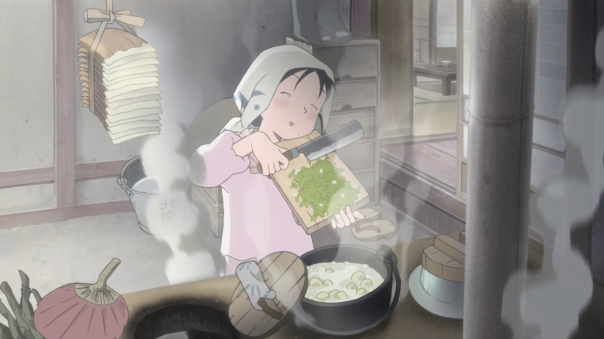
In 1944, life for Suzu Urano starts slipping through her tiny calloused fingers. For one, she is married to Shuusaku Houjou, a reserved young clerk, and is sent off to the small town of Kure in Hiroshima where her husband works at the local naval base. Now living with the Houjou family, Suzu must adjust to her new life, which is made especially difficult since she quickly becomes an essential meal-making, chore-doing crutch for the family. She does all of the daily housework during the tough wartime conditions, and the familial disconnect Suzu experiences between her sister-in-law—timed with the regular air raids—makes both the political and household climates feel like battlefields.
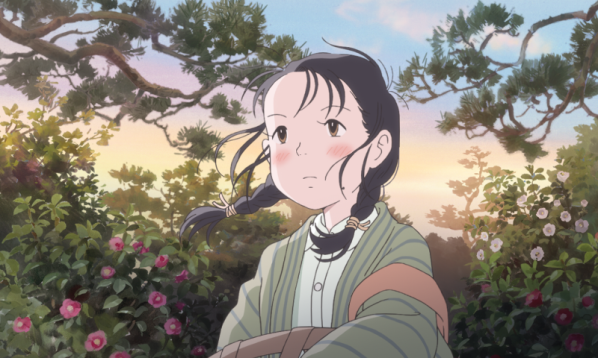
Image result

When intense bombings by the U.S. military finally reach Kure in 1945, devastation to Hiroshima and its townsfolk, as well as its culture, forever shake the nation, and Suzu’s life is permanently impacted by the tragedies. “Much is gained by living in Kure, but with war, many things cherished are also lost.” It is only through the greatest perseverance and courage that Suzu manages to continue caring for those around her, and to truly live life to the fullest.

“Torn apart by war. Brought together by love.”

By its end, In This Corner of the World is a somber ode to history, wherein the tragedies of WWII’s Hiroshima bombing are experienced firsthand by the main characters. But before the bomb is dropped, the entire first half of the film winds us back to the 1920s, Suzu’s peaceful childhood. It starts this way to not only show Suzu’s developing story from beginning to end, but also to create the picturesque vision of pre-war times in Japan, specifically Hiroshima and its surrounding towns. As every 5 or 10-minute interval—marked by on-screen dates—brings us closer to that horrific day, August 6, 1945, your stomach starts churning in dreadful anticipation; you know what’s about to happen, and you’re almost left disbelieving how Suzu’s whole life could just fall apart in an instant.

Related image

Akin to African author Achebe’s world-renowned novel, Things Fall Apart, which was written to show that life, law, and liberty already existed before the white man saw the need to organize, colonize, and, get this, “save” Africa, Fumiyo Kouno’s story serves to inform the viewer about the other side of the Pacific. You are put through the trials and tribulations of Suzu’s daily life, from learning to properly make a meal using rations to understanding the familial benefits of marriage, in order to hopefully understand that despite their differing customs, both the attackers and the attacked have things they want to protect.

I set up a pretty overwhelming historical background here, but the film really isn’t that political at all. Rather, its a drama centered around one little girl’s average life during WWII, and how no matter the global circumstances plaguing a household cause ruin and chaos, life goes on. That’s right, life will always go on. There are always things to be fixed, clothes to be washed, and food to be cooked. Suzu understand this, and that’s why she faces each painstaking day blessed that there’s still a roof above her family’s head. In This Corner of the World, though rife with tragedy, is ultimately a heartwarming tale of Suzu’s prevailing love and healing hands.

Related image

A Hero at Home: Suzu Urano

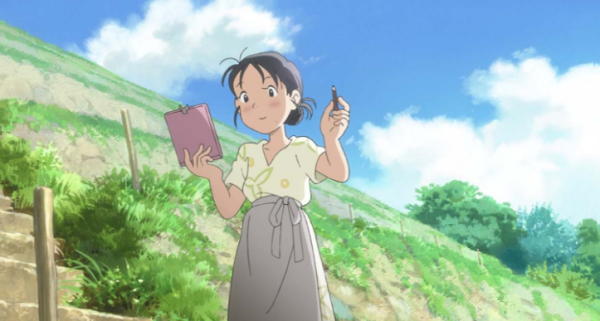
Characterized as tiny, optimistic, and a bit aloof at times, Suzu Urano goes through great lengths to help in anyway she can, even if her assistance comically ends up backfiring in the end. She’s also incredibly creative, shown in both her beautiful landscape sketches and paintings, as well as when she wields her knowledge of samurai food rationing to construct some, at the very least, “interesting” dishes. Her artistic talents act as a sort of sanctuary for her, and it is through her simple yet gorgeous works that she meets many new friends and even potential lovers. But like all artistic endeavors, chores come first, and slowly you start to see the hobbies that she once did for herself fade away to make room for aiding the family.

Related image

On top of working her hardest around the house (her efforts eventually exceeding those of everyone around her), Suzu is a girl, a soon-to-be-woman who undergoes all of the same treatments that Japanese women received during the 1900s. From stricter expectations in the kitchen and household to family-controlled courtship, rarely is Suzu the master of her own fate. Yet somehow, Suzu makes the best of what is given to her, for merely being allowed to experience the tranquility and joys of everyday life in Kure is enough to give her hope and purpose. Honestly, what a woman!

Image result

Suzu only speaks out once or twice in the entire film—remember, this is a film that chronicles Suzu’s ENTIRE life! She many not be honest to herself all the time, frequently disregarding her own happiness and well-being for the sake of her family and her nation’s pride, but Suzu knows how to fight the good fight, as well as when to keep pushing on through the toughest of hardships. Between watching her frugal attempts at fitting in with her husband’s family, her struggle to adjust to life in Kure, and the tragedies of war she later encounters, it feels as if you physically and emotionally cannot go through as much heartache that is thrust upon her and make it out ok. Yet Suzu manages to bandage up her scars and continue making herself useful to everyone. The warmth she brings to the war-torn world embodies the purest light of hope in a time of darkness.

Visually, the Softest Movie I’ve Ever Seen

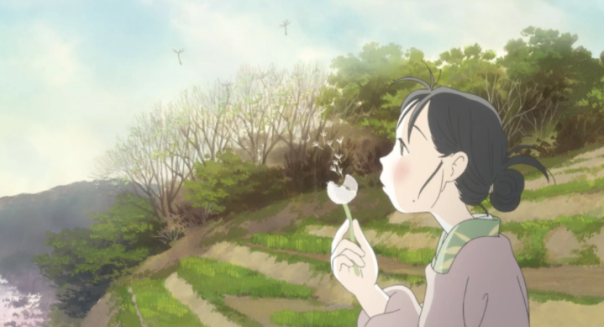
“It was like Studio Ghibli meets the Peanuts and together they talk about some pretty serious stuff.” This was my immediate reaction to the film which I posted on Twitter, and I still stand by these words now. The backgrounds are painted so smoothly, giving off an immense sense of ease, and the magical watercolor touch just feels so right. Even the characters, for a lack of a better word, look so . . . “soft.” There’s a lack of detail in their physical features, but it’s their sometimes cute, sometimes sorrowful mannerisms and words that convey their true characters. Seeing characters this adorable almost feels wrong for the tone of the film’s second half where the air raids become prominent, but it somehow works altogether as one moving, breathing, snapshot of history.

Related image

(If you watch the special feature clip “Hiroshima & Kure: Then & Now,” you’ll understand how and why it all looks so historically accurate; the attention to detail in re-creating several destroyed sites where famous architecture once stood was very commendable.)

The luscious animation is accompanied by equally gentle music, as kotringo’s (Rieko Miyoshi) soundtrack matches perfectly with the tone. At times uplifting, other times more tender or melancholic, tracks like “Kanashikute Yari Kirenai” or my personal favorite, the ED theme “Migite no Uta (みぎてのうた)” provide lovely messages to live by: “Even in this painful and broken world, there IS hope.”

Image result for in this corner of the world hiroshima

Learn From Fiction: Heartwarming Tenderness Comes From How We Live

It is stories like Suzu Urano’s that give us all the fuzziest feelings of contentment and comfort. But like all stories, they eventually end, and once they’re over, the books get placed back on the shelves, and the DVDs and Blu-rays are ejected from their players. And that’s it. It’s all just entertainment, anyway.

*If you’ve ever thought this, then you completely missed the point as to why certain works even exist in the first place.

All fiction is written with messages, no matter how significant or insignificant. With the case of In This Corner of the World, it’s to showcase the tragedies of war firsthand, and the devastation that comes with violence. That should’ve been apparent from the synopsis alone. Looking deeper, we can understand more big takeaways from the film:

  • Hardships exist everywhere—someone is always struggling
  • Protect family, for without it we are fundamentally alone
  • Gender roles can limit individuals from reaching their full potential
  • The youth of today ARE our future
  • With destruction comes the joy of rebirth
  • By rebuilding from the ground up, we build a stronger foundation than the one before it
  • Make the most of your life—you only get one, and it goes by incredibly fast
  • WE ALL have the choice to be happy or sad, rude or nice—live the way you want to
  • Be thankful for what the earth provides, and what you can do for it in return
  • And lastly, to quote The End of Evangelion, “Anywhere can be paradise, so long as you have the will to live”

Just LOOK AT ALL OF THOSE THINGS I CAME UP WITH. And that only took me a couple minutes of reflection.
inthiscorner2.PNG

History will always be our greatest teacher

Authors, directors, artists, musicians—Creators improve on what skills they already have in order to teach us invaluable lessons about the human experience. They have the power to take all the world’s evil and tell us that life can be incredible, so long as we don’t repeat history’s mistakes. Don’t just watch a film: enjoy what it is trying to show you. Don’t just read a book: revel in the messages left in-between the lines. Take what you learn and monopolize on it! Essentially, BE the good in the world!

In This Corner of the World presents the catastrophic effects of humanity’s cruelty, savagery, and barbarity—yes, absolutely. But it also exists to tell us that through the ashes, we can rebuild; that we can be kind to others, even if they treat us harshly; that most of all, we have the choice to see the good in this wild, wicked, unfair world.
inthiscorner3.PNG

As a race, we have this terrible tendency to appear on the wrong side of history (if you know what I mean). The title In This Corner of the World refers to both Suzu’s tiny Kure house on the hill AND a state of harmony achieved by acknowledging and balancing the positives and negatives that life throws at us. A heartbreaking historical ballad for those we have wronged, and the terrible things we have done, In This Corner of the World is here to say that life goes on, and that as long as we try to understand one another, hope and a warm heart will always allow us to move forward.

We can love. We can rebuild. We can move on. But we’ll never truly forget.

There is only one corner of the universe you can be certain of improving, and that’s your own self. – Aldous Huxley


This can be a hard film to watch, but it all depends on how seriously you decide to take it. It has several comedic points of value in it, as well as a very cute presentation style, but don’t let those two aspects close you off from In This Corner of the World‘s subtle brilliance and emotional depth. As a powerful, touching work of art, this film is awarded the “Caffe Mocha” seal of approval, a rating for those special titles that I consider to be a must-watch!

Image result

This concludes my December 20th entry in the OWLS “Warmth” blog tour. Arria Cross of Fujinsei went right before me and expressed her sincere gratitude to all of her fellow readers, bloggers, and OWLS members in one emotional, heartwarming post. Now, look out for fellow aniblogger LitaKino (Lita Kino Anime Corner) with a surprise celebratory birthday video this Friday, December 22nd! Thank you so much for reading, from my first OWLS post in January to here at the end—I do hope you have enjoyed them, as I do really, really like writing them! Until next time, this has been

– Takuto, your host
Shin Godzilla is a Terrifyingly Realistic & Meaningful Ode to History | Review

A brief discussion on the summer 2016 Japanese film “Shin Godzilla” (also known as “Godzilla: Resurgence”), produced Toho, co-directed by Hidaeki Anno and Shinji Higuchi, based on the original story by Anno (Evangelion). 

*I am not overly familiar with the Godzilla franchise (meaning I cannot properly decide whether it is a particularly “good” or “faithful” addition), but I do respect it and the impact it has had on the Japanese people and the rest of the world.*

“A God Incarnate. A City Doomed.”

This is how Funimation captions the deadly film containing the biggest, baddest Godzilla known to mankind, and accurately so. (He’s literally the tallest in the franchise!) But before the King of Monsters surfaced from the deep, it was just another quiet day for Japan. Chaos quickly floods the scene when a giant, strange gilled creature explodes from the ocean’s surface and begins tearing through the city.

Prioritizing citizen safety above all else, the government attempts to keep the situation under control, only to realize that their technicalities and formalities are useless in the face of true terror. It’ll take a rag-tag team of volunteer scientists, engineers, and public safety officials to come up with some sort of way to combat this seemingly perfect lifeform. “But time is not on their side—the greatest catastrophe to ever befall the world is about to evolve right before their very eyes.” – Funimation

Image result for shin godzilla screenshots

More Than BOOMS! and BANGS!

Despite boasting action (it’s a Godzilla film for crying out loud), there’s a surprising amount of substance, particularly a possible social commentary on the hierarchy of the Japanese government and they way the nation handles foreign affairs during war time. Specifically, we are frequently shown how frustrating and slow policy can be. The film’s first half centralizes on political officials arguing about who should do what, when, and their reactions to the unbelievable events unfolding—most were consumed with disbelief, in fact, except for the young yet forward-thinking Deputy Chief Cabinet Secretary Rando Yaguchi, our basically-main character (and wow, what a title).

Image result for shin godzilla kayoko

We join Yaguchi in his frustration against the higher-ups, as well as his struggle to make amends with the innocent lives lost because of the government’s inability to act early on. While those above him in rank merely wish to hold fast to their comfortable, well-paying seats, shrugging off the impending doom that is about to likely kill them all, Yaguchi pulls together every asset that he can to find out what Godzilla is, and solve the mysteries surrounding Goro Maki’s research on the subject. It’s sad to admit how painfully real the execution of this all is.

Unlike the other officials who merely bicker about bureaucratic protocol and semantics (and not take things seriously), Yaguchi deals with exactly what’s in front of him. He knows he’s trapped within the system’s web, but he doesn’t fear questioning those above him in order to do his job correctly and honorably. Actor Hiroki Hasegawa conveys the complexity of Yaguchi’s character impressively, balancing fitting facial expressions for each emotional hit: a mix of concern, anger, sadness, and confusion.

Image result

As I side note, I thoroughly enjoyed the excitement that came with watching Godzilla transform from the weird gilled lizard on all fours to the menacing tower of terror we’ve come to know and love. It was so much fun! One small small complaint that I did have was (and I’m not sure if this actually counts) that I couldn’t really tell if the CG done on Godzilla was “good” or not. Seriously, I couldn’t. Was he creepy lookin’? Sure, but I’m not sure how this makeover compares to previous ones. Also, while his explosive beams later on looked absolutely terrifying, I didn’t like the cheesy sound effects for the explosions—they felt like they were missing a low boom to ’em, or perhaps an epic bass you’d expect from a Hollywood explosion.

Intense Dialogue, and the Engrish Doesn’t Help

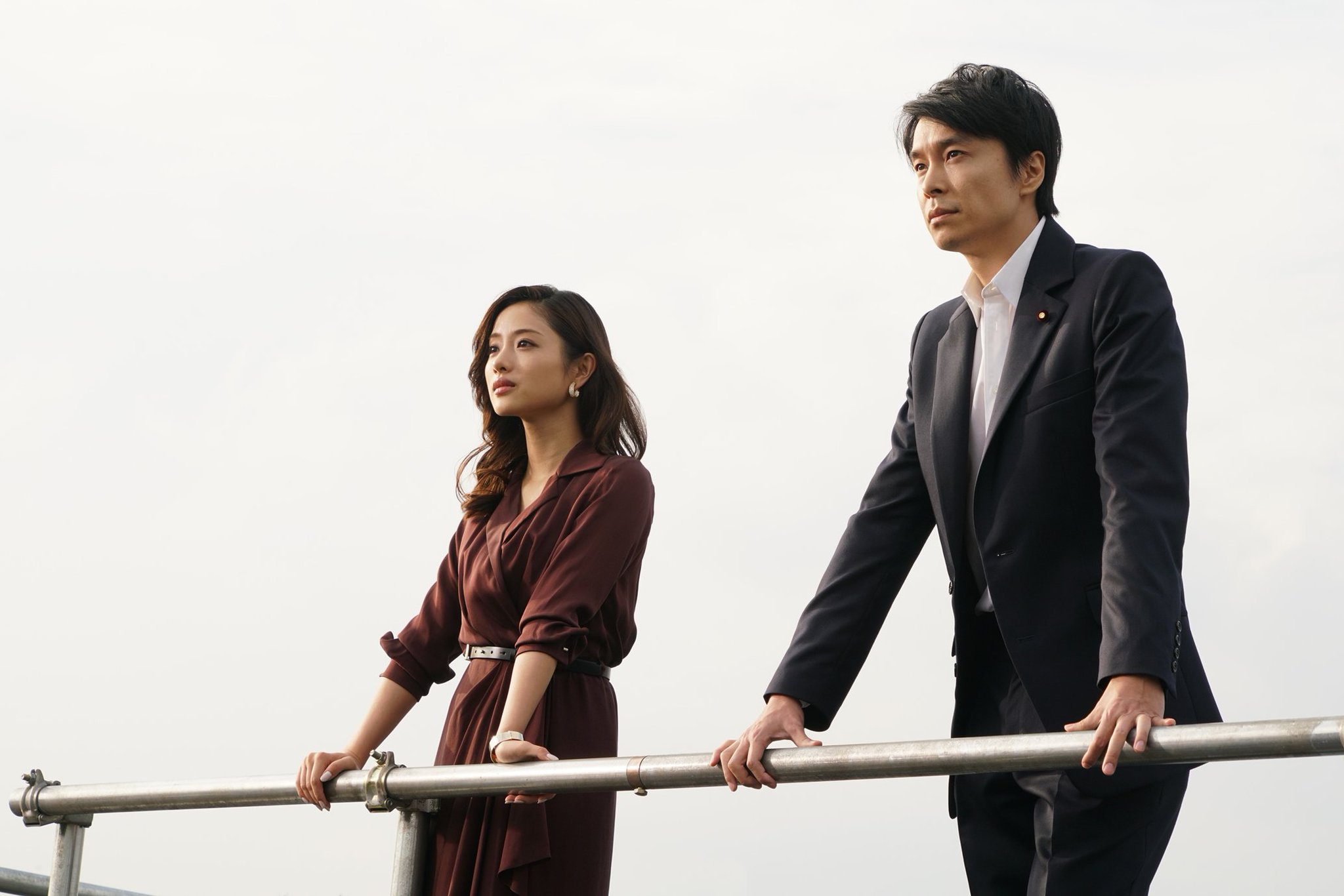
Most of the film’s complaints are targeted at the lead female, Kayoko Ann Patterson, portrayed by Satomi Ishihara, whose unfortunate script is loaded with English-heavy dialogue. In an interview, she even stated “Sometimes it’s so frustrating, I just want to cry,” and by NO means is any of this her fault—that’s a director issue. Her character is meant to seem very American, and while we definitely get that feeling, I can’t help but think that her normal Japanese speaking would’ve sufficed the whole way through. Anyway, I still love Kayoko to death because of how her character acts as an excellent foil to Yaguchi’s—both see themselves in higher positions, but for now, they work together efficiently with what they’ve got in their own ways.

Image result

The Engrish problem is solved by switching the language settings to Funimation’s English dub, which is especially wonderful because the subtitles just fly by! Shin Godzilla is a film about talking through the problem, and less about any spectacular human actions. The political nonsense in the first 20 minutes, as well as the ending with solving Maki’s quote (which I’ll get to) are much easier to understand with the dub. If you don’t mind live-action dubs, do give this one a go—it could help immensely with understanding the film’s main messages.

Understanding the Legacy of the Atomic Bomb

More than having knowledge of the franchise, it’s historical context that is needed for full emotional effect here. Japan was rocked not once but twice by an evil that shouldn’t have even been unleashed on the planet: the atomic bomb. History has learned that the destruction that follows an atomic bomb is not cool. It’s not something the U.S. or any country should glorify, and this film makes sure of that. Godzilla was birthed once the long-term effects of radiation poisoning revealed themselves as something just as fearsome and frightful as the bomb itself—gosh, perhaps worse.

This brings us back to the film, which could stand an allegory for nuclear war and its long-standing effects, Godzilla itself mirroring the disastrous earthquakes, tsunamis, and radiation that hit the poor nation all at once. Unlike normal action films where you’re just waiting in anticipation for the bad guy to unleash their awesome powers, I was left not cheering, but shaking with fear of the results that, very closely, mimic an atomic bomb. The theme of destruction is a powerful one, a scary one, and that’s how this film shocked the viewers—the moment Godzilla unleashes its wrath is one that can only be witnessed . . . and feared.

Image result

The People that Made this Experience Special

1. Sharla (Sharmander on YT)—Being one of my favorite YouTubers, it’s rare to ever hear about her work life as a dialogue coach, and so I was ecstatic once she put out a video saying that she worked with the cast (particularly Yaguchi and Kayoko on those stubborn English lines) and Anno himself.

2. Shiro Sagisu—Known for his epic music in Evangelion, Shiro gives the film a really neat character. His famous “intense operations planning” music that plays throughout the franchise makes several appearances in this film, and though it felt overplayed at first, a second watch through with the dub made it all feel like it blended seamlessly, as if Eva and Godzilla were truly “a match made in kaiju heaven!”

3. Hidaeki Anno—THIS MAN puts me through so much stress, and yet I can’t ever look away whenever I hear his name involved in a project. He is the reason I jumped into this foreign franchise, after all, so that’s got to mean something, right? He perfectly combs together realism, destruction, and rebirth in such a way that merits a masterpiece with every work. In Shin Godzilla, he took me back to the first time when I saw Evangelion and was impacted in such a way that I’d never be the same without it. I’m glad Anno took the break between 3.0 and the final Rebuild film, because hey, sometimes we have to “Do as we please,” and I respect that.

Thank you for giving me my Evangelion fix—it was an incredibly enjoyable experience!

“Do as you please.”

These are the few words left by the enigmatic Maki, and yet, they remain the strongest message within the work. It’s something so simple, to do as you want to, though I get the impression that it’s not a common Japanese lesson taught. No, this isn’t a wish or a passing thought, but a statement aimed DIRECTLY at Japan. Towards the end of the film, the Prime Minister must either give consent to or deny the United States’s declaration against Godzilla: “Take care of it now, or we will nuke it.” That’s right, history will repeat itself. Japan would risk losing the pride and dignity it spent so many years recuperating to the humiliation of starting at ground zero once again.

With the titular creature MIA towards the end and the U.S.’s threat, it almost begs the question: Are humans deadlier than Godzilla?

But oh, “Danger is an opportunity for personal growth,” remarks the U.S. President in the film. Yeah, not for this country. The true climax of the film comes down to a duel between philosophies—to accept help and then rebuild, or own up to the situation. And when Japan finally does decide to take matters into its own hands, fighting the way only they do best by studying their enemy, the scientific team makes work of the King of Monsters in a way that, without spoilers, makes me proud to be human. Using science, mankind’s greatest weapon, the team transforms the impossible into plausible—theory into reality.

It’s that moment when you realize you CAN stand for yourself WITHOUT having to kill another being—THAT is the big takeaway. Take pride in the things you can create and accomplish together, NOT destroy. And finally, for ONCE in your overly obedient life, do as YOU please, NOT what the others want.

Image result

Shin Godzilla is incredibly smart, realistic, meaningful, and genuinely scary at times. Most of all, my god, if this film had come from my country, I’d be overflowing with pride, too.

“Accountability comes with the job. A politician must decide to own it or not.” – Rando Yaguchi 

Image result

(None of these screenshots belong to me. No copyright infringement is intended.)


Have I been completely Godzilla-fied? Haha, not quite, but I will definitely be keeping an eye out for future installments, including the wildly anticipated CG Godzilla film directed by Gen Urobuchi, another one of my favorite directors in the industry! Shin Godzilla may not be anime, but I’ll let it slide into the “Caffe Mocha” selection as grade-A movie material for sure, and for everything it stands for. Shout-out to Scott (Mechanical Anime Reviews) for hyping me up about it, and for covering the film way better (and quicker) than I did here.

Lastly, thank you so much for reading, as this was a film that has grown to mean a lot to me. I’m dying to know what you thought about Shin Godzilla, especially regarding its production, so let me know your thoughts in the comments! Until next time everyone, this has been

– Takuto, your host

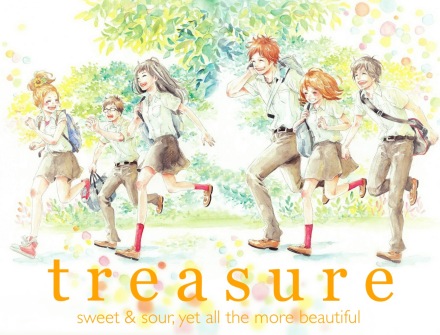
“Orange” is Sweet & Sour, Yet All The More Beautiful | OWLS “Treasure”

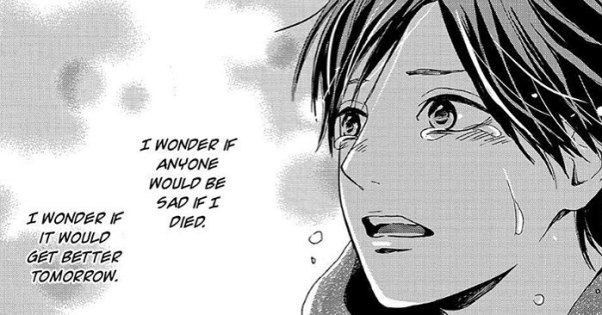
Chances are that if you were linked here from another blogger pal, then you might be new. To those first-timers, “Hi, I’m Takuto, welcome to my anime cafe!” As part of the OWLS blog tour’s  ninth monthly topic, “Treasure,” I decided to incorporate what would have been my standard review of the Orange manga into a cautionary yet hopeful look at the realm of teen suicide, and how, as an outsider, it is okay feel unsure when warning signs are observed.

There are moments in our lives where we lose our sense of self-worth and value and as a result, we find ourselves deep in darkness or drowning in the ocean. However, every person in this world is a treasure—we treasure ourselves or we are treasured by others—and at times, we may need to be reminded of that. We will be exploring characters who have suffered from mental illnesses, depression, and/or suicide, and then discussing how these individuals cope with these issues, the reasons for their emotions, and how they handled the situations they were in.

For as long as I’ve been avoiding it, alas, there’s no going around the major theme of suicide in Orange, so thanks for the prompt, Lyn! This is also my first manga review, so wish me luck!

Image result


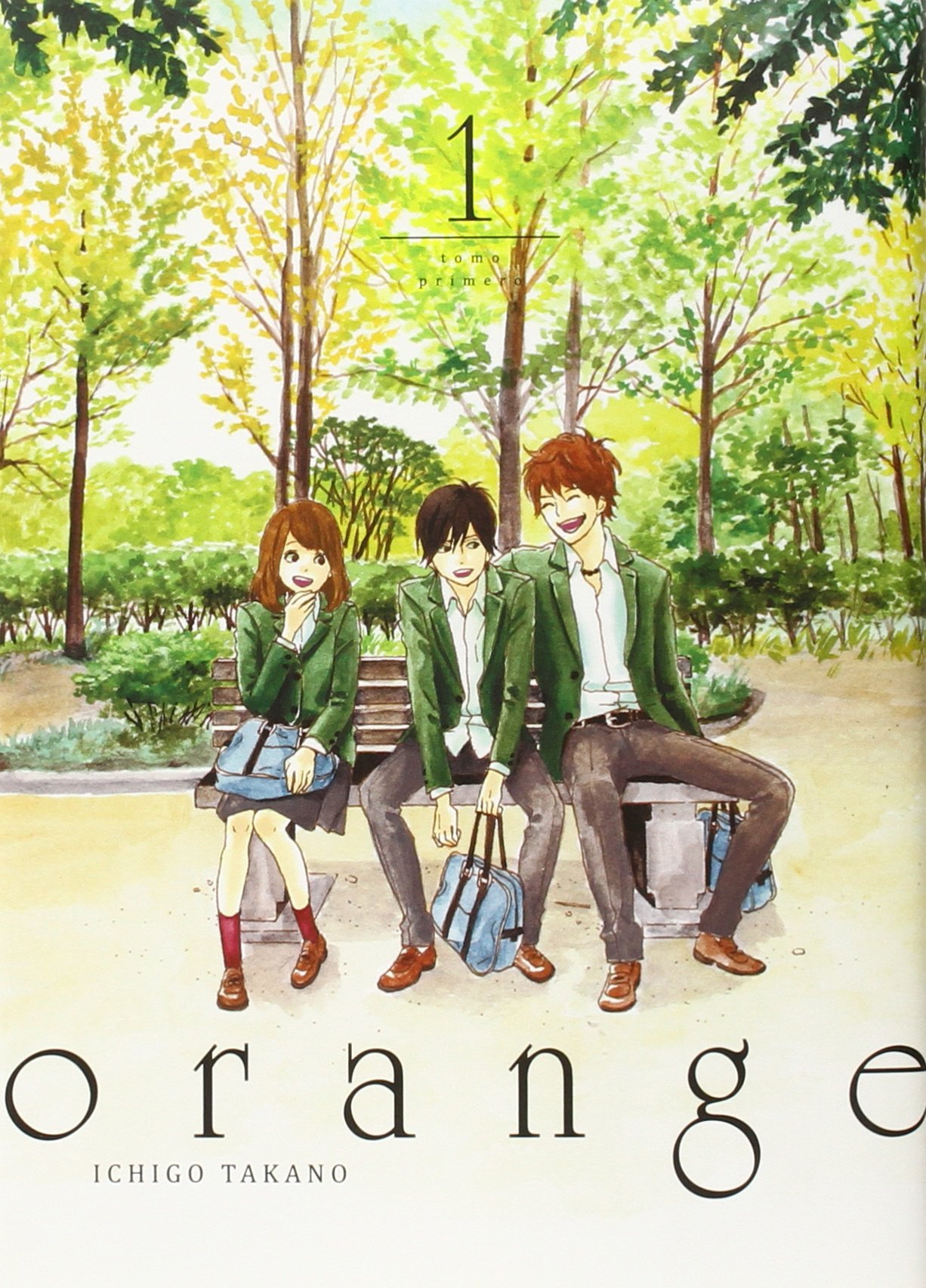
A brief spoiler-free discussion on the 5-volume 2012-2017 manga “Orange,” localized in the U.S. by Seven Seas Entertainment with story and art by Ichigo Takano. 

Death, Divorce, Drugs, Depression

Today, teachers will advise students to omit these four things when it comes to important college, scholarship, or job essays/interviews. This is likely because your employers and admissions offices do not want your pity; they want to hear about your strengths, a time you overcame tough odds, or maybe a moment of positive character development in your lifetime—NOT about the pitiable setbacks along the way.

But if these four items have become such crucial parts in the great cycle of life, why mightn’t you want to write about how you didn’t let the divorce of your parents or attempt at suicide ultimately stop you, or convey how even though drugs might’ve ruled your past that they would not own your future?

Ok, real talk. Depression is, well, depressing. Drugs are weird. And let’s face it, having to console someone about their “recently late” Aunt Susie can be extremely awkward, both for the you and the other party, rest-assured. It’s hard to talk about suicide and say “just the right thing” at “just the right time.” When is that time? Is it my fault for not knowing? It’s all just so . . . pressuring, so time consuming, and your boss probably doesn’t have the time to seat you on the sofa and listen to you express all your life’s troubles.

As much as I hate to say it, business and education are professional. Save your need of counseling for the counselor.

Image result for orange manga

I’ve Been Running for So Long

All this and more is why I avoid the Four D’s, both on my papers and here on the most informal of blogs. I try not to talk about specific real problems—negative aspects, terrible people, worrisome events—we face daily, but instead offer to celebrate the good that can come from something, even if that bit of positivity is ultimately (and knowingly) insignificant or greatly overpowered. Death and depression are hard to talk about for many, and the last thing I want to do is try consoling someone when I’d probably end up making things worse.

We don’t always get to make that decision, however, as entertainment has integrated these kinds of issues into their stories and characters. I might hear that a certain manga or anime is a “masterpiece of emotional conflict,” yet as soon as I hear “mental illness,” I won’t lie, I get turned off.

This brings me back to Orange, a brief tale about THE WORLD’S GREATEST GROUP OF FRIENDS and their willingness to alter time—risking the wonderful future in store for themselves—in order to prevent the inevitable suicide of a troubled young boy, their newfound beloved, treasured friend. It’s a story so short, powerful, and highly regarded of that it just couldn’t be ignored anymore, and descending into darkness proved well-worth the risks.

Related image

To You, in the Past

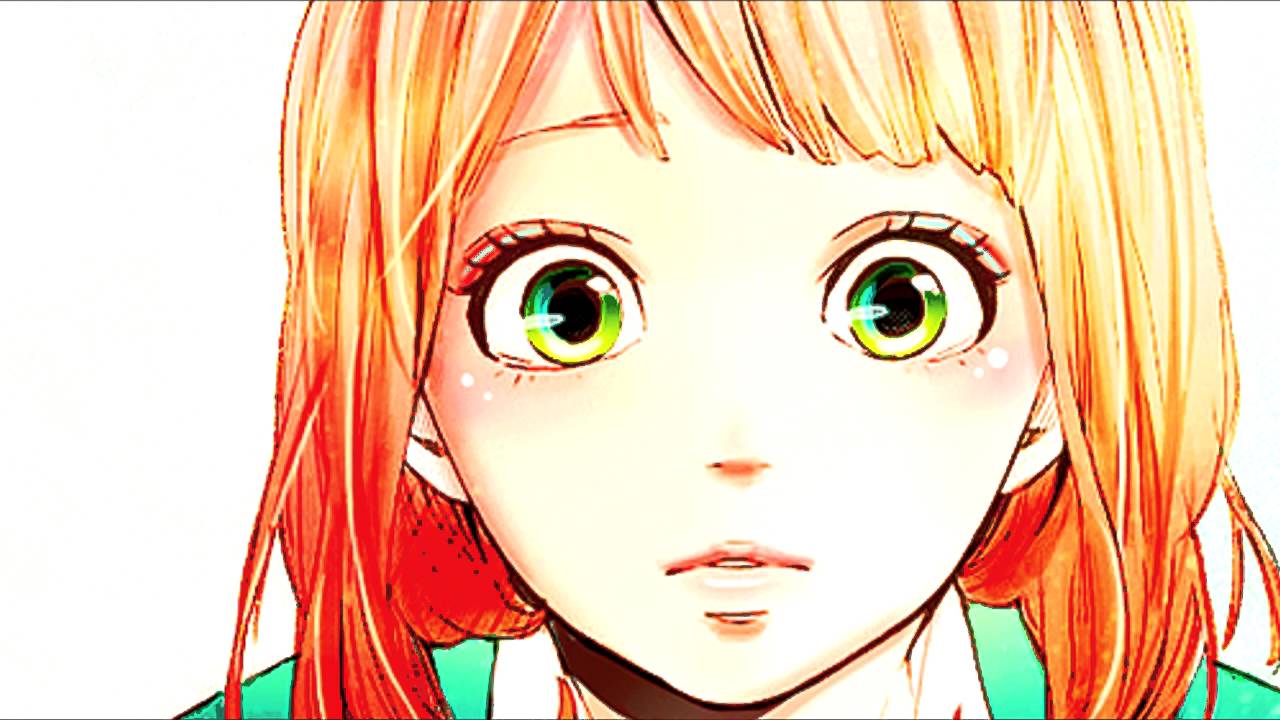
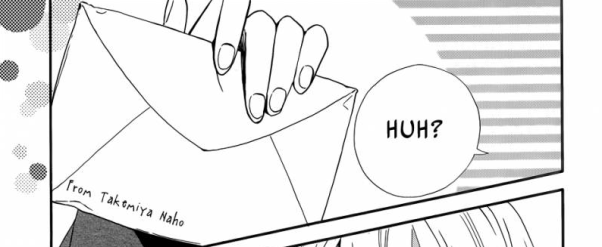
The start of Naho Takamiya ‘s junior year in high school was unlike any other: for the first time, Naho overslept, which was also her first mistake. That morning a letter made its way to her, but she was too busy trying to make it to school on time. When she finally arrives, her teacher announces a new transfer student by the name of Kakeru Naruse. According to the letter (which she now has some time to scope out), he’ll sit next to her. And just like clockwork, the teacher seats him in the back right next to her.

To her disbelief, Naho realizes she stumbled upon a letter from herself ten years in the future, which chronicles her everyday emotions and actions for the next six or so months. It’s not until shortly after Naho and her four other friends invite Kakeru to walk home together after class that she, again, violated the letter’s requests: her second big mistake.

naho letter

Naho is tasked by her future self to get to know Kakeru Naruse better—to make him feel welcomed, loved, cherished, and understood—for ten years from now, Kakeru no longer walks among the living, and his loss was her greatest regret. Now unfolds a fatalistic love story that spans across time, a tale full of many emotional ups and downs.

Everyone Needs Friends Like These Guys

I find myself in the same boat as Naho; depression is hard to talk about, so she often skirts around the issue by using the excuse of “making him smile.” I suppose both technically work, but clearly, Naho has no idea how to make Kakeru happy. While I can relate to her frequent indecision and lack of self-confidence, C’MON GIRL, JUST SPIT IT OUT ALREADY. I love Naho’s cute and considerate character to death, but man, telling a guy that you have lunch for him shouldn’t be that hard. I guess it adds to Orange‘s drama, and that some social anxiety can be just as stressful as depression.

Related image

Orange is only complicated on an emotional level, concerning itself almost exclusively with Kakeru’s depression and Naho’s inability to act the way she truly wants to. The relationship between the two of them is such a focal point that I couldn’t help but wish more of Naho’s friends played a bigger role. There’s the ever-teased soccer “giant” Suwa, a real team player, and he’s just about the best friend you could ever ask for. I’ll avoid spoilers by merely saying that he’s a funny guy full of heart, and that if anyone’s willing to take one for the team, it would absolutely be him. (Props to creating one of the most challenging love triangles ever.)

Image result for kakeru e suwa orange

But there are others: the girls, including the loud and cheerful Azusa and the cool, strong Takako. These two are almost always up to no good, snooping around whenever and wherever they can, but their presence makes me feel most at ease. They’re both overly caring, and despite how bratty Azu can get, or scary Takako may seem, they only mean to stick up for their friends.

Lastly there’s poor, poor glasses-kun Hagita, who likely would’ve been my favorite character had he been more than just the team’s punching bag. He’s picked on and ridiculed for nearly everything he does, but his logic and reasoning, no matter how pessimistic, often lead to the solutions everyone’s been looking for. Several times throughout the series he’s hinted on having a huge involvement with the finale (which could’ve led to something really cool), when in actuality, he’s just as equal in importance as the other girls.

Image result for orange manga characters

*gulp* Here We Go

It doesn’t take a second glance to see that Kakeru is dealing with his own demons. His smile may be pretty and sparkly, but underneath that shine is a whole lot of self-doubt, trauma, and shitty memories from his previous school. On top of it all, his parents are divorced, and he blames himself for his mother’s sudden suicide early on, which is what triggers the events of Orange! Well geez, it’s no wonder he’s thinkin’ about offin’ himself all the time!

Related image

Suicide is big. It can be hard to stomach and awkward to talk about, I covered this. But because it can be so off-putting for some people, odds are that they will have a difficult time with Orange. It doesn’t help that Kakeru comes across as particularly frustrating and ungrateful. But we gotta help the guy out, that’s what we do, right? With these kinds of people and situations, we need to get as close as we can to hear them out. From there, we can only go with our gut and advise them, appreciate their efforts and tell them that  it’s almost always never their own fault, and that they are never alone.

In my opinion, Naho did what was right by involving all of her friends in on the dilemma. She took her sweet time, but thanks to plot convenience (and a neat twist), everyone becomes gung-ho about saving Kakeru. Take things slowly, sincerely, and whole-heatedly, for if you can save the life of a friend, then it’s always worth the time. You may not get it right the first time, but at least you tried.

Related image

Regret and Happiness

I boast that one of Orange’s winning features is its short 5-volume run, but maybe that’s because I can’t take +10 volumes on suicide. Suicide plays a big role in the story, I’ll admit, but it’s not the real enemy here—regret is. As if all of the characters play supporting roles, Regret is the main antagonist (Guilt his henchman), whilst Satisfaction and Happiness work together to calm not only Kakeru’s mindset, but everyone else’s regret-filled future, too.

Image result for orange manga suwa

It just sucks when you have to give up what could have been your dream life all because you felt a little guilty for having that blessed life in the first place.

To You, in the Future

Like the titular fruit flavor, oranges taste so sweet and delightful. That is, until you notice that subtle sour tinge. Once it stands out to you, that’s all you can taste, and the fruit no longer becomes desired for its sweetness.

Naho lives one of the coolest lives ever imaginable, surrounded by her dearest friends and caring family. But as soon as Naho experiences Kakeru’s false smile, the sourness just punches her in the gut and pushes her to the brink of tears and exhaustion. That’s when she remembers Kakeru’s value to not only herself now, but herself in the future: “Ten years from now, I’m still regretting Kakeru’s death and the fact that I didn’t even notice how he truly felt.”

Image result for orange manga naho happy

At this point, she makes a desperate call to fate, the ruler of this timeline, wishing to keep the treasure that she found—that they all found—in Kakeru’s heart. And if fate didn’t grant her this treasure, then she’d take it by force. I’m no love expert, but that’s pretty cool of Naho, and I’m glad that this sour story found its sweetness once again by the end—it just makes it all the more beautiful.

“Kakeru . . . is my greatest treasure. Please let us change Kakeru’s future . . . I will not let this be his last day.” – Naho Takamiya


What’s the moral of the story? Well, you could say “Never give up,” but I rather like the sound of “Live without regrets.” The author Ichigo Takano herself, in the epilogue, hopes that our future is a happy one, and that years from now we are still living without regrets. “If you have someone like Kakeru in your life, please find a way to save them. Every life is precious. Please treasure each and every day, the present, the moment, and yourself. Thank you very much.” 

If we notice someone displaying potential signs of any mental illness, don’t feel afraid to step out and let them know you’re with them. Never expect to know EXACTLY what they’re going through, but be prepared to get them the right help just in case. I’m excited to watch the Orange anime now, and with a LTD ED release coming this fall thanks to Funimation, I know what’ll bring my wonderful experience full circle! For now, the manga receives the “Caffe Mocha” approval rating!

A very special to Gigi (Animepalooza) over on YouTube for gifting me with the first volume as per her giveaway—without you, I would not have been allowed to experience this endearing story of romance and very attractive artwork, so many thanks again~!

This concludes my September 19th entry in the OWLS “Treasure” blog tour. Prior to me, Hazelyn (ARCHI-ANIME) wrote about reasons for living in the otome PS Vita game Collar X Malice, and just tomorrow the 20th, Crimson (Crimson is Blogging) will walk us through the Katie Green novel Lighter Than My Shadow! Thank you so much for reading, and until next time, this has been

– Takuto, your host
Image result

Empire of Corpses Reanimates a Classic Tale | Review

A brief spoiler-free review of the fall 2015 anime film “Empire of Corpses,” produced by Wit Studio, directed by Ryoutarou Makihara, based on the novel by Keikaku Itou. 


Oh my, is it already passed Thanksgiving?! Woah, since I’ve been slacking I’ll make this one brief. Shall we visit the first of three films based on the late novelist Itou’s melancholic work and see if Wit Studio was able to breath life into his ambitious project?

Image result

Zombies and Steampunk

Welcome to an 1800s London where zombies roam the streets! Not really, sort of. Scientists have played god with dead bodies long enough that they’ve patented it down to a system called reanimation. In other words, the Brits are reviving the dead. It’s not a foolproof process, however, for the key to understanding life itself–the soul–does not return upon reignition. Because these walking corpses are incapable of experiencing the joys and sorrows that life presents, they’re mainly revitalized to serve in the labor force.

Image result

But every lab experiment comes with its breakthroughs, and that is exactly what befell Dr. Victor Frankenstein. Rumored to have been the first to successfully reanimate a corpse with a soul, the great mad scientist suddenly disappeared–his work supposedly vanishing with him. Inspired by his love for research and science, John Watson pursues hunting Dr. Frankenstein’s notes regarding the blueprints of the soul in order to revive his best pal, Friday. Throughout his journey, Watson unearths the terrifying truths of corpse technology, and how costly the science is for not only the living, but also for those who have long since passed on.

Image result

What exactly makes up the “Weight of the Soul?”

I’d like to first point out that I understand why the film, despite its glorious visuals, was poorly received by critics. The first Project Itou film tries to dish out a lot of hard, unknown science, but above all make you feel emotional connection to the lead character Watson and his situation. Grasping the conceptual stuff is particularly tricky, and the ties between real life historical figures and their fantasy counterparts don’t seem to make understanding the basics much easier. It’s even arguable that the rules of the world presented are poorly laid out from the start. This build up of failed comprehension and attempt at emotional appeal led to a cataclysmic finale on both the story and visual levels.

Image result for empire of corpses

Beyond the messy climax, I did quite enjoy the relationship between Watson and Friday. Their exchanges (well, Watson’s actions and Friday’s silent responses) felt genuine, and above all, I think that matters more than a shaky concept deliverance does. When Watson felt curious or distressed, the actions were reciprocated on myself. Also, to go against the crowd, I really liked the female role. Though she mainly served as a reminder of the scientist’s goal–Friday serving as his ambition–I found myself wanting her to also receive a happy ending. The Russian scientist Nikolai could’ve used more screentime, but I digress since the show mainly revolves around Watson’s side.

Image result

The Incredible World of Sherlock Holmes

Empire of Corpse’s strongest point easily lies with Wit Studio’s fantastic job in creating an atmosphere similar to a Sherlock Holmes film straight out of Hollywood! Such entrancing lighting, rich symbolism, and articulate detail in the machines and other devices absolutely blew me away. Each of the characters stand out beautifully in their own way, from the deadpan expressions of Friday to the stylish English outfits of a steampunk society. Action scenes would engage any viewer (I’m a sucker for vehicle chase scenes, so the opening really drew me in), and it all culminates into a finale so stellar it became a visual feast. I had to pick between absorbing or comprehending, and, well, I think you knew which won. I did notice Redjuice and Egoist accredited, which would also explain the Guilty Crown vibes.

Image result for empire of corpses ending

While I cannot recall any specific tracks, the music did do the show justice in contemplating the Sherlock Holmes tone. On the auditory side, huge props to the English voice cast and THE ACCENTS that tied so well with the concept and setting. Wonderful performances from Jason Liebrecht (Watson) and Micah Solusod (Nikolai).

Final Thoughts

Even if the concepts presented are a bit tricky to grasp near the end, this movie achieves in the feels department for me. Perhaps I was missing the context of the original Frankenstein novel for a few of those bits, but I did find it okay for the most part. It’s another demonstration on how far man will go to pursue knowledge above all else, an ultimate nudge to the idea that for us humans, some things are best not knowing.

“Beauty and sublimity are not what shape the future. It’s the willpower to try to actualize one’s words and feelings for someone else–DON’T YOU SEE!?” – John Watson

Final Assessment

+ Breathtaking visuals, fantastic steampunk design

+ Emotional attachment to Watson’s struggle with Friday

+ Fascinating project history, happy to see Itou’s work animated

– Started off simple enough, but lost its footing by the end

– “Weight of the soul” not explained thoroughly

Image result


I’m signing off on the first Project Itou film with a hot “Coffee” rating here at the cafe! Understandably flawed, but still quite enjoyable. This was the finale to my Halloween break following Shiki, a title which I reviewed a week or two back if you’re interested. Shoutout to Crimson for recommending this movie to me!! What did you think of Empire of Corpses? Were you disappointed with the results or did you find it particularly noteworthy for anything? Let me know because parts of me (the living ones, at least) are still a bit conflicted! Until next time, this has been

– Takuto, your host

Image result

I know it’s fan art, but LOOK at that mechanical detail!

Loss Has Little Meaning in Yuki Yuna | Hero Week Review

A brief review of the 12-episode fall 2014 anime “Yuki Yuna is a Hero,” produced by Studio Gokumi, based on original story by Takahiro and Makoto Uezu.

For the third segment of Hero Week, I’ll warn you now that this anime is extremely hit or miss, especially if you’re familiar with Madoka Magica. Despite any polarizing comments I make, I’d like to let you know that this happens to be my favorite of the three Hero Week anime I’ve reviewed, regardless that it is indeed the “worst-written one,” should I even have to pick. I found that it had the most to offer, and I have to be critical of it because something that means so much should be sought in full light.

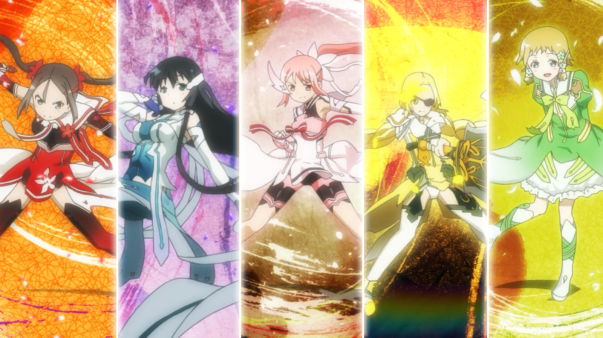
Five middle school girls—Yuuna, Togo, Fu, Itsuki, and Karin—are on a quest to save the world. That is, community service, volunteer work, and puppet shows for local children. It all seems trivial on the outside, but their Hero Club is determined to do good deeds for love, justice, and happiness, goals which are outlined and pursued religiously in the club’s Five Tenets. Such is the sweet and simple life of Yuuki Yuuna.

The club’s charismatic president Fu is living two lives, however, and upon phone call is forced to drag her friends into a mystical realm. There, they are to protect the God of the natural world and human blessing, the Shinju, from strange geometric entities called Vertexes. By the single tap on a phone app, the girls are transformed into the extraordinary heroes they so desired to be. But transcending the realm of God and obtaining unimaginable power comes with a price almost not worth paying.

As the girls fight for their lives and the people they love, their perception of the world dramatically warps into a cruel land of delusional grandeur. In the depressing struggle for power, the girls might have to point their guns at beings besides the Vertexes in order to preserve their very belief of what it means to be a true hero.

One of the biggest problems I had with Yuki Yuna was the lame world building. Had I not read the summary provided by Crunchyroll, I wouldn’t not have noticed that the story is set in the far future—YEAR 300, the Era of the Gods. WHAT, but it looks like modern-day Japan?! I enjoy it when stories have good reasons to break the rules set by the setting, but you can’t rebel against an outline that otherwise doesn’t exist!

My second beef with the anime was the lack of each girl’s unique drive to be a magical girl. They just sort of accepted the role because of the club’s influence. Individual motive is largely what make hero stories interesting and standout, so to have such weak trope characters (besides Fu and Togo) was a huge shame. For instance, what if the wheel-chair-bound Togo wanted to keep fighting because she could walk once again? That’s much more compelling than “I’ll do it because Yuna needs my help.” The way Yuna clings to the club tenets is also a bit cheesy and a weak excuse for ‘development.’

This is obviously less apparent if you are unfamiliar with it, but the last somewhat spoiler-free issue I had were the painfully obvious similarities to Madoka Magica. The magical girl system, character destinies, and dark, depressing themes in the second half all have strong correlation with its critically-acclaimed predecessor. Heck, even the music (which is still really, really good) and the animation sometimes feel like snippets borrowed from Madoka. While it is occasionally disappointing, Yuki Yuna managed to have fun longer than Madoka did, heavily maximizing its slice-of-life side for the earlier parts. And while I wanted darker, more twisted, nastier Madoka narrative, watching those girls have fun was what I needed more.

On a positive note, the animation was surprisingly incredible. The Vertexes themselves are CG, but because they are basically Evangelion angels crossed-over with the zodiac, it all works to create a fantastic off-putting vibe. I also appreciated the vivid color patterns for the Shinju realm and the cool magical girl outfits (Yuuna’s elegant armor was actually what got me into this show). The style was more rooted in Asian culture (petals, shrines, zodiac), while something like Madoka featured more European-like classical culture (columns, gates, witches).

HERO WEEK SEGMENT: Archetypical Hero qualities represented by Yuuna

I’ve taken a quick trip to Google to provide qualities of the typical hero. Let’s briefly exercise each prompt:

  • Hero is of humble origins
    • Yuuna is a very friendly and open girl, often willing to accept help and help others at no cost.
  • An event, sometimes traumatic, leads to adventure
    • The Taisha, the organization dedicated to the Shinju, calls upon Fu to advance on the incoming Vertex. Yuuna, even though given a choice, steps up to bat and becomes a magical girl
  • Hero has a special weapon only he can wield/always has supernatural help
    • Yuuna is a hero just like her friends. What makes her stand out is her unwavering devotion to the hero cause and her gifted fighting abilities. In episode one, she doesn’t just suddenly transform like the other girls, but is able to gradually make her armor appear upon demand. Her unusually rare strength and “true maiden’s heart” make her unstoppable on the battlefield.
  • The Hero must prove himself many times while on adventure
    • Besides fighting off the Vertexes, Yuuna must be able to lift the spirits of her comrades as the show’s ideal hero. The others will lose their way, and it’s up to Yuuna to lead them back on the path of righteousness. She doesn’t seem like a main character, nor does she change much as a character, and that’s mostly because I believe she’s not supposed to; she’s the guiding light of hope and justice, and as such doesn’t stop fighting even at the end.
  • ***SPOILERS START HERE***
  • PLEASE CONSIDER THIS THEORY TAG BEFORE PROCEEDING
  • The journey and the unhealable wound
    • In the end, the effects of going through Mankai so many times and taking on all of her friends’ pain leaves Yuuna in a catatonic state. When she does reawaken, her physical body is only a crutch for her soul, which is always off fighting. Upon the rebellion, Shinju-sama must have changed the rules so that girls don’t have to suffer long-lasting disabilities in the real world. This makes ALL LOSS ESSENTIALLY MEANINGLESS—All of the heartache the girls go through, then you turn around and say, “Oh, yeah, they don’t have to suffer anymore.” Now, I didn’t want a sad ending for the girls, especially Yuuna, but doesn’t that take away most of the emotional weight? Yuuna’s dedication to the heroic spirit causes her to be Shinju-sama’s ultimate protector, and is forced to keep on fighting even though her friends are retired.
  • Hero experiences atonement with the father
    • I like to consider the “father” not as Shinju-sama or the Taisha, but as the intelligent Togo instead. At first, Yuuna finds most of her purpose for fighting in protecting her friend and vice versa. When Togo is able to walk again at the end, she somewhat pities herself for letting Yuuna burden everyone’s pain even though she shouldn’t. Yuuna is praised like a goddess but somewhat frowned upon as a fool for sticking so close to the hero path.
  • When the hero dies, he is rewarded spiritually
    • Because I find the theory to be so interesting and quite possible, we can conclude that though her real-world body is somewhat “dead,” Yuuna is still alive and fighting behind the scenes. Her reward? She transcends the mortal world and becomes a goddess who will never stop fighting. Not exactly the prize I would want, but because Yuuna fell hook, line, and sinker for the whole hero bait, I’m sure that’s exactly how she would have wanted it from the beginning.
    • In the end, everyone’s illnesses go away, which contradicts the heavy theme of sacrifice Yuki Yuna spent its entire run on building up.
  • ***SPOILERS END HERE***

Much of Yuki Yuna is unexplained or at least not evident in the anime adaptation. Should the prequel light novels and the sequel manga ever make it here in the U.S., then I would be thrilled to revisit the franchise. Its fascinating world and the somber warriors fighting to protect it have so much more depth to them, and that lack of depth in the anime hinders a truly wonderful experience. The entire story and production of Yuki Yuna also has too many underdeveloped and forced ties to Madoka Magica, which sadly tampers with the mind-blowing aspect of it.

As a fantasy, drama, slice of life magical girl anime that attempts to see Madoka in a different light, I can appreciate all that it tried to pull off. It tackles the painfully realistic hero themes in the most interesting (and very dark) way that just excites me, yet also has rare moments of joy for our characters and a real built sense of unease instead of just scary/dark imagery like Madoka. Even though it stumbles in appreciating loss, we do wind up with one solid ideal: Ultimately, fight for what you want to save, not for what you are burdened by.

“You know that the fairest flowers fade first. But I made it.” – Fu Inubouzaki (best girl)

I award Yuki Yuna is a Hero with a benefit of the doubt 8/10, narrowly allowing it to breach the “Caffé Mocha” classification. It combats the fantastic with heavy ideals and characters that are honestly cared about (can’t say that for most series). Yuki Yuna won’t impress all—most are quite hard on it, actually—but I still encourage people to try it out especially if you like the wildly mentioned Madoka Magica. I’ve been forgetting, but both ERASED and Yuki Yuna is a Hero can be viewed for FREE on Crunchyroll! While I’d LOVE to own it on DVD, Ponycan is releasing these ‘premium’ sets with an okay English dub for a ridiculous $70 each—AND THERE ARE THREE OF THEM. How do you think Yuki Yuna did? Also, do you think Yuuna is a good hero? How about the other girls? Comment below!! Until next time, this has been

– Takuto, your host

CAFÉ NOTICE | Aftermath of Being Logged in ALO

Hello café-goers, how should I start this? Well, it’s evening here, so perhaps “Good evening, all!” or something to that effect. What I’m about to talk about is more on the serious side, but don’t worry, it’s that good kind of serious – that satisfactory seriousness that comes from adult praise, for instance. The topic? You read the title. I was logged into ALO for admittedly far too long, and you’ve probably realized that. Also, I lost a lot of you guys from my first anticipation post of the project, haha! What happened?!

I started to analyze Reki Kawahara’s Fairy Dance not by choice; I was sick and tired of nearly every goddamn anime fan beating up on SAO’s second half, and I had to change that by defending it as my sole right as a reviewer and a fan. We stick up for things we appreciate, see, and we also criticize the aspects that could’ve been better. But this was a defense series for the positive aspects, not the negative ones. I’m not saying Fairy Dance is pure gold – Oh gosh, no – but aren’t there other series out there begging to be picked apart like the literary vultures we are?

Now you probably think, “What about all those fans out there that praise SAO as the chief of all anime, huh? We must stop their ignorance!” Well, I agree, you can tear Sword Art Online limb from limb, whether that be the anime, the novels, or both, but the series’ problem is rooted in the the lead character himself, and sadly I can’t do much about that. However, I can point out a few of the cool tricks the series performed correctly. Hence, my motives for writing this.

This journey of 10,000 words starts with a single letter. Cheesy as it sounds, it is what it is. Clocking in at around 10,000 words altogether (parts I through this reflection), this is one of my greatest achievements as a blogger. A Word document this large is at risk of EXPLODING! Am I proud that I threw a sh*t ton of words on a page and called it an analysis? Not necessarily. I proclaim this to be one of my greatest achievements in blogging because this is my grandest collection of argumentative text on this blog. I dare say it means more to me than my reviews . . . This is a project I can look back on and actually feel really, really proud of the hours of work that went into this. I went into it thinking it would just be another review series. Hah, how little did I predict the longstanding effects it would come to have.

I realize this topic is taboo by bloggers, but here I go. “In Defense of Fairy Dance” had quite possibly one of the worst ‘statistical’ receptions on this blog – and THAT’S FINE. I believe it to be one of my highest of highs even though the number of likes and comments dictate it was one of my lowest of lows. It just means that you as a reader didn’t want to, well, read it, and that’s totally okay. Read what won’t waste your time, after all. That’s how I’ve always seen it. Just know that despite my efforts (and I don’t blame you AT ALL for not knowing the struggle), they ultimately mean so little, statistically. Thus, I’d like to extend my warmest thanks to those who stuck around, read, liked, commented – You know who you are. Thank you, it is an absolute joy reading your comments overflowing with your own responses and opinions!!!

If you’ve learned anything by now, it’s that Sword Art Online is a franchise rich with irony. Dramatic Irony ringin’ any bells? Gosh, we’ve beaten this horse quite dead. I won’t rattle on more, but I hope you’ve been able to take out this popular theme and apply it to other media. SAO doesn’t do anything particularly special with it; it just does a fantastic job working it into the story and characters. I also hope that, through reading this, you’ve been reinforced with the thought that “appearances aren’t everything.” Oh, it’s a juvenile theme, but one that applies itself here in many more ways than one.

Lastly, before I bow out of this enchanting land of fairies and bid the franchise farewell, I have one last lesson to reign it all in. You question, “What could possibly be more important than dramatic irony, Takuto???”

La vie est drôle

“Life is Funny,” eh?

You might recall this phrase rolling off the tongue of Ragyo Kiryuin from Kill la Kill, but its meaning is can be equally applied to the entirety of Sword Art Online.

A story of kids who finally get their hands on virtual reality, only to get trapped in it with death as the only escape.

How about when they finally do manage to return to the real world, and the main character’s lover has been relocated into another cage?

Or even when she gets out, and a mysterious marauder threatens to kill players in-game with one pull of his trigger?

Heck, even a girl struggling through terminal illness seeks refuge in the game world.

What about a blogger who expended his time, energy, and soul into a project that got less hits than his dinky little haul post? I think you get the picture.

When you look at it, life sure is funny, eh?

I’m using the wings I gained from ALfheim Online to soar to new heights. This experience has been troublesome, yet surprisingly a wake-up call much-delayed as well. I am still trying to work out a review format I am comfortable with, and this comprehensive review stuff has helped reduce my options (because at this point, I just can’t decide). Maybe now you’ll get to endorse yourself with tastier content. Or, perhaps, things could take a sour turn. Anything could happen, and so whatever does come our way, I’d like to reaffirm my thanks to all who have flown by my side during this journey. Don’t feel bad if you didn’t – I’m sure there’s a reason for your absence. Just know that we had a grand ol’ time here with dramatic irony, right fellows? Yeah, don’t answer that.

With more positive announcements on the horizon, I sincerely hope you have emerged as enlightened as I have! Keep on rolling with the punches, and until the next post, thank you very much for reading!

– Takuto, your host

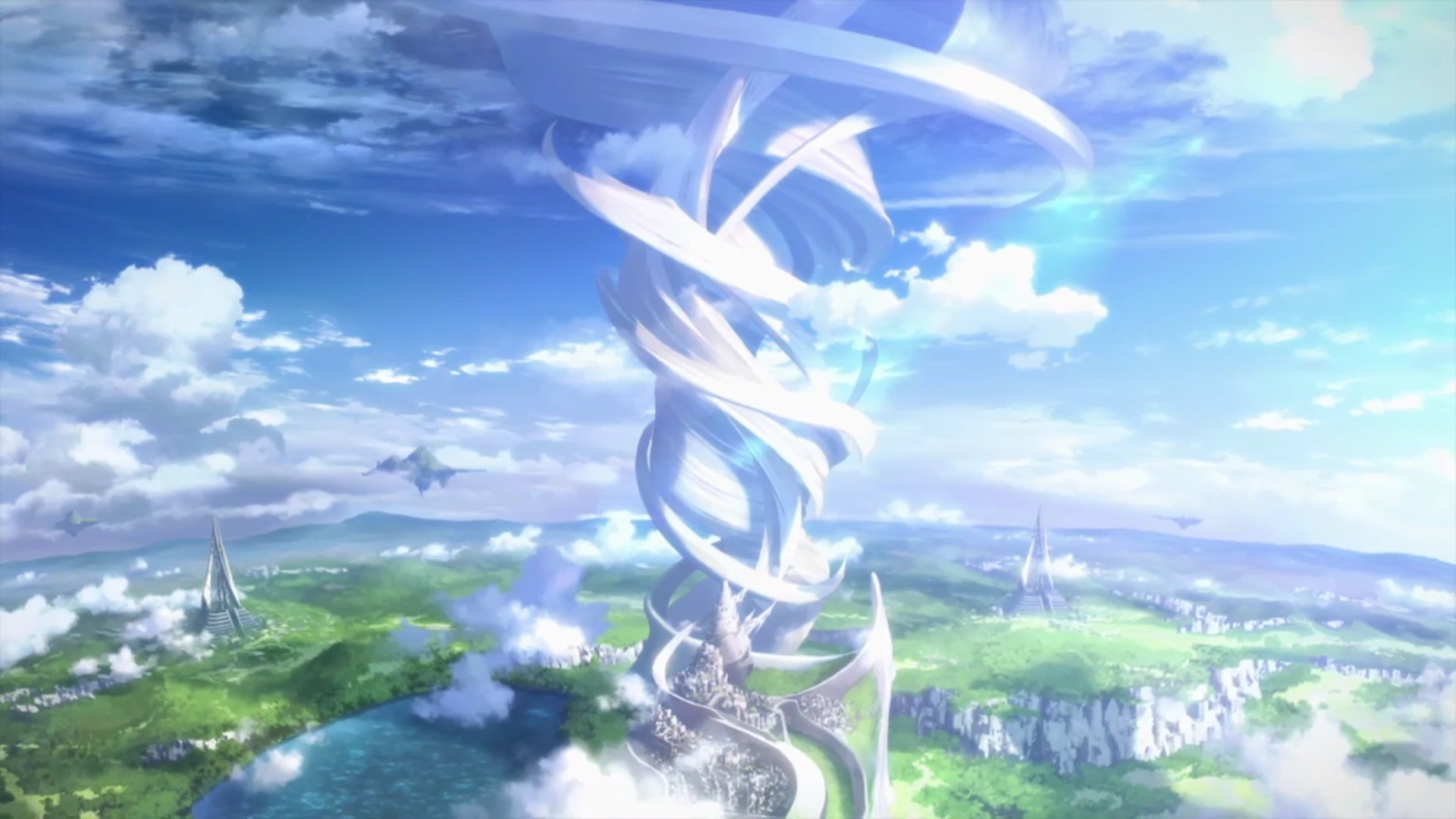
Oh, before I leave, I’ll be dropping the headers for each section of the series below. You are encouraged to click on the image (if my computer’s not being fickle) to direct you to the page. Everything under “In Defense of Fairy Dance” will be compiled under the “Cafe Talk” section of the blog for future reference! 🙂

dayii_HHS017710B1_1

dayii

dayiii

dayiv

dayv

The Deadly Power of the Game | PART IV: In Defense of Fairy Dance

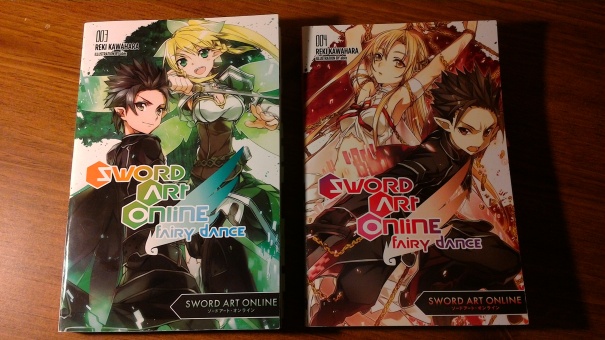
This is part four of the five-part series “In Defense of Fairy Dance,” a collection and comprehensive analysis defending the positive aspects of Reki Kawahara’s “Fairy Dance” arc in Sword Art Online. Research was gathered from the anime (sub and dub versions) and volumes three and four of the light novel series. This is in NO WAY written to justify all of the second half of the series, nor is it to say that it is particularly well-written. Instead, it is a half-full glass of the neat things the series did, and why I enjoyed myself with most of the content despite the glaring flaws. HEAVY SPOILERS EXIST.

Much like with PART III, this section will focus on the dramatic irony behind ALfheim Online itself, along with VR gaming altogether. Again, we’ll be analyzing many of the quotes from the light novels to bring the truth to light. The anime does a fair job at captioning the satire of the entire ordeal, so bringing in further clips would only clutter the analysis. There are pictures, though. Many pretty pictures.

“Land of the Fairies,” Eh?

Don’t worry, Kazuto thought the exact same thing. I mean, what’s a bunch of fairies doing in games anyway? After nearly dying in a world of knights and castles, nobody wants to be a dumb fairy – They’re just bloated pixies. But when Kazuto questioned Agil, apparently ALO isn’t just another laid-back, casual MMO. No, in fact it’s “actually pretty hard-core,” as the system is set up to be entirely skill-based so that player skill is rewarded. PK-ing is encouraged as a result. Where each VRMMORPG tests its players, Leafa believes that pride is what was being challenged in ALO. “How hard could you struggle? If you lost, how would you regroup and hold your head high? That was the test, (24, vol.4).” Also, imagine losing to a bunch of fairies. That’s dumb.

Right off the bat irony is up and ready for a home run. That should be every viewer’s first thought – What’s so tough about ALfheim? The second arc’s game is totally based on athletic abilities rather than keyboarding techniques, essentially meaning that if you lose in-game, it means that you literally weren’t strong enough. It’s also funny how they mention it’s basically SAO with magic. Magic. Doesn’t ALO feel magical? Everyone has glittery wings that allow them to fly higher than in any other MMO, and who doesn’t want that? ALO must be a DREAM COME TRUE, no flaws whatsoever. HAH! What a joke.

The Sad, Scientific Truth behind ALfheim

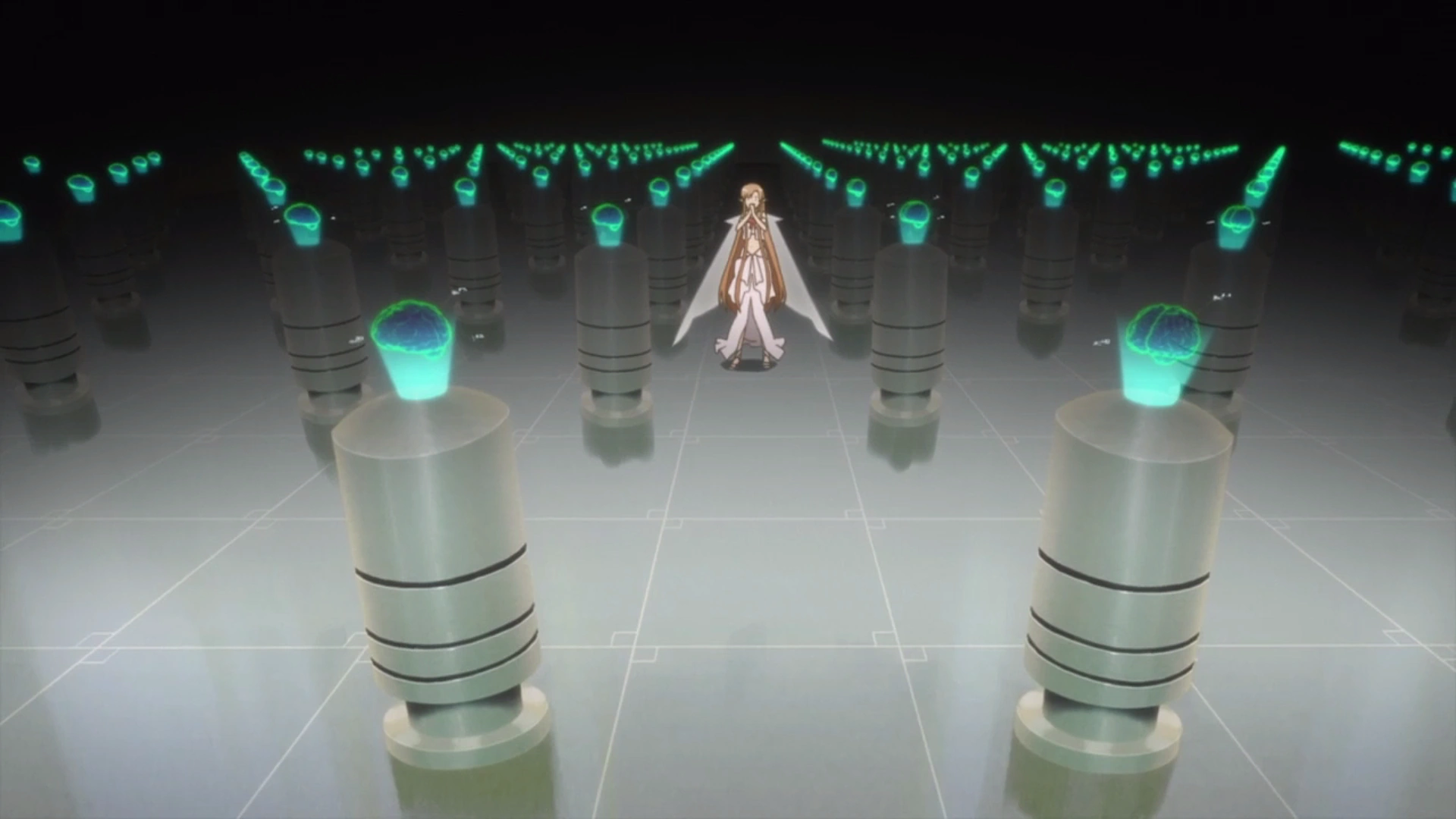
I don’t want to turn this already-way-too-long series into a summary, so let’s just jog our noggins. Sugou inverted SAO into ALO, kidnapping +300 entrapped minds as tools to further his research. That being, to study and prove that if the brain could be significantly controlled, then so could emotions.

“’Ha-ha! You won’t be singing that tune for long. Very soon, I will control your emotions in the palm of my hand. Look, Titania. Can you see them? Thousands and thousands of players, diving into this expansive world, enjoying the game. The thing is . . . none of them has any idea that the full-dive system isn’t just a tool for mere entertainment!’ (102, vol.3).”

Games are meant to be innocent fun, nothing more or less. But here, the grand Fairy King has rewritten the rules and taken control of all pawns on the board. He cheats, abusing the gift of the virtual world to benefit his own research – And at the extent of risking human lives, to which he casts aside! Sugou is a villain in both pixels and cold blood, and I’d say he’s a good one at that. He is, after all, a scientist, and furthering one’s knowledge of the world whenever and WHEREVER possible is sincerely worth pursuing. While you can only go so far to justify his motives, Sugou is still a creepy bastard who treats his soon-to-be wife without any regard, and he also kidnaps kiddos and pokes around their brain while they sleep. His jealousy over Kayaba’s success drove him to be even more passionate, yet he was outraged when the creator sacrificed himself.

“’Mr. Kayaba was a genius. But he was also a fool. How could he utilize that incredible potential just to create a stupid game?’ (103, vol.3).”

But his methods are where I see the crowd diverge. His henchmen find it more humane than exposing test animals’ brains to open air and jamming electrodes into them. “I mean, all they’re doing here is dreaming.” Very true, it’s all one big farce, and the series mentions that research on the human brain is incredibly slow due to the, well, human subjects needed. It’s not like you can get folks to consent on the matter, though. Otherwise we’d be leaps and bounds ahead of what we know! His research is admirable, but Sugou’s methods cross the line of sanity. He’s also an ass, which adds to what makes pure villainy – hatred. He’s supposed to be unlikable, and I think we can all agree that he is without falter.

This is One Tree You Can’t Climb

After giving Kirito the info-dump as to the features in ALO, Kirito assesses that the World Tree – The Master Quest – is essentially unbeatable because the only indication to standing a chance involves guild cooperation. However, the prize is only awarded to a single race that completes the mission, and no one would compete if it just means forfeiting the prize to the other team.

A while later, Kirito truly understands the game’s irony. “’ALO’s a nasty game, testing its players’ greed like this. I’m guessing its designer is a real piece of work,’ (191, vol.3).”

Oh trust me, he is. He is the self-proclaimed “Fairy King.” He’s also a narcissistic fiend.

Even Leafa, while tackling the Tree at the end of the series, feels the unfairness in the omnipresent guardian knights. She’s starting to sense that this world isn’t built around the hopes and dreams that flying fulfills. Something’s amiss. I just love this quote:

“But now, for the first time, Leafa began to sense a kind of malice within the system. Some unseen force, which was supposedly keeping everything in a fair balance, was wickedly, cruelly swinging a bloody scythe at the players’ necks within this arena. There was no way to overcome this trap, (124, vol.4).”

And when Kirito finally resurfaces (because he’s too OP) he becomes speechless. He has some excellent mental grammar, though:

“The grand quest at the center of the game – to reach the city atop the World Tree and be reborn as true fairies – was nothing more than a giant carrot, endlessly dangled out of reach of the game’s player base? So not only was this battle’s difficulty set to the extreme, the door was locked by nothing more than the will of the game manager . . . ? (133, vol.4).”

THIS RIGHT HERE is the MOST SIGNIFICANT piece of DRAMATICAL IRONY found in the work. We’ve covered Suguha and Asuna, but this realization is the ultimate plot underlying Sword Art Online. Even the revelation to Kirito that Sugou – the nasty man trying to steal his girl IRL – is the mastermind doesn’t compare in shock value to this. The game is rigged. It was from the start to its game manager’s end. Those who fought for life in this world – to fly high among the stars and one day, a palace in the sky – is all for not. Hell, the option doesn’t exist. Just like you couldn’t log out of SAO, a freakin’ game, ALO’s master storyline isn’t designed to finish – EVER. What keeps players like Asuna and Kirito coming back to VRs if they only bring painful revelations and ironically cruel clickbait?

Treasures ALO Gave its Players

The irreplaceable positive memories and true friendships formed, that’s what. People form ideals off of scenarios like these. For Kirito, everything was just a game. “Kill what you want, take what you want.” After surviving SAO and enduring ALO, he’s seen enough to realize that “there are things you have to protect and uphold because it’s a virtual world, even if that makes you look stupid, (168, vol.3).” Paraphrasing from the novel: Though it sounds paradoxical, you can’t completely separate the player and the role-playing. Letting your inner greed run wild in the virtual world and that will come back to haunt your real-life personality. The player and the character are one in the same. That’s powerful; it’s an influential statement I’m sure actors, cosplayers, gamers, and the like can relate to.

For Leafa – No, for Suguha – she found true friendship along with hope and purpose through her wings of freedom. When rescuing Tonky from the three-faced giant, Sugu wasn’t going stand and watch the murder of something she’d labeled as a friend and given a name. There’d be no point to playing a VRMMO if it’s all fake! Even when they get out of Jotunheim, she reflects on the happy accident that arose from falling in the first place, and all of the rare experience and friendship they gained being side-by-side.

To think that Sugou can manipulate these emotions is catastrophic, and Asuna of all people knows this by heart. “The research being done here was one of the great taboos, like human cloning. It wasn’t just a simple crime. This was the destruction and desecration of the last vestige of human dignity: the soul, (59, vol.4).” Robbing humans of emotions doesn’t make them human anymore, yet the person reaping the souls of others is the most inhumane of all. It’s almost unfathomable, really, and I only wish the series took this issue more seriously.

Lastly, along with memories, friendships, and ideals comes initiative – the drive to take charge and change fate. In his final bouts, Kirito reflects that ultimately, a virtual world is just a game, and he thought it was all real. He ponders his desire to return to the deadly SAO just because he was that world’s strongest hero. This notion of might clouded his judgement upon landing in ALO to foolishly save the princess without professional help, and it sadly resulted in borrowed mental toughness, nothing more. “I must have been very happy regaining my imaginary power, crushing other players and satisfying my ugly pride and self-esteem, (151, vol.4).” And even though the hideous God of this world is in absolute dominance, Kirito still prays. To a God in the real world? To a system glitch? To fate itself?

The most logical choice is the one whom blessed him with strength in the first place. The God of that old world. And just like that, Kayaba shows up in disappointment at what has become of the ideals which blossomed from their duel – That the HUMAN WILL could surpass a COMPUTER. Kirito wins not because his stats were higher, or that his blade was sharper. He wins because his will overpowered Sugou’s corrupted vision. The God of Old indirectly causes the downfall of the New God by channeling his spirit into the knight that beat him in a past life. That’s golden irony.

Thank you for reading! Please, share any thoughts below and stay tuned for PART V & FINALE!

(I own neither the anime nor the light novel series of Sword Art Online. All images and videos belong to A-1 Pictures and Reki Kawahara.)

Wings of Freedom, Cage of Gold | PART III: In Defense of Fairy Dance

This is part three of the five-part series “In Defense of Fairy Dance,” a collection and comprehensive analysis defending the positive aspects of Reki Kawahara’s “Fairy Dance” arc in Sword Art Online. Research was gathered from the anime (sub and dub versions) and volumes three and four of the light novel series. This is in NO WAY written to justify all of the second half of the series, nor is it to say that it is particularly well-written. Instead, it is a half-full glass of the neat things the series did, and why I enjoyed myself with most of the content despite the glaring flaws. HEAVY SPOILERS EXIST.

For this third part I think we’ll have a little more fun. Are you sick of dramatic irony yet? No? Good, because realizing how large of a role it plays in Sword Art Online’s second half could make or break the experience, and here at the café, enlightenment is something we strive for!

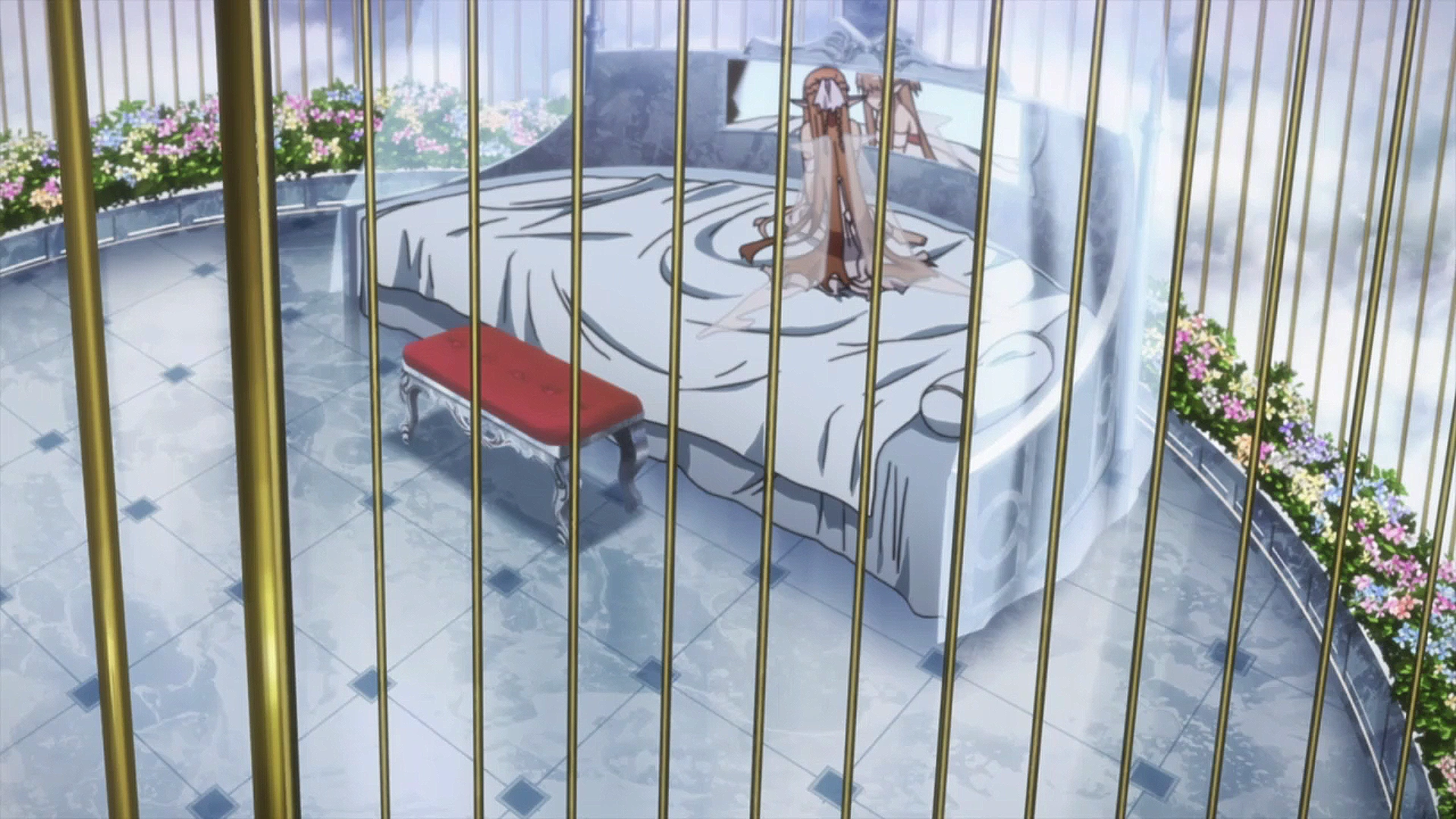
As I mentioned, today’s post a little different. Instead of analyzing one line for +1,500 words, I thought I’d briefly list quotes from the light novels hinting at the rich irony in play, this being the symbolism behind the fairy wings and the birdcage suspended in the heavens. It’ll largely be, once again, a look into Suguha and Asuna.

Wings of Freedom, a Look into Suguha’s Case

“But she knew that when it happened, Kazuto’s heart would be forever beyond her reach, (92, vol.3).”

Ah, this refers to the incest we glanced over due to its taboo nature and my modest stance with the whole thing. Regardless, isn’t it funny that the person whom she is closest to – they live together for crying out loud – is the one person whom she is not allowed to love? Siblings, cousins, or otherwise, that’s pretty cruel.

“. . . Leafa felt the heavy, clinging web of hassles descending upon her. The only thing she wanted from ALO was the feeling of flight, of escape from pressure. To cast aside her troubles and fly as far as she desired. Nothing more. But it seemed that was a naiveté born of ignorance. Perhaps it was just a fantasy of hers, that this virtual world where everyone had wings would be enough to help her forget the gravity of real life, (116, vol.3).”

Apologies for the lengthy passage, but this is the bottom line, the viewpoint through which Sugu sees ALO and gaming altogether. Stats, battles, monsters? She couldn’t give a ‘flying’ flip. How can we tell? She could’ve joined any other game, but she chose the one VR with flight capabilities – Wings of Freedom (no, not a tribute to the overly popular titan-slaying hit). After school when she logs on and becomes Leafa, she believes she can sprout her wings and take off, leaving her problems grounded. She wants to float around, to soar against the moon and the stars, to leave it all behind and fly away from her issues. She knows it’s a foolish thought, yet here she is still playing the same game.

“’I wonder . . . Why does everything have to come down to control-or-be-controlled? I mean, we have these wonderful wings . . .’ (120, vol.3).”

“The stronger she grew, the wider her range of activities. Just flying through the sky over unfamiliar territory was a thrill. But as she became one of the strongest sylphs in the game, along with her knowledge came hassles. In time, she felt she was just going through the motions. The obligation to fight for her race became an invisible chain shackled to her wings, (133, vo.3).”

Here’s that punchline again. Imagine having weighty responsibilities in the real world, like most of us do. These obligations are noisome, so we log on a play games to leave these worries behind if only for a brief moment. Now, just because she became attached to flight, Leafa has become a significant figure in the game, and her controlling guild leader has burdened her with unnecessary responsibilities. It’s just a game, sheesh! All the girl wants to do is fly, so quit dragging her off to be a battlefield celebrity!

“Suguha’s stature was far from large for a kendo athlete, but compared to Leafa the sylph, she was rather big-boned. When she moved her shoulders, stomach, or thighs, the muscles rose to the surface of the skin. She thought her breasts had grown quite a bit recently, too. She couldn’t help but feel that the inescapable reality of that body reflected her own inner conflict, so Suguha shut her eyes tight again, (132, vol.3).”

This is another long but good one. We don’t get this in the anime. Also, another point from my heart to Suguha. Sugu is a big-boned, short, well-endowed women. To her, she’s anything but a woman, that being her sylph idol. Leafa is slender, tall, big-chested (as well), yet just as strong, if not more so. That’s not fair. All of her painful kendo training and I look like this? That’s what she probably is telling herself. It doesn’t help that her bro is a perfect fem-boy – Even Klein wants a piece of Kirito’s meat. Sugu, I feel your pain. Any chance I get to create a virtual avatar, I change the hair color to blond (because I’m a brunette), change the eyes to bold blue (cause mine are dull brown), and chop off a good +50 lbs just because I CAN. I’d RATHER look like this! Having body-image issues makes us feel like we have done something wrong, and sometimes, kiddo, that’s just the way this world works.

“She’d be lying if she claimed that loving Kazuto as Suguha and being attracted to Kirito as Leafa didn’t fill her with guilt. But it was Kirito who had taught her that the world of ALfheim didn’t have to be just an extension of a virtual flight simulator, but another true reality. Because of that, Leafa had realized that the feelings she felt here were true, not just digital data . . . ‘This can’t be happening . . . This is so wrong,’ (101, vol.4).”

This is the grand reveal we covered in PART I, and might I add that the entire five or ten pages this encompasses could’ve been marked down as quote material. Obviously, the irony here is that Sugu loved her brother, but that was ‘wrong.’ Thus, she put her mind to VR games like he did and discovered flight. It wasn’t long before she buried those feelings and met Kirito, a gamer who brought a whole new level of experience to her. Her life feels forever revolutionized – that she’s moved on – until the boy (should’ve been obvious duh from the start, as the similarities are off the chart) reveals himself to be the knight she found new love in. She betrayed her own heart, and the guilt is incomprehensible.

“I was on top of the World Tree. The peak of the world. The place that Leafa . . . that Suguha had dreamed of for so long. But . . . ‘There’s no city in the sky’ . . . It was all an empty gift box. Past the enticing wrapping paper and ribbon, it was empty lies. How could I explain this to Leafa, after all of her dreams of being reborn as a high fairy? ‘This is unforgivable . . .’ (137, vol.4).”

Right before the fated reunion in the clouds, Kirito gets a peak at the world of fairies for what it truly is – A huge hoax. I put this here because, as he brings up, this was Suguha’s biggest dream: To soar through the clouds, and beyond. Now, Kirito is high above in the World Tree, only to realize that what the high and mighty sylph was clinging to this whole time was false. There is no master race, only one terrible, greedy man behind it all. Even though I’m not old enough, it’d be like breaking it to your daughter that the Tooth Fairy doesn’t exist . . . I still cry about that one, not that the idea broke my heart or anything, but that almost every other kid will have to go through the same trauma. Why even do it in the first place? You give me wings, ALfheim, but I’ll never truly be free?

Cage of Gold: A Look into Asuna’s Case

“The space between the bars was just wide enough that Asuna could have squeezed through if she tried, but the system prevented her from doing so. The intersecting golden bars stretched vertically before meshing together overhead in a dome . . . Which made this room a giant golden birdcage, hanging from the branch of an impossibly large tree – but no, that description wasn’t right. The birds who came to visit could come and go freely between the metal bars. It was a cell designed to hold a single prisoner: Asuna. A fragile, elegant, beautiful, but cruel cell. (98, vol.3).”

This is the punchline in Asuna’s case. Can you imagine the beauty of a floating golden birdcage with foliage wrapping around the bars and the horizon melting through each day? Don’t be fooled, as its beauty is insulting. The bars are purposefully positioned far enough to feed a sense of escape, but only after a natural attempt would one realize it was all a joke – You can’t actually squeeze through. Birds can weave in and out whenever they please (pair of black and white birds represent Kirito and Asuna’s relationship, BTW), stretching their wings wide outside the bars, and here you are not being able to move a wink. I’m surprised she didn’t go crazy on us and start talking to the birds.

Anyway, this “fragile, elegant, and beautiful” cell is more than cruel. It’s an insult to the prize it has imprisoned, and that mockery is pointed at ALO’s current Fairy Queen, Titania. Remember covering the story of Oberon and Titania in PART II? Well, how does the fairy world’s strongest fairy look now? That’s pretty ironic. Also, who puts a bird in a birdcage OUTSIDE ON A TREE?

“It was that world she longed for now, even more than the real world that she couldn’t be sure actually existed anymore. When she realized that tears were coming to her eyes, Asuna shook her head to get her feelings under control. Kirito was waiting for her in the real world. The only place she truly belonged was in his arms. She had to keep moving to make that happen. This hallway was not quite so long, (57, vol.4).”

So the cage has warped Asuna. While she would love more than anything to fight alongside her best friend and lover, after all she’s gone through, Asuna would rather rest in his arms. Is that weakness? No, that’s what we call settling down, hence the cabin in Aincrad and her “motherly” stance after this season. She just wants to relax with her love and put this cruel mockery of gaming behind her. But, even in desperate times, Asuna is always strategizing and being sneaky, much like her old avatar. Time passes when reminiscing on nice, old, happy memories, which is why the current hallway she is pacing, though identical to the seemingly never-ending one beforehand, went by so quickly, and she’ll cling to these memories to pull through.

“Suguha forgot to breathe when she saw the girl sleeping on the spacious bed. For a moment, she thought it wasn’t a person. It must be a fairy – one of the Alfs, the true fairies that lived on top of the World Tree. Such was the otherworldly beauty of the sleeping girl before her, (72, vol.4).”

Hmmmm, you can put this one together without my help . . . Funny how things turn out, huh? The irony is dripping wet.

asunasleeping

“Asuna’s fighting, too. She’s doing her best to resist, to escape this world. There must be more that I can do, (87, vol.4).”

If Kirito’s not already got a sense of direction, then here’s his eye-opener. Asuna deliberately dropped a key card to them from above. She senses Kirito and Yui, and they sense Asuna. With passion starting to reignite, this is the excitement leading up to the fantastic, cataclysmic reveal! In other words, Suguha’s about to find out the cold truth that’s been staring her dead in the eyes.

“’I always believed . . . No . . . I still believe. I did in the past, and I will in the future. You’re my hero . . . You’ll come to save me anywhere, anytime . . . (158, vol.4).”

From peasant fighter, to powerful knight, to heart-warming wife, to caged princess, to freed women, Asuna has grown reluctant to struggling anymore. She hardly recalls the SAO days, let alone her own real home life. The cage has brought unnecessary strife and resignation to the resilient fighter. The quote, however, implies with “I did in the past” that she depended on him, and this could be tracing back to as early as when he saved her guild, or even when they first teamed up, though unlikely. Point is, I’m not surprised that she is tired of carrying the torch. She’s by no means weak all of a sudden, just that the front lines are a place of the past now. Everyone can have a hero in life.

“Her thin arms were resting in her lap, holding a shining, blue, egg-shaped object. Her NerveGear. The crown of thorns that had held her prisoner for so long was finally silent, its job finished, (173, vol.4).”

This is a statement of closure. Do you recall Suguha in her final moments spotting her “shining crown ahead of her” to place it atop her head? Notice how they are both identified as “crowns,” but for different reasons. A crown of thorns is one full of burden, imprisonment, and painful sin; horns, almost. Meanwhile, Sugu’s shining crown is a halo that will transcend her into a free being with wings. Again, both are crowns, but they crown the wearer for drastically different reasons. I honestly wish the story ended here, rather than with Kayaba’s cheap RPG maker egg. This crowning glory where one bestows themselves with it while the other relinquishes it is much more symbolic, much more touching, and much more . . . dramatically ironic.

Thank you for reading! Please, share any thoughts below and stay tuned for PART IV!

(I own neither the anime nor the light novel series of Sword Art Online. All images and videos belong to A-1 Pictures and Reki Kawahara.)

Asuna’s Position Cannot Define Her Personality | PART II: In Defense of Fairy Dance

This is part two of the five-part series “In Defense of Fairy Dance,” a collection and comprehensive analysis defending the positive aspects of Reki Kawahara’s “Fairy Dance” arc in Sword Art Online. Research was gathered from the anime (sub and dub versions) and volumes three and four of the light novel series. This is in NO WAY written to justify all of the second half of the series, nor is it to say that it is particularly well-written. Instead, it is a half-full glass of the neat things the series did, and why I enjoyed myself with most of the content despite the glaring flaws. HEAVY SPOILERS EXIST.

Introductions out of the way, we’re now getting down to business. For this second session, I’ll be taking a look at the target reason why Sword Art Online has a big fat red “X” scarred across itself on many people’s anime list. Her name was Asuna the Flash: Fierce, courageous, vigilant, and a knight for the people. Notice how I said was.

In “Fairy Dance,” our superior heroine was reduced to a weeping twig of a fairy begging for her mighty Kirito-kun to save her from her perverted, slimy (in more ways than one) captors. This unnecessary shift from castle knight to caged canary puts a fowl taste in the mouths of many, but was Asuna really as pathetic as she seems, or, perhaps, was there a special kind of development in play underneath the foliage? Did our coined “Damsel in Distress” actually have an iron backbone under those glittering wings we so frown upon?

Titania . . . That Stupid Name

Finding Asuna alone in the first half of “Fairy Dance” (third volume) is pretty rare. Often her sleazy captor Oberon the Fairy King AKA Sugou is found loafing around her chamber, mocking her hero, her helplessness, and even the game itself . . . We’ll cover that later. What is known is that by being forced into ALO, Asuna is unarmed – but still dangerous, mind you!

The book doesn’t start her off too strong, though. Upon her entrance in chapter three (98, vol.3), our first impression is her ‘silent prayer to Him,’ “’Hurry . . . Hurry and come save me, Kirito . . .’” Yeah, not a good start to our favorite ruby knight. Already, we feel her frailness of being a caged princess, as she first clings to the thought of someone else rescuing her rather than escaping herself.

That all fades away when Oberon graces his darling ‘Titania’ with his presence. In Aniplex’s English dub for the anime, she snappily remarks,

’Stop calling me by that stupid name. My name is Asuna, Sugou.’

In comparison, the light novel uses

’And stop calling me by that stupid name. I’m Asuna, Oberon . . . I mean, Mr. Sugou.’

If you read that second one closely enough, Asuna still reveres Sugou as an adult, hence, the respective Mr. in front. The ellipses further implies a cautioning, while the anime, specifically Cherami Leigh’s role of Asuna, is clearly firm with an unwavering glare to match it. That is one tiny detail where the anime did a better job at maintaining “The Flash’s” fire.

Another variance in tone between the two versions is shortly after, where Oberon requests that Asuna ‘give her heart to him.’ In the English dub:

’Never. The only things I’ll give you are disgust and hatred, and nothing more.’

Ooh, that’s tough talk. How about the LN?

’You will be waiting until the end of your days. All I feel for you is scorn and disgust.’

Interesting. Both are equally fierce and nearly identical in translation, but that wordier LN quote (Japanese language probably has something to do with that) comes across as a bit more, say, romantic, no? Not romantic as in “Oh Sugou, I love you” but more like a sweeter sass than “Never.” That brings us to the next point.

Romantic VS (not-so) Sexy 

Anime. Yup, that’s fan service, not motivation for Kirito.

I’ll stop here, but you get the point.

comparison

Here is a side-by-side, LN Left, anime Right, same chain scene. The LN looks more graceful, as if to be romantic. Little too submissive, but I think it’s better than the anime’s gritty, busty, shadowed version. The anime tried to be sexier, and it almost worked had we not gotten a full-fledged tongue rape by Sugou. Notice how the shackles are cruder in the anime as well. I realize the LN is cover art, but it is still there to represent the same scene or state of being.


Reading a scene versus watching the same scene visually are two completely different translations. In that regard, the Asuna in the LNs embodies this air of “romantically clinging to hope,” while the anime is more of an “Oh God please save me from this disgusting man.” Support for this comes from the repeated reference to other aspects of nature in the LNs:

The World Tree Warriors are moths, the Sylph are grasshoppers, the Cait Sith are beasts, Kirito is a cockroach, Asuna is a bird trapped in a cage . . . And this all makes sense considering ALfheim’s fairy world theme – Everything is supposed to be lovely, full of wildlife and excitement! Asuna also translates as more of a delicate, gold-shackled woman than the anime’s bustier bod meant to attract your eyes. She is an item for Kirito and Sugou in the anime rather than a prize to be revered and softly handled.

And that’s where people draw the line with the second half – Sugou’s ridiculously inappropriate touching of Asuna towards the end. Was it necessary? Arguably, I think yes. By then, we are asleep. Kirito will reach the top, kill Sugou, and save the girl. The end. So didn’t having the female physically exploited before the MC’s eyes by this atrocious monster fuel the excitement, the rage?! It’s completely disgusting and humiliating (and fan service) in the anime (not that it isn’t in the LN) but you cannot say it wasn’t effective. It was the most infuriating yet engaging moment in the entire second half!

As for the tentacle slug things that nearly raped her? Yeah, THAT is poor, stupid, and totally uncalled-for writing. An alarm system or perhaps HUMAN guards would have not only made more sense, but also would have purified the show even if just a tad bit more. This was plain disgraceful and distasteful, not to mention unjustifiable. *shudders*

Parallels with the Legend

Okay, so it’s not a legend, but Shakespeare’s “A Midsummer Night’s Dream” clearly was the basis for the second half’s cast. Oberon is the ruthless fairy king driven by jealousy and power. He is a man to be enthralled by jokes, and will wickedly pursue his lust by making an ass of his wife, Titania, his object, wife, and queen. Titania is the strongest female fairy in the land, and her struggle against her King’s will puts her foster son, whom she loves more and spends more time with, on Oberon’s wanted list – He even contemplates making him his servant! Now, whom do these characters sound like? I wonder . . .

By Bravely Leaving the Nest, POSITION DOES NOT DEFINE PERSONALITY

If you once thought that Asuna was a weak gal in ALO, think again. Sure, her sword was taken away, but the true sword is her commendable courage (call it corny, but it is true). Asuna could’ve been stuck in that damned cage forever and gotten her mind wiped clean had she been caught by Sugou – Yet this birdie still boldly left the nest. “’That ends today,’” she tells herself. The only sign of reliability at this point is her murmuring “’Kirito . . . I’ll do my best.’” That’s not, “Kirito, come save me when I get out.” That is “Kirito, you’re out there fighting, and I’ll do my upmost to match your spirit.” Know the difference.

And I’m so freaking sick of everyone calling her a “Damsel in Distress!” Urban Dictionary defines it as “a stereotype of portraying an unmarried female who needs to be saved.”

  1. Asuna is married. Childlike in execution, but nevertheless an item with the Black Knight in the first half.
  2. She doesn’t need saving – She’s doing it herself! Why else would she risk her life in the game and in the real world? Kirito is trying her hardest, and she knows she must reinforce her own backbone with the thought that they will both be reunited TO ESCAPE BY HERSELF. This Asuna is just as clever and observant as her red counterpart. Look how she figured out a way to sneak out using the mirror; How about when she did escape, saw the 300 trapped players, and muttered that she would save them, too; Or when she did find a logout source, was pulled away, but took the key with her only to give it to her best fighting option – Her daughter and husband down below the clouds. And she did this all without pissing off her captor enough to have him wipe her mind. She’ll push his buttons and resist as long as she can without closing off any chance of escape.

Asuna shook her hair back, puffed out her chest in resolution, and strode forward purposefully, the way she had once done in a different world . . . ‘I won’t stop. I’m getting back to the real world, alive. I have to see him again,’ she swore to herself, and then resumed her march. (202, vol.3)

Guys, she’s an incredibly talented and valiant spirit on the inside, so please do not let that piece of cloth they call a dress and her whimpering in disgust hamper that belief. This, above many moments in the franchise, shows her true willingness to live and free herself (struggled with when she first arrived in SAO) – That iron will to push through the impossible is the mark of a true heroine. I admit that I’d rather watch her slice and dice demons on the battlefield, but I can, to a degree, at least understand the position/inner conflict (to live, and to do so freely), and why it the series took this route. It’s setting up Kirito as the main hero and Asuna as a secondary character for future content. Again, I don’t prefer it, but observing Asuna endure in this manner was still nevertheless intriguing if you look past the fairy glitter. Queens can be just as resilient as the mighty knights they call upon.


Thank you for reading! Please, share any thoughts below and stay tuned for PART III!

(I own neither the anime nor the light novel series of Sword Art Online. All images and videos belong to A-1 Pictures and Reki Kawahara.

Dramatic Irony Causes Suguha’s Terrible Fate | INTRO & PART I: In Defense of Fairy Dance

This is part one of the five-part series “In Defense of Fairy Dance,” a collection and comprehensive analysis defending the positive aspects of Reki Kawahara’s “Fairy Dance” arc in Sword Art Online. Research was gathered from the anime (sub and dub versions) and volumes three and four of the light novel series. This is in NO WAY written to justify all of the second half of the series, nor is it to say that it is particularly well-written. Instead, it is a half-full glass of the neat things the series did, and why I enjoyed myself with most of the content despite the glaring flaws. HEAVY SPOILERS EXIST.

Welcome to ALfheim Online, a virtual realm where you and your friends can soar the skies of a fantasy world, fight enemy fairy clans, and, one day, reach the top of the World Tr—

Why fool ourselves? Nobody likes the “Fairy Dance” arc. Well, I shouldn’t say everyone, as those who merely dismiss the entirely new plot, characters, and atmosphere just to watch it for fun most likely don’t realize all of the sudden, arguably hypocritical, dishes the second half of the infamous Sword Art Online brings to the table.

But is it as “downright lazy, sexist, and stupid” as opponents claim? Do the underlying themes of dramatic irony, devotion towards love, true freedom, and misunderstanding of the bounds of humanity’s evil even matter if our favorite character gets her sword taken away? Can we merely cast these intense messages aside? Never, and this compilation will hopefully show you why.

Accompanying me on this journey will be the third and fourth volumes of the series because hey, “The books are always better than the movies, right?”

WIN_20160321_22_47_06_Pro


FIRST, learn the difference:

IRONY . . . the expression of one’s meaning by using language that normally signifies the opposite, typically for humorous or emphatic effect.

DRAMATIC IRONY . . . a literary technique, originally used in Greek tragedy, by which the full significance of a character’s words or actions are clear to the audience or reader although unknown to the character.


“You’ve been met with a terrible fate.”

Kawahara hints Suguha Kirigaya’s love for her brother Kazuto from as early as page 20. While we’ll eventually find out that they are not blood related, incest is its own beast to be tackled at a later date. All we know is that she is love-struck, and that love will be her driving focus to improve herself. She doesn’t discover this truth for herself until seeing the pain in Kazuto’s eyes when she visits the hospital with him for the first time. Just as they were spending sunrises together, training, happy as can be, Suguha immediately withdraws her heart, for she “realized what her heart truly desired, and that it was in a place she could never reach, (74, vol.4).” It is at this time where, for Suguha, the gaming world is all she can rely on. The real world will bring pain – a pain which sharing with anyone can destroy you from the inside out – and she knows this well.

Tragedy likes following Sugu around, though, as now it is Leafa’s turn to shoulder her agony. After her hospital visit, Sugu hits up ALO to vent. “If she cried here, she knew she’d never be able to give up on this. Instead, she’d cry a bit in the fairy world. Leafa was always peppy and energetic; she’d be back to laughing in no time, (74, vol.4).” Crying here means giving up, and girl’s got more backbone than that. So she thinks, “Ah, Leafa’s a good chap, she’ll fix me up right away!”

Wrong. Leafa was fighting her own battles regarding Kirito love, and now she’s got a war. From here on, Sugu will scarcely leave the virtual world. One reason is the quest at hand, to reach the World Tree, but the other is to avoid the tragic reality waiting for her back home. How do you confess your love to a sibling? I honestly don’t think you can without it corrupting the relationship. Holding it back as tightly as you can is the only safeguard (forgetting about a loved one is hard to do when you LIVE with them), so what better place to store the key than in an intangible world.

As the “stabbing pain deep in her heart” continues to ring, Leafa awakens in Alne following their overnight venture to “wait for the pain to turn into liquid so it could drip from her eyes.” When further confronted by Kirito, she replies, attempting to put a smile on her face, “’Well, Kirito . . . I . . . I’ve got a broken heart,’ (76, vol.4).” To which he charismatically responds:

’You’re allowed to cry when it’s hard – there or here. There’s no rule that says you can’t express your emotions in a game.’

I’m not the biggest Kirito fan, but that line was just the “bit of awkwardness” Leafa – no, Sugu – needed to hear most. “’I love my brother,’ she told herself . . . ‘But I can’t speak this feeling aloud. I have to keep it trapped deep in the deepest part of my heart. That way I might actually forget about it one day.’” This will have to be the tying point for her, and she’ll try her damnedest to bury her lust. If SAO and life itself has taught us one thing, however, it’s that everything comes to an end.

Suguha finds out

It’s a catastrophic moment we saw coming since episode one of the second half, yet here it is, and it’s even more devastating than we could’ve imagined. 

On page 102 of volume four, Suguha breaks down. Her efforts to conceal her “wicked thoughts” have been all for not when her knight in black armor Kirito reveals that cursed name of the princess he is searching for: Asuna.

’I . . . I . . .’ Her feelings turned into tears and tears into words before she could stop them. ‘I-I betrayed my own heart. I betrayed my love for you . . . ‘I was going to forget, to give up, to fall in love with Kirito. In fact, I already had. And yet . . . and yet . . . I’ . . . ‘I was so happy when you came back from SAO. I was so happy when you started treating me the way you used to. I thought you finally saw me for who I was’ . . . ‘But . . . after this, I’d rather you kept being cold to me. Then I wouldn’t have realized that I love you . . . I wouldn’t have been sad to learn about Asuna . . . and I wouldn’t have fallen in love with Kirito to replace you!!’

‘. . . Sorry . . . ‘

The ball just dropped. Readers and audience members only look to the floor in guilt and self-loath just like Suguha. Her slamming the door is the final sound to finish off her tirade, and it’s scary effective. Her thoughts of holding it in and shoving it down her throat are worthless now. For once, I have to give Aniplex’s English dub the props for providing the best reenactment of the performance. Cassandra Lee Morris absolutely crushes the role, vocalizing herself like she would in Sugu’s feet and topping it off with a tear-filled shattering cry.

Video posted by NintendoxWolf on YouTube. I do NOT own Sword Art Online.

The secret’s out, and this could arguably be where the curtain closes for SAO. The dramatic irony for Sugu, if you haven’t already guessed, is the multilayered thought she loves her brother, but that is, quote, “wrong.” So instead, she abandons her love to fall for Kirito, a bishounen badass whom she feels so alive with on quests. She’ll escape the harsh reality for a fantasy world of electrons only to discover the black avatar is none other than the boy she tried so hard to hide her heart from in the first place.

The legacy of this tragic yet classic scene

This scene is not only the most emotional and gut-wrenching part Sugu will ever shine in, but also a decent hit on Kazuto. All this time, he has known the Net to be a place where everyone has a “secret inner side.” It’s now that he questions his own familial and relationship status with his cousin: “Who is this person, exactly? Do I really know them? (105, vol.4).” This guilt is almost as heavy a burden as being responsible for killing off his first group of friends back in Aincrad. You should realize by now that it’s nearly impossible to knock Kirito off his feet – And Sugu did it verbally in less than two minutes.

As much as tragedy has woven these two fates together, SAO will once again prove that gaming and friendship can mend the bonds once broken by the game. Knowing that her knight would wipe his tears aside and grab his sword, Suguha reaches out to her “shining crown ahead of her” and “set it on her head.” Though its resolution was shamefully brief (a mere shrug to the side cause Asuna comes first), SAO fans of the dramatic irony device will revel in this classic scenario for years to come, and its outstanding effects it set on Suguha will not be forgotten so long as we remember the sacrifices she made to truly grow wings and take off.

Kawahara is guilty of adding more females to the story not only because he claims it’s easier to add a new face to give the MC a new relationship, but also because he likes the idea (Afterword vol.3). However, the light novel series is a monumental step up in terms of more cohesive understanding and better execution of elements like dramatic irony. In comparison to the anime, the “boobs and butts” are also much less distracting and in your face, being a bouncy visual production and all. I’m sure it’s meant to be pleasing to the eyes, yet I believe it deflowers Kawahara’s vision given the much more intricate and meaningful (and appropriate) actions, pauses, romantic elements, and thought processing found in text.

I realize that that her situation could be very difficult to imagine yourself in, but gosh dang, you’ve got to give a teen girl props for trying her hardest yet still falling into heartbreak – Not once, but twice. You may not like Suguha or Leafa – You may even detest SAO – but understanding both sides to every argument is half of life. The other half is of course being able to place your judgment on an issue. All I can recommend is that if you feel “lost” or ashamed of SAO, do try reading the original light novel series to possibly formulate a new outlook on the series that means something to you. I managed to uncover many of the less-apparent literary devices, dramatic irony being one, and that opened up a whole new window of exploration. Also, I just want to give Sugu a big ol’ hug after everything she’s been through, that poor, poor girl.


Thank you for reading! Stay tuned for PART II!

(I own neither the anime nor the light novel series of Sword Art Online. All images and videos belong to A-1 Pictures and Reki Kawahara.)