
The Root of All Disappointment: Tokyo Ghoul √A

A review of the 2015 winter anime “Tokyo Ghoul √A”

Remember that fireworks analogy I made in my Tokyo Ghoul review: suspenseful start, awkward wait, explosive finish? Well, I will now describe √A using a continuation of that comparison, let’s say, what the actual firework looked like. If the first season was the bang, then this sequel is the tiny bursts of light that follow. Bursts so minor, dull and utterly disappointing that by the end of the display, you’ve realized that you purchased a cheap firework, and the only way to get your money back is by reading the manga.

***Spoilers for Tokyo Ghoul ahead

√A picks up right where we last left it. Kaneki gives into his inner ghoul and, battle after battle alongside “Aogiri Tree” unleashes more of the deadly, uncontrollable powers that Jason infected him with. Over at CCG, superior officers and Amon handle new recruits, one being Mado’s daughter, Akira. The finale takes us back to every ghoul’s favorite coffee shop, “Anteiku,” where the monstrous “Owl” reveals his identity. Carnage ensues.

And that’s about all I got. Whisked from one large-scale bloodbath to the next, there’s never a moment to just stop and think about the what’s going on. As such, there’s not really time to cram in motives for most of the major ghouls introduced in this season either. You desperately try to grasp onto any connections within the show, but nothing pieces together correctly; the plot is far too choppy.

Also, I could give one finger less about the CCG dudes and their struggle against the ghouls – Why can’t we uncover the secrets surrounding the ghouls already: Where did Ghouls come from? What determines their powers? Do the Kagunes have special properties, and how can normal people wield them? What can a half-breed do better than anyone else? How did Rize actually die?? My previous questions still go unanswered 😦

Other than Akira Mado, whose incredible intel and willingness to seek out the truth seems fresh since NOBODY ELSE KNOWS WHAT’S GOING ON, the characters in this sequel also stand as unremarkable. Even Kaneki, my previous fave attends the sidelines right up until the end, where the “plot” makes the decisions for him. I couldn’t even call his big revelation character development; it was ridiculously unreal, forced maturation. The new detectives and ghouls that come out to play also only get a ten-second flashback to fill you in, then the fight continues. What the actual f*ck? Literally, I don’t know any other characters besides the Anteiku gang. They were pretty chill ~

Animation was just as enjoyable as before, but there were several more obvious derps. For instance, during on one of the fights, they panned out to a downwards view of a ghoul in the air and some CCG dude on the ground was sliding parallel with the ghoul. So either that guy can glide over concrete or the ground was shifting below him :’D A coincidental fog also happens to blur out most of the background during the prison fight and the final confrontation. Studio Pierrot, that’s plain lazy!

Sound quality remained one of the best aspects, with phenomenal voice acting for Tsukiyami, Juuzou, and Kaneki (whenever he actually spoke) and an epic orchestral OST to back up all of that combat! There was one particular grand, foot-tapping string instrumental that caught my ear each time it played, but I can’t seem to find the name. While the opening was sadly annoying as all hell, the ending “Kisetsu wa Tsugitsugi Shindeiku” by Amazarashi had vibrant still visuals depicting the cast, which was pretty neat.

You’re probably wondering, “Takuto, if the plot was a disaster, the characters were rushed and bland, and animation is kinda sloppy, then what is there commendable, if anything, about this show?” I have to give the sole reason I liked this series to the final episode. By the end, nothing really gets accomplished, nothing is answered, and we still don’t know whom we are cheering for, but the reuniting of two charactersKaneki and his old best friend Hidebrings EVERYTHING to a halt, where something very special happens.

In the midst of the bloody chaos on the ruined streets: wounded and dead, male and female, adult and child – all lying on the ground, Kaneki finally embraces his harsh reality in a very cold yet artistic and heartbreaking scene that chilled me to the bone. I was reminded of ALDNOAH.ZERO‘s first cour ending.

Tokyo Ghoul as a whole is extremely flawed. A leaves off hinting a third season, but honestly, it’s not worth watching. In my defense, I have never read the manga, which I know has several significant variations, explanations, and development in it. Thus, I rate Tokyo ghoul A a “Bread” here at the cafe, and a recommendation to ONLY watch it if you are a desperate fan of the manga. It had a beautifully choreographed ending, I’ll admit, but everything else is a complete wreck.

“I was wrong. I wasn’t eating ghouls. I’m the one . . . who was being eaten.” – Kaneki Ken

“Whether we die or not isn’t really that big of a deal.” – Insane boy Juuzou

+ Epic orchestral OST and voice acting make overall sound a near-perfect

+ Artistic and heartbreaking ending

– A mountain of unexplained plot holes, and there’s still more to the story

– Too many characters to balance, especially when all we get is combat and no pensive conversations

– Who are we rooting for again?

What did you guys think of A? It wasn’t so bad compared to what I thought it’d be, but it was still incredibly disappointing. *sighs* If the prison scene was the climax of this season, which was built up by explanations and proper introductions of the characters, some drama here and there, then this would have been a great season. This way, the Anteiku clash could have been  the third season’s climax, with even more character development and secrets of the ghouls revealed. Gosh, maybe I should have directed this series, haha, maybe . . . Comment below with your thoughts and until next time, this has been

– Takuto, your host

Seraph of the End Review

PLEASE, PEOPLE! It’s not Attack on Titan. It’s not even close. Sure, the main character wants to kill every last one from the enemy side – that is pretty close to Eren Yeager’s passion, though Eren is a much more dimensional character. Seraph of the End is absolutely, without a doubt nothing like the famous Titan-smashing epic, and I can confirm that by this first half alone.

Vampires crawled out of the chaos that emerged from a mysterious disease that spread like wildfire. With this disease wiping out all humans older than age 13, the scheming vampires subjugated the remaining youth like livestock, keeping them huddled together in fear as they sucked their blood whenever needing to.

Orphan Hyakuya Yuichirou survives in the slums under vampire rule. Yu hates them with a passion, but when they threaten his orphan family, his rage ignites, and he dreams to kill all of the vampires. Every last one.

Episode one of this anime is by far one of the best first episodes I’ve seen to date. Entrancing mood, exhilarating pace, musty and dark setting – you’ll easily be amazed! Not to mention, the end leaves you with such gushing emotions you can only hope they build up as the series progresses . . .

Sadly, nope. Episode two abandons our gloomy vampire paradise to bring us, yes, our overused high school setting. Ughhh. Just wait, it gets a little better, for as soon as the next couple of episodes are over, we return to the frontlines but with opposition in mind and a “Cursed Gear” in our hands. These strangely overpowered demon weapons turn vampires into dust after a single hit! Now, our true story unveils itself as we follow the Moon Demon Company, a vampire resistance team among others composed of Yu and his new friends, which sets out to eradicate the enemy in this post-apocalyptic Japan.

I admit that after episode one I, was incredibly depressed to witness a more stereotypical yet simply conventional plot. Had they taken out the whole school training thing and spent more time rescuing some encaged children and building characters this way, then I could consider forgiving the series. At least the latter half returned some interest, though very little.

Seraph‘s cast is cliché. The cocky protagonist, the “friend” that bickers with the protagonist even though they’re close buds, the shy boy, the tsundere, the a**hole chief – it’s all there, trust me. Mikaela, Yu’s orphan brother, does stray from the norm, but there’s not enough screen time of him to uncover layers of depth. Yu himself, albeit narrow-minded, still manages to be an entertaining character for me. There is, however, one individual that stands out more than Mr. OP Shounen.

Her name is Shinoa, the female protagonist whose sarcasm and merry wit stands out as a new character type for me. She’s amazing with the scythe, which would be cooler if we saw more, but Shinoa also always seems to know what’s going on (besides the end). Her ability to remain above everyone else yet not be annoying makes her interesting to watch. Hayami Saori portrays her charming mannerisms and constant teasing with little sardonic bolts of high-pitched laughter, a joy to listen to every time! 😉

The art is absolutely phenomenal!! Sharp, bold, eye candy characters against soft pastel building ruins and sunsets adds so much to the “devastated world” theme. Actual animation by Wit Studio (Attack on Titan with Production I.G.), however, sucks the bum hole. Action scenes are super awkward, as one moment you’ll watch a soldier holding up a sword to a vampire, then we skip to a character monologuing for five minutes, afterwards flashing back to view the characters in the same pose. Who decided to choreograph this, cause this is literally so awful! There are a few neat sequences involving the Cursed Gear, but that’s all you will get from the animation.

One of the main reasons I stuck with this series was for the music, but like most of it so far, I was tragically disappointed. It’s quite true to say that it’s “just more Hiroyuki Sawano,” as one reviewer put it, but it also lacks impact and stand alone pieces I’ve come to expect from him. My biggest complaint wasn’t the low quality of the tracks, though rather the placement of them. During sit-down dialogue or transitions we get music, and that’s great, yet during the hype of battle (which already suffers from lazy animation), sometimes nothing is playing!! That’s just outrageous considering the stakes! Besides the awesome techno opening “X.U.” by SawanoHiroyuki[nZk]:Gemie, there just wasn’t much going for the soundtrack.

Seraph of the End is by no means a bad show – heck no! I found enjoyment in the characters Yu, Mika and Shinoa (occasionally from Guren, a possibly back-stabbing adult . . .), the art and the music (wherever it was).From a reviewer’s point of view, the show is a terrible pile of plot holes and poor storytelling. The whole time I felt like I was being teased, much like Shinoa does to “baka Yu.” Samples of smooth animation and intense music are few and far between, enough to tie you over until the next quality moment.  Just from a casual watcher, however, I’d conclude that the show was fairly entertaining.

Thus, I will leave Seraph of the End with a “Coffee” rating (6 ish/10) and a recommendation to NOT watch it until the hopeful second season clears this mess up (Krul Tepes do something!). I will be following the second season which airs in the fall, but do note that my interest level is already scraping the damp cobblestones in front of young Yu and Mika’s home.

“I don’t ever wanna say I survived because I left someone else to die ever again!!”- Yuichiro Hyakuya

+ Sharp, bold characters against pastel backgrounds make for phenomenal art

+Shinoa’s youthful, sarcastic, easy-going yet witty personality is a new character type

+ Thrilling first episode; final episode leaves off on a good note, one refreshed and ready for a sequel

– Fine premise, very sloppy focus so far

– Most action scenes are flat and awkward

– Music not timed/placed as well – not as effective

What did you think of this spring’s Seraph of the End? It’s only the first cour, and hopefully the second is much better than this one. Still entertaining though ~ I hope my review was interesting! I appreciate all of the likes you guys leave me and the follows are also super helpful 😀 Until next time, this has been

– Takuto, your host
Tokyo Ghoul Review

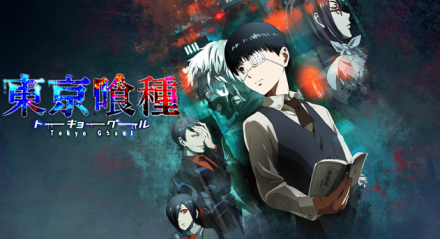
You know when you launch a firework there’s a thrilling rush as you flick the match and light the string? After, there’s this awkward wait to see if it takes off and, if it does so correctly, then it’s followed by a long, dry pause, everyone just staring at it, most losing sight of it. Finally BOOOOOOMMM!!!  it explodes furiously, and everyone applauds, expecting more to come, right?

That, friends, is Tokyo Ghoul,  a new dark fantasy/horror anime that starts and ends with quite the bang, but in the middle leaves us squinting our eyeballs to spot any real development.

Creeping around the dark alleyways of modern Tokyo are the Ghouls, monsters that devour human organs as food. Everyone knows about them, and some even fear for their lives of taking a daily death stroll, but most just continue on with their day. Why would you do something so insane?? Because these Ghouls look exactly like normal people: adults, teens, children, elderly, husbands, wives, etc. The only distinguishing feature of these demons is their black and crimson eyes that burn when they exhibit fierce emotions.

Kaneki Ken is your average college student who frequents a local cafe for one main reason: the enchanting Rize. Since they both enjoy reading from the same author, Kaneki musters the courage to ask her out, thinking that they have so much in common. Kaneki’s date quickly soils into a blood fest when Rize “the Binge-Eater” reveals her wicked Ghoul powers and then tries to kill Kaneki. Suddenly, an accident occurs in their location, and the critical medical situation results in her organs being transplanted into Kaneki to preserve his life.

But now Kaneki feels strange. All normal food makes him want to vomit, and instead he craves . . . human flesh. The story is about Kaneki’s struggle as this new “Half-Breed” for his remaining humanity, and what he’ll risk to remain moral no matter what – or give in to Ghoul within!

Right from the start Tokyo Ghoul latches on with an interesting predicament for our protagonist. The show quickly appeals to your senses when, after the operation, Kaneki tries to cram his face with his favorite foods, all to no avail. They taste like charcoal and rotten dung. Those incredibly morbid realizations that he’s become a monster attack the heart, causing you to feel all of the suffering that he does. This deep argument of human VS Ghoul develops as the show progresses, mostly to build around Kaneki and a little girl named Hinami, though.

I think Kaneki fits the mold for the intense themes of humanity and life better than any other character could have. Cocky like let’s say Eren Yeager (Attack on Titan) and everyone at the cafe will despise him. But too kind like Armin Arlert and I don’t think we’d get anywhere. Kaneki embodies the middle ground of what I’d like to call a “real human being.” He’s never too innocent, yet never totally ridiculous either, and that makes him easily likeable.

Hanae Natsuki portrays all of Kaneki’s hardships believably well, be it screaming in Ghoul mode, conversing calmly with friends, or choking on blood. He’s amazing!

The rest of the characters range from a tsundere teen somewhat goth girl, to an overly-attached whimsical genius, to a desperate family, and finally to a pair of Ghoul counter team members. Even with all of the variety, however, I just didn’t feel the characters nor relate to them in any way. In fact, I can hardly recall names, which is crucial to note because I hardly ever forget a name. Other than Kaneki and possibly Touka, another cafe Ghoul refugee, Tokyo Ghoul lacks in the character department.

Quite stunning is the art and animation by Studio Pierrot (Yona of the Dawn), who puts together intense action sequences with outrageously beautiful and surprisingly colorful animation – especially of the Kagunes, the Ghoul blood weapons. Supposedly, there’s a lot of gore, but I couldn’t see half of the screen because of all of the DAMN CENSORING!! Sheesh, like seriously, they’re only gonna make me more curious about what’s going on. And you know what, it probably wasn’t that bad of gore anyway! But I suppose that’s not the studio’s fault, as the various censoring depended on what your source you watched from.

Yutaka Yamada provides a supportive soundtrack that easily surpasses your average OST. Loneliness, tragedy, melancholy, and epicness are all packed into his tracks. “Licht und Schatten (Light and Shadow)” and a battle theme entitled “Symphony” are model examples of his high-quality work. Though the OST is a rather small one, the few tracks played are not only longer than usual but great to listen to. Quality over quantity is what I believe wins the day!

I’ve gradually become more and more familiar with Ling Tosite Sigure’s opening “Unravel,” which is a step up considering that I don’t care for that high-pitch screamo voice. The song matches the show perfectly, and it became one of my favorite parts of the experience. 🙂

As mentioned previously, the anime’s ending is an unexpected thriller, one that I didn’t see coming a mile away. The show steps away from its usual routes to do something very, very interestingsomething that hopefully pays off in the second season. If you can watch the end without flinching, then congrats to your balls of steel.

And now for my major problem with the show: we don’t have explanations for anything! Where did Ghouls come from? What determines their powers? Do the Kagunes have special properties, and how can normal people wield them? What can a half-breed do better than anyone else? How is the main antagonist roped in with all of this? How did Rize actually die?? Tokyo Ghoul has a crap ton of potential, enough to be considered one of the best – that is, if the second season pans out well, because at this point, Tokyo Ghoul is definitely unfinished. If you’re gonna get into it, just be sure you can stomach the gore, and please, watch it uncensored. It tastes better that way >.<

“What is this? What is it to be a Ghoul? Killing people . . . killing each other . . .I’m not like that! I’m . . . human!” – Kaneki Ken

+ Easily likable, non-annoying lead character with good development

+ Gripping start, intense, bloody and sweaty cliffhanger

+ Quality colorful visuals, gorgeous fights, matching OST to back it up

– SO many unanswered questions, literally no explanations!

– Weak secondary character development

– Middle of show deviates from an psychological alley horror to a slice of life coffee shop drama (no JK, but seriously, what?)

I’m pretty excited for the sequel! It has a lot riding on its shoulders, and I can only hope it doesn’t disappoint (even though I heard it sucks, I will be the judge of that myself). What did you think of Tokyo Ghoul? Were you thinking “Welp, this makes absolutely no sense, why aren’t people screaming for their lives? At least it’s pretty :3” FUNimation has licensed the anime for North America with an English dub on the way, though you can watch it for free on their site if you’re +18. Clobber that like button for more material like this and until next time, this has been

– Takuto, your host

From the New World Review

I always used to think that sci-fi was robots, high-tech cities, and people in black suits shooting guns at other people in black suits. Flying cars, neon lights, and stainless steel, right? Well I’m not all wrong, but I’m certainly not right, as here is Shinsekai Yori (From the New World), a psychological mystery drama that uses themes from the supernatural and the occult to create – yep, you got it – a science fiction anime. Prepare to abandon all sense of worldliness and jump into your traditional Japanese village, where, for some reason, something doesn’t feel quite right . . .

Unknown apocalyptic events have passed which destroyed most of the world. Taking place 1,000 years in the future, we are met with a small Japanese village of humans that have supernatural, psychic Power. Two Committees maintain peace and judgment: Ethics and Education. On the surface, they are the ones maintaining this masterful, humble utopia, but these Committees actually regulate information and manipulate reality in the village. Whether it’s by “banishing” troublesome individuals or even subverting one’s own memories, they will risk any and everything to maintain order.

There’s always this dangerous aura that spurs from the setting, making each and every day in class risky. Adventures outside of the village barrier, which no one is allowed to leave, are hazardous, yes, but exhilarating and unknowing. As far as you know, everything outside the gates is desolate and menacing. Rules upon rules established by the Ethics and Education Committees allow for “thinking in the box only,” and actions that go against these authoritative groups warrant unimaginable punishment. Thus, the theme proven most effective to preserving protection in the village is to use FEAR as a means to influence and control the youth. Well done, From the New World.

Our actual story centers around Saki and her four friends: Satoru, Shun, Mamoru and Maria. We witness the development of their Powers in school (some more than others) and the truths of the real world outside the village. From child to teen to young adult – innocence to rebellion to experienced –  we follow five youths that will inspire the drive for hopeful future of change.

What’s obviously the best part of this anime is the particular care that went into telling a great story. It seems that at all times, we are shown only what we need to be seen for the time being, much like a novel, filling holes and uncovering twists at the end of each chapter. Speaking of, the show was based on “Shinsekai Yori,” a Japanese novel by Yusuke Kishi. That’s right, not a light novel, not manga, a “book” book. That explains why the anime feels like something all teachers would make their kids read. It requires that kind of technical thinking.

But it’s not all smooth sailing – no – because like books, each “chapter” of the characters’ lives begins so painfully slow. Told from Saki as the narrator flashing back on the events, the time skips include life at ages 12, 14, 26, and 36. The pace only picks up towards the end of each arc when they decide to info dump us, a reoccurring problem.

Another issue I had with the show was actually the Powers. To what is their extent?? Levitation (of body and objects including giant rocks), pyrokinesis, the ability to reassemble glass, drawing with the mind, creating reflective surfaces out of nothing – seriously! What can they not do? I understand that each person has some sort of practice unique to them, but still, with all things considered, I feel that they could at least be living in a city with their powers rather than some weird collection of occult shanties (no offense). Also, they cannot kill another human due to the “Death of Shame,” a genetic trait which causes them to die instantaneously if they use their powers to kill another . . . umm, I guess it’s conventional, but that’s it.

The characters are developed well enough to identify definite progression since episode one, especially Saki and Satoru, but that development comes with discovering the events that led up to present-day. Well, that and the Monster Rats, humanoid mutant rats that live in colonies and obey the psychic people like gods.

In fact, the most interesting character in the entire series is a Monster Rat known as Squealer, a helper of Saki and Satoru in their early days outside the barrier. I literally can’t say anything due to spoiler’s sake, but do keep an eye on this creepy fellow – he performs some very very commendable acts as a main character . . . some wicked, Machiavellian acts we’ve all seen sometime before . . .

I found the animation by A1-Pictures to be gorgeous: soft sunrises, intense sunsets, luscious forests, and beautiful character designs. While it contributed to the atmosphere of the show marvelously, including the vast difference between the village and “Tokyo,” it’s not 100% satisfaction.

Apparently there was a change in staff when it came to design work and animation around earlier/mid episodes that fluctuated between two totally unlike styles – neither of which were bad, just noticeably different. Another weak point was the Monster Rat Colony fight scenes. The boulders are so CG and glaringly horrendous that I just laughed the whole time!

Sound-wise, hair-raising tracks boost the suspense and inevitable horror. In contrast, subtle adventurous songs for exploring helped establish various moods. A standing ovation, however, goes to “Ienikaeru (Going Home),” which is actually composed by Dvorak and coincidently, from the 2nd Movement (Largo) of the “From the New World” Symphony. Being a classical nut, this tune as the evening “children, return home” theme that plays over speakers in the village completely through me off. One of my all time favorite classical works, on the verge of tears when this played at the end 😥

Oh yeah, Yuki Kaji’s freaking awesome as always, performing the role of Satoru with such strong conviction and youthful stress. Always great to listen to him!

One of the biggest reasons I love From the New World is because it reminds me sooo much of No.6, another one of my first anime that I hold to heart. Soundtrack, dystopia, youth, romance, suspense, thriller, science fiction – it’s got it all, too, but this anime did what No.6 didn’t, and that was deliver with a fulfilling ending. I never, ever got closure from watching that anime a couple of years back, no matter how much I searched for “anime like No.6.” I can finally rest easy.

Despite being just a science fiction story, this anime feels more scary real than anything else I’ve encountered in a long while, and that could be because of its realistic characters and their actions. Its analysis of the human condition through a dark, manipulative plotline adds so much depth and curiosity that you’ll be guessing until that last episode, but no more than that. Why? Because by the end of the show, From the New World does not get very far at all, but it paves the way to a more hopeful future instead, and after all of the wrong, disturbing, and twisted carnage that I bore witness to, I could not ask for more than that.

“We have to change our way of thinking if we really want to change the future.” – Watanabe Saki

+ Mastered storytelling, made gripping and curious until the very end

+ Incorporation of “Going Home” really made the mood shine

+ Thriller tone so realistic like nothing I’ve seen in a long time; fresh, clean slate after viewing

+ Satisfying ending that delivers justice to the show

– Brief animation issues

– Info dumping in the beginning/middle of each new arc made for rugged understanding

Wow, this anime was so hard to talk about! It’s such a beautiful story that you should defiantly check it out. It’s not for everyone, but for those seeking something completely different than the norm and/or are wanting a clean slate by the end, you can watch the whole thing on Crunchyroll for FREE! Thanks so much for reading my emotional report over From the New World, and in fact, thanks world for the joyous experience! Beware the Trickster Cat, and until next time, this has been

– Takuto, your host

Log Horizon Review

Log Horizon is the newest “stuck in a video game” anime since Sword Art Online. Rather than try to escape as the main goal, however, one brave geek steps out of his cloak and glasses to answer “Who’s gonna do what, what we’re up against, when things are going down, where we’re going next, but interestingly, not why we’re here” – and that could be Log Horizon‘s biggest fault.

Eight-year Elder Tales Veteran Shiroe among 30,000 Japanese players (700,000 worldwide) are suddenly transported into game that they all love upon installation of the “Novasphere Pioneers” expansion pack. Most everyone quickly realizes that the game is not quite as friendly when you’re actually in it: all of the food taste like the same mush, combat with the menus spinning around your head is difficult, and if you made your game avatar a little taller or shorter than in real life, well, now you have to adjust to it!

But here’s the most intriguing bit: when you die in the game, you simply revive at the cathedral, just like normal so no big deal . . .

That means you are trapped in the game.

With no known way out, no sense of order, player killers running about, and the CPUs (now “People of the Land”) acting strangely personal, the level 90 enchanter Shiroe picks up that you can’t just play in Elder Tales anymore – you have to live in it. Partnered with the faithful ninja Akatsuki and the beefy guard Naotsugu, Shiroe takes on his own quest of restoring order to Akiba, even if it means becoming a “Villain in Glasses” instead.

What’s best about this anime is the way it handles situations. Covering food to personal qualms to economics to ethics to community issues -all of these critical points in structuring modern civilization are hashed out with incredible detail and with consideration of the characters’ emotions. For instance, sparking the industry with the invention of the Crescent Burger was not only creative but it mattered in the context. The people wanted flavorful food and Shiroe need more money to execute his plan, so what a better way than that? It’s probably one of the best examples of world building I’ve ever seen.

Acting as the mastermind behind all operations is Shiroe, a socially awkward young man who is an expert strategist. To the kids, he’s a savior and a teacher, but to adults he’s a creepy guy with mysterious intentions. I’d say Shiroe’s a good mix of both; he means well, but the way he performs maneuvers could be considered rather extreme. He’s willing to make himself look like the bad/strict guy if it’s to better the people, which aggravates the ones that love him. Regardless, Shiroe’s best feature is that he values progress. He is the most achieving character I’ve seen in a long time, but often times, the plot just uses Shiroe as a means to convey this progression rather than developing his character.

Also, instead of the frontline swordsman, he’s the man pulling all the strings and gauging the stats, and makes for a really fresh, enjoyable point of viewa view not usually popular with this kind of story.

Though the majority of characters in the series lack any real development, there are several characters that I enjoyed because of their quirks: Akatsuki’s loyalty and shyness is super cute; Marielle and Henrietta (the playful Crescent Moon gals) are not only hilarious to watch, but a hardworking team, too; RUNDEL HAUS CODE and Isuzu are quarreling lovers that receive the best development; and finally Lenessia, a straightforward, lazy, cowardly princess who makes a few damn good speeches despite her lack of attention. Log Horizon‘s cast may be large and unremarkable, but it’s well-balanced and enjoyable as you’re watching.

Animation by Satelight is by far the show’s weakest point. Characters can look really botched at times, though during some of the fights scenes you’re sitting on the edge of your seat! The luscious green background of Akihabara is also standout artwork in itself. I guess the word is inconsistent.

Driving the fantasy story and installing bravery into the characters is the wonderful soundtrack composed by Yasuharu Takanashi, now a music genius in my book. The grand main theme “Log Horizon” is the most notable for carrying out Shiroe’s plans. “Daisaigai” welcomes players to foreign, mysterious lands with an eerie tone. “Akiba no Machi” celebrates with festivals, food, and friends. Finally, the “Elder Tale Waltz” elegantly reminds adventurers of their love for the game. While the story is inventive and the characters are fun, to me, the surely overused music is the best feature!

The obvious big problem for this series is that it’s only a small portion adapted from the books as well as not explaining the reason they were trapped there in the first place. Wouldn’t you be dreading to know what was happening to your body in reality? Why are we here? Apparently, the adventurers don’t seem to care, but hey, I’m glad they just didn’t drain episodes into this cause – there are a lot more interesting factors to consider besides whining to go home.

I was never much of a hardcore gamer, just glazing the surface when it tickled my fancy, and that was part of another problem as I watched this show. Terminology such as battle positions and skills/combos glazed past my ears, but the approach is what gripped me most. The show takes a very economic and political approach to a usually action-dominated premise, which is something that I am slowly starting to love. Rather than sword and shield being the issue, it’s supply vs. demand that we have to fight! Start stocking those shelves, boys! 😀

Log Horizon is a very peculiar show, as rather than acting with the laws of the land, characters like Shiroe constantly challenge the rules. He rebuilds the world with all things considered and frankly, it’s just fascinating to watch! Yes, the pacing can be slow with the kids arc, and yes, a lot of the opening dialogue is quite cheesy, but beyond that is Shiroe, a thinker, an enchanter, a teacher, a gambler, and a villain. If you understand the concept of RPG styled gaming and also love anime, drop what you are doing right now and check this show out! If not, well then, it’s completely up to you. Just know that all of us “gamer geeks” will be enjoying the ride.

“If you can’t do something, then don’t. Focus on what you can do.” – Encouraging words of Shiroe himself

+ Classic concept with a very different yet much more interesting viewpoint and approach

+ Story always seems to have some things kept secret, Shiroe’s world building experiments and rule-challenging offer engaging twists

+ Fantastic fantasy-appropriate OST with game theme included in story

– Filler episodes and slow pacing during times without Shiroe drag on

– Does not answer “why” they are there, does not end (more to come)

Presently Collections 1 and 2 of Sentai Filmwork’s Log Horizon English dub release stand fantastically on my shelf awaiting my next login to the hearty world of Elder Tales. The dub by the way is outstanding, new actors and actresses all around, my only problem being Nyanta the cat chef – what happened there?? *shakes head with disapproval*

Thanks for reading my review of a “Caffé Mocha” worthy series I absolutely love! Have you seen this anime? Comment below with your thoughts because I want to talk with you all! Want more Log Horizon? Check out my season two review here! Until next time, this has been

– Takuto, your host

Bakemonogatari Review

So I decided to take up another large anime project and have settled on the Monogatari series. Famous for its dialogue-driven stories full of supernatural phenomenon, I thought “hey, sounds like a blast.” What I got instead, sugar coating scraped off, was a hit-or-miss subtitle-heavy anime that, with all careful decision in mind, I might not explore to its fullest.

“Ghostory” centers on Koyomi Araragi, a high school boy who, after surviving a vampire attack, became half-vampire himself, giving him various powers such as regeneration and heightened vision. To the best of his abilities, Araragi lends a helping hand to five different girls who have also become entangled with ghosts and spirits. His first encounter with the sadist tsundere Ms. Senjougahara Hitagi, however, sets him down the path of frustration yet eventually love.

I came into this anime expecting dark, twisted stories about ghosts and the occult, but instead I got a romance harem. *sighs* The series is divided into five different arcs – one for each girl – and while each one is interesting and rounds out a particular character to a considerable degree, the lack of coherence to each story chops up Senjougahara and Araragi’s overarching relationship. In an anime filled with nothing but dialogue, each arc manages to keep the story fresh, but their relationship suffers heavily.

In terms of character dialogue, there is nothing wittier than this, well, besides Okabe and Makise from Steins;Gate. Crafty wordplay, playful teasing, and intense argumentative banter are so well presented in Bakemonogatari that often times than not, it’s even worth reading in subs. Sure, some of the comical value of the puns is lost, as I sadly do not know Japanese, but the interactions are still super entertaining. A downside to this factor is that these quirky conversations can last the span of half an episode, where the characters are just standing around or sitting on a park bench. AS SUCH, THE SHOW CAN BE EQUALLY BORING.

Another disappointing thing was that arcs would begin mysteriously and uber creepy (YESS!!), but then they sometimes build up to a lackluster finish. For instance, I really liked how “Nadeko Snake” started, but man, it was such a boring finish. This show was good, but not a masterpiece by any means, and I honestly don’t know if I want to watch the second season.

Each of the girls have been “cursed” so-to-speak by an apparition, and as a result carry some sort of deformation that affects their body: Hitagi’s physical weight was stolen from her, Mayoi can’t seem to return home, Suruga’s arm became that of a monkey’s, so on and so forth. In addition to their dilemmas, each girl is a personification of various anime girl stereotypes – but with a twist. Take Hanekawa: class rep, studious, kind, but has parental problems at home. Suruga is the loud athletic girl, but she’s extremely perverted as well as a hardcore lesbian! These additions not only help personalize characters, but they feel more realistic, too.

Watching all of the characters interact with each other is where this anime shines. Because the show has such a small cast, each of the characters are explored and developed quite thoroughly. Even Araragi is hilarious to watch, witnessing his switch from lolicon to pervert, serious man to joker! The comedic skits are fast-paced while the “return fire” in arguments are just as quick-witted! Great voice acting, especially for Araragi and Senjougahara, also helps to bring out the sass talk!

Animation studio Shaft brings it all together with its attractive presentation. Silhouettes, background shadows, geometric lining, extreme symbolism and color balance are all presented with such unity that it’s truly remarkable to watch! Not to mention, varying camera angles and flash frames attempt to keep those long conversation scenes as exhilarating as possible. Also, it’s hilarious to watch the characters anger Araragi; I love all of the cartoon faces that he makes!

About the flash frames, though –  while some shows flash a couple of words that can easily be read, Bakemonogatari seizures us with occasionally paragraphs of plot-important text. I found myself slamming the pause button every five seconds during the episode openings where they are most abundant.

As for OST, the fight scenes are not necessarily well-supported, but the lengthy conversations have several strange and upbeat scores playing in the background. While the OST is not worth mentioning, the fourth opening “Ren’ai Circulation” by Kana Hanazawa and the fifth opening “Sugar Sweet Nightmare” by Yui Horie are both really catchy!

Bakemonogatari is a very surreal anime built around cursed characters that try to fight their own nightmares. They speak cleverly, some a bit smart-assy than most! I strongly recommend walking into this anime with an open mind, as lots of information are thrown at you – and you gotta read fast! Underneath all of the jokes is a memorable cast of colorful and deep characters, each complete with a story of their own no matter how grim, and it’s all about diving into their personal hell and finding the cure so that they can be at peace once again.

“If I kill you, that means I’ll be the one closest to you when you’re on your deathbed. Isn’t it romantic?” – Senjougahara to Araragi

+ Incredibly well-developed characters with entertaining dialogue

+ Sense of “something’s not quite right” establishes great tone

+ Shaft’s unique animation adds to the series quality

– Lots of subtitles to read

– Drastically boring during periods without suspense

Haha, Senjougahara, I’m not sure if that’s romantic, but it’s definitely true (and freakin’ weird)! If you want, you can watch the first 12 episodes of Bakemonogatari on Crunchyroll for free, and you’ll have to find the last three episodes somewhere . . . umm . . . on the web. What did you think of this anime? Does it get better after the first season? Staplers and head tilts!? Let me know in the comments, thanks for reading, and until next time, this has been

– Takuto, your host

Love Live! School Idol Project (1st and 2nd Season Review)

Apparently, poppy young girls called “idols” dominate urban culture regions of Japan. This bright form of vocal art is definitely hit or miss by most. I’m only glad that Love Live! could be my first segue into this genre of anime, and not some generic idol series instead. For others new to spunky idols, here’s Love Live!, a true story of struggle and determination.

Honoka dives into her second glorious year at Otonokizaka High School with overwhelming passion only to find out that if the school doesn’t receive enough transfer students the following year, then it will close down forever. In an effort to save her beloved school, Honoka starts an idol group, which are currently popular, with her best friends Umi and Kotori to attract new students.

As the hardships stack up, μ’s (pronounced “Muse”) recruits six new members including three first-years and three third-years. Pouring all of their hard work, time, and love into their music, the girls pursue the “Love Live,” the top-dog high school idol contest in the region! But will their combined efforts be enough to save their blossoming high school life?

In terms of plot execution, this anime is a bit rigid. A lot of the characters have individual qualms that conflict with the idol competitions, for instance: studying abroad, future professions, failing grades, and other talents besides singing and dancing. And while I’m glad that these characters have realistic conflicts of their own, the show never bothers to touch up on some of these issues, some development even being dropped as “the show must go on” with all nine members intact (end of first season specifically). Don’t get me wrong, I love happy endings, but had some of these characters gone their own ways, then the show could have been more gripping, tear-jerking, and even relatable.

But where the show falters, the characters easily fill in the holes as the show’s richest feature. Each and every one of the girls are overly loveable, memorable, unique and just plain cute! Their constant teasing yet support of each other adds to the overall enjoyment and sense of reality that the show carries. Additionally, each of the characters, including the rival members of “A-RISE,” have some sort of back story and/or standout characteristic that adds a whole new level of depth to them. I’ve never seen a cast of girls so likable and so well-developed like they are in Love Live!

Honoka is seriously the most bubbly, loveable, natural-born leader character ever! Obviously being the main character, she undergoes the most development. You can definitely tell a difference before and after the two seasons. Her charisma and perseverance is nearly unmatched – well, until the rest of the girls step in to cheer Honoka up when she’s discouraged!

Two other characters in particular stuck out to me, which are the third-year student council members Eli and Nozomi. Eli embodies the student council attitude with her over-concerning will to protect the school. Of all the girls, she sets the standard for maturity and true talent (besides Maki), as she was a professional ballet dancer during her childhood in Russia. Though her story is never glanced back to, she just has this irresistible kindness and devotion that can’t be ignored.

Nozomi is vice-prez of the student council and serves as Eli-cchi’s advisor/best friend. After they both become a member of μ’s, however, Nozomi becomes a motherly figure that everyone looks up to. From the start, she is always watching over everyone and never loses faith in μ’s. She is the key that all things related to μ’s creation tie back to, and Nozomi hilariously uses these tarot cards to predict the outcome of everything. Nozomi also has this strange impulse of rubbing the other girls’ breasts when they “misbehave” and whatnot. It’s totally out-of-character, but it was always funny to witness!

As for visuals, the producers at Sunrise like to keep things very colorful and dazzling. Each of the girls have their own concept design to them as well, which helps to define their personality and distinguish them in the crowd. Especially enjoyable are the expressive faces that the characters give off. All of the emotions and feels are perfectly captured on their cute lil’ faces, allowing you to feel exactly what they do without them needing to say a word. And speaking of cute, some of them can pull of the most devilish smiles I’ve ever seen – Umi and Eli can be pretty freakin’ terrifying when they want to! 😀

The only “glaring” issue I found with the animation was actually with the CGI used in the performances. There’s such a crude switch between 2D and 3D in every other frame that becomes really distracting after even a few seconds. I understand why they did it an all – 3D is much smoother to animate, especially with dancing – but man, some of these transitions are pretty rough.

And while I’m hitting the dance scenes, I’d also like to point out that for a “music anime,” the songs weren’t that catchy or memorable. Perhaps that was just the idol music to my ears, but it was all just too bland for me. Happy, sure, but bland. Between both seasons, the only songs that I really liked were “Bokura no LIVE Kimi to no LIFE” performed in the anime by μ’s, Maki’s “Aishiteru Banzai!” and the anthem the song that started it all, “START:DASH!!” sung by the original three members in episode three and in episode 13 with all of the members. Now, my favorite song award goes to “Susume→Tomorrow,” initiated by Honoka in episode one – the first thing we hear, might I add. I absolutely fell in love with this sweet, delicate melody!

Love Live!‘s most enjoyable moments come from the enduring, harsh beginnings of the idol group. Their first concert in episode three in particular left me on the verge of tears. But once μ’s is up and off the ground, the lovable girls carry the story home. What I liked most about this show overall was that no matter how desperate situations seemed, the girls, primarily Honoka, endured it all.

Love Live! radiates POSITIVITY, and is UNEXPECTEDLY a stand-out anime! While the first season has a couple of plot issues, the second season makes up for that with great character development. Just know that all good things eventually come to an end, though . . . If you’re new to this idol business, I full-heartedly recommend this show – it’ll cheer you up no matter what and make you feel dem feels as well! “Nico Nico Ni :3”

“All we can ask for is just a tiny bit of support from you. We truly believe that with your help, we can change the world around us. We will make our dreams come true!”

+ Amazing, well-developed, fun main cast

+ Positive vibe is irresistible

+ Harsh reality of the idol business approached step by step

– 2D to 3D shifts jarring

– Plot cuts back stories short and forces the group over personal conflicts

– Music could have been better

Thanks so much for reading – hit the like if you enjoyed it! You can watch both seasons of Love Live! over on Crunchyroll for free. I can’t wait for NIS America to dub it all in English! Woot! Until next time, this has been

– Takuto, your host
Evangelion: 2.22 You Can (Not) Advance. Review

If there’s one thing that I’ve learned, it’s that Evangelion is much more than a robot fight . . .

The Evangelion franchise holds a very biased but special connection with me, for reasons unknown. I get thrilled by the interesting story, the amazing action, and especially, I love the characters. But what happens when one of my favorite series throws a world of hurt on my favorite character? I get angry, and 2.22 did me in.

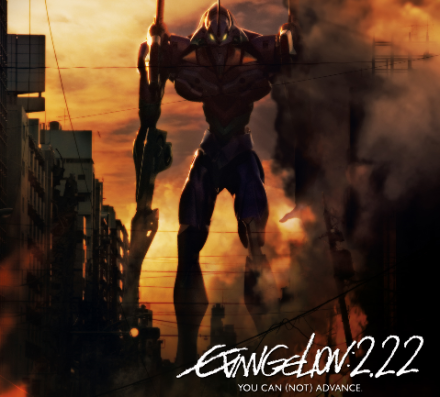
Leaving off from the first film, 2.22 centers on four psychologically-damaged teens that pilot synthetic humanoid robots called Evangelions, where their mission is to protect mankind from the wrath of the heavens. On the horizon looms a secret organization that plans to initiate the Third Impact, which will somehow destroy the world.

Possibly one of the best anime openers I’ve seen, the film kicks off with two new Eva pilots taking out two new Angels. These couple of introductory fights really draw the viewer back into the chaotic world where mass destruction became commonplace.

All of the intense Angel clashes are exhilarating, as execution timed with high stakes makes for desperate situations that are completely entertaining in all aspects. You can’t  simply call it a Rebuild anymore, as Studio Khara has outdone themselves by completely transforming a beloved series into a dazzling spectacle. Evangelion will be around for a while, and these Rebuild films make it cut in stone. Animation of architecture is clean-cut, the CG Evas and Angels are terrifyingly gorgeous, and the characters stand out wonderfully against the detailed, digitally remastered world.

The movie rolls along smoothly between fights, developing Shinji and Rei’s relationship in a quicker and more delicate manner than the original series. Possibly because a lot of their uninteresting scenes are taken out, I definitely like the Rebuild‘s Rei over NGE‘s. Shinji and Rei’s characters act much more natural, allowing personal growth and maturity to take its roots earlier on. I mean, boy-wonder makes a couple decisions for himself and quiet girl grows emotions – it’s already miles ahead of their original status!

Then there’s the mysterious Mari, a character who, despite not knowing much about, adds a new enjoyable level to Evangelion. The fun fourth pilot reveals she fits the pattern for traumatized individuals when she brutally forces control over a transformed Eva Unit 02 towards the end, a gruesome scene so aggressive that it still stuns me now! It’s interesting to note, however, that she’s always in full control, never once letting the Eva take her over instead. This one intriguing difference sets her piloting abilities above the Second Child, whom I’ll talk about next.

Here’s where I really hate 2.22 and what they did. First off, Asuka’s name has been changed from Asuka Langley Soryu to Asuka Langley Shikinami – it just doesn’t sound very German anymore, which she is. Second, Asuka is known for her dominating attitude and brash, “high and mighty” sass-talk. They reaffirmed that, which was awesome, but they took out a scene where Asuka, speaking in German, answers a call from her home. It was a small yet memorable scene from NGE that created my love and interpretation for one of my favorite anime characters EVER. She’s still an ass to everyone, yes indeed, but she doesn’t feel like the same Asuka I came to love from the original.

*Spoiler Rant Ahead*

The true “break” starts when Asuka test pilots the new Eva Unit 06, rather than Shinji’s friend Touji. If you remember NGE, Unit 06 ascends into the next Angel, which Shinji must kill – pilot included. So when Asuka gets brutally crushed and torn to pieces (shortly after she was revealed to be still alive), I WAS FURIOUS! Never have I ever seen something in anime so insulting that left me more enraged than this gut-wrenching horror scene. I honestly couldn’t believe my eyes to see Asuka ripped to sh*t like this, and it didn’t help that the calm child folk song “Tsubasa wo Kudasai,” sung by Megumi Hayashibara, was the only thing you could hear. Well, that and the screams.

Rebuild 2.22′s ultimate climax invokes similar feels to Instrumentality in The End of Evangelion. The film even has its own relaxing slow song “Komm, süsser Tod” scene infamous to Hideaki Anno’s work, where chaos, death, and transcendence has never looked so beautiful yet depressing. Ending the film is an acoustic version of Utada Hikaru’s “Beautiful World,” which is a reprise of 1.11’s ending. Such a fitting trance song ~

As much as I abhorred the abuse of Asuka in this film, I can’t help but admire the fact that an anime made me feel something so powerful and emotional. Because Evangelion: 2.22 You Can (Not) Advance managed to rip at my heartstrings, provided top-notch animation quality, and proceeded with its own continuation of a spectacular series, I must award the film a 5/5 in the entertainment category. The Rebuild rekindles my mind and emotions, and most of all, it reminds me why I fell in love with Evangelion in the first place. Though it is not the same mindset, it is still the same, great Evangelion.

+ Stunning, crisp animation, most effective CG

+ Improved character development, great new additions

+ Music adds to film, interesting insert songs

+ “Break” route proves a masterful addition to the franchise

– Asuka swap with Touji is inconceivable

– Song that plays during Unit 06 scene could have been more epic

– It’s only another movie in the series, still needs an ending

There! I’m finished with my Evangelion experience until 3.33 comes out, which it better this year cause it’s 2015! You should immediately pick up 1.11 and 2.22, as they are fairly cheap, house cool extras about the animation, and are both dubbed by FUNimation, who knows exactly how to execute an English dub! I recommend the Rebuild series to fans of NGE, individuals who are exploring the mech genre, and to those looking for something that’ll rack your brain. This film was an exhilarating, surprising, and brutal follow-up – I Was (Not) Disappointed! Until next time, this has been

– Takuto, your host
Soul Eater Review

For just a mere $30 drop, the famous shonen anime Soul Eater has been a daily treat of mine now for the past couple of weeks. Notable for its perfect blend of action, comedy, and awesome characters, this show is responsible for pulling in many anime fans here in the U.S. But does the title live up to its grandiose reputation? I Takuto, your host here at the café, shall present my thoughts to you in a slice of colorful cake.

Everyone has a soul. In the world surrounding Death Weapon Meister Academy (DWMA), administrated by Lord Death himself, there exist evil humans and monsters known as Kishins, beings that have turn into evil demons by consuming an incredible amount of pure souls. To fight of these Kishins, warriors called Meisters team up with Weapons, people that can transform into various blades or arms.

Once a Weapon has collected 99 evil human souls and 1 witch soul, the Meister’s weapon will advance to a Death Scythe, recognizing you as one of Lord Death’s finest weapons. Not that this concept matters anyway.

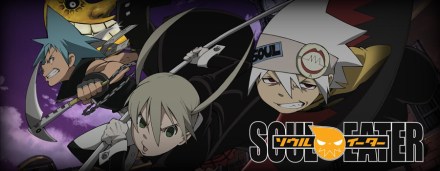
Soul Eater follows Maka and Soul, Black Star and Tsubaki, and Death the Kid with Liz and Patty Thompson. While their goal is to gather souls for Death, they have the chief mission of defending Death City and the DWMA from all kinds of wickedly powerful creatures. When they are not on the front lines, however, they attend school and train to become the best!

As the anime introduces its main cast one by one, this seemingly honest idea of leveling up deviates towards a complex and deeper plot. What starts off as a repetition of kids going to school quickly erodes into a story of madness.  Along the way, Soul Eater pressures our heroes into crazy situations that, though obviously not comfortable for them, are extremely enjoyable for us as viewers. Simple values like friendship, bravery, and humanity are also used as mediums for character development, but they can be a bit overbearing at times, especially the way the show cradles some characters.

Maka is studious, short-tempered, and is always thinking of others, but above all, she is determined. Her Weapon, Soul, might just look like a cool guy, but he would actually risk life and limb to protect Maka. Despite the bickering here and there, Maka and Soul’s platonic bond matures into one of the most reliable ones in the series. It was a sheer joy to hear Laura Bailey as Maka, considering that the last I had heard from her was as Ayaka and Evangeline in Negima!?, and Micah Solusod was great as always!

Black*Star is brash, loud, enthusiastic, but more than anything annoying! Wanting to surpass God in terms of power, he provides the comic relief in the show with his ridiculous stunts.  He’s also a fail assassin, shouting his name to all to hear when he enters the scene. Following loyally behind him is Tsubaki, his kind Weapon who is willing to help however she can.

Death the Kid, the son of Lord Death, is calm, smart, and . . . . has an extreme OCD case where symmetry is everything? Yes – He is so obsessed with perfect symmetry that he is willing to stop and marvel at a giant mummy monster just because the sarcophagus is equal in all proportions.  If it weren’t for Liz and Patty, playful twin sisters, to comfort him, then Kid would never stay focused. Todd Haberkorn plays Kid brilliantly!

Other than the cruel witch Medusa (never heard that side of Luci Christian before – its freakin’ awesome!), the underlying antagonist that is frankly a genius in every way possible, the rest of the cast, to me, is meh. I mean, Lord Death’s cheery nature and Arachne’s evil blemishes, though she did nothing, are both definitely cool, but everyone else was either decent or really annoying – specifically Crona, Sid, and Mosquito. Then there’s Excalibur . . .

Nevertheless the likability overpowers and all of the characters are memorable. They each stand out at least a couple times to give you room to judge. Soul Eater functions best when it showcases one character at a time.

Studio Bones delivers a bright tone in a rather dark show, which is a hard thing to get right, but they nail it for sure! When scenes are meant to be light-hearted, bold colors on characters and backgrounds jump out. In contrast, the eerie, haunting parts –with a touch of Halloween – feel ominous. Praise to Eruka and Free’s encounter with the First Kishin – my heart literally jumped out of my rib cage; seriously terrifying!

The use of various angles, smooth animation, and unique moves makes for some of the most interesting action I’ve ever seen, and they’re fantastic! Never once do the fight scenes ever seem pointless or unnecessary. It helps that all of the characters support expressive faces to match the mood. However cartoonish and basic the animation seemed, it was executed with pure entertainment in mind.

Aside from the great English dub performance, sound remains nothing special. There are no memorable tracks other than “Psychedelic SoulJam,” but there are a couple new ones added for the “epic” final fights.

The first opening “Resonance” by T.M.Revolution fits the first half of the show perfectly with its spooky tune.  Meanwhile, the second opening “PAPERMOON” by Tommy heavenly6 beautifully exemplifies the second half. Both are super catchy, and my favorite ending of 4, #3 “Bakusou Yumeuta” by Diggy-MO’ raps out the quirky character styles!

Soul Eater does not have any filler (besides Excalibur. . .), but can be rather slow at times. Dangerous situations are drawn out, specifically that whole Arachnophobia vs the DWMA clash. Crona and Franken Stein dilemmas were especially a drag, considering the fact that I could have been watching more Kid and Soul kicking ass! Also, considering its 51-episode length, it’s a bit of a struggle to the end.

Other than that, Soul Eater is plain fun, offering great action, heartwarming themes, memorable characters, ano stupid comedy – DO NOT try to take this show seriously. Once the secrets of the Kishin are let loose in the first half, however, there is an extreme drop in interest towards the end. As such, this anime is not perfect because of the great distinction between the first and second arcs, and some of the characters can be extremely annoying. But it manages to stay consistent with one goal in mind, and that is one of the strongest points to the show; the end was pretty fair if ya ask me. Though it wasn’t the “best anime ever,” I still had a great time watching this it, and I thank those who recommended it to me!

“People need fear to survive. We experience it so we can grow stronger.” – Maka Albarn

FOOLS! Go watch Soul Eater if you haven’t already – it’s a classic in the shonen genre for a reason! Leave a comment below if you had similar thoughts towards this crazy show! I welcome all newcomers to the café and extend my thanks towards my followers 😀 Hit the like if you enjoyed my review and until next time, this has been

– Takuto, your host

Log Horizon 2nd Season Review

I’ll be doing a review of the first season sometime this summer, but until then, here are my thoughts on the fall simulcast season’s Log Horizon 2, the sequel to the realistic adventure/ trapped in a game anime that is NOT Sword Art Online. :3 Enjoy~

We return to Elder Tale through the eyes of veteran gamer Shiroe who, along with all of the other players, has been trapped in the game for six months now. The Round Table Alliance continues to bring order to Akiba, and the People of the Land have begun to trust Shiroe by teaming up for war against the Goblins. As a result, Princess Lenessia has moved to Akiba to protect the Cowen family wealth and name.

Presently, winter is approaching quickly, and the Adventurers start to ponder their goals in this world: Are we going to keep living in Elder Tale? Can we get back home, and if so, how will we get there? Should we travel to the West or remain here in Akiba? What about the North or even further? These rival opinions cause mayhem and disorder to spread. Shiroe and his team, of course, do the best they can to maintain public order and expand their knowledge of the mysterious world, stumbling into new foes that might know a way out . . .

Log Horizon is known for its slow pacing – despite the great story, it does drag often. This sequel is no exception, and in fact, it drags even more than the first season. The plot starts strong with Shiroe leading the largest raid to the Abyssal Shaft, the supposed source of the world’s gold flow. Meanwhile, Akatsuki the cute ninja and the women of Akiba fight off a player-killer who stole transporting armor from the Royal Guard. Both of these stories flesh out characters, and allow us to get to know them better all while watching action-packed fights . . .

And then there are a few filler episodes that lead up to the children’s arc, which like the first season, focuses on the kids of Akiba and their own adventures. IT WAS PAINFULLY SLOW TO WATCH. Not only was it boring, but besides Rudy’s depressing truths, there wasn’t much development for them. The only things good that came from this dull period was a new mysterious character Roe2 and a personality reveal of Nureha and other Plant Hwyaden members, both of which raised more questions than answered. None the less, the new additions are still awesome!

Best for last, the series ends with a couple of thriller episodes pertaining to a way of going home, and as such leads off with a direction already pointed towards a third season. I suppose I don’t mind a third, but I was really hoping the series would end considering the drastically slow pacing at times.

As I mentioned, Roe2 is a new character among a few others. The “villains” of Elder Tale have also been splattered in here and there, but they sadly weren’t very interesting or the main focus. Akatsuki gets sidelined for quite a few episodes, so if you liked her like I do, you’ll be disappointed. The best thing that came from the characters in this sequel were the epic encouragement speeches made by guild leaders like William, who in particular brought tears to my eyes 😥 So freakin’ relatable! Such powerful dialogue!

Now the animation, yikes. A switch in animators to the infamous Studio Deen – most likely caused by budget issues – causes a lot of changes in art style compared to the old studio – specifically, the eyes are drawn differently and characters are bland as hell. It takes a while to get used, but it’s not necessarily “bad” by any means. The finale was superbly animated, however, which ended this category with an overall positive review.

The electric/orchestral music has always been one of this series’ best features, and this second season only continues to impress. While most of the adventuring and Renaissance-esque pieces return from the first season, there are many new tracks like “This World and its Music” by Yasuharu Takanashi that are absolutely bliss. There are tracks like “A Hopeful Journey” and “The Uncertain Path Ahead” that ring with the Log Horizon SPIRIT in just the perfect moments! Seriously, one of my favorite OSTs.

“database feat. TAKUMA (10 Feet)” by MAN WITH A MISSON returns as well as the show’s annoying rap opening. In addition, the ending “Wonderful Wonder World” by Yun*chi represents Akatsuki’s sweet, shy attitude perfectly! Love that song 😀

So, does the practical “stuck in a video game” adventure anime live up to its first season’s standards? No, but then again, that bar was already pretty high. Filler episodes about Valentine’s Day, slow anticlimactic Children’s arc, and overall poor pacing ONLY to be led to a third freakin’ season has me awarding Log Horizon 2 4/5 stars. While that’s still pretty darn good, this slightly disappointing sequel could have been better – in all categories. Fans of the first season should like it, so long as they manage to stay awake for the whole thing!

“There are things you can only learn by accepting your weakness.” – Akatsuki

You can watch all of Log Horizon 2 and the first season on Crunchyroll for free! I was rather impressed by Sentai Filmwork’s English dub of the first season, so I hope to see a release of this soon. I’d like to extend my thanks to all of my newest customers and my frequent café-goers – you’re all awesome! Thank you for reading and as always, this has been

Takuto, your host