Wings of Freedom, Cage of Gold | PART III: In Defense of Fairy Dance

This is part three of the five-part series “In Defense of Fairy Dance,” a collection and comprehensive analysis defending the positive aspects of Reki Kawahara’s “Fairy Dance” arc in Sword Art Online. Research was gathered from the anime (sub and dub versions) and volumes three and four of the light novel series. This is in NO WAY written to justify all of the second half of the series, nor is it to say that it is particularly well-written. Instead, it is a half-full glass of the neat things the series did, and why I enjoyed myself with most of the content despite the glaring flaws. HEAVY SPOILERS EXIST.

For this third part I think we’ll have a little more fun. Are you sick of dramatic irony yet? No? Good, because realizing how large of a role it plays in Sword Art Online’s second half could make or break the experience, and here at the café, enlightenment is something we strive for!

As I mentioned, today’s post a little different. Instead of analyzing one line for +1,500 words, I thought I’d briefly list quotes from the light novels hinting at the rich irony in play, this being the symbolism behind the fairy wings and the birdcage suspended in the heavens. It’ll largely be, once again, a look into Suguha and Asuna.

Wings of Freedom, a Look into Suguha’s Case

“But she knew that when it happened, Kazuto’s heart would be forever beyond her reach, (92, vol.3).”

Ah, this refers to the incest we glanced over due to its taboo nature and my modest stance with the whole thing. Regardless, isn’t it funny that the person whom she is closest to – they live together for crying out loud – is the one person whom she is not allowed to love? Siblings, cousins, or otherwise, that’s pretty cruel.

“. . . Leafa felt the heavy, clinging web of hassles descending upon her. The only thing she wanted from ALO was the feeling of flight, of escape from pressure. To cast aside her troubles and fly as far as she desired. Nothing more. But it seemed that was a naiveté born of ignorance. Perhaps it was just a fantasy of hers, that this virtual world where everyone had wings would be enough to help her forget the gravity of real life, (116, vol.3).”

Apologies for the lengthy passage, but this is the bottom line, the viewpoint through which Sugu sees ALO and gaming altogether. Stats, battles, monsters? She couldn’t give a ‘flying’ flip. How can we tell? She could’ve joined any other game, but she chose the one VR with flight capabilities – Wings of Freedom (no, not a tribute to the overly popular titan-slaying hit). After school when she logs on and becomes Leafa, she believes she can sprout her wings and take off, leaving her problems grounded. She wants to float around, to soar against the moon and the stars, to leave it all behind and fly away from her issues. She knows it’s a foolish thought, yet here she is still playing the same game.

“’I wonder . . . Why does everything have to come down to control-or-be-controlled? I mean, we have these wonderful wings . . .’ (120, vol.3).”

“The stronger she grew, the wider her range of activities. Just flying through the sky over unfamiliar territory was a thrill. But as she became one of the strongest sylphs in the game, along with her knowledge came hassles. In time, she felt she was just going through the motions. The obligation to fight for her race became an invisible chain shackled to her wings, (133, vo.3).”

Here’s that punchline again. Imagine having weighty responsibilities in the real world, like most of us do. These obligations are noisome, so we log on a play games to leave these worries behind if only for a brief moment. Now, just because she became attached to flight, Leafa has become a significant figure in the game, and her controlling guild leader has burdened her with unnecessary responsibilities. It’s just a game, sheesh! All the girl wants to do is fly, so quit dragging her off to be a battlefield celebrity!

“Suguha’s stature was far from large for a kendo athlete, but compared to Leafa the sylph, she was rather big-boned. When she moved her shoulders, stomach, or thighs, the muscles rose to the surface of the skin. She thought her breasts had grown quite a bit recently, too. She couldn’t help but feel that the inescapable reality of that body reflected her own inner conflict, so Suguha shut her eyes tight again, (132, vol.3).”

This is another long but good one. We don’t get this in the anime. Also, another point from my heart to Suguha. Sugu is a big-boned, short, well-endowed women. To her, she’s anything but a woman, that being her sylph idol. Leafa is slender, tall, big-chested (as well), yet just as strong, if not more so. That’s not fair. All of her painful kendo training and I look like this? That’s what she probably is telling herself. It doesn’t help that her bro is a perfect fem-boy – Even Klein wants a piece of Kirito’s meat. Sugu, I feel your pain. Any chance I get to create a virtual avatar, I change the hair color to blond (because I’m a brunette), change the eyes to bold blue (cause mine are dull brown), and chop off a good +50 lbs just because I CAN. I’d RATHER look like this! Having body-image issues makes us feel like we have done something wrong, and sometimes, kiddo, that’s just the way this world works.
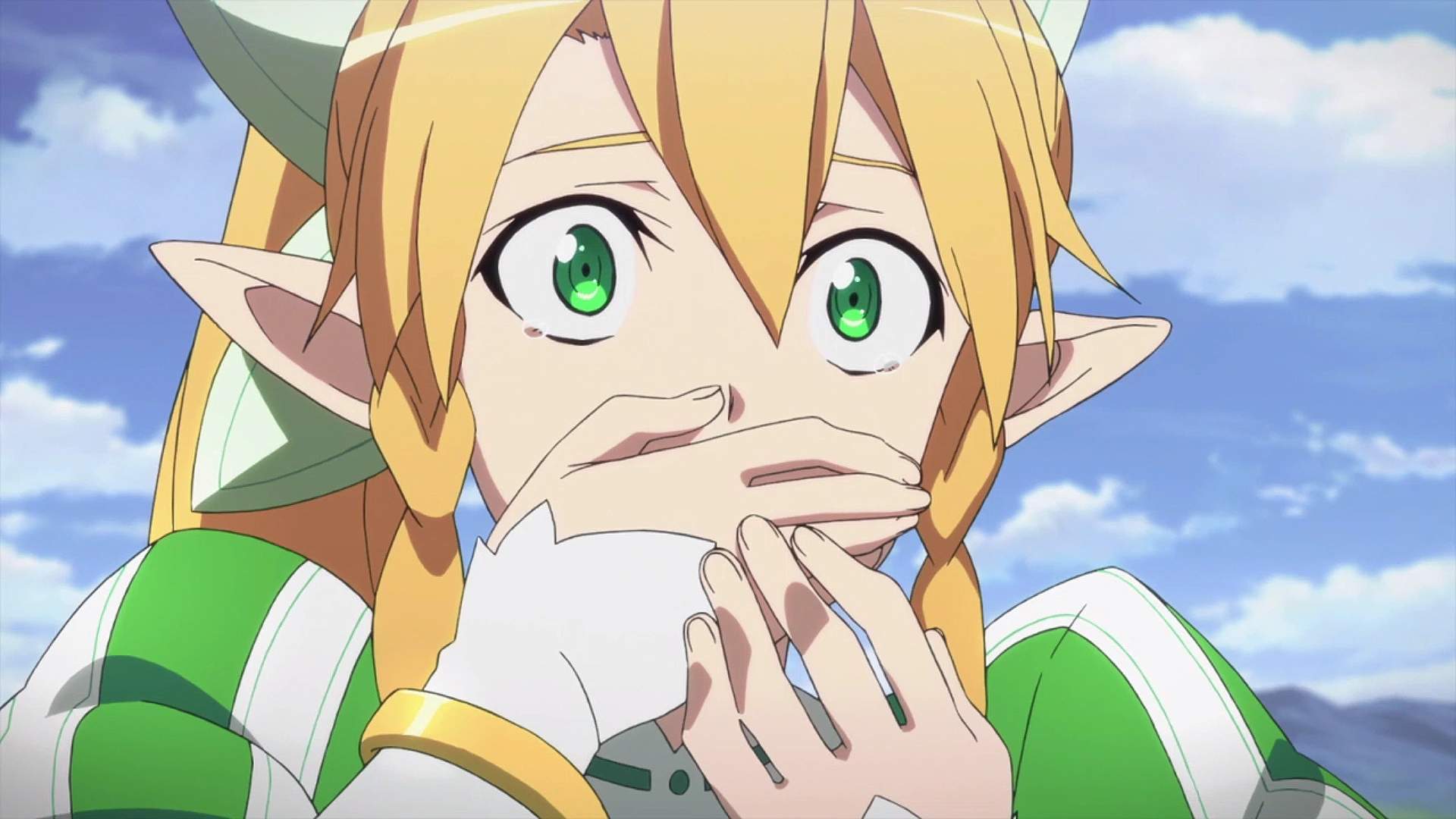
“She’d be lying if she claimed that loving Kazuto as Suguha and being attracted to Kirito as Leafa didn’t fill her with guilt. But it was Kirito who had taught her that the world of ALfheim didn’t have to be just an extension of a virtual flight simulator, but another true reality. Because of that, Leafa had realized that the feelings she felt here were true, not just digital data . . . ‘This can’t be happening . . . This is so wrong,’ (101, vol.4).”

This is the grand reveal we covered in PART I, and might I add that the entire five or ten pages this encompasses could’ve been marked down as quote material. Obviously, the irony here is that Sugu loved her brother, but that was ‘wrong.’ Thus, she put her mind to VR games like he did and discovered flight. It wasn’t long before she buried those feelings and met Kirito, a gamer who brought a whole new level of experience to her. Her life feels forever revolutionized – that she’s moved on – until the boy (should’ve been obvious duh from the start, as the similarities are off the chart) reveals himself to be the knight she found new love in. She betrayed her own heart, and the guilt is incomprehensible.

“I was on top of the World Tree. The peak of the world. The place that Leafa . . . that Suguha had dreamed of for so long. But . . . ‘There’s no city in the sky’ . . . It was all an empty gift box. Past the enticing wrapping paper and ribbon, it was empty lies. How could I explain this to Leafa, after all of her dreams of being reborn as a high fairy? ‘This is unforgivable . . .’ (137, vol.4).”

Right before the fated reunion in the clouds, Kirito gets a peak at the world of fairies for what it truly is – A huge hoax. I put this here because, as he brings up, this was Suguha’s biggest dream: To soar through the clouds, and beyond. Now, Kirito is high above in the World Tree, only to realize that what the high and mighty sylph was clinging to this whole time was false. There is no master race, only one terrible, greedy man behind it all. Even though I’m not old enough, it’d be like breaking it to your daughter that the Tooth Fairy doesn’t exist . . . I still cry about that one, not that the idea broke my heart or anything, but that almost every other kid will have to go through the same trauma. Why even do it in the first place? You give me wings, ALfheim, but I’ll never truly be free?

Cage of Gold: A Look into Asuna’s Case

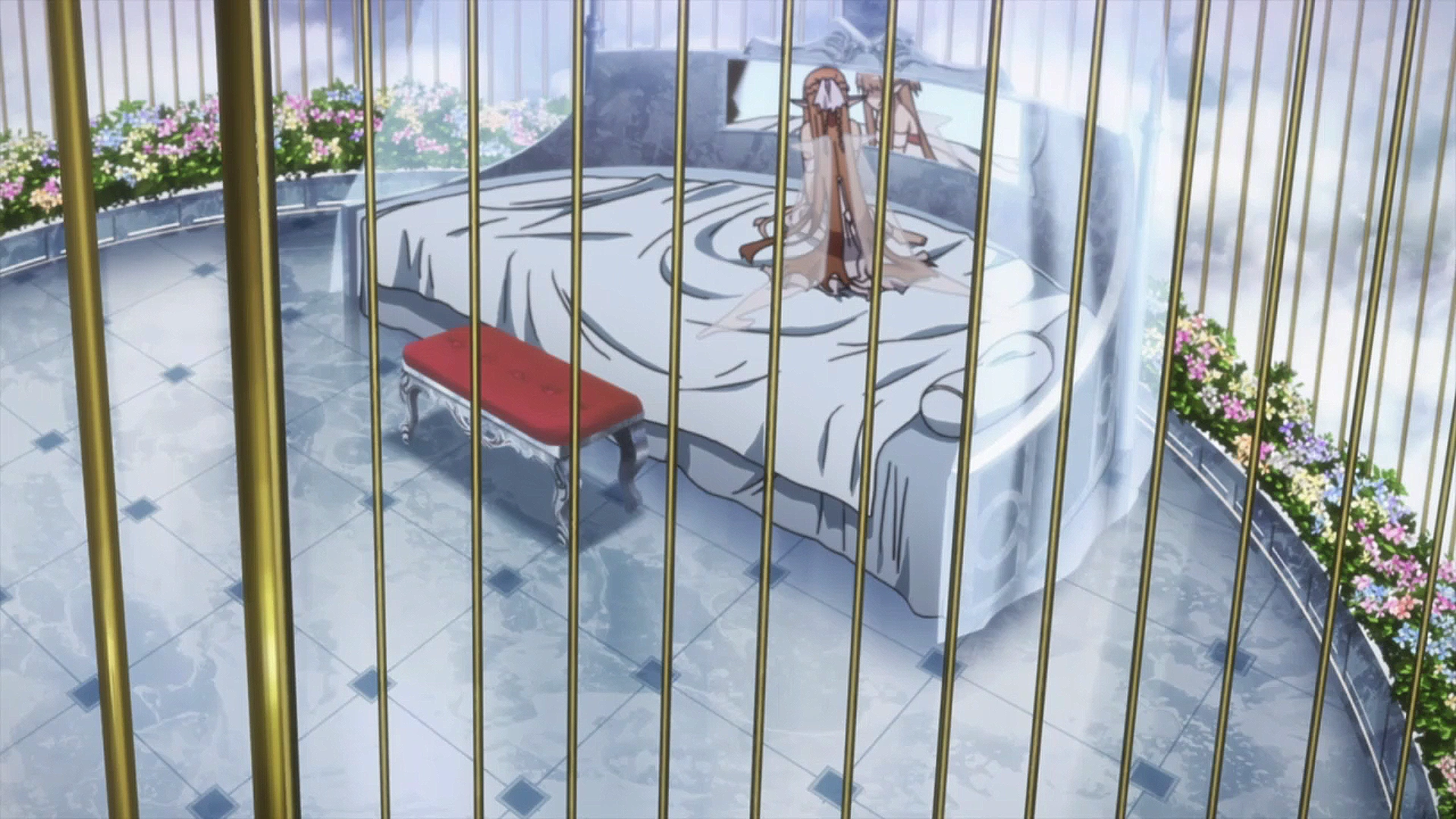
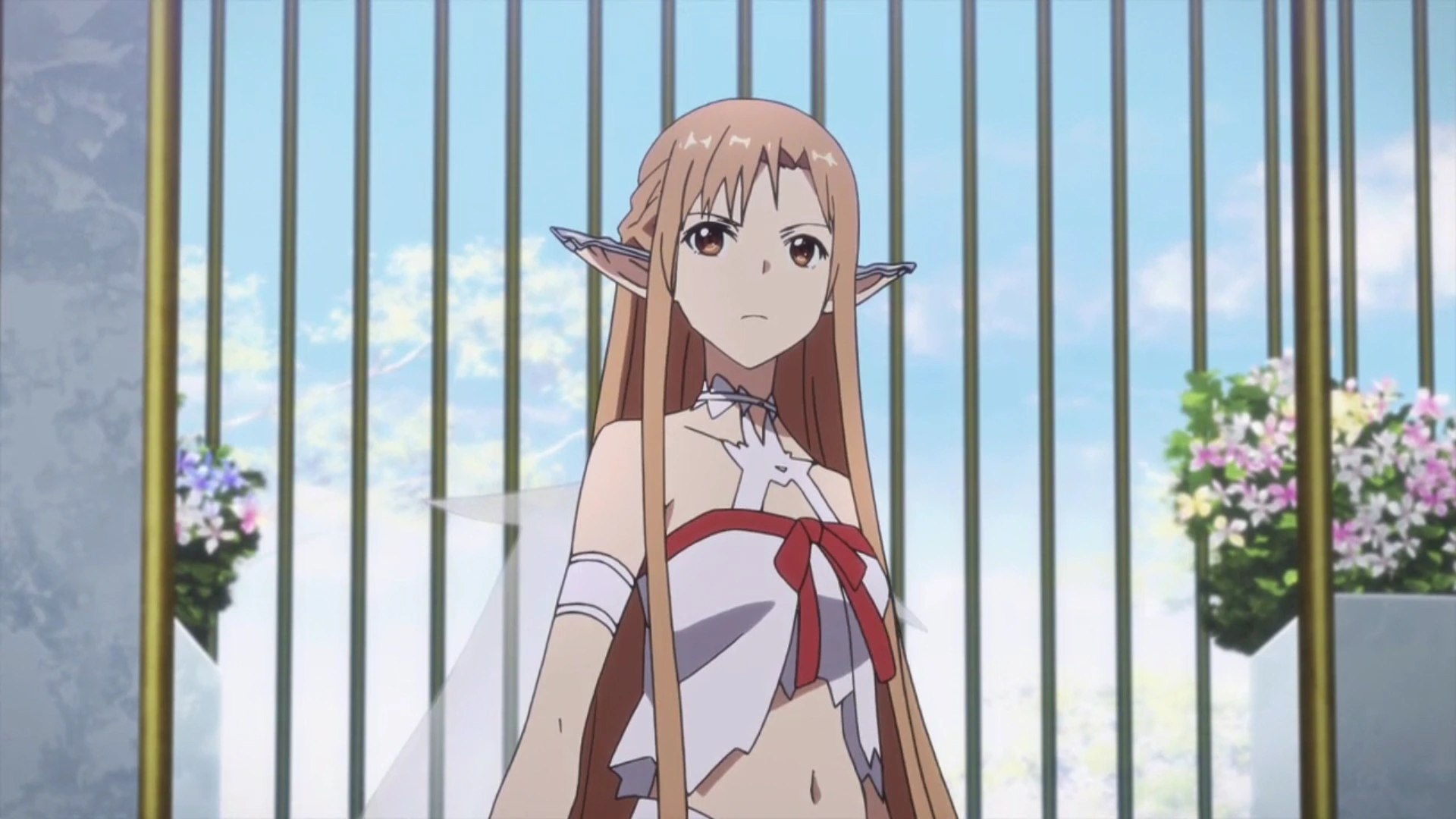
“The space between the bars was just wide enough that Asuna could have squeezed through if she tried, but the system prevented her from doing so. The intersecting golden bars stretched vertically before meshing together overhead in a dome . . . Which made this room a giant golden birdcage, hanging from the branch of an impossibly large tree – but no, that description wasn’t right. The birds who came to visit could come and go freely between the metal bars. It was a cell designed to hold a single prisoner: Asuna. A fragile, elegant, beautiful, but cruel cell. (98, vol.3).”

This is the punchline in Asuna’s case. Can you imagine the beauty of a floating golden birdcage with foliage wrapping around the bars and the horizon melting through each day? Don’t be fooled, as its beauty is insulting. The bars are purposefully positioned far enough to feed a sense of escape, but only after a natural attempt would one realize it was all a joke – You can’t actually squeeze through. Birds can weave in and out whenever they please (pair of black and white birds represent Kirito and Asuna’s relationship, BTW), stretching their wings wide outside the bars, and here you are not being able to move a wink. I’m surprised she didn’t go crazy on us and start talking to the birds.

Anyway, this “fragile, elegant, and beautiful” cell is more than cruel. It’s an insult to the prize it has imprisoned, and that mockery is pointed at ALO’s current Fairy Queen, Titania. Remember covering the story of Oberon and Titania in PART II? Well, how does the fairy world’s strongest fairy look now? That’s pretty ironic. Also, who puts a bird in a birdcage OUTSIDE ON A TREE?
“It was that world she longed for now, even more than the real world that she couldn’t be sure actually existed anymore. When she realized that tears were coming to her eyes, Asuna shook her head to get her feelings under control. Kirito was waiting for her in the real world. The only place she truly belonged was in his arms. She had to keep moving to make that happen. This hallway was not quite so long, (57, vol.4).”

So the cage has warped Asuna. While she would love more than anything to fight alongside her best friend and lover, after all she’s gone through, Asuna would rather rest in his arms. Is that weakness? No, that’s what we call settling down, hence the cabin in Aincrad and her “motherly” stance after this season. She just wants to relax with her love and put this cruel mockery of gaming behind her. But, even in desperate times, Asuna is always strategizing and being sneaky, much like her old avatar. Time passes when reminiscing on nice, old, happy memories, which is why the current hallway she is pacing, though identical to the seemingly never-ending one beforehand, went by so quickly, and she’ll cling to these memories to pull through.

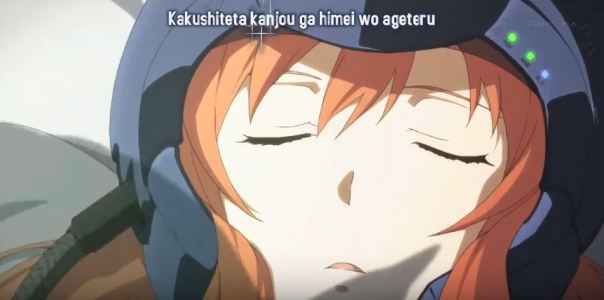
“Suguha forgot to breathe when she saw the girl sleeping on the spacious bed. For a moment, she thought it wasn’t a person. It must be a fairy – one of the Alfs, the true fairies that lived on top of the World Tree. Such was the otherworldly beauty of the sleeping girl before her, (72, vol.4).”

Hmmmm, you can put this one together without my help . . . Funny how things turn out, huh? The irony is dripping wet.
asunasleeping

“Asuna’s fighting, too. She’s doing her best to resist, to escape this world. There must be more that I can do, (87, vol.4).”

If Kirito’s not already got a sense of direction, then here’s his eye-opener. Asuna deliberately dropped a key card to them from above. She senses Kirito and Yui, and they sense Asuna. With passion starting to reignite, this is the excitement leading up to the fantastic, cataclysmic reveal! In other words, Suguha’s about to find out the cold truth that’s been staring her dead in the eyes.
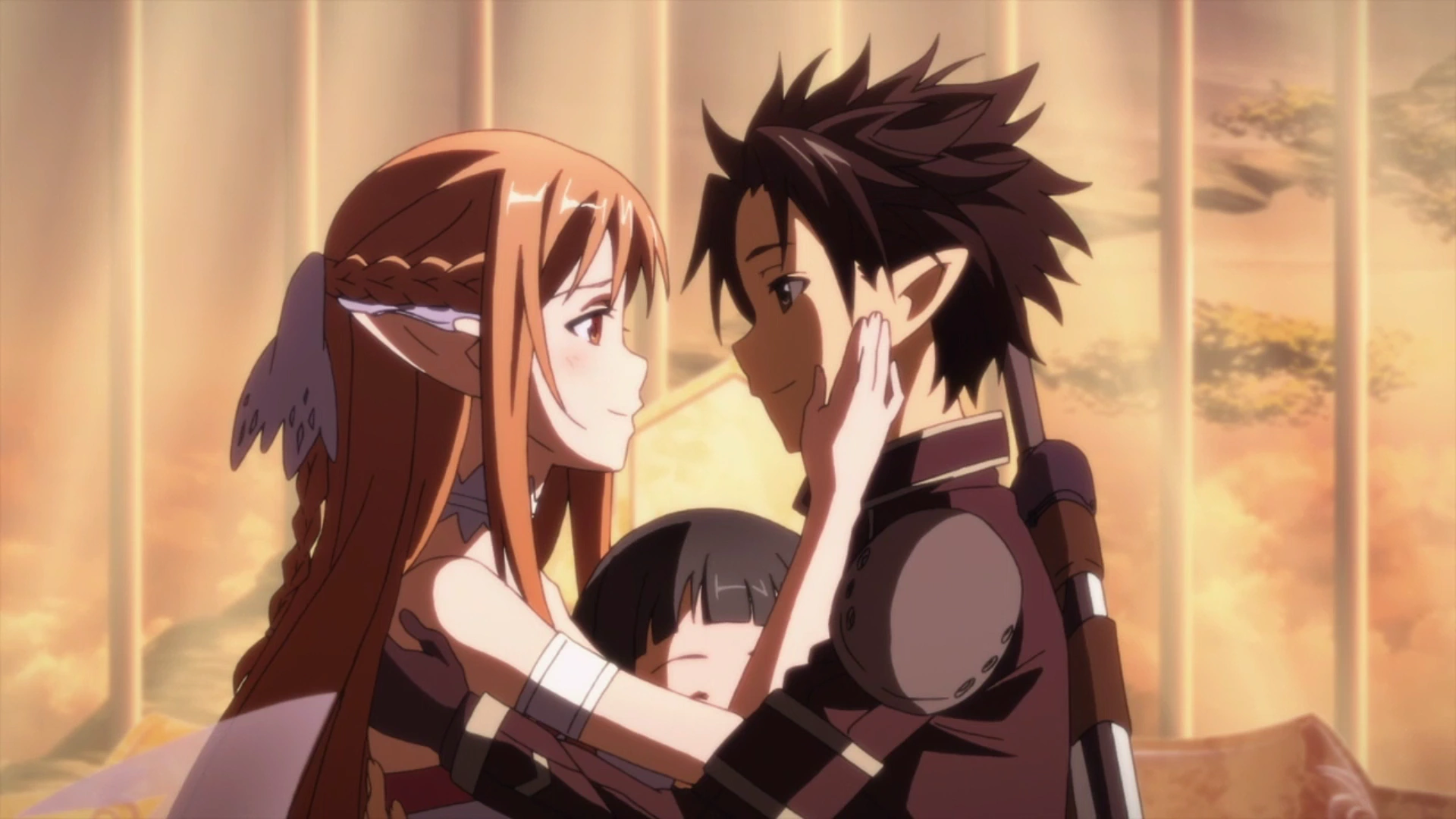
“’I always believed . . . No . . . I still believe. I did in the past, and I will in the future. You’re my hero . . . You’ll come to save me anywhere, anytime . . . (158, vol.4).”

From peasant fighter, to powerful knight, to heart-warming wife, to caged princess, to freed women, Asuna has grown reluctant to struggling anymore. She hardly recalls the SAO days, let alone her own real home life. The cage has brought unnecessary strife and resignation to the resilient fighter. The quote, however, implies with “I did in the past” that she depended on him, and this could be tracing back to as early as when he saved her guild, or even when they first teamed up, though unlikely. Point is, I’m not surprised that she is tired of carrying the torch. She’s by no means weak all of a sudden, just that the front lines are a place of the past now. Everyone can have a hero in life.

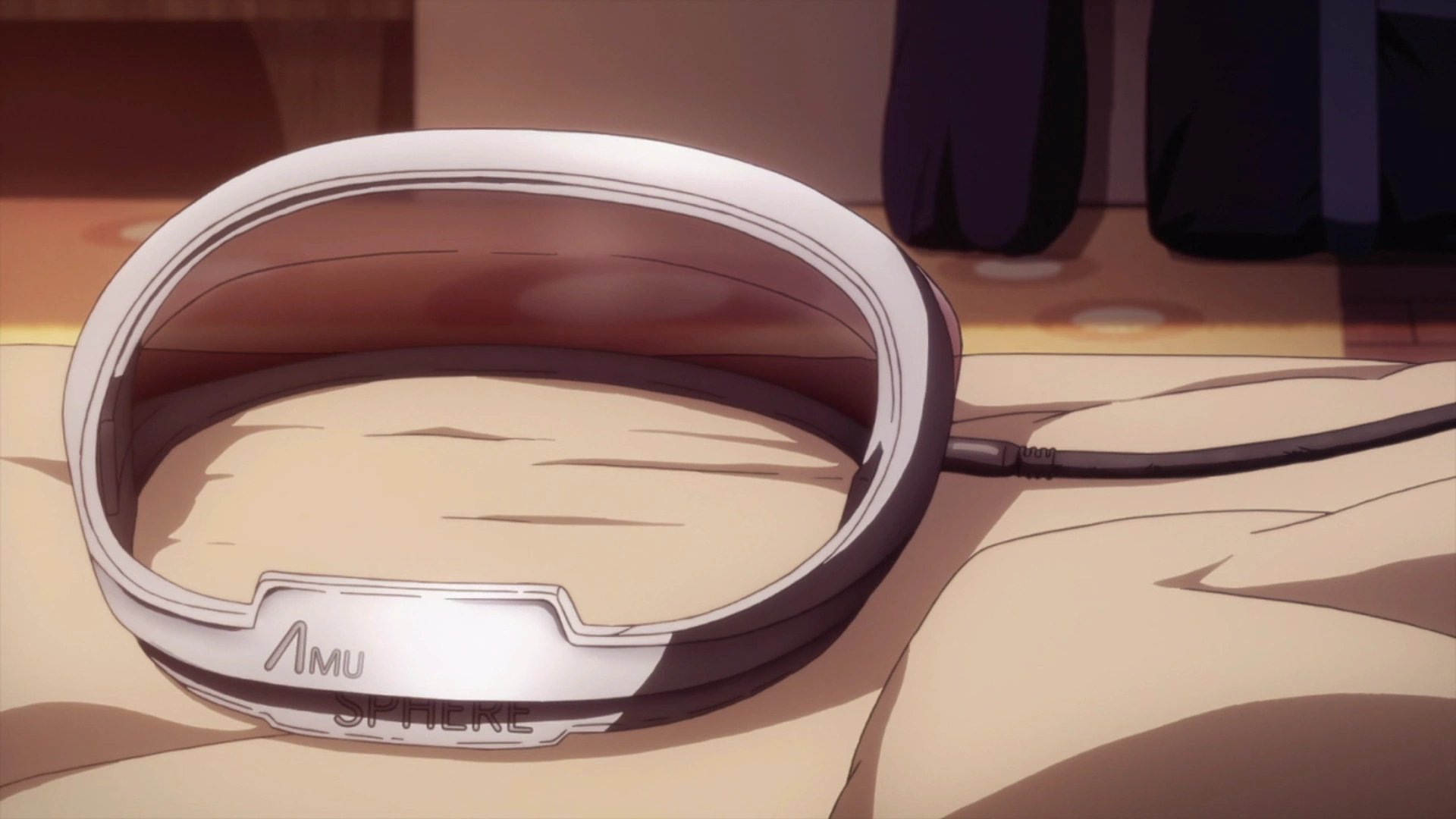
“Her thin arms were resting in her lap, holding a shining, blue, egg-shaped object. Her NerveGear. The crown of thorns that had held her prisoner for so long was finally silent, its job finished, (173, vol.4).”

This is a statement of closure. Do you recall Suguha in her final moments spotting her “shining crown ahead of her” to place it atop her head? Notice how they are both identified as “crowns,” but for different reasons. A crown of thorns is one full of burden, imprisonment, and painful sin; horns, almost. Meanwhile, Sugu’s shining crown is a halo that will transcend her into a free being with wings. Again, both are crowns, but they crown the wearer for drastically different reasons. I honestly wish the story ended here, rather than with Kayaba’s cheap RPG maker egg. This crowning glory where one bestows themselves with it while the other relinquishes it is much more symbolic, much more touching, and much more . . . dramatically ironic.

Thank you for reading! Please, share any thoughts below and stay tuned for PART IV!

(I own neither the anime nor the light novel series of Sword Art Online. All images and videos belong to A-1 Pictures and Reki Kawahara.)
Asuna’s Position Cannot Define Her Personality | PART II: In Defense of Fairy Dance

This is part two of the five-part series “In Defense of Fairy Dance,” a collection and comprehensive analysis defending the positive aspects of Reki Kawahara’s “Fairy Dance” arc in Sword Art Online. Research was gathered from the anime (sub and dub versions) and volumes three and four of the light novel series. This is in NO WAY written to justify all of the second half of the series, nor is it to say that it is particularly well-written. Instead, it is a half-full glass of the neat things the series did, and why I enjoyed myself with most of the content despite the glaring flaws. HEAVY SPOILERS EXIST.

Introductions out of the way, we’re now getting down to business. For this second session, I’ll be taking a look at the target reason why Sword Art Online has a big fat red “X” scarred across itself on many people’s anime list. Her name was Asuna the Flash: Fierce, courageous, vigilant, and a knight for the people. Notice how I said was.

In “Fairy Dance,” our superior heroine was reduced to a weeping twig of a fairy begging for her mighty Kirito-kun to save her from her perverted, slimy (in more ways than one) captors. This unnecessary shift from castle knight to caged canary puts a fowl taste in the mouths of many, but was Asuna really as pathetic as she seems, or, perhaps, was there a special kind of development in play underneath the foliage? Did our coined “Damsel in Distress” actually have an iron backbone under those glittering wings we so frown upon?

Titania . . . That Stupid Name

Finding Asuna alone in the first half of “Fairy Dance” (third volume) is pretty rare. Often her sleazy captor Oberon the Fairy King AKA Sugou is found loafing around her chamber, mocking her hero, her helplessness, and even the game itself . . . We’ll cover that later. What is known is that by being forced into ALO, Asuna is unarmed – but still dangerous, mind you!

The book doesn’t start her off too strong, though. Upon her entrance in chapter three (98, vol.3), our first impression is her ‘silent prayer to Him,’ “’Hurry . . . Hurry and come save me, Kirito . . .’” Yeah, not a good start to our favorite ruby knight. Already, we feel her frailness of being a caged princess, as she first clings to the thought of someone else rescuing her rather than escaping herself.

That all fades away when Oberon graces his darling ‘Titania’ with his presence. In Aniplex’s English dub for the anime, she snappily remarks,

’Stop calling me by that stupid name. My name is Asuna, Sugou.’

In comparison, the light novel uses

’And stop calling me by that stupid name. I’m Asuna, Oberon . . . I mean, Mr. Sugou.’

If you read that second one closely enough, Asuna still reveres Sugou as an adult, hence, the respective Mr. in front. The ellipses further implies a cautioning, while the anime, specifically Cherami Leigh’s role of Asuna, is clearly firm with an unwavering glare to match it. That is one tiny detail where the anime did a better job at maintaining “The Flash’s” fire.

Another variance in tone between the two versions is shortly after, where Oberon requests that Asuna ‘give her heart to him.’ In the English dub:

’Never. The only things I’ll give you are disgust and hatred, and nothing more.’

Ooh, that’s tough talk. How about the LN?

’You will be waiting until the end of your days. All I feel for you is scorn and disgust.’

Interesting. Both are equally fierce and nearly identical in translation, but that wordier LN quote (Japanese language probably has something to do with that) comes across as a bit more, say, romantic, no? Not romantic as in “Oh Sugou, I love you” but more like a sweeter sass than “Never.” That brings us to the next point.

Romantic VS (not-so) Sexy 

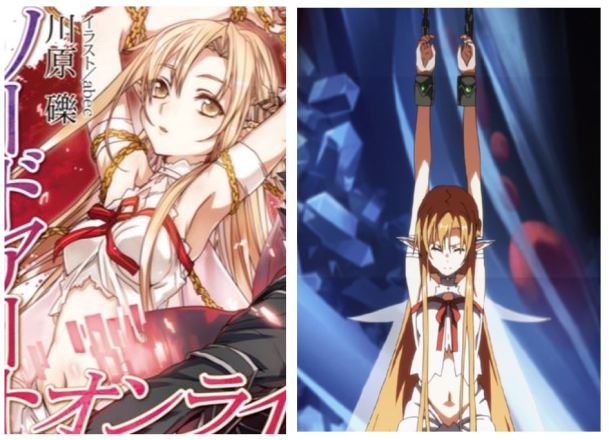
Anime. Yup, that’s fan service, not motivation for Kirito.

I’ll stop here, but you get the point.

comparison

Here is a side-by-side, LN Left, anime Right, same chain scene. The LN looks more graceful, as if to be romantic. Little too submissive, but I think it’s better than the anime’s gritty, busty, shadowed version. The anime tried to be sexier, and it almost worked had we not gotten a full-fledged tongue rape by Sugou. Notice how the shackles are cruder in the anime as well. I realize the LN is cover art, but it is still there to represent the same scene or state of being.


Reading a scene versus watching the same scene visually are two completely different translations. In that regard, the Asuna in the LNs embodies this air of “romantically clinging to hope,” while the anime is more of an “Oh God please save me from this disgusting man.” Support for this comes from the repeated reference to other aspects of nature in the LNs:

The World Tree Warriors are moths, the Sylph are grasshoppers, the Cait Sith are beasts, Kirito is a cockroach, Asuna is a bird trapped in a cage . . . And this all makes sense considering ALfheim’s fairy world theme – Everything is supposed to be lovely, full of wildlife and excitement! Asuna also translates as more of a delicate, gold-shackled woman than the anime’s bustier bod meant to attract your eyes. She is an item for Kirito and Sugou in the anime rather than a prize to be revered and softly handled.

And that’s where people draw the line with the second half – Sugou’s ridiculously inappropriate touching of Asuna towards the end. Was it necessary? Arguably, I think yes. By then, we are asleep. Kirito will reach the top, kill Sugou, and save the girl. The end. So didn’t having the female physically exploited before the MC’s eyes by this atrocious monster fuel the excitement, the rage?! It’s completely disgusting and humiliating (and fan service) in the anime (not that it isn’t in the LN) but you cannot say it wasn’t effective. It was the most infuriating yet engaging moment in the entire second half!

As for the tentacle slug things that nearly raped her? Yeah, THAT is poor, stupid, and totally uncalled-for writing. An alarm system or perhaps HUMAN guards would have not only made more sense, but also would have purified the show even if just a tad bit more. This was plain disgraceful and distasteful, not to mention unjustifiable. *shudders*

Parallels with the Legend

Okay, so it’s not a legend, but Shakespeare’s “A Midsummer Night’s Dream” clearly was the basis for the second half’s cast. Oberon is the ruthless fairy king driven by jealousy and power. He is a man to be enthralled by jokes, and will wickedly pursue his lust by making an ass of his wife, Titania, his object, wife, and queen. Titania is the strongest female fairy in the land, and her struggle against her King’s will puts her foster son, whom she loves more and spends more time with, on Oberon’s wanted list – He even contemplates making him his servant! Now, whom do these characters sound like? I wonder . . .

By Bravely Leaving the Nest, POSITION DOES NOT DEFINE PERSONALITY

If you once thought that Asuna was a weak gal in ALO, think again. Sure, her sword was taken away, but the true sword is her commendable courage (call it corny, but it is true). Asuna could’ve been stuck in that damned cage forever and gotten her mind wiped clean had she been caught by Sugou – Yet this birdie still boldly left the nest. “’That ends today,’” she tells herself. The only sign of reliability at this point is her murmuring “’Kirito . . . I’ll do my best.’” That’s not, “Kirito, come save me when I get out.” That is “Kirito, you’re out there fighting, and I’ll do my upmost to match your spirit.” Know the difference.

And I’m so freaking sick of everyone calling her a “Damsel in Distress!” Urban Dictionary defines it as “a stereotype of portraying an unmarried female who needs to be saved.”

  1. Asuna is married. Childlike in execution, but nevertheless an item with the Black Knight in the first half.
  2. She doesn’t need saving – She’s doing it herself! Why else would she risk her life in the game and in the real world? Kirito is trying her hardest, and she knows she must reinforce her own backbone with the thought that they will both be reunited TO ESCAPE BY HERSELF. This Asuna is just as clever and observant as her red counterpart. Look how she figured out a way to sneak out using the mirror; How about when she did escape, saw the 300 trapped players, and muttered that she would save them, too; Or when she did find a logout source, was pulled away, but took the key with her only to give it to her best fighting option – Her daughter and husband down below the clouds. And she did this all without pissing off her captor enough to have him wipe her mind. She’ll push his buttons and resist as long as she can without closing off any chance of escape.

Asuna shook her hair back, puffed out her chest in resolution, and strode forward purposefully, the way she had once done in a different world . . . ‘I won’t stop. I’m getting back to the real world, alive. I have to see him again,’ she swore to herself, and then resumed her march. (202, vol.3)

Guys, she’s an incredibly talented and valiant spirit on the inside, so please do not let that piece of cloth they call a dress and her whimpering in disgust hamper that belief. This, above many moments in the franchise, shows her true willingness to live and free herself (struggled with when she first arrived in SAO) – That iron will to push through the impossible is the mark of a true heroine. I admit that I’d rather watch her slice and dice demons on the battlefield, but I can, to a degree, at least understand the position/inner conflict (to live, and to do so freely), and why it the series took this route. It’s setting up Kirito as the main hero and Asuna as a secondary character for future content. Again, I don’t prefer it, but observing Asuna endure in this manner was still nevertheless intriguing if you look past the fairy glitter. Queens can be just as resilient as the mighty knights they call upon.


Thank you for reading! Please, share any thoughts below and stay tuned for PART III!

(I own neither the anime nor the light novel series of Sword Art Online. All images and videos belong to A-1 Pictures and Reki Kawahara.

Dramatic Irony Causes Suguha’s Terrible Fate | INTRO & PART I: In Defense of Fairy Dance

This is part one of the five-part series “In Defense of Fairy Dance,” a collection and comprehensive analysis defending the positive aspects of Reki Kawahara’s “Fairy Dance” arc in Sword Art Online. Research was gathered from the anime (sub and dub versions) and volumes three and four of the light novel series. This is in NO WAY written to justify all of the second half of the series, nor is it to say that it is particularly well-written. Instead, it is a half-full glass of the neat things the series did, and why I enjoyed myself with most of the content despite the glaring flaws. HEAVY SPOILERS EXIST.

Welcome to ALfheim Online, a virtual realm where you and your friends can soar the skies of a fantasy world, fight enemy fairy clans, and, one day, reach the top of the World Tr—

Why fool ourselves? Nobody likes the “Fairy Dance” arc. Well, I shouldn’t say everyone, as those who merely dismiss the entirely new plot, characters, and atmosphere just to watch it for fun most likely don’t realize all of the sudden, arguably hypocritical, dishes the second half of the infamous Sword Art Online brings to the table.

But is it as “downright lazy, sexist, and stupid” as opponents claim? Do the underlying themes of dramatic irony, devotion towards love, true freedom, and misunderstanding of the bounds of humanity’s evil even matter if our favorite character gets her sword taken away? Can we merely cast these intense messages aside? Never, and this compilation will hopefully show you why.

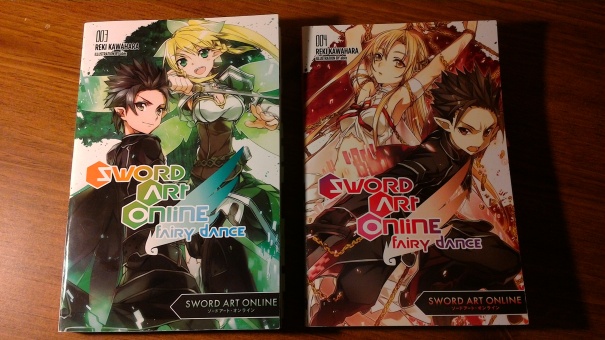
Accompanying me on this journey will be the third and fourth volumes of the series because hey, “The books are always better than the movies, right?”

WIN_20160321_22_47_06_Pro


FIRST, learn the difference:

IRONY . . . the expression of one’s meaning by using language that normally signifies the opposite, typically for humorous or emphatic effect.

DRAMATIC IRONY . . . a literary technique, originally used in Greek tragedy, by which the full significance of a character’s words or actions are clear to the audience or reader although unknown to the character.


“You’ve been met with a terrible fate.”

Kawahara hints Suguha Kirigaya’s love for her brother Kazuto from as early as page 20. While we’ll eventually find out that they are not blood related, incest is its own beast to be tackled at a later date. All we know is that she is love-struck, and that love will be her driving focus to improve herself. She doesn’t discover this truth for herself until seeing the pain in Kazuto’s eyes when she visits the hospital with him for the first time. Just as they were spending sunrises together, training, happy as can be, Suguha immediately withdraws her heart, for she “realized what her heart truly desired, and that it was in a place she could never reach, (74, vol.4).” It is at this time where, for Suguha, the gaming world is all she can rely on. The real world will bring pain – a pain which sharing with anyone can destroy you from the inside out – and she knows this well.

Tragedy likes following Sugu around, though, as now it is Leafa’s turn to shoulder her agony. After her hospital visit, Sugu hits up ALO to vent. “If she cried here, she knew she’d never be able to give up on this. Instead, she’d cry a bit in the fairy world. Leafa was always peppy and energetic; she’d be back to laughing in no time, (74, vol.4).” Crying here means giving up, and girl’s got more backbone than that. So she thinks, “Ah, Leafa’s a good chap, she’ll fix me up right away!”

Wrong. Leafa was fighting her own battles regarding Kirito love, and now she’s got a war. From here on, Sugu will scarcely leave the virtual world. One reason is the quest at hand, to reach the World Tree, but the other is to avoid the tragic reality waiting for her back home. How do you confess your love to a sibling? I honestly don’t think you can without it corrupting the relationship. Holding it back as tightly as you can is the only safeguard (forgetting about a loved one is hard to do when you LIVE with them), so what better place to store the key than in an intangible world.

As the “stabbing pain deep in her heart” continues to ring, Leafa awakens in Alne following their overnight venture to “wait for the pain to turn into liquid so it could drip from her eyes.” When further confronted by Kirito, she replies, attempting to put a smile on her face, “’Well, Kirito . . . I . . . I’ve got a broken heart,’ (76, vol.4).” To which he charismatically responds:

’You’re allowed to cry when it’s hard – there or here. There’s no rule that says you can’t express your emotions in a game.’

I’m not the biggest Kirito fan, but that line was just the “bit of awkwardness” Leafa – no, Sugu – needed to hear most. “’I love my brother,’ she told herself . . . ‘But I can’t speak this feeling aloud. I have to keep it trapped deep in the deepest part of my heart. That way I might actually forget about it one day.’” This will have to be the tying point for her, and she’ll try her damnedest to bury her lust. If SAO and life itself has taught us one thing, however, it’s that everything comes to an end.

Suguha finds out

It’s a catastrophic moment we saw coming since episode one of the second half, yet here it is, and it’s even more devastating than we could’ve imagined. 

On page 102 of volume four, Suguha breaks down. Her efforts to conceal her “wicked thoughts” have been all for not when her knight in black armor Kirito reveals that cursed name of the princess he is searching for: Asuna.

’I . . . I . . .’ Her feelings turned into tears and tears into words before she could stop them. ‘I-I betrayed my own heart. I betrayed my love for you . . . ‘I was going to forget, to give up, to fall in love with Kirito. In fact, I already had. And yet . . . and yet . . . I’ . . . ‘I was so happy when you came back from SAO. I was so happy when you started treating me the way you used to. I thought you finally saw me for who I was’ . . . ‘But . . . after this, I’d rather you kept being cold to me. Then I wouldn’t have realized that I love you . . . I wouldn’t have been sad to learn about Asuna . . . and I wouldn’t have fallen in love with Kirito to replace you!!’

‘. . . Sorry . . . ‘

The ball just dropped. Readers and audience members only look to the floor in guilt and self-loath just like Suguha. Her slamming the door is the final sound to finish off her tirade, and it’s scary effective. Her thoughts of holding it in and shoving it down her throat are worthless now. For once, I have to give Aniplex’s English dub the props for providing the best reenactment of the performance. Cassandra Lee Morris absolutely crushes the role, vocalizing herself like she would in Sugu’s feet and topping it off with a tear-filled shattering cry.

https://www.youtube.com/watch?v=hGMTnqIXv1A

Video posted by NintendoxWolf on YouTube. I do NOT own Sword Art Online.

The secret’s out, and this could arguably be where the curtain closes for SAO. The dramatic irony for Sugu, if you haven’t already guessed, is the multilayered thought she loves her brother, but that is, quote, “wrong.” So instead, she abandons her love to fall for Kirito, a bishounen badass whom she feels so alive with on quests. She’ll escape the harsh reality for a fantasy world of electrons only to discover the black avatar is none other than the boy she tried so hard to hide her heart from in the first place.

The legacy of this tragic yet classic scene

This scene is not only the most emotional and gut-wrenching part Sugu will ever shine in, but also a decent hit on Kazuto. All this time, he has known the Net to be a place where everyone has a “secret inner side.” It’s now that he questions his own familial and relationship status with his cousin: “Who is this person, exactly? Do I really know them? (105, vol.4).” This guilt is almost as heavy a burden as being responsible for killing off his first group of friends back in Aincrad. You should realize by now that it’s nearly impossible to knock Kirito off his feet – And Sugu did it verbally in less than two minutes.

As much as tragedy has woven these two fates together, SAO will once again prove that gaming and friendship can mend the bonds once broken by the game. Knowing that her knight would wipe his tears aside and grab his sword, Suguha reaches out to her “shining crown ahead of her” and “set it on her head.” Though its resolution was shamefully brief (a mere shrug to the side cause Asuna comes first), SAO fans of the dramatic irony device will revel in this classic scenario for years to come, and its outstanding effects it set on Suguha will not be forgotten so long as we remember the sacrifices she made to truly grow wings and take off.

Kawahara is guilty of adding more females to the story not only because he claims it’s easier to add a new face to give the MC a new relationship, but also because he likes the idea (Afterword vol.3). However, the light novel series is a monumental step up in terms of more cohesive understanding and better execution of elements like dramatic irony. In comparison to the anime, the “boobs and butts” are also much less distracting and in your face, being a bouncy visual production and all. I’m sure it’s meant to be pleasing to the eyes, yet I believe it deflowers Kawahara’s vision given the much more intricate and meaningful (and appropriate) actions, pauses, romantic elements, and thought processing found in text.

I realize that that her situation could be very difficult to imagine yourself in, but gosh dang, you’ve got to give a teen girl props for trying her hardest yet still falling into heartbreak – Not once, but twice. You may not like Suguha or Leafa – You may even detest SAO – but understanding both sides to every argument is half of life. The other half is of course being able to place your judgment on an issue. All I can recommend is that if you feel “lost” or ashamed of SAO, do try reading the original light novel series to possibly formulate a new outlook on the series that means something to you. I managed to uncover many of the less-apparent literary devices, dramatic irony being one, and that opened up a whole new window of exploration. Also, I just want to give Sugu a big ol’ hug after everything she’s been through, that poor, poor girl.


Thank you for reading! Stay tuned for PART II!

(I own neither the anime nor the light novel series of Sword Art Online. All images and videos belong to A-1 Pictures and Reki Kawahara.)

The End of EVA-Week: Voicing CONCERN for the Rebuild | Cafe Talk

Hello cafe-goers, welcome to cafe talk, a segment where I ramble and you are more than welcome to ramble with me! Today’s post is the last one (for some of you thinking, thank goodness he’s done) concerning my recent EVA-Week, a celebration centering around the official English release of Evangelion 3.33. I hope you have enjoyed what has come out, and I ask you to join me on this last little voyage to Tokyo-3 for the foreseeable future . . . maybe . . . ?

TheRevisit calender (2)

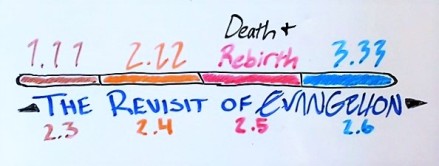
Here is the calendar on my board. I’ve been filling in the days with their respective colors as they pass.

This goes more along with my 3.33 review which was recently posted. I thought dividing this into two parts would tremendously help cut down on the word count (it is so far the largest post on this blog)! This comprehensive aftermath will also explain the mindset I currently have with both Neon Genesis Evangelion and the Rebuild, so SPOILERS EXIST FOR ALL OF THE EVANGELION FRANCHISE.

Three groups of people exist when it comes to the franchise, and here are my thoughts on them:

  1. Those who interpret the Rebuild as its own series of 4 stand-alone films.

Stand-alone meaning that I could watch 1.11, not look back, and be satisfied with what I got; the film should be able to support itself without additional knowledge like most movies. I’ll admit, this method works fairly well for 1.11 and I dare say 2.22 if you decide to overlook the last ten or so minutes. With 3.33, this all falls apart – and NOT because of the 14-year gap. I was honestly thrilled when Anno decided to take such a ballsy risk, and it would’ve worked if

A) the events between the gap were explained by the end (Shinji’s confusion is decently handled, so putting it at the beginning would be all for not);

and B) The mental states of each character, not just Shinji, were further delved into. This viewpoint, I believe, is defunct due to the lack of both of these. Sadly, 3.33 just doesn’t stand by itself no matter how you look at it (my review will further explain why).

  1. Those who interpret the Rebuild as its own singular story, requiring knowledge of all 4 films.

This interpretation kinda piggy-backs off of the first, but in more of a coherent fashion. It is comparable more to a series, in that imagine if you watched the films back-to-back in one long slew (taking out credits, disc switches, etc.). This helps support the idea that the third leg of a four-person race is most tiring, complex, and occasionally (if you already assume how it’ll end), most climactic. I swam the 100-yd free, which is down-back-down-back. Without a doubt, that second down is the hardest part, as you have to manufacture your own adrenaline rush. For ROE, this means that 3.33 decides to take a more emotional approach and build up to the “beginning of the end,” much like a typical plot diagram. Still, this method lacks explanations for the unreasonable character motives and those deep psychological treats we savored in NGE. This viewpoint will be defunct should the last film present itself similarly to 3.33 or add nothing “new” like 3.33 did (I say “new” lightly, as causing the Fourth Impact isn’t something to just shrug off).

HEAVY THEORY/POSSIBLE SPOILERS FOR THE FUTURE AHEAD, TREAD CAREFULLY

  1. Those who interpret the Rebuild as a rehashing of the original series, and believe elements between the two stories are interchangeable or that the Rebuild continues the story . . . somehow.

This is the wacky one. 1.11 is basically an exact copy of the first six episodes of NGE, only introducing Lilith earlier, showing off the red sea and the corpse outline on the hill, and sliding down the Angel appearance count by one – That’s it. It’s a wonderful remake of the original and deserves more appreciation. 2.22 is the break, the deviation. We get Asuka, but less Asuka (her name is even changed, WTF). Rei is kickin’ out hormones like crazy. Misato fails to tell her own story. Ritsuko is sidelined. Mari has little purpose other than to contrast against the others and be different. It’s a high-quality film, just a little lacking in the character department (nothing that the remaining two films can’t fix, right?). Then 3.33 comes along and breaks the flow. This is Anno’s different route, and unless that theory about the Rebuild being a successor to The End of Evangelion is trueThat it might all be a “dream,” another world route, or a chance to redo the past – then this is what we get. This viewpoint FORGIVES EVERYTHING that the Rebuild has caused thus far, as we fans can just plug n’ chug the backstories and memories, but should this fantastical theory prove false then this viewpoint is defunct as well. It is a well-constructed theory with much evidence, though. Then again, there’s the keyword. Theory.

I have much concern for this series, this franchise, at this point in time. Making 4.44, 3.0+1.0, Shin Evangelion Theatrical Edition 😐| – WHATEVER you want to call it – a masterful conclusion to the Rebuild series like The End of Evangelion was so many years ago is nearly impossible (unless something like option 3 happens, but it sounds all too easy). Its lack of characters which thought for themselves and had psychological issues that were conquered by individual experience and self-evaluation doesn’t even feel like the same Evangelion. And god dammit, SHOCK VALUE that receives no logical explanation is a SIN. Should the last film fail, ROE will be remembered as a series loaded with Grade A+ animation and soundtrack, a high-powered story full of twists and turns, and an emotional ride for some that found their calling with it. But hardly will you hear them say, “That doctor chick with the blond hair was an excellent character full of dynamic and emotional struggle,” because kid, the Rebuild‘s Ritsuko Akagi is not such a powerful woman.

Evaweekcelebration

Here is EVERYTHING referenced throughout The Revisit of Evangelion, or EVA-Week. It is mainly here as a compilation for me to look back on and remember all the fun times we had. You’re more than welcome to browse the menu and comment/reminisce with me 🙂

Happy Valentine’s Day: You Are (Not) Alone

Neon Genesis Evangelion Review

The End of Evangelion Review

Evangelion: 1.11 You Are (Not) Alone. Review

Evangelion: 2.22 You Can (Not) Advance. Review

The Revisit of Evangelion: We Have Begun Third Impact | Cafe Talk

Evangelion’s Rebirth isn’t so Sweet after this Disposable Death | Review

THIS IS WHY WE CAN (NOT) REDO | Comprehensive Review

ATTENTION: 2 More Treats EVA Fans Might Have Missed!

The End of EVA-Week: Voicing CONCERN for the Rebuild | Cafe Talk

This concludes the EVA-Week celebration here at the cafe . . I’m starting to get emotional now, trying to hold back the tears! If you stuck around to read, like, or even comment with your own meaningful thoughts once, I thank you! This series means a lot to me, to many of us, and we just want to see it do well – So damn well we cry our eyes out and meld into the proverbial sea of life. Do you have any similar thoughts on the subject, or are you completely indifferent and just watch it for the giant robots? How do you prefer to interpret the Rebuild? Any other interpretations?? Let me know so we can party hard in the comments! Thanks for celebrating this joy with me, and may the inevitable conclusion of a lifetime rock our world!~

– Takuto, your host

I’m gonna be humming “A Cruel Angel’s Thesis,” “Beautiful World,” and “Canon in D” for the next several weeks, aren’t I. . .

ATTENTION: 2 More Treats EVA Fans Might Have Missed!

Hello Evangelion fanboys and fangirls, it would appear that EVA-Week is nearing its inevitable end. But don’t worry, if you’re not already sick of me going on and on about this series, here are two treats to the franchise you might have glossed by. After all, they are only a few minutes apiece.

Gosh, I’m starting to sound like a teacher emailing his students the latest assignments . . . I thank Wikipedia pages for helping me with this one!

Evangelion: Another Impact (CONFIDENTIAL)

This was an anime short project from Studio Khara and the media company Dwango. It was, like everything else, directed by Hideaki Anno, but produced by Joseph Chou and Tomohiko Ishii. Released on February 6, 2015, the website of the project describes the plot as follows:

“Another time, another place. An activation test of a decisive weapon was underway. With its development and operational trials shrouded in complete secrecy, the Another Number – Unit Null, suddenly breaks free of human control and goes berserk. For what purpose was Another Number – Unit Null created?

The story of an Evangelion’s activation, rampage and howling in another world.”

Supposedly it’s cannon, but I don’t think that was the intent. The project was meant to see what Evangelion looked like in realistic CG animation, and you know what? IT LOOKS HELLA COOL!! You don’t even have to be a fan of the series to enjoy this EPICNESS! Just enjoy the little clip:

This is the full thing, HD quality, though there is a voiceover in another language.

https://www.youtube.com/watch?v=NHRYCixcMiU

For those English buds who need the translation, here it is with subs, though in lower quality.

https://www.youtube.com/watch?v=JfU1xALdSWo


Evangelion: until You come to me.

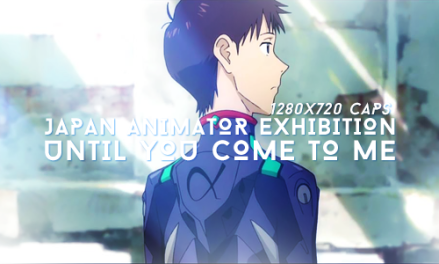
Now this one was specifically directed by Anno and released with more serious intent and style. It was an entry in the 2014 Animator Expo, and is designed as a sort of prelude/possible 3.0+1.0 hype/just-for-art for the Rebuild series, specifically set after 3.33 as it had “emotionally drained him.” The background song is Shiro Sagisu’s rendition of the popular Irish tune, “Danny Boy.”

You’ll have to click on this link to watch it:

https://vk.com/video1785371_170606473?list=07610468a6ce66812c

Don’t get parts of it? All of it? Here is an excellent analysis which I encourage ALL EVA fans to watch REGARDLESS of having seen the original, as YouTuber GoatJesus does a wonderful job picking apart this piece of art and appreciating it for the sadness, beauty, and hope it inspires.


Had you seen either of these Evangelion shorts, or were you living under a rock like I was? I do hope you enjoy something out of this, whether it was the high-energy Another Impact or the more delicate, melancholic, emotionally-touching until You come to me. Both are more Evangelion, and both do it pretty damn well, providing not only new material but different medias the franchise can be viewed through. If you’d like to chat about any of it, drop me a comment below! Until the next and final EVA-Week post, this has been

– Takuto, your host

Evangelion’s Rebirth isn’t so Sweet after this Disposable Death | Review

A review of the spring 1997 anime movie “Neon Genesis Evangelion: Death & Rebirth,” produced by Gainax and Production I.G, based on the original story and series by Hideaki Anno.

 – View in browser, not app, for best experience –

I knew I would be disappointed with this film just by hearing all of the negative feedback it received. Now, would I have sent Hideaki Anno death threats? Lord, no, but I can understand why Death & Rebirth, despite its critically-acclaimed impact on the series, is often – and should be – skipped. To those who haven’t seen it, you’re probably thinking, “Why pass up more information to a series that lacks much explanation as is?” That’s because Death & Rebirth offers absolutely nothing new. Zilch, save for interspersed musical quartet scenes, a one-minute firsthand account of the Katsuragi Mission, and pretty half-way credits moment.

The following song just reminds me of all of the sh*t these poor kids went through. It’s sad, really:

https://www.youtube.com/watch?v=UmWjF_O72bQ

The “movie” is actually two episodes: one 70-ish minutes and the other 30-ish minutes. Part one, Death, is a shotty recap of the first 26 episodes of the original Neon Genesis Evangelion.

Instead of taking the typical approach of sequential order used by most recap episodes, Death jumbles all of the scenes up and attempts to sort them out by characters. That’d be like saying, here’s 20 minutes of Asuka, followed by 10 minutes of Rei, then 20 minutes of Misato, etc. It fails incredibly, however, due to having inconsistent rhythm, nonsensical ordering, and honestly, all of the “meh” scenes from the original series. While I understand going for a psychological approach to sort of line everyone’s emotional patterns, flaws, and triumphs up, that doesn’t mean you cut out all of the quality combat scenes that made Evangelion a fan-favorite.

I always thought this was going to be Death & Rebirth. WHAT IS THIS ARTWORK FROM?? That Angel looks B.A.

By the way, over 90% of the film is REUSED ANIMATON from the series. Wait, what?? The only new thing Death brings to the table is those lackluster quartet scenes mentioned above. Kaworu on first violin, Asuka on second, Rei on viola, and Shinji behind the cello. Even though we don’t get to see them play (cue typical Evangelion black screen and text), the film merely putting classics like the “Canon in D” or “Air” in the background, the assigning of their instruments speaks for itself. Don’t get it? Here:

Shinji Ikari, cello. First to arrive, set up, tune, and practice Bach’s “Cello Suite #1,” a soothing piece which weaves notes on all four strings together; arpeggio (yes I’ve played it, often overhead in media, but whatever). The cello is the closest string instrument to the human voice. Specifically, some say it was modeled after a woman’s — a mother’s voice. Shinji pilots Unit-01, which we all know by now contains the essence of his lost mother. The cello is a mirror to Shinji’s desire to be with his mother again. Also, it’s the only instrument in a traditional quartet that you can hide your chest behind.

Asuka Langley Soryu, second violin. Second to arrive, cheerfully giving Shinji a “good morning call,” unpack, tune, and burst out the first few bars of Bach’s “Gavotte in Rondo,” a busty and springy song full of independence and repeated melody. Want to know why they’re called “second violins?” Simple. It’s because they’re not first; that is what Asuka has been struggling with since the beginning – Always trampling over the competition with a fierce façade, yet falling so short in the last second.

Rei Ayanami, viola. Third to arrive, set up, tune, and wait patiently to start. I can’t remember what she practices (if she even did so), but she plays the viola, an instrument that has been joked about for centuries because it’s nearly impossible to hear. It’s shaped like the violin – an imitation, a clone, much like Rei herself – but it harbors the same strings as the cello. Remember that warm and fuzzy mother feeling I was talking about? Yeah. Starting to see the connection?

Kaworu Nagisa, first violin. Fourth and last to arrive, set up, tune, and become ready to play. I also can’t recall what he practiced, but the instrument speaks for itself. It’s the first violin: It guides the group, provides cues, gets all of the high licks, and impresses us most upon first glance. Kaworu was only around for an episode or two toward the very end, yet his impression not only on Shinji but the audience as well enraptured viewers. SPOILER: Kaworu is not only the last to show up in the film and to quartet practice, but is also the last angel. He’ll literally fly higher than everyone else, whether that’s over the planet or in the music. It is through his death (his final cue) that the show can ascend into its final stage.

Then there’s a 5-minute intermission which plays “A Cruel Angel’s Thesis” on acoustic guitar and another track from the original series . . . Yep, a real freakin’ intermission. That sh*t just made me laugh.

Rebirth, the second half (last third), is actually the first half of the film The End of Evangelion. As such, you should skip this copout and head straight on over to that masterpiece following your Evangelion experience!!

Supposedly, the animation and sound quality in Death & Rebirth is a huge improvement over the original series. I neither saw nor heard a difference, SOOOO, for those interested in my thoughts in those areas, please check out my review of the original series!

I get what Death & Rebirth was supposed to be: a grand compilation of the psychological sides of the main characters meant to “butter you up” for the true end. But it FAILS MISERABLY, and as such I only recommend it to EXTREME fans of the franchise. The content was great, but its presentation just doesn’t do the original series a bit of justice. The playing of Pachelbel’s “Canon in D” by our favorite quartet of psychologically-scarred NERV-lings was a nice end to Death, but since they aren’t actually animated performing (and it’s a crappy compilation), I’m not even going to personally rate it. Instead, I’ll be leaving Neon Genesis Evangelion: Death & Rebirth in the “Breads” section of the café NOT because it’s necessarily bad, just disposable for non-fans. Did I like it?

Let’s just say that in my case, more Eva is a good thing. A wonderful thing.

As always, I hope you found my thoughts interesting! Until the next part of Eva-Week, this has been

– Takuto, your host