United We Stand in Ghost S.A.C. 2nd GIG| Review

A brief spoiler-free review of the 26-episode winter 2004 anime “Ghost in the Shell: Stand Alone Complex 2nd GIG” and its recap 2006 film “Individual Eleven,” produced by Production I.G, directed by Kenji Kamiyama, based on the original manga by Masamune Shirow.

Cafe note: I reviewed the first season right here, so check that out prior to reading this. Many thanks, happy reading~!


Back to the Cybernetic City

With the Laughing Man’s agenda terminated by Motoko Kusanagi and the gang, Section 9 is no longer forced to operate in the shadows. Taking an interest in the way the brutal hunting force operates, Japan’s newly elected Prime Minister Kayabuki re-establishes Section 9 as her final attempt to fend off the latest rounds of cyber-terrorism, and find a party whom she could trust her life with. This new deadly collective, “The Individual Eleven,” has led a string of seemingly unrelated terrorist plots and assassinations across the nation.

Just as the Major and Chief Aramaki begin investigating into these gruesome cases, however, the Japanese government faces a forced confrontation by the alarming build-up of foreign refugees who were ousted from their homes during the Third World War, and are now seeking asylum in Japan. Section 9 attempts to juggle both crises, but their constant bumping heads with Kazundo Gouda of Cabinet Intelligence Service leads the Major to suspect he may be even more tangled up in the mess than the “enemy” is, and that perhaps both The Individual Eleven and the refugee crisis are just two parts of one titanic movement.

Image result

The Stand Alone Complex branch of the hit Ghost in the Shell franchise returns to the scene to reaffirm that everything, be it physically or digitally, is interconnected by the pushes and pulls of a techno-dystopian society.

Picking Up Where We Left Off

S.A.C. 2nd GIG wastes no time in welcoming us back to its inner universe. Unlike its predecessor, 2nd GIG features a clearer, more concisely written story. It achieves this by appropriately placing its “stand-alone” episodes within the timeline in less-congested areas of heavy plot action. Sticking to a story written in sequential order, 2nd GIG feels a lot easier to grasp, even if the characters themselves are more “complex” this second time around. I can see why fans acknowledge this series as the superior one not simply because the visuals are upgraded, but the linear way in which the story is told—even if the concept may not rival that of a wizard-class super hacker—seems more straightforward. Either that, or it just took me 26 episodes prior to get used to Kamiyama’s directing.
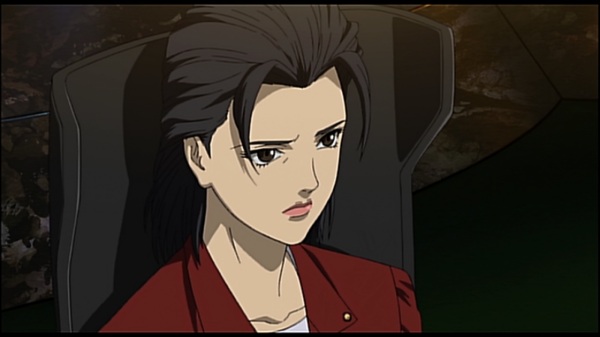
Image result for prime minister kayabuki

Critical characters to not only the series but the franchise as a whole are introduced quickly and efficiently, these namely being Kayabuki, Gouda, and Kuze, the eventual leader of the refugee camp and a mastermind in guerrilla warfare, both on the battlefield and in the net. Watching Kayabuki crumble before but endure the weight of those dirty politicians and back-alley deals emphasizes one trait that defined the Major as such a relatable character for so many: the strength of women, and the power, beauty, and grace that comes with enduring unfavorable outcomes and situations. Ghost in the Shell, like much of entertainment, explores the notion that life is one big power struggle; it’s as unavoidable as the rising moon or the flowing tides.

New, Twisted Faces

Speaking of power, Gouda is clearly not meant to be a likable dude. His *literally* twisted face should be an indicator of his reliability. He’s a competent and sophisticated man, using people and manipulating scenarios like he does with data. Though he’s got several tricks up his sleeves to be used against all of the pawns in the game, including the Major, his sheer level of skill and sneering wit make me MELT with a swelling love for his character. And John Snyder, his English VA absolutely knocked the role outta the park! We honestly need more intelligent rivals like him in anime; he’s a dick, but that’s what makes him so fascinating. Gouda is always one step ahead of the game, and stacking the deck is the only way to secure a trump card in this dirty world.

Image result

The Major’s foil finally manifests in the form of Hideo Kuze, an calm yet equally interesting antihero who holds a similar background. While I cannot mention too much without spoiling, I will say that he’s just as calculating as Motoko and Gouda, and perhaps more skillful and inspirational than both of them on a personal level. He’s quite interesting, so let his words sink in . . . everything he does is for the people . . .

Image result

Aside from the Major’s few moments, those members of Section 9 that did not previously have an episode for their own backstory (Pazu, Saito) receive one now EXCEPT for poor, poor Borma, the fat guy. While the Tachikoma’s return with more amusing exclamations and ideas, Togusa takes takes the back seat for this ride. One of these days we’ll get the backstory details and spotlight that they ALL deserve, but that time is sadly not now.

Improved Presentation Transcend S.A.C.

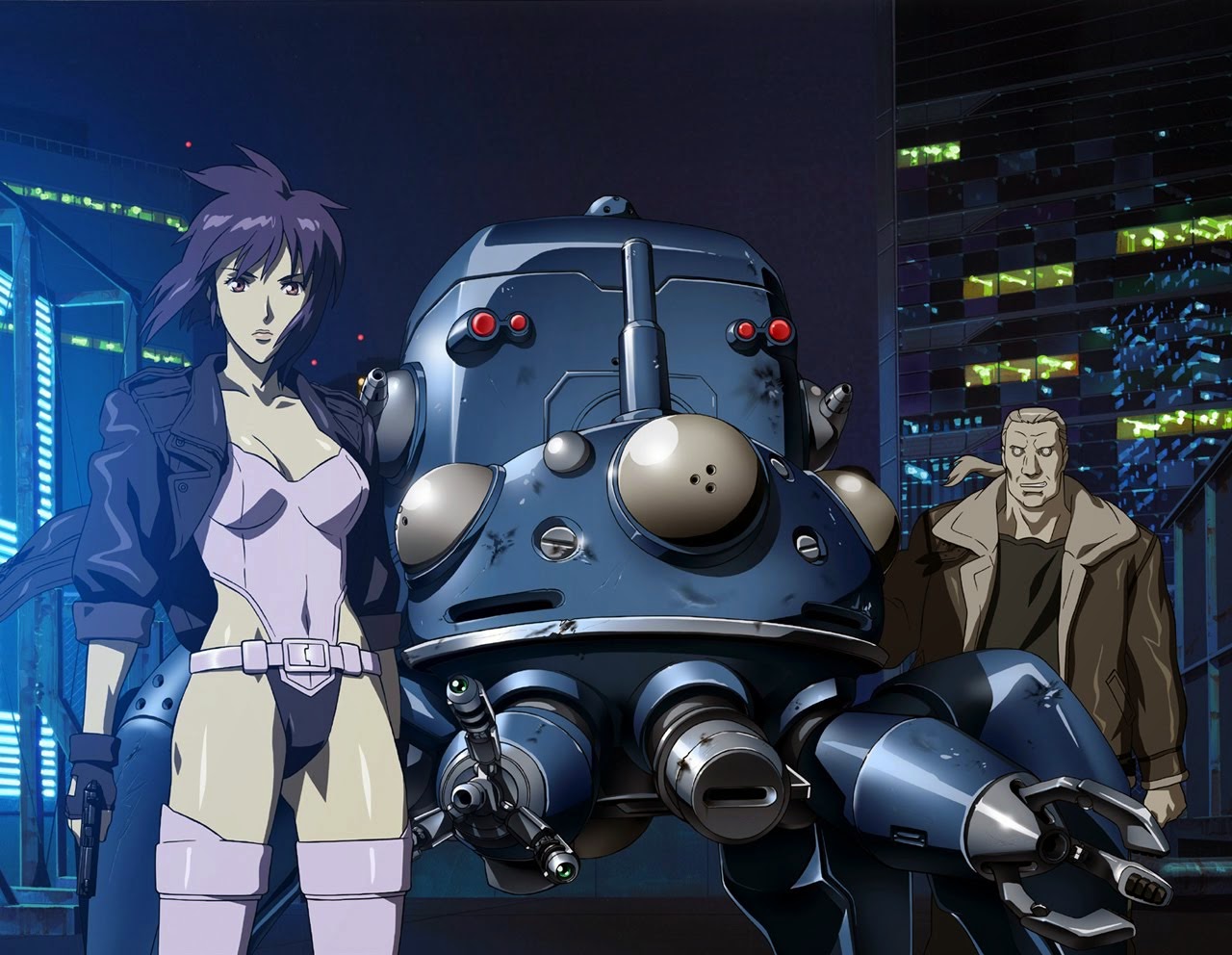
The two-ish year gap between each series really does reiterate the fact that Production I.G is the king of science fiction anime. Most of the characters receive new outfits and gear, all of which show off their differing personalities. The Major’s transformation from light gray and white to a dark gray and black skintight suit add contrast to the series’ new tone, a perfect match for some of the unsettling truths regarding the Major’s past. Her leather trench coat and obsidian visors complete the look. Besides the returning overly impressive architecture, it’s all the tiny details in character design that make 2nd GIG a fashion show for our models, both the sleek and the grungy alike.

Kanno returns to add that techno-blues/cop show soundtrack from the first season. Many of the tracks were even reused, so it’s not an entirely “new” OST. The epic action music in particular was done better this time. Where she doesn’t stand out in background music Kanno definitely makes up for with the new opening “Rise,” once again sung by the lovely Origa. “Rise” is the epitome of cyber punk trance dubstep, a song that hypes itself up with its intense beat, ascending chord progressions, and deep lyrics. Exhilarating stuff!

Since the characters remain largely underdeveloped in terms of background info, many just watch the show for its intriguing story, to which I point you toward the 3-hour (eek) recap film titled Individual Eleven that hones its focus solely on the core case from beginning to end. It is a recap, however, so all of your favorite one-off episodes are not present, and a lot of cool detours were cut, such as a fatal mission flaw by the Major that made my heart skip a beat. I give the same caution that I dished out last time, though—Individual Eleven features an entirely different English voice cast. While the wonderful Mary Elizabeth McGlynn, Crispin Freeman, and now John Snyder should never have been replaced as Motoko, Togusa, and Gouda, respectively, the new cast largely remains serviceable.

United We Stand – The Individual VS Society

Ghost in the Shell S.A.C. 2nd GIG continues as a more light-hearted cop-chase approach to the original 1995 film, and by this I mean that it is less about self-reflection and more geared towards the interactions people share with others. It’s also no laughing matter, either, presenting the sadness of war, and that in the near future warfare is still terrifying and tragic. 2nd GIG resumes its heavy, confusing political drama, but its new emphasis on securing a cyber body through the black market is neatly explored with greater depth, ironically “fleshing” out the world.

Image result

The sequel to the beloved Stand Alone Complex is a successful piece of science fiction and sociological analysis. It’s a series rooted in the effects of technology on people, be it the goods, bads, or really bads. Sharpening its linear storytelling and enhancing its setting and character designs, one really shouldn’t stop at the first season—continue to uncover the fate of Section 9 as the original story intended!

“The refugees have given me countless names. I joined forces with them with the intent to save them. But maybe the real reason I united with them was to keep the loneliness at bay.” – Kuze

Final Assessment:

+ Story told sequentially with with focused, linear direction

+ New character designs are more appealing; Major’s new look

+ Production I.G upped their game again!

+ Both Gouda and Kuze are excellent characters

+ Explores the pillars of social order through a cool story; the war on terror continues

– Section 9 members STILL don’t get the backstory treatment they deserve

– Recap film English dub remains pestering
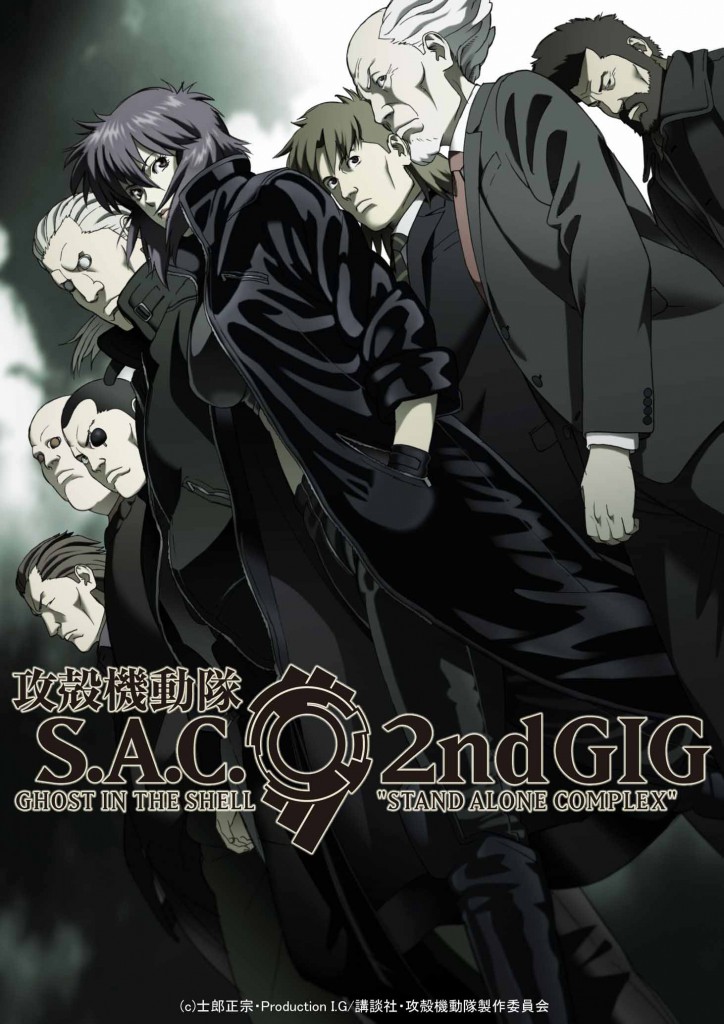
Image result


GitS S.A.C. 2nd GIG also deserves its “Cake” title (4/5), a must-watch if you’ve already started the first! It does require a great amount of focus and minor understanding of corporate politics, though. Thankfully the action weighs well against the political banter. What did you think of the Individual Eleven story, and did the recap film aid in your understanding as it did mine? Let me know, and until next time, this has been

– Takuto, your host

Image result

Still lookin’ fresh, Batou and Major

No Man Laughs Alone in Ghost S.A.C. | Review

A brief spoiler-free review of the 26-episode fall 2002 anime “Ghost in the Shell: Stand Alone Complex” and its recap 2005 film “The Laughing Man,” produced by Production I.G, directed by Kenji Kamiyama, based on the original manga by Masamune Shirow.


City of Steel, Bodies of Iron

It’s 2032, the cyberization age. Because most brains are now encased in a metal mold, people can access the net just by thinking and slide into mechanical bodies through a connecting cable alone. Walk along the streets and one would find fleshlings, cyborgs, and robots alike coexisting as if it were commonplace. The power of the net has virtually blurred the lines between the physical and the digital, which can breed both terrific convenience and terrifying crime. Completely ineffective in halting cyber crime, as it typically is, the government has hired Security Division Section 9, a group of ruffians specialized in taking down hackers and terrorists alike.

Led by their Chief Daisuke Aramaki and Major Motoko Kusanagi, this small squad rules the shadows and grungy back alleys in an effort to clean up the city. When a great super hacker dubbed the “Laughing Man” rears his head once again after 5 quiet years, however, the Major and her troop face what could be their greatest social threat yet. Unlike their most recent cases, this one proves to be not as simple as SHOOT + LOAD + REPEAT, but rather an intense chasing game of CTRL + ALT + DELETE.
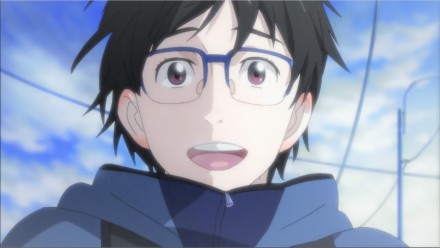
Image result for ghost in the shell stand alone complex section 9

The iconic franchise and its much-loved figurehead return to the streets after a silent 7 years since the groundbreaking film’s worldwide release in 1995. While it’s neat to see the title reinvented into a series, I found all of the GitS films, recap or not, to be far superior to the series. Before I go further into the franchise, let’s evaluate Stand Alone Complex and weigh its own merits.

It’s Not like the Movie, and that’s Perfectly Fine

This pun has already been pitched a million times, but to aptly put things, many of the episodes of Stand Alone Complex are, well, stand-alone. These episodes all tackle the lives of individuals of all all social classes, and how they interact with society and the Section 9 crew. The true underlying story is only tossed here and there as hints before the grand finale. Unlike the 1995 classic, which honed in on the psychological balance between human and cyborg, both of the GitS series challenge society instead, providing much sociological questioning such as “how much can people be “cyberized” before it’s no longer a human society,” or “whether the net truly brings people together or tears us apart.” Because it was less egocentrically based, I found myself less prone to self-discovery, but more open to social understanding. It’s a bit of a letdown at first, especially since the Major’s self-reflection is what sold me to begin with.

motoko.PNG

Where the plot may stumble and confuse, the characters provide entertaining banter and motivation. Being a more light-hearted approach to the franchise much like the original manga was, it’s appropriate to chuckle here and there at the strong man Batou’s unfortunate misdemeanors around the still-intelligent Major, or admire the human normie Togusa’s total dad bod. The presence of the cute Tachikomas, blue insect-shaped and car-sized robot AI, helped to not only alleviate unnecessary government actions that frustrated me, but also provide that quintessential self-pondering of being a robot vs a lifeform similar to what the Major dealt with in 1995. They’re annoying at times, but they remind us as to the joys of feeling alive.

A Stunning Sci-Fi Story and World

People watch this show for the genuine Section 9 crew and for high-paced, explosive combat layered with a complicated cop show setup. For its 2002 release, SAC has aged remarkably, providing some of the most engaging sci-fi action that rivals today’s anime fights. What ultimately brought it all together was the world itself, though. The towering skyscrapers and low, wrap-around market places give off a bustling effect to Newport City. The occasional gray sky and drizzly weather is almost enough to take one back to 1995, and the traffic—my goodness, all the road traffic! What a headache! Watching the characters drive from location to location allows Production I.G prove that they are the masters of anime architecture. The complex interwoven highways and cars almost act as a mirror of society itself, in that we’re ultimately all just a small part of the great flow.

Story-wise, it’s quite complicated, honestly. I held off on any Ghost in the Shell until I was older simply because I felt I wouldn’t be able to enjoy it fully without encompassing a greater intellect. (I’m still no genius, though.) To assume one has to be smart to enjoy this series isn’t true at all, but when it came to all of the political nonsense between government officials and sketchy deals, it is a lot to consume, I’ll admit.

Much of this can be negated, however, if a person checks out the 3-hour (yikes) recap film that reorganizes the Laughing Man snippets that are littered throughout all 26 episodes and places them into a more logical, sequential order. The [sadly] very few valuable backstory spotlights of Section 9 members are lost, but if one’s just in it for the core story, then this recap film satisfies immensely. The only caution I can give is to those who prefer English dubs; The Laughing Man features an entirely different vocal cast from the series, and while it is utterly DISAPPOINTING to hear brilliant actors Mary Elizabeth McGlynn and Crispin Freeman replaced as Motoko and Togusa, this other cast doesn’t do a bad job. Nope, not at all, and these are very large shoes to fill.

motoko1.PNG

While everyone praises Yoko Kanno for her sheer masterpieces of music, Stand Alone Complex is not her most memorable work for me. She keeps with the flow of light dialogue and adrenaline-filled action, balancing the two just fine, but I can’t recall any specific tracks besides the opening, “Inner Universe,” sung by the late Origa, a piece of music that perfectly captures the ENTIRE franchise. Its haunting yet entrancing beginning put me in full-dive mode every time. It’ll live on with the likes of “A Cruel Angel’s Thesis” as anime’s bests, and rightfully so.

Let Me Walk Away Laughing

It’s no surprise that SAC is different than 1995: different directors, production date, arcs adapted, character introductions and routes taken, etc. What hasn’t changed is the same powerful studio behind the project and the unwavering calculations of the Major. Ghost in the Shell is a franchise that explores possibility through the unification of humans and technology. It also shows us the worst case scenario—its abuse, and how that turns people off from all things cyber entirely. SAC‘s first season is a little hard to understand thanks to its divided attentions, but so long as you trust in the Major’s new face and follow your ghost, you may walk away having thought of something new, and that’s what sci-fi is all about.

Batou: Nowadays . . . people entrust their memories to external devices because they want to set down solid physical proof that can distinguish them as unique individuals . . .

Motoko: A watch and weight training gear, both of us have clung to useless scraps of memory, haven’t we?

Final Assessment:

+ This incarnation of the Major can be just as meaningful so long as you have an open mind

+ Emphasizes that Production I.G is king of city architecture and sci-fi worlds

+ Works in sociological approach that defines the franchise today

+ That opening combined with all the fluid combat gets the blood pumping

– Such a lovable cast deserves greater backstories

– Overarching story is hard to follow, but recap movie helps

– Missing out on series dub in recap film


Stand Alone Complex is welcomed at the cafe as a “Cake” title (4/5), one too sweet to miss out on if you have the time! It does require a great amount of focus and minor understanding of corporate politics, though. Sometimes the intermixed action sequences were the only bits that helped me stay awake! SAC has been around for YEARS now, so what do you make of the series? Did you enjoy the Laughing Man story, and did the recap film aid in your understanding as it did mine? Let me know, and until next time, this has been
– Takuto, your host

Related image

Batou, his Tachikoma, and Major. Stay fresh, Section 9.

Evangelion’s Misato Provides a Home for the Lonely | OWLS “Sanctuary”

Chances are that if you were linked here from another blogger pal, then you might be new. To those first-timers, “Hi, I’m Takuto, welcome to my anime cafe!” As part of the OWLS blog tour’s  third monthly topic, “Sanctuary,” I decided to pull in all of the Evangelion sources that I could, original series and Rebuild alike, in order highlight that no matter where you may be in the apocalyptic future of Tokyo-3, captain Misato Katsuragi’s apartment will always remain a safe haven from the wrath of the heavens.

A sanctuary is a place of safety and stability. In anime, there are several different places and environments that characters call “home.” For this topic, we will be discussing locations and settings in anime.

Eva is a franchise that you might already know means the WORLD to me, so allowing myself to revisit its iconic universe is a real treat. Thanks Lyn for the prompt!

Image result


A brief discussion on Misato’s Apartment as it appears in the 26-episode 1995 series “Neon Genesis Evangelion,” the critical 1997 film “The End of Evangelion,” and the “Rebuild of Evangelion” film series, produced by Gainax and eventually Khara, all of which were written and directed by Hideaki Anno. 

First, A Welcoming Party

Eva opens up on an alternate present-day Tokyo where “Angels,” ironically named beasts of pure destruction, are in recent rise for some bizarre reason. Shinji Ikari, son of NERV commander Gendo Ikari, is called in to pilot the towering [neon] colored humanoid robot Evangelion Unit-01. NERV, an organization bent on the survival of the human race no matter the cost, may very well be the last battlefront in stopping these beings of terror, but it is ultimately up to Eva pilots like Shinji to determine whether humanity lives to see another day.

Shinji survives the first angel encounter against Sachiel. Barely. But the fact remains that he did actually save everyone, which is why his cold father ensures that Shinji remains on campus in case of another attack. No, the two don’t share the same living space, let alone sleep in the same house. Instead, they mutually agree that rooming together would be the worst possible outcome. Like a mother overprotective of her ducklings (this is funny because she has a pet penguin), the clumsy yet strong captain Misato Katsuragi takes Shinji under her wings and shelters the boy at her own apartment.

Image result for misato's apartment

Misato’s place is graphically located quite a ways away from NERV HQ, which is probably for the best considering that they are always on call, and that they already over-shoulder work everywhere else they go. It’s also crucial to note that we never see any interactions with the other apartment members in the complex, nor are the other lights on. It’s only Misato’s that is lit, like a lonely lighthouse guiding lost ships. After the two go out to pick up some welcome party snacks and view the majestic city sunset, the two share a memorably warm if not simple exchange before entering the household:

Misato: “Your things ought to have been delivered already, Shinji. I just moved here myself, ya know? *glancing back* Hey, come in.”

Shinji: “Uh, I don’t . . . want to intrude.”

Misato: “Shinji, this is your home now.”

Shinji: *hesitant pause, finally steps into the apartment, crossing the sliding door lining along the floor, and stares upward shyly* “I’m–I’m home.”

Misato: *closed eyes, smiling* “Welcome home.”

[the apartment door automatically slides shut, revealing the tag M.KATSURAGI]

Misato: “Ummm, as you can see, the place is just a little bit messy but uh, heh, go ahead and make yourself comfortable.”

This is your home now. Wow. Just by reading this you can already get a feel for both of our characters. Shinji is shy, not wishing to impose upon anyone his own troubles. Misato comes across as casual, relaxed, and friendly. But just as how she makes her cameo in a flashy blue sports car with nothing but a seductive picture to go by, the atmosphere quickly shifts from one of formality to an air of light-heartedness. Evangelion masterfully plays with moods depending on how the characters should be reacting to certain situations, and Misato’s apartment, in fact, could almost represent the peaceful and joyful side of the chaos. Now that we’re all acquainted, it’s time to get to know each other beyond the name tags.

Image result for misato katsuragi screencaps

Make Yourself Comfortable

“Is this how you act in public? In front of your friends!?” You might have gotten this spiel by your parents if you’ve ever for a second acted, heaven forbid, without concern for public opinion or manners. Going back to the question, of COURSE I don’t act like this out there—this is home, and home is the one place where an individual should feel less pressured to “suck in their gut,” so to speak. Home is where I can let my guard down, and the characters in Eva do exactly that at the apartment. These moments make up the lighter side of a series otherwise known to offer psychological trauma and emotional turmoil.


This slideshow requires JavaScript.

Shinji, Misato, and eventually Asuka are free to lounge around with a temporary leave of stress that comes with saving the world. At first it was only a woman and her pet. Soon the dynamic opens up to invite a pseudo son (episode 2), followed by a pseudo daughter (Asuka in episode 9) and an anything-but father (Kaji). Even aunty Ritsuko comes along and plays house at one point!

toothpick

Like mentioned earlier, Evangelion is rife with iconography. Some early examples include:

  • Episode 2’s introduction of the song, Misato’s theme
  • Episode 2’s fridge reveal of nothing but ice, snacks, and lots of beer
  • Episode 2’s infamous toothpick scene (adding on with the straw scene in the Rebuild)
  • Episode 2’s recitaiton of “Unfamilar Ceiling” (sheesh, one would think that episode 2 is important for some reason)
  • Episode 9’s synchronization training through DDR and fashion
  • Episode 16’s “I’m bored, so kiss me” by Asuka

Little Shin’s Room ❤

Homes allow people to ponder and create. In the show, we see the characters questioning their own existence, their place in the world, and whether the actions they take are justifiable. The apartment also allows philosophies to be revealed, such as Misato’s “Not everything must be answered with a yes m’am,” or “Wash away your troubles—bathing cleans the mind and soul!” Speaking of bathing . . .

Differing personalities invite conflict, for not everything in Misato’s apartment is happy-go-lucky. Time spent alone allows the darkness to sneak back into their heads. We are permitted to see the characters at their worst, such as this disturbing 20-second bath tangent by Asuka, portrayed by the incredible Tiffany Grant. Whereas bath scenes are supposed to be tranquil and stacked with fan service, Eva, being Eva, turns this cliche on its head to emphasize that not all acts at home are frivolous. Sometimes we get into fights, and that’s natural. Easily, the worst-case scenario remains the pinnacle choking scene from The End of Evangelion, which brings an entirely different and off-putting light to the children’s home, both figuratively and literally.

Related image

What’s So Special About An Apartment

Not much, actually, only that it’s not just a house—it’s a home. A sanctuary from work stress and the trivialities of daily life, if you will. Even though these types of apartments are numerous in Japan, Eva still goes the extra mile in presenting the physical space uniquely. For one, the cinematography is sharp. This is reflected by the angles used, enhancing censored scenes like Shinji’s toothpicks or items such as the bras and lingerie that hang from the ceiling. In this way, the show stays interesting and provides enjoyment for a second time through. Utilizing warm hues of yellow for lighting also provides a sense of ease, unlike the cold LED lights of a hospital or a laboratory (it is HUGE contrast to Rei’s apartment).

As much as it’s fun to break down the inter-workings of the minds of our favorite characters, or pick apart the cause and effect plots of our most beloved stories, taking a minute to admire the physical—locational settings—feels like a nice breath of fresh air.

misato.PNG

It feels like we’ve nearly covered it all, but in fact there’s so much more to the development of the apartment itself. How its atmosphere changes over the course of the story almost makes it seem as if it were a living, breathing entity. Home is a place to relax and be comforted by all the things, living or not, you cherish. It should be a place of intimacy, of quietude, a place to be yourself without anyone telling you how to live. I know not everyone has it this way, and I’m sorry, but I hope you have found your own little sanctuary somewhere in this wild world, or that someone like Misato has provided this comfort space for you.

To those who do settle down at the house, aren’t you the most “yourself” in the comfort of your own home or room? I know I am, and I hope that doesn’t change for at least a little while now. We all need our me-time, and there will never, ever, be something wrong with a lil’ peace and quiet. For those in solitude, just remember that even if you’re all alone without anyone to come home to, your own home will be waiting for you, eyes closed and smile wide, just as Misato was to Shinji. 

Welcome home.

step.PNG

Take care of yourself. – Neon Genesis Evangelion episode 26 title


Evangelion in its entirety clearly means a LOT to me. You could almost say that it influenced the shape of my character. If you’re interested in more of my ramblings and personal thoughts, please, feel free to browse the archives for more of that Eva goodness!

This concludes my March 8th entry in the OWLS “Sanctuary” blog tour. Please check out Matt’s (Matt-in-the-Hat) post discussing how, in Sword Art Online, there exists sanctuary within gaming. He apparently used my Fairy Dance musings as some inspiration, which makes me all the more excited to check it out! I’ll now toss the ball to BeckNaja (Nice Job Breaking It, Hero), for she will be jumping into Haikyuu!! this Friday, March 10th. (But let’s be honest, when is she not engaged with the show? lol) Thank you so much for reading, and until next time, take care ~

– Takuto

Sleep tight, Misato . . . such a mess, at least she looks comfortable enough

Yuri!!! On ICE Goes the Distance for Life & Love | OWLS “Flight”

Chances are that if you were linked here from another blogger pal, then you might be new. To those first-timers, “Hi, I’m Takuto, welcome to my anime cafe!” As part of the OWLS blog tour’s second monthly topic, “Flight,” I decided to incorporate what would have been my standard Yuri!!! On ICE review into this pep talk about ambition. Something different to mix things up, right?

An individual takes flight when there is a goal, a dream, or an ambition that he or she wants to achieve. For this blog post, however, we are going to look at “flight” through different lenses: the underdog’s dream, the possibilities that Yuri!!! On ICE allows viewers to think about, and also the dangers of greed and ignorance that can influence one’s dream.

Since last month’s interpretation of mine was a bit gloomy, I’ll be honing in on the wondrous joys of living in each moment–leaving it all out on the rink–and the ephemeral effects of social media.

I LOVE YURI!!! ON ICE so this’ll be fun! Thanks Lyn for the prompt!

Image result for yuri on ice episode 1


A brief discussion of the 12-episode fall 2016 anime “Yuri!!! On ICE,” produced by MAPPA, directed by Sayo Yamamoto, based on the original story by Mitsurou Kubo. 

Unexpected Loss, Unexpected Arrival

At age 23, country legend Yuuri Katsuki nearly lost it all when he returned to his family-owned Japanese hot springs without the gold. In fact, he didn’t even medal, taking last in the men’s ice-skating Grand Prix Final. Even though his face still beams youthfully, Yuuri’s not as agile as he used to be–and he knows it. Just as Yuuri contemplates moving on from skating, however, a video of him performing five-time world champion Viktor Nikiforov’s previous routine during practice instantly goes viral.

Image result

Scrambling to keep his life from further collapse, Yuuri finds himself in utter shock when Viktor, bearing himself in glistening full-frontal nude, unexpectedly shows up at his hometown’s Hasetsu hot springs. He jovially offers to mentor Yuuri and, being the BIGGEST Viktor Nikiforov fan ever to exist, Yuuri immediately accepts. His rekindled encouragement may blaze hotter than ever before, but Katsuki isn’t simply fighting against his past self! Everyone wants a piece of Viktor, including the competitive and fierce rising star of Russia, Yuri Plisetsky, and it quickly comes to both of their minds–and hearts–that there can only be one Yuri (!!!) on the ice.

Image result for yuri on ice yurio

So how do our guys “take flight” in the show? We’ll look at 3 ways that all relate to the anime’s ending theme, “You Only Live Once”!

1. Leaving the Comfort Zone

From their first day of practice together, Viktor splits Yuuri and Yurio apart, assesses their basic personalities, and assigns them opposing labels and routines completely and clearly different from themselves. This was all in the hopes of giving the two what they lack or fail to understand. Born from this exercise were the two spiritual entities on love, Eros and Agape, which I covered previously post that, ironically, received lots of love from you guys–thank you very much! Anyway, life and love come as a pair of L’s that Viktor himself has neglected. By understanding love, you can live a fuller life, and vice versa. To achieve their goals of competing in the GPF, Viktor rips the boys out of their comfort zone so that they, too, could fully comprehend the bizarre nature of love and its many beautiful forms.

This slideshow requires JavaScript.

2. Going the Distance

(In a post coming up soon I’ll be elaborating on my life-changing experience with sports, so for now you’ll get the truncated version.) Simply put, competitions like the GPF allow hardworking spirits from around the globe to come and put on a show for the world. They connect us. These boys all have their own origins: towns or cities that vary in atmosphere depending on the season; varying experience with languages and culture; the definition of a home-cooked meal.They are athletes, they are performers. And when they board that plane for the long flight ahead with determination to be the best in the world, they are ready  to put it all out there on the rink, no holds barred, no regrets. These boys want to do the best not only for themselves, their coaches, families, or nation, but for each competitor, too. THAT is the spirit of sportsmanship in competition: to do the best you can and make memories–make history–doing it with others!

Image result for yuri on ice traveling

And then that’s it. They’ll part ways, maybe take a couple pics together, and then decorations come down. But the memories never fade.

3. You Only Live Once

Tuning in to w.hatano’s “You Only Live Once” at the end of each episode treated us to an upbeat, happy-go-lucky firework show, not to mention a series of behind-the-lives-of-the-cast photos styled like an Instagram feed. The strong use of social media in this anime emphasizes a transient feeling, the romantic notion of fleeting emotions–of living in each moment–and living full and true to oneself. All of these characters are separated by their languages, styles, cultures, races, expressions, and location, but what binds them is love, love for one’s nation and the glorious joys that ice-skating brings.

The art they create doesn’t let them merely glide on the ice, but soar on the wings of life and love. Yuuri and the guys are just a bunch of kids from different countries coming together to make an ephemeral moment together. That’s why those last few episodes of touring Barcelona mean so much to the show as a whole and to us as viewers. They show us the boys out of their environment, or what they’d be like if we met them on the streets, and passing them by would be just that–evanescent.

So go out there and work hard, perform brilliantly, act courteously, be silly, laugh loudly, sing merrily, dance gracefully, pose triumphantly, speak clearly, learn intensely, ponder cleverly, play gently, dream wildly, write creatively, think positively, love passionately . . . and while you’re out there taking lots and lots and LOTS of pictures, never forget this: You only get one life. Live truthfully. 

It’s the only way those wings on your back will let you fly majestically. 

hugging2.png

There’s a place you just can’t reach unless you have a dream too large to bear alone. We call everything on the ice “love.” – Yuuri Katsuki


It’s no surprise that Yuri!!! On ICE has had a profound effect on my life recently, so regardless of its few shortcomings, flaws, or inconsistencies, the cafe will warmly welcome this anime as a “Caffè Mocha,” a proud rating for those shows that have touched my heart and are regarded as a must-watch from me. Watching YOI air throughout the cold, bitter wintry weather gave us all hope and anticipation for whatever excitement the next Wednesday would bring, and I’m seriously glad I joined Twitter when I did, otherwise I’d be missing out on the bountiful quantities of fan art, haha!

I strongly recommend watching Yuri!!! On ICE via Crunchyroll since you can boot up all 12 episodes for FREE! And OH MY GOODNESS, I didn’t even get to talk about the incredible soundtrack that accompanied each of our star performers! Not to mention studio MAPPA’s captivating and elegant animation–it’s on it’s own level in terms of representing sports physics in anime!! And then Dean Fujioka’s instant hit opening “History Maker,” oh how INSPIRING this entire ensemble is!!! I consider myself lucky each day that we honestly got a show like this one. It truly went out of its way to bring us something wonderfully unique and powerful. Emotionally touching, entertaining, comedic, inciteful, inspirational, full of good vibes all around . . . wow, it just means so much to me, and I could probably go on and on forever~!

This concludes my February 27th entry in the OWLS “Flight” blog tour. Please check out Hazelyn’s (Archi-Anime) post discussing how Viktor may have risked it all with his leap of faith! Next after me is . . . wait, did I just end our second blog tour? I DID, and what a pleasure it has been! Thank you so much for reading, and stay tuned for Arria of Fujinsei to wrap up this lovely month. Until next time, this has been

– Takuto, your host

smiling-edit

Smiling Yuuri with long hair is everything. Go the distance to make yourself and others as happy as this kid!

Kiznaiver, Where Change is Worth the Pain | OWLS “Disruptors”

Chances are that if you were linked here from another blogger pal, then you might be new. To those first-timers, “Hi, I’m Takuto, welcome to my anime cafe!” As part of the OWLS blog tour’s first monthly topic, “Disruptors,” I decided to incorporate what would have been my standard Kiznaiver review into this discussion on peaceful protest. Something different to mix things up, right?

“To disrupt” has a negative denotation, but rather than looking at the verb in a negative light, we are going to use the verb in a positive way. It’s like the word “protest,” which has positive and negative connotations depending on the perspective of the person.

Disruptors: An individual or a group disturbing a system/set of social norms that they believe is destroying what is morally right.

I got this. Thanks Lyn for the prompt!

Image result for kiznaiver screenshots


A brief discussion of the spring 2016 anime “Kiznaiver,” produced by Trigger, directed by Hiroshi Kobayashi, based on the original story by Mari Okada.

When You Hurt, We All Hurt

Kids being subjected to horrific sociological experiments lurking within the shadows of a metropolis is a trend that, by now, anime is no stranger to. Just look at A Certain Scientific Railgun S and Terror in Resonance among others for proof. The newest “toddlers in test tubes” flick to come from Japan features kids not bound by grades, smarts, or other great potentials, but by blood–specifically pain–instead.

That’s right, they’re blood brothers (and sisters), and when one kiddo cries, the agony is divided. But like most scary psychological tests, the experiment is eventually caught, abandoned, and deemed a failure.

Image result for kiznaiver screenshots

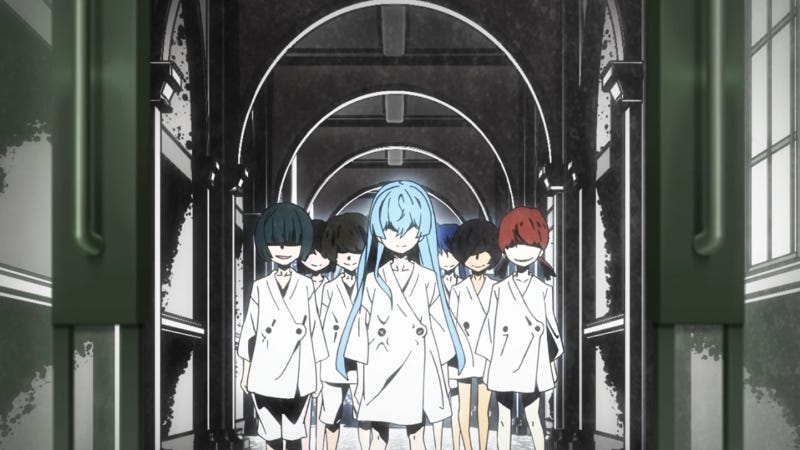
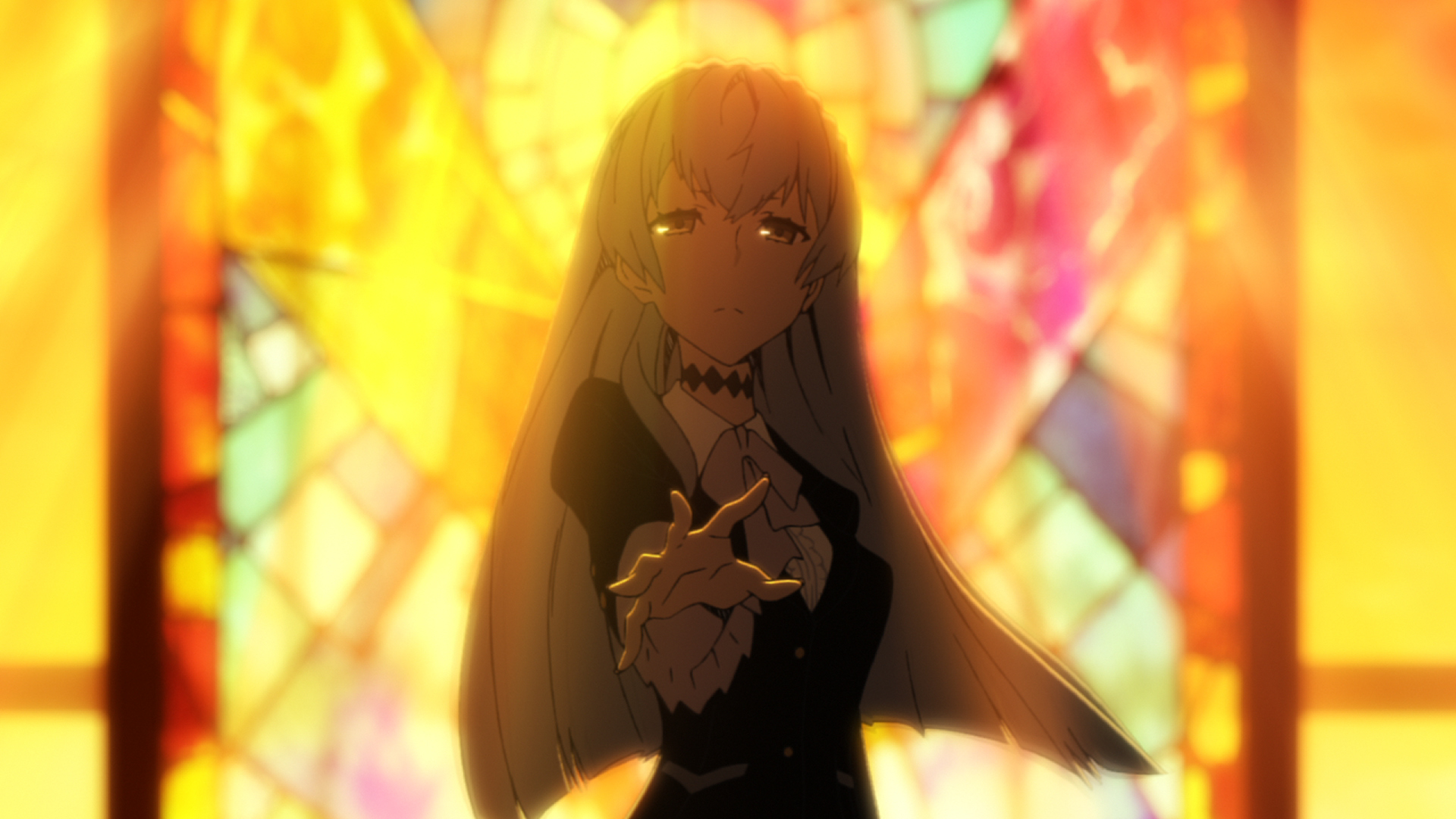
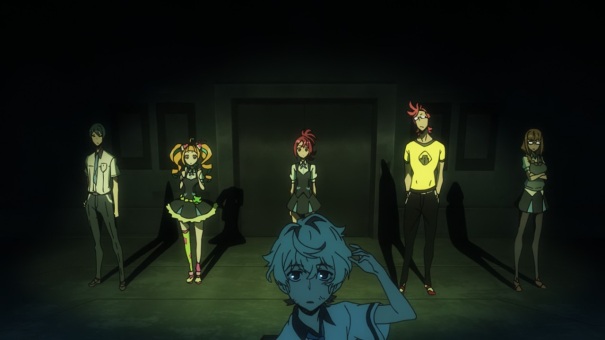
Years later, seven teenagers–who would otherwise NEVER be friends with one another–find themselves confronted by Noriko Sonozaki, a bland yet mysteriously cruel high-schooler clad in a suit and long pale blue hair. She sets up an elaborate scheme to trap and force these clique representees into one small conflicted group in order to revive the “Kizuna System.” All of its members, or “Kiznaivers,” become connected through pain in a farfetched attempt to thoroughly understand what truly binds people.

Image result for kiznaiver screenshots

In a fashion very reminiscent of The Breakfast Club, the Kiznaivers must learn to get along with each other and accept one another’s differences and desires, or else risk receiving much more than a bad lab grade. Little do these wandering teens know that pain is not always a physical ailment.


This slideshow requires JavaScript.

Disrupting the Social System

Whether lifting weights or running sprints, it’s easier to relate to people by saying “Ah god that sucked!” after the workout rather than during while you’re dying. Similarly, we quickly learn that it is not pain that binds the group, but the absence of that pain the minute the torture stops.  Basic application of sociology practices can easily tell us that breaking “social statics,” the order that holds society together, can lead to psychological effects both beneficial and disastrous. How are the three main broad modern perspectives of sociology displayed in Kiznaiver . . . ?

Related image

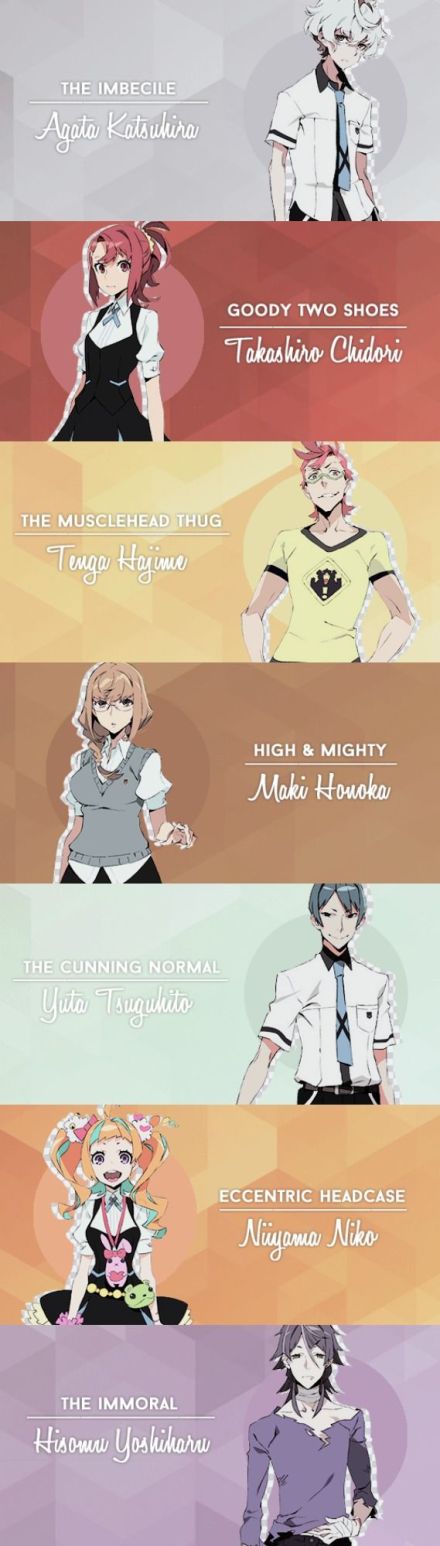
First is the functionalist perspective. “Society is a set of interrelated parts that work together to produce a stable social system.” This refers to the seven deadly sins that reflect each character. I didn’t tell you about them? Oh, well, here’s a pretty infographic for that:

kiznaiver

I did not make this infographic. Character images belong to Studio Trigger.

Like The Breakfast Club was trying to strike home with at the end, society CANNOT function WITHOUT these individual traits, and that each of these traits–to a certain degree–exist within each one of us. Through a mutual hostility towards Sonozaki and the Kizuna System, consensus is achieved within the group . . . . that is, once they finally make the “high and mighty” Maki come around. They quickly realize that if each of one of them does not sacrifice himself to the collective, then their summer would be dreadful as hell. The dysfunctions that the group encounters, such as embarrassing reveals and aching hearts, do, in the end, lead to social change in order to fix their wavering social instability.

Related image

Second is the conflict perspective. Oh yes, it wouldn’t be anime if our main cast wasn’t chased by idiots in ridiculous suits, racing against the clock to solve a simple equation of personality or reach the checkpoint in some quirky game. Sonozaki doesn’t like waiting for the pot to simmer, and we see this through her hiring of goons and manipulating of the higher ups to reach quicker means of an end. She exercises calm yet absolute control over her lab rats, and her form is only disturbed when Katsuhira Agata, our quiet protagonist, invites her in on the fun. Sonozaki may not be the best-developed of her kuudere kind, but her use of conflict as the prominent source for change adds a fair degree of speed and excitement to this show bombarded by melodramatic twists.

Image result for kiznaiver gomorin

Third is the interactionist perspective. The name’s self-explanatory. “It focuses on how individuals interact with one another in society.” Our crew of seven fall back on this perspective as they uncover their true selves and unravel the hearts of others. This perspective is interested in the ways in which individuals respond to one another in everyday situations, which is why Kiznaiver is rife with scenes where these unrelated characters are just eating or lying on the couch and talking to each other nonchalantly. Slice-of-life interactions and witty dialogue are what keep this anime afloat, after all. The show gets its edge from the characters’ constant defining and interpreting of each other’s actions.

Related image

REMEMBER, They Didn’t Chose This Life

It’s easy to forget that our seven peeps weren’t chosen heroes, but actually lab rats of a terrifying experiment lost in the past. In other words, they didn’t chose to save society by disrupting the immoral, negative flow–they were FORCED to make change, and I think that’s why they struggled so hard. If anything, they dedicated themselves to taking down Sonozaki and the supposed system designed to achieve “world peace.” These kids just wanted to continue being normal . . .

Katsuhira, a victim unresponsive to pain,

Chidori, a silent lover in denial,

Tenga, a street thug to pass the time,

Maki, a bookwork undetected by her peers,

Yuta, a popular kid distanced from his past,

Niko, a spoiled delusionist by choice,

Hisomu, a hospital resident seeking pleasure,

Sonozaki, a child in fear of suffering . . .

But because these seemingly unrelated individuals were bound together by fear itself, they learned to welcome the bizarre, the wacky, and the weird that resided within each of their souls, and to protest against the elusive faults of a perfect society so that their new bonds of friendship could persevere through even the thickest of storms. In the final bout to save themselves, the Kiznaivers resolved to defy the social norms dictating their lives, for in the deepest, darkest, most-messed-up cores of each other, they found only themselves staring back.

Image result for kiznaiver screenshots

“Everyone wants to carve their scars into someone else. Everyone wants to connect with someone else.” – Noriko Sonozaki


Pay no heed to the slightly pessimistic tone there at the end–it’s supposed to be a good thing! Also, don’t feel bad if you didn’t recognize any of the science I was spittin’ out at the beginning. I just happened to be in the sociology neighborhood at school. So, what have you learned from this? Well, other than that Sonozaki is kinda a mad, lovesick bitch on sedatives, we found that sometimes it is not always the positives that make people seek change. The Kiznaivers were tired of wallowing around with cringy, disgusting insides that decayed their spirits.

To eliminate that self-pity, they helped each other, which in turn helped themselves find personal salvation, which finally led to an improvement within their squad, which was reflected as a mirror of society itself. By putting their differences aside, disrupting social norms, and coming together with a strong goal in mind, they effectively corrected some of the dysfunctions of society, even if only for a brief moment. That, is understanding. That, is change. That, is healing. There, look at me finding the positives!

Kiznaiver is by no means one of the best anime out there–I’d welcome it as a “Coffee” here at the cafe. But, if you look hard enough, you might be surprised with what’s actually lurking in the belly of the beast. Perhaps seven deadly sins? All 12 episodes of Kiznaiver can be found on Crunchyroll if I’ve at all intrigued you! If you liked The Breakfast Club, then this also might be for you. And if things just don’t jive with you too well, heck, at least Trigger’s animation and Yuuki Hayashi’s music are entertaining enough. Oh, and we can’t forget its true legacy, the opening”LAY YOUR HANDS ON ME” by BOOM BOOM SATELLITES.

This concludes my January 27th entry in the OWLS “Disruptors” blog tour. Please check out Pink-chan (Pinky’s Palace) who did a lovely job right before me (as did everyone else) discussing the modern dystopian classic PSYCHO-PASS, one of my top favorites, no less! Oh, and get psyched for one of my best blogger buds Lita (LitaKino Anime Corner) to wrap up this exciting month with Samurai Seven! Until next time, this has been

– Takuto, your host

Image result

To disrupt, or not to disrupt: that is the question of change.

Empire of Corpses Reanimates a Classic Tale | Review

A brief spoiler-free review of the fall 2015 anime film “Empire of Corpses,” produced by Wit Studio, directed by Ryoutarou Makihara, based on the novel by Keikaku Itou. 


Oh my, is it already passed Thanksgiving?! Woah, since I’ve been slacking I’ll make this one brief. Shall we visit the first of three films based on the late novelist Itou’s melancholic work and see if Wit Studio was able to breath life into his ambitious project?

Image result

Zombies and Steampunk

Welcome to an 1800s London where zombies roam the streets! Not really, sort of. Scientists have played god with dead bodies long enough that they’ve patented it down to a system called reanimation. In other words, the Brits are reviving the dead. It’s not a foolproof process, however, for the key to understanding life itself–the soul–does not return upon reignition. Because these walking corpses are incapable of experiencing the joys and sorrows that life presents, they’re mainly revitalized to serve in the labor force.

Image result

But every lab experiment comes with its breakthroughs, and that is exactly what befell Dr. Victor Frankenstein. Rumored to have been the first to successfully reanimate a corpse with a soul, the great mad scientist suddenly disappeared–his work supposedly vanishing with him. Inspired by his love for research and science, John Watson pursues hunting Dr. Frankenstein’s notes regarding the blueprints of the soul in order to revive his best pal, Friday. Throughout his journey, Watson unearths the terrifying truths of corpse technology, and how costly the science is for not only the living, but also for those who have long since passed on.

Image result

What exactly makes up the “Weight of the Soul?”

I’d like to first point out that I understand why the film, despite its glorious visuals, was poorly received by critics. The first Project Itou film tries to dish out a lot of hard, unknown science, but above all make you feel emotional connection to the lead character Watson and his situation. Grasping the conceptual stuff is particularly tricky, and the ties between real life historical figures and their fantasy counterparts don’t seem to make understanding the basics much easier. It’s even arguable that the rules of the world presented are poorly laid out from the start. This build up of failed comprehension and attempt at emotional appeal led to a cataclysmic finale on both the story and visual levels.

Image result for empire of corpses

Beyond the messy climax, I did quite enjoy the relationship between Watson and Friday. Their exchanges (well, Watson’s actions and Friday’s silent responses) felt genuine, and above all, I think that matters more than a shaky concept deliverance does. When Watson felt curious or distressed, the actions were reciprocated on myself. Also, to go against the crowd, I really liked the female role. Though she mainly served as a reminder of the scientist’s goal–Friday serving as his ambition–I found myself wanting her to also receive a happy ending. The Russian scientist Nikolai could’ve used more screentime, but I digress since the show mainly revolves around Watson’s side.

Image result

The Incredible World of Sherlock Holmes

Empire of Corpse’s strongest point easily lies with Wit Studio’s fantastic job in creating an atmosphere similar to a Sherlock Holmes film straight out of Hollywood! Such entrancing lighting, rich symbolism, and articulate detail in the machines and other devices absolutely blew me away. Each of the characters stand out beautifully in their own way, from the deadpan expressions of Friday to the stylish English outfits of a steampunk society. Action scenes would engage any viewer (I’m a sucker for vehicle chase scenes, so the opening really drew me in), and it all culminates into a finale so stellar it became a visual feast. I had to pick between absorbing or comprehending, and, well, I think you knew which won. I did notice Redjuice and Egoist accredited, which would also explain the Guilty Crown vibes.

Image result for empire of corpses ending

While I cannot recall any specific tracks, the music did do the show justice in contemplating the Sherlock Holmes tone. On the auditory side, huge props to the English voice cast and THE ACCENTS that tied so well with the concept and setting. Wonderful performances from Jason Liebrecht (Watson) and Micah Solusod (Nikolai).

Final Thoughts

Even if the concepts presented are a bit tricky to grasp near the end, this movie achieves in the feels department for me. Perhaps I was missing the context of the original Frankenstein novel for a few of those bits, but I did find it okay for the most part. It’s another demonstration on how far man will go to pursue knowledge above all else, an ultimate nudge to the idea that for us humans, some things are best not knowing.

“Beauty and sublimity are not what shape the future. It’s the willpower to try to actualize one’s words and feelings for someone else–DON’T YOU SEE!?” – John Watson

Final Assessment

+ Breathtaking visuals, fantastic steampunk design

+ Emotional attachment to Watson’s struggle with Friday

+ Fascinating project history, happy to see Itou’s work animated

– Started off simple enough, but lost its footing by the end

– “Weight of the soul” not explained thoroughly

Image result


I’m signing off on the first Project Itou film with a hot “Coffee” rating here at the cafe! Understandably flawed, but still quite enjoyable. This was the finale to my Halloween break following Shiki, a title which I reviewed a week or two back if you’re interested. Shoutout to Crimson for recommending this movie to me!! What did you think of Empire of Corpses? Were you disappointed with the results or did you find it particularly noteworthy for anything? Let me know because parts of me (the living ones, at least) are still a bit conflicted! Until next time, this has been

– Takuto, your host

Image result

I know it’s fan art, but LOOK at that mechanical detail!

Shiki: The Frightening Science of Vampires | Review

A brief spoiler-free review of the 22-episode summer 2010 anime “Shiki,” produced by Daume, based on the novel by Fuyumi Ono.

How would you feel about being given a second chance at life? Was there work you left behind unfinished that just needed a few more final touches? What about reuniting with a loved one from your past life? An opportunity like this rivals that of winning the lottery–a dream fulfilled, is it not?

Now, what if you were forced to return to this wretched earth, strained out of the dead to continue maintaining your fragile body at the expense of friends and family? You’d be a burdensome leech, a selfish and disgusting virus which feeds off of the innocent and the ignorant alike just to preserve your own rotting corpse. If you could kill people without consequence, would it be easier to do? Would you feel more inclined to repeat your actions?

Shiki presents us with both scenarios of life for the undead, but its grim tone and somber character stories have us believing that life after death is truly and rightfully morbid.

Image result for shiki screenshots

Welcome to Sotoba – Population: Fear, Hysteria, and Death

This tale of madness descending is set in a remote rural village isolated from “modern” society. (We’re talking a town with traditional wooden Japanese houses and only one clinic to visit in case of emergency.) From the get-go, we already know that what will happen in the village will stay in the village. At first the atmosphere is cheery, starting us off through the eyes of hot n’ dangerous teen Megumi, a girl who feels like an outcast among the villagers because of her fashionable and trendy fantasies of city life (quite relatable, might I add). She lusts after a transfer student by the name of Natsuno who would be, as anyone could guess, charming yet mysterious “boyfriend material.”

Image result for shiki screenshots

But much of her young life changes when an enormous castle-sized mansion is built almost overnight–the extravagant yet seemingly-elusive Kirishiki family has moved into that vacant lot high in the mountains. They are reserved and elegant divas of the night, but what terror, if any, lies beyond their walled stronghold on the hill?

Image result for shiki kirishiki

And exactly like clockwork, strange disease and paranoia begin seeping through the cracks of these closed-off country minds. Villagers grow pale and unresponsive, only to pass away within days of their diagnosis! All of this perplexes our [arguably the] main character, the good doctor Toshio, and his battle against these unseen and mystical forces quickly causes his ironclad rationale to teeter on the edge of self-destruction.

Themes! Themes for all!

The story is loaded with conflicts of the individual vs. culture and society that would make any philosopher or English teacher quiver in delight. If you continue to dissect its characters apart, you’ll notice a healthy amount of psychoanalysis to be done. There’s also the very nature of these vampiric beasts that’ll surely give you goosebumps if you’re just in it for the action. All things considered, Shiki’s premise is well-crafted and cleverly presented through its many different viewpoints. The anime tries to handle the scenario through every set of eyes possible, and actually does a fair job at it.

Image result

Watching Occupation Shaping Perception

If this show is trying to preach one lesson to its viewers, it’s that OCCUPATION SHAPES PERCEPTION. First we have Toshio the Rational who wields science and logic as his guiding torch. His hands-on experience and repeated failure with his patients shape his view on how the village should act. Given this firsthand account of horror, the trauma is enough to eventually shake his mental stability. “Empty your hearts. In order to kill these demons we have to become demons.”

Image result for shiki toshio

Then there’s Muroi the Romantic writer and priest who believes through feelings that these demons are just like us. Even now, they only have special requirements to live. His benevolent approach leaves him without any clue as to how to fight a back, however, for his inexperience and urge to document the case rather than seek justice cause him to remain sane but forever alone.

Image result for shiki seishin

And finally we have Natsuno and Megumi, both Angsty Lovers who embody mixes of the doc and the junior monk. They remain rational and understanding of all that takes place, but their struggle against striving for the lives they desire to live under supernatural circumstances leads them to consequence. All of the villagers, save for these four, are static characters designed to move the plot forward and advance growth in our leads.

Image result for shiki screenshots

A Damn Good English Dub

A fair point is that I fell in love with the English dub voices before I did the characters, so props to FUNimation for that win–especially to Tia Ballard as Megumi, holy crap! Also, while there are a dozen characters that I loved (and a dozen that I hated), my heart goes out to nurse Yasuyo (yay for more Wendy Powell!), the busty, compassionate sweetheart clad in fishnet-leggings. What a frickin’ saint she is!

Image result for shiki yasuyo

Image result for shiki yasuyo

Relying on Story Horror Rather than Visual Horror

Onto the animation side, studio Daume actually did a very decent job. Several excellent cinematic shots and moldy/bold color choices were used to convey the eerie atmosphere. But I did have a few problems. As much as I took great pleasure in the Shiki black ombre eyes, too many different kinds of eye styles made me really dislike the ugly, small-pupil look that was overused on “insane” characters. Also, what’s up with that hair shaping? Natsuno’s nasty cut reminded me of the salad leaves I was munching on! (Yes, I did tweet about this).

I’m sure you’ve heard Shiki’s main theme “Shi-Ki” in one of your “emotional anime music 2 hours” compilation videos. But don’t just stop there! Check out the melodramatic tracks I left below which utilize a haunting choir, chimes, bass drums, a soothing macabre orchestra to create the illusion of nightmares stalking the shadows. They are a bit overused, but hey, you get so consumed by the atmosphere that repetition doesn’t matter. Composer Yasuharu Takanashi (Log Horizon, Oda Nobuna, Fairy Tale, Sailor Moon Crystal) remains one of my favorites, for he always does such phenomenal job in mashing together atmosphere and action.

“Day and Night”

“Eau de Vie”

“Pendulum”

Also, the second opening, “Calendula Requiem” by kanon x kanon totally rocked the house. Just look at those visuals–and the song, ooh the song!

Why is it Popular? Fresh Spin on a Legendary Concept

Shiki is praised for its ability to tell the same story through every character viewpoint possible; you get attached to individuals from both sides, which is quite a wonderful thing given the premise. It’s a nice rational approach to an ancient, typically fantasy or magical subject–The Science of Vampires, if you will. It presents us with a very well-thought-out tale of morality vs. rationality, never taking the easy way out to show its claims.

Image result

In a world where monsters and humans alike are pitted against each other, fear, especially of abandonment, consumes all who let it. Common people who are unwilling to let go of pre-existing notions are the ones that get left behind. It sounds harsh, but in this brutal and vicious cycle everyone except the sane ultimately lose. What draws the line between superstition and simply being afraid is how disturbingly far people will go to preserve their own “sanity.” It’s only after the smoke clears, however, that humans realize the error in their ways, and that any God has long since abandoned them . . . or at least some believe.

Image result for shiki church

Final Thoughts

Anyone can die at any time; no one is safe/excluded from the elements listed above, which is also why I really enjoyed Shiki. Fear of uncertainty through the supernatural catches us off guard, in that fear CAN and WILL strike at any time. The use of gory sound effects and beautifully ghastly music help to establish that fearful tone. Shiki may not have visually scared me, but its raw content sure was creepy, gruesome, and more interesting than any Hollywood horror film.

“This is what a world ruled by order looks like. Those who accept order can live together peacefully, protected from the unknown safe in their belief that all is as it should be. But when something happens to threaten this orderly existence, they will fight to the very death. By eliminating the threat, they hope to preserve the fabric of their lives–the order that holds their entire world together. And so they realize what a fragile world it is.” – Seishin Muroi

Final Assessment

+ Frequent tonal shifts, led by the many viewpoints, leave strong and vastly different impressions from beginning to end

+ Death can strike anyone, anytime

+ True fear and creepiness created by the supernatural STORY ITSELF, not necessarily the visuals (never takes the easy way out)

+ Wonderfully presented themes of morality between individuals, culture, and society, and how people are only as safe as their surroundings make them feel

+ Nailed the village horror atmosphere with frightful perfection; intricately woven web of characters and interactions between them and setting

– Eye and hair designs on some characters just looked dumb

– Fantastic and complementing soundtrack, but some tracks are a bit overused

Image result

What a Halloween break well-spent, no? Well, if anything could be said, it’s that those Japanese need real doors, not the paper-thin stuff you can hear through the walls, yikes! What did you think of this anime? It’s another “Caffe Mocha” over here! Were you completely freaked out or more invested in its thought-provoking messages? Let me know in the comments so we can talk about this beloved title! I’m so happy I got to finally watch this very peculiar classic. Until next time, this has been

– Takuto, your host

Extravagant Divas of the Night, the Kirishikis

My Hero Academia, Where we’re all a bit Quirky | Review

A brief spoiler-free review of the 13-episode spring 2016 anime “Boku no Hero Academia” or its English title “My Hero Academia,” produced by Bones, based on the manga by Kouhei Horikoshi.

***Dedicated to Crimson, a silly blogger pal and shipper of all things MHA. I hope you enjoy it ~!

I know we all are a bit quirky, but in the universe of My Hero Academia, 80% of humanity takes quirkiness to the next level. Recently discovered super powers, otherwise known as “quirks,” have overtaken the daily lives of most people. Not all were blessed with powers though, Izuku “Deku” Midoriya being one downtrodden soul.

Image result for my hero academia screencaps

So while all of his friends (more so enemies) set their sights on the prestigious UA High School, an intense school dedicated to raising heroes, Deku continues his menial routine of taking abundant notes on local big-shot heroes and especially eyeing his idol – The almighty All Might!!! (Yes, the exclamation points are necessary.)

When Deku is suddenly caught in the chaos of rescuing his rival from a hideous slime villain, All Might, upon witnessing his unwavering heroism, vows to train young Deku into a muscular man and eventually pass on his quirk to him (because his quirk relies on inheritance).

Image result for my hero academia all might

Flash forward past the months of rigorous training and it’s enrollment time – and Deku is intent on making the student roster. Not surprised to see his rival Bakugo sitting at the back of the classroom, Deku’s new life full of new friendships and hardships begins. And through his academia, he will learn both the harsh realities and unmistakable joy that come with being a true hero.

Image result for my hero academia screencaps

The Underdog Reincarnated, But Made More Interesting

My Hero Academia succeeds in many merits, the obvious one showing the traditional underdog tale that we all like to resonate with through explosive visuals and just high production values overall. Call it cliché, but people still do want to watch the curly-haired nerd beat up the bad guys—it’s a tried-‘n-true formula, and Academia does not fail to meet the expectations of the genre. I dare say it trumps the more complicated plots of Hollywood hero films just because its lead character is so . . . well, you really, really want to watch him kick ass.

Deku is a kid with a big heart for heroes, and I wish I could say that about most people. Even though he’s been quirk-less since birth, his dreams are still set on UA and All Might, and while it was shattering to see that flashback of him finding out [insert meme here], I think that is what has made him such a loveable guy. Being of humble origins, obtaining powers from a supernatural source, and faced with challenges every day, every hour of the day, Deku practically had the hero formula drilled in him – And he knows it, too!

Image result for my hero academia screencaps

He’s SUPER enthusiastic about the whole hero bit. Watching him get all geeky about the city’s greats never fails to lift spirits, which is why when Deku is taken up on the aw-inspiring All Might’s offer, a part of me just cracked, then stitched itself together again. It’s a show that rewards not only its cast, but its viewers as well.

Image result for my hero academia screencaps

A Colorful Class of Soon-to-be Friends

There’s also the very interesting setting—a world where heroes are viewed by the media and the public as superstars. Their identities are still concealed behind their unique quirks, but for the fanboys like Deku, merely getting firsthand coverage of a battle is enough to wet pants.

Image result for my hero academia class

But how do the kids in Deku’s class measure up? It’s hard to say. His class is HUGE, and to spend the first several episodes on Izuku’s background alone doesn’t leave much room for the rest. It’d be like if someone flashed you a bright and brilliant work of art, then quickly tucked it away. You’d never know if it was a masterpiece or not, but you sure as heck are interested! Beyond the playful and bouncy Uraraka Ochako (I love her name), the noble class officer Iida, and everyone’s favorite frog girl Asui, only Izuku’s rival Bakugo shares part of the spotlight. As a delinquent with rough features, watching his growth waver between righteousness and chaos really made for an interesting story arc. I only wish we got more attention for each of these quirky classmates, but given the brief runtime, there’s a lot of setting-up to do with the overarching story.

Image result for my hero academia screencaps

Comic Book The Anime

It helps that the animation is bright, active, and uncensored in the body fluids department . . . I’m talking about blood, sweat, tears, and snot, of course. The action scenes with All Might are particularly empowering. It’s saddening to see him shrink to his normal scrawny human physique after being buff and superior. I hope the animated part of the franchise carries that torch straight through to the end just like Deku is so far.

Image result for my hero academia episode 13

Studio Bones nails the cartoonish atmosphere and bubbly expressions of Izuku’s hobby, stringing out comedic slapstick reactions whenever possible to keep the tone light. Action scenes with the superpowers themselves draw us viewers into the wacky world where large-scale catastrophe is commonplace. That is, so long as a hero soars swiftly in to quell the fire. The character designs are all very individualistic and flashy, which does wonders in helping you remember who’s who. While the sharp facial designs and bold outlining in particular caught my eye, the frequent switch a softer and doughier style during school hours really bothered me. But as a whole, all of the actions culminates well into this high-intensity finale that’s furious in every single swing and punch.

Image result for my hero academia costumes

Music is pumped-up to the max for the hero scene, silly during the comical training scenes, yet more emotional to fit Deku’s resolves and inspiring speeches with his mentor. What especially caught my ears was the opening, “The Day” by, don’t laugh, Porno Graffiti (HAH).

Final Thoughts

As much as it’s simply a glance into the franchise, I like My Hero Academia’s first seasonThere’s not much else to be said that hasn’t been already. It’s a show about growing up, one of those feel-good anime that makes you want to run out and punch a guy in the face just because you get so hyped up with energy. Full of colorful action, comedy, super powers, and likable characters, My Hero Academia is a comic book come to life by THE studio Bones being Bones again. Should that not win you over, then ALL MIGHT himself is enough of an empowering reason to watch this show. To think that a second season was greenlit before production of the first was even over gets me all revved up for more. If you’re not already heading to class each with MHA, what’s going on? Add this anime to your schedule! PLUS ULTRAAAA!!!

“This is something I was once told: ‘Something that you receive because you’re lucky and something you’re given because you’re recognized are different in essence.’ Take that to heart. This is power that you earned because of your own effort.” – Our greatest hero, All Might

Final Assessment

+ Izuku stands out as an endearing lead amongst the standard pool of underdogs

+ Exciting and energetic fights with explosive effects

+ The All Might-Izuku-Bakugo relationship is especially an attention-grabber

+ Sequel announcement cushions story faults

– Ultimately skimming the surface of a lively and most-likely successful story

– Such a large cast DEMANDS further exploration

Image result


If it seems like you’re having déjà vu, that might be because most of the ‘script’ for this review came from my Episodes 1-5 Thoughts a while back when it aired. I just didn’t feel like rewriting and regurgitating the same material, haha. But looking back at the spring season, this is definitely one of the bests to emerge—a 4/5 “caffe mocha” rating over here! Now that it’s all out, what are you waiting for? Head to FUNimation.com to watch the whole darn thing for free! I’ve also heard the English dub and can confirm that it’s also pretty solid, Izuku and All Might’s performances in particular. Now I’m just waiting for a physical release! Till next time, where we’ll be looking back at more 2016 spring titles,

– Takuto, your host

Image result

“Go beyond,” awwww~ *sobs without resistance*


Mayoiga: A Village Lost, But How Far Off the Trail? | Review

A brief spoiler-free review of the 12-episode spring 2016 anime “Mayoiga” or its English title “The Lost Village,” produced by Diomedea, directed by Tsutomu Mizushima and written by Mari Okada.


While I didn’t watch every airing show this past spring season, I do know that many stirred lengthy discussions and debates. In the case of The Lost Village, you’re going to see my thoughts regarding a show which received so much negative feedback that some people even began to reinterpret its intention entirely just to decipher if it was actually clever or plain crap.

A New Life Awaits

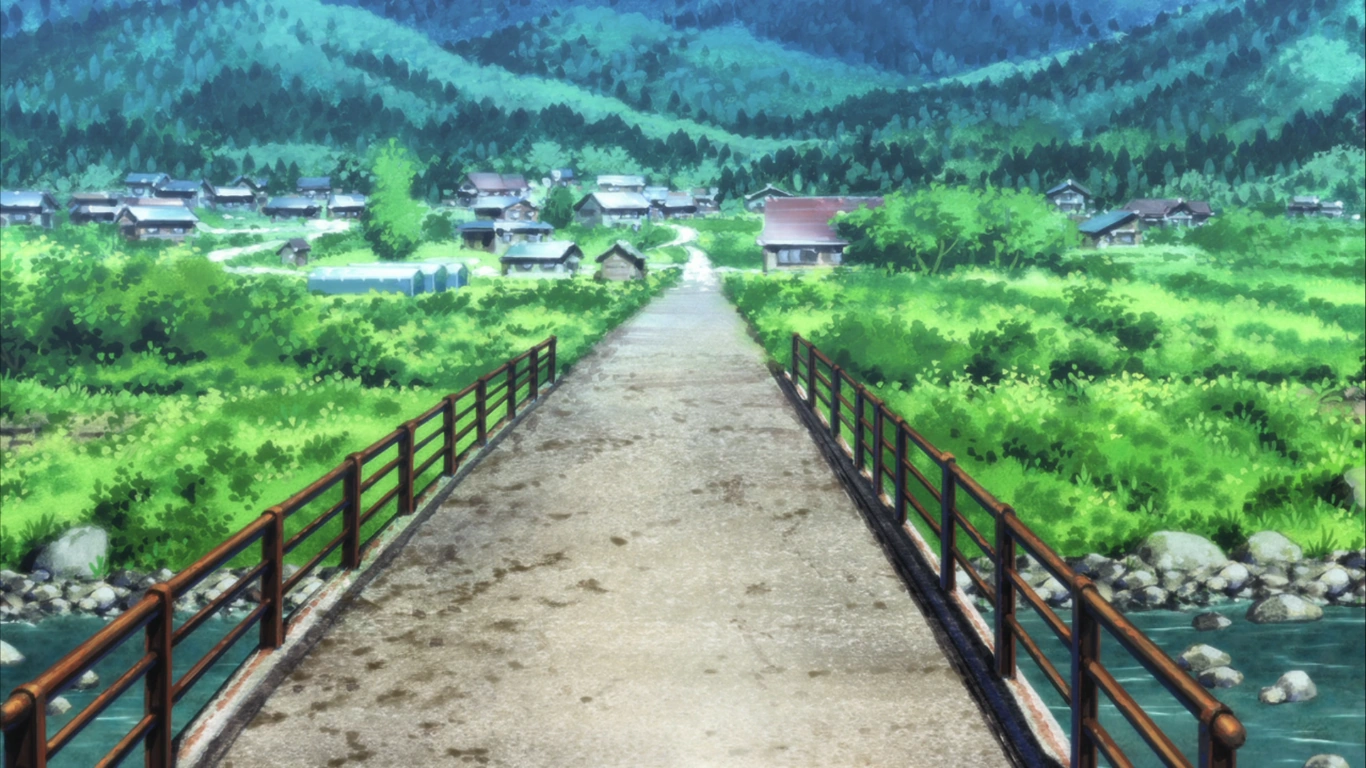
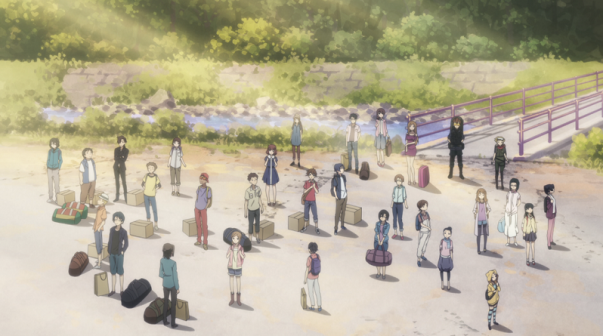
Simply put, I’m sure more people than you’d expect would easily raise their hands at the chance of getting to restart life in a Utopian village. And that’s exactly how Mayoiga begins: 30-some-odd children and adults chosen by an internet survey are gathered on a bus ride to paradise. This village lost in the mountains is so hard to find that even the police can’t seem to mark it on a map. Only a handful in our eccentric troop dwell on the sketchy project until they reach their destination — Nanaki Village. After all, the party is more concerned about how they’ll want to live once they exit the bus.

Mysteries start piling up one by one. The village seems to be abandoned, yet everything is orderly and the houses seem fairly clean. They also discover a recently-gardened patch on one end and bloody claw marks scratched into trees on the other. The forest in particular seems like it’s shrouding something. As if more tension was needed, some members of the party vanish without a trace, and like clockwork, it becomes only a matter of time before superstition and doubt plague the group like wildfire. Now begins their true test of survival, for monsters eagerly lurk within the minds of the doubtful run rampant whenever escape is attempted. Is it a curse? An illusion? Or are these seemingly otherworldly phantoms just messin’ with our heads?

Something is Missing . . .

Does Mayoiga provide thought-provoking ideas? I’m still not entirely sure myself. On one hand there’s a certain level of personal acceptance that doesn’t go quite as far as I was hoping it would. Instead of confronting their past, they flee desperately, clinging to ignorance as bait. While its execution is unique, it isn’t all quite there. Perhaps you can lend it to the enormously underdeveloped cast, or maybe it’s the poor balance between character skepticism, village mystery, and heavy-handed theme. I suppose that’s why you end up feeling slight satisfaction for only half of the cast. The lack of character motivations (why they wanted to restart) for the remaining ensemble also didn’t give me enough reason to give two shits if someone went missing or died.

On the other hand, it’s also tackling superstition in that ugly Salem Witch Trial style. What prevents this ‘climax’ from being truly powerful is the fact that these guys are dumb. Plain stupid. Why can’t we talk each other — question each other, even — instead of raising a weapon? Unlike Salem, religion isn’t the issue here. Neither are societal bounds (cause they’re in the middle of nowhere). They’re all just FRIGGIN’ INSANE, dumping their doubt on one little shady girl in hopes that, like their pasts, the terror be offed.

A Bus Full o’Freaks

I also can’t talk much about the characters due to spoilers. When I say that, I just mean the main trio: Mitsumune, Hayato, and Masaki. Mitsumune is an awkward soul, having only been friends with Hayato and not getting much contact with the female species. He really doesn’t know anything, but we can’t blame the unknowing, now can we? Hayato is a smart guy you’ll only find hanging around Mitsumune for his own reasons. Masaki, the group’s verbal punching bag, is a young girl rooted in a suspicious past. She also claims to not know anything, yet she is somehow tied to the village . . . I really don’t mind these three, but most of the others — especially that batshit insane execution girl — are simple-minded and annoying.

Going into it, my favorite was Koharun, the shady tour guide, as she really felt suspicious and I love feeling that way. By the end, though, that position was taken by the flirtatious [I swear she was a prostitute] woman with the high heels because EVERY SINGLE THING she said was sexually implied, and that’s just awesome. Her and the pudgy detective girl. She was pretty cool, too.

Facing Our Fears. Literally.

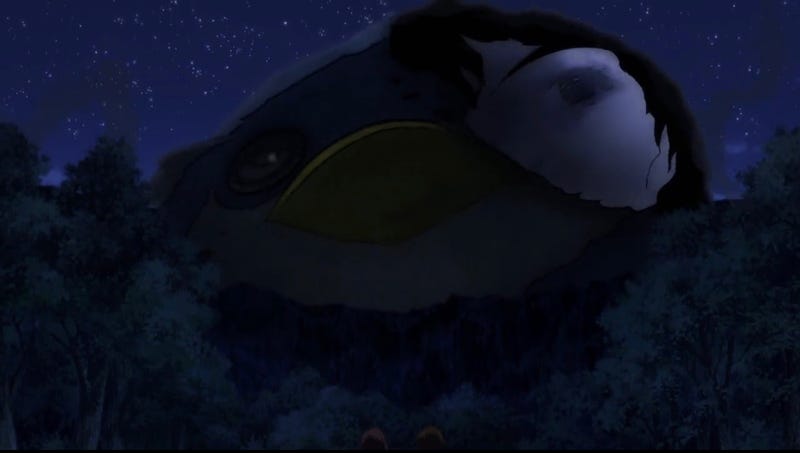
Now, the sheer illusionary work behind the animation team really makes up for the supernatural ‘talk’ the characters boast about. Raw CG was used like crazy in most of the nightmares that stalked the cast, and while that alone looks terrible, the fake appearance enhances the oddity and spookiness of it all. For once, asking the 3DCG “What the hell are you even supposed to be?” is a complement. Let it all rattle your brain. Outside that, characters look pretty nice — almost something out of P.A. Works — but the dialogue scenes are really boring.

Masaru Yokoyama’s soundtrack is by far the winning aspect of this series! Apparently he also composed the OSTs for Your Lie in April, Rampo Kitan: Game of Laplace, and Lord Marksman and Vanadis among others, so make of that what you will. His chosen style here is obviously mystery and suspense, as the main theme and its many renditions is especially haunting, the kind of “LET’S GET OUT OF HERE” music you need with a show like this. Sadly couldn’t’ find any tracks on the web but the damned Hippopotamus song (my heart goes out to thee as best song). Just know that the OST effective in establishing mood if the creepy village didn’t do that for you.

The opening “Gensou Drive” by Ami Wajima was also fairly good, though I much preferred the ending theme “Ketsuro” by Rina Katahira. It’s much slower, more wound down, and unfitting for the show’s overall tone, but I couldn’t help but look it up afterwards to add it to my playlist. Its position is similar to Parasyte -the maxim-’s ending: slow yet oddly yearning for hope. Visuals were boring as heck, but a nice song nonetheless.

Final Thoughts

At the end of the day, I’m just so tired of reading about The Lost Village. The community has exhausted me on this one — To quote Lovepon, “Grabbed each of my legs and tore in opposite directions.” I went in with a lot of excitement for a hot mystery show and ended up with a slightly twisted yet comedic take on rebirth. I’ll admit that it had me going for the first five or so episodes, but once the ghouls revealed themselves, it didn’t take off like I thought it would. Was I supposed to be scared? Maybe . . . ? But I still laugh that I tried watching this at night and got too scared to leave my room to pee, hehe.

The Lost Village is to say the least an oddball, and regardless of whether it was trying to be a satire of horror mysteries or something like that, I can confirm that it fell flat on its mission. I think it all just strayed waaay too far from the trail it seemed to promise, much like a wanderer looking for paradise who got lost in the process. As a simulcast, however, I cannot deny the fact that I kept coming back each week just to see how it would end . . . Like, the bus went up in flames, but how far would it roll down the hill?

Pretty far, actually. I can’t see it being brought up ever again after a week or two.

“I’m interested in the results.” – Lion

Final Assessment

+ Given its composition, village mystery vibe kept up a good ¾ of the way in

+ Main theme song in OST fit the eerie tone perfectly

– Poor balance between characters’ skepticism, actual village mystery, and themes it might’ve been trying to press

Enormous cast with lack of believable drive and development from those move forward; stupidity is contagious


I’m slightly annoyed with Mayoiga as is, so you’ll find it here under the lowly “Breads” archive. It’s not bad, but there are so many other anime out there that explore the same concept, yet do it better. Like Angel Beats! for the personal acceptance stuff or Another for the superstition bit. The show also could have been interesting and made me have wanted to think had there not been so many troll characters. Did you follow The Lost Village this season? If so, how did you feel about its overall presentation? Until next time, this has been

– Takuto, your host


Gurren Lagann: The Larger-Than-Life Story of Us | Review

A brief spoiler-free review of the 27-episode spring 2007 anime “Tengen Toppa Gurren Lagann” or simply “Gurren Lagann,” produced by Gainax, based on original story by Hiroyuki Imaishi and Kazuki Nakashima.


Imagine your whole world being contained within a shabby cardboard box. There are no cracks, so light doesn’t penetrate through the sides, and inside the box is nothing but a floor of dirt. This is life, and it the only time-waster is digging deeper in hope of discovery.

Then one day, *chink!* “What is this?” You find a key buried fantastically deep under your feet. Perhaps you confused your increased heart rate with the rumbling of the box, but suddenly, the cardboard flaps burst open and a giant face gazes down on you. So what now?? With possibility erupting with every new experience, you rise to your feet and step outside the box. Is this a room? You run out the door. So this is a building? You flee to the street where an unimaginable light floods your vision. Shocked yet determined, the sun, the stars, and the ever-expanding universe await your exploring spirit.

Breaking the Surface

Such is the story that Gurren Lagann tells, and it does so marvelously. In a world where people are forced to eke out a living underground for fear of what roams above, we hone in on a little boy named Simon who, among his grungy village neighbors and peers, is pitied as a quiet loner with no real dreams. He is just another digger, though quite skilled, who spends his youth drilling deep beneath the crust for artifacts long-lost. Any excitement in Simon’s life stems directly from his boisterous “bro” Kamina, a defiant ruffian with cool shades who remains hell-bent on leaving behind the village and scouting the wondrous surface.

And excitement is just what Simon gets when he uncovers a drill-shaped key and a giant robot head. Putting two and two together, Simon and Kamina activate the newly dubbed machine “Lagann” to fight against an even larger robot that falls from the surface. Amidst the chaos, the guys meet the red-headed rifle-wielding Yoko Littner, a girl who roams the upper lands.

Tossed into the sky by an enormous EXPLOSION, the vastness world above becomes clear to Simon and Kamina. Teaming up with Yoko and her gang, the grand struggle between the Gunman-wielding “Beastmen” and the renegade humans only intensifies until their rancor reaches the edge of the galaxy — and beyond.

Inspiration, Purpose, and Fate

Carving their names in history, the squad is always breathing on the edge of tomorrow. Their determination to live free lives under the sun, fueled primarily by Kamina’s leadership, allows them to stand such a miraculous chance against an enemy who has conquered basically the known universe. It’s an inspiring tale, that’s for certain, and watching Kamina take a shit on the “ignorance is bliss” message is half the fun. If you don’t know what it is, KICK ITS ASS. If it’s hot on your trail and stealing your women, KICK ITS ASS. Let nothing stand in your way of learning and growing as a human.  

There’s not much else I can say about the story other than what I covered in the intro. I mean, it starts as a small quarrel in the bar, then gets moved out into the streets. Soon blocks are all fighting each other before it becomes dueling towns, kingdoms, continents, planets, galaxies — I think you get the picture. Each enemy is tenfold stronger than the one that came before it. The world’s energy, known as Spiral Power, can be seen as a metaphysical embodiment of inspiration, drive, purpose, intention — Whatever you want to call it, it’s about overcoming any obstacle, no matter the size. And I like that a lot. Gurren Lagann wants fate to be left in our hands, not in those of a third party observer.

The Gurren Crew

The characters all range from as gentle and quirky as Simon to the bombastic Kamina to Yoko’s tech junkie (and rather gay friend) Leeron (who is, yes, my favorite character). Like its ever-expanding story, we’ll watch Simon go from boy on the sideline to a man in the front. He’ll borrow traits from the foes he faces and the allies he makes, but more prominently, Simon will not only step outside of Kamina’s brazen shadow, but cast his own in due course.

I want to say a lot about Kamina, but the only words I can use are “WHO THE HELL DO YOU TH–” okay fine, he’s simply a badass. Same is arguably to be said about Yoko, though I found the series’ latter half portrayal of her much stronger and less of a girl-with-a-big-gun fan-service token. I also forget Rossiu, a young religious boy, and Viral, a renegade with a Gunman, two chumps who’ll eventually cause a lot of trouble despite them having their own motives and ideologies. I didn’t care much for these two, but they were interesting to watch develop.

Rossiu in particular is an interesting case, in where he, like Simon, was forced underground not because their village leader was a power-hungry dick, however, but because it was the will of God. His actions in the second half will unfortunately reveal the toll his origins have taken on him, even though it’s far too late to call it justice. Considering its trigger happy mood, it was a dark part of the series that I basically wish didn’t even exist.

Meanwhile, Leeron is always being Leeron: a big, gay-ass time.

The money-maker:

The Bold Presentation

Both the animation and the music are very hit or miss this time around. As a fan, this was spectacularly animated (episode 4 tho?), and it was just as explosive as I wanted it to be considering KILL la KILL is its “spiritual successor.” Even though I think the Gunmen are pretty goofy looking, the colors are rich and bold to match its cast. I still believe that Lagann’s first episode is one of the most fluid and best-looking ones I’ve ever seen!

I do have to speak as a reviewer, however, and that voice of concern is in the character designs and movement. It’s very cartoony, so for people who only leech off of studios P.A. Works, Ufotable, and KyoAni (just to name a few), you’ll probably be quite turned off by the somewhat grotesque and angular designs. A side note: high quality is kept pretty constant throughout.

Favorites from Taku Iwasaki’s OST include the emotionally-charged anthem “With Your Drill, Pierce The Heavens!!,” the military-ready “BafBaf! Do You Like… Burning With Such Passion,” the operatic yet ruined-by-rap “Libera Me From Hell,” and my number one (which I believe best represents Gurren Lagann), “Fleeing the Hot desert, Team Dai-Gurren Can Continue.” The rest of the soundtrack is pretty skippable on its own.

Final Thoughts

Gurren Lagann can be viewed in two ways:

  1. It’s a crazy adventure about a boy who grows up into a man by following his brother’s footsteps in liberating the world of evil beings and conquering its trials.
  2. It’s the story of raw motivation — the idea of controlling possibility — and expanding your view of the universe through conquest.

While it can be seen in two entirely different lights, both objects cast shadows that intersect at the crossroads of EXPANSION. It encourages us heartily to find the drill within ourselves — To reach deep down and just turn it on! If you want something, dammit, “Kick logic to the curb, do the impossible,” and just GO DO IT!! After all, “A frog in a well knows not of the great ocean (Negima!?).”

Lastly, I found Kamina’s signature advice to provide a nice peace of mind.  He constantly shouts, “Believe in the me that believes in you,” and even though he’ll later preach to just believe in yourself, I think it’s still a good temporary fail-safe for last-minute faith. In unsure times, relying on a friend who knows you’ll be okay is quite calming. All this and more is why I’ll recommend Gurren Lagann to anyone who doesn’t mind outlandish art styles and the mecha genre. While they won’t ruin the experience, per se, they are heavy plot devices. Have fun with that huge plot twist midway! Gurren Lagann is badass and tons of fun. And best of all, it puts possibility in YOUR hands. Go out and explore what this beautiful world has to offer.

“We evolve beyond the person we were a minute before. Little by little, we advance a little further with each turn. That’s how a drill works!” – Simon, just another digger

Final Assessment

+ Ideas of crushing fate and owning your own future are explored thoroughly; ultimate antagonist should also prove thought-provoking

+ Absurd and bombastic journey with an incredible cast of colorful characters; Simon, Kamina, Yoko, and Leeron are just awesome

+ Explosive animation with fluidity despite the rough designs

– Art style is not for everyone

– Wish there were more standalone tracks, even though what we got was great

– Some actions in the second half add unnecessary negative tone


While Gurren Lagann is obviously a “Caffe Mocha” for me, what did you guys think of it? Also, man, it is hard to write a review about a show that has already +1,000 reviews in circulation! I tried, though, haha! What you thought about Lagann and/or the universe? Were you turned off by its quirkiness, or did you embrace it? And hey, if you enjoyed my thoughts, drop me a ‘like’ to let me know! I’ll totally be buying Aniplex’s DVD box of it . . . whenever my wallet pierces heavens. Until next time everyone, this has been

– Takuto, your host

When does a man die? When he is hit by a bullet? No. When he suffers a disease? No. When he eats a soup made out of a poisonous mushroom? No! A man dies when he is forgotten.