Sailor Moon “Black Moon Arc” Themes, Motifs, & Symbols

This is PART II of the Sailor Moon analysis series. Click here for PART I “Dark Kingdom Arc.”


Welcome to the long-awaited continuation of this Sailor Moon light analysis series! Like I did in my overview of themes, motifs, and symbols in Sailor Moon‘s “Dark Kingdom Arc,” I want to try veering off the traditional review path and instead focus on some of the thematic devices and elements in my favorite manga or anime series. These posts will not aim to critically analyze elements of the work but rather provide a leaping-off point to prompt your own discussions. I encourage readers to use this post as they see fit (just be sure to tag me and link this page), and I hope you will find it useful!

The themes, motifs, and symbols discussed here pertain specifically to the “Black Moon Arc” of Naoko Takeuchi’s Sailor Moon manga and the Sailor Moon Crystal anime series. Other themes, motifs, and symbols may also apply, though I plan to save those devices for future posts where they are more relevant in other parts of the franchise (like the use of dreams inSuperS). At the same time, I’ll avoid repeating any items from previous posts because, like most series, Sailor Moon tends to build off of existing groundwork as the story progresses. As such, this listing is by no means exhaustive, but it should help anyone trying to understand how some of the thematic devices function within the narrative. SPOILERS AHEAD!

Themes


Desire as a Slippery Slope to Possession

It’s no coincidence that the classic anime refigures the “Black Moon Arc” as Sailor Moon R, an R which is commonly believed to signify “Romance,” “Return,” or “Rose.” Plights of desire and envy ignite every moment with new layers of meaning to the word “romance.” Prince Demande’s overwhelming desire to capture Neo Queen Serenity and demonstrate his mastery is a clear twisting of the romance shared between the Queen and her King Endymion. Endymion stands behind Serenity as an act of giving love, while Demande, well, demands that possessing Serenity and her Silver Crystal is the only way to effectively communicate his desires. In truth, Demande likely felt “bewitched” by her superiority, and so he tries to place a bell jar over his love out of an unwillingness to accept that her strength—her capacity to love—is greater than his own.

Duplicity Is Deception

Doppelgängers or mirror personalities loom in the shadows of many characters, reflecting both a semblance of repressed desires and a gross exaggeration of said truth. Tiny Chibiusa has bold Black Lady, the Queen of Nemesis cloaked with power AND the man of her dreams at her beck and call. Little does she realize that a more earnest sense of self awaits around the corner in the form of Sailor Chibi Moon. Sailor Moon (or Neo Queen Serenity) has the submissive, altered version that exists in Prince Demande’s evil eye(s). All of the Black Moon members bear desires original to them that are buried beneath Wiseman’s hypnotic effects. And even Wiseman himself masks his true form as Death Phantom, shedding his layers of deception only as the Senshi are able to wipe away each one.

Distance Breeds Love and Hate

They say that the farther we are from the ones we cherish most, the stronger our passion for them—and despise for others—can grow. Sailor Pluto, known for residing at the forbidden corridor between space and time, is living proof that experiencing distance from our loved ones can reinforce that same fondness for them. She views the dedication to her task as a positive way to deepen her bonds with the royal family’s members. In a way, she is a foil to Wiseman, who instead of safeguarding space-time hides within its folds, his hatred for Serenity heavy in his heart. On the other hand, both Usagi and Chibiusa view their rotating separation from Mamoru with frustration and jealousy towards the other girl. When one has her moment with Mamoru, the other is often caught up in worry and vexation, however needless it all seems in hindsight. It’s astonishing how a little separation can so drastically affect us.

Isolation Creates an Echo Chamber

For a series about love and romance, many characters across the “Black Moon Arc” experience aching loneliness and anxious ideation from their isolation. On Planet Nemesis, Wiseman stews in his own depravity and torment as a rebel forever banished from humanity on Earth. Rather than use the imprisonment cast by Neo Queen Serenity to reflect on the error of his ways, he mines Planet Nemesis for the Beguiling Black Crystal, a gem which only furthers his corruption. It’s not just the bad guys damaged by isolation, though. In the 30th century, Chibiusa is ostracized by her classmates for being the Queen’s daughter; her mother has much grander ordeals to attend to than child-rearing, and the Inner Senshi often accompany their Queen. The echo chamber of her perceived isolation is exploited when Chibiusa flees to the shadowy edges of space-time and Wiseman lures out these anxieties within her. Of course, there’s also Sailor Pluto whose sole guardianship over space-time leads her to ever wondering if her work and dedication were truly enough to please her Queen and, in ways unrequited, her King.

The Futility of Changing History

After becoming disillusioned by the supposed unaffecting ways of Crystal Tokyo’s monarchal rule, the Black Moon Clan joins forces with Wiseman, a terrorist exiled to the far reaches of space, to travel back to the past and erase the possibility of a new Silver Millennium being created in the 30th century. As the Sailor Guardians thwart every one of the Black Moon Clan’s missions, however, it becomes apparent that history is a fixed constant, one that is futile to change. Even if the Inner Senshi become detained or incapacitated, the lone Guardian of Space-Time can be called upon in their darkest hour.

Critiques of Monarchy and Singular Authority

When the Sailor Guardians make their way to 30th century Crystal Tokyo, they find that Neo Queen Serenity had bricked herself up in the Crystal Palace as a final act of self-preservation. Granted, this decision safeguarded the one hope that could be used against the Black Moon, but it’s this same singular dependance on one figure to constantly save the day that landed Crystal Tokyo in so much trouble when the Black Moon first invaded. According to their account, Neo Queen Serenity only graced the public to protect her people against rare acts of terrorism. She was, to the renegade Black Moon (who were once citizens of Crystal Tokyo themselves) a leader in name only—a concept, even. With all vestiges of celestial power sealed within the slumbering Neo Queen Serenity, it almost begs the same question that the Black Moon propose: Why does a superior 30th-century human race still rely on the crown, and why can’t the radiance of the Silver Crystal—the symbol of monarchal authority—be shared by more than one individual?

Motifs


Blackness

Black Moon. Black Lady. Beguiling Black Crystal, black as the abyss of space. The “Dark Kingdom Arc” introduces a similarly vague word to express the forces of evil, but whereas darkness exists on a spectrum of light, black connotes just that: stark, opaque, dense, and without dimension. The evil present in the second arc of Sailor Moon is far more sinister in scale, and its shadows are twice as black. Interestingly, the notes in the manga describe that the Black Moon Clan members Crimson Rubeus, Verdant Esmeraude, and Azure Saphir unite under Prince Demande as the primary colors found in light (red + green + blue = white). When they are removed from the picture, the light is gone; in their stead, “Black Lady” reigns supreme.

The Future

Anxieties about what the future will bring swirl in the hearts of many. For the girls living in the present, it’s mostly concerns with studies, extracurriculars, and friendships. For all of the “aliens,” this worry is retrograde. Having lived to see 30th century Earth, the Black Moon looks to the past to weed out their future enemies. Likewise, Chibiusa fears the reality that the legendary Sailor Moon of the past may be unable to protect her family in the future. After weighing her future against humanity’s, Sailor Pluto makes the desperate call to stop time in the ultimate showdown against Demande. The future is always at risk, ever slipping between characters’ grasps. Simultaneously, it is that which everyone is living through—a stage of possibility that fluctuates on every whim, breath, and pulse shared by the actors. Regardless of the consequences, it’s Mamoru’s comment that closes out this clash for romance, dominance, and the future: “It wasn’t a dream. It was the story of a future that will be here before we know it.”

Acts of Motherhood

This arc, which is devoted to exploring love and its many different forms, does not neglect the mother-daughter relationship in the slightest. Usagi and Chibiusa’s relationship starts out rough, but the edges start to smooth once the two develop a routine: waking up, going to school, playing at the arcade with friends, fighting over Mamoru’s attention, combatting the forces of evil, and then returning home to sleep and start all over again the next day. In particular, it’s moments when Mamoru is present that Usagi feels the conflict of love, for his caring gaze seems split between the two girls. When Usagi heads to Crystal Tokyo and learns more of Neo Queen Serenity, she starts to adopt a more motherly tone with her future daughter. Furthermore, Usagi’s mother begins to feel the gravity of the cosmos pulling her daughter away from their little home in the Juban District. Even Luna must accept that her daughter Diana knows more about the future and what’s best for everyone than she does (which is a RARE occurrence indeed). It’s the willingness of mothers—Usagi, Ikuko, Luna—to relinquish their daughters and let them experience the world that allows trust to strengthen on both sides.

Spectre and the Supernatural

Between fortune tellings gone awry, UFO sightings on the rise, and urban legends spiraling out of control, the Sailor Guardians do their best to combat the bizarre. The iconically named “Spectre Sisters” adorn the first half of the narrative with poltergeist-level misdemeanors and serial phantom kidnappings. It’s not until a literal “Death Phantom” (AKA Wiseman) conjures stranger images that the whole of space-time becomes at risk of collapse. Even with the anime-original “Doom Tree Arc” included at the start of season two, Sailor Moon R‘s expanded exploration to the dark corners of the solar system are entirely connected under the motif of supernatural happenings. There are some forces out there that simply can’t be explained . . . apparently . . .

Exiles, Outcasts, and Alien Invaders

Along with alien energies and antagonists, there’s a fair amount of invasion occurring on just about every level of human interaction. The obvious one is the Black Moon Clan appearing in strange, UFO-shaped discs of light to abduct people for their schemes. Wiseman is an exile of the gravest kind, a terrorist who led a rebellion against the Silver Millennium and is imprisoned on Planet Nemesis for his crimes. Chibiusa, too, is an invader upon not only the temporal past (and the Door of Space and Time protected by Pluto) but also Mamoru and Usagi’s relationship. Additionally, she regards herself as a kind of outcast from her class and family’s affection back home. Finally, there’s Sailor Pluto whose solitary role lends itself to the outward appearance of being outcast from the other Senshi. Despite their respective distances, the narratives of these exiles, outcasts, and invaders will intermingle and cause ripples of unimagined proportion.

Planet Power

We don’t often regard our planet as possessing its own kind of power, but in 30th century Crystal Tokyo, Earth shines as a jewel across the cosmos. Planet Nemesis, which apparently went undetected for centuries due to the *rare* gravitational phenomonen surrounding it, emerges as a planet of rival energy due to it possessing its own crystal power. This battle between Planet Earth and Planet Nemesis, Mythical Silver Crystal and Beguiling Black Crystal, centers itself as the arc’s grand climax. In response, the Sailor Guardians are granted “Planet Power” for the first time by Neo Queen Serenity. With Earth’s prosperity secured across 20th and 30th centuries, the stage becomes reset for the next arc to begin.

Doors and Keys

The “Black Moon Arc” begins with Chibiusa’s opening of the doors to space-time, and it ends in the same way. Doors represent barriers to forces which we might not be ready to take on . . . yet, anyway. The Door of Space and Time offers entrance to the unfathomable realm of causality. Hence, it is only discussed in hushed whispers, locked by special spatial keys, and watched by a lone protector. Still, Chibiusa hears the rumors, steals the keys, and befriends the solitary Sailor Guardian. She opens doors left and right, willing to cause trouble at every turn if it offers a new chance for her to find strength—and a savior—for the ones she loves. To Chibiusa, behind every door resides new possibilities; one only needs the right key to open them up.

Symbols


Beguiling Black Crystal

Unlike the Mythical Silver Crystal, which is limited to one (“1”) body and wielded by the Silver Millenium, the Beguiling (or Malefic/Evil, depending on translation) Black Crystal is mined and crafted into different shapes and sizes. High-ranking Clan members are bestowed Beguiling Black Crystal Earrings which can channel the power of the main crystal housed within the Black Moon Castle. Asteroid-sized Black Crystals have been used to decimate and weaken Crystal Tokyo with a nuclear power that is instantly reminiscent of the atom bomb. If the Silver Crystal persists in its namesake mercurial nature, slipping in and out of various grasps yet unable to be controlled, the Beguiling Black Crystal beckons each of its many holders forward. Not like quicksilver in the slightest, the Beguiling Black Crystal is ironically clear in its presentation. The Mythical Silver Crystal is an endless fountain of radiant power; the Beguiling Black Crystal, its one true rival force, draws and drains power from its surrounding in wicked supply. As Wiseman states, “The negative energy of the Beguiling Black Crystal that consumes all things, returning them to nothingness. And the infinite positive energy of the Mythical Silver Crystal that grants power to all things, amplifying it beyond measure . . .” Like their respective users, the two crystals symbolize the way we can love others: by giving and showering love, or by stealing it away.

UFOs

The preferred method of travel by the Black Moon invaders resembles (by little coincidence) the primary vehicle of stereotypical alien travel. UFO sightings have been a superstitious craze for decades, centuries even, and Naoko Takeuchi’s decision to incorporate their iconic shape into the story takes the girls’ fascination for urban legends to the next level. In reality, these light-shaped discs are not machines but portals created in the vacuum of space-time. While the Senshi are led to believe the invaders are from outer space, the Black Moon members cleverly withhold a second layer of truth: they are travelers from the distant future.

Luna-P

This gift given by Sailor Pluto to Chibiusa means all the world to the budding Sailor Guardian in pink. The way Chibiusa bounces Luna-P around and performs prankish tricks resembles a child playing with a temari, a Japanese handball used for games. Luna-P seems to house many hidden abilities, but one shouldn’t read too much into it as a sophisticated weapon. Rather, the cat-faced ball is a symbol of youthful mischief, joyful innocence, bountiful luck, divine protection, and above all, the bond between two friends.

Crystal Palace

The attempted siege against the Crystal Palace of 30th century Earth began with Wiseman’s acts of terrorism. Following his mission, the Black Moon became consumed with rage against the crown and its opulence. The Crystal Palace still stands after the carnage, a symbol of the royal family’s resilience to change in more ways than one. Until Sailor Moon can save Crystal Tokyo, the palace acts as a safe house for the slumbering Sailor Guardians and the royal family. After all, only the inheritors of Silver Millennium may draw on the power of the Mythical Silver Crystal. The fallout of Crystal Tokyo is still blatant in its chaotic implications, though; the royal family sleeps safely in the palace while civilian bodies lie strewn along ruined streets. Even Usagi herself contemplates the matter of a “divine right to rule” pounding in her soul: “Is it really the Silver Crystal that plants evil in people’s hearts and makes them fight each other? If the Silver Crystal never existed . . . would history never run off course? Should the Mythical Silver Crystal . . . should I . . . have never existed?”

Evil Eye and Bestial Hands

Beauty is in the eye of the beholder, yet don’t confuse Demande’s bewitching gaze as a mere sign of affection. This power to control and subjugate, along with the Bestial Hands, are bequeathed to Wiseman’s most loyal pawns. The Evil Eye, red with irritation, matches the savage cruelty of the Bestial Hands that go with them. While it’s easy to dismiss them as classic features of fantasy antagonists, one will remember that Wiseman draws his power from the Beguiling Black Crystal on top of years of practicing dark arts. Given Naoko Takeuchi’s background studying science, this could be a dramatization of the mutation caused by the Black Crystal’s radiation and a direct allusion to Japan’s own history with radiation poisoning.

Planet Nemesis

Rumors and theories about a distant 10th planet in the solar system were rampant decades before the dawn of superior-powered telescopes. Nemesis is an extension of this astronomical urban legend given nightmarish form. Comprised of Black Crystal, which was capable of absorbing light and energy much like a black hole, the phantom planet would appear and disappear from Crystal Tokyo’s sensors. As followers of Death Phantom also fled to Nemesis, its powers grew, and the planet began to emit large amounts of negative energy. The planet became synonymous with Death Phantom himself, as symbolized by the loss of his physical body and the binding of his will to Nemesis. For all that was righteous, luminous, and pure about the bygone era of Silver Millennium on the Moon, Nemesis offers the opposite—an all-consuming abyss that feeds off its prisoners.

Usagi’s “Reverie” Dress

Naoko Takeuchi is famous for her fashion tributes and passion for haute couture. When Prince Demande kidnaps Sailor Moon, she awakens to find herself dressed in an unfamiliar white gown. The design of the dress is inspired from Alphonse Mucha’s poster for the F. Champenois company, an art piece that was later given the title “Reverie.” The foreign white dress becomes emblematic of Sailor Moon’s current situation, her subjugation, and (after being topped with an unwanted kiss from Demande) the complete invasion of her body. The aliens had succeeded in capturing the enemy queen. While the whole display is gross to watch, there’s no denying the gorgeousness of the dress. Attached to the back of the dress are four wings fashioned from a translucent fabric. Given that Usagi is royalty, the scene may allude to the Amazonian Queen Hippolyta’s forced capture and wed by Theseus who, in Shakespeare’s A Midsummer Night’s Dream (“reverie” meaning daydream, by the way), infamously “wooed thee with [his] sword/ And won thy love doing thee injuries” (i.e., bested her in combat, which is how Sailor Moon also lost). In the play, which is inspired by Greek mythology, the fairy king Oberon commits similar dehumanizing acts against Titania, the fairy queen, in a parallel plot. With white wedding dress adorning her front and fairy wings strapped to her back, the stage almost appears set for Sailor Moon (or Hippolyta, or Titania) to plan her unprecedented comeback.

Moon Rod

A celestial weapon created from the love between Sailor Moon and Tuxedo Mask, the Moon Rod is the manifestation of their partnership. If Sailor Moon’s previous primary weapon, the Moon Stick, represents her destiny as the Moon Princess, the Moon Rod illuminates her future as a wife, a Queen, and a mother. In that way, the Rod could be likened to a royal scepter. When Tuxedo Mask is brainwashed and uses the Rod to hit Usagi, the scene resembles an instance of domestic violence. Sailor Moon internalizes the attack as such: “That rod was born of our combined powers. And he’s using it . . . against me.” Whether wielded with pure or ill intent, the Rod has always represented the unity of their love. Like the Moon Stick, instead of outright “killing” enemies, the Moon Rod specializes in purifying evil. Of course, bodies completely consumed by darkness are likely to disintegrate entirely. As the story evolves across arcs and seasons, so too will the Mood Rod upgrade in its healing magnanimity, physical stature, and legendary light.


Got any themes, motifs, or symbols you think should be on this list? Drop your suggestions down in the comments for all of us to see. Thanks for reading, and ‘til next time! 

– Takuto

Sailor Moon “Dark Kingdom Arc” Themes, Motifs, & Symbols

Welcome to the start of a new series on my blog! I want to try veering off the traditional review path and instead focus on some of the themes, motifs, and symbols in my favorite manga or anime series. These posts will not aim to critically analyze elements of the work, but rather provide a leaping-off point to prompt your own discussions. I encourage readers to use this post as they see fit (just be sure to tag me and link this page), and I hope you will find it useful!

The themes, motifs, and symbols discussed here pertain specifically to the “Dark Kingdom Arc” of Naoko Takeuchi’s Sailor Moon manga and the Sailor Moon Crystal anime series. Other themes, motifs, and symbols may also apply, though I plan to save those devices for future posts where they are more relevant in other parts of the franchise (like the use of dreams in SuperS). As such, this listing is by no means exhaustive, but it should help anyone trying to understand how some of the thematic devices function within the narrative. SPOILERS AHEAD!

Themes


Love and Fate Are Intertwined

Usagi and Mamoru’s relationship is written in the stars. Across time, they share many fated moments together, both on and off the battlefield. Whether as Usagi and Mamoru, Sailor Moon and Tuxedo Mask, or Princess Serenity and Prince Endymion, our star-crossed (or moonlit) lovers are fated to meet again and again. Their romance is the anchor for cruel fate to tear them apart at every possible junction. But, of course, love always wins, especially if it’s destined.

Destiny Is Circular

Fate, cycles, and chance meetings in the night create a circular storytelling pattern in the Dark Kingdom Arc. Just as the girls form unbreakable bonds with each other, they remember that they all used to be friends many moons ago—and that destiny, as it happens, has brought them together once more. The reuniting of the Sailor Guardians this time around is for the same purpose, too: the vanquishing of evil Queen Metalia once and for all. (In the classic Sailor Moon anime, the Sailor Guardians also lose their memories after defeating Queen Beryl—only for Usagi to have to once again become Sailor Moon in the second season—thus enhancing the circular nature of destiny.)

Light Conquers the Darkness

A story of magical girls invoking celestial powers to fight the forces of evil would not be complete without the popular saying “light conquers the dark.” It’s a cliche theme, but again, Sailor Moon makes it work because of its contrast between the heavenly moonlight of Silver Millennium (the force of good) and the subterranean Dark Kingdom (the force of evil). Quite literally, Serenity’s moonlight shines down from on high, establishing a visual hierarchy of morality as well as signaling a powerful allusion to heaven and hell itself.

Loyalty Accompanies Royalty

Every princess has her entourage of ladies-in-waiting, and Princess Serenity is no different. Although it takes the Sailor Guardians considerable time to realize that one of their own is in fact the Princess of the Moon Kingdom, they all naturally look to Sailor Moon anyway for guidance. Perhaps this is attest to her innate charm or the nature of destiny, but Usagi nevertheless finds herself surrounded by a circle of amazing female friendships. Similarly, Queen Beryl has her four Dark Generals carry out every waking task she can come up with. To the bitter end, they follow the will of their supreme ruler.

Acceptance of the Past

Finding out that you once stabbed yourself with a sword out of love several millennia ago and then were reborn in modern Tokyo would be a bitter pill for anyone to swallow. Yet, this is Usagi’s destiny, and it’s the past she has to accept if she wants to save her friends and the world in the present. Likewise, Mamoru must overcome any doubts of who he may have been as a young child due to his amnesia. All he knows now is that he needs the Silver Crystal to reaffirm something unknown to him in his own past. On the flip side, Beryl is forced to recall her feelings for Prince Endymion (and acknowledge her use of Metalia’s dark magic) if she is to take what she believes she rightfully deserves.

Justice Against the Usurper

Queen Beryl, as we find, was not always the monarch she claims to be. At most, she was a peasant girl whose infatuation, obsession, and jealousy over Prince Endymion’s love caused her to sign a dark contract. As Beryl led the rebellion against Earth and eventually the Moon, she only destroyed innocent lives in her path. When she finds the Dark Kingdom in the present age and establishes herself as its queen, she even starts scheming to overcome her ruler’s power, the darkness of Queen Metalia. Once Sailor Moon gets a complete grasp of the situation, it quickly becomes apparent what she must do: avenge her mother, her people, and her own past self by killing Beryl. Only Beryl’s (and Metalia’s) death will claim the justice Sailor Moon needs to validate her dual existence as Princess Serenity.

With Power Comes Responsibility

The staple character pattern of all superhero works is watching the protagonist grow into their newfound powers, only for them to realize that their actions have consequences, regardless of severity. Magic can be a blessing or a curse, and this dilemma stresses Usagi out. In the early chapters, she admits several times that she hates being a Sailor Guardian—that she hates being in pain and likewise inflicting it upon others. Being the guardian of love and justice certainly has its costs, yet Usagi’s destiny that only she can be Sailor Moon—as well as the Moon Princess—will be something she struggles with realizing time and time again. Gone are the days of innocent, youthful school life, and dawning now is the coming-of-age story for the future queen of the galaxy.

Motifs


Friendship

Perhaps what the entire Sailor Moon franchise is most beloved for is the endearing and genuine friendship between the girls. In the Dark Kingdom Arc, five girls who once adored each other and their peaceful life on the Moon are separated by fate, only to find themselves falling back into each others’ lives one chapter at a time. From their shared compassion, the Sailor Guardians are able to conquer any obstacles that come their way, whether the forces of evil Queen Beryl or the stress of classroom exams.

Magical Girl Transformation

Sailor Moon is one of the most influential works in creating the popular image of the “magical girl” as we know it today. From Sailor Moon, the magical girl has gone on to spiral into its own genre, wherein the themes of love, light, and justice often reoccur. While it may not be the first work of its kind, we can still understand how magical girls come across as admirable in the way that Usagi idolizes Sailor V. To Usagi Tsukino, Sailor V represents everything she aspires to become. Being a “tough and beautiful ally of justice” would be a dream—until Usagi becomes Sailor Moon, the soon-to-be-strongest magical girl in all existence, and realizes that her previous mundane reality wasn’t so bad after all. Each time the Sailor Guardians transform, we are reminded of their legendary powers, as well as how they are responsible for safeguarding humanity from the darkness.

Disguises & Misrecognition

People wear all kinds of disguises in Sailor Moon. Some moments of misrecognition are comic, like when Usagi transforms into a nurse to rescue Ami. Other times it is more tragic, like how Endou appears to Usagi with the face of Mamoru. The most famous disguise we know is Mamoru Chiba donning his suit and hat for Tuxedo Mask. With this disguise, he navigates through the night undetected to uncover more about the Silver Crystal’s whereabouts, as well as understand his own amnesiac past. As for the girls, they have their second identities as Sailor Guardians, and although they don’t look too different from their normal selves, the powers of magic prevent onlookers from seeing past the guise. Jadeite, Nephrite, Zoisite, and Kunzite also all use the bodies of innocent citizens to hide their monstrous demons. Finally, Usagi and Mamoru have their dual (tertiary?) identities as Princess Serenity and Prince Endymion. The fact that no one is able to figure out the princess’s identity until she is standing before them is attest to misrecognition’s role in protecting destiny itself.

Roundtable Meetings

Like King Arthur’s Knights of the Round or any other kind of strategizing scene in a superhero or spy movie, the Sailor Guardians are always assessing and evaluating new information as a group. Typically, their meetings take place at someone’s home, a local park, the arcade, or their secret base beneath the arcade. These meetings primarily serve to debrief recently acquired information and establish a plan of attack for the group, but they also provide insight into the girls’ individual personalities as they react to the developing situation. For example, Ami responds with tactical reasoning, Makoto just wants to fight the enemy, and Usagi usually sleeps through the whole thing. Meetings add moments of levity where the suspense of lingering battle can reset and transition back to daily life, reinforcing the themes of responsibility and loyalty to their noble cause.

Darkness & Light

Throughout this first arc, darkness always looms at bay. Whether the monsters of the Dark Generals, Beryl’s witchcraft, or Metalia’s overwhelming presence, darkness pervades in Sailor Moon. The radiant Moon and the Mythical Silver Crystal symbolize pure light, and although Metalia is a being born of the Sun, her existence only casts shadows—a kind of darkness which twists her and any who interact with her. It’s no coincidence that the Sailor Guardians are always “fighting evil by moonlight,” for the night is when the darkness can creep out. Likewise, their “winning love by daylight” lets us know that daytime is more or less a safe space. Any colorations of light and dark are further emphasized in the manga, wherein Naoko Takeuchi uses stark panels of all-black to heighten the spectacle of Sailor Moon’s glittering light.

Death & Rebirth

Cycles of life and death occur for both the heroes and the villains of the Dark Kingdom Arc. In the war on the Moon, the Sailor Guardians are defeated, Prince Endymion is martyred, and Usagi commits suicide. Likewise, Beryl is slain in her revolt, and her master, Metalia, is sealed away. The death of the antagonists and the preservation of the protagonists are commandeered by Queen Serenity, who uses the last of her strength to give the Sailor Guardians a second chance at life on Earth. Even after all Serenity had done, however, Mamoru again martyrs himself for Usagi, and Usagi—drawn to her wits end—surrenders to their circular fate and draws the fatal sword to her chest once again.

Monarchy

Castles and royalty are central to the early story of Sailor Moon and her legend. Queen Serenity ruled the Moon Kingdom. Prince Endymion ruled the kingdoms of Earth. Now, Queen Beryl rules the Dark Kingdom, and in order to reclaim what was lost from her mother, Usagi will have to awaken as Princess Serenity and end Beryl’s terrible reign. As the series progresses (across this arc and subsequent ones), we follow Usagi as she slowly starts equipping herself with the powers that once belonged to Queen Serenity. In this arc, the climax is Sailor Moon wielding the destructive force of the Silver Crystal to vanquish her foes. The passing of the jewel from mother to daughter is a significant rite of royal passage, one which marks Usagi as the next heir to the Silver Millennium.

Slumber & Awakening

Moments of sleep and wakefulness are apparent throughout the story. When not fighting the forces of evil, Usagi and the Sailor Guardians earn their rest. In fact, much of the motivated drama in the story is enhanced by Usagi and Mamoru’s conflicting dreams. Both sense their fate, yet they can’t quite grasp what it means. In the same sense, Queen Metalia “slumbers” deep beneath the Dark Kingdom as Beryl’s Four Dark Generals amass energy for their great ruler’s return. Likewise, both Queen Serenity on the Moon and the essence of Princess Serenity within Usagi’s heart lie dormant until the Silver Crystal can unleash their fated awakenings.

The Moonlight Legend Reborn

This signature phrase is borrowed from Viz Media’s marketing of the Sailor Moon Crystal anime, and it’s quite a fitting phrase considering how many times various adaptations have revisited this timeless story’s opening act. From manga to animation, stage plays to musicals, and likely countless drama CDs, Sailor Moon Crystal marks yet another retelling of the Moon Princess’ origin story. The moonlight legend is reborn, and we are once again given a chance for one of these adaptations to tell the manga’s story as Naoko Takeuchi originally intended. Thankfully, if the Crystal anime gets one thing right, it’s the conviction to that cause.

Symbols


Jewelry & Gemstones

Across literary and cinematic history, jewelry and gemstones have become associated with wealth, power, greed, and an obsession with vanity. Their sparkling allure attracts the gaze of many—it’s no wonder Beryl is so drawn to the Mythical Silver Crystal. Along with Beryl, the Four Heavenly Princes are characterized after actual gemstones. Naoko Takeuchi is able to flex her background in chemistry and gemology by tying many of the characters and plot points in the series to her personal fascination with minerals and gemstones.

Mythical Silver Crystal

The famous and sacred MacGuffin of Sailor Moon. Whether translated as legendary, imperium, or mythical (as the English localization of the manga went with), one thing’s certain—the crystal is silver, and its powers are unrivaled. One could argue that the Silver Crystal symbolizes the ugly struggle for power itself, as Beryl and Queen Metalia stop at nothing to obtain it. When wielded by an emotional Sailor Moon, however, the Silver Crystal only serves to protect her allies, heal their wounds, and carve a destructive path toward justice. The Silver Crystal also represents the legacy of the Moon Kingdom left in Usagi’s hands by Queen Serenity, which makes sense why it was hidden away from everyone—including loyal Luna—in Usagi’s own heart. What seems to matter most is that in the hands of evil, the legendary crystal is nothing but another pretty rock.

Transformation Pens

The obvious connotation here is that the pens aid in the transformation and disguise of the Sailor Guardians. Each pen is uniquely colored, denoting individual ownership over them. Thus, they become symbols of responsibility for the Sailor Guardians. While Usagi has her own assortment of magical items, the Sailor Guardians only have their pens. Holding their pens close to their chest when they shout out their transformation mantras, the transformation pens represent the timeless duty of the Sailor Guardians.

Stone Sword

The sword is a unique artifact in the continuity in that it is the only traditional weapon found in the battle against Beryl and Queen Metalia. A blade compounded over time by countless rocks and minerals, the sword is durable enough to cut through diamonds. It’s also heavy and denotes leadership, as shown in the way Sailor Jupiter helps Sailor Venus wield its power. Moreover, the sword was used in the previous war on the Moon to banish Queen Metalia. Back then it was shining, but its stone-cold appearance now reinforces the fact that Metalia’s power is turning things to stone. Additionally, Usagi wields this sword twice in the act of suicide, forever tying the blade to her suffering and legend. Thus, the stone sword needs to be the item that ends this story once again, for it symbolizes the destruction of ancient evil and leaving antiquity behind, once and for all.

The Moon & Silver Millennium

Floating high above and adorned on just about everything pertaining to the Sailor Guardians and their princess, the Moon carries the ambitious task of symbolizing everything the titular heroine stands for: tranquility, ephemerality, and serenity. Although Usagi may not embody those traits perfectly at first, the Moon is a constant reminder of where she’s come from—and where she needs to go next. We can almost attribute the crescent moon to Sailor Moon herself, while the full moon represents Queen Serenity. The moon’s white glow often warms the characters, and as they lose their way, they look up to its light for guidance. Of course, Earth’s silver satellite is also home to the Moon Kingdom, Silver Millennium, which means it bears an ancient history as the civilization that once orbited the blue planet below.

Rose

Red roses are the romantic mark of Tuxedo Mask. Since the flower is almost exclusively found on Earth, we can also associate plant life and nature with Prince Endymion. A red rose symbolizes true love, respect, and courage, qualities which are all tried and exemplified by all the good-natured characters in the story. Most of all, the flash of a red rose on the battlefield reaffirms Sailor Moon that she is not alone, for Tuxedo Mask is always watching her back.

Rabbit

Based on the pun of Usagi’s name and the Japanese word for rabbit, the animal is associated with Usagi Tsukino herself, as it is patterned on all her stationary and personalized items. The cute bunny ears and light colors also represent innocence, and we tend to associate them with Usagi as a middle-school girl as opposed to future queen of the Moon. In English, one could almost see the word “bunny” more closely relating to Usagi’s modern self, whereas the more sophisticated “rabbit” would befit Serenity (even though they are the same person and refer to the same animal).

Pocket Watch

Mamoru’s star-shaped pocket watch is the memento Usagi holds onto until she is able to see her beloved again. The watch symbolizes time, but specifically in relation to the temporal distance which separates the two lovers. When the pocket watch is cracked, the lovers struggle to find one another. The fact that the watch protects Usagi from her suicidal blow with the stone sword shows that time is on their side, and that they will eventually claim their happiness once they defeat Queen Metalia. Usagi mending the watch and returning it to Mamoru tells us that she has accepted her identity as the Moon Princess, and that she no longer needs to rely on borrowed time to understand her cosmic role.

Handkerchief

Like Mamoru’s pocket watch, the handkerchief is a classic symbol of lovesickness. Mamoru’s longing to be with Usagi is indicated by his delicate handling of her pink-laced handkerchief. The personalized cloth is also a mark of championship, almost as if Usagi has (unbeknownst to her) already chosen Mamoru to be her knight. We find this relationship twofold when Tuxedo Mask admits his admiration for the guardian of love and justice, Sailor Moon.

Sailor Moon’s Compact

The transformation brooch given to Usagi by Luna at the story’s beginning is the device which allows her to become the titular guardian of love and justice. It fashions nicely with both her sailor-suited outfits for school life and heroine life. As the franchise progresses, the compact itself transforms and receives new powers—blessings from the moon and Queen Serenity. After Beryl and Metalia’s defeat in the “Dark Kingdom Arc,” Usagi’s receiving of a new compact from her mother is symbolic of her divine right to rule. Its star-encrusted pattern and colored gems represent the unity of Sailor Moon and her Sailor Guardians as they are bound to Silver Millennium’s fate. This new compact houses the Mythical Silver Crystal, and its light will continue to guide Usagi as they both transform together.


Got any themes, motifs, or symbols you think should be on this list? Drop your suggestions down in the comments for all of us to see. Thanks for reading, and ‘til next time!

– Takuto
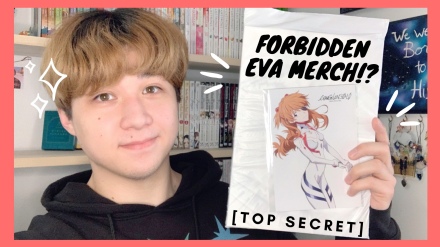
I bought forbidden Evangelion 3.0+1.0 goodies :) || Spring Anime Merch Haul

RANDOM OTAKU MERCH HAUL DAY!!!

Hey guys, I’m back to share with you all the anime-related merch I’ve picked up over the past month. Some of it was ordered months ago, but all of it arrived this past week, and I’m excited to talk about what I’ve got!

Packages from Sentai Filmworks, Good Smile Company, a Kickstarter order, and some odds and ins from eBay make this a random blend of my favorite franchises, from Evangelion and Sailor Moon to Haikyuu and Run with the Wind! Let me know your thoughts about any of these items down in the comments!

Follow me on Instagram @ takutoac!

Interested in more anime, manga, or K-pop content? Subscribe to stick around!

Thanks for watching~!

– Takuto

30-Day Song Challenge Day 14: Songs You Liked When You Were Younger

Thank you all for the birthday praise :D, I haven’t read any of it yet (killer suspense, I know), but I will sometime tonight or tomorrow!! I had such an awesome day with family and even got to order some expensive anime, so I will be expecting some nice mail in due time. And yes, the cake was fantastic, sorry I couldn’t serve you all a piece 😉

But that celebrating aside, we’ve got day 14 of the song challenge. Something I liked when I was younger . . . hmm, ooh, I think I’ve got a few to fit the bill!

Hamtaro Opening (old English dub)

OMG I didn’t realize how cringe-worthy this was until now. Oh lawd, it’s been a looonng time hehe. I’ve got nothing else to say on this one other than I still have tapes of this in my room. “Little hamsters, big adventures” :>

Code Lyoko Opening (English)

I know this is technically a French production, but it’s got all of the vibes of anime, so I went ahead and threw it in because this was my jam way back when! My siblings and I would dress up and “login to Lyoko” where we would basically throw pillows at invisible targets. It was lame as all hell, but you can’t deny childhood! How I miss this show ~

The Sailor Moon Theme Song in English

Some things are actually better in English, and to me, this is one of those great things. This song needs no introduction, it’s freakin’ Sailor Moon! I LOVE THESE LYRICS. My sister still has a ton of random tapes from when we picked those up at the local store in our early childhood. In fact, she’s got them displayed in her little anime shelf of her own #raisedwell

But seriously, if childhood had an anthem for anime fans, it has got to be this. Has anyone seen the new dub by Viz Media yet? I’ve been dying to, but I heard they dropped all of the old English dub names, which is kind of a bummer. I actually thought that those were their real names until I learned what dubbing was lol, like ya do. I still plan to pick up Sailor Moon S, as I believe that is my favorite!

And that’ll do it for day 14! Other suitable songs would have been any of the Pokemon themes, the Beyblade Metal Fusion English opening, and, as much as I love/hate it, the Bakugan opening. If you know what that show is, you’re my new favorite 🙂 I’ll stop using emoticons now, till tomorrow ~

– Takuto, your host