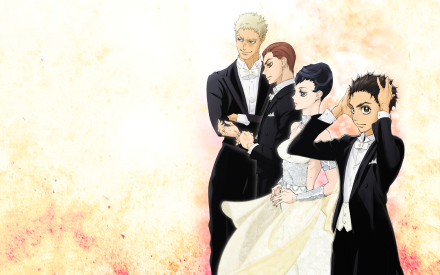
The Ravishing, Elegant Imperfections of “Welcome to the Ballroom” | Blogmas 2017 Day 9

Hey everyone, welcome to (a very belated) day 9 of Blogmas (whoops)! This past summer, two sports anime aired simultaneously, and I decided to follow them to see which would wind out on top! Today I present a review of the show that finished airing about a week or so ago, the anime about a young boy’s experience as a ballroom dancer, and how the sport challenged and changed him for the better!

blogmasday9.PNG

The Summer of Sports: A Review of Welcome to the Ballroom


A spoiler-free review of the summer 2017 anime “Welcome to the Ballroom,” produced by Production I.G, directed by Yoshimi Itazu, based on the manga by Tomo Takeuchi. 

Entering the World of Dance

Tatara Fujita’s another one of those introverted third-year middle schoolers with no aim in life who very soon has to make the big high school decision. On one of his particularly average days, he is harassed by delinquents, only to suddenly be rescued by an imposing gentleman on a motor cycle. His name is Sengoku, an energetic professional dancer on the international level, and it is through some miscommunication on Sengoku’s part that Tatara ends up at his dance studio. There, he meets a girl from his school: Shizuku Hanaoka—the woman of his dreams—and it is partially because of both her charm and Tatara’s own desire to change himself that he enters the world of dance. The free-spirited Sengoku sees potential in young Tatara, and thus decides to show him the steps.
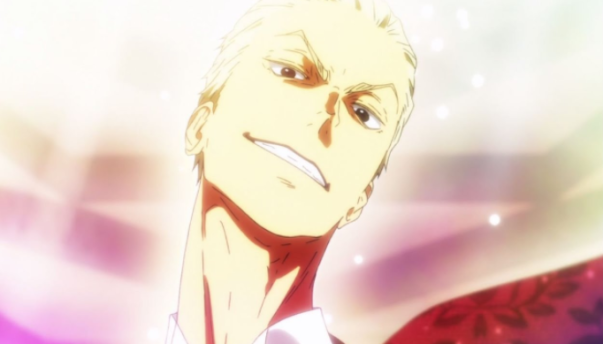
sengoku shine.PNG

Through his experience with dance, Tatara meets many people, friends and rivals alike, who will each challenge Tatara not only as an athlete, but as a young man coming of age. And it is through this same interaction with Tatara that other dancers feel encouraged to take steps to overcome their own issues and flaws. His feet will get plenty sore, and he’ll fall on the dance floor many, many times in practice, but Tatara keeps on going because of the enjoyment and wonder dancing brings into his otherwise goalless life.

Wonder

From Slouch Stance to Swing Dance

One of the most exciting times to be alive was Welcome to the Ballroom‘s beginning. Its first six or so episodes set up a pretty strong premise, not to mention a promising standard of animation quality. From Tatara understanding how to stand up straight and correct his terrible slouch to learning the waltz’s basic box pattern, I truly felt inspired to try waltzing around my room like I used to so many years ago. You just want to see more and more of the characters and the sport they all love—it’s first several episodes are addictive! But it’s hard to maintain that same adrenaline over the course of one dance competition alone. Let me elaborate.

Over the course of 24 episodes, we only bear witness to what, three, maybe four competitions. And it is from each of these arcs that we are expected to understand that Tatara’s skills accelerate at a terrifyingly quick rate. One does not instantly become a pro by attending merely a couple competitions, though; the reality is that it takes tens, if not hundreds of events like competitions that challenge one’s entire range of skills. I know Tatara wasn’t defined as a “pro” by the end of the series, as he clearly still has much to learn, but the fact that he was able to equally rival some of the series’s known-to-be-greatest dancers felt somewhat unbelievable.

Image result

And while we’re on the subject of shounen arcs, a single dance could last two or three episodes, while a competition could span as great as nine or so episodes. What’s with that pacing? Had the competitions made shorter, we could’ve made room for more of them, which might’ve balanced the characterization better. In its defense, I imagine that my issues with the slow pacing would be way less apparent watching it now in marathon format as opposed to over the course of SIX MONTHS.

Where the series fails to be a completely smooth run here and there, it definitely makes up for it by proving to be VERY entertaining. Each episode does leave you craving to know what might happen in the next round, or perhaps to see which couples end up clashing on the dance floor. My pacing dissatisfaction wasn’t from “bad episodes” or “poor directing choices,” but rather a lack of action worthy enough to fill a whole episode (especially by the end). It’s not filler, it’s just slow-moving, and I suppose I’d rather a show take its time than push forward and leave out development.
Related image

Finding Something to be Good At: Tatara & Dance

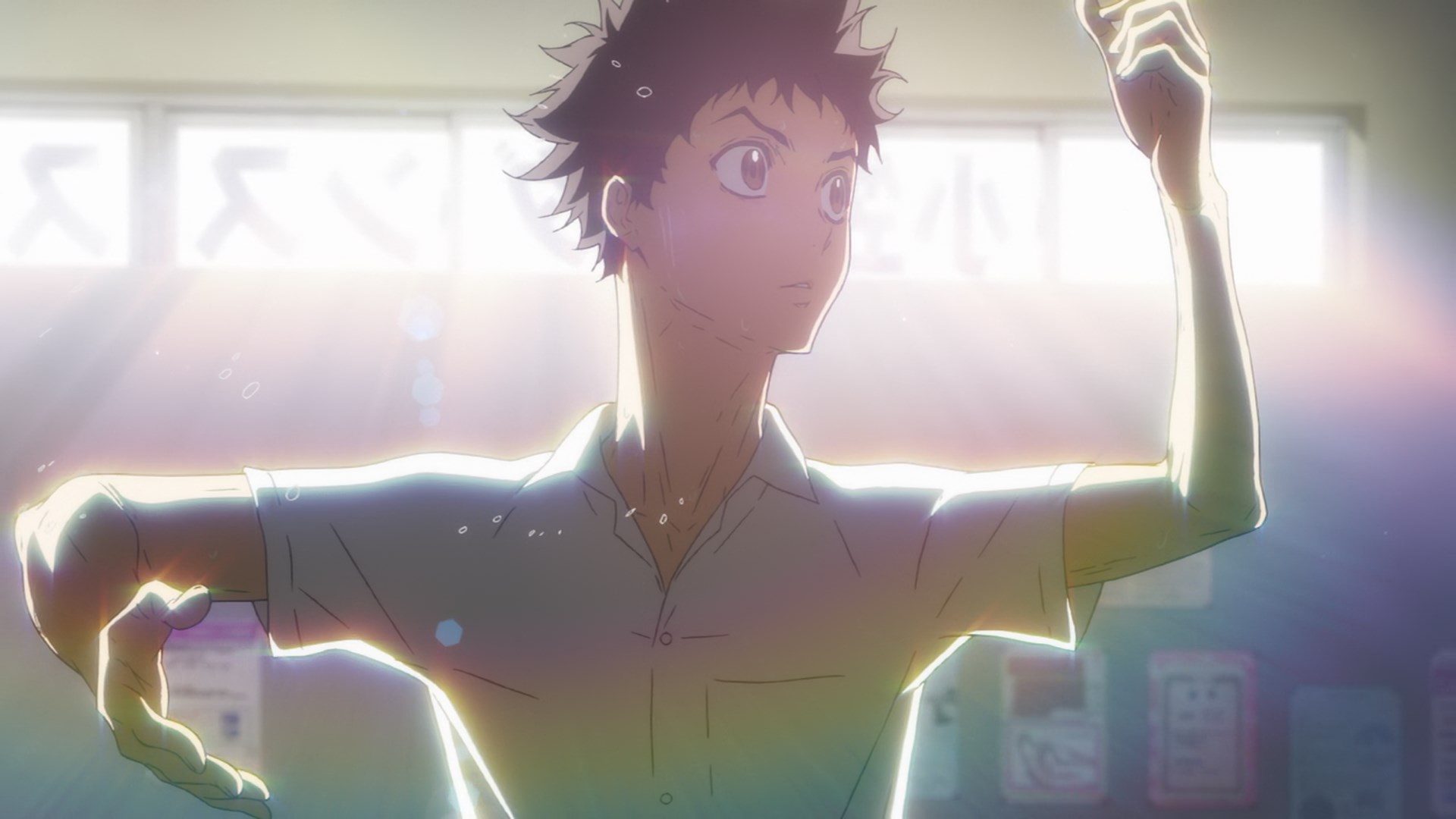
To give him credit, Tatara Fujita does practice A LOT. He’s a hard worker, and in fact, many shots in the series focus on characters walking into the studio, only to discover a tired Tatara training through the early hours of the morn. Where he struggles with verbal teachings, Tatara is incredibly gifted at duplicating dance moves he has seen. Odds are that this is the reason why he is able to fair well against many dancers, including the experienced ones.

Either way, he struggles with communicating what he wants, and as such fails to grasp the masculine hold that a couple’s lead should possess. This translates across to his external conflict: great shyness, nervousness, and a lack of self-confidence around others. He dances in secret, embarrassed by being a male dancer, and is unable to make friends as a result, nor tell his dad about his newfound hobby. Mentally, he is fighting to “man up,” accept dance as a part of himself, and discover what dancing really means to him—this is all while chasing after Sengoku’s shadow, of course. Overall, I like Tatara, as his conflicts are not only relatable, but his efforts to respect and embrace what he truly loves are praiseworthy, too! Through an unlikely sport like dance, Tatara finds that one thing he wished he could be good at, as well as a way to express his true, repressed, artistic spirit.

Image result

Finding Kinship in Competition: Hyoudou & Gaju

As mentioned, several challengers oppose Tatara over the course of the series. Though they are mainly boys a tad older than he is, there are a couple of older men who provide valuable lessons and wisdom on the sport. Sengoku is the obvious culprit, but his lack of attention to Tatara kind of makes him a dick of a coach. He does have his own professional career to worry about, I suppose. And I do see why Tatara (and heck, everybody else) idolizes the guy: for all his goofiness and trouble with verbal instructions, Sengoku knows his stuff, and he sure is one eye-catching, dynamic dancer.
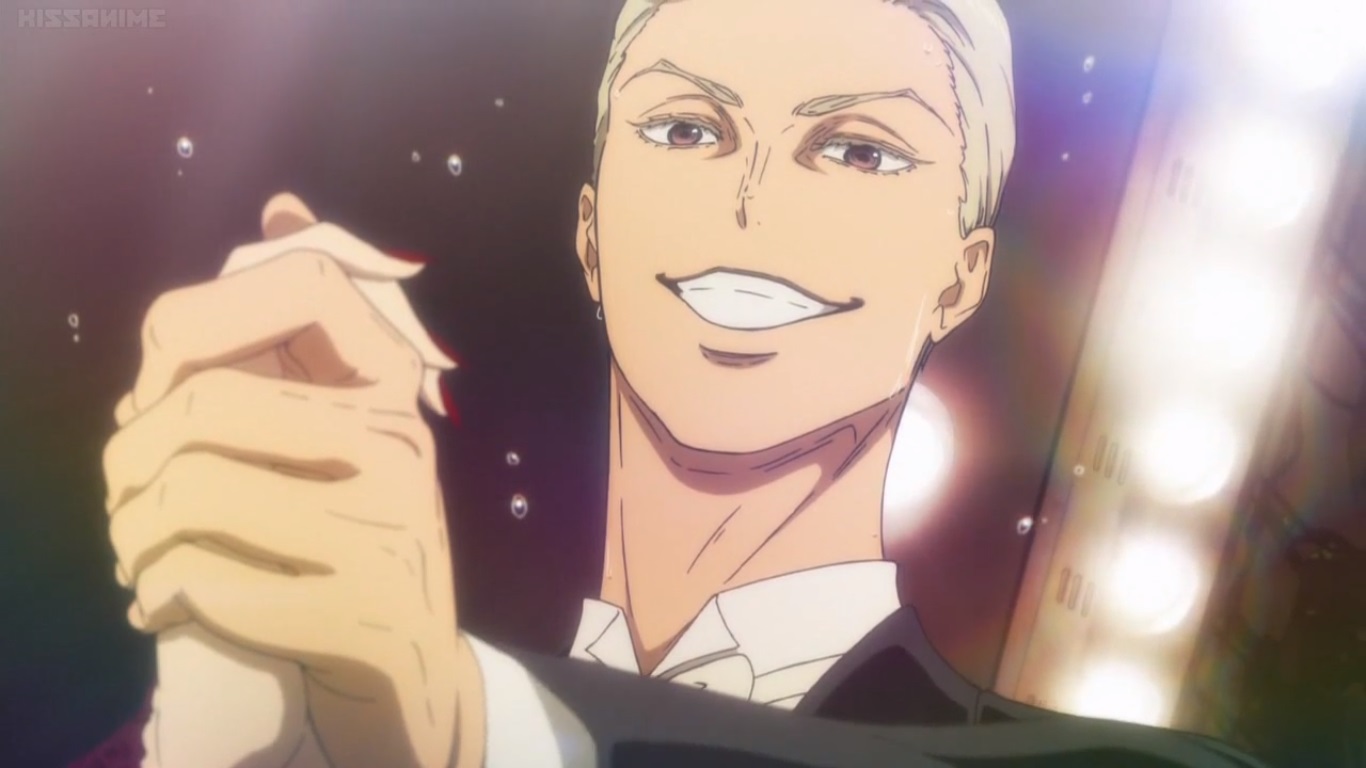
Image result

Then there’s the other leads, namely dancing prodigy Kiyoharu Hyoudou and the brash, loudmouth Gaju Akagi. On their own, Hyoudou’s seemingly perfect career is suffering from a hidden injury, and the way the show handled his behavior and mannerisms was quite realistic and well-handled. It’s always a surprising dilemma to see “the star” in trouble, but it can happen to anyone, and the road to recovery can really deter one’s once-blazing determination. Every time he appeared from the shadows and opened his smart mouth to make some stupidly detailed analysis of Tatara’s mistakes, however, I did low-key want to punch him in the face.

Related image

If Hyoudou is Tatara’s foil, then Gaju would be more like your standard, overly zealous competitor, the epiphany of dominance over one’s partner. He is the glue that holds the group together, though, and in times of relaxation and relief, it’s Gaju’s presence that brings out the casts’s nice chemistry.

Image result

Finding a Partner: Chinatsu & The Struggle to Connect

At first, the other female dancers seem like standards for Tatara’s partner(s) to reach and eventually pass, but thankfully, that’s not how Ballroom works. While I’m told the manga (which I can’t wait to read) fleshes out the female characters better, as you get read their thoughts, I found myself nonetheless enjoying Hanaoka’s untouchable nature and the cute Mako Akagi’s hidden glam (seriously, the Tenpei Cup final was EPIC, and I love Mako’s yellow dress). Even the adult females like Sengoku’s partner Chizuru or Hyoudou’s mom Coach Marisa serve more purpose than just being there for Tatara—they all feel like real people with their own attitudes, weaknesses, and ambitions.

Image result

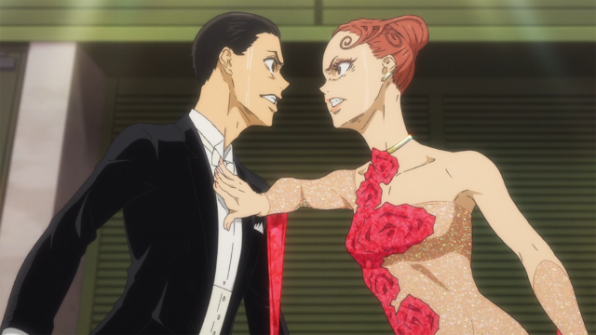
As much as I loved Mako’s adorable yet strong-willed spirit, my favorite female character was one introduced in the show’s second half: Chinatsu, Tatara’s fiery future partner. Characterized as the polar opposite of Tatara—fierce, strong, bold, and most of all, a true leader—Chinatsu poses a lot of problems for Tatara (and frustration for the viewers, too). She’s essentially everything that he’s not, and her unwillingness to accept her own issues and work through them calmly (and fairly) with Tatara sets up a rocky, explosive relationship just waiting to burst. How Chinatsu’s existence changes EVERYTHING reminds me so much of Shinji and Asuka’s relationship from Evangelion, and it’s probably the reason why I like their dynamic so much.

Simply put, she’s everything that makes him uncomfortable, and he’s everything that challenges her very being. 
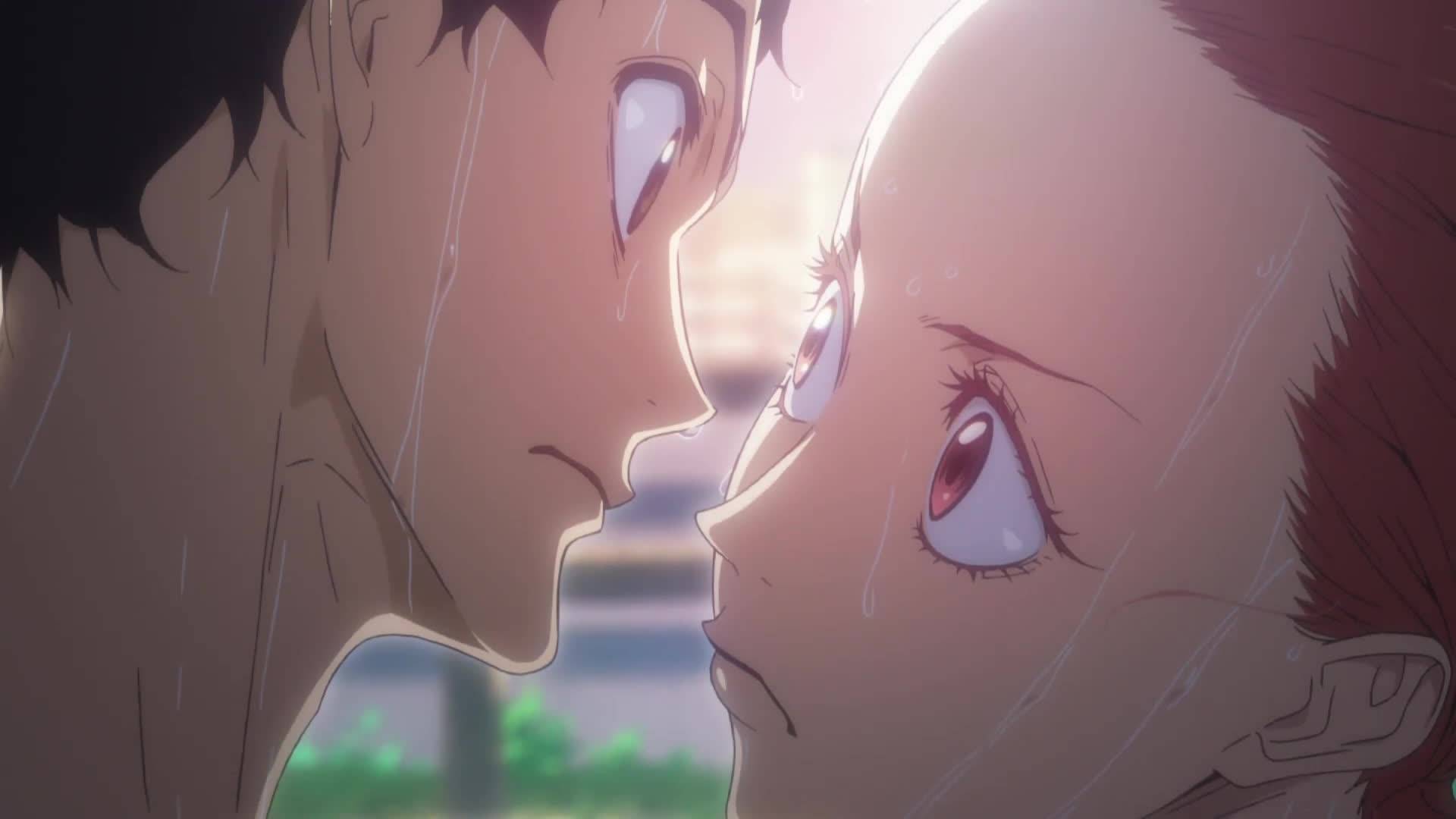
Image result

The anime’s ending tries to cap off their relationship with a sudden “everything’s gonna be ok,” but we all know that more fights and fits are bound for this couple in the future. Their animosity was just handled so well, so powerfully, and it arguably made the long second half bearable for me. The struggle to connect and find a partner is a very intimate, vital thing, and I’m glad it wasn’t underplayed.
Related image

(To avoid spoilers, obligatory shoutout to Kugimiya and his partner Idogawa, as it was their character development that made the final competition so impactful!)

A Dancing Anime Without the “Dance”

Ballroom blossoms beautifully when it’s moving. Seriously, it’s freakin’ wonderful. But fluid scenes on the dance floor are sadly few and far between, which is odd considering that a powerhouse like Production I.G is behind the helm. This was most viewers’ biggest beef with the anime adaptation, as the manga’s pages are rife with striking, expressive motion (which seems odd for paper, but just open up a volume whenever you get the chance). Way too often than what should be allowed for a sports anime, we are treated to still frame, after still frame, after still frame, which are guided by someone annoying (like Hyoudou) verbally leading us through what should have been a thrilling, visual feast! Don’t get me wrong—Every. Single. Frame. Of this anime is drop-dead gorgeous. Like, those dresses, holy shit, wow! But man, I was sighing throughout so many of the dance scenes because I just wanted to see SOMETHING move. It could literally be a ribbon or a dress sequin—JUST MOVE IT. I really hope some animation is added to the Blu-ray releases.

Related image

(As for the giraffe necks, I didn’t mind too much. They’re glaring at first, but after a few episodes you don’t even notice how wrong it is.)

Music, the Soul of Dance

Thankfully, Ballroom manages to stay somewhat engaging during these motionless shots because of its delightful soundtrack. Perhaps this is because of musician Yuuki Hayashi’s own experience as a rhythmic gymnast; the man already knows how to match tempo and tune with fancy footwork. Hayashi is a rising favorite of mine, as he knows how to perfectly time moments that should be epic with music that is absolutely epic. From moving ensembles like “Ballroom, Shakou Dance” to THE MOST UPLIFTING BEAT OF THE CENTURY, “Ganbaritai Kimochi,” how you can’t NOT feel the emotional weight? And don’t even get me started on the dance music—waltz, salsa, jazz, swing, samba, cha-cha, Charleston, Merengue—so many styles, and so much respect for each time period’s jams!!

Hayashi’s able to take a simple melody and turn it into a gorgeous, heartwarming waltz, or even a snappy, saucy tango. I was just so happy to see my favorite time signature, the waltz’s 3/4, be revived in modern anime akin to Ouran High School Host Club‘s brilliance. It’s a shame that his dance-themed tracks would be frequently swapped out for the main OST mid-dance, unlike the continuous play like in Yuri!!! On ICE, but I suppose that makes anticipating each lovely track all the more exciting. There’s a raw love for classical strings, piano, and a bit of drums for movement in Hayashi’s internationally-infused music, and that’s why I’ll always look forward to his perfect, inspiring scores.

“Tatara’s Waltz,” “Hyoudou Tango,” “Blooming On Our Way,” “Tango City,” “Viennese Waltz,” “It’s like a symphony,” “Quick Step B,” “La Cumparsita, “Las Patineurs,” “Sing, Sing, Sing . . .” HOW CAN YOU NOT LIKE THIS VARIETY???

I’ve already talked way to much about the music in this anime, but on top of featuring a well-rounded soundtrack, Ballroom has TWO amazingly energetic openings that create so much HYPE! Both by UNISON SQUARE GARDEN (which I will now keep an eye out for), “10% roll, 10% romance” and “Invisible Sensation,” my favorite of the two, have made my “Current Faves” playlist. And I couldn’t forget about the first ED theme, “Maybe the next waltz” by Mikako Komatsu, which was sung, yes, AS A SWEET WALTZ. I JUST LOVE THIS ANIME’S STYLE SO MUCH!!

Dismantling the Stereotypes: The Beauty of Evolution

As a final note, Ballroom makes quick work of eliminating any frivolous or “girly” things you previously thought about ballroom dance. Its appropriate depiction as an equally sweaty, vigorous sport is eye-opening, and you can feel that all the people behind the project had a great respect for the sport. The anime is aware of this, and repeatedly nails in the idea that ballroom dance IS, indeed, very difficult. From the pain-staking accuracy of the sound that certain shoes make, to the flow and friction of suits and dresses, incredible attention was put into the sound effects to fully immerse you in the bustling dance floor atmosphere. Lastly, both the anime’s culturally diverse soundtrack and fashion sense pay ode to dance’s professional realities, culminating into an accurate depiction of dance’s heaviest hardships and most joyous pleasures alike.

Image result

When it wants to be, the show is also very funny, using quick-witted humor and hilarious facial reactions to lighten an unnecessarily tense mood—something that we routinely find ourselves in.

Welcome to the Ballroom clearly has many strengths, but also several weaknesses. It boasts the allure of dancing, yet frequently fails put the concept into motion. It showcases how thrilling the sport can be, yet often drags out the effect nearly to the point of boredom. But above its faults, Ballroom promotes the beauty of evolution, the purity of youth, and the countless many possibilities that come with change and transformation. It’s a dramatic story of motivation, inspiration, and progress, both for its characters and the future of the sport itself. And by its end, I couldn’t help but applaud the valiant effort made to enlighten me on the world of dance and all its ravishing, graceful, and truly elegant imperfections. It’s that rare kind of show that doesn’t come around often—and one that should not be missed.

Dance’s physical and emotional expressions seem close, but they aren’t easily tied together. It can’t be considered a real expression unless you can reflect the outside knowledge and experiences you’ve gained. That’s why with an emotional dance, you can see through the dancer’s entire life. Joy and sorrow. Love and hate. A dance with a variety of emotions adds depth. Don’t you think that becomes meaningful enough to dedicate the time in your life to dance? – Coach Marisa Hyoudou

Image result


Production and pacing problems aside, Welcome to the Ballroom‘s biggest issue right now is the lack of a licensing, as Anime Strike doesn’t count for CRAP! Seriously, someone please get a hold of the polished Japanese Blu-rays, dub it if you want, and I’ll buy three. This was such a long review, my goodness, but I wanted to make sure that I covered EVERYTHING about it! If you managed to make it from beginning to end, give yourself a pat on the back, and let me know in the comments what you thought of Welcome to the Ballroom in the comments! It’s a sweet, delicious “Cake” here at the cafe!

This concludes Blogmas Day Nine of the 12 Days of Anime, as well as part 2 of “The Summer of Sports!” If you couldn’t already tell, Ballroom definitely won the match, but I do love them both! Thanks for reading, and I’ll catch you shortly with another belated post!

– Takuto, your host
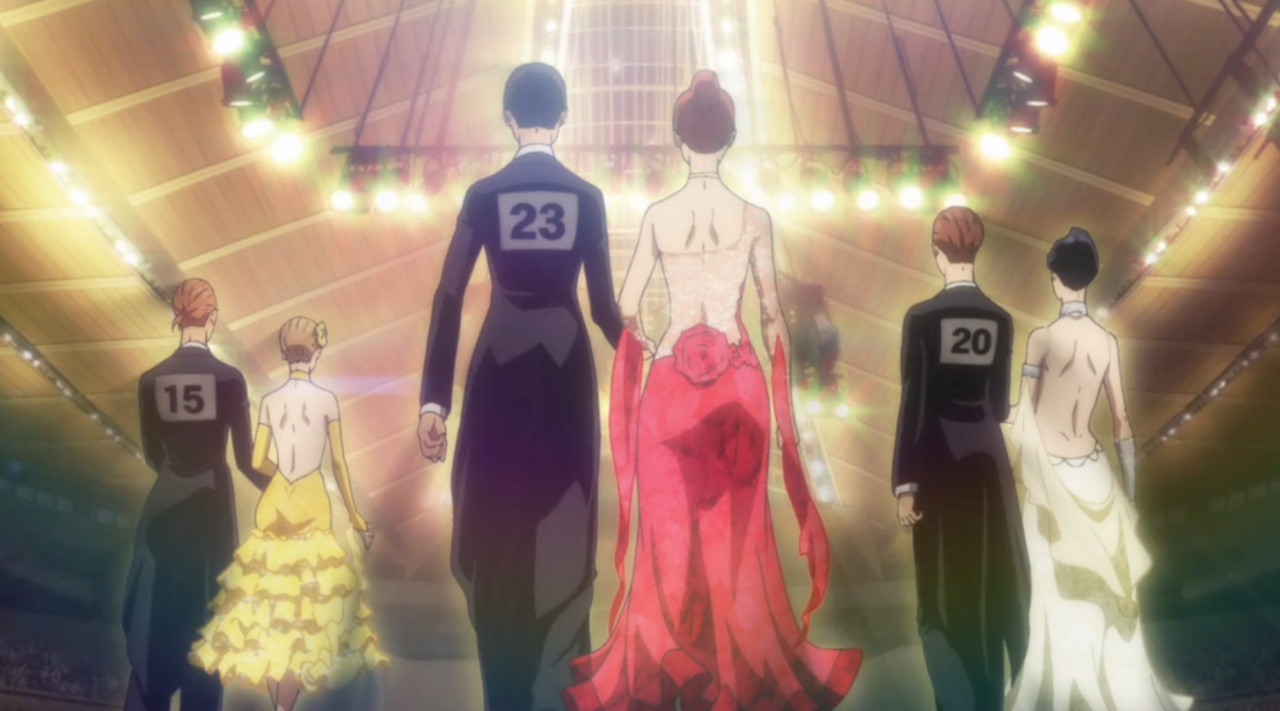
Image result

“DIVE!!” Flops as a Summer Sports Anime | Blogmas 2017 Day 8

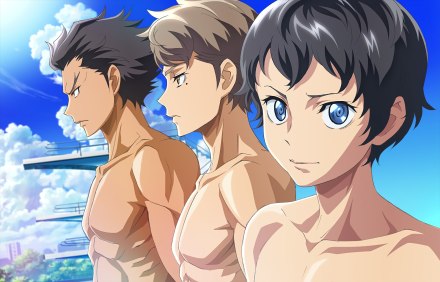
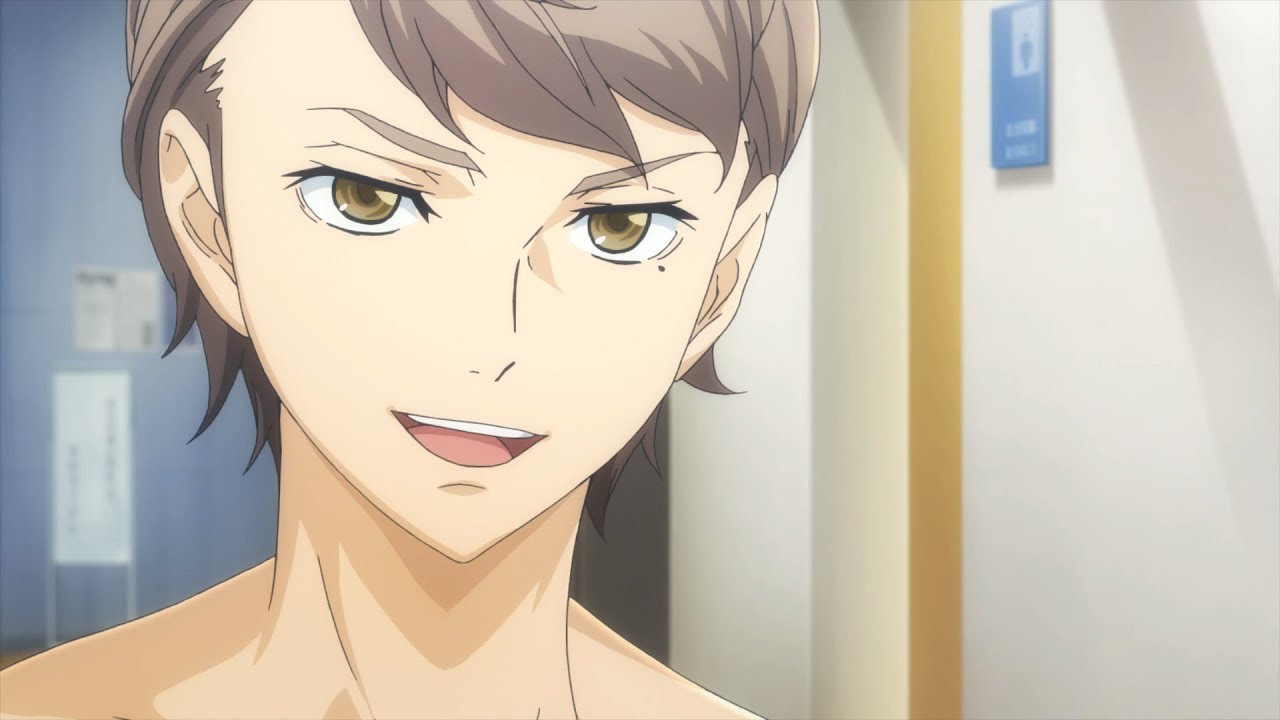
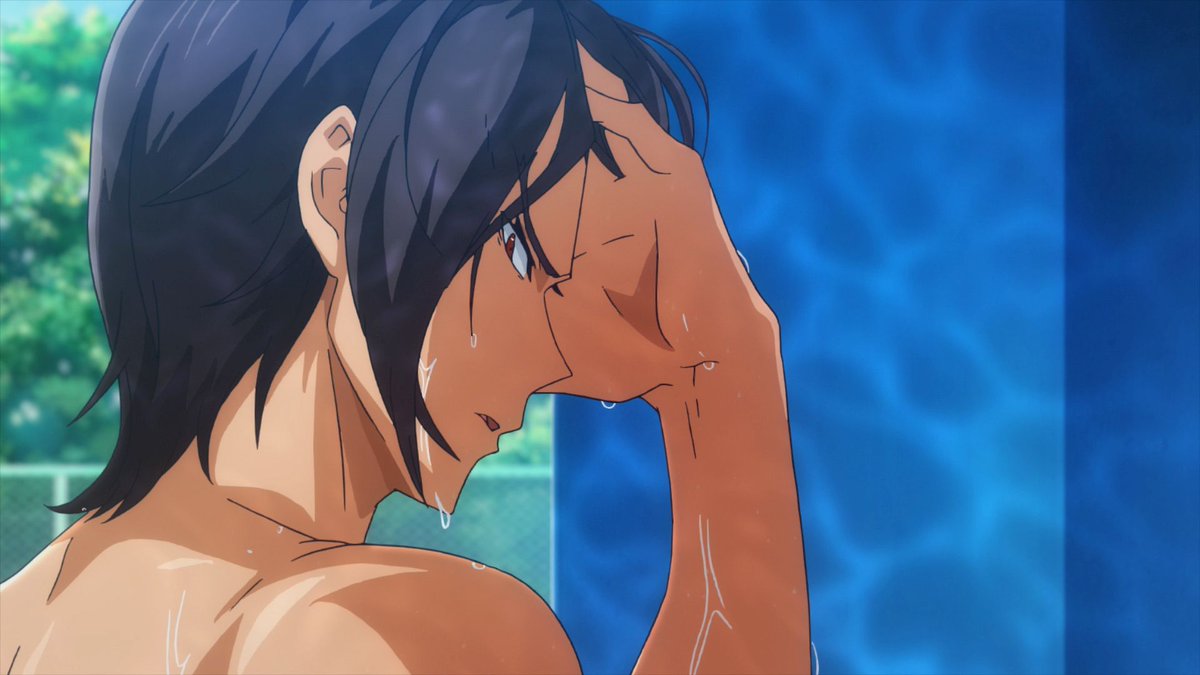
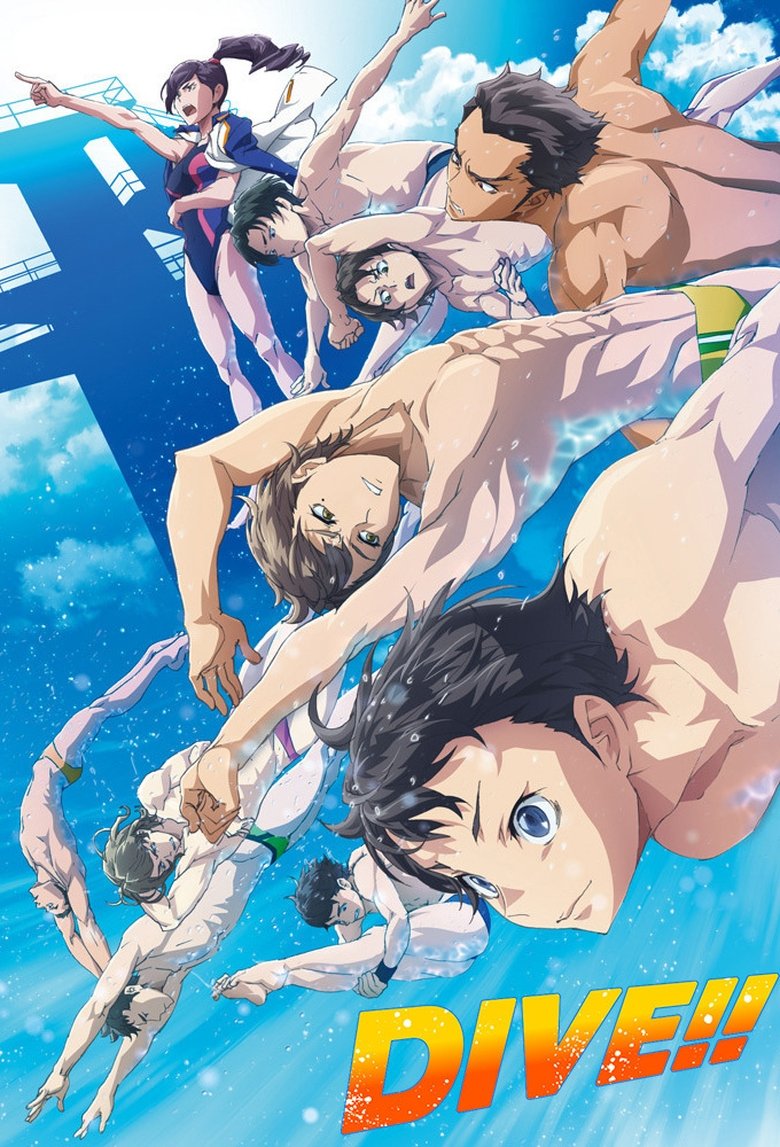
Hey everyone, welcome to day 8 of Blogmas! This past summer, two sports anime aired simultaneously, and I decided to follow them to see which would wind out on top! Today I present a review of the show that finished airing first, the anime about a boys diving club and their ambition to enter the Olympics!

blogmasday8.PNG

The Summer of Sports: A Review of DIVE!!


A brief spoiler-free review of the summer 2017 anime “DIVE!!,” produced by Zer-G, directed by Kaoru Suzuki, based on the novel series by Eto Mori. 

Gazing up at the Concrete Dragon

A young Tomoki Sakai was inspired to join the Mizuki Diving Club (MDC) after witnessing its pride and joy member Yoichi Fujitani dive from high up off a giant captivating “Concrete Dragon.” Though the imposing diving platforms don’t literally stretch into the sky like a dragon would, the 10-meter height is enough to turn off most children and adults alike. But to Tomoki, Yoichi’s single dive proved that people can reach even greater heights through the daring sport, and thus he joins.

Related image

Years of practice and good memories pass. Eventually suffering from significant financial troubles and on the verge of closure, the MDC hires a new coach as a last-ditch effort to promote its divers. This new coach manages to persuade the club’s sponsors to stay open, but only on one condition: the club must send one of its members to the Olympics in just a year’s time.

Image result

If DIVE!! had one big gray area where it needed work, it’s right here in the plot. True sports anime have this natural tendency to hype you up as you’re watching. You may not know the rules of the sport, nor the backgrounds of all the characters, but there’s still a level of heart-pounding adrenaline to every failed goal, missed shot, or faulty start. DIVE!!, simply put, isn’t all that exciting. Even at its climax, I couldn’t help but compare it to how another water sports anime, Free!, handled its enthusiasm through its incredible character growth and thrilling animation sequences. It just wasn’t there for DIVE!! (which is ironic, because its title boasts two exclamation points), and I think there are other reasons for why it flopped as a sports anime.

Where most sports anime dedicate a decent portion at the beginning to understanding why the sport is so beloved by its cast, we only really have two characters to go off of: Yoichi and Tomo. Even then, Tomo just wants to feel special and catch up to Yoichi, while Yoichi seems like he could hardly care less about it all—he happened to be born with diving talents, that’s all. The goal is the Olympics, but I can’t even seem to muster the heart to cheer for these boys during practice when they keep skippin’ all the time! Sure, characters like Okitsu’s grandfather and Coach Asaki fill in that void later on, but by then, most of my interest had already been lost.

Image result

Also, and this is a nitpick, as many good sports anime can still be notorious for this, but the lack of explanation of how scoring works, or why certain techniques are more difficult than others not only increases my disinterest, but it hurts the series’s ending: Were Yoichi and Tomo’s scores really that good? What does a standard Olympic score even look like, and where do those numbers come from anyway? What makes a triple flip that much more special than a quadruple, and what kinds of people can achieve this level of technique? Tomo is seriously just a middle schooler—can middle schoolers even enter the freakin’ Olympics?? So many questions, and no answers to be found anywhere. It almost begs me to ask whether this show is worth watching anymore. Well, if it weren’t for the characters, I’d give it a hard pass for sure.

Image result

How Realism Shakes Up the Status Quo

As I mentioned earlier, we reach a point in the story where club members start dropping practice one-by-one, each rotating back in only for another overly sensitive boy to leave. Not everyone likes the new competition brought by suddenly raising the bar. Coaches Asaki and Fujitani (Yoichi’s dad) quickly pick their favorites, and it is that favoritism which causes jealousy and rage to seed themselves within the minds of Ryou and Reiji, Tomo’s “friends.” Ryou’s straightforwardness constantly clashes with Coach Asaki’s partiality to Tomo, and Reiji faces his own internal conflict of competition anxiety. It’s a lose-lose situation for both parties, yet it all somehow feels so . . . real. While anime like Free! glorify friendship and rivalry during swim meets, DIVE!! says that sometimes athletes don’t recover from lost pride, and that team members DO in real life leave the teams that isolate them. Aside from the MDC boys feeling way too young for the Olympics, it’s DIVE!!‘s realism that almost saves it in the end.

Image result

Take Yoichi, for instance. He’s basically perfect: talented, hardworking, a natural born leader, has a great body, etc. But the guy can’t get a girlfriend, and he eventually faces burnout due to, well, a couple reasons. One is that he feels pushed by everyone, especially his father, to make it into the Olympics—and he totally wants to go, but he becomes sick of the pressure and expectations set by all those around him. The second is his realization that the Olympics almost seems to market its athletes more than support them. In what is definitely DIVE!!‘s saving plot point, understanding how the Olympics’s way of promoting and advertising its fine athletes affects people like Yoichi opens up a whole new level of devastation. It was, to be frank, Yoichi’s unexpected fall from grace. Ka-chan, an aniblogger friend of mine detailed Yoichi’s character conflict with the Olympics’s abuse of athletes for money in a very interesting post, which I’ll link here!

Image result

MDC’s latest member, the towering island boy Okitsu, also has a short yet fairly impressive arc dedicated to his own passion for diving. Born and raised along the coast, Okitsu’s only ever been familiar with ocean diving. For him, the pool is like a cage, but he joins MDC nonetheless after Coach Asaki enlightens him on his late grandfather’s stunning pro-diving career. It was honestly a well-done plot point, and I likely won’t ever forget it. Watching a coach bond with her pupils like this was how it should’ve been done for everyone; she’s an integral character for this story. But there’s one character that caught Coach Asaki’s eye more than anyone.

Related image

“Why is Tomoki so special?” Very good question. Nicknamed “Diamond Eyes” for his dynamic vision, Tomo’s as natural a diver as they come. And like all diamonds, they need a fair amount of polishing in order to truly shine. Between Coach Asaki’s intense regimen to shape Tomo into one of Japan’s greatest divers to experiencing a sense of betrayal by his closest friends, including his girlfriend, Tomo comes to realize that many sacrifices must be made to excel at something: sleep, food, free time, energy for other passions, a chance at friendship and love. Admittedly, Tomo being that distraught about losing hid girlfriend and moping about it the whole time was dumb. He’s slow to others’ feelings, and that too is quite frustrating. But nonetheless, he learns that sometimes being good at something requires you to distance yourself from others. Having him voiced by Yuki Kaji was a HUGE win for me, but ultimately, Tomo is one of the weaker characters in the story.

Image result for DIVE!! anime tomo screenshots

Diving So Stiff that it Hurts to Watch

As I mentioned earlier, the best sports anime usually have decent to top-tier animation. It sounds very privileged of me to say that a certain anime needs to look this way or that, but man, a huge problem with DIVE!! is that it’s just not pretty to look at. Artwork? Absolutely gorgeous color palette with chiseled abs (for those in need). The water? Looks smooth enough. The divers themselves? Let’s just say they are animated so stiffly that it hurts your back to watch.

The soundtrack though, oh my gosh, it’s surprisingly great! Kohta Yamamoto hasn’t done much work for anime, but he knows how to rouse up a dramatic track when it’s needed. It helps that the music was credited to two individuals, however, the second being the great Yuuki Hayashi (Robotics;Notes, My Hero Academia!, Death Parade)! And while the OP  “Taiyou mo Hitoribocchi” by Qyoto pumped you up (for what you thought would be some good sports fun), the ED “NEW WORLD” by Yuuta Hashimoto was THE REAL BOP OF THE SUMMER. SERIOUSLY GUYS, “NEW WORLD” IS PROBABLY MY FAVORITE SONG OF ALL THE SIMULCASTS I STREAMED THIS YEAR. It’s just so melancholic, so bittersweet, so befitting of everything that DIVE!! tried to be.

Image result

Surpass the Limits You Set for Yourself

Arguably, DIVE!! is not a sports anime, but rather a character-driven coming-of-age story for the main characters. It highlights the experiences—both good and bad, done with a team and alone—that sports can bring, as well as the realities plaguing growing teenage athletes. Unlike the happy-go-lucky Free!DIVE!! teaches us that sometimes being good at something requires you to distance yourself from others. You must decide for yourself what’s best for you, and sometimes that choice doesn’t follow what others want—that’s ok. Through diving:

  • Reiji found excitement and adventure in his otherwise risk-less yet worrisome life
  • Okitsu left the ocean and fell in love with his grandfather’s calling
  • Yoichi experienced burnout after dealing with the reality the adults preordained for him, but thanks to his team found his passions once again
  • And lastly, Tomo gained a pastime that provided him many friends and opportunities, but he had to give up many things to have even the slightest chance at victory

Unlike any sports anime that I’ve ever seen, DIVE!! focuses on the things given up or lost, rather than what is gained. Diving is solely an individual, all-or-nothing sport, after all. But even as a “diving anime,” I couldn’t distinguish between a good dive and a bad one due to the uneven animation, not that it mattered because the plot was so unfocused (the finale looked great, though). Much like its characters, DIVE!! tried to pave its own destiny, but ultimately flopped as truly engaging sports anime—or even as a piece of entertainment for that matter.

Diving is a competition that requires many long years of practice. Their future is a long one. Our duty isn’t to show them the shortcuts, but rather to teach them about the length. – Coach Fujitani

Related image


Don’t get me wrong—despite all the crap I gave its animation and plot issues, I still actually like DIVE!!. At the very least, I clearly tried to see the good in its character development . . . maybe it’s because water sports resonate so much with me, or that I just like sports anime too much. It’s not unbearable, but you’re better off watching something else if you’re craving the thrill that comes from the genre. It’s been a while since I awarded anything with this, but DIVE!! deserves the “Coffee” recognition, as there is some decent content hidden deep below the water’s depths—if only the plot development didn’t merely skim the surface.

Image result

Let me know what you thought of DIVE!! if you happened to watch it! Not many people did, but I’d still love to know your experience with it. This wrap up Blogmas Day Eight of the 12 Days of Anime, as well as part 1 of “The Summer of Sports!” Thanks for reading, and I’ll catch you all tomorrow for part 2!

– Takuto, your host

Related image

In This Corner of the World: A History Lesson on Hope & Healing | OWLS “Warmth”

Chances are that if you were linked here from another blogger pal, then you might be new. To those first-timers, “Hi, I’m Takuto, welcome to my anime cafe!” As part of the OWLS blog tour’s twelfth monthly topic, “Warmth,” I decided to incorporate what would have been my standard review of In This Corner of the World into a sympathetic discussion on the hardships of war and loss, and how love gives us the strength to continue being compassionate through even the worst of times.

It’s the season of joy, thankfulness, and love. This month’s topic is “Warmth.” Whether it is spending time with family members during the holiday season or with that special someone during New Year’s Eve, we will be discussing moments in anime and pop culture media that convey a feeling of happiness in our hearts. During times of struggles, we look towards the things that matter to us as a source of strength, hope, and happiness. We hope you enjoy this round of posts and that you, too, will have a wonderful holiday season!

inthiscorner.png

I’ve nothing else to say for the intro! Thank you Lyn for twelve consecutively thoughtful topics to ponder each month—I’ve enjoyed writing for all of them!


A brief spoiler-free discussion on the fall 2016 anime film “In This Corner of the World,” produced by studio MAPPA, directed by Sunao Katabuchi (“Black Lagoon”), based on Fumiyo Kouno’s award-winning manga of the same name.

New Life, New Opportunities

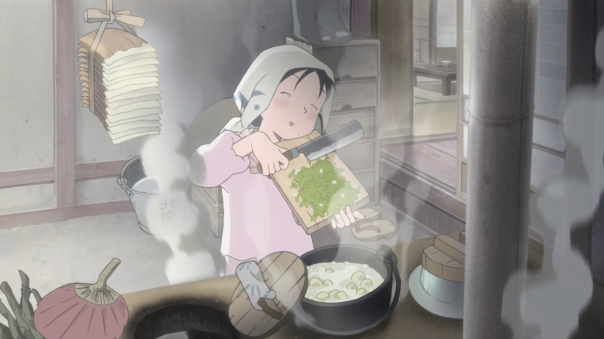
In 1944, life for Suzu Urano starts slipping through her tiny calloused fingers. For one, she is married to Shuusaku Houjou, a reserved young clerk, and is sent off to the small town of Kure in Hiroshima where her husband works at the local naval base. Now living with the Houjou family, Suzu must adjust to her new life, which is made especially difficult since she quickly becomes an essential meal-making, chore-doing crutch for the family. She does all of the daily housework during the tough wartime conditions, and the familial disconnect Suzu experiences between her sister-in-law—timed with the regular air raids—makes both the political and household climates feel like battlefields.

Image result

When intense bombings by the U.S. military finally reach Kure in 1945, devastation to Hiroshima and its townsfolk, as well as its culture, forever shake the nation, and Suzu’s life is permanently impacted by the tragedies. “Much is gained by living in Kure, but with war, many things cherished are also lost.” It is only through the greatest perseverance and courage that Suzu manages to continue caring for those around her, and to truly live life to the fullest.

“Torn apart by war. Brought together by love.”

By its end, In This Corner of the World is a somber ode to history, wherein the tragedies of WWII’s Hiroshima bombing are experienced firsthand by the main characters. But before the bomb is dropped, the entire first half of the film winds us back to the 1920s, Suzu’s peaceful childhood. It starts this way to not only show Suzu’s developing story from beginning to end, but also to create the picturesque vision of pre-war times in Japan, specifically Hiroshima and its surrounding towns. As every 5 or 10-minute interval—marked by on-screen dates—brings us closer to that horrific day, August 6, 1945, your stomach starts churning in dreadful anticipation; you know what’s about to happen, and you’re almost left disbelieving how Suzu’s whole life could just fall apart in an instant.

Related image

Akin to African author Achebe’s world-renowned novel, Things Fall Apart, which was written to show that life, law, and liberty already existed before the white man saw the need to organize, colonize, and, get this, “save” Africa, Fumiyo Kouno’s story serves to inform the viewer about the other side of the Pacific. You are put through the trials and tribulations of Suzu’s daily life, from learning to properly make a meal using rations to understanding the familial benefits of marriage, in order to hopefully understand that despite their differing customs, both the attackers and the attacked have things they want to protect.

I set up a pretty overwhelming historical background here, but the film really isn’t that political at all. Rather, its a drama centered around one little girl’s average life during WWII, and how no matter the global circumstances plaguing a household cause ruin and chaos, life goes on. That’s right, life will always go on. There are always things to be fixed, clothes to be washed, and food to be cooked. Suzu understand this, and that’s why she faces each painstaking day blessed that there’s still a roof above her family’s head. In This Corner of the World, though rife with tragedy, is ultimately a heartwarming tale of Suzu’s prevailing love and healing hands.

Related image

A Hero at Home: Suzu Urano

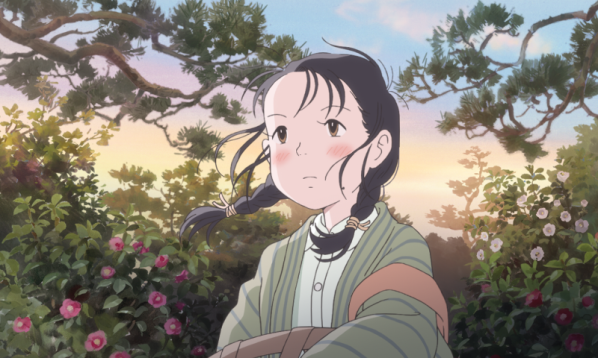
Characterized as tiny, optimistic, and a bit aloof at times, Suzu Urano goes through great lengths to help in anyway she can, even if her assistance comically ends up backfiring in the end. She’s also incredibly creative, shown in both her beautiful landscape sketches and paintings, as well as when she wields her knowledge of samurai food rationing to construct some, at the very least, “interesting” dishes. Her artistic talents act as a sort of sanctuary for her, and it is through her simple yet gorgeous works that she meets many new friends and even potential lovers. But like all artistic endeavors, chores come first, and slowly you start to see the hobbies that she once did for herself fade away to make room for aiding the family.

Related image

On top of working her hardest around the house (her efforts eventually exceeding those of everyone around her), Suzu is a girl, a soon-to-be-woman who undergoes all of the same treatments that Japanese women received during the 1900s. From stricter expectations in the kitchen and household to family-controlled courtship, rarely is Suzu the master of her own fate. Yet somehow, Suzu makes the best of what is given to her, for merely being allowed to experience the tranquility and joys of everyday life in Kure is enough to give her hope and purpose. Honestly, what a woman!

Image result

Suzu only speaks out once or twice in the entire film—remember, this is a film that chronicles Suzu’s ENTIRE life! She many not be honest to herself all the time, frequently disregarding her own happiness and well-being for the sake of her family and her nation’s pride, but Suzu knows how to fight the good fight, as well as when to keep pushing on through the toughest of hardships. Between watching her frugal attempts at fitting in with her husband’s family, her struggle to adjust to life in Kure, and the tragedies of war she later encounters, it feels as if you physically and emotionally cannot go through as much heartache that is thrust upon her and make it out ok. Yet Suzu manages to bandage up her scars and continue making herself useful to everyone. The warmth she brings to the war-torn world embodies the purest light of hope in a time of darkness.

Visually, the Softest Movie I’ve Ever Seen

“It was like Studio Ghibli meets the Peanuts and together they talk about some pretty serious stuff.” This was my immediate reaction to the film which I posted on Twitter, and I still stand by these words now. The backgrounds are painted so smoothly, giving off an immense sense of ease, and the magical watercolor touch just feels so right. Even the characters, for a lack of a better word, look so . . . “soft.” There’s a lack of detail in their physical features, but it’s their sometimes cute, sometimes sorrowful mannerisms and words that convey their true characters. Seeing characters this adorable almost feels wrong for the tone of the film’s second half where the air raids become prominent, but it somehow works altogether as one moving, breathing, snapshot of history.

Related image

(If you watch the special feature clip “Hiroshima & Kure: Then & Now,” you’ll understand how and why it all looks so historically accurate; the attention to detail in re-creating several destroyed sites where famous architecture once stood was very commendable.)

The luscious animation is accompanied by equally gentle music, as kotringo’s (Rieko Miyoshi) soundtrack matches perfectly with the tone. At times uplifting, other times more tender or melancholic, tracks like “Kanashikute Yari Kirenai” or my personal favorite, the ED theme “Migite no Uta (みぎてのうた)” provide lovely messages to live by: “Even in this painful and broken world, there IS hope.”

Image result for in this corner of the world hiroshima

Learn From Fiction: Heartwarming Tenderness Comes From How We Live

It is stories like Suzu Urano’s that give us all the fuzziest feelings of contentment and comfort. But like all stories, they eventually end, and once they’re over, the books get placed back on the shelves, and the DVDs and Blu-rays are ejected from their players. And that’s it. It’s all just entertainment, anyway.

*If you’ve ever thought this, then you completely missed the point as to why certain works even exist in the first place.

All fiction is written with messages, no matter how significant or insignificant. With the case of In This Corner of the World, it’s to showcase the tragedies of war firsthand, and the devastation that comes with violence. That should’ve been apparent from the synopsis alone. Looking deeper, we can understand more big takeaways from the film:

  • Hardships exist everywhere—someone is always struggling
  • Protect family, for without it we are fundamentally alone
  • Gender roles can limit individuals from reaching their full potential
  • The youth of today ARE our future
  • With destruction comes the joy of rebirth
  • By rebuilding from the ground up, we build a stronger foundation than the one before it
  • Make the most of your life—you only get one, and it goes by incredibly fast
  • WE ALL have the choice to be happy or sad, rude or nice—live the way you want to
  • Be thankful for what the earth provides, and what you can do for it in return
  • And lastly, to quote The End of Evangelion, “Anywhere can be paradise, so long as you have the will to live”

Just LOOK AT ALL OF THOSE THINGS I CAME UP WITH. And that only took me a couple minutes of reflection.

inthiscorner2.PNG

History will always be our greatest teacher

Authors, directors, artists, musicians—Creators improve on what skills they already have in order to teach us invaluable lessons about the human experience. They have the power to take all the world’s evil and tell us that life can be incredible, so long as we don’t repeat history’s mistakes. Don’t just watch a film: enjoy what it is trying to show you. Don’t just read a book: revel in the messages left in-between the lines. Take what you learn and monopolize on it! Essentially, BE the good in the world!

In This Corner of the World presents the catastrophic effects of humanity’s cruelty, savagery, and barbarity—yes, absolutely. But it also exists to tell us that through the ashes, we can rebuild; that we can be kind to others, even if they treat us harshly; that most of all, we have the choice to see the good in this wild, wicked, unfair world.

inthiscorner3.PNG

As a race, we have this terrible tendency to appear on the wrong side of history (if you know what I mean). The title In This Corner of the World refers to both Suzu’s tiny Kure house on the hill AND a state of harmony achieved by acknowledging and balancing the positives and negatives that life throws at us. A heartbreaking historical ballad for those we have wronged, and the terrible things we have done, In This Corner of the World is here to say that life goes on, and that as long as we try to understand one another, hope and a warm heart will always allow us to move forward.

We can love. We can rebuild. We can move on. But we’ll never truly forget.

There is only one corner of the universe you can be certain of improving, and that’s your own self. – Aldous Huxley


This can be a hard film to watch, but it all depends on how seriously you decide to take it. It has several comedic points of value in it, as well as a very cute presentation style, but don’t let those two aspects close you off from In This Corner of the World‘s subtle brilliance and emotional depth. As a powerful, touching work of art, this film is awarded the “Caffe Mocha” seal of approval, a rating for those special titles that I consider to be a must-watch!

Image result

This concludes my December 20th entry in the OWLS “Warmth” blog tour. Arria Cross of Fujinsei went right before me and expressed her sincere gratitude to all of her fellow readers, bloggers, and OWLS members in one emotional, heartwarming post. Now, look out for fellow aniblogger LitaKino (Lita Kino Anime Corner) with a surprise celebratory birthday video this Friday, December 22nd! Thank you so much for reading, from my first OWLS post in January to here at the end—I do hope you have enjoyed them, as I do really, really like writing them! Until next time, this has been

– Takuto, your host

Before the Black Out: More Human Than Human | OWLS “Diplomacy”

Chances are that if you were linked here from another blogger pal, then you might be new. To those first-timers, “Hi, I’m Takuto, welcome to my anime cafe!” As part of the OWLS blog tour’s  eleventh monthly topic, “Diplomacy,” I decided to incorporate my loose thoughts on Blade Runner: Black Out 2022 into this glance at the past, the present, and the future of the franchise’s iconic sci-fi world. The matter at hand: In an age rife with incredible development, improvement, and achievement, when did humanity lose its defining future–its ability to reason compassionately?

Whenever we have a disagreement with someone, we use our words to express our thoughts and opinions. However, there are those who would rather use fists instead of words—those who forget that being “right” isn’t the most important thing, and those who lose sight of compromising and acknowledging differences in opinion and belief. Diplomacy is an important skill and tactic that not many of us have or are able to utilize properly especially in “social media wars” for sensitive issues and anime discourse—we just express our opinions without really listening.

We will be exploring some of the best negotiations scenes in pop culture media and discuss how effective these diplomatic moments are and what we can learn from them. We will also discuss why communication and listening are important traits to have, and whether or not there are other means to enforce peace.

I’ll be taking this in a bit of a different direction, like say, what happens in a world without diplomacy—a world without choice—where issues can’t merely be talked through, but require brute force to get a point across. War is necessity. I’m talkin’ about the dawn of a revolution, the beginning of the blackout bigger and darker than the world had ever known. Welcome to Blade Runner.

blue light.PNG

Thanks Lyn for the prompt (this month’s theme was admittedly tricky for me, so I hope you all enjoy a VERY different OWLS post)!


A brief discussion on the 15-min fall 2017 anime short “Blade Runner: Black Out 2022,” produced by Cygames, directed by Shinichiro Watanabe (Cowboy Bebop). It serves as one of three short films based on the original film by Ridley Scott as an intended sequel to fill in the events before “Blade Runner 2049.” SPOILERS only for “BLACK OUT 2022” will be present.

A Dystopian Vision of Our World, the Not-So-Far-Off Future

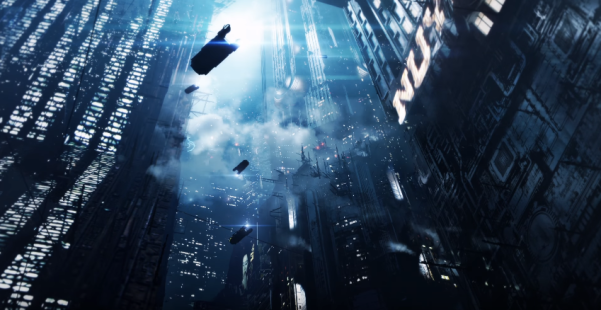
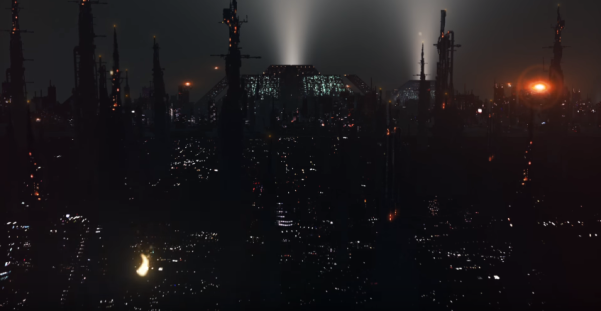
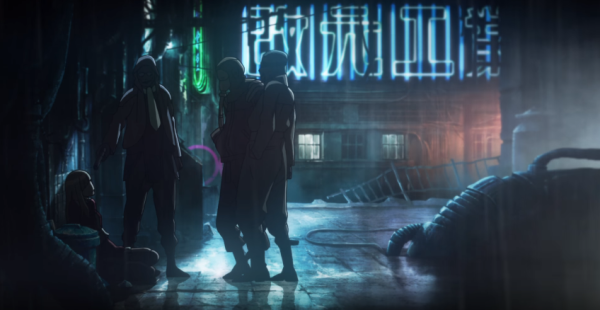
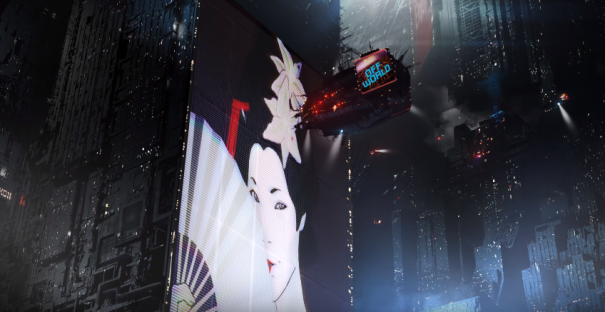
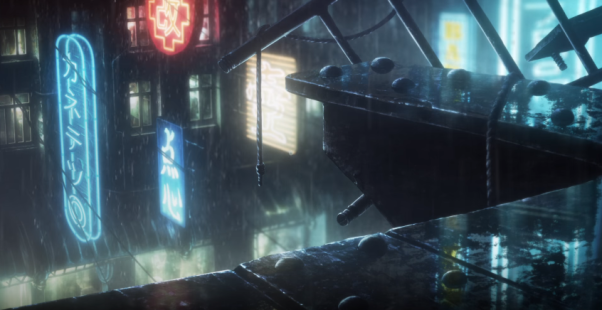
Set three years after the events of Blade Runner, we are presented with a vision of Los Angeles in 2022: a grim, metal and rain-coated field of shacks and skyscrapers that continues beyond the horizon as far as the eye can reach. It’s an overcrowded metropolis in which millions of people roam the streets, shoulders practically touching, yet people couldn’t feel more disconnected on a personal level. The scene is gloomy, very neo-noir in tone, and the only sense of organization comes from not the city’s inhabitants, but its layout and structure; a handful of massive, sprawling, and imposing ziggurats distinguish between the penniless street-dwellers and those empowered with privilege.

los angeles

Between the maze of ominous alleyways and towering steel spires, one would find two types of species: the living, us standard human types, and the manufactured, bio-engineered androids coined “replicants” (these happen to be new Nexus-8 models, mind you, which mean that their lifespans are programmed to be just as long as a normal human’s—a significant improvement since the four-year lifespans of Nexus-6 models in the original Blade Runner). Already faster, stronger, and smarter than humans, this latest replicant enhancement robbed humans of their final upper edge against the robots, and unfortunately, this didn’t settle well with the populous.

Hunters, fighters, and police began their assaults on a race that didn’t even get to choose its genes—their maker, in fact, was human, so why the cause for outrage? Human nature, that’s why (cue events of 1982’s Blade Runner). Replicants were brutally hunted down, more killed than imprisoned. Feeling the urge, the drive, the right to power over all they create and manipulate, unjust violence by humanity broke out everywhere, and it’d only be a matter of time before the Replicants as a whole decided to fight back. In their rise, humanity fell further to the lowest levels of jealousy, corruption, and greed.

alley.PNG

A Means to an End

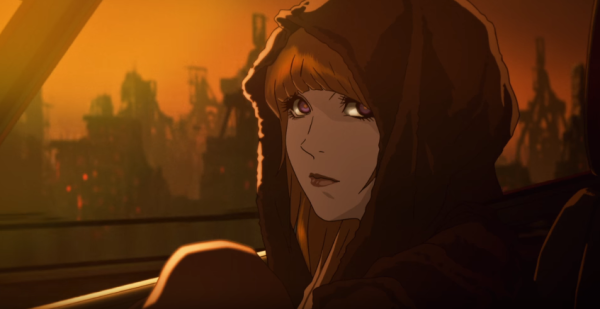
FINALLY, we get to Black Out 2022, a brief tale that begins at the climax of the Replicant Revolution, a stage craftily set by what I’d imagine to be many painstaking hours of sorting out the details so that the franchise’s history flowed smoothly with the coming of Blade Runner 2049. We find a young female, a replicant named Trixie, in the streets being approached by a group of thugs when Iggy, a once-soldier replicant, bursts onto the scene and rescues her. Iggy had left the battlefield once he realized that, in the war on terror, BOTH sides were using replicants as disposable pawns. Flash forward and together the two team up with other members of the underground replicant freedom movement to destroy the Tyrell Corporation’s database of registered replicants, so that replicants can no longer be hunted, as well as plunge Los Angeles into the dark ages via atomic bomb. Heaven and hell are for the humans—now, THIS life, is all the replicants have.

trixie.PNG

Too often, these war shows about rebellion cause us to contemplate the same questions: How did things turn out this way? Was this really the only way to win? Did we even really win anything in the end? And you know, I find them to be more rhetorical than anything. Rather than asking a serious question and expecting a straight answer, these questions merely exist to put a point out there. How did things turn out this way? Well, because we kept agreeing to disagree, that’s how. But really, perhaps it’s because, somewhere deep down in the darkest of our human selves, we wanted this result—this form of means to bring us to the end. As the saying goes, “If you go down, go down fighting,” right? Then WHAT is so wrong about rigging a bomb to protect the lives of millions of ill-fated replicants? (rhetorical question, just think)

Maybe there isn’t a way outta this one. Sometimes, words alone are not enough to probe individuals to act. Replicant injustice was akin to a crueler version of slavery by the time of the revolution—it was humanity who created beings capable of achieving self-realization and freedom, and it was humanity who purposefully dangled that freedom in front of their innocent, unknowing faces, far beyond their grasp. I hate to admit it (and no, I don’t condemn the use of atomic bombs, ever), but maybe the replicants were right on this one.

According to basic psychology, Kohlberg’s theory on moral development might have an explanation to the justification of rigging the great black out of 2022:

Of his 6 stages, the last is the rarest case of man, one in which he weighs universal ethical principles. Gifted individuals like Ghandi or Martin Luther King Jr. fit this bill, as they pass judgments based on universal human rights (whether it’s for or against the law, this is inherently right/wrong). They tend to disregard law and social agreement for what is believed to be the greatest good for all, kinda like groovin’ to the beat of their own drum. Whoever is leading the Replicant Revolution is likely such a charismatic character, one who is seeking an end where replicants can live freely regardless of how many laws they have to break getting there. Now, back to the Blade Runner . . .

holo.PNG

If Only We Could Talk Things Through

BEHOLD, THIS is the future you asked for, humanity. THIS is the world in which you gave all of your power up to an oppressive state that knows all and sees all, and thus it created more slaves. THIS is the route where humans essentially reduced a complex lifeform into a machine. This is . . . the black out is . . .

It’s the world you deserve.

Call me bitter, but there’s a time and place for war, there really is. When some people get their head SO far up their asses that they close off their mind to new ideas and thoughts, it’s time for change. And that is EXACTLY what the replicants did and in the most peaceful way possible. Through the black out, two lowly replicants transcend their original purposes to become free-thinking individuals.

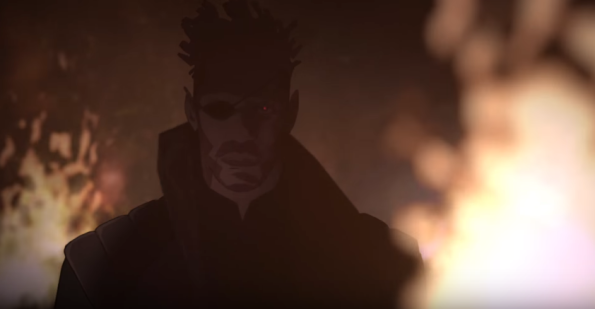
fire.PNG

The film ends just as it began: Iggy walking away from a storm of ash and flames with an eye patch, symbolizing that he, like Trixie, has cast aside his original purpose as a replicant soldier (replicant IDs are located under the eye), transforming him into a cold warrior fighting for justice and the freedom of his kind. Now, in theory, all men are equal, and the means of terrorism have brought upon a glorious end: all of the world is painted black. There is no record of who is or isn’t a replicant. Is it an ending of hope? Well, if you find their actions to be “stage 6 justification” like I do, then it might be. Enslavement of any kind should never be tolerated, and as such, sometimes we need action to prove a point—much like asking a rhetorical question. To quote MLK Jr., “Injustice anywhere is a threat to justice everywhere.”

Blade Runner: Black Out 2022, as with the rest of the franchise, shows us a future void of diplomacy. It’s a world where those who are inferior neither get a voice nor a chance to negotiate their terms of living. There is no fairness. There is no thoughtfulness, or sensitivity, or care given to the replicants. To change the treatment of their kind, the replicants had to think bigger and above themselves—to a region of thought that even most humans fail to fathom—accurately becoming, as ironically as the Tyrell Corporation proclaims, “more human than human.” And it is through the awe-inspiring darkness of the black out that we see the light.

“Darkness cannot drive out darkness; only light can do that. Hate cannot drive out hate; only love can do that.” – MLK Jr. 
dove

Once again, I didn’t even get to discuss the art and animation of the world of Blade Runner in the anime style—which is perhaps the single most interesting element about this entire short film!!! Guys, 2022 is seriously beautiful, both fluid and engaging during the action scenes, and simply breathtaking in terms of landscape. JUST LOOK AT IT. MY GOD, what I’d give to just walk through the blue, rainy, compact streets of the city!! It’s like a dirtier, grittier version of Ghost in the Shell, and if that means anything to you then you ought to give the franchise a watch.

ledge.PNG

Speaking of, this is NOT RECOMMENDED for a blind watch. You won’t get any of it. It’s designed to serve as a one of three prequel short films to the latest Blade Runner 2049and boy did they help a ton! So yes, start with the 1982 Blade Runner, as I highly recommend it, then make your way up. For Black Out 2022, I’ll gladly place it under the “Cakes” menu for future reference.

This concludes my November 10th entry in the OWLS “Diplomacy” blog tour. A new friend of mine, Irina (Drunken Anime Blog) chose to explore how her otome stories and games taught her that you can’t please all the boys with your charming diplomatic ways. Then look out for Lita (Lita Kino Anime Corner) tomorrow, November 11th with, well, it’s a surprise!  Thank you so much for reading, and until next time, this has been

– Takuto, your host

LISTEN TO THIS. “Almost Human” by pop-singer Lauren Daigle is an interesting choice for an ED theme, and I wouldn’t have picked a different one. SO GOOD!!


Death Parade: That’s Just the Name of the Game | OWLS “Dreamers”

Chances are that if you were linked here from another blogger pal, then you might be new. To those first-timers, “Hi, I’m Takuto, welcome to my anime cafe!” As part of the OWLS blog tour’s  tenth monthly topic, “Dreamers,” I decided to incorporate what would have been my standard Death Parade review into this retrospective look at beauty stopped short by a cruel twist of fate.

Every individual has a goal or ambition that they devote their whole life to with passion and courage—whether it’s landing your dream job, traveling, or finding the love of your life. However, there are those who spent their whole life working towards a dream, but were cut short due to an unexpected occurrence. Those people are left only to dream and wonder about the possibility. 

We are not going to focus on the individuals that achieved their aspirations, but instead look at characters that weren’t able to. We will explore what happens to characters who had their wings forcefully cut off, as well as those who gave up before they even started their journey.

I’m a little late to the Death Parade game, but better late than never, right? Also . . . IT’S FRIDAY THE 13—KARMA IS GOING TO EAT ME ALIVE AND SPIT ME OUT. Thanks Lyn for the prompt!

Related image


A brief discussion on the winter 2015 anime “Death Parade,” produced by Madhouse, directed and based on the original story by Yuzuru Tachikawa. SPOILERS WILL BE PRESENT.

“Welcome to Quindecim”

What awaits us in the afterlife? Is there even such a place? As we understand it, nobody will remember how they died. There is living, and then the moment after death. So how did I get here—and why is there a bar in the afterlife?

Such is the state of mind of those who—fortunately or not—awaken in a mysterious bar remembering only that they lived, and that they are now here at a chic bar called the Quindecim. You cannot escape, but you are invited to participate in a game where the value of your soul is on the line, and weighed by none other than the discreet bartender Decim himself. Darts, bowling, air hockey—your typical watering hole time-wasters. Terrible joke, right? Honey, that’s just the name of the game.

Image result for death parade screenshots games

As pairs of strangers stumble into the ethereal pub, they quickly ingrain it within themselves that winning is absolutely dire to making it out alive. Little do they know that despite having come from different walks of life, human nature is unchanging, including the worsts parts of it. That precise moment of despair declares the true winner and loser, and just like an arbiter Decim passes judgement based on the revelations alone, sending them to either heaven or hell following the game—that is until, however, the arrival of a strange black haired woman causes Decim to reevaluate this cruel system of judgement he employs upon his poor guests, as well as his own existence as a heartless arbiter.

“Tell me, bartender . . . we’re already dead”

Death Parade centers its focus on three important themes: the act of passing judgement upon others, self-realization, and death itself. What’s really special about this anime is how it breaks down these notions and turns them on their head, causing the lives of the characters in the show to fall short of any real achievement or happiness:

3. Judgement For one, Decim does not believe that the games bring out the true hearts of his guests, but that true shock and terror for one’s own being does instead. He draws forth these intense emotions by the games: slowly, he might re-implant the memories of their deaths back into their minds; or perhaps, he’ll break or disable a function necessary to win the game in order to see how those essentially “cheated  on” accept these brutal circumstances. Actions define your character, after all. But could you even call this fair judgement? Decim thinks so.

Related image

2. Self-Realization All of our guests awaken without a clue as to how they got there. None of them even remember how they died, which is crucial to the game Decim wishes them to play. As the matches progress and the memories begin trickling back, these individuals start to reveal their true colors to one another, some exploding with hypocritical violence like they used to back when they lived, others merely crying at the tragedies that befell them pre-death. What’s common between both the winners and the losers is that they are all struggling while coming to terms with the realities that fate has placed them in. That shock is a lot to take in. All at once, you remember the person you used to be: the sins that you committed, or the evils that were done to you unknowingly—how you were stabbed in the back, or how you yourself took another’s life. Here, self-realization isn’t used to instill individuals with hope, but rather complicate matters, causing some to break because of the pain.

Related image

1. Death One of the anime’s greatest secrets is revealed come episode two: the guests who believe that they’ve just been kidnapped or imprisoned are, in fact, deceased, presumably stuck in a purgatory of sorts until the arbiter judges them, sending them to either heaven or hell. That’s when the second great secret is revealed: there is no life after death, only reincarnation or the void. Adding more trauma to the hopeless situation, Death Parade anticipates that its viewers are left praying for the purest of the two guests, only to have that purity snapped by the ultimate revelation: There are no second chances, in life and after it.

Related image

Why do it all? To Show us Chiyuki, a Dreamer

This is the name of the black haired woman with no name, no memories, but a passing thought: she knows that she’s already dead. Inconveniencing Nona, Decim’s “boss,” the nameless woman is granted a working shift at Decim’s side until . . . hmm, well we don’t really know how long she was supposed to work, just that towards the latter half of the series memories of her past life start resurfacing, creating an unstable existence trapped with little time left to remember everything. Luckily, she does, only to realize that she, too, was ruined long ago.

She was heralded as one of the nation’s top ice-skaters, and as a child growing into an adult, everyone only saw her for that, an athlete. Chiyuki was thrilled with the praise and success, but overtime (especially as a full-grown adult woman) we get the feeling that she wanted to be more than that—to be known for who she was, not what. And nobody cared to explore that side of her. She was judged by the world for what she accomplished, not how she lived.

Image result for death parade iceskating shigofumi and death parade

To balance the scales, Chiyuki is sent as an assistant to Decim to judge souls herself. She finds herself frequently bumping heads with Decim’s cool demeanor, though, frequently voicing her human emotions and opinions quite loudly—about how wrong Decim is, or how unfair the things he does are. She opens Decim’s eyes to the way of the world, allowing them both to tragically realize that, whether it’s in life or whatever comes after, no soul deserves the unbearable weight of judging others.

She was judged, she had a realization, and then she died. But not in the traditional sense. No—her death came with losing what connected her to others: ice-skating. After suffering a career-ruining injury, she was forced to give up her passions, aspirations, and biggest dreams of becoming one of the greatest ice-skaters to ever live—THIS was what truly killed her, for now, without a purpose, she merely exists and walks along a destination-less path. When Decim shows Chiyuki the world without her in it, she realizes that her suicide marked the finality of her regrets, not her death. The pain she caused her mother absolutely tore her apart, and she is left heartbroken because she wished she had valued her own life.

Related image

Where Justice Lies

Given the once-in-a-“lifetime” chance to return to the living, Chiyuki denies the ultimate wish. Why? Why wouldn’t she want to apologize and reunite with her mom?? Causality, that’s why; give and take. When a soul leaves the earth, a ripple of cause and effect impacts the lives of others. By reclaiming the impossible—a second chance at everything—her soul is exchanged for another. This brings us back to the first theme, where YOU do not get the chance to weigh another’s life, nor the sorrows that would come with that stranger’s death. The revival of one brings about the unfair ruin of another, and if justice has taught her anything by this point, it’s that this is the greatest taboo.

Related image

At the story’s end, we find out that Decim’s existence is part of an elaborate experiment crafted by Nona all for the sake of searching for a better judgement system. Though Quindecim’s tactics are arguably fairer than the ones we have now, it’s still a far shot from true justice. That begs us to ask the essential question:

How long will it take to find where justice lies, and at the smallest cost possible?

Death Parade takes an exceptionally accurate stab in the dark and concludes that, though trial and error brings us inches closer towards the light, true justice still lies many, many lifetimes away. In a story rich with irony where dreams are crushed and lives are weighed like pennies, those parading into the bar of the afterlife died long before they even realized they lived.

“I don’t regret the things I’ve done. I regret the things I didn’t do when I had the chance.” – Chiyuki


Man, I didn’t even get into the slick animation (with amazing texture designs), atmospheric and emotional soundtrack, or the other characters besides Chiyuki and Decim, but perhaps I’ll leave that all up to you to explore yourself! It is, after all, regarded as a “Cake” here at the Quintaku. 🙂 But yeah, Death Parade, it’s a wild ride for sure, though I can’t help but feel that it, like its poor characters, had its expectancy cut short. I doubt there’ll ever be more, considering it’s an original source (the best kind of anime), but who knows, maybe Lady Luck will throw us a curve ball, or an extra toss at the dart board. (Just please, avoid the eyes. That would suck immensely.) Let me know what you thought of this anime!

Image result

This concludes my ~spooky~ October 13th entry in the OWLS “Dreamers” blog tour. The incredible YouTuber Gigi of Animepalooza *FINALLY* put together a video captioning the flawed life and broken dreams of Yuri!!! On ICE‘s KING JJ which you can view right here! Also, look out for our fearless leader Arria’s (Fujinsei) post about the lovely Silver Spoon this upcoming Monday, October 16th!  Thank you so much for reading, and until next time, this has been

– Takuto, your host

Shin Godzilla is a Terrifyingly Realistic & Meaningful Ode to History | Review

A brief discussion on the summer 2016 Japanese film “Shin Godzilla” (also known as “Godzilla: Resurgence”), produced Toho, co-directed by Hidaeki Anno and Shinji Higuchi, based on the original story by Anno (Evangelion). 

*I am not overly familiar with the Godzilla franchise (meaning I cannot properly decide whether it is a particularly “good” or “faithful” addition), but I do respect it and the impact it has had on the Japanese people and the rest of the world.*

“A God Incarnate. A City Doomed.”

This is how Funimation captions the deadly film containing the biggest, baddest Godzilla known to mankind, and accurately so. (He’s literally the tallest in the franchise!) But before the King of Monsters surfaced from the deep, it was just another quiet day for Japan. Chaos quickly floods the scene when a giant, strange gilled creature explodes from the ocean’s surface and begins tearing through the city.

Prioritizing citizen safety above all else, the government attempts to keep the situation under control, only to realize that their technicalities and formalities are useless in the face of true terror. It’ll take a rag-tag team of volunteer scientists, engineers, and public safety officials to come up with some sort of way to combat this seemingly perfect lifeform. “But time is not on their side—the greatest catastrophe to ever befall the world is about to evolve right before their very eyes.” – Funimation

Image result for shin godzilla screenshots

More Than BOOMS! and BANGS!

Despite boasting action (it’s a Godzilla film for crying out loud), there’s a surprising amount of substance, particularly a possible social commentary on the hierarchy of the Japanese government and they way the nation handles foreign affairs during war time. Specifically, we are frequently shown how frustrating and slow policy can be. The film’s first half centralizes on political officials arguing about who should do what, when, and their reactions to the unbelievable events unfolding—most were consumed with disbelief, in fact, except for the young yet forward-thinking Deputy Chief Cabinet Secretary Rando Yaguchi, our basically-main character (and wow, what a title).

Image result for shin godzilla kayoko

We join Yaguchi in his frustration against the higher-ups, as well as his struggle to make amends with the innocent lives lost because of the government’s inability to act early on. While those above him in rank merely wish to hold fast to their comfortable, well-paying seats, shrugging off the impending doom that is about to likely kill them all, Yaguchi pulls together every asset that he can to find out what Godzilla is, and solve the mysteries surrounding Goro Maki’s research on the subject. It’s sad to admit how painfully real the execution of this all is.

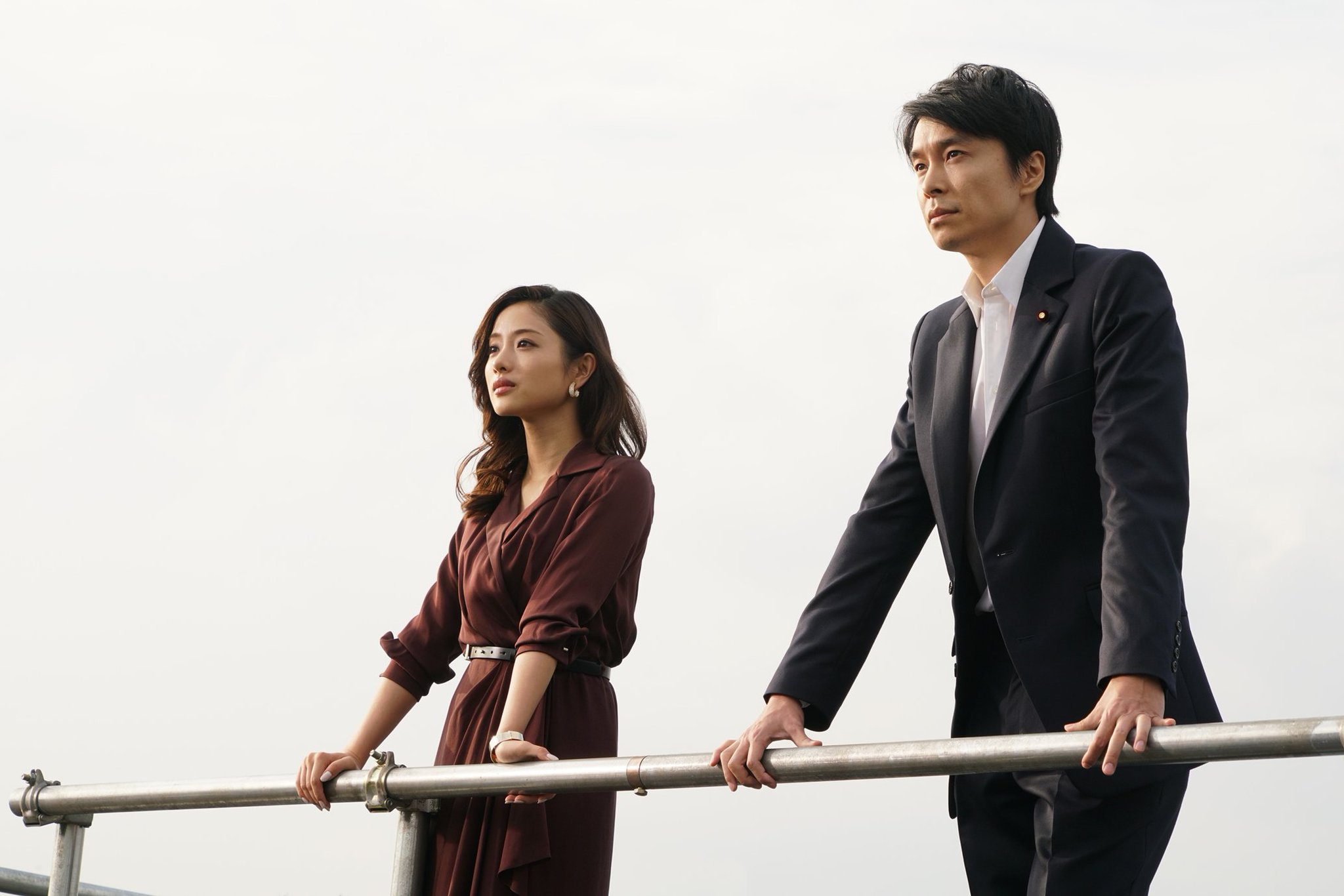
Unlike the other officials who merely bicker about bureaucratic protocol and semantics (and not take things seriously), Yaguchi deals with exactly what’s in front of him. He knows he’s trapped within the system’s web, but he doesn’t fear questioning those above him in order to do his job correctly and honorably. Actor Hiroki Hasegawa conveys the complexity of Yaguchi’s character impressively, balancing fitting facial expressions for each emotional hit: a mix of concern, anger, sadness, and confusion.

Image result

As I side note, I thoroughly enjoyed the excitement that came with watching Godzilla transform from the weird gilled lizard on all fours to the menacing tower of terror we’ve come to know and love. It was so much fun! One small small complaint that I did have was (and I’m not sure if this actually counts) that I couldn’t really tell if the CG done on Godzilla was “good” or not. Seriously, I couldn’t. Was he creepy lookin’? Sure, but I’m not sure how this makeover compares to previous ones. Also, while his explosive beams later on looked absolutely terrifying, I didn’t like the cheesy sound effects for the explosions—they felt like they were missing a low boom to ’em, or perhaps an epic bass you’d expect from a Hollywood explosion.

Intense Dialogue, and the Engrish Doesn’t Help

Most of the film’s complaints are targeted at the lead female, Kayoko Ann Patterson, portrayed by Satomi Ishihara, whose unfortunate script is loaded with English-heavy dialogue. In an interview, she even stated “Sometimes it’s so frustrating, I just want to cry,” and by NO means is any of this her fault—that’s a director issue. Her character is meant to seem very American, and while we definitely get that feeling, I can’t help but think that her normal Japanese speaking would’ve sufficed the whole way through. Anyway, I still love Kayoko to death because of how her character acts as an excellent foil to Yaguchi’s—both see themselves in higher positions, but for now, they work together efficiently with what they’ve got in their own ways.

Image result

The Engrish problem is solved by switching the language settings to Funimation’s English dub, which is especially wonderful because the subtitles just fly by! Shin Godzilla is a film about talking through the problem, and less about any spectacular human actions. The political nonsense in the first 20 minutes, as well as the ending with solving Maki’s quote (which I’ll get to) are much easier to understand with the dub. If you don’t mind live-action dubs, do give this one a go—it could help immensely with understanding the film’s main messages.

Understanding the Legacy of the Atomic Bomb

More than having knowledge of the franchise, it’s historical context that is needed for full emotional effect here. Japan was rocked not once but twice by an evil that shouldn’t have even been unleashed on the planet: the atomic bomb. History has learned that the destruction that follows an atomic bomb is not cool. It’s not something the U.S. or any country should glorify, and this film makes sure of that. Godzilla was birthed once the long-term effects of radiation poisoning revealed themselves as something just as fearsome and frightful as the bomb itself—gosh, perhaps worse.

This brings us back to the film, which could stand an allegory for nuclear war and its long-standing effects, Godzilla itself mirroring the disastrous earthquakes, tsunamis, and radiation that hit the poor nation all at once. Unlike normal action films where you’re just waiting in anticipation for the bad guy to unleash their awesome powers, I was left not cheering, but shaking with fear of the results that, very closely, mimic an atomic bomb. The theme of destruction is a powerful one, a scary one, and that’s how this film shocked the viewers—the moment Godzilla unleashes its wrath is one that can only be witnessed . . . and feared.

Image result

The People that Made this Experience Special

1. Sharla (Sharmander on YT)—Being one of my favorite YouTubers, it’s rare to ever hear about her work life as a dialogue coach, and so I was ecstatic once she put out a video saying that she worked with the cast (particularly Yaguchi and Kayoko on those stubborn English lines) and Anno himself.

2. Shiro Sagisu—Known for his epic music in Evangelion, Shiro gives the film a really neat character. His famous “intense operations planning” music that plays throughout the franchise makes several appearances in this film, and though it felt overplayed at first, a second watch through with the dub made it all feel like it blended seamlessly, as if Eva and Godzilla were truly “a match made in kaiju heaven!”

3. Hidaeki Anno—THIS MAN puts me through so much stress, and yet I can’t ever look away whenever I hear his name involved in a project. He is the reason I jumped into this foreign franchise, after all, so that’s got to mean something, right? He perfectly combs together realism, destruction, and rebirth in such a way that merits a masterpiece with every work. In Shin Godzilla, he took me back to the first time when I saw Evangelion and was impacted in such a way that I’d never be the same without it. I’m glad Anno took the break between 3.0 and the final Rebuild film, because hey, sometimes we have to “Do as we please,” and I respect that.

Thank you for giving me my Evangelion fix—it was an incredibly enjoyable experience!

“Do as you please.”

These are the few words left by the enigmatic Maki, and yet, they remain the strongest message within the work. It’s something so simple, to do as you want to, though I get the impression that it’s not a common Japanese lesson taught. No, this isn’t a wish or a passing thought, but a statement aimed DIRECTLY at Japan. Towards the end of the film, the Prime Minister must either give consent to or deny the United States’s declaration against Godzilla: “Take care of it now, or we will nuke it.” That’s right, history will repeat itself. Japan would risk losing the pride and dignity it spent so many years recuperating to the humiliation of starting at ground zero once again.

With the titular creature MIA towards the end and the U.S.’s threat, it almost begs the question: Are humans deadlier than Godzilla?

But oh, “Danger is an opportunity for personal growth,” remarks the U.S. President in the film. Yeah, not for this country. The true climax of the film comes down to a duel between philosophies—to accept help and then rebuild, or own up to the situation. And when Japan finally does decide to take matters into its own hands, fighting the way only they do best by studying their enemy, the scientific team makes work of the King of Monsters in a way that, without spoilers, makes me proud to be human. Using science, mankind’s greatest weapon, the team transforms the impossible into plausible—theory into reality.

It’s that moment when you realize you CAN stand for yourself WITHOUT having to kill another being—THAT is the big takeaway. Take pride in the things you can create and accomplish together, NOT destroy. And finally, for ONCE in your overly obedient life, do as YOU please, NOT what the others want.

Image result

Shin Godzilla is incredibly smart, realistic, meaningful, and genuinely scary at times. Most of all, my god, if this film had come from my country, I’d be overflowing with pride, too.

“Accountability comes with the job. A politician must decide to own it or not.” – Rando Yaguchi 

Image result

(None of these screenshots belong to me. No copyright infringement is intended.)


Have I been completely Godzilla-fied? Haha, not quite, but I will definitely be keeping an eye out for future installments, including the wildly anticipated CG Godzilla film directed by Gen Urobuchi, another one of my favorite directors in the industry! Shin Godzilla may not be anime, but I’ll let it slide into the “Caffe Mocha” selection as grade-A movie material for sure, and for everything it stands for. Shout-out to Scott (Mechanical Anime Reviews) for hyping me up about it, and for covering the film way better (and quicker) than I did here.

Lastly, thank you so much for reading, as this was a film that has grown to mean a lot to me. I’m dying to know what you thought about Shin Godzilla, especially regarding its production, so let me know your thoughts in the comments! Until next time everyone, this has been

– Takuto, your host

The Great Sea: Phantom Hourglass | Zelda Project

Welcome! This is just a fraction of the reviews and reminiscent posts covering the expansive “Legend of Zelda” franchise in a project titled “The Legend of Zelda: A Blogger’s Journey,” which covers the many adventures of Link, from its creation in 1986 to its arguable magnum opus in 2017. This massive undertaking was started by fellow blogger NekoJonez (NekoJonez’s Gaming Blog), and though we had some rough-footing (what with aligning individual schedules to a project on this scale), I’m proud to be a part of the brave thirteen bloggers who were captivated by this memorable franchise, and wish to tell their own tales about the games they love. 

Here I have chronicled my experience playing “The Legend of Zelda: Phantom Hourglass” in Part 1 of 2. Part 2 over the game’s sequel, “The Legend of Zelda: Spirit Tracks,” can be found here. 

This is only the third blogger project I’ve ever been part of, so an extended thank you to NekoJonez for recruiting me back in June of 2017—we’ve come such a long way, my friend!

abloggersjourney.png

Awesome logo by zoef


Bridging the Gap

When Nintendo’s Wii stormed onto the scene in late 2006, bringing with it a long-since-promised expansive world in epic HD realism now known as Twilight Princess, fans were not only shocked but a bit confused as to how the games all “linked” together. It had been four years since the Overworld was flooded in Wind Waker, and five years since Zelda was played on the small Game Boy Advanced console (unless you returned to beat Vaati again in 2005’s Minish Cap).

Luckily enough, Nintendo responded to our calls in 2007 by continuing the adventure that had still left enough open waters out there worth exploring. Once again mounting the ship deck, we shove off the shores and set sail for what will be the next “brief 10 minutes” of Phantom Hourglass and glimpse into the future 100 years later in Spirit Tracks. Come 2009, with no other Zelda entries in between, the Toon Link Trilogy (or reign) will finally get its resolution from the day, long ago, when a valiant king sacrificed everything he had—including his own life—wishing for the creation of a new future.

Image result for wind waker great sea

Back Out at Sea

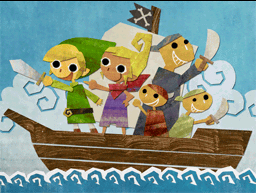
Phantom Hourglass picks right back up where Wind Waker ended, even giving us a unique recap of the game via pirate Niko’s storyboard slates. Because of this, it marks itself as a clear successor to WW, a treatment that no other game in the franchise has received. Link, Tetra, and the gang are on a voyage to explore the endless oceans, one day hoping to finally settle down on a larger continent.

Image result

But just as they begin their journey, the Ghost Ship, an eerie and haunting vessel whispered to cause other ships to disappear, catches the attention of our heroes. Tetra’s curiosity gets the better of her, and when she attempts to board the ship, the ghostly liner departs, causing Link to chase after her screams and, ultimately, fall into the dark water’s depths.

Image result for zelda phantom hourglass ghost ship art

He awakens washed up on a shore, and when a mysterious fairy named Celia and a kind old man named Oshus rehabilitate the boy, Link’s journey of once again returning the princess to the land of the living begins. He first visits the cursed Temple of the Ocean King, where destiny bequeaths him with the Phantom Hourglass, an artifact with sand that protects the holder from the temple’s toxicity. In the temple, he encounters the infamous treasure-hunter Captain Linebeck, and while the Capt.’s penchant for riches and fame frequently falls to his arrogant, scaredy-cat nature, he secretly admires Link’s silent charisma, and swears on his treasure-seeking hide to find the treacherous Ghost Ship.

Image result

Introducing the Nintendo DS

Phantom Hourglass pioneered the Zelda franchise onto the Nintendo DS, returning the green-clad Hero to small consoles where he got his roots. As we all know, the DS’s bragging feature was its stylus/touch screen action, to which PH is worthy of the boast. Straying away from the D-pad (which now functions as the options menu), all the mechanisms are completely stylus driven: draw paths for weapons and movement, tap to attack, swipe and squiggle to perform a rolling dodge—you name it!

Image result for zelda phantom hourglass boomerang

While the drawing function for weapons like the iconic boomerang can cause some combat inaccuracies, you’re more likely to be using the DS’s key features for puzzles, riddles, and story events. Zelda was known for problem-solving in elaborate dungeons anyway, so this isn’t too big of a drawback. If anything, the idea of tracing on screen adds a whole new level of fun that just doesn’t exist anywhere else in the franchise.

An example of this would be that, for the first time, you can freely draw on the maps with your stylus, forever leaving behind tips, secrets, and memories for whenever you next visit the Isle of Ember or Mercay Island. Same can be said about sailing—draw a path on the map and the ship will follow. Some of my most fond memories, in fact, were merely cruising on the open waters for days on end, admiring the view of the colorful and creative islands both near and far.

Related image

Another fond memory of my gameplay experience is again attributed to the unique involvement of one’s senses. Save for taste (please do not eat the game cartridges, looking at you BOTW freaks), PH used the DS’s capabilities to its fullest. In one scenario, you are required to “extinguish the flames to open the door.” I recall spending HOURS just trying figure out what the heck that meant. After finally succumbing to a game guide (my first one ever!), I learned that you were supposed to blow on the mic sensor located between the top and bottom screens. How inventive! In another situation, you had to “stamp the Seal of Courage onto the sea map.” That is, you would SLAM the DS lid shut, then gently fold it back open again. Now THAT is not only creative as hell, but very rewarding if you figure it out on your own. (I got that one, yay!)

It’s the Ocean Temple, But Worse

Where Phantom Hourglass is praised for its gameplay ingenuity, gorgeous cell-shaded graphics (which was practically begged for after Wind Waker), and fun, memorable characters, its most unfortunate drawback is the Ocean King’s Temple itself, which especially sucks since the name of the game—“Phantom Hourglass”—revolves around a crappy timed dungeon. That’s right, the main antagonist, a squid-like demon named Bellum, didn’t want just any old explorer making it to the 13th floor.

Image result for zelda spirit tracks final battle

Thirteen fricken’ floors, and that’s not even the worst part—when you first visit, only three floors are available. Between visiting each island’s temple, you RETURN to the Temple of the Ocean King—tediously starting at FLOOR ONE, mind you—and unlock the next set of floors. Oh yeah, and a reminder: it’s all timed. Once you run out of time, the temple starts sucking away your health. As an added bonus, phantom knights roam the floors, and unless you’re sitting on a safe zone, they’ll chase you down, slash you, restart you at the BEGINNING of the floor, AND cut time off your hourglass. It’s ridiculous, it’s challenging, and there are very few shortcuts as you go along. It’s even been dubbed “Doing your Ocean King homework before getting to the fun stuff.” I’ve gained so many gray hairs from this temple it’s not even funny.

Message in a Bottle

But as us Zelda fans should know, we shouldn’t let one bad dungeon ruin our experience. Beyond the Ocean King Temple is a simple story of heroism and doing what is right even if that scares you. Although Phantom Hourglass felt like a bottle episode, every bottle has a message in it:

It left us knowing that the goddesses who created the Triforce perhaps watch over many worlds, and that even in those worlds, the Hero can inspire courage in the most unlikely of cowards.

linebeck.PNG

I can proudly say that Phantom Hourglass was my first Zelda game (shoutout to the OG Gold Triforce DS Lite), and that despite my biases toward it, I’ll still recommend it to all the fans of the franchise, especially Wind Waker, and to those wanting to know if there’s hope in the future of the flooded Overworld.

To put it simply, yes, and it’s a world brimming with childish excitement and everlasting adventures.

Image result

End of Part 1. Go to Part 2 now!

(none of this lovely artwork belongs to me)


Let me know your thoughts, memories, or nostalgia while playing Phantom Hourglass! It’s a game that took me places, and arguably brought me to where I am now. Many thanks again to NekoJonez for his hard work in putting this all together! PLEASE visit our hub article for “The Legend of Zelda: A Blogger’s Journey” HERE and reminisce on all the games that brought us joy, wonder, and excitement! We hope you enjoy it all! Now it’s time to board the train for Spirit Tracks, so go and meet me over there! Thanks for reading!

– Takuto, your host

Image result

“Orange” is Sweet & Sour, Yet All The More Beautiful | OWLS “Treasure”

Chances are that if you were linked here from another blogger pal, then you might be new. To those first-timers, “Hi, I’m Takuto, welcome to my anime cafe!” As part of the OWLS blog tour’s  ninth monthly topic, “Treasure,” I decided to incorporate what would have been my standard review of the Orange manga into a cautionary yet hopeful look at the realm of teen suicide, and how, as an outsider, it is okay feel unsure when warning signs are observed.

There are moments in our lives where we lose our sense of self-worth and value and as a result, we find ourselves deep in darkness or drowning in the ocean. However, every person in this world is a treasure—we treasure ourselves or we are treasured by others—and at times, we may need to be reminded of that. We will be exploring characters who have suffered from mental illnesses, depression, and/or suicide, and then discussing how these individuals cope with these issues, the reasons for their emotions, and how they handled the situations they were in.

For as long as I’ve been avoiding it, alas, there’s no going around the major theme of suicide in Orange, so thanks for the prompt, Lyn! This is also my first manga review, so wish me luck!

Image result


A brief spoiler-free discussion on the 5-volume 2012-2017 manga “Orange,” localized in the U.S. by Seven Seas Entertainment with story and art by Ichigo Takano. 

Death, Divorce, Drugs, Depression

Today, teachers will advise students to omit these four things when it comes to important college, scholarship, or job essays/interviews. This is likely because your employers and admissions offices do not want your pity; they want to hear about your strengths, a time you overcame tough odds, or maybe a moment of positive character development in your lifetime—NOT about the pitiable setbacks along the way.

But if these four items have become such crucial parts in the great cycle of life, why mightn’t you want to write about how you didn’t let the divorce of your parents or attempt at suicide ultimately stop you, or convey how even though drugs might’ve ruled your past that they would not own your future?

Ok, real talk. Depression is, well, depressing. Drugs are weird. And let’s face it, having to console someone about their “recently late” Aunt Susie can be extremely awkward, both for the you and the other party, rest-assured. It’s hard to talk about suicide and say “just the right thing” at “just the right time.” When is that time? Is it my fault for not knowing? It’s all just so . . . pressuring, so time consuming, and your boss probably doesn’t have the time to seat you on the sofa and listen to you express all your life’s troubles.

As much as I hate to say it, business and education are professional. Save your need of counseling for the counselor.

Image result for orange manga

I’ve Been Running for So Long

All this and more is why I avoid the Four D’s, both on my papers and here on the most informal of blogs. I try not to talk about specific real problems—negative aspects, terrible people, worrisome events—we face daily, but instead offer to celebrate the good that can come from something, even if that bit of positivity is ultimately (and knowingly) insignificant or greatly overpowered. Death and depression are hard to talk about for many, and the last thing I want to do is try consoling someone when I’d probably end up making things worse.

We don’t always get to make that decision, however, as entertainment has integrated these kinds of issues into their stories and characters. I might hear that a certain manga or anime is a “masterpiece of emotional conflict,” yet as soon as I hear “mental illness,” I won’t lie, I get turned off.

This brings me back to Orange, a brief tale about THE WORLD’S GREATEST GROUP OF FRIENDS and their willingness to alter time—risking the wonderful future in store for themselves—in order to prevent the inevitable suicide of a troubled young boy, their newfound beloved, treasured friend. It’s a story so short, powerful, and highly regarded of that it just couldn’t be ignored anymore, and descending into darkness proved well-worth the risks.

Related image

To You, in the Past

The start of Naho Takamiya ‘s junior year in high school was unlike any other: for the first time, Naho overslept, which was also her first mistake. That morning a letter made its way to her, but she was too busy trying to make it to school on time. When she finally arrives, her teacher announces a new transfer student by the name of Kakeru Naruse. According to the letter (which she now has some time to scope out), he’ll sit next to her. And just like clockwork, the teacher seats him in the back right next to her.

To her disbelief, Naho realizes she stumbled upon a letter from herself ten years in the future, which chronicles her everyday emotions and actions for the next six or so months. It’s not until shortly after Naho and her four other friends invite Kakeru to walk home together after class that she, again, violated the letter’s requests: her second big mistake.

naho letter

Naho is tasked by her future self to get to know Kakeru Naruse better—to make him feel welcomed, loved, cherished, and understood—for ten years from now, Kakeru no longer walks among the living, and his loss was her greatest regret. Now unfolds a fatalistic love story that spans across time, a tale full of many emotional ups and downs.

Everyone Needs Friends Like These Guys

I find myself in the same boat as Naho; depression is hard to talk about, so she often skirts around the issue by using the excuse of “making him smile.” I suppose both technically work, but clearly, Naho has no idea how to make Kakeru happy. While I can relate to her frequent indecision and lack of self-confidence, C’MON GIRL, JUST SPIT IT OUT ALREADY. I love Naho’s cute and considerate character to death, but man, telling a guy that you have lunch for him shouldn’t be that hard. I guess it adds to Orange‘s drama, and that some social anxiety can be just as stressful as depression.

Related image

Orange is only complicated on an emotional level, concerning itself almost exclusively with Kakeru’s depression and Naho’s inability to act the way she truly wants to. The relationship between the two of them is such a focal point that I couldn’t help but wish more of Naho’s friends played a bigger role. There’s the ever-teased soccer “giant” Suwa, a real team player, and he’s just about the best friend you could ever ask for. I’ll avoid spoilers by merely saying that he’s a funny guy full of heart, and that if anyone’s willing to take one for the team, it would absolutely be him. (Props to creating one of the most challenging love triangles ever.)

Image result for kakeru e suwa orange

But there are others: the girls, including the loud and cheerful Azusa and the cool, strong Takako. These two are almost always up to no good, snooping around whenever and wherever they can, but their presence makes me feel most at ease. They’re both overly caring, and despite how bratty Azu can get, or scary Takako may seem, they only mean to stick up for their friends.

Lastly there’s poor, poor glasses-kun Hagita, who likely would’ve been my favorite character had he been more than just the team’s punching bag. He’s picked on and ridiculed for nearly everything he does, but his logic and reasoning, no matter how pessimistic, often lead to the solutions everyone’s been looking for. Several times throughout the series he’s hinted on having a huge involvement with the finale (which could’ve led to something really cool), when in actuality, he’s just as equal in importance as the other girls.

Image result for orange manga characters

*gulp* Here We Go

It doesn’t take a second glance to see that Kakeru is dealing with his own demons. His smile may be pretty and sparkly, but underneath that shine is a whole lot of self-doubt, trauma, and shitty memories from his previous school. On top of it all, his parents are divorced, and he blames himself for his mother’s sudden suicide early on, which is what triggers the events of Orange! Well geez, it’s no wonder he’s thinkin’ about offin’ himself all the time!

Related image

Suicide is big. It can be hard to stomach and awkward to talk about, I covered this. But because it can be so off-putting for some people, odds are that they will have a difficult time with Orange. It doesn’t help that Kakeru comes across as particularly frustrating and ungrateful. But we gotta help the guy out, that’s what we do, right? With these kinds of people and situations, we need to get as close as we can to hear them out. From there, we can only go with our gut and advise them, appreciate their efforts and tell them that  it’s almost always never their own fault, and that they are never alone.

In my opinion, Naho did what was right by involving all of her friends in on the dilemma. She took her sweet time, but thanks to plot convenience (and a neat twist), everyone becomes gung-ho about saving Kakeru. Take things slowly, sincerely, and whole-heatedly, for if you can save the life of a friend, then it’s always worth the time. You may not get it right the first time, but at least you tried.

Related image

Regret and Happiness

I boast that one of Orange’s winning features is its short 5-volume run, but maybe that’s because I can’t take +10 volumes on suicide. Suicide plays a big role in the story, I’ll admit, but it’s not the real enemy here—regret is. As if all of the characters play supporting roles, Regret is the main antagonist (Guilt his henchman), whilst Satisfaction and Happiness work together to calm not only Kakeru’s mindset, but everyone else’s regret-filled future, too.

Image result for orange manga suwa

It just sucks when you have to give up what could have been your dream life all because you felt a little guilty for having that blessed life in the first place.

To You, in the Future

Like the titular fruit flavor, oranges taste so sweet and delightful. That is, until you notice that subtle sour tinge. Once it stands out to you, that’s all you can taste, and the fruit no longer becomes desired for its sweetness.

Naho lives one of the coolest lives ever imaginable, surrounded by her dearest friends and caring family. But as soon as Naho experiences Kakeru’s false smile, the sourness just punches her in the gut and pushes her to the brink of tears and exhaustion. That’s when she remembers Kakeru’s value to not only herself now, but herself in the future: “Ten years from now, I’m still regretting Kakeru’s death and the fact that I didn’t even notice how he truly felt.”

Image result for orange manga naho happy

At this point, she makes a desperate call to fate, the ruler of this timeline, wishing to keep the treasure that she found—that they all found—in Kakeru’s heart. And if fate didn’t grant her this treasure, then she’d take it by force. I’m no love expert, but that’s pretty cool of Naho, and I’m glad that this sour story found its sweetness once again by the end—it just makes it all the more beautiful.

“Kakeru . . . is my greatest treasure. Please let us change Kakeru’s future . . . I will not let this be his last day.” – Naho Takamiya


What’s the moral of the story? Well, you could say “Never give up,” but I rather like the sound of “Live without regrets.” The author Ichigo Takano herself, in the epilogue, hopes that our future is a happy one, and that years from now we are still living without regrets. “If you have someone like Kakeru in your life, please find a way to save them. Every life is precious. Please treasure each and every day, the present, the moment, and yourself. Thank you very much.” 

If we notice someone displaying potential signs of any mental illness, don’t feel afraid to step out and let them know you’re with them. Never expect to know EXACTLY what they’re going through, but be prepared to get them the right help just in case. I’m excited to watch the Orange anime now, and with a LTD ED release coming this fall thanks to Funimation, I know what’ll bring my wonderful experience full circle! For now, the manga receives the “Caffe Mocha” approval rating!

A very special to Gigi (Animepalooza) over on YouTube for gifting me with the first volume as per her giveaway—without you, I would not have been allowed to experience this endearing story of romance and very attractive artwork, so many thanks again~!

This concludes my September 19th entry in the OWLS “Treasure” blog tour. Prior to me, Hazelyn (ARCHI-ANIME) wrote about reasons for living in the otome PS Vita game Collar X Malice, and just tomorrow the 20th, Crimson (Crimson is Blogging) will walk us through the Katie Green novel Lighter Than My Shadow! Thank you so much for reading, and until next time, this has been

– Takuto, your host
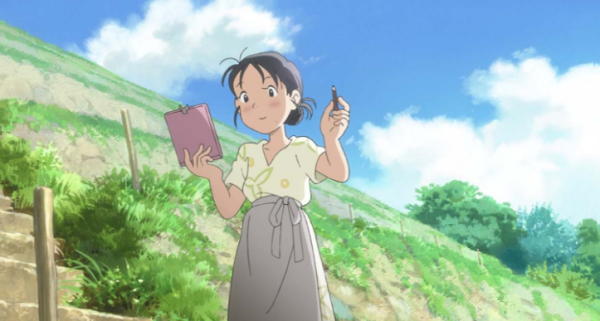
Image result

United We Stand in Ghost S.A.C. 2nd GIG| Review

A brief spoiler-free review of the 26-episode winter 2004 anime “Ghost in the Shell: Stand Alone Complex 2nd GIG” and its recap 2006 film “Individual Eleven,” produced by Production I.G, directed by Kenji Kamiyama, based on the original manga by Masamune Shirow.

Cafe note: I reviewed the first season right here, so check that out prior to reading this. Many thanks, happy reading~!


Back to the Cybernetic City

With the Laughing Man’s agenda terminated by Motoko Kusanagi and the gang, Section 9 is no longer forced to operate in the shadows. Taking an interest in the way the brutal hunting force operates, Japan’s newly elected Prime Minister Kayabuki re-establishes Section 9 as her final attempt to fend off the latest rounds of cyber-terrorism, and find a party whom she could trust her life with. This new deadly collective, “The Individual Eleven,” has led a string of seemingly unrelated terrorist plots and assassinations across the nation.

Just as the Major and Chief Aramaki begin investigating into these gruesome cases, however, the Japanese government faces a forced confrontation by the alarming build-up of foreign refugees who were ousted from their homes during the Third World War, and are now seeking asylum in Japan. Section 9 attempts to juggle both crises, but their constant bumping heads with Kazundo Gouda of Cabinet Intelligence Service leads the Major to suspect he may be even more tangled up in the mess than the “enemy” is, and that perhaps both The Individual Eleven and the refugee crisis are just two parts of one titanic movement.

Image result

The Stand Alone Complex branch of the hit Ghost in the Shell franchise returns to the scene to reaffirm that everything, be it physically or digitally, is interconnected by the pushes and pulls of a techno-dystopian society.

Picking Up Where We Left Off

S.A.C. 2nd GIG wastes no time in welcoming us back to its inner universe. Unlike its predecessor, 2nd GIG features a clearer, more concisely written story. It achieves this by appropriately placing its “stand-alone” episodes within the timeline in less-congested areas of heavy plot action. Sticking to a story written in sequential order, 2nd GIG feels a lot easier to grasp, even if the characters themselves are more “complex” this second time around. I can see why fans acknowledge this series as the superior one not simply because the visuals are upgraded, but the linear way in which the story is told—even if the concept may not rival that of a wizard-class super hacker—seems more straightforward. Either that, or it just took me 26 episodes prior to get used to Kamiyama’s directing.

Image result for prime minister kayabuki

Critical characters to not only the series but the franchise as a whole are introduced quickly and efficiently, these namely being Kayabuki, Gouda, and Kuze, the eventual leader of the refugee camp and a mastermind in guerrilla warfare, both on the battlefield and in the net. Watching Kayabuki crumble before but endure the weight of those dirty politicians and back-alley deals emphasizes one trait that defined the Major as such a relatable character for so many: the strength of women, and the power, beauty, and grace that comes with enduring unfavorable outcomes and situations. Ghost in the Shell, like much of entertainment, explores the notion that life is one big power struggle; it’s as unavoidable as the rising moon or the flowing tides.

New, Twisted Faces

Speaking of power, Gouda is clearly not meant to be a likable dude. His *literally* twisted face should be an indicator of his reliability. He’s a competent and sophisticated man, using people and manipulating scenarios like he does with data. Though he’s got several tricks up his sleeves to be used against all of the pawns in the game, including the Major, his sheer level of skill and sneering wit make me MELT with a swelling love for his character. And John Snyder, his English VA absolutely knocked the role outta the park! We honestly need more intelligent rivals like him in anime; he’s a dick, but that’s what makes him so fascinating. Gouda is always one step ahead of the game, and stacking the deck is the only way to secure a trump card in this dirty world.

Image result

The Major’s foil finally manifests in the form of Hideo Kuze, an calm yet equally interesting antihero who holds a similar background. While I cannot mention too much without spoiling, I will say that he’s just as calculating as Motoko and Gouda, and perhaps more skillful and inspirational than both of them on a personal level. He’s quite interesting, so let his words sink in . . . everything he does is for the people . . .

Image result

Aside from the Major’s few moments, those members of Section 9 that did not previously have an episode for their own backstory (Pazu, Saito) receive one now EXCEPT for poor, poor Borma, the fat guy. While the Tachikoma’s return with more amusing exclamations and ideas, Togusa takes takes the back seat for this ride. One of these days we’ll get the backstory details and spotlight that they ALL deserve, but that time is sadly not now.

Improved Presentation Transcend S.A.C.

The two-ish year gap between each series really does reiterate the fact that Production I.G is the king of science fiction anime. Most of the characters receive new outfits and gear, all of which show off their differing personalities. The Major’s transformation from light gray and white to a dark gray and black skintight suit add contrast to the series’ new tone, a perfect match for some of the unsettling truths regarding the Major’s past. Her leather trench coat and obsidian visors complete the look. Besides the returning overly impressive architecture, it’s all the tiny details in character design that make 2nd GIG a fashion show for our models, both the sleek and the grungy alike.

Kanno returns to add that techno-blues/cop show soundtrack from the first season. Many of the tracks were even reused, so it’s not an entirely “new” OST. The epic action music in particular was done better this time. Where she doesn’t stand out in background music Kanno definitely makes up for with the new opening “Rise,” once again sung by the lovely Origa. “Rise” is the epitome of cyber punk trance dubstep, a song that hypes itself up with its intense beat, ascending chord progressions, and deep lyrics. Exhilarating stuff!

Since the characters remain largely underdeveloped in terms of background info, many just watch the show for its intriguing story, to which I point you toward the 3-hour (eek) recap film titled Individual Eleven that hones its focus solely on the core case from beginning to end. It is a recap, however, so all of your favorite one-off episodes are not present, and a lot of cool detours were cut, such as a fatal mission flaw by the Major that made my heart skip a beat. I give the same caution that I dished out last time, though—Individual Eleven features an entirely different English voice cast. While the wonderful Mary Elizabeth McGlynn, Crispin Freeman, and now John Snyder should never have been replaced as Motoko, Togusa, and Gouda, respectively, the new cast largely remains serviceable.

United We Stand – The Individual VS Society

Ghost in the Shell S.A.C. 2nd GIG continues as a more light-hearted cop-chase approach to the original 1995 film, and by this I mean that it is less about self-reflection and more geared towards the interactions people share with others. It’s also no laughing matter, either, presenting the sadness of war, and that in the near future warfare is still terrifying and tragic. 2nd GIG resumes its heavy, confusing political drama, but its new emphasis on securing a cyber body through the black market is neatly explored with greater depth, ironically “fleshing” out the world.

Image result

The sequel to the beloved Stand Alone Complex is a successful piece of science fiction and sociological analysis. It’s a series rooted in the effects of technology on people, be it the goods, bads, or really bads. Sharpening its linear storytelling and enhancing its setting and character designs, one really shouldn’t stop at the first season—continue to uncover the fate of Section 9 as the original story intended!

“The refugees have given me countless names. I joined forces with them with the intent to save them. But maybe the real reason I united with them was to keep the loneliness at bay.” – Kuze

Final Assessment:

+ Story told sequentially with with focused, linear direction

+ New character designs are more appealing; Major’s new look

+ Production I.G upped their game again!

+ Both Gouda and Kuze are excellent characters

+ Explores the pillars of social order through a cool story; the war on terror continues

– Section 9 members STILL don’t get the backstory treatment they deserve

– Recap film English dub remains pestering

Image result


GitS S.A.C. 2nd GIG also deserves its “Cake” title (4/5), a must-watch if you’ve already started the first! It does require a great amount of focus and minor understanding of corporate politics, though. Thankfully the action weighs well against the political banter. What did you think of the Individual Eleven story, and did the recap film aid in your understanding as it did mine? Let me know, and until next time, this has been

– Takuto, your host
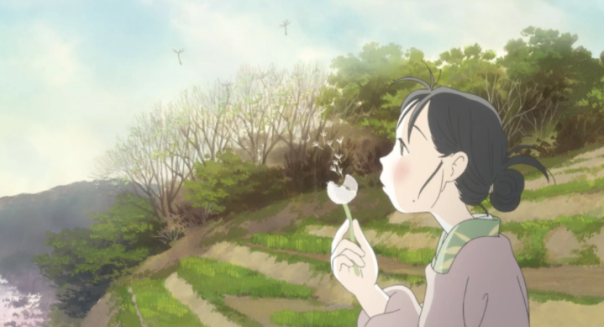
Image result

Still lookin’ fresh, Batou and Major

No Man Laughs Alone in Ghost S.A.C. | Review

A brief spoiler-free review of the 26-episode fall 2002 anime “Ghost in the Shell: Stand Alone Complex” and its recap 2005 film “The Laughing Man,” produced by Production I.G, directed by Kenji Kamiyama, based on the original manga by Masamune Shirow.


City of Steel, Bodies of Iron

It’s 2032, the cyberization age. Because most brains are now encased in a metal mold, people can access the net just by thinking and slide into mechanical bodies through a connecting cable alone. Walk along the streets and one would find fleshlings, cyborgs, and robots alike coexisting as if it were commonplace. The power of the net has virtually blurred the lines between the physical and the digital, which can breed both terrific convenience and terrifying crime. Completely ineffective in halting cyber crime, as it typically is, the government has hired Security Division Section 9, a group of ruffians specialized in taking down hackers and terrorists alike.

Led by their Chief Daisuke Aramaki and Major Motoko Kusanagi, this small squad rules the shadows and grungy back alleys in an effort to clean up the city. When a great super hacker dubbed the “Laughing Man” rears his head once again after 5 quiet years, however, the Major and her troop face what could be their greatest social threat yet. Unlike their most recent cases, this one proves to be not as simple as SHOOT + LOAD + REPEAT, but rather an intense chasing game of CTRL + ALT + DELETE.

Image result for ghost in the shell stand alone complex section 9

The iconic franchise and its much-loved figurehead return to the streets after a silent 7 years since the groundbreaking film’s worldwide release in 1995. While it’s neat to see the title reinvented into a series, I found all of the GitS films, recap or not, to be far superior to the series. Before I go further into the franchise, let’s evaluate Stand Alone Complex and weigh its own merits.

It’s Not like the Movie, and that’s Perfectly Fine

This pun has already been pitched a million times, but to aptly put things, many of the episodes of Stand Alone Complex are, well, stand-alone. These episodes all tackle the lives of individuals of all all social classes, and how they interact with society and the Section 9 crew. The true underlying story is only tossed here and there as hints before the grand finale. Unlike the 1995 classic, which honed in on the psychological balance between human and cyborg, both of the GitS series challenge society instead, providing much sociological questioning such as “how much can people be “cyberized” before it’s no longer a human society,” or “whether the net truly brings people together or tears us apart.” Because it was less egocentrically based, I found myself less prone to self-discovery, but more open to social understanding. It’s a bit of a letdown at first, especially since the Major’s self-reflection is what sold me to begin with.

motoko.PNG

Where the plot may stumble and confuse, the characters provide entertaining banter and motivation. Being a more light-hearted approach to the franchise much like the original manga was, it’s appropriate to chuckle here and there at the strong man Batou’s unfortunate misdemeanors around the still-intelligent Major, or admire the human normie Togusa’s total dad bod. The presence of the cute Tachikomas, blue insect-shaped and car-sized robot AI, helped to not only alleviate unnecessary government actions that frustrated me, but also provide that quintessential self-pondering of being a robot vs a lifeform similar to what the Major dealt with in 1995. They’re annoying at times, but they remind us as to the joys of feeling alive.

A Stunning Sci-Fi Story and World

People watch this show for the genuine Section 9 crew and for high-paced, explosive combat layered with a complicated cop show setup. For its 2002 release, SAC has aged remarkably, providing some of the most engaging sci-fi action that rivals today’s anime fights. What ultimately brought it all together was the world itself, though. The towering skyscrapers and low, wrap-around market places give off a bustling effect to Newport City. The occasional gray sky and drizzly weather is almost enough to take one back to 1995, and the traffic—my goodness, all the road traffic! What a headache! Watching the characters drive from location to location allows Production I.G prove that they are the masters of anime architecture. The complex interwoven highways and cars almost act as a mirror of society itself, in that we’re ultimately all just a small part of the great flow.

Story-wise, it’s quite complicated, honestly. I held off on any Ghost in the Shell until I was older simply because I felt I wouldn’t be able to enjoy it fully without encompassing a greater intellect. (I’m still no genius, though.) To assume one has to be smart to enjoy this series isn’t true at all, but when it came to all of the political nonsense between government officials and sketchy deals, it is a lot to consume, I’ll admit.

Much of this can be negated, however, if a person checks out the 3-hour (yikes) recap film that reorganizes the Laughing Man snippets that are littered throughout all 26 episodes and places them into a more logical, sequential order. The [sadly] very few valuable backstory spotlights of Section 9 members are lost, but if one’s just in it for the core story, then this recap film satisfies immensely. The only caution I can give is to those who prefer English dubs; The Laughing Man features an entirely different vocal cast from the series, and while it is utterly DISAPPOINTING to hear brilliant actors Mary Elizabeth McGlynn and Crispin Freeman replaced as Motoko and Togusa, this other cast doesn’t do a bad job. Nope, not at all, and these are very large shoes to fill.

motoko1.PNG

While everyone praises Yoko Kanno for her sheer masterpieces of music, Stand Alone Complex is not her most memorable work for me. She keeps with the flow of light dialogue and adrenaline-filled action, balancing the two just fine, but I can’t recall any specific tracks besides the opening, “Inner Universe,” sung by the late Origa, a piece of music that perfectly captures the ENTIRE franchise. Its haunting yet entrancing beginning put me in full-dive mode every time. It’ll live on with the likes of “A Cruel Angel’s Thesis” as anime’s bests, and rightfully so.

Let Me Walk Away Laughing

It’s no surprise that SAC is different than 1995: different directors, production date, arcs adapted, character introductions and routes taken, etc. What hasn’t changed is the same powerful studio behind the project and the unwavering calculations of the Major. Ghost in the Shell is a franchise that explores possibility through the unification of humans and technology. It also shows us the worst case scenario—its abuse, and how that turns people off from all things cyber entirely. SAC‘s first season is a little hard to understand thanks to its divided attentions, but so long as you trust in the Major’s new face and follow your ghost, you may walk away having thought of something new, and that’s what sci-fi is all about.

Batou: Nowadays . . . people entrust their memories to external devices because they want to set down solid physical proof that can distinguish them as unique individuals . . .

Motoko: A watch and weight training gear, both of us have clung to useless scraps of memory, haven’t we?

Final Assessment:

+ This incarnation of the Major can be just as meaningful so long as you have an open mind

+ Emphasizes that Production I.G is king of city architecture and sci-fi worlds

+ Works in sociological approach that defines the franchise today

+ That opening combined with all the fluid combat gets the blood pumping

– Such a lovable cast deserves greater backstories

– Overarching story is hard to follow, but recap movie helps

– Missing out on series dub in recap film


Stand Alone Complex is welcomed at the cafe as a “Cake” title (4/5), one too sweet to miss out on if you have the time! It does require a great amount of focus and minor understanding of corporate politics, though. Sometimes the intermixed action sequences were the only bits that helped me stay awake! SAC has been around for YEARS now, so what do you make of the series? Did you enjoy the Laughing Man story, and did the recap film aid in your understanding as it did mine? Let me know, and until next time, this has been

– Takuto, your host

Related image

Batou, his Tachikoma, and Major. Stay fresh, Section 9.