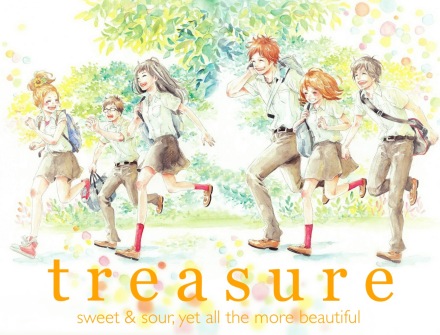
“Orange” is Sweet & Sour, Yet All The More Beautiful | OWLS “Treasure”

Chances are that if you were linked here from another blogger pal, then you might be new. To those first-timers, “Hi, I’m Takuto, welcome to my anime cafe!” As part of the OWLS blog tour’s  ninth monthly topic, “Treasure,” I decided to incorporate what would have been my standard review of the Orange manga into a cautionary yet hopeful look at the realm of teen suicide, and how, as an outsider, it is okay feel unsure when warning signs are observed.

There are moments in our lives where we lose our sense of self-worth and value and as a result, we find ourselves deep in darkness or drowning in the ocean. However, every person in this world is a treasure—we treasure ourselves or we are treasured by others—and at times, we may need to be reminded of that. We will be exploring characters who have suffered from mental illnesses, depression, and/or suicide, and then discussing how these individuals cope with these issues, the reasons for their emotions, and how they handled the situations they were in.

For as long as I’ve been avoiding it, alas, there’s no going around the major theme of suicide in Orange, so thanks for the prompt, Lyn! This is also my first manga review, so wish me luck!

Image result


A brief spoiler-free discussion on the 5-volume 2012-2017 manga “Orange,” localized in the U.S. by Seven Seas Entertainment with story and art by Ichigo Takano. 

Death, Divorce, Drugs, Depression

Today, teachers will advise students to omit these four things when it comes to important college, scholarship, or job essays/interviews. This is likely because your employers and admissions offices do not want your pity; they want to hear about your strengths, a time you overcame tough odds, or maybe a moment of positive character development in your lifetime—NOT about the pitiable setbacks along the way.

But if these four items have become such crucial parts in the great cycle of life, why mightn’t you want to write about how you didn’t let the divorce of your parents or attempt at suicide ultimately stop you, or convey how even though drugs might’ve ruled your past that they would not own your future?

Ok, real talk. Depression is, well, depressing. Drugs are weird. And let’s face it, having to console someone about their “recently late” Aunt Susie can be extremely awkward, both for the you and the other party, rest-assured. It’s hard to talk about suicide and say “just the right thing” at “just the right time.” When is that time? Is it my fault for not knowing? It’s all just so . . . pressuring, so time consuming, and your boss probably doesn’t have the time to seat you on the sofa and listen to you express all your life’s troubles.

As much as I hate to say it, business and education are professional. Save your need of counseling for the counselor.
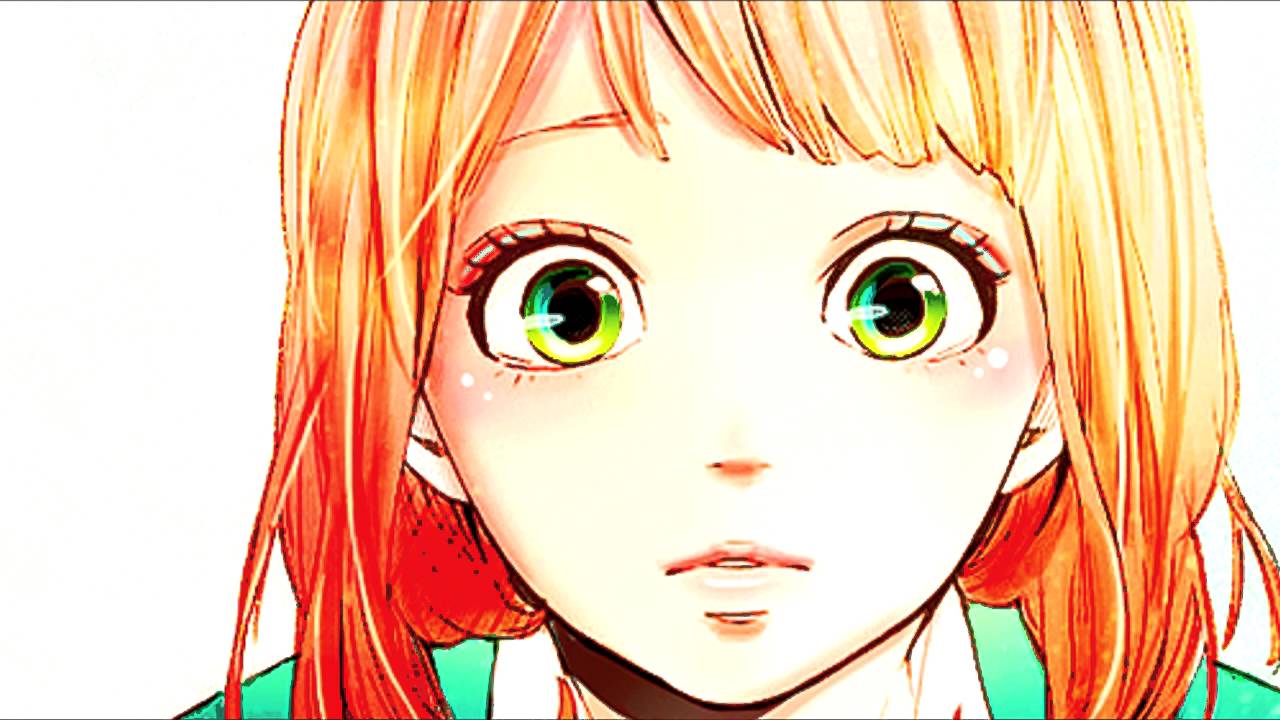
Image result for orange manga

I’ve Been Running for So Long

All this and more is why I avoid the Four D’s, both on my papers and here on the most informal of blogs. I try not to talk about specific real problems—negative aspects, terrible people, worrisome events—we face daily, but instead offer to celebrate the good that can come from something, even if that bit of positivity is ultimately (and knowingly) insignificant or greatly overpowered. Death and depression are hard to talk about for many, and the last thing I want to do is try consoling someone when I’d probably end up making things worse.

We don’t always get to make that decision, however, as entertainment has integrated these kinds of issues into their stories and characters. I might hear that a certain manga or anime is a “masterpiece of emotional conflict,” yet as soon as I hear “mental illness,” I won’t lie, I get turned off.

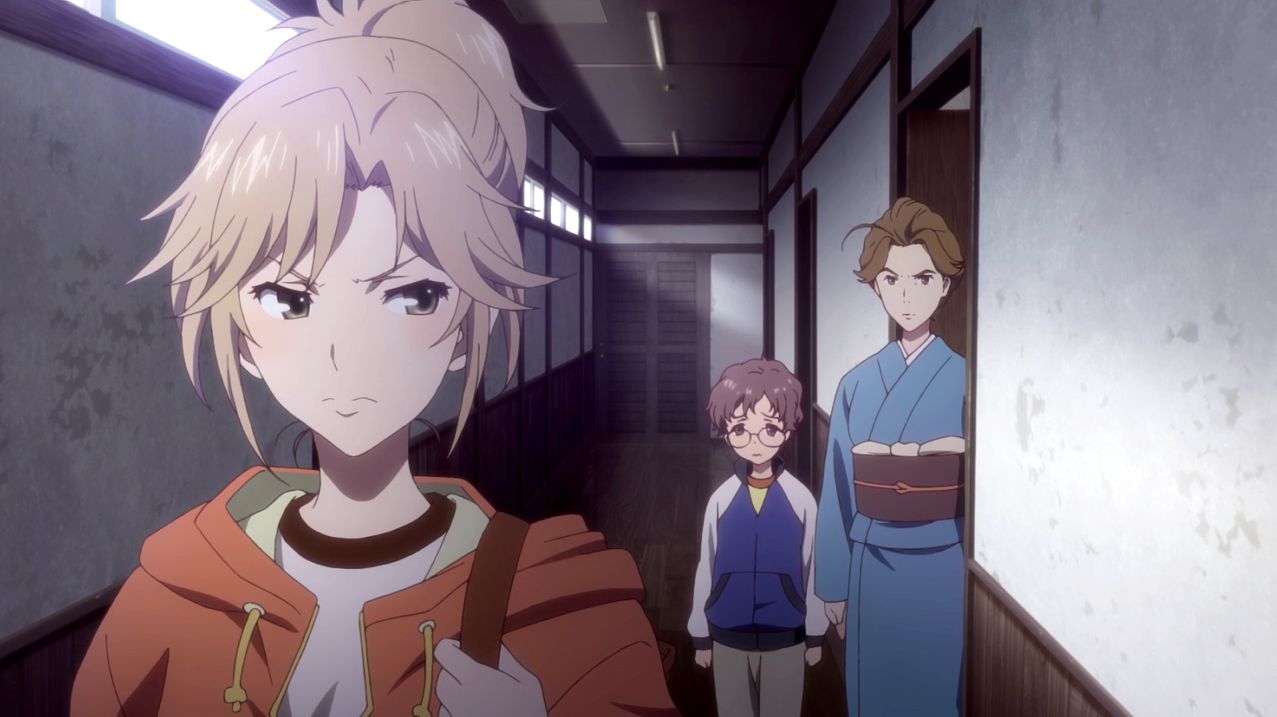
This brings me back to Orange, a brief tale about THE WORLD’S GREATEST GROUP OF FRIENDS and their willingness to alter time—risking the wonderful future in store for themselves—in order to prevent the inevitable suicide of a troubled young boy, their newfound beloved, treasured friend. It’s a story so short, powerful, and highly regarded of that it just couldn’t be ignored anymore, and descending into darkness proved well-worth the risks.

Related image

To You, in the Past

The start of Naho Takamiya ‘s junior year in high school was unlike any other: for the first time, Naho overslept, which was also her first mistake. That morning a letter made its way to her, but she was too busy trying to make it to school on time. When she finally arrives, her teacher announces a new transfer student by the name of Kakeru Naruse. According to the letter (which she now has some time to scope out), he’ll sit next to her. And just like clockwork, the teacher seats him in the back right next to her.

To her disbelief, Naho realizes she stumbled upon a letter from herself ten years in the future, which chronicles her everyday emotions and actions for the next six or so months. It’s not until shortly after Naho and her four other friends invite Kakeru to walk home together after class that she, again, violated the letter’s requests: her second big mistake.
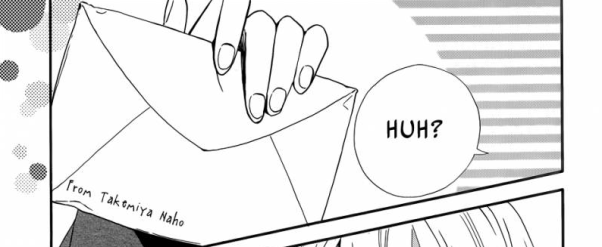
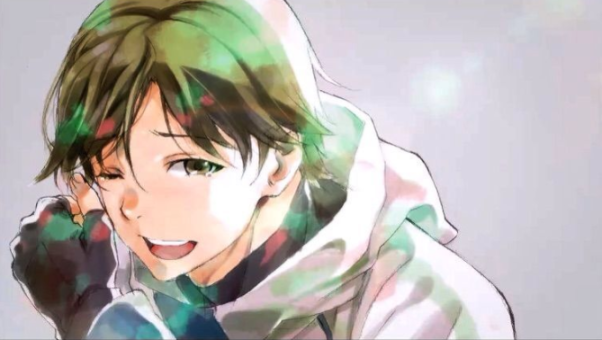
naho letter

Naho is tasked by her future self to get to know Kakeru Naruse better—to make him feel welcomed, loved, cherished, and understood—for ten years from now, Kakeru no longer walks among the living, and his loss was her greatest regret. Now unfolds a fatalistic love story that spans across time, a tale full of many emotional ups and downs.

Everyone Needs Friends Like These Guys

I find myself in the same boat as Naho; depression is hard to talk about, so she often skirts around the issue by using the excuse of “making him smile.” I suppose both technically work, but clearly, Naho has no idea how to make Kakeru happy. While I can relate to her frequent indecision and lack of self-confidence, C’MON GIRL, JUST SPIT IT OUT ALREADY. I love Naho’s cute and considerate character to death, but man, telling a guy that you have lunch for him shouldn’t be that hard. I guess it adds to Orange‘s drama, and that some social anxiety can be just as stressful as depression.

Related image

Orange is only complicated on an emotional level, concerning itself almost exclusively with Kakeru’s depression and Naho’s inability to act the way she truly wants to. The relationship between the two of them is such a focal point that I couldn’t help but wish more of Naho’s friends played a bigger role. There’s the ever-teased soccer “giant” Suwa, a real team player, and he’s just about the best friend you could ever ask for. I’ll avoid spoilers by merely saying that he’s a funny guy full of heart, and that if anyone’s willing to take one for the team, it would absolutely be him. (Props to creating one of the most challenging love triangles ever.)

Image result for kakeru e suwa orange

But there are others: the girls, including the loud and cheerful Azusa and the cool, strong Takako. These two are almost always up to no good, snooping around whenever and wherever they can, but their presence makes me feel most at ease. They’re both overly caring, and despite how bratty Azu can get, or scary Takako may seem, they only mean to stick up for their friends.

Lastly there’s poor, poor glasses-kun Hagita, who likely would’ve been my favorite character had he been more than just the team’s punching bag. He’s picked on and ridiculed for nearly everything he does, but his logic and reasoning, no matter how pessimistic, often lead to the solutions everyone’s been looking for. Several times throughout the series he’s hinted on having a huge involvement with the finale (which could’ve led to something really cool), when in actuality, he’s just as equal in importance as the other girls.

Image result for orange manga characters

*gulp* Here We Go

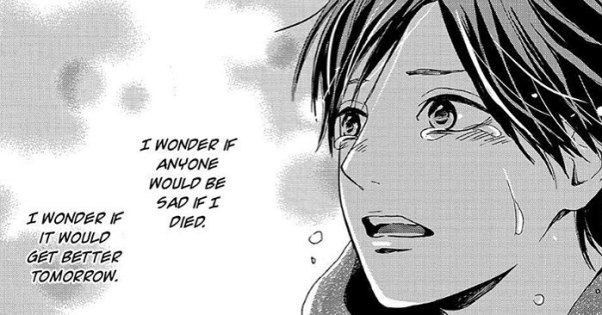
It doesn’t take a second glance to see that Kakeru is dealing with his own demons. His smile may be pretty and sparkly, but underneath that shine is a whole lot of self-doubt, trauma, and shitty memories from his previous school. On top of it all, his parents are divorced, and he blames himself for his mother’s sudden suicide early on, which is what triggers the events of Orange! Well geez, it’s no wonder he’s thinkin’ about offin’ himself all the time!
Related image

Suicide is big. It can be hard to stomach and awkward to talk about, I covered this. But because it can be so off-putting for some people, odds are that they will have a difficult time with Orange. It doesn’t help that Kakeru comes across as particularly frustrating and ungrateful. But we gotta help the guy out, that’s what we do, right? With these kinds of people and situations, we need to get as close as we can to hear them out. From there, we can only go with our gut and advise them, appreciate their efforts and tell them that  it’s almost always never their own fault, and that they are never alone.

In my opinion, Naho did what was right by involving all of her friends in on the dilemma. She took her sweet time, but thanks to plot convenience (and a neat twist), everyone becomes gung-ho about saving Kakeru. Take things slowly, sincerely, and whole-heatedly, for if you can save the life of a friend, then it’s always worth the time. You may not get it right the first time, but at least you tried.

Related image

Regret and Happiness

I boast that one of Orange’s winning features is its short 5-volume run, but maybe that’s because I can’t take +10 volumes on suicide. Suicide plays a big role in the story, I’ll admit, but it’s not the real enemy here—regret is. As if all of the characters play supporting roles, Regret is the main antagonist (Guilt his henchman), whilst Satisfaction and Happiness work together to calm not only Kakeru’s mindset, but everyone else’s regret-filled future, too.

Image result for orange manga suwa

It just sucks when you have to give up what could have been your dream life all because you felt a little guilty for having that blessed life in the first place.

To You, in the Future

Like the titular fruit flavor, oranges taste so sweet and delightful. That is, until you notice that subtle sour tinge. Once it stands out to you, that’s all you can taste, and the fruit no longer becomes desired for its sweetness.

Naho lives one of the coolest lives ever imaginable, surrounded by her dearest friends and caring family. But as soon as Naho experiences Kakeru’s false smile, the sourness just punches her in the gut and pushes her to the brink of tears and exhaustion. That’s when she remembers Kakeru’s value to not only herself now, but herself in the future: “Ten years from now, I’m still regretting Kakeru’s death and the fact that I didn’t even notice how he truly felt.”

Image result for orange manga naho happy

At this point, she makes a desperate call to fate, the ruler of this timeline, wishing to keep the treasure that she found—that they all found—in Kakeru’s heart. And if fate didn’t grant her this treasure, then she’d take it by force. I’m no love expert, but that’s pretty cool of Naho, and I’m glad that this sour story found its sweetness once again by the end—it just makes it all the more beautiful.

“Kakeru . . . is my greatest treasure. Please let us change Kakeru’s future . . . I will not let this be his last day.” – Naho Takamiya


What’s the moral of the story? Well, you could say “Never give up,” but I rather like the sound of “Live without regrets.” The author Ichigo Takano herself, in the epilogue, hopes that our future is a happy one, and that years from now we are still living without regrets. “If you have someone like Kakeru in your life, please find a way to save them. Every life is precious. Please treasure each and every day, the present, the moment, and yourself. Thank you very much.” 

If we notice someone displaying potential signs of any mental illness, don’t feel afraid to step out and let them know you’re with them. Never expect to know EXACTLY what they’re going through, but be prepared to get them the right help just in case. I’m excited to watch the Orange anime now, and with a LTD ED release coming this fall thanks to Funimation, I know what’ll bring my wonderful experience full circle! For now, the manga receives the “Caffe Mocha” approval rating!
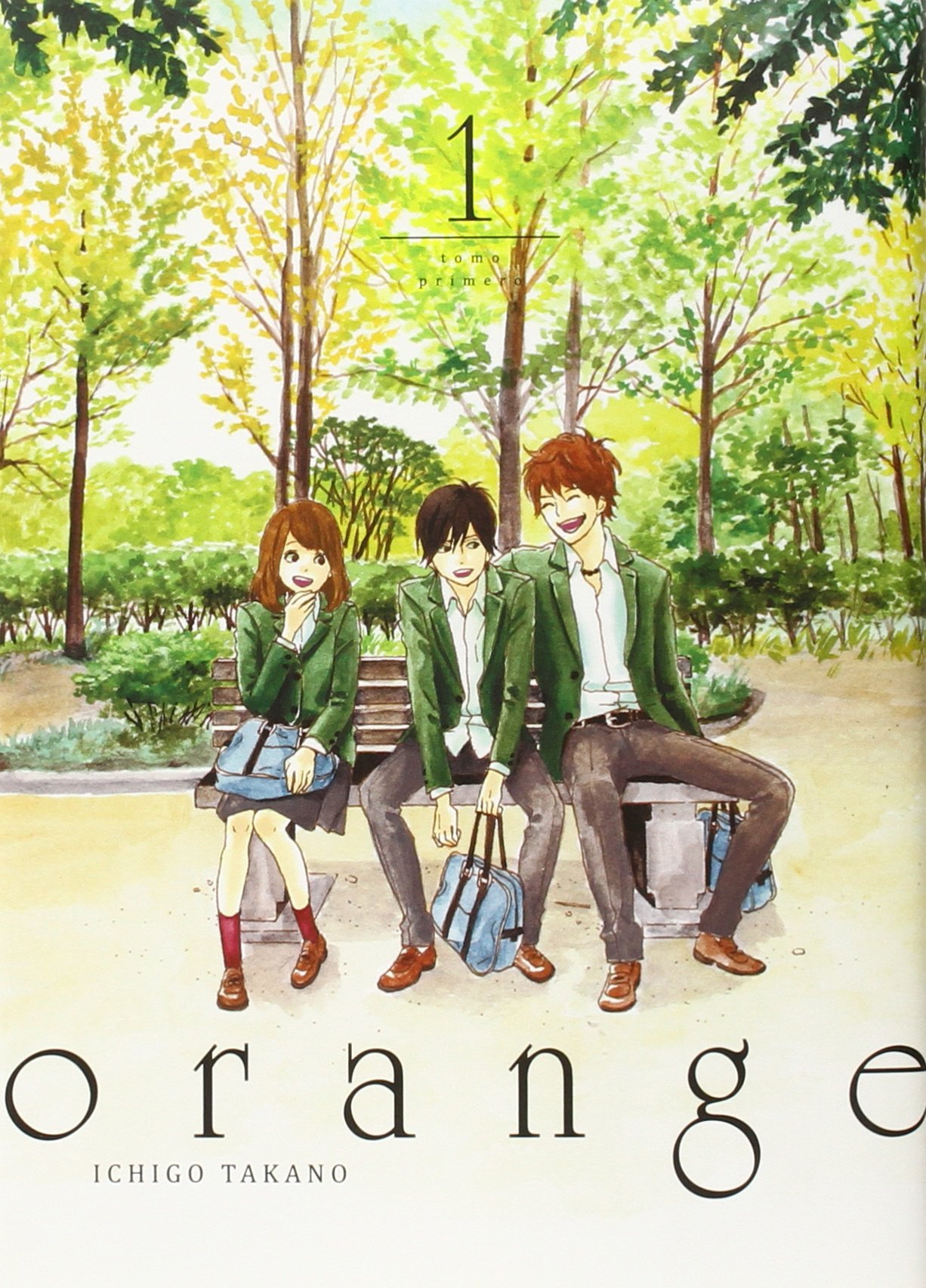
A very special to Gigi (Animepalooza) over on YouTube for gifting me with the first volume as per her giveaway—without you, I would not have been allowed to experience this endearing story of romance and very attractive artwork, so many thanks again~!

This concludes my September 19th entry in the OWLS “Treasure” blog tour. Prior to me, Hazelyn (ARCHI-ANIME) wrote about reasons for living in the otome PS Vita game Collar X Malice, and just tomorrow the 20th, Crimson (Crimson is Blogging) will walk us through the Katie Green novel Lighter Than My Shadow! Thank you so much for reading, and until next time, this has been

– Takuto, your host

Image result

Hanasaku Iroha: Finding Beauty & Grace in Hard Work, Dignity, and Servitude | OWLS “Bloodlines”

Chances are that if you were linked here from another blogger pal, then you might be new. To those first-timers, “Hi, I’m Takuto, welcome to my anime cafe!” As part of the OWLS blog tour’s  eighth monthly topic, “Bloodlines,” I decided to incorporate what would have been my standard Hanasaku Iroha review into this discourse about “it runs in the family.”

Family means everything (or does it?). This month, we will be discussing the importance of family relationships in anime and pop culture. Familial relationships include a child and his/her parents, sibling rivalries, adoptions, etc. Some questions about family that we will be contemplating on include how does one’s family shapes his or her identity? How do we define family? How does a broken household influence a person’s view on family?

This show probably deserves a review all on its own, but hey, I’m just gonna go for it here! Thanks Lyn for the prompt!

Image result for hanasaku iroha screenshots


A brief discussion on the 26-episode spring 2011 anime “Hanasaku Iroha: Blossoms for Tomorrow” and the 2013 film “Home Sweet Home,” produced by P.A. Works, directed by Masahiro Ando (Blast of Tempest), based on the original story by Mari Okada (A Lull in the Sea).

Out On Her Own

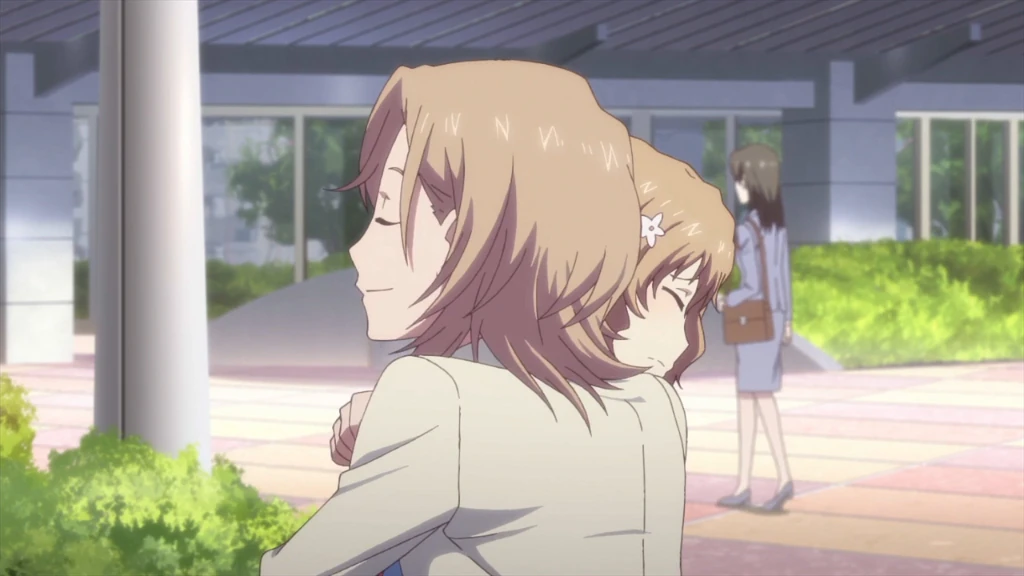
Ohana Matsumae: bursting with rebellious energy and only 16 years old, her picture-perfect Tokyo life could’ve been every girl’s dream—if only her mom wasn’t such a mess! Carefree, irresponsible, and always on the go, mother Satsuki Matsumae and her boyfriend hurriedly pack their bags to flee from debt collectors, forcing Ohana to seek refuge out in the countryside at her grandmother’s Kissui inn. It is there at the Kissuiso that Ohana forms the resolve to work hard under her grandmo—I mean, Madame Manager’s—cold and strict guidance as a maid to prove that she is just as strong and independent as her mother, reevaluate her unrequited love life, and “fest up” her otherwise mundane city life.

As Ohana grows deeper connections with the quiet countryside land and the changing seasons, she is faced with the trials of working as a maid, as well as countless interactions with the many customers that come and go at the Kissuiso. Bonds of friendship are born, and inexpressible relationships blossom beautifully.

Image result for hanasaku iroha screenshots ohana working

The Kissuiso Staff

Much of the love and respect I have for this show lies right here with the inn’s staff. That said, it can also be the most frustrating part. The busybody maids remain my favorite: Ohana’s fresh, persevering face even if she’s not exactly helping in the best way just makes you want to shout “SHE DID NOTHING WRONG” (at least she’s always trying, unlike some of the others); Nako, the”quite literally” big sister character never fails to support Ohana in that soft and gentle way that she does; and Tomoe, the playful and typically jealous woman tends to catch gossip and spread rumors throughout the inn, adding in the comedic elements.

Image result

It’s the cooking staff that annoys me the most. No, not Renji, the stoic and buff head chef who minds to himself—my issues lie with an outspoken young man named Tohru and a girl Ohana’s age named Minko who “secretly” has the hots for him. They’re just both so rude to everyone, scolding one another whenever they can and not leaving much room for fun. I guess part of that adds to the staff’s dynamic (and conflict for Ohana), but Minko’s attitude really got on my nerves; far too distracting for what her character honestly represents. I also couldn’t stand her voice.

Image result

Lastly, I couldn’t forget the two loudmouths that pop in throughout the series: Yuina, the daughter of a rival inn’s family and Ohana’s new classmate who honestly only wishes to enjoy her youth while discovering her true passion; and Takako, the glamorous business consultant adviser for Kissuiso who always wants to revitalize the rather old-fashioned inn to suit the times. She often bumps heads with Sui, as her ideas are indeed ludicrous at times, but when it comes down to it, they both only desire what’s best for the inn and its customers.

Image result

I could go on about how genuine the personalities and relationships of each character feel, but half the appeal of Hanasaku Iroha is witnessing how they go about their days, both the ordinary ones for those slice-of-life vibes and the hectic ones to see how this seemingly disjointed team tackles wild problems head on!

Image result for hanasaku iroha screenshots minko and tohru

One of P.A. Works’ Finest Pieces

I’m all about scenery. Whether it’s a schoolyard from heaven (or hell) or an enchanting undersea village, P.A. Works never fails to embody this ideal vision of a “gorgeous world.” The anime’s characters are all beautifully designed and fluidly animated in their own right, Ohana especially, but the colorful Kissuiso takes the cake as a visionary set piece. Perfectly blending antiquity with its polished, hand-carved wooden exterior with the luscious greens from nature, the rustic countryside inn almost feels tangible, one that you can breath fresh air easily in and instantly feel comforted by the relaxing atmosphere. I could probably lose myself in the pages of an art book if I ever got my hands on one (which I will surely try to).

This slideshow requires JavaScript.

The same glowing things are to be said about the charming piano and string tracks by Shiro Hamaguchi, my favorite being a little sad piece called “Remember that day with a smile like that.” For OPs and EDs, I’m not a huge fan of nano.RIPE’s lead singer’s nasally voice, but its random fifth ending “Saibou Kioku” happened to play at just the right time.

It Runs in the Family

Hanasaku Iroha enters the realm of slice-of-life with a little drama thrown in the mix. While it’s easy to label it as just that—a simply relaxing show—the series poses much more than that. From the beginning, it presents a moving story about family and adulthood, parenting and role-modeling. Like most titles with drama elements, the events of the larger present story are results of a little, once-close-knit group from the past.

Image result

This group now makes up the adults in Ohana’s life: her stern grandma, Sui, her defiant mom, Satsuki, and her scatterbrain uncle (Satsuki’s brother), Enishi. When these parental figures were supposed to guide Ohana as a child, Satsuki often left Ohana to do all of the chores and “take care of herself”—a mantra that she still employs—choosing to put her efforts into her work as a pro writer instead of parenthood. Satsuki gave up her entitlement as the inn’s next manager, and as a result Sui stayed behind at the inn, Enishi working for her, and that was that.

Ohana spent her whole life cleaning up after her own mother.

Image result for hanasaku iroha ohana young

As depressing as that sounds, the story’s realism is probably the best thing that it has going for it. It’s a show that doesn’t want to boast, but simply leave itself out there by remarking, “This actually happens in real life.” By intertwining the lives and efforts of the inn’s staff, using the Kissuiso itself as the anchor, everyone comes to understand the tension between Satsuki and her mother, why Ohana’s personality is so brazen and spirited, why Enishi is so desperate to win his mother’s approval over his big sister, and why their boss Sui acts like such a secluded hag. It all comes down to family in the end, or rather the lack of a strong one to bind them together.

I think we can all relate to this.

Genes have the power to shape a family, but only you can decide what path it takes. As people, we make mistakes—for some of us, a lot of them—and maybe you got that from someone (or you’ll pass it on). But regardless, if we spent as much time thinking about the ones we are supposed to love as we did ourselves, I think we’d all be better off.

Related image

Ohana put herself in her mother’s shoes when she reconnected with the source that threw her mom off to begin with, and her entire world changed for the better as a result. She realized that as different as she liked to think they were, they both made the same mistakes as young girls. Knowing this, she vowed to be like her grandma one day, hopefully ending the cycle of familial neglect.

And this made momma very proud of her little girl.

Image result for hanasaku iroha satsuki

Hard Work Really Does Pay Off

Hanasaku Iroha walks us through the struggles of the worker class for a girl living in a somewhat broken home. As Ohana comes to find beauty and grace in hard work, dignity, and servitude, we can’t help but feel inspired by her bold newfound identity. Most important of all, we’re told an endearing story about being the best that only you can be, and that even in this self-centered world that is so consumed by “give and take,” there exists wonderful places like the Kissuiso, safe havens that offer both a relaxing time to heal old wounds and a staff that only wishes to work hard to serve YOU. And that, well, that’s really special.

Image result

“You may come to a standstill or get irritated because things don’t work out the way you want them to, but what you gain from hard work will never betray you.” – Tohru Miyagishi


So there you have it, the very gentle and sweet Hanasaku Iroha. By the end of it, you just want to smile and cry at the same time. For those wondering, the film takes place before the finale, and acts more like three episodes linked together rather than a standalone film. Still wonderful stuff—so wonderful that I present it with the certified “Caffe Mocha” rating, one for the menu and it’s all on me (actually it’s on Crunchyroll for FREE)! You HAVE to let me know what you thought about my review over this quaint little gem if you’ve seen it, as it’s a quiet show that doesn’t get much buzz anymore. I found this to be the perfect show for this month’s OWLS theme since “Ohana” does mean “family” in Hawaiian, after all!

This concludes my August 4th entry in the OWLS “Bloodlines” blog tour. Since I was first again this month, I’ll give you the weekend before handing it off to my buddy Matt (Matt-in-the-Hat) with Final Fantasy VII: Advent Children (I REMEMBER THIS FILM!) on Monday, August 7th! Thank you so much for reading, and until next time, this has been

– Takuto, your host

Related image

Time of EVE Welcomes Impartiality Through Reflection | OWLS “Mirrors”

Chances are that if you were linked here from another blogger pal, then you might be new. To those first-timers, “Hi, I’m Takuto, welcome to my anime cafe!” As part of the OWLS blog tour’s  seventh monthly topic, “Mirrors,” I decided to incorporate what would have been my standard Time of EVE review into this reflection on artificial intelligence and robotic spirit.

“Magic mirror, on the wall—who is the fairest one of all?” When we look in the mirror, what do we see? Do we see ourselves or someone we don’t want to be? For this month’s theme, we will be exploring some of our favorite anime and other pop culture media that redefine individual beauty—inside and out. Some topics we may explore are physical appearances, social expectations on gender, and the importance of self-confidence.

I’ve always loved that wicked mantra, so thanks Lyn for the prompt!

Image result for time of eve


A brief discussion on the spring 2010 anime film “Time of EVE: The Movie,” produced by Studio Rikka, directed and created by Yasuhiro Yoshiura.

She Left the House, and He Got Curious

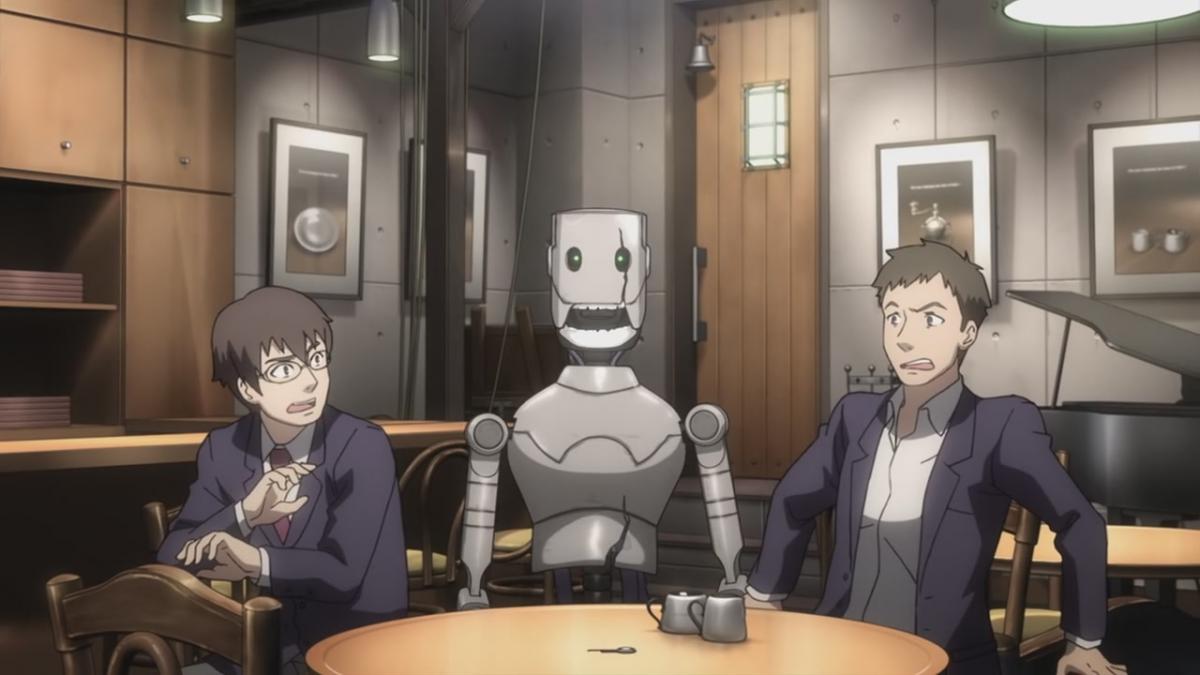
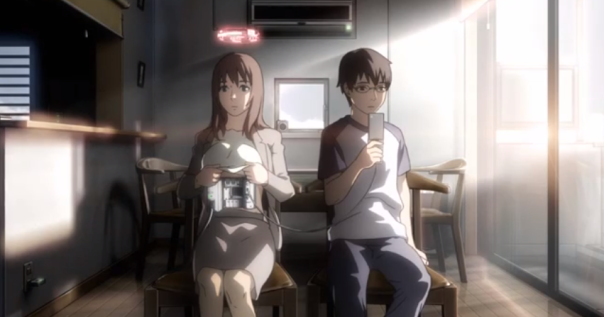
Rikuo is just another Japanese student owning an android in the near future. While checking his android’s behavioral log one day, he notices odd check-in and check-out times. When Sammy, his android, finally takes another detour, Rikuo and his friend Masaki head out and stalk her. It turns out Sammy frequents a hidden cafe called “Time of EVE,” and the cafe’s barista Nagi only has one request: that there is no discrimination between humans and androids.

Being the compilation of a 6-episode series by the same name, Time of EVE follows a pretty basic formula: Rikuo and Masaki frequent the cafe in order to uncover more about each of its interesting patrons and, of course, find out just what kind of character Sammy really is. A tale of unrequited feelings, childhood dreams, and understanding comes to fruition.

Image result

Director Yasuhiro Yoshiura solidified his wacky and weird yet oddly comedic and intelligent presentation style with this one. It’s subtle in execution, but anyone could still identify it as science fiction—and good sci-fi at that. I know people who don’t care for sci-fi that walked away loving Time of EVE, and I think that’s largely because the film aims at much more than pondering ideas like sci-fi does; instead, it goes deeper, showing you that the genre also has a lot of heart once you pull the wires away. The story is touching, sometimes even hilarious with all the sudden zoom-ins, and its visual artistry still holds quite well as a visionary piece even today!

Related image

THIS 10/10 AESTHETIC IS WHAT INSPIRED MY CAFE 

Yup, that’s right. Time of EVE so inspirational to me that it inspired the clean and modern look of my cafe here (or at least I hope it comes across this way . . . do I need to remodel!?). If I could spend all of my days writing and reading in one place, it’d be here, at the Time of EVE! Everything just feels so sleek and simple, yet intricate and “underground” at the same time. Like, the coffee (EVLEND) cups, the bar, the tall tables, the ceiling fans, the smooth jazz music—ALL OF IT! It’s just a chill, quiet, aesthetically pleasing place = The perfect kind of place for me.


And I couldn’t forget Tooru Okada’s VERY 2008 soundtrack, which just happens to be included on the Blu-ray release, yay! The music adds wonderful immersion into the wonder and fun of the cafe, not to mention all of the very peculiar interactions that take place. The energetic child, the grandpa and his crazy kid, the sexy couple, and even the stoic man in the back: it’s as if they all have their own track, as well as a story to be told within the music and the dialogue. I’m very pleased that the show was crowdfunded via Kickstarter with a dub, too. (I only wish I could have participated to get the coffee set >.<)


Related image

Sammy, You are an Android

a letter from Rikuo to Sammy, written by Takuto

Sammy, what is it that you see in the mirror each morning when you wake up? I’ve noticed that you tie your hair up with a headband, scrunchy, or a flower when you go out sometimes. It’s unusual. You are an android, but don’t let that stop you from looking the way you want to look.

Now, Sammy, who is it that you see in the mirror each morning when you wake up? I’ve picked up on your subtle cues as to my tastes, preferences, and mannerisms. Perhaps that’s just the activity log recalling my “most recent selections.” But I like to believe that you’re growing, just like all of us are each and every day. You are an android, but if you find yourself wanting to be happy or sad, angry or surprised, I’ll understand. 

After frequenting that place you visit, that Time of EVE, I realized that it’s no ordinary cafe, but a safe haven from prejudice and routine. I’m kind of a nerd, one who gets picked on sometimes for saying please and thanks to you, my android, and if I had a place where I could go to escape all of the name-calling and expectations, well, I’d probably be at that cafe all the time, too. 

We live in a pretty convoluted world. It’s not necessarily bad, but people make it much harder than it needs to be. Why does it matter if you’re an android or a human? If we both value our own lives and only wish to help each other out, then I’d just rather avoid “things or beings” altogether. Sammy, you’re an android, and in this world so bent on exclusion and division, I only wish you the best. 

The fact that we gaze into the mirror to begin with reveals that we’re only insecure about something, really. But last I checked, androids don’t “feel insecurity,” only assurance in their code. This proves you can be anything and anyone you desire, so do it with pride for not only yourself, but anyone you inspire in the process, like Nagi, Masaki, and myself. 

For me, however, just please stop looking into the mirror—you look great with that headband on.

– Rikuo

Image result


“Are you enjoying the time of EVE?” I sure am, so much so that I wish I never had to leave, haha! For Sammy, reflection about who she wanted to be came from her experiences with the world around her, a bold fashion decision, and, of course, a secret trip to the cafe. Through the interactions with Rikuo, Nagi, and the other “people” at the cafe, she, an android, found individuality and character for herself, defying the laws of her creators and the social norm—strict servitude to the master. Considering its impact on myself, this blog, and sci-fi entertainment in anime, Time of EVE: The Movie is undoubtedly awarded the “Caffe Mocha,” a film for all those even remotely interested in AI, as well as what it means to be human. It’ll fill you with warm fuzzy feelings for sure. Let me know your thoughts on this post and show if you’ve seen it!

Image result

This concludes my July 17th entry in the OWLS “Mirrors” blog tour. Please check out Rai (Rai’s Anime Blog) who went right before me and wrote about accepting every fiber of one’s being in the gorgeously grim Elfen Lied. And now, I’ll turn it over to Carla (Pop Culture Literary) on Wondering Son and its visual portrayal of gender norms this Wednesday, July 19th! Thank you so much for reading, and until next time, this has been

– Takuto, your host

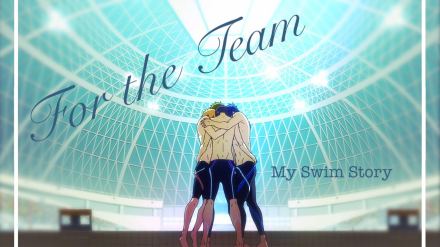
For the Team – Free! & My Swim Story | OWLS “Team”

Chances are that if you were linked here from another blogger pal, then you might be new. To those first-timers, “Hi, I’m Takuto, welcome to my anime cafe!” As part of the OWLS blog tour’s  sixth monthly topic, “Team,” I decided to incorporate what would have been a “Cafe Talk” about my high school swimming experience, along with my thoughts on the anime Free! into one big post over sticking with a team to the end.

While the prompt was more intended as dedication to “Pride Month” and all of those who support the LGBT & Queer communities both in real life and in anime, the generosity and flexibility, as well as the promoted creativity that OWLS is known for, allows me to bend this topic back to its home nature: companionship found in teamwork. Thanks Lyn for the prompt!

haru


A brief discussion on the 12-episode summer 2013 anime “Free! – Iwatobi Swim Club,” and its 13-episode summer 2014 sequel “Free! – Eternal Summer,” both produced by Kyoto Animation, directed by Hiroko Utsumi, based on the original story by Kouji Ooji.

“After High School, You’re Ordinary”

This was what Haruka Nanase was told long ago and, nearing the end of his own high school experience, Haru is still unsure of what to make of his future. Swimming as early as elementary school and winning races and a tournament with his childhood relay mates—all boys with very much girlish names—Makoto, Nagisa, and Rin, Haru has always loved the water. When they all went their separate ways for middle school, Haru dropped swimming entirely. Now he’s about to enter the real world, all dried up for a life of normalcy.

Image result

That is—until the boys reunite in high school. Only desiring to race Haru after all these years, however, Rin could care less about the old team being together—he only wants to find out that HE is indeed the better, faster, stronger swimmer.

Without Rin, the three boys form a new Iwatobi High School Swim Team, and it turns out that their first challenge is not training and practicing hard, but actually recruiting a fourth member so that their relay can face off against Rin’s team later in the season! Eventually, these boys, bound by friendship, the spirit of competition, and the love of the sport, will discover what swimming in a relay means to each of them!

Image result for free iwatobi swim club haru and rin race

And Just Like That, We’re Off the Blocks! 

Free!, like a well-trained athlete, balances episodes of training and technique with bits of fun, slice-of-life ventures and some emotional turmoil inbound. By using races and competitions as peaks of interest (and a way to execute the boys’ hard work), everything flows smoothly and as such makes time fly by. By the end of the two seasons, all relationships and story developments feel comfortably resolved—and that’s all I can ask of most adapted works these days!

Image result for free eternal summer ending

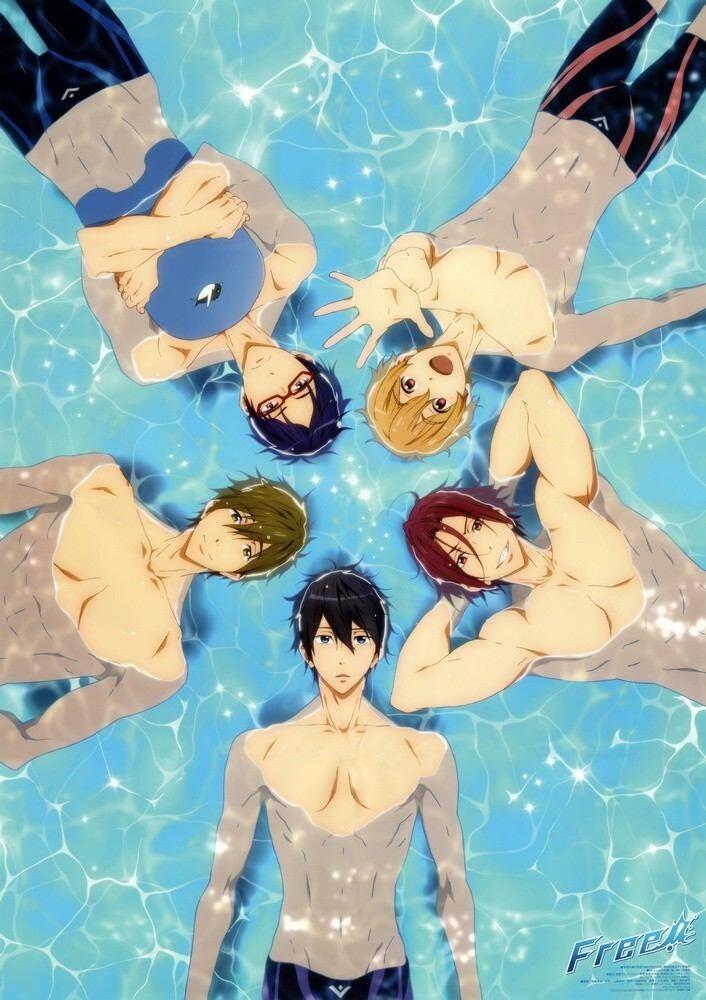
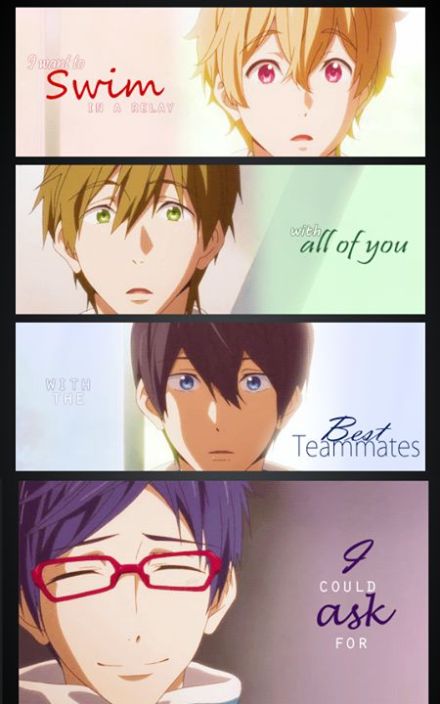
If it’s not apparent to you yet, the boys of Free! are very beloved by its fans in the community, and for good reasons, too. They all have such great . . . chemistry, and truly, they’re more than just friends—they’re family, the kind that look out for each other before themselves, as well as value each others’ strengths and weaknesses alike. Each so unique and diverse, they all have their own personal demons, but rather than facing them alone, they fight each battle as a team, causing their bonds to develop even further. I’d dare say that Free!’s characters form one of the most heartwarming squads out there; if not the best, they’re at least favorites of mine!

Name a Better-Looking Sports Anime. I Dare You.

Looking back, Free! was the first Kyoto Animation show to leave its signature mark on my viewing experience, and boy is it delicious. Not the muscles, well, maybe the muscles. I’m talking about the water—to quote Haru, it’s as if it’s ~alive~. Their attention to how water actually flows in real life is incredible. You could almost call it “liquid smooth.” KyoAni has a splendid color palette, which is bright, airy, and cheerful, not to mention that their eye for the cool, modern aesthetic is top-notch. Color and tone values help to distinguish between scenes of comedy and rivalry. I almost feel as if I’m cleansed when I watch this show, if that makes any sense at all.

swim.gif

swim2

Image result for free iwatobi swim club swimming gif

But the boys, oh yes, they are youthful, breathtaking creatures with beautiful physiques. I said it. No regrets.

The seaside OST also provides a flowing atmosphere from scene to scene, specifically those “go out and do something wonderful” tracks like “Rhythm of Port Town” and “Revelry of Student.” What the show’s probably known for music-wise is its energetic openings “Rage On” and “Dried Up Youthful Fame” by the wild OLDCODEX. And then there’s that ending “SPLASH FREE” by STYLE FIVE, a group composed of the five lead seiyuus (loudly sings 50% OFF ver).

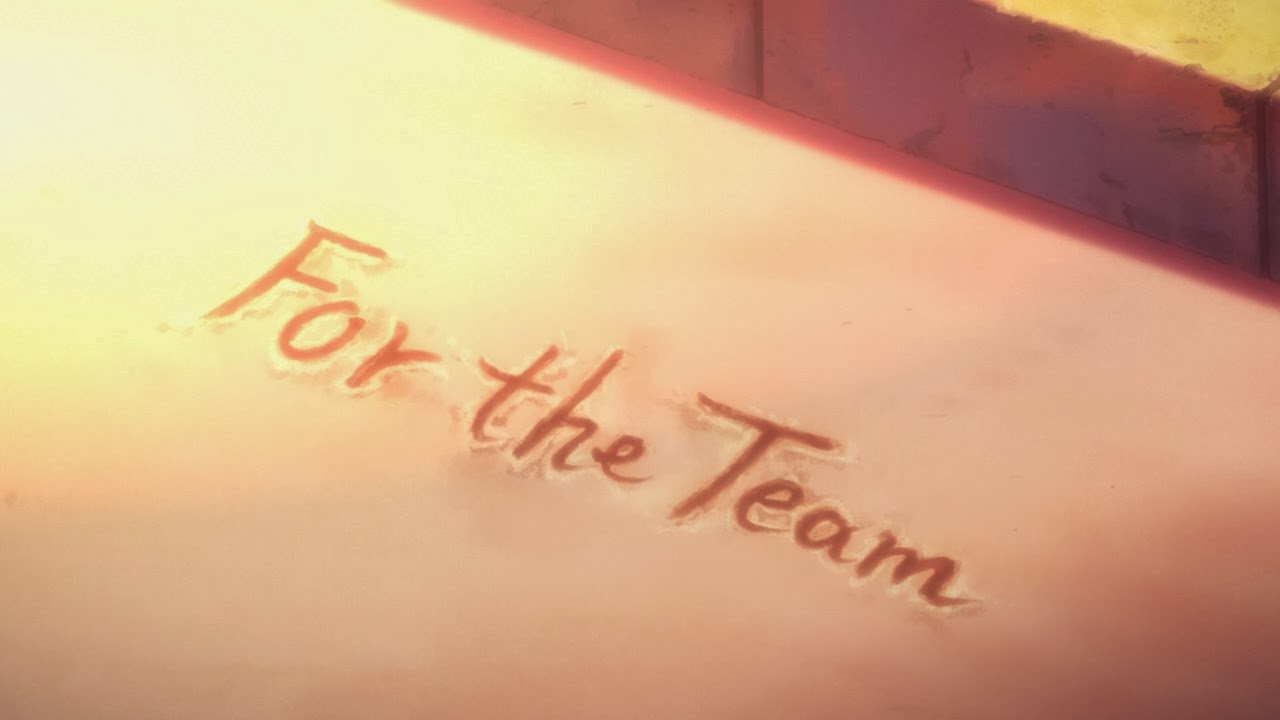
For the Team: My High School Swim Club Story

My 8th grade summer ushered in a whole new set of problems: high school was right around the corner, and I was a) waaaay out of shape and b) wanted to fit in. So I was just like anyone else, right?

That’s when I told myself to do a sport—my first one ever—that no matter what happened or how bad I looked, I’d do it just for the sake of doing it. I was considering track for pole-vaulting since a close guy friend of mine did it. Then I looked at tennis.

Tennis couldn’t be that bad, right?

Then summer got real hot. Like, sure, it was 90+ degrees each day, but, early on during my anime experience when I was unfamiliar with simulcasts, I ran into a 30 sec trailer for something hot.

Really hot.

It was other peoples’ phrasing, not mine!

But there was NO WAY I’d “wear a speedo.” Heck, I didn’t even know if my high school had a boys swim team. So I rummaged the yearbooks and did a little online looking and sure enough, there it was.

As the summer drummed on, Free! kept calling me back to YouTube each week where someone would upload the episodes. Not the best streaming service, but I didn’t mind. Anyway, the way their club started off so small and so closely knit, and then the fact that they were STUNNING to look at—I had to do swimming, I just had to.

Season one ended leaving me in high spirits and hopeful that whatever came that coming winter (cause that’s when swim season was here), I’d be more than ready.

Flash forward, the school announcements read off an early interest meeting for the sport. I was overly nervous, of course, but I showed up, and just like a lost freshman EVERYONE knew each other already. Like 20 guys that all were buds with each other. I was already lost, and ready to give up.

Then the first practice came, oh god, the first practice. I received swimming lessons from a countryside town growing up, and so I thought I was a champ at it. But in fact I sucked. Really bad, hahaha!

The next practice came and five or so of the team didn’t show up.

They quit. Each with their own excuses.

What.

There were so few members on the team that we were all considered “varsity” swimmers, so at least that was neat. Little ol’ me was varsity as a freshman!

I somehow finished that year improving times meet after meet with the other first years. But my eyes never stopped wandering off to our lane four relay. Coincidentally, or perhaps by fate, there were four of them: one for each of the strokes, one for each of the boys in Free!

Image result

I wanted to be like them. So I worked my ass off at morning practices and afternoon practices day after day after day.

I was even awarded the “Most-Improved” on the team! Still got the medal displayed in my room.

Then they all graduated. Except for one, since he was a junior, but yeah, they all had left me. They left the team, leaderless.

My sophomore and junior years ushered in new issues. New coaches, new members joining then quickly dropping for all the same things, but the core members of the team never left, and now they’re some of my greatest “upperclassmen” friends. Facing the facts, the others just couldn’t take the heat of practice.

But I could, and I did.

Related image

Senior year came. Three other seniors joined me, but then those same three quit the very next day. By the end we were eight strong, but became eight of the closest guys you could ever imagine. We were all swimming Free!.

But there was this one freshman in particular. He was good. Very good. Like crazy good enough to make State qualification times in our first meet.

*gulp*

Then there was me, who had actually peaked his junior year and suffered all season with a young hot-headed coach who didn’t even know what “mercy” meant.

I suddenly felt unqualified. Alone, if you will. Days grew longer, my body grew more tired, and yet my times never improved.

I even remember crying myself to sleep one night, swearing to myself that I’d quit at practice the next day. “Who even needed to say they swam for four years during high school?? It’s not like I’d remember any of it a decade later!!”

Image result

But then I thought about me—myself, that scared little guy who, during his freshman year, witnessed several of his upperclassmen leave the lanes for good. If it weren’t for those four boys, our A-Team relay, I probably would have—

I WOULD HAVE QUIT A LONG TIME AGO.

That’s when it hit me: I wasn’t staying there for me anymore. Heck, I didn’t need swimming, or an in-shape body anymore—it’s senior year.

But what kind of message would that have sent to them, their families, this community, that a team of only freshmen and sophomores were left senior-less after they all quit??

Nope. I was there for them. For the team that never left me when I was a first year.

For the team. 

So I whipped myself back into shape, my psyche ready for any challenges that came my way, because I wasn’t swimming for my own times anymore—it was for the relay, for the team!

Related image

This past spring, we finished seven strong with one of our guys leaving us due to his parents moving away. But we never forgot him, and we never forgot about us.

And it was that fleeting member who got us to compete at State. Relay times are generally left permanently for the team, which is why, when he left, we met consideration time. It was just a few aching days after that we found out that our qualifying time got us in.

We stayed overnight in a fancy hotel, exploring the town together with our coaches, shopping, laughing, making those kinds of memories.

The kinds you’ll never forget.

And then we swam at state. That one really good freshman OF COURSE placed in the top ten. Our relay . . .

We didn’t make it to the second day, hahaha! But we were lucky enough to even be there in the first place, right?

When our splits (individual times) were captured by our coaches and the timing mats, my own time came in:

I swam a 24-some-second 50-yard freestyle in our relay. That is, to date, the fastest I had ever swam, and I nearly cried. We were all yelling and screaming and cheering so loud that we nearly lost our voices, but we didn’t care at that point, cause we all for the most part had swam our best when it mattered most, and ya know,

That means the world to a Team Captain.

Image result

Like Free! tries to tell us, you can be the best swimmer or the worst swimmer, but if you don’t work together as a team, you’ll never win what truly matters: friendship, companionship, brotherhood—they’re all synonymous at this point.

We go about our lives thinking and acting like we have to carry our own weight, and to an extent, that’s true. But like a relay, everything we do is ultimately for the team, for some group, tangible or not, that is bonded together through incredible triumphs, pitfalls, or just good memories.

And if you find yourself losing passion with something, or are stuck with a team that frankly isn’t filled with the most wonderful of people, then BE that wonderful person for the team. Do what I did and work your butt off, sweat your tears away, and devote everything you’ve got just to say that YOU never left them when it mattered most.

Cause ultimately, you, too, are part of a team, their team, and you should do things just like that:

Image result


 This was a very long post (laughs) and I apologize, but there’s a lot to be said about Takuto here. A lot indeed. And if you read it all, from beginning until now, I can’t honestly thank you enough! Free! may be male fanservice to everyone’s eye, but to me, it’s a beautiful and inspirational coming-of-age story filled with compassion and teamwork that inspired me to take on a seemingly impossible journey—impossible alone, that is. It’s about growing up and finding out who you really want to be, about dedication, self-motivation, and life after graduation. Through Free! I made friends and fell in love with a sport. But more than that I made memories to last a lifetime, and those are irreplaceable.

As such, both seasons of Free! are awarded solid “Caffe Mochas” ratings, and should be watched on Crunchyroll or Funimation’s sites for FREE (hah) at one’s earliest convenience. That is, only if you’re craving something really hot.

Image result

This concludes my June 5th (now 6th, apologies) entry in the OWLS “Team” blog tour. Being the first one to kick off a tour of this magnitude is quite a heavy weight, but hopefully I did a decent job, and now we can carry that together, right? Please tune in to Remy Fool (The Lily Garden) as he discusses the poor perception of male crossdressers in Japanese media this Monday, June 12th.

To all the guys I swam with throughout my four years, from the team that inspired me to the one that I, myself, hopefully inspired, thank you for all of the laughs and the memories—this one’s for you. Stay silly my guys. 

And to you, my favorite readers, an even greater thanks! Until next time, this has been

– Takuto, once a team captain, now just another blogger

Rei


Grimgar: Stronger Together, Now & Forever | OWLS “Strength”

Chances are that if you were linked here from another blogger pal, then you might be new. To those first-timers, “Hi, I’m Takuto, welcome to my anime cafe!” As part of the OWLS blog tour’s  fifth monthly topic, “Strength,” I decided to incorporate what would have been my standard Grimgar review into this pep talk about keeping your chin up. I’m also celebrating its recent release, which includes a strong English dub by a set of newbie-ish VAs!

“Your greatest weakness can become your greatest strength.” In anime, characters struggle with inner demons or physical weaknesses that make them feel insecure and prevent them from achieving goals, which makes viewers feel empathetic toward their battle. Yet when these characters overcome their adversity, they can finally be able to express who they are, or in other words, “Free to be Me.” 

I’m also gonna try a new, shorter, more poetic form of writing, since I seem to have been named such a writer by blogger buddy LitaKino and the OWLS YT squad. Let me know if you prefer this, oh, and thanks Lyn for the prompt!


A brief discussion on the 12-episode winter 2016 anime “Grimgar: Ashes and Illusions,” produced by A-1 Pictures, directed by Ryousuke Nakamura, based on the light novel by Ao Jyumonji.

The Past is Irrelevant

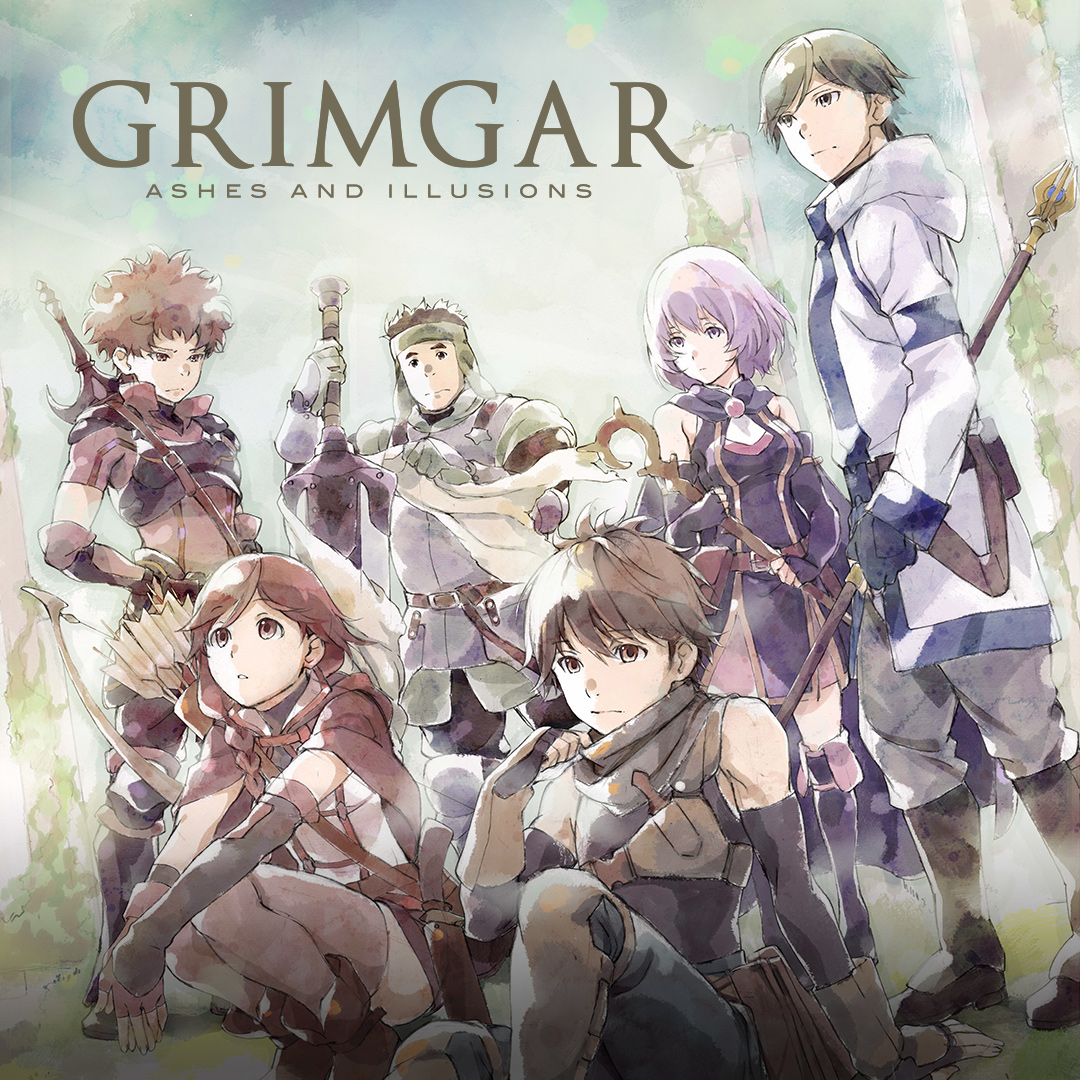
Waking up in an alternate world not too far off from a fantasy, a group of strangers with no recollection of their past lives are welcomed to Grimgar, a vast magical landscape that spans as far as the eye can see. Much like an RPG system, parties, guilds, and other factions exist in packs to ensure survival and decent living conditions.

With no home to call their own, six teenagers bound by the simple wish to live in this bizarre landscape form their own party. Unbeknownst to them, what awaits their poor squad in this harsh new world is nothing but grief, loss, misfortune, and tragedy at every bend in the beaten dirt path.

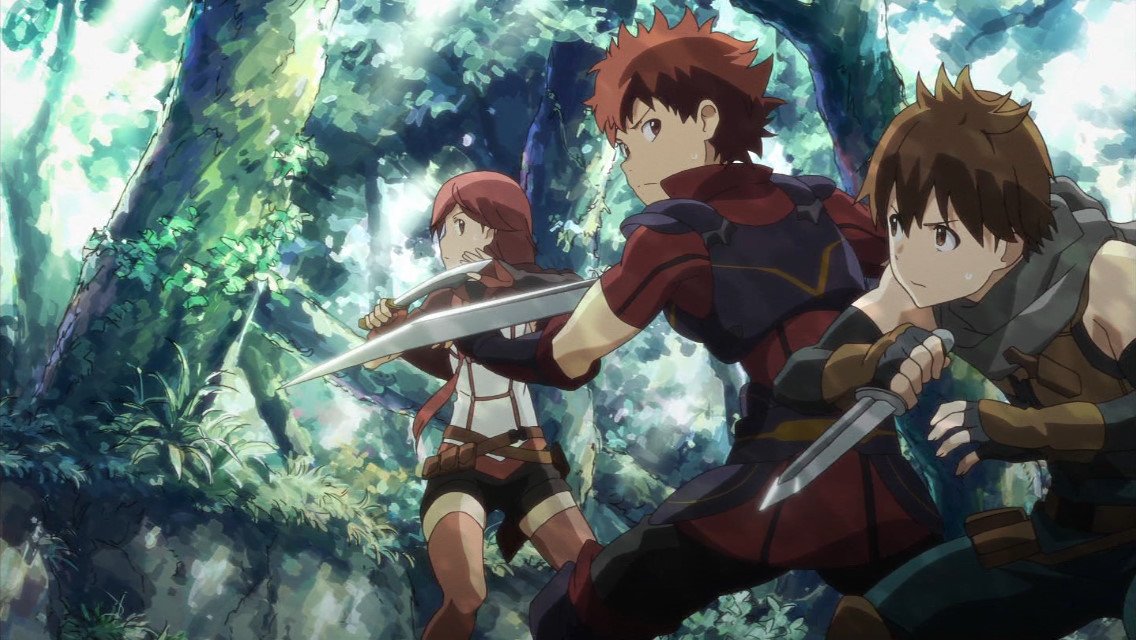
Image result for grimgar party

Grimgar‘s greatest appeal is its attention to the realities of living in a fantasy world. From finding a place to sleep to having enough copper pieces to afford simple luxuries like a fresh pair of underwear after using the same one for days on end, the anime never fails to appeal to logic and frugality. This comes with a downside—dreadfully slow pacing—but a show like this shouldn’t be rushed. Otherwise we’d miss out on another uneventful tidbit of coping with life’s pain, a quality that, where other trapped-in-an-RPG anime stumble, Grimgar excels.

Image result for grimgar crying

Being primarily main character Haruhiro’s story, I only wish we got to see through the eyes of the other party members. They’re all unique, classes and stats aside, and it could’ve been the cherry on top to understand what the Ranta the dark knight or Moguzo the tank thought before they went to bed each night.

A World Painted Unlike Any Other

Surprisingly, A-1 Pictures paints a glorious watercolor backdrop to accompany our volunteer soldier trainees as they run across the ruins of old attempting to slay a single goblin. If this anime has a winning feature, it’s the artwork. Reminiscent of the quiet world of Maoyu, it’s rare to find such wallpaper-worthy scenery at every shot, every frame. Exquisite and personalized, yet very simplistic, and it all works magically in Grimgar. 

This slideshow requires JavaScript.

Also fantastic is the soundtrack, more specifically the joyous and exciting violin hoedown of the opening, “Knew day” by (K)NoW_NAME, along with the bittersweet ending, “Harvest,” a song by the same band, which frequently cues in early to accent a feeling of mourning and memorial. Both are equally enjoyable and very appropriate.

Strength is More Than Good Stats

When you think RPG stats, STRENGTH or TOUGHNESS are what jump at you first, naturally.

Now, when I say STRONGEST, having the best weapons, armor, or other gear is essential, right?

In Grimgar, that’s what Haruhiro and the gang thought, too. But they couldn’t have been more wrong.

You see, outfitting oneself with top-notch equipment sure does help, but there’s one part of your body you forget to protect most of all.

You heart.

?

When sleeping, eating, or socializing are the only forms of relaxation and entertainment, you can bet much of your time is spent on the battlefield, a land where your life is always on the line. At any moment, you could get slashed on your side with a dagger, or

Struck in the back with an arrow.

Tragedy follows the pathetic party everywhere they go, and when they first experienced loss, none of them could handle themselves. It was almost as if one member meant the lives of all six.

With no one to comfort them, they all experienced petty conflict with one another—they all tore themselves up for not being cautious enough. Day by day, they milled around in the doldrums, incapable of moving forward from the horrors of their last fight.

It wasn’t until they openly cried and poured their hearts out in front of one another that they realized how each member felt. You could almost say that the wound in their hearts finally bled out.

But like scars, sadness heals itself with time, comfort, and care. But also like scars, they will never fully heal. And that’s okay.

For the Grimgar crew, strength blossomed from the heartache they experienced. Loss, tragedy, and depression, poisons that normally corrupt the body, became ironclad armor to protect them from whatever came next—as best as armor could, that is.

They came to understand just what “ashes” meant, and used their tears, innate weaknesses, and unfamiliarity to bond closer with one another. Slowly but surely, they worked harder on the field and with one another to grow as people, and to move on from that day.

For they had endured a torn heart, and what doesn’t kill you DOES make you stronger.

They learned that true strength lies not in good stats, but in their faith in one another—in overcoming adversity and misfortune TOGETHER.

You are only alone if you choose to be. Similarly, one may be strong, but a team is stronger.

All you have to do is grit your teeth and keep on rolling with the punches.

manato.PNG

“Living has its own challenges. I’ll give you just one piece of advice. Don’t quit. Yes, when you die, you die. But if you give up, you’re definitely going to die. That, I am sure of.” – Brittany


Fortune favors the bold, right?! Grimgar: Ashes and Illusions is full of unfortunate pitfalls for a cast of endearing teens, but so long as they stick together, they can overcome any challenge. A special shoutout goes to Rocco B (In the Cubbyhole) and Jamie (Jamie Talks Anime), two very special people who shouldn’t have had to wait so long for my thoughts on this series! I give it the certified “Cake” rating! Everyone, let me know what you thought about this series in the comments!!

Image result for grimgar poster

This concludes my May 26th entry in the OWLS “Strength” blog tour. Please check out Lita (LitaKinoAnimeCorner), who went right before me and wrote about the astounding latest-hit film A Silent Voice. And now, I’ll give you the weekend before we return with Naja (Nice Job Breaking It, Hero) on equally powerful film, Colorful, this Monday, May 29th! Thank you so much for reading, and until next time, this has been

– Takuto, your host

Tales of Symphonia Orchestrates Racial Harmony By Overcoming Great Tragedy| OWLS “Colors”

Chances are that if you were linked here from another blogger pal, then you might be new. To those first-timers, “Hi, I’m Takuto, welcome to my anime cafe!” As part of the OWLS blog tour’s  fourth monthly topic, “Colors,” I decided hit up a show that originates from a GameCube JRPG—the one and only Tales of Symphonia which was, fun fact, the SECOND anime I had ever watched!! You know what that means—aww yeah, old-school Takuto wrote a dope review about it (here) years ago that is littered with grammatical errors but full of heart. It currently has zero comments and likes, so go mess that up for me, will ya? Be gentle 🙂

We are all part of one race, the human race. “Colors” refers to people of color in anime. For this month’s topic, we will be discussing how people of color or
characters of different “races” (could be a literal alien race) are represented in anime. Some topics we are considering is the dangers of stereotyping, bi-racial
characters, and the importance of racial inclusion.

I had the recent pleasure of finally finishing the Tales of Symphonia PS3 game recently, so I’m excited let the experience come full circle by revisiting one of the titles that got me into anime. Thanks Lyn for the prompt!

Image result


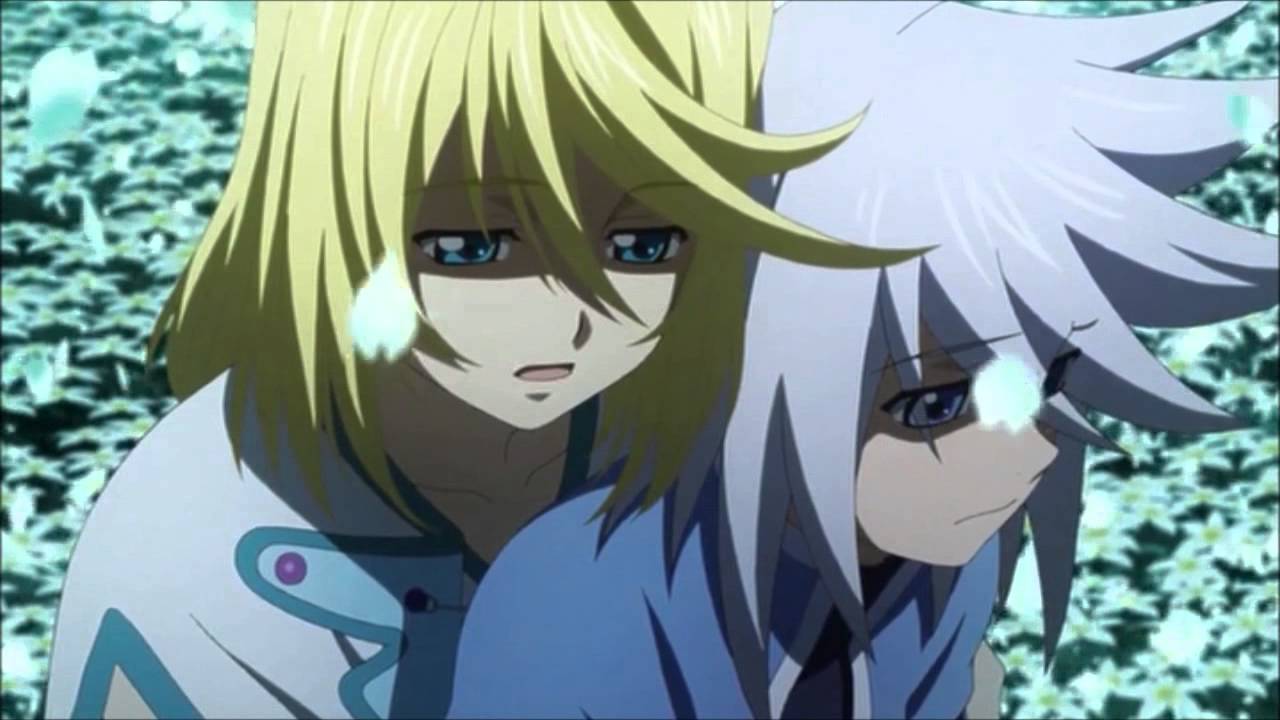
A brief discussion on the various races and factions that appear in the 2007-2012 11-episode OVA series “Tales of Symphonia: The Animation,” based off the GameCube game by the same name, created by Bandai-Namco, produced by Ufotable, directed by Haruo Sotozaki (“Tales of Zestiria”). SPOILER WARNING

When One World Flourishes, the Other Withers

Enter Sylvarant, a fantasy world of monsters yet very little magic. Why? The mana that flows through the realm has been draining out for a long time now, and it seems that the land will only grow drier (literally) with each passing day. Little to the peoples’ knowledge, a second world exists out there, one that mirrors their own home, and the reason it prospers and thrives is because the mana flow resembles that of an hourglass, Tethe’alla, this second world, residing on the bottom.

This is where the Chosen one comes to save the day! “Chosen” by the heavens, Colette Brunel of Sylvarant sets out on her quest of World Regeneration to flip the hourglass back in their favor. But her clumsiness and well-being worry her friends Lloyd Irving and Genis Sage. So the two, along with Genis’s older sister Raine (who happens to be their village’s teacher) and a mysterious mercenary named Kratos, embark on a journey, encountering new friends and more foes with their own philosophies that will forever shake the foundations of their precious world that they’ve studied for so long.

Image result for tales of symphonia anime screencaps

Just when our gang finally learns to love the world for what it is, things take one tragic turn after another, forcing our heroes to question the reason they fight, and whether their quest is one of nobility or selfishness. Remember, when one world flourishes, the other withers—people are bound to make great sacrifices.

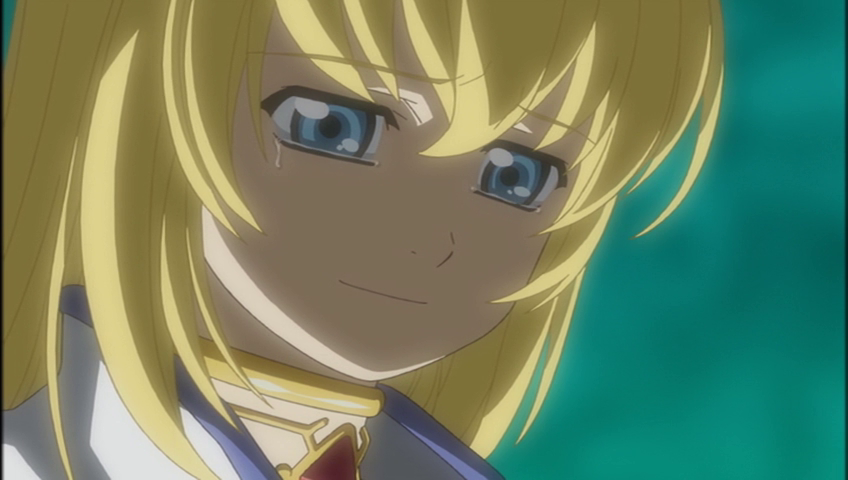
Symphonia remains one of the top, if not THE #1 game in the incredible Tales franchise. Rife with gorgeous visuals, dramatic Celtic-inspired music, and heartbreaking characters, the animation holds on its own by establishing a fantasy adventure world (or two) where there’s always something to be lost for one of its characters. As the series progresses, we viewers, too, begin to question if a happy ending even exists for this broken cast of many ages and races. Symphonia tackles the harsh realities of acceptance and racism through its memorable characters.

Related image

Oppressed, Punished, and Exiled

In this vast fantasy world, several races and factions exist, most of which frequently bump heads with one another. Aside from the dwarves, who lead quieter pastimes as master craftsman, there exist elves. They live reclusive lives hidden in villages among the trees, like Heimdall, and choose to isolate themselves from society because half-elf breeding (the result of human x elf mating) is frowned upon. Largely stemming from human jealousy—for elves have much longer lifespans and can use magic, but humans possess neither—and disgust for one’s blood to be tainted by the others’ race, both humans and elves decided to hate the “perfect” half-elves all around, which leads us to Symphonia‘s most tragic bunch.

Related image

Half-elves cower at the tip of every whip cracked and at the shackles of every chain latched. Disdain from both humans and elves has caused these poor people to be punished for their mixed blood, and, if they are lucky, exiled from the land. Some literally fled to a floating isle called Exire to avoid their tragic fate. Those who could not escape detainment were hunted down, beaten, and even tortured. The main reason for their abuse, aside from their physical make-up, derives from the legend of the the great Kharlan War. In it, humans and elves fought over the two countries, Sylvarant and Tethe’alla, which left half-elves, near-omnipotent magic users with longevity in beautiful human bodies, to be caught in the crossfire.

If We Could Just Include Instead of Exclude . . . 

Lloyd Irving, the main character, was raised by a dwarven father, meaning that he has seen the abuse from a more objective standpoint than that of a human, elf, or half-elf. Out of rage for their treatment, the Desians, a treacherous organization of half-elves, had swept through Sylvarant, enslaving humans and sacrificing them to create enhancing magic crystals called Exspheres. What they are doing is wrong, and Lloyd knows it, clutching his own mother’s Exsphere from when she was still among the living.

Image result

With a burning desire to end all enslavement and restore the two worlds to one so that all can live in harmony together, Lloyd uses his own experience with the people he holds dear to guide his quest. When it is revealed early on that his best friend Genis and sister Raine are, in fact, half-elves, Lloyd doesn’t grief or retaliate harshly. There’s even a scene where Genis mourns because he knows that when Lloyd and all of his friends eventually pass away, he will be left behind alive but lonely. Instead, Lloyd sympathizes, and smiles because he is still able to enjoy their company in the present, looking beyond racial treatment and into the value of their personality.

Genis himself undergoes his own journey when he meets the great Mithos, suppposed Hero of the Kharlan War. In actuality, he manifests as a young half-elf boy just like Genis who only wished for a world where he and his sister Martel could live in peace. Viewing Mithos as a painful mirror of his very being, Genis seeks solace in this poor boy. Unlike Lloyd’s determination to seek symphonic harmony with all races, however, Mithos sought to convert everyone into one homogeneous kind, believing that if race didn’t exist, then neither would racism. The boy is right and his ideals are true, but the execution of his plans via brutal nature was naive and cruel. The heart was in the right place, but the mind wasn’t, and that’s why Mithos continues to suffer until his own sister rejects him.

Image result for tales of symphonia anime mithos

We need more people like Lloyd and Genis—people who have had experiences with trauma on both sides, yet still manage to see the good in others regardless of their race or status. But there’s only one way to handle this matter carefully. Rather than force people to accept the beautiful array of colored people on this planet, shoving our own ideals down their ignorant throats, we need to integrate warm, positive spirits into communities that suffer from racial exclusion.  We must value the characters, not appearances, of all different peoples in order to end this childish thinking.

Dividing the world into two so that people could exist on separate planes was not the answer. Same goes for establishing one master race. The weight of Lloyd’s unwavering acceptance and determination to create a world for everyone is the greatest joy that can come from the series. It’s the hope that someday we can all overcome our own tragedies to play in one harmonic symphony together that makes “Tales of Symphonia” ring true to so many hearts. Life in this kind of new world begins not by looking at what which makes us different, but celebrating what we share in common, and that is beautiful. 

Image result for tales of symphonia anime lloyd and genis

“Dwarven Vow #1: Let’s all work together for the sake of a peaceful world.” – Lloyd Irving


Tales of Symphonia is a really neat show full of heartwarming themes and deep characters, so do check it out if this kind of fantasy is your thing! For those who have seen it, what do you think of the game or its anime adaptation? What about how it’s emotional bits are portrayed? I preferred the anime’s flow in this department, but hey, let me know your thoughts!

This concludes my April 22nd entry in the OWLS “Colors” blog tour. Please check out Stephanie Clarke’s (Anime Girls NYC) post over the darker colored villains from the currently popular Twin Star Exorcists! And now the magic will trickle down to Eren (sakuradaisuki) as she walks us through “Colors” in the dear-to-heart Sailor Moon on Monday, April 24th! Thank you so much for reading, and until next time, this has been

– Takuto, your host

Image result

Evangelion’s Misato Provides a Home for the Lonely | OWLS “Sanctuary”

Chances are that if you were linked here from another blogger pal, then you might be new. To those first-timers, “Hi, I’m Takuto, welcome to my anime cafe!” As part of the OWLS blog tour’s  third monthly topic, “Sanctuary,” I decided to pull in all of the Evangelion sources that I could, original series and Rebuild alike, in order highlight that no matter where you may be in the apocalyptic future of Tokyo-3, captain Misato Katsuragi’s apartment will always remain a safe haven from the wrath of the heavens.

A sanctuary is a place of safety and stability. In anime, there are several different places and environments that characters call “home.” For this topic, we will be discussing locations and settings in anime.

Eva is a franchise that you might already know means the WORLD to me, so allowing myself to revisit its iconic universe is a real treat. Thanks Lyn for the prompt!

Image result


A brief discussion on Misato’s Apartment as it appears in the 26-episode 1995 series “Neon Genesis Evangelion,” the critical 1997 film “The End of Evangelion,” and the “Rebuild of Evangelion” film series, produced by Gainax and eventually Khara, all of which were written and directed by Hideaki Anno. 

First, A Welcoming Party

Eva opens up on an alternate present-day Tokyo where “Angels,” ironically named beasts of pure destruction, are in recent rise for some bizarre reason. Shinji Ikari, son of NERV commander Gendo Ikari, is called in to pilot the towering [neon] colored humanoid robot Evangelion Unit-01. NERV, an organization bent on the survival of the human race no matter the cost, may very well be the last battlefront in stopping these beings of terror, but it is ultimately up to Eva pilots like Shinji to determine whether humanity lives to see another day.

Shinji survives the first angel encounter against Sachiel. Barely. But the fact remains that he did actually save everyone, which is why his cold father ensures that Shinji remains on campus in case of another attack. No, the two don’t share the same living space, let alone sleep in the same house. Instead, they mutually agree that rooming together would be the worst possible outcome. Like a mother overprotective of her ducklings (this is funny because she has a pet penguin), the clumsy yet strong captain Misato Katsuragi takes Shinji under her wings and shelters the boy at her own apartment.

Image result for misato's apartment

Misato’s place is graphically located quite a ways away from NERV HQ, which is probably for the best considering that they are always on call, and that they already over-shoulder work everywhere else they go. It’s also crucial to note that we never see any interactions with the other apartment members in the complex, nor are the other lights on. It’s only Misato’s that is lit, like a lonely lighthouse guiding lost ships. After the two go out to pick up some welcome party snacks and view the majestic city sunset, the two share a memorably warm if not simple exchange before entering the household:

Misato: “Your things ought to have been delivered already, Shinji. I just moved here myself, ya know? *glancing back* Hey, come in.”

Shinji: “Uh, I don’t . . . want to intrude.”

Misato: “Shinji, this is your home now.”

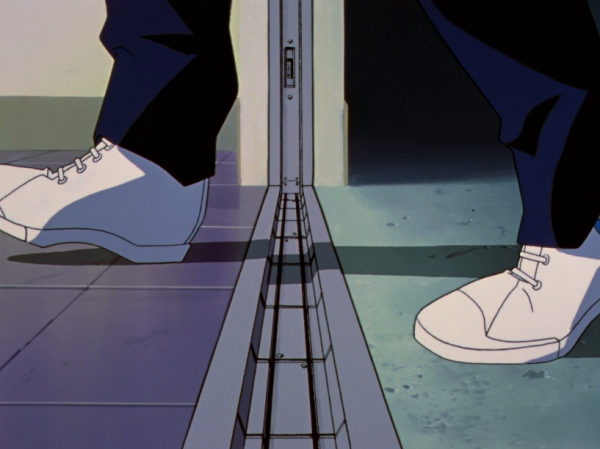
Shinji: *hesitant pause, finally steps into the apartment, crossing the sliding door lining along the floor, and stares upward shyly* “I’m–I’m home.”

Misato: *closed eyes, smiling* “Welcome home.”

[the apartment door automatically slides shut, revealing the tag M.KATSURAGI]

Misato: “Ummm, as you can see, the place is just a little bit messy but uh, heh, go ahead and make yourself comfortable.”

This is your home now. Wow. Just by reading this you can already get a feel for both of our characters. Shinji is shy, not wishing to impose upon anyone his own troubles. Misato comes across as casual, relaxed, and friendly. But just as how she makes her cameo in a flashy blue sports car with nothing but a seductive picture to go by, the atmosphere quickly shifts from one of formality to an air of light-heartedness. Evangelion masterfully plays with moods depending on how the characters should be reacting to certain situations, and Misato’s apartment, in fact, could almost represent the peaceful and joyful side of the chaos. Now that we’re all acquainted, it’s time to get to know each other beyond the name tags.

Image result for misato katsuragi screencaps

Make Yourself Comfortable

“Is this how you act in public? In front of your friends!?” You might have gotten this spiel by your parents if you’ve ever for a second acted, heaven forbid, without concern for public opinion or manners. Going back to the question, of COURSE I don’t act like this out there—this is home, and home is the one place where an individual should feel less pressured to “suck in their gut,” so to speak. Home is where I can let my guard down, and the characters in Eva do exactly that at the apartment. These moments make up the lighter side of a series otherwise known to offer psychological trauma and emotional turmoil.


This slideshow requires JavaScript.

Shinji, Misato, and eventually Asuka are free to lounge around with a temporary leave of stress that comes with saving the world. At first it was only a woman and her pet. Soon the dynamic opens up to invite a pseudo son (episode 2), followed by a pseudo daughter (Asuka in episode 9) and an anything-but father (Kaji). Even aunty Ritsuko comes along and plays house at one point!

toothpick

Like mentioned earlier, Evangelion is rife with iconography. Some early examples include:

  • Episode 2’s introduction of the song, Misato’s theme
  • Episode 2’s fridge reveal of nothing but ice, snacks, and lots of beer
  • Episode 2’s infamous toothpick scene (adding on with the straw scene in the Rebuild)
  • Episode 2’s recitaiton of “Unfamilar Ceiling” (sheesh, one would think that episode 2 is important for some reason)
  • Episode 9’s synchronization training through DDR and fashion
  • Episode 16’s “I’m bored, so kiss me” by Asuka

Little Shin’s Room ❤

Homes allow people to ponder and create. In the show, we see the characters questioning their own existence, their place in the world, and whether the actions they take are justifiable. The apartment also allows philosophies to be revealed, such as Misato’s “Not everything must be answered with a yes m’am,” or “Wash away your troubles—bathing cleans the mind and soul!” Speaking of bathing . . .

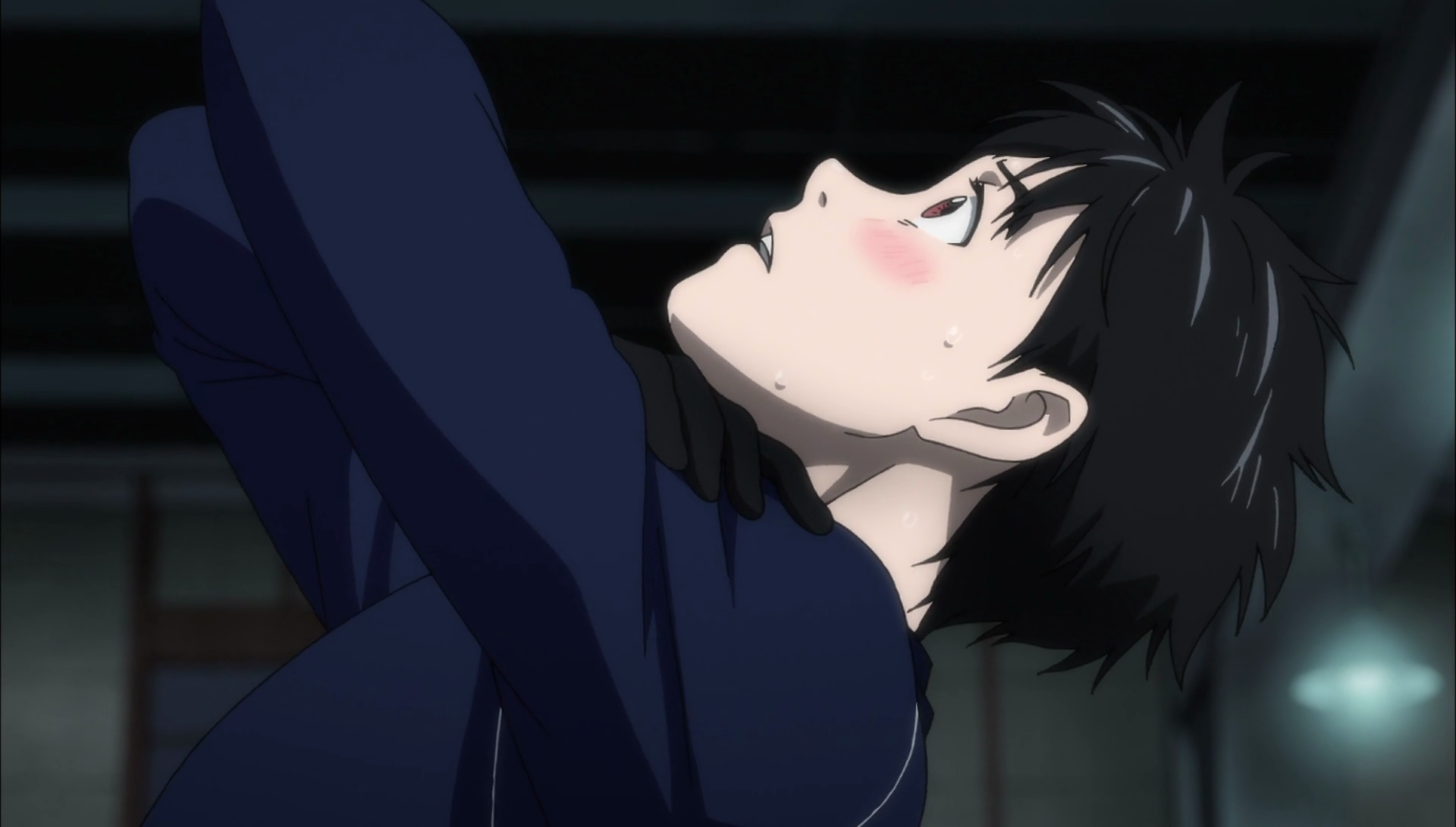
Differing personalities invite conflict, for not everything in Misato’s apartment is happy-go-lucky. Time spent alone allows the darkness to sneak back into their heads. We are permitted to see the characters at their worst, such as this disturbing 20-second bath tangent by Asuka, portrayed by the incredible Tiffany Grant. Whereas bath scenes are supposed to be tranquil and stacked with fan service, Eva, being Eva, turns this cliche on its head to emphasize that not all acts at home are frivolous. Sometimes we get into fights, and that’s natural. Easily, the worst-case scenario remains the pinnacle choking scene from The End of Evangelion, which brings an entirely different and off-putting light to the children’s home, both figuratively and literally.

Related image

What’s So Special About An Apartment

Not much, actually, only that it’s not just a house—it’s a home. A sanctuary from work stress and the trivialities of daily life, if you will. Even though these types of apartments are numerous in Japan, Eva still goes the extra mile in presenting the physical space uniquely. For one, the cinematography is sharp. This is reflected by the angles used, enhancing censored scenes like Shinji’s toothpicks or items such as the bras and lingerie that hang from the ceiling. In this way, the show stays interesting and provides enjoyment for a second time through. Utilizing warm hues of yellow for lighting also provides a sense of ease, unlike the cold LED lights of a hospital or a laboratory (it is HUGE contrast to Rei’s apartment).

As much as it’s fun to break down the inter-workings of the minds of our favorite characters, or pick apart the cause and effect plots of our most beloved stories, taking a minute to admire the physical—locational settings—feels like a nice breath of fresh air.

misato.PNG

It feels like we’ve nearly covered it all, but in fact there’s so much more to the development of the apartment itself. How its atmosphere changes over the course of the story almost makes it seem as if it were a living, breathing entity. Home is a place to relax and be comforted by all the things, living or not, you cherish. It should be a place of intimacy, of quietude, a place to be yourself without anyone telling you how to live. I know not everyone has it this way, and I’m sorry, but I hope you have found your own little sanctuary somewhere in this wild world, or that someone like Misato has provided this comfort space for you.

To those who do settle down at the house, aren’t you the most “yourself” in the comfort of your own home or room? I know I am, and I hope that doesn’t change for at least a little while now. We all need our me-time, and there will never, ever, be something wrong with a lil’ peace and quiet. For those in solitude, just remember that even if you’re all alone without anyone to come home to, your own home will be waiting for you, eyes closed and smile wide, just as Misato was to Shinji. 

Welcome home.

step.PNG

Take care of yourself. – Neon Genesis Evangelion episode 26 title


Evangelion in its entirety clearly means a LOT to me. You could almost say that it influenced the shape of my character. If you’re interested in more of my ramblings and personal thoughts, please, feel free to browse the archives for more of that Eva goodness!

This concludes my March 8th entry in the OWLS “Sanctuary” blog tour. Please check out Matt’s (Matt-in-the-Hat) post discussing how, in Sword Art Online, there exists sanctuary within gaming. He apparently used my Fairy Dance musings as some inspiration, which makes me all the more excited to check it out! I’ll now toss the ball to BeckNaja (Nice Job Breaking It, Hero), for she will be jumping into Haikyuu!! this Friday, March 10th. (But let’s be honest, when is she not engaged with the show? lol) Thank you so much for reading, and until next time, take care ~

– Takuto

Sleep tight, Misato . . . such a mess, at least she looks comfortable enough

Yuri!!! On ICE Goes the Distance for Life & Love | OWLS “Flight”

Chances are that if you were linked here from another blogger pal, then you might be new. To those first-timers, “Hi, I’m Takuto, welcome to my anime cafe!” As part of the OWLS blog tour’s second monthly topic, “Flight,” I decided to incorporate what would have been my standard Yuri!!! On ICE review into this pep talk about ambition. Something different to mix things up, right?

An individual takes flight when there is a goal, a dream, or an ambition that he or she wants to achieve. For this blog post, however, we are going to look at “flight” through different lenses: the underdog’s dream, the possibilities that Yuri!!! On ICE allows viewers to think about, and also the dangers of greed and ignorance that can influence one’s dream.

Since last month’s interpretation of mine was a bit gloomy, I’ll be honing in on the wondrous joys of living in each moment–leaving it all out on the rink–and the ephemeral effects of social media.

I LOVE YURI!!! ON ICE so this’ll be fun! Thanks Lyn for the prompt!

Image result for yuri on ice episode 1


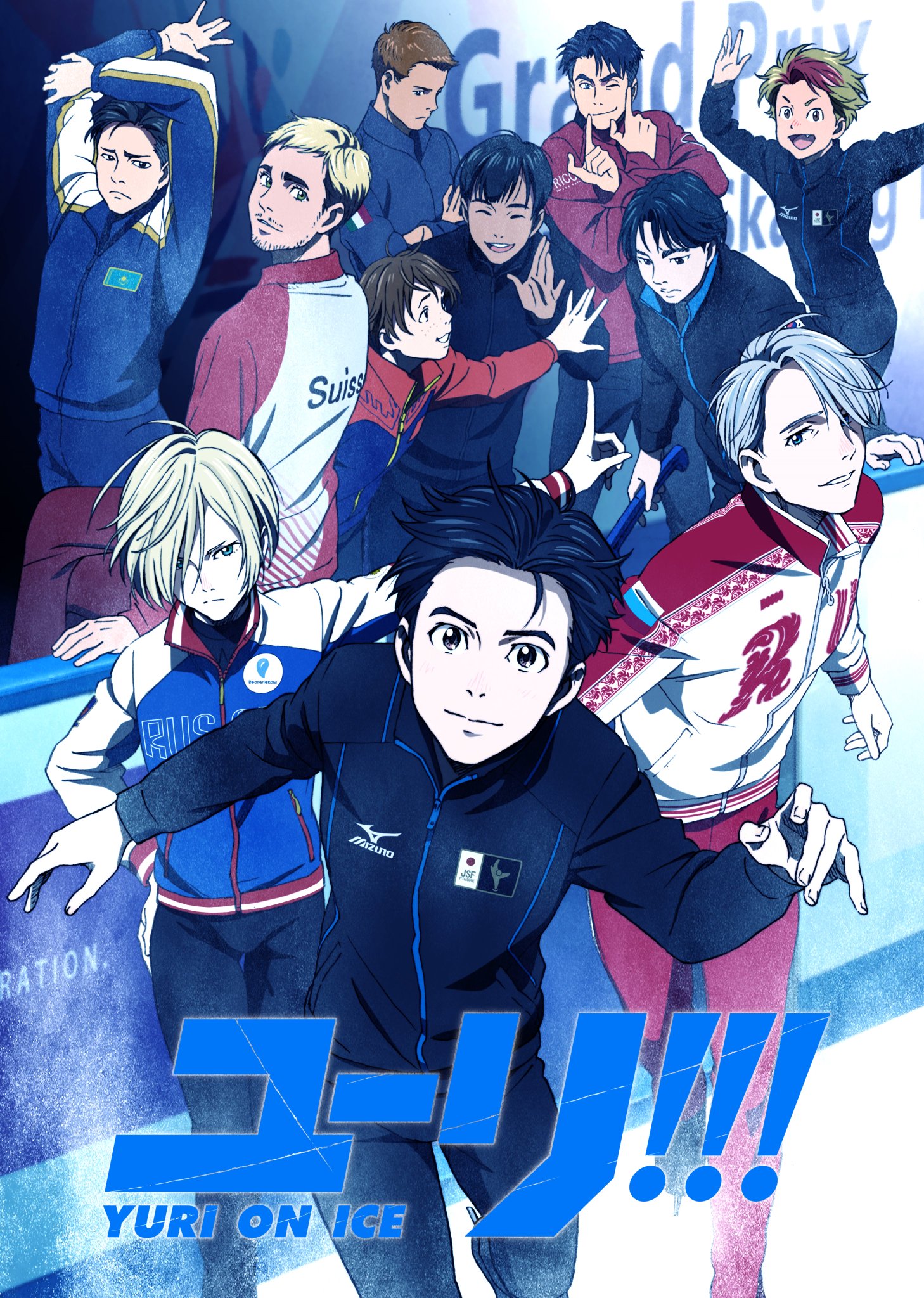
A brief discussion of the 12-episode fall 2016 anime “Yuri!!! On ICE,” produced by MAPPA, directed by Sayo Yamamoto, based on the original story by Mitsurou Kubo. 

Unexpected Loss, Unexpected Arrival

At age 23, country legend Yuuri Katsuki nearly lost it all when he returned to his family-owned Japanese hot springs without the gold. In fact, he didn’t even medal, taking last in the men’s ice-skating Grand Prix Final. Even though his face still beams youthfully, Yuuri’s not as agile as he used to be–and he knows it. Just as Yuuri contemplates moving on from skating, however, a video of him performing five-time world champion Viktor Nikiforov’s previous routine during practice instantly goes viral.

Image result

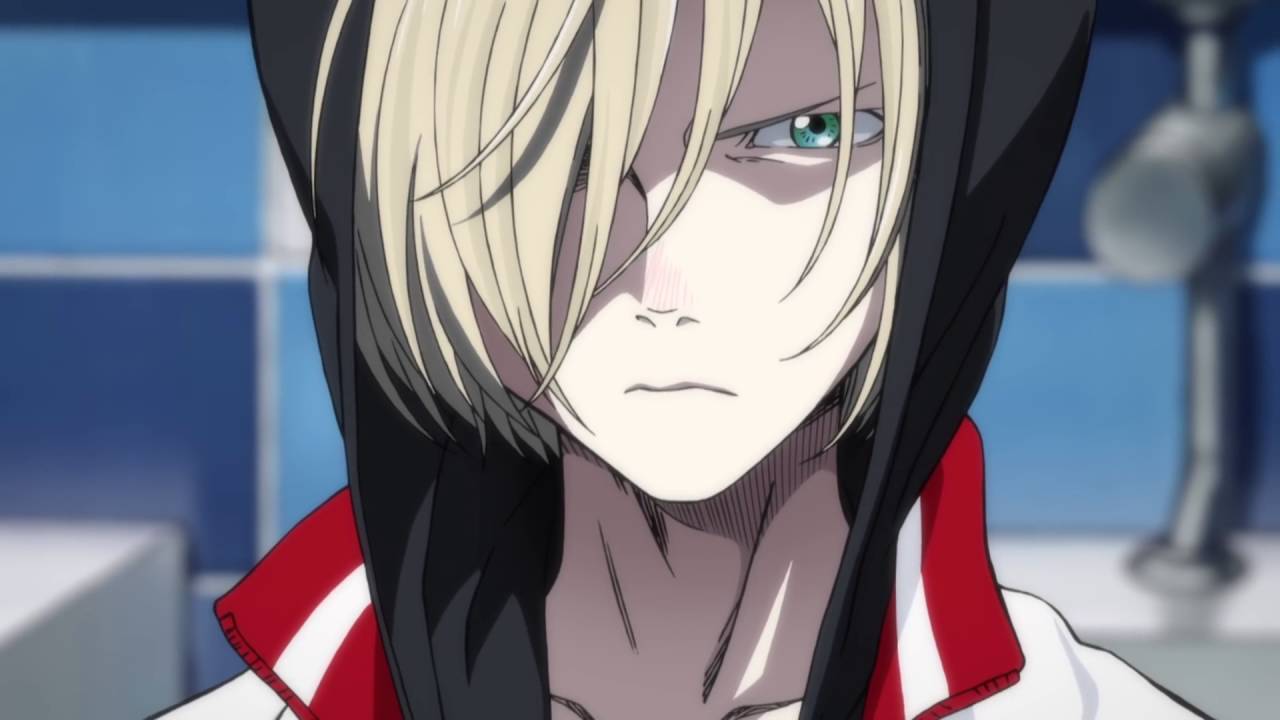
Scrambling to keep his life from further collapse, Yuuri finds himself in utter shock when Viktor, bearing himself in glistening full-frontal nude, unexpectedly shows up at his hometown’s Hasetsu hot springs. He jovially offers to mentor Yuuri and, being the BIGGEST Viktor Nikiforov fan ever to exist, Yuuri immediately accepts. His rekindled encouragement may blaze hotter than ever before, but Katsuki isn’t simply fighting against his past self! Everyone wants a piece of Viktor, including the competitive and fierce rising star of Russia, Yuri Plisetsky, and it quickly comes to both of their minds–and hearts–that there can only be one Yuri (!!!) on the ice.

Image result for yuri on ice yurio

So how do our guys “take flight” in the show? We’ll look at 3 ways that all relate to the anime’s ending theme, “You Only Live Once”!

1. Leaving the Comfort Zone

From their first day of practice together, Viktor splits Yuuri and Yurio apart, assesses their basic personalities, and assigns them opposing labels and routines completely and clearly different from themselves. This was all in the hopes of giving the two what they lack or fail to understand. Born from this exercise were the two spiritual entities on love, Eros and Agape, which I covered previously post that, ironically, received lots of love from you guys–thank you very much! Anyway, life and love come as a pair of L’s that Viktor himself has neglected. By understanding love, you can live a fuller life, and vice versa. To achieve their goals of competing in the GPF, Viktor rips the boys out of their comfort zone so that they, too, could fully comprehend the bizarre nature of love and its many beautiful forms.

This slideshow requires JavaScript.

2. Going the Distance

(In a post coming up soon I’ll be elaborating on my life-changing experience with sports, so for now you’ll get the truncated version.) Simply put, competitions like the GPF allow hardworking spirits from around the globe to come and put on a show for the world. They connect us. These boys all have their own origins: towns or cities that vary in atmosphere depending on the season; varying experience with languages and culture; the definition of a home-cooked meal.They are athletes, they are performers. And when they board that plane for the long flight ahead with determination to be the best in the world, they are ready  to put it all out there on the rink, no holds barred, no regrets. These boys want to do the best not only for themselves, their coaches, families, or nation, but for each competitor, too. THAT is the spirit of sportsmanship in competition: to do the best you can and make memories–make history–doing it with others!

Image result for yuri on ice traveling

And then that’s it. They’ll part ways, maybe take a couple pics together, and then decorations come down. But the memories never fade.

3. You Only Live Once

Tuning in to w.hatano’s “You Only Live Once” at the end of each episode treated us to an upbeat, happy-go-lucky firework show, not to mention a series of behind-the-lives-of-the-cast photos styled like an Instagram feed. The strong use of social media in this anime emphasizes a transient feeling, the romantic notion of fleeting emotions–of living in each moment–and living full and true to oneself. All of these characters are separated by their languages, styles, cultures, races, expressions, and location, but what binds them is love, love for one’s nation and the glorious joys that ice-skating brings.

The art they create doesn’t let them merely glide on the ice, but soar on the wings of life and love. Yuuri and the guys are just a bunch of kids from different countries coming together to make an ephemeral moment together. That’s why those last few episodes of touring Barcelona mean so much to the show as a whole and to us as viewers. They show us the boys out of their environment, or what they’d be like if we met them on the streets, and passing them by would be just that–evanescent.

So go out there and work hard, perform brilliantly, act courteously, be silly, laugh loudly, sing merrily, dance gracefully, pose triumphantly, speak clearly, learn intensely, ponder cleverly, play gently, dream wildly, write creatively, think positively, love passionately . . . and while you’re out there taking lots and lots and LOTS of pictures, never forget this: You only get one life. Live truthfully. 

It’s the only way those wings on your back will let you fly majestically. 

hugging2.png

There’s a place you just can’t reach unless you have a dream too large to bear alone. We call everything on the ice “love.” – Yuuri Katsuki


It’s no surprise that Yuri!!! On ICE has had a profound effect on my life recently, so regardless of its few shortcomings, flaws, or inconsistencies, the cafe will warmly welcome this anime as a “Caffè Mocha,” a proud rating for those shows that have touched my heart and are regarded as a must-watch from me. Watching YOI air throughout the cold, bitter wintry weather gave us all hope and anticipation for whatever excitement the next Wednesday would bring, and I’m seriously glad I joined Twitter when I did, otherwise I’d be missing out on the bountiful quantities of fan art, haha!

I strongly recommend watching Yuri!!! On ICE via Crunchyroll since you can boot up all 12 episodes for FREE! And OH MY GOODNESS, I didn’t even get to talk about the incredible soundtrack that accompanied each of our star performers! Not to mention studio MAPPA’s captivating and elegant animation–it’s on it’s own level in terms of representing sports physics in anime!! And then Dean Fujioka’s instant hit opening “History Maker,” oh how INSPIRING this entire ensemble is!!! I consider myself lucky each day that we honestly got a show like this one. It truly went out of its way to bring us something wonderfully unique and powerful. Emotionally touching, entertaining, comedic, inciteful, inspirational, full of good vibes all around . . . wow, it just means so much to me, and I could probably go on and on forever~!

This concludes my February 27th entry in the OWLS “Flight” blog tour. Please check out Hazelyn’s (Archi-Anime) post discussing how Viktor may have risked it all with his leap of faith! Next after me is . . . wait, did I just end our second blog tour? I DID, and what a pleasure it has been! Thank you so much for reading, and stay tuned for Arria of Fujinsei to wrap up this lovely month. Until next time, this has been

– Takuto, your host
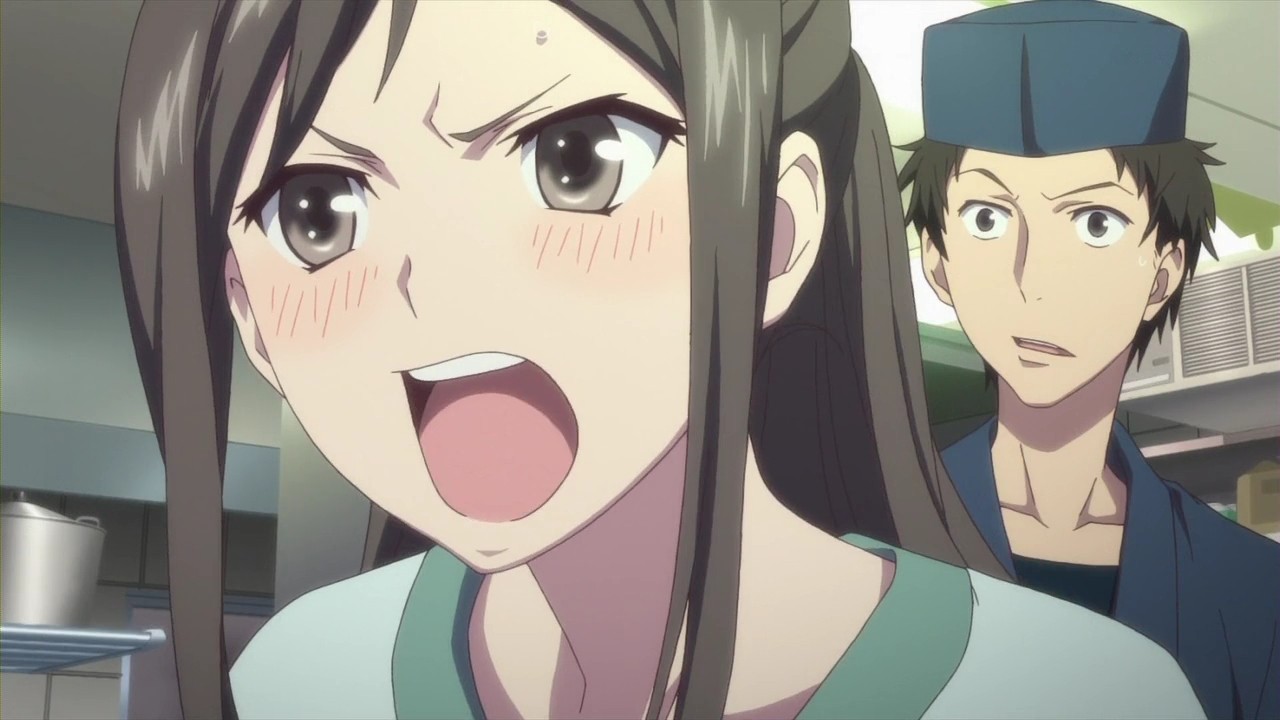
smiling-edit

Smiling Yuuri with long hair is everything. Go the distance to make yourself and others as happy as this kid!

Kiznaiver, Where Change is Worth the Pain | OWLS “Disruptors”

Chances are that if you were linked here from another blogger pal, then you might be new. To those first-timers, “Hi, I’m Takuto, welcome to my anime cafe!” As part of the OWLS blog tour’s first monthly topic, “Disruptors,” I decided to incorporate what would have been my standard Kiznaiver review into this discussion on peaceful protest. Something different to mix things up, right?

“To disrupt” has a negative denotation, but rather than looking at the verb in a negative light, we are going to use the verb in a positive way. It’s like the word “protest,” which has positive and negative connotations depending on the perspective of the person.

Disruptors: An individual or a group disturbing a system/set of social norms that they believe is destroying what is morally right.

I got this. Thanks Lyn for the prompt!

Image result for kiznaiver screenshots


A brief discussion of the spring 2016 anime “Kiznaiver,” produced by Trigger, directed by Hiroshi Kobayashi, based on the original story by Mari Okada.

When You Hurt, We All Hurt

Kids being subjected to horrific sociological experiments lurking within the shadows of a metropolis is a trend that, by now, anime is no stranger to. Just look at A Certain Scientific Railgun S and Terror in Resonance among others for proof. The newest “toddlers in test tubes” flick to come from Japan features kids not bound by grades, smarts, or other great potentials, but by blood–specifically pain–instead.

That’s right, they’re blood brothers (and sisters), and when one kiddo cries, the agony is divided. But like most scary psychological tests, the experiment is eventually caught, abandoned, and deemed a failure.

Image result for kiznaiver screenshots

Years later, seven teenagers–who would otherwise NEVER be friends with one another–find themselves confronted by Noriko Sonozaki, a bland yet mysteriously cruel high-schooler clad in a suit and long pale blue hair. She sets up an elaborate scheme to trap and force these clique representees into one small conflicted group in order to revive the “Kizuna System.” All of its members, or “Kiznaivers,” become connected through pain in a farfetched attempt to thoroughly understand what truly binds people.

Image result for kiznaiver screenshots

In a fashion very reminiscent of The Breakfast Club, the Kiznaivers must learn to get along with each other and accept one another’s differences and desires, or else risk receiving much more than a bad lab grade. Little do these wandering teens know that pain is not always a physical ailment.


This slideshow requires JavaScript.

Disrupting the Social System

Whether lifting weights or running sprints, it’s easier to relate to people by saying “Ah god that sucked!” after the workout rather than during while you’re dying. Similarly, we quickly learn that it is not pain that binds the group, but the absence of that pain the minute the torture stops.  Basic application of sociology practices can easily tell us that breaking “social statics,” the order that holds society together, can lead to psychological effects both beneficial and disastrous. How are the three main broad modern perspectives of sociology displayed in Kiznaiver . . . ?

Related image

First is the functionalist perspective. “Society is a set of interrelated parts that work together to produce a stable social system.” This refers to the seven deadly sins that reflect each character. I didn’t tell you about them? Oh, well, here’s a pretty infographic for that:

kiznaiver

I did not make this infographic. Character images belong to Studio Trigger.

Like The Breakfast Club was trying to strike home with at the end, society CANNOT function WITHOUT these individual traits, and that each of these traits–to a certain degree–exist within each one of us. Through a mutual hostility towards Sonozaki and the Kizuna System, consensus is achieved within the group . . . . that is, once they finally make the “high and mighty” Maki come around. They quickly realize that if each of one of them does not sacrifice himself to the collective, then their summer would be dreadful as hell. The dysfunctions that the group encounters, such as embarrassing reveals and aching hearts, do, in the end, lead to social change in order to fix their wavering social instability.

Related image

Second is the conflict perspective. Oh yes, it wouldn’t be anime if our main cast wasn’t chased by idiots in ridiculous suits, racing against the clock to solve a simple equation of personality or reach the checkpoint in some quirky game. Sonozaki doesn’t like waiting for the pot to simmer, and we see this through her hiring of goons and manipulating of the higher ups to reach quicker means of an end. She exercises calm yet absolute control over her lab rats, and her form is only disturbed when Katsuhira Agata, our quiet protagonist, invites her in on the fun. Sonozaki may not be the best-developed of her kuudere kind, but her use of conflict as the prominent source for change adds a fair degree of speed and excitement to this show bombarded by melodramatic twists.

Image result for kiznaiver gomorin

Third is the interactionist perspective. The name’s self-explanatory. “It focuses on how individuals interact with one another in society.” Our crew of seven fall back on this perspective as they uncover their true selves and unravel the hearts of others. This perspective is interested in the ways in which individuals respond to one another in everyday situations, which is why Kiznaiver is rife with scenes where these unrelated characters are just eating or lying on the couch and talking to each other nonchalantly. Slice-of-life interactions and witty dialogue are what keep this anime afloat, after all. The show gets its edge from the characters’ constant defining and interpreting of each other’s actions.

Related image

REMEMBER, They Didn’t Chose This Life

It’s easy to forget that our seven peeps weren’t chosen heroes, but actually lab rats of a terrifying experiment lost in the past. In other words, they didn’t chose to save society by disrupting the immoral, negative flow–they were FORCED to make change, and I think that’s why they struggled so hard. If anything, they dedicated themselves to taking down Sonozaki and the supposed system designed to achieve “world peace.” These kids just wanted to continue being normal . . .

Katsuhira, a victim unresponsive to pain,

Chidori, a silent lover in denial,

Tenga, a street thug to pass the time,

Maki, a bookwork undetected by her peers,

Yuta, a popular kid distanced from his past,

Niko, a spoiled delusionist by choice,

Hisomu, a hospital resident seeking pleasure,

Sonozaki, a child in fear of suffering . . .

But because these seemingly unrelated individuals were bound together by fear itself, they learned to welcome the bizarre, the wacky, and the weird that resided within each of their souls, and to protest against the elusive faults of a perfect society so that their new bonds of friendship could persevere through even the thickest of storms. In the final bout to save themselves, the Kiznaivers resolved to defy the social norms dictating their lives, for in the deepest, darkest, most-messed-up cores of each other, they found only themselves staring back.

Image result for kiznaiver screenshots

“Everyone wants to carve their scars into someone else. Everyone wants to connect with someone else.” – Noriko Sonozaki


Pay no heed to the slightly pessimistic tone there at the end–it’s supposed to be a good thing! Also, don’t feel bad if you didn’t recognize any of the science I was spittin’ out at the beginning. I just happened to be in the sociology neighborhood at school. So, what have you learned from this? Well, other than that Sonozaki is kinda a mad, lovesick bitch on sedatives, we found that sometimes it is not always the positives that make people seek change. The Kiznaivers were tired of wallowing around with cringy, disgusting insides that decayed their spirits.

To eliminate that self-pity, they helped each other, which in turn helped themselves find personal salvation, which finally led to an improvement within their squad, which was reflected as a mirror of society itself. By putting their differences aside, disrupting social norms, and coming together with a strong goal in mind, they effectively corrected some of the dysfunctions of society, even if only for a brief moment. That, is understanding. That, is change. That, is healing. There, look at me finding the positives!

Kiznaiver is by no means one of the best anime out there–I’d welcome it as a “Coffee” here at the cafe. But, if you look hard enough, you might be surprised with what’s actually lurking in the belly of the beast. Perhaps seven deadly sins? All 12 episodes of Kiznaiver can be found on Crunchyroll if I’ve at all intrigued you! If you liked The Breakfast Club, then this also might be for you. And if things just don’t jive with you too well, heck, at least Trigger’s animation and Yuuki Hayashi’s music are entertaining enough. Oh, and we can’t forget its true legacy, the opening”LAY YOUR HANDS ON ME” by BOOM BOOM SATELLITES.

This concludes my January 27th entry in the OWLS “Disruptors” blog tour. Please check out Pink-chan (Pinky’s Palace) who did a lovely job right before me (as did everyone else) discussing the modern dystopian classic PSYCHO-PASS, one of my top favorites, no less! Oh, and get psyched for one of my best blogger buds Lita (LitaKino Anime Corner) to wrap up this exciting month with Samurai Seven! Until next time, this has been

– Takuto, your host

Image result

To disrupt, or not to disrupt: that is the question of change.