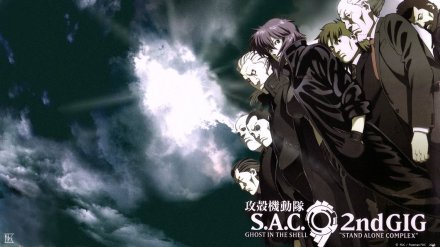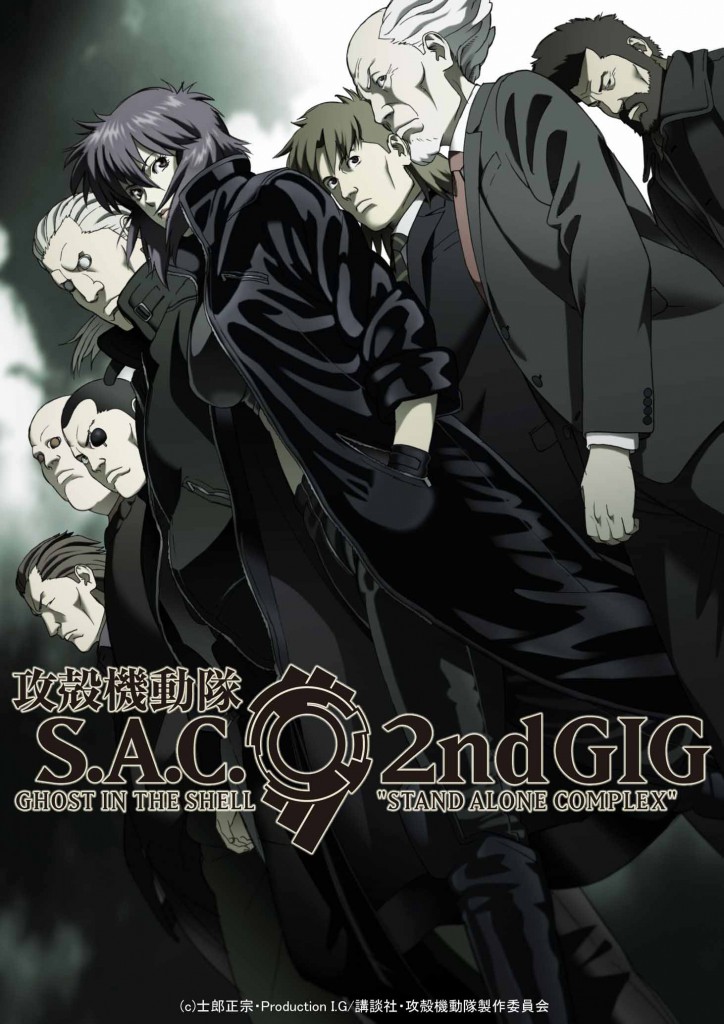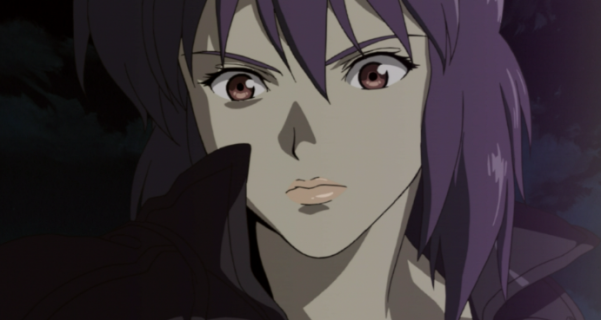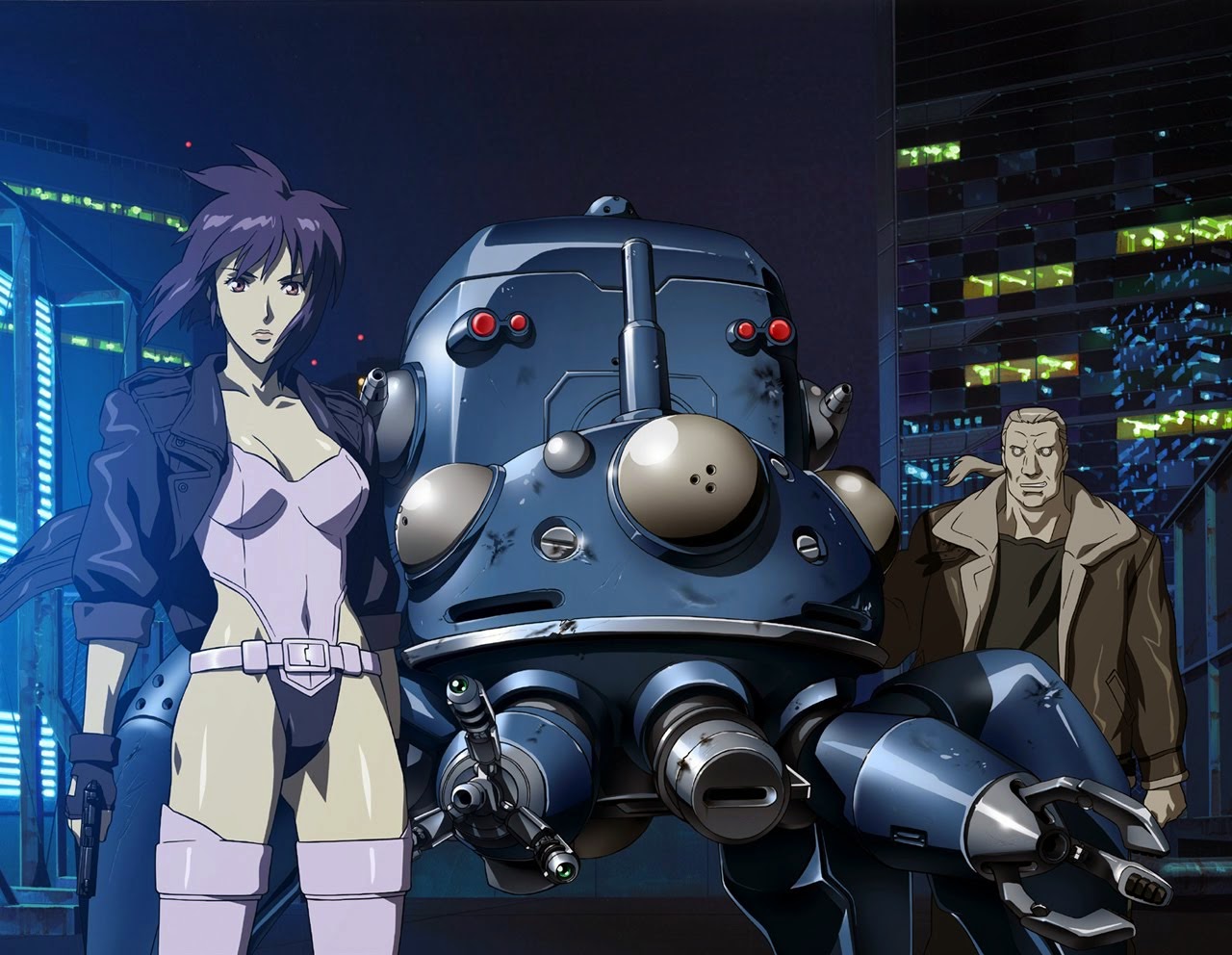
United We Stand in Ghost S.A.C. 2nd GIG| Review

A brief spoiler-free review of the 26-episode winter 2004 anime “Ghost in the Shell: Stand Alone Complex 2nd GIG” and its recap 2006 film “Individual Eleven,” produced by Production I.G, directed by Kenji Kamiyama, based on the original manga by Masamune Shirow.

Cafe note: I reviewed the first season right here, so check that out prior to reading this. Many thanks, happy reading~!


Back to the Cybernetic City

With the Laughing Man’s agenda terminated by Motoko Kusanagi and the gang, Section 9 is no longer forced to operate in the shadows. Taking an interest in the way the brutal hunting force operates, Japan’s newly elected Prime Minister Kayabuki re-establishes Section 9 as her final attempt to fend off the latest rounds of cyber-terrorism, and find a party whom she could trust her life with. This new deadly collective, “The Individual Eleven,” has led a string of seemingly unrelated terrorist plots and assassinations across the nation.

Just as the Major and Chief Aramaki begin investigating into these gruesome cases, however, the Japanese government faces a forced confrontation by the alarming build-up of foreign refugees who were ousted from their homes during the Third World War, and are now seeking asylum in Japan. Section 9 attempts to juggle both crises, but their constant bumping heads with Kazundo Gouda of Cabinet Intelligence Service leads the Major to suspect he may be even more tangled up in the mess than the “enemy” is, and that perhaps both The Individual Eleven and the refugee crisis are just two parts of one titanic movement.

Image result

The Stand Alone Complex branch of the hit Ghost in the Shell franchise returns to the scene to reaffirm that everything, be it physically or digitally, is interconnected by the pushes and pulls of a techno-dystopian society.

Picking Up Where We Left Off

S.A.C. 2nd GIG wastes no time in welcoming us back to its inner universe. Unlike its predecessor, 2nd GIG features a clearer, more concisely written story. It achieves this by appropriately placing its “stand-alone” episodes within the timeline in less-congested areas of heavy plot action. Sticking to a story written in sequential order, 2nd GIG feels a lot easier to grasp, even if the characters themselves are more “complex” this second time around. I can see why fans acknowledge this series as the superior one not simply because the visuals are upgraded, but the linear way in which the story is told—even if the concept may not rival that of a wizard-class super hacker—seems more straightforward. Either that, or it just took me 26 episodes prior to get used to Kamiyama’s directing.

Image result for prime minister kayabuki

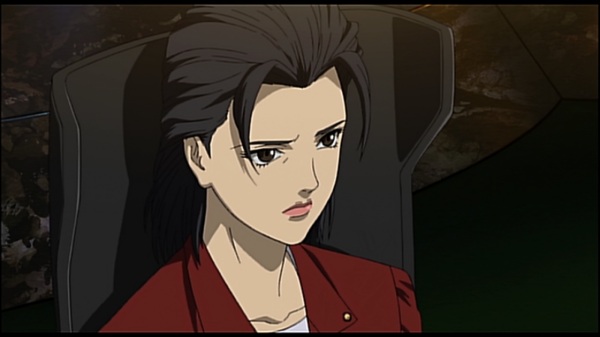
Critical characters to not only the series but the franchise as a whole are introduced quickly and efficiently, these namely being Kayabuki, Gouda, and Kuze, the eventual leader of the refugee camp and a mastermind in guerrilla warfare, both on the battlefield and in the net. Watching Kayabuki crumble before but endure the weight of those dirty politicians and back-alley deals emphasizes one trait that defined the Major as such a relatable character for so many: the strength of women, and the power, beauty, and grace that comes with enduring unfavorable outcomes and situations. Ghost in the Shell, like much of entertainment, explores the notion that life is one big power struggle; it’s as unavoidable as the rising moon or the flowing tides.

New, Twisted Faces

Speaking of power, Gouda is clearly not meant to be a likable dude. His *literally* twisted face should be an indicator of his reliability. He’s a competent and sophisticated man, using people and manipulating scenarios like he does with data. Though he’s got several tricks up his sleeves to be used against all of the pawns in the game, including the Major, his sheer level of skill and sneering wit make me MELT with a swelling love for his character. And John Snyder, his English VA absolutely knocked the role outta the park! We honestly need more intelligent rivals like him in anime; he’s a dick, but that’s what makes him so fascinating. Gouda is always one step ahead of the game, and stacking the deck is the only way to secure a trump card in this dirty world.

Image result

The Major’s foil finally manifests in the form of Hideo Kuze, an calm yet equally interesting antihero who holds a similar background. While I cannot mention too much without spoiling, I will say that he’s just as calculating as Motoko and Gouda, and perhaps more skillful and inspirational than both of them on a personal level. He’s quite interesting, so let his words sink in . . . everything he does is for the people . . .

Image result

Aside from the Major’s few moments, those members of Section 9 that did not previously have an episode for their own backstory (Pazu, Saito) receive one now EXCEPT for poor, poor Borma, the fat guy. While the Tachikoma’s return with more amusing exclamations and ideas, Togusa takes takes the back seat for this ride. One of these days we’ll get the backstory details and spotlight that they ALL deserve, but that time is sadly not now.

Improved Presentation Transcend S.A.C.

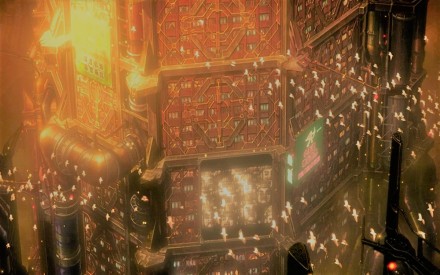
The two-ish year gap between each series really does reiterate the fact that Production I.G is the king of science fiction anime. Most of the characters receive new outfits and gear, all of which show off their differing personalities. The Major’s transformation from light gray and white to a dark gray and black skintight suit add contrast to the series’ new tone, a perfect match for some of the unsettling truths regarding the Major’s past. Her leather trench coat and obsidian visors complete the look. Besides the returning overly impressive architecture, it’s all the tiny details in character design that make 2nd GIG a fashion show for our models, both the sleek and the grungy alike.

Kanno returns to add that techno-blues/cop show soundtrack from the first season. Many of the tracks were even reused, so it’s not an entirely “new” OST. The epic action music in particular was done better this time. Where she doesn’t stand out in background music Kanno definitely makes up for with the new opening “Rise,” once again sung by the lovely Origa. “Rise” is the epitome of cyber punk trance dubstep, a song that hypes itself up with its intense beat, ascending chord progressions, and deep lyrics. Exhilarating stuff!

Since the characters remain largely underdeveloped in terms of background info, many just watch the show for its intriguing story, to which I point you toward the 3-hour (eek) recap film titled Individual Eleven that hones its focus solely on the core case from beginning to end. It is a recap, however, so all of your favorite one-off episodes are not present, and a lot of cool detours were cut, such as a fatal mission flaw by the Major that made my heart skip a beat. I give the same caution that I dished out last time, though—Individual Eleven features an entirely different English voice cast. While the wonderful Mary Elizabeth McGlynn, Crispin Freeman, and now John Snyder should never have been replaced as Motoko, Togusa, and Gouda, respectively, the new cast largely remains serviceable.

United We Stand – The Individual VS Society

Ghost in the Shell S.A.C. 2nd GIG continues as a more light-hearted cop-chase approach to the original 1995 film, and by this I mean that it is less about self-reflection and more geared towards the interactions people share with others. It’s also no laughing matter, either, presenting the sadness of war, and that in the near future warfare is still terrifying and tragic. 2nd GIG resumes its heavy, confusing political drama, but its new emphasis on securing a cyber body through the black market is neatly explored with greater depth, ironically “fleshing” out the world.

Image result

The sequel to the beloved Stand Alone Complex is a successful piece of science fiction and sociological analysis. It’s a series rooted in the effects of technology on people, be it the goods, bads, or really bads. Sharpening its linear storytelling and enhancing its setting and character designs, one really shouldn’t stop at the first season—continue to uncover the fate of Section 9 as the original story intended!

“The refugees have given me countless names. I joined forces with them with the intent to save them. But maybe the real reason I united with them was to keep the loneliness at bay.” – Kuze

Final Assessment:

+ Story told sequentially with with focused, linear direction

+ New character designs are more appealing; Major’s new look

+ Production I.G upped their game again!

+ Both Gouda and Kuze are excellent characters

+ Explores the pillars of social order through a cool story; the war on terror continues

– Section 9 members STILL don’t get the backstory treatment they deserve

– Recap film English dub remains pestering

Image result


GitS S.A.C. 2nd GIG also deserves its “Cake” title (4/5), a must-watch if you’ve already started the first! It does require a great amount of focus and minor understanding of corporate politics, though. Thankfully the action weighs well against the political banter. What did you think of the Individual Eleven story, and did the recap film aid in your understanding as it did mine? Let me know, and until next time, this has been

– Takuto, your host
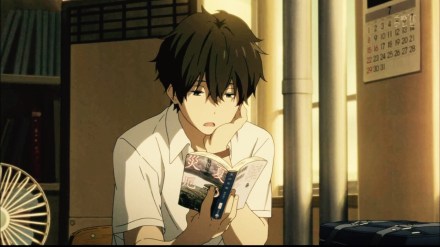
Image result

Still lookin’ fresh, Batou and Major

No Man Laughs Alone in Ghost S.A.C. | Review

A brief spoiler-free review of the 26-episode fall 2002 anime “Ghost in the Shell: Stand Alone Complex” and its recap 2005 film “The Laughing Man,” produced by Production I.G, directed by Kenji Kamiyama, based on the original manga by Masamune Shirow.


City of Steel, Bodies of Iron

It’s 2032, the cyberization age. Because most brains are now encased in a metal mold, people can access the net just by thinking and slide into mechanical bodies through a connecting cable alone. Walk along the streets and one would find fleshlings, cyborgs, and robots alike coexisting as if it were commonplace. The power of the net has virtually blurred the lines between the physical and the digital, which can breed both terrific convenience and terrifying crime. Completely ineffective in halting cyber crime, as it typically is, the government has hired Security Division Section 9, a group of ruffians specialized in taking down hackers and terrorists alike.

Led by their Chief Daisuke Aramaki and Major Motoko Kusanagi, this small squad rules the shadows and grungy back alleys in an effort to clean up the city. When a great super hacker dubbed the “Laughing Man” rears his head once again after 5 quiet years, however, the Major and her troop face what could be their greatest social threat yet. Unlike their most recent cases, this one proves to be not as simple as SHOOT + LOAD + REPEAT, but rather an intense chasing game of CTRL + ALT + DELETE.

Image result for ghost in the shell stand alone complex section 9

The iconic franchise and its much-loved figurehead return to the streets after a silent 7 years since the groundbreaking film’s worldwide release in 1995. While it’s neat to see the title reinvented into a series, I found all of the GitS films, recap or not, to be far superior to the series. Before I go further into the franchise, let’s evaluate Stand Alone Complex and weigh its own merits.

It’s Not like the Movie, and that’s Perfectly Fine

This pun has already been pitched a million times, but to aptly put things, many of the episodes of Stand Alone Complex are, well, stand-alone. These episodes all tackle the lives of individuals of all all social classes, and how they interact with society and the Section 9 crew. The true underlying story is only tossed here and there as hints before the grand finale. Unlike the 1995 classic, which honed in on the psychological balance between human and cyborg, both of the GitS series challenge society instead, providing much sociological questioning such as “how much can people be “cyberized” before it’s no longer a human society,” or “whether the net truly brings people together or tears us apart.” Because it was less egocentrically based, I found myself less prone to self-discovery, but more open to social understanding. It’s a bit of a letdown at first, especially since the Major’s self-reflection is what sold me to begin with.

motoko.PNG

Where the plot may stumble and confuse, the characters provide entertaining banter and motivation. Being a more light-hearted approach to the franchise much like the original manga was, it’s appropriate to chuckle here and there at the strong man Batou’s unfortunate misdemeanors around the still-intelligent Major, or admire the human normie Togusa’s total dad bod. The presence of the cute Tachikomas, blue insect-shaped and car-sized robot AI, helped to not only alleviate unnecessary government actions that frustrated me, but also provide that quintessential self-pondering of being a robot vs a lifeform similar to what the Major dealt with in 1995. They’re annoying at times, but they remind us as to the joys of feeling alive.

A Stunning Sci-Fi Story and World

People watch this show for the genuine Section 9 crew and for high-paced, explosive combat layered with a complicated cop show setup. For its 2002 release, SAC has aged remarkably, providing some of the most engaging sci-fi action that rivals today’s anime fights. What ultimately brought it all together was the world itself, though. The towering skyscrapers and low, wrap-around market places give off a bustling effect to Newport City. The occasional gray sky and drizzly weather is almost enough to take one back to 1995, and the traffic—my goodness, all the road traffic! What a headache! Watching the characters drive from location to location allows Production I.G prove that they are the masters of anime architecture. The complex interwoven highways and cars almost act as a mirror of society itself, in that we’re ultimately all just a small part of the great flow.

Story-wise, it’s quite complicated, honestly. I held off on any Ghost in the Shell until I was older simply because I felt I wouldn’t be able to enjoy it fully without encompassing a greater intellect. (I’m still no genius, though.) To assume one has to be smart to enjoy this series isn’t true at all, but when it came to all of the political nonsense between government officials and sketchy deals, it is a lot to consume, I’ll admit.

Much of this can be negated, however, if a person checks out the 3-hour (yikes) recap film that reorganizes the Laughing Man snippets that are littered throughout all 26 episodes and places them into a more logical, sequential order. The [sadly] very few valuable backstory spotlights of Section 9 members are lost, but if one’s just in it for the core story, then this recap film satisfies immensely. The only caution I can give is to those who prefer English dubs; The Laughing Man features an entirely different vocal cast from the series, and while it is utterly DISAPPOINTING to hear brilliant actors Mary Elizabeth McGlynn and Crispin Freeman replaced as Motoko and Togusa, this other cast doesn’t do a bad job. Nope, not at all, and these are very large shoes to fill.

motoko1.PNG

While everyone praises Yoko Kanno for her sheer masterpieces of music, Stand Alone Complex is not her most memorable work for me. She keeps with the flow of light dialogue and adrenaline-filled action, balancing the two just fine, but I can’t recall any specific tracks besides the opening, “Inner Universe,” sung by the late Origa, a piece of music that perfectly captures the ENTIRE franchise. Its haunting yet entrancing beginning put me in full-dive mode every time. It’ll live on with the likes of “A Cruel Angel’s Thesis” as anime’s bests, and rightfully so.

Let Me Walk Away Laughing

It’s no surprise that SAC is different than 1995: different directors, production date, arcs adapted, character introductions and routes taken, etc. What hasn’t changed is the same powerful studio behind the project and the unwavering calculations of the Major. Ghost in the Shell is a franchise that explores possibility through the unification of humans and technology. It also shows us the worst case scenario—its abuse, and how that turns people off from all things cyber entirely. SAC‘s first season is a little hard to understand thanks to its divided attentions, but so long as you trust in the Major’s new face and follow your ghost, you may walk away having thought of something new, and that’s what sci-fi is all about.

Batou: Nowadays . . . people entrust their memories to external devices because they want to set down solid physical proof that can distinguish them as unique individuals . . .

Motoko: A watch and weight training gear, both of us have clung to useless scraps of memory, haven’t we?

Final Assessment:

+ This incarnation of the Major can be just as meaningful so long as you have an open mind

+ Emphasizes that Production I.G is king of city architecture and sci-fi worlds

+ Works in sociological approach that defines the franchise today

+ That opening combined with all the fluid combat gets the blood pumping

– Such a lovable cast deserves greater backstories

– Overarching story is hard to follow, but recap movie helps

– Missing out on series dub in recap film


Stand Alone Complex is welcomed at the cafe as a “Cake” title (4/5), one too sweet to miss out on if you have the time! It does require a great amount of focus and minor understanding of corporate politics, though. Sometimes the intermixed action sequences were the only bits that helped me stay awake! SAC has been around for YEARS now, so what do you make of the series? Did you enjoy the Laughing Man story, and did the recap film aid in your understanding as it did mine? Let me know, and until next time, this has been

– Takuto, your host

Related image

Batou, his Tachikoma, and Major. Stay fresh, Section 9.

I’m Going to Naka-Kon THIS Weekend!

Evening all, just a couple of heads up items you might be curious about!

  1. Yes, I’ve STILL got the damn stomach bug, but I’m trying not to let it bother me too much, especially for this weekend. It started on Monday and, four days later, you’d think it’d be gone–NOPE. I’ve found out that I generally feel a bit better when I keep moving around, so hopefully all of the walking this weekend keeps my stomach from folding in on itself. Speaking of . . .
  2. YES, this will be my third year at Naka-Kon, an anime/Japanese culture convention in Overland Park, Kansas. It’s kind of a smaller con, but it’s recently gained a ton of popularity within the last couple years. I’ll be leaving tomorrow (Friday) in the early afternoon and I’ll hopefully arrive there at the hotel sometime that evening. I also do this thing with my siblings (and parents since they’re actually somewhat interested in my hobbies), so I’ll be spending the entire weekend with them and all the crazy and colorful things we love.
  3. I’ll be meeting voice actors at the con! In an ideal world, I’ll walk away with a photo and a signature from Max Mittleman, Robbie Daymond, and David Vincent, who will, fingers crossed, sign my A Lull in the Sea blu-ray 1 (I’m bring Aldnoah.Zero‘s DVD 1 in case I get lucky :3), Sailor Moon Viz DVD 1, and Fate/Zero pin-up poster + KILL la KILL blu-ray LTD volume 1, respectively. And though he’s certainly no voice actor, I’ll hopefully run into Kausus from Otaku Gamer Zone while I’m out in the madness! That’ll be an exciting reunion!
  4. Yes, I do cosplay, just a little, though. I’ve revised my Mikaela Hyakuya (Seraph of the End) like tossing the cheap foam pieces the set came with and remaking those pieces out of nice wood with a fresh coat of metallic paint. Same with the little jingly gold thingies–I replaced the basic gold ones with translucent blue ones like he has in all the concept art. I’ve also trimmed the wig so it fits LOL. On the third day, I’ll just sport your typical Attack on Titan jacket but with Shinji Ikari’s plug suit head piece things. They’re neat. It’s a cool, casual mashup.
  5. What happened to my Ghost in the Shell marathon? Well, thanks to my being bedridden, it was put on a temporary hold for a few days. I’ve finished the first two films, the first season and its recap film, and I’ve started the first 3 episodes of 2nd Gig. Currently having a blast with it all, and I’ll likely review my favorite entries from the franchise as soon as I finish it all!
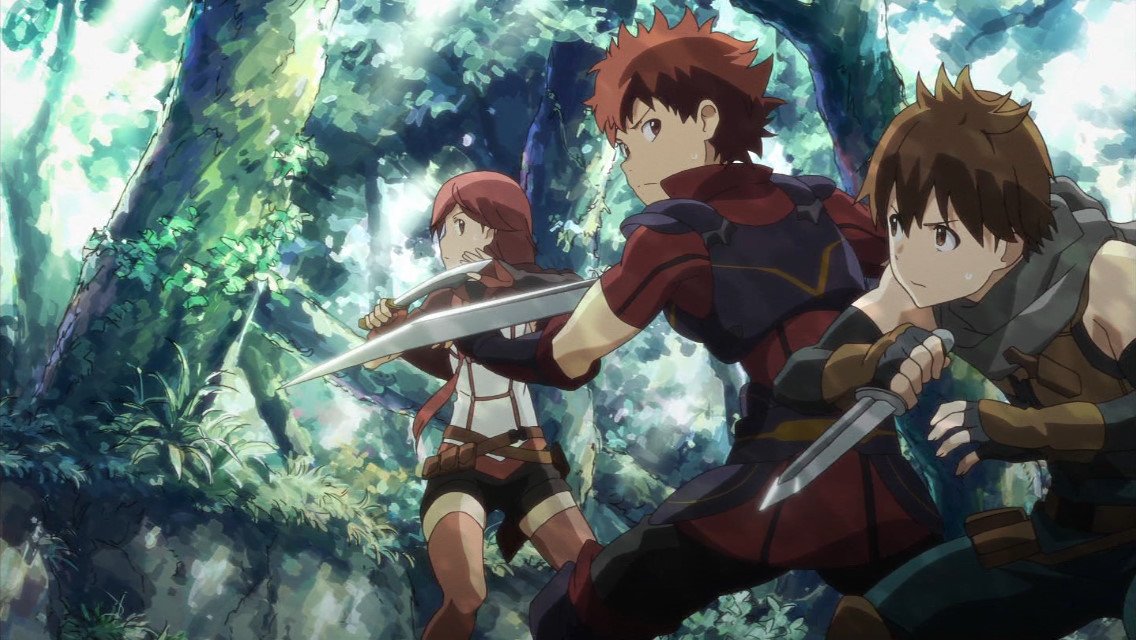
  6. As to other reviews, a Blast of Tempest and Grimgar review are both in the works, so between those, my OWLS involvement, the GitS marathon, and a convention haul, there’ll be much more activity here at the cafe than in the past few months!
  7. I’ve got a TON, TON, TON of catch-up to play once my spring break hits, so I’m sorry if I’ve delayed your lovely comments for what, like 2+ months now? YOU WILL NOT BE IGNORED, I PROMISE!

Thank you all for your continued support. Wishing you all a fun, safe weekend, whatever you may be doing, and send some of your magical healing powers my way for the tum-tum if you’ve got juice to spare. 😉 Happy early Friday, everyone!

– Takuto, your host

Evangelion’s Misato Provides a Home for the Lonely | OWLS “Sanctuary”

Chances are that if you were linked here from another blogger pal, then you might be new. To those first-timers, “Hi, I’m Takuto, welcome to my anime cafe!” As part of the OWLS blog tour’s  third monthly topic, “Sanctuary,” I decided to pull in all of the Evangelion sources that I could, original series and Rebuild alike, in order highlight that no matter where you may be in the apocalyptic future of Tokyo-3, captain Misato Katsuragi’s apartment will always remain a safe haven from the wrath of the heavens.

A sanctuary is a place of safety and stability. In anime, there are several different places and environments that characters call “home.” For this topic, we will be discussing locations and settings in anime.

Eva is a franchise that you might already know means the WORLD to me, so allowing myself to revisit its iconic universe is a real treat. Thanks Lyn for the prompt!

Image result


A brief discussion on Misato’s Apartment as it appears in the 26-episode 1995 series “Neon Genesis Evangelion,” the critical 1997 film “The End of Evangelion,” and the “Rebuild of Evangelion” film series, produced by Gainax and eventually Khara, all of which were written and directed by Hideaki Anno. 

First, A Welcoming Party

Eva opens up on an alternate present-day Tokyo where “Angels,” ironically named beasts of pure destruction, are in recent rise for some bizarre reason. Shinji Ikari, son of NERV commander Gendo Ikari, is called in to pilot the towering [neon] colored humanoid robot Evangelion Unit-01. NERV, an organization bent on the survival of the human race no matter the cost, may very well be the last battlefront in stopping these beings of terror, but it is ultimately up to Eva pilots like Shinji to determine whether humanity lives to see another day.

Shinji survives the first angel encounter against Sachiel. Barely. But the fact remains that he did actually save everyone, which is why his cold father ensures that Shinji remains on campus in case of another attack. No, the two don’t share the same living space, let alone sleep in the same house. Instead, they mutually agree that rooming together would be the worst possible outcome. Like a mother overprotective of her ducklings (this is funny because she has a pet penguin), the clumsy yet strong captain Misato Katsuragi takes Shinji under her wings and shelters the boy at her own apartment.

Image result for misato's apartment

Misato’s place is graphically located quite a ways away from NERV HQ, which is probably for the best considering that they are always on call, and that they already over-shoulder work everywhere else they go. It’s also crucial to note that we never see any interactions with the other apartment members in the complex, nor are the other lights on. It’s only Misato’s that is lit, like a lonely lighthouse guiding lost ships. After the two go out to pick up some welcome party snacks and view the majestic city sunset, the two share a memorably warm if not simple exchange before entering the household:

Misato: “Your things ought to have been delivered already, Shinji. I just moved here myself, ya know? *glancing back* Hey, come in.”

Shinji: “Uh, I don’t . . . want to intrude.”

Misato: “Shinji, this is your home now.”

Shinji: *hesitant pause, finally steps into the apartment, crossing the sliding door lining along the floor, and stares upward shyly* “I’m–I’m home.”

Misato: *closed eyes, smiling* “Welcome home.”

[the apartment door automatically slides shut, revealing the tag M.KATSURAGI]

Misato: “Ummm, as you can see, the place is just a little bit messy but uh, heh, go ahead and make yourself comfortable.”

This is your home now. Wow. Just by reading this you can already get a feel for both of our characters. Shinji is shy, not wishing to impose upon anyone his own troubles. Misato comes across as casual, relaxed, and friendly. But just as how she makes her cameo in a flashy blue sports car with nothing but a seductive picture to go by, the atmosphere quickly shifts from one of formality to an air of light-heartedness. Evangelion masterfully plays with moods depending on how the characters should be reacting to certain situations, and Misato’s apartment, in fact, could almost represent the peaceful and joyful side of the chaos. Now that we’re all acquainted, it’s time to get to know each other beyond the name tags.

Image result for misato katsuragi screencaps

Make Yourself Comfortable

“Is this how you act in public? In front of your friends!?” You might have gotten this spiel by your parents if you’ve ever for a second acted, heaven forbid, without concern for public opinion or manners. Going back to the question, of COURSE I don’t act like this out there—this is home, and home is the one place where an individual should feel less pressured to “suck in their gut,” so to speak. Home is where I can let my guard down, and the characters in Eva do exactly that at the apartment. These moments make up the lighter side of a series otherwise known to offer psychological trauma and emotional turmoil.


This slideshow requires JavaScript.

Shinji, Misato, and eventually Asuka are free to lounge around with a temporary leave of stress that comes with saving the world. At first it was only a woman and her pet. Soon the dynamic opens up to invite a pseudo son (episode 2), followed by a pseudo daughter (Asuka in episode 9) and an anything-but father (Kaji). Even aunty Ritsuko comes along and plays house at one point!

toothpick

Like mentioned earlier, Evangelion is rife with iconography. Some early examples include:

  • Episode 2’s introduction of the song, Misato’s theme
  • Episode 2’s fridge reveal of nothing but ice, snacks, and lots of beer
  • Episode 2’s infamous toothpick scene (adding on with the straw scene in the Rebuild)
  • Episode 2’s recitaiton of “Unfamilar Ceiling” (sheesh, one would think that episode 2 is important for some reason)
  • Episode 9’s synchronization training through DDR and fashion
  • Episode 16’s “I’m bored, so kiss me” by Asuka

Little Shin’s Room ❤

Homes allow people to ponder and create. In the show, we see the characters questioning their own existence, their place in the world, and whether the actions they take are justifiable. The apartment also allows philosophies to be revealed, such as Misato’s “Not everything must be answered with a yes m’am,” or “Wash away your troubles—bathing cleans the mind and soul!” Speaking of bathing . . .

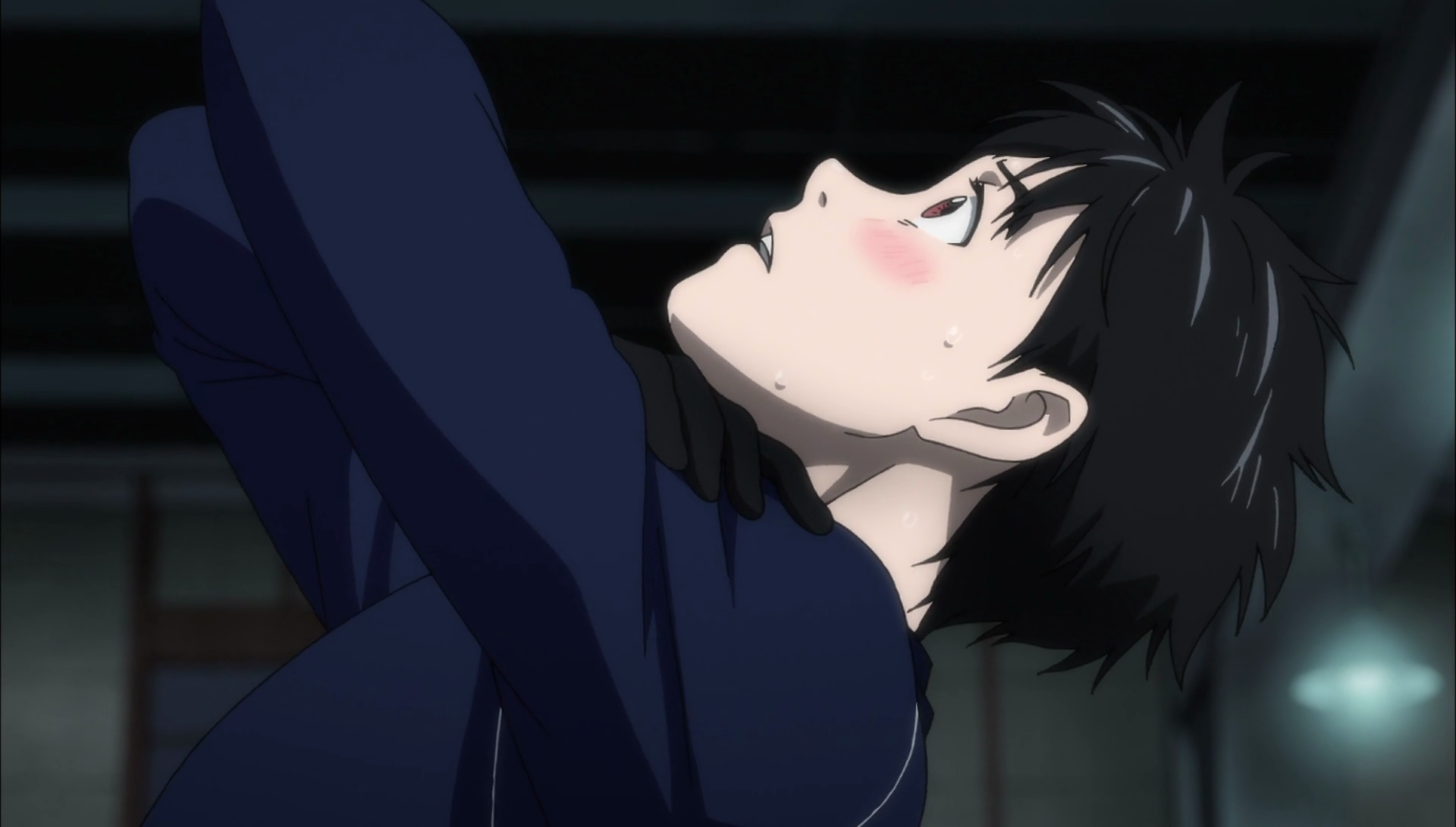
Differing personalities invite conflict, for not everything in Misato’s apartment is happy-go-lucky. Time spent alone allows the darkness to sneak back into their heads. We are permitted to see the characters at their worst, such as this disturbing 20-second bath tangent by Asuka, portrayed by the incredible Tiffany Grant. Whereas bath scenes are supposed to be tranquil and stacked with fan service, Eva, being Eva, turns this cliche on its head to emphasize that not all acts at home are frivolous. Sometimes we get into fights, and that’s natural. Easily, the worst-case scenario remains the pinnacle choking scene from The End of Evangelion, which brings an entirely different and off-putting light to the children’s home, both figuratively and literally.

Related image

What’s So Special About An Apartment

Not much, actually, only that it’s not just a house—it’s a home. A sanctuary from work stress and the trivialities of daily life, if you will. Even though these types of apartments are numerous in Japan, Eva still goes the extra mile in presenting the physical space uniquely. For one, the cinematography is sharp. This is reflected by the angles used, enhancing censored scenes like Shinji’s toothpicks or items such as the bras and lingerie that hang from the ceiling. In this way, the show stays interesting and provides enjoyment for a second time through. Utilizing warm hues of yellow for lighting also provides a sense of ease, unlike the cold LED lights of a hospital or a laboratory (it is HUGE contrast to Rei’s apartment).

As much as it’s fun to break down the inter-workings of the minds of our favorite characters, or pick apart the cause and effect plots of our most beloved stories, taking a minute to admire the physical—locational settings—feels like a nice breath of fresh air.

misato.PNG

It feels like we’ve nearly covered it all, but in fact there’s so much more to the development of the apartment itself. How its atmosphere changes over the course of the story almost makes it seem as if it were a living, breathing entity. Home is a place to relax and be comforted by all the things, living or not, you cherish. It should be a place of intimacy, of quietude, a place to be yourself without anyone telling you how to live. I know not everyone has it this way, and I’m sorry, but I hope you have found your own little sanctuary somewhere in this wild world, or that someone like Misato has provided this comfort space for you.

To those who do settle down at the house, aren’t you the most “yourself” in the comfort of your own home or room? I know I am, and I hope that doesn’t change for at least a little while now. We all need our me-time, and there will never, ever, be something wrong with a lil’ peace and quiet. For those in solitude, just remember that even if you’re all alone without anyone to come home to, your own home will be waiting for you, eyes closed and smile wide, just as Misato was to Shinji. 

Welcome home.

step.PNG

Take care of yourself. – Neon Genesis Evangelion episode 26 title


Evangelion in its entirety clearly means a LOT to me. You could almost say that it influenced the shape of my character. If you’re interested in more of my ramblings and personal thoughts, please, feel free to browse the archives for more of that Eva goodness!

This concludes my March 8th entry in the OWLS “Sanctuary” blog tour. Please check out Matt’s (Matt-in-the-Hat) post discussing how, in Sword Art Online, there exists sanctuary within gaming. He apparently used my Fairy Dance musings as some inspiration, which makes me all the more excited to check it out! I’ll now toss the ball to BeckNaja (Nice Job Breaking It, Hero), for she will be jumping into Haikyuu!! this Friday, March 10th. (But let’s be honest, when is she not engaged with the show? lol) Thank you so much for reading, and until next time, take care ~

– Takuto

Sleep tight, Misato . . . such a mess, at least she looks comfortable enough

End of February Update 2/28/17

So I failed the 4-post-per-month plan yet again, but the defeat doesn’t seem as crushing as it was last month. Perhaps that’s because of my involvement with the OWLS bloggers; having a set deadline for a hefty post keeps me on my toes. Plus, they are more fun to write for some reason, hehe. The update this month will be brief, but hey, at least I’m doing the end of February update at the actual end of February!

Recently Finished:

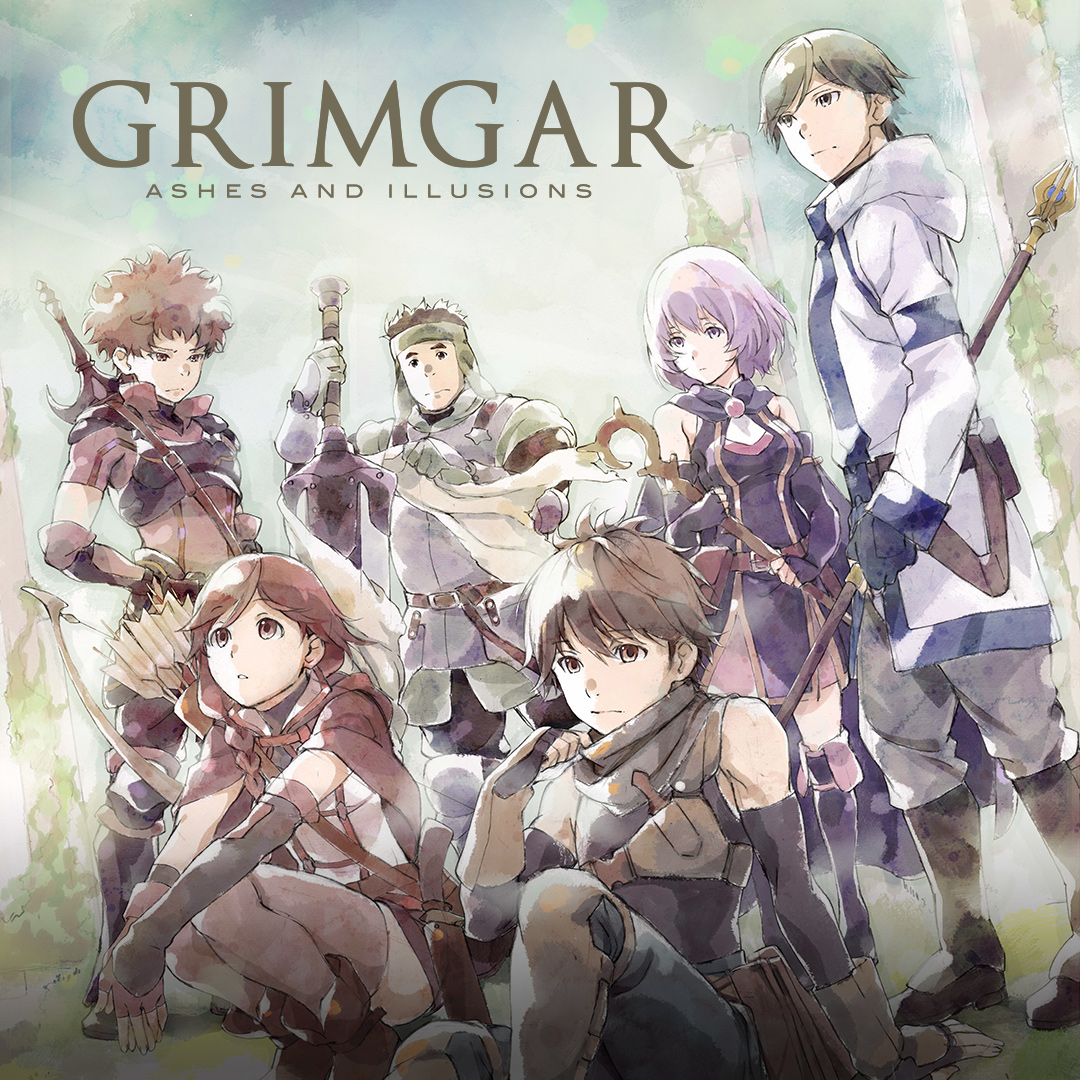
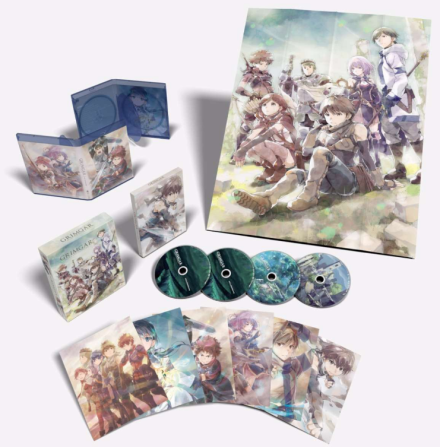
Grimgar of Fantasy and Ash – I covered my recent love for this short series in the last update, and here it is again but in the finished bin! Looking back, I’m happy that Grimgar didn’t stray from its preface of presenting the struggles of daily life in a fantasy adventure setting. Things took an unexpected turn, however, and on top of food, clothing, and other basic utilities, our party had to deal with death. Finding ways to cope and properly honor those who have passed on occupied much of the middle block. Luckily, the party found their way back on the track and ended their quest with great, intense combat, leaving the series open to a continuation if one ever were to arise. I quite enjoyed Grimgar, and I’ll probably try to pick it up now that FUNimation has released pics of the limited edition, huehuehue. I just might have to write a review if anyone is interested in knowing more of my thoughts!

grimgar.PNG

Ghost in the Shell 2: Innocence – As part of my Ghost in the Shell marathon week(s), this was the second entry to be completed. IT WAS NOT THAT BAD. Sheesh, everywhere you go, you have folks claiming that it was “too far up its own ass.” That quote was by the ANN podcast. I really enjoyed this film, I mean, not as much as the first, but still, it proved plenty interesting to say the least. The animation is gorgeous, the music complements the dingy atmosphere (that ending theme is soooo beautiful), and the premise offers enough to keep the viewer thinking, which is more than what Stand Alone Complex is currently giving me. I went ahead and picked it up on Amazon since FUNi recently rescued it and released it. When it gets here, I’ll rewatch a few bits then hopefully cover my thoughts in-depth later.

Currently Watching:

Ghost in the Shell: Stand Alone Complex – I’m not going to lie, SAC has so far been the most underwhelming entry in the franchise for me. I wasn’t even hooked until like episode 17 when the characters were trying to save bottles of wine–WINE for crying out loud! Maybe it’s just the way the characters converse that I’m not quite fully comprehending. I am watching the English dub (because YES Mary Elizabeth McGlynn AKA Viceroy Cornelia) if that makes any difference. The overarching “Laughing Man” plot has had its moments that completely gripped me, but there are too many government/political figures to remember, and that only adds to my confusion. Someone help, plz. I’ve got three episodes to go, so hopefully it all ties in by now, if not then by the “Laughing Man” recap movie, at least. The music is good, though, especially those first 15 or so seconds of the opening “Inner Universe.”

Between all this Ghost in the Shell, I don’t want to start anything not related to the franchise. Otherwise it wouldn’t be a marathon, right? I have Sailor Moon Crystal Set 2 on the way, as well as Innocence and GitS: The New Movie, so maybe I’ll hop into some sailor senshi awesomeness after Motoko’s done kicking all that cyber ass. Oh, isn’t set 2 of Sailor Moon S supposed to come out sometime in March? I already have set 1, so that’ll probably follow my Crystal session.

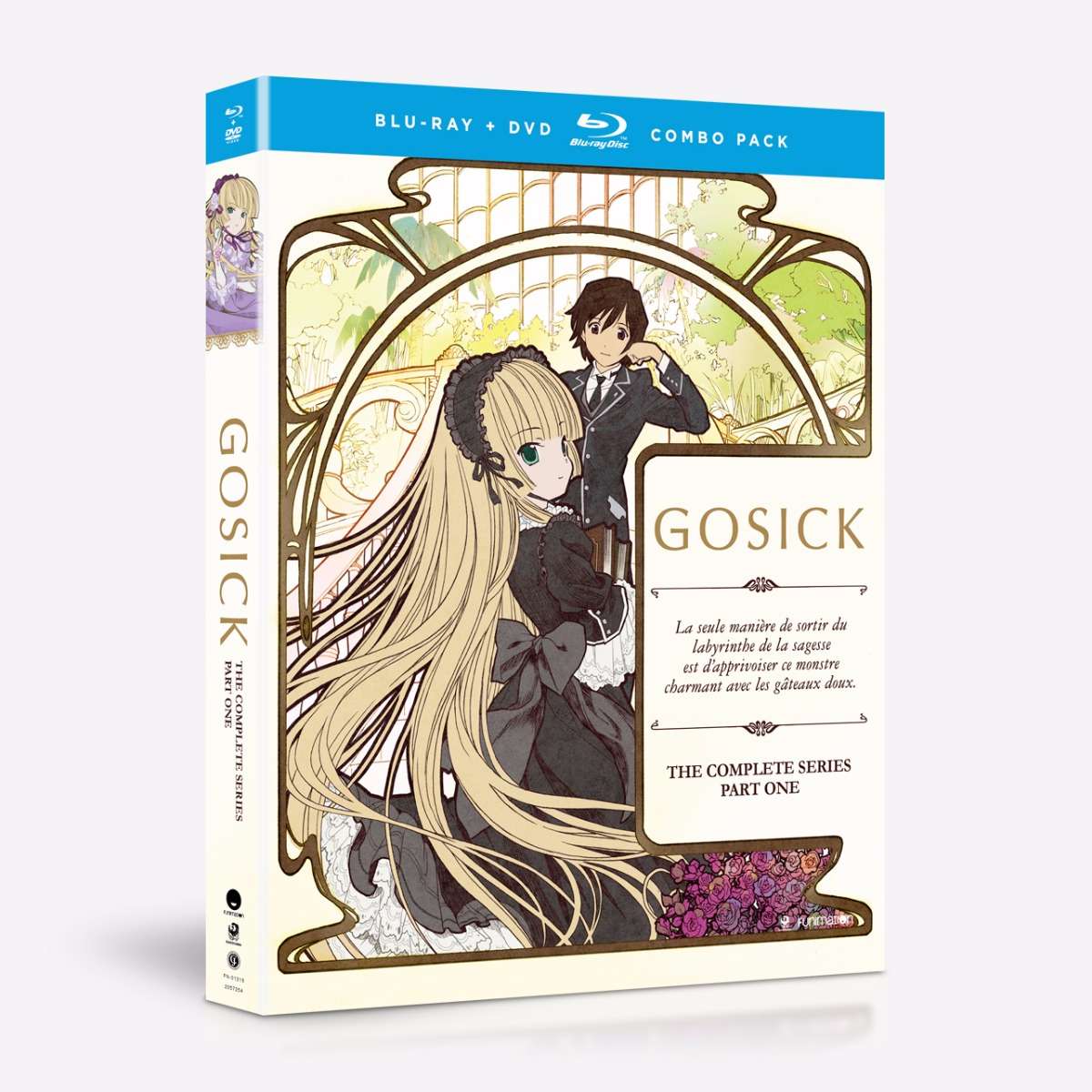
All of the releases lined up for this spring are absolute bliss: Steins;Gate the Movie, Crystal Season 2, Grimgar, One Punch Man, not to mention several others–the highlight of my entire year, however, has been the BLU-RAY RESCUE and even ENGLISH DUB of GOSICK set to come out in MAY. THIS. MAY. GOD I’M SO HAPPY I EVEN CRIED. What are you looking forward to picking up this spring?

Image result for gosick bluray

Also, how are the winter simulcasts, guys? I was going to watch Chaos;Child and Masamune-kun’s Revenge, but let me know if anything else out there is noteworthy. I plan to spend the afternoon reading all of the January and February OWLS blog tour posts, so be sure to check those out if you haven’t yet done so! I also plan to catch up on ALL of those comments you guys left. You know, time to be a responsible blogger for once, right? Haha, I will try to be super active this month, so until next time (hopefully soon), this has been

– Takuto, your host

Yuri!!! On ICE Goes the Distance for Life & Love | OWLS “Flight”

Chances are that if you were linked here from another blogger pal, then you might be new. To those first-timers, “Hi, I’m Takuto, welcome to my anime cafe!” As part of the OWLS blog tour’s second monthly topic, “Flight,” I decided to incorporate what would have been my standard Yuri!!! On ICE review into this pep talk about ambition. Something different to mix things up, right?

An individual takes flight when there is a goal, a dream, or an ambition that he or she wants to achieve. For this blog post, however, we are going to look at “flight” through different lenses: the underdog’s dream, the possibilities that Yuri!!! On ICE allows viewers to think about, and also the dangers of greed and ignorance that can influence one’s dream.

Since last month’s interpretation of mine was a bit gloomy, I’ll be honing in on the wondrous joys of living in each moment–leaving it all out on the rink–and the ephemeral effects of social media.

I LOVE YURI!!! ON ICE so this’ll be fun! Thanks Lyn for the prompt!

Image result for yuri on ice episode 1


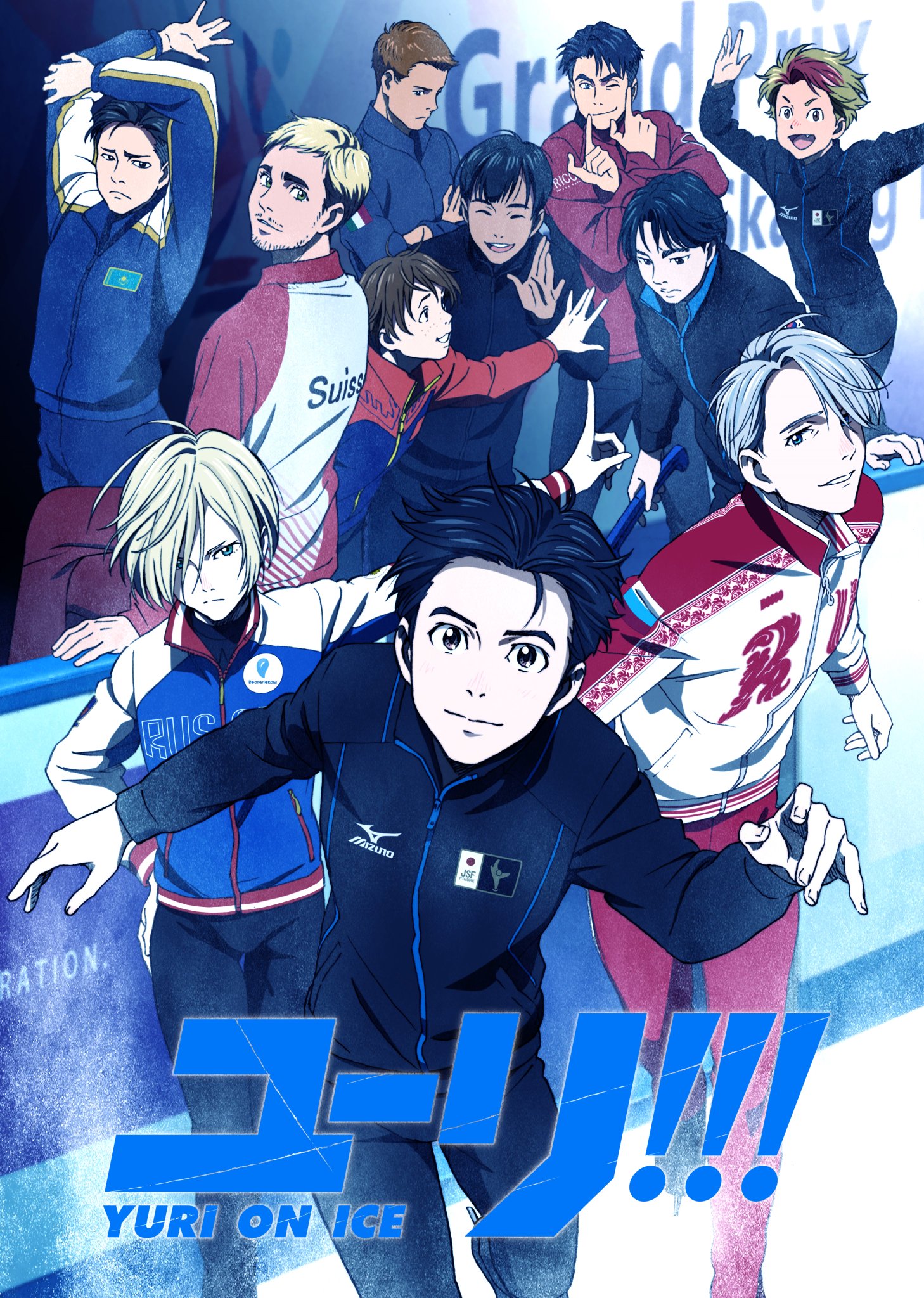
A brief discussion of the 12-episode fall 2016 anime “Yuri!!! On ICE,” produced by MAPPA, directed by Sayo Yamamoto, based on the original story by Mitsurou Kubo. 

Unexpected Loss, Unexpected Arrival

At age 23, country legend Yuuri Katsuki nearly lost it all when he returned to his family-owned Japanese hot springs without the gold. In fact, he didn’t even medal, taking last in the men’s ice-skating Grand Prix Final. Even though his face still beams youthfully, Yuuri’s not as agile as he used to be–and he knows it. Just as Yuuri contemplates moving on from skating, however, a video of him performing five-time world champion Viktor Nikiforov’s previous routine during practice instantly goes viral.

Image result

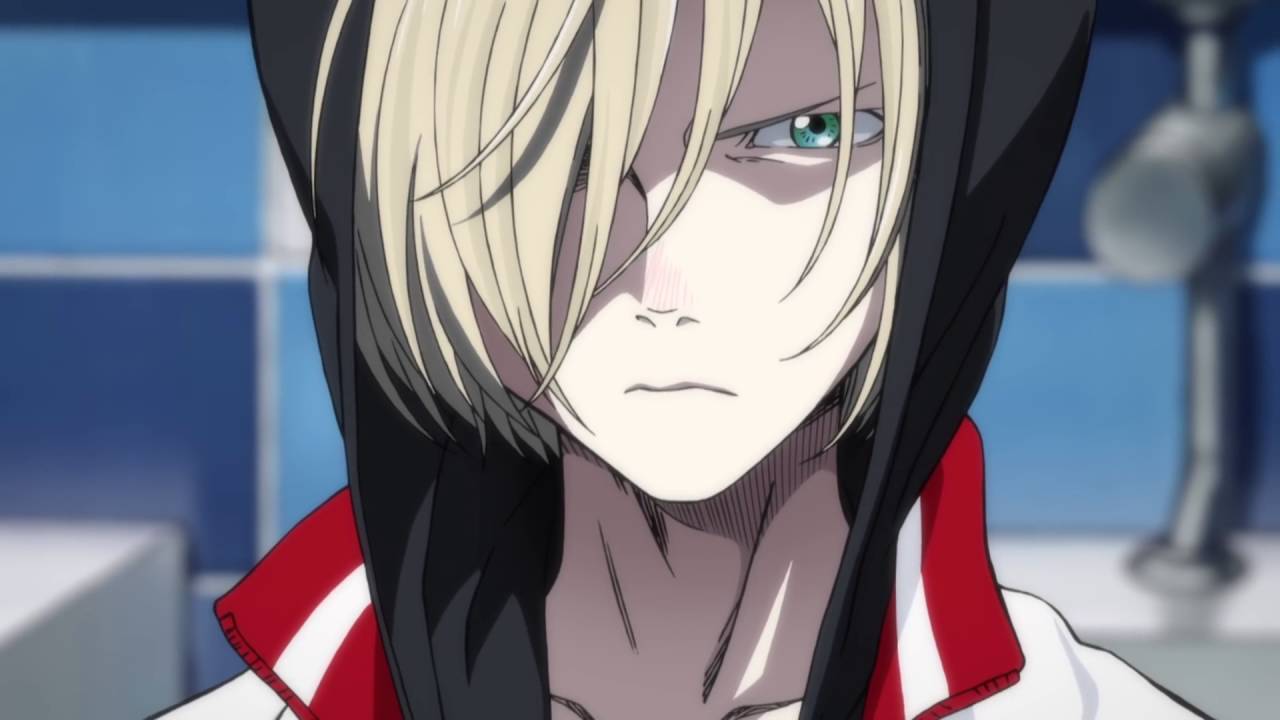
Scrambling to keep his life from further collapse, Yuuri finds himself in utter shock when Viktor, bearing himself in glistening full-frontal nude, unexpectedly shows up at his hometown’s Hasetsu hot springs. He jovially offers to mentor Yuuri and, being the BIGGEST Viktor Nikiforov fan ever to exist, Yuuri immediately accepts. His rekindled encouragement may blaze hotter than ever before, but Katsuki isn’t simply fighting against his past self! Everyone wants a piece of Viktor, including the competitive and fierce rising star of Russia, Yuri Plisetsky, and it quickly comes to both of their minds–and hearts–that there can only be one Yuri (!!!) on the ice.

Image result for yuri on ice yurio

So how do our guys “take flight” in the show? We’ll look at 3 ways that all relate to the anime’s ending theme, “You Only Live Once”!

1. Leaving the Comfort Zone

From their first day of practice together, Viktor splits Yuuri and Yurio apart, assesses their basic personalities, and assigns them opposing labels and routines completely and clearly different from themselves. This was all in the hopes of giving the two what they lack or fail to understand. Born from this exercise were the two spiritual entities on love, Eros and Agape, which I covered previously post that, ironically, received lots of love from you guys–thank you very much! Anyway, life and love come as a pair of L’s that Viktor himself has neglected. By understanding love, you can live a fuller life, and vice versa. To achieve their goals of competing in the GPF, Viktor rips the boys out of their comfort zone so that they, too, could fully comprehend the bizarre nature of love and its many beautiful forms.

This slideshow requires JavaScript.

2. Going the Distance

(In a post coming up soon I’ll be elaborating on my life-changing experience with sports, so for now you’ll get the truncated version.) Simply put, competitions like the GPF allow hardworking spirits from around the globe to come and put on a show for the world. They connect us. These boys all have their own origins: towns or cities that vary in atmosphere depending on the season; varying experience with languages and culture; the definition of a home-cooked meal.They are athletes, they are performers. And when they board that plane for the long flight ahead with determination to be the best in the world, they are ready  to put it all out there on the rink, no holds barred, no regrets. These boys want to do the best not only for themselves, their coaches, families, or nation, but for each competitor, too. THAT is the spirit of sportsmanship in competition: to do the best you can and make memories–make history–doing it with others!

Image result for yuri on ice traveling

And then that’s it. They’ll part ways, maybe take a couple pics together, and then decorations come down. But the memories never fade.

3. You Only Live Once

Tuning in to w.hatano’s “You Only Live Once” at the end of each episode treated us to an upbeat, happy-go-lucky firework show, not to mention a series of behind-the-lives-of-the-cast photos styled like an Instagram feed. The strong use of social media in this anime emphasizes a transient feeling, the romantic notion of fleeting emotions–of living in each moment–and living full and true to oneself. All of these characters are separated by their languages, styles, cultures, races, expressions, and location, but what binds them is love, love for one’s nation and the glorious joys that ice-skating brings.

The art they create doesn’t let them merely glide on the ice, but soar on the wings of life and love. Yuuri and the guys are just a bunch of kids from different countries coming together to make an ephemeral moment together. That’s why those last few episodes of touring Barcelona mean so much to the show as a whole and to us as viewers. They show us the boys out of their environment, or what they’d be like if we met them on the streets, and passing them by would be just that–evanescent.

So go out there and work hard, perform brilliantly, act courteously, be silly, laugh loudly, sing merrily, dance gracefully, pose triumphantly, speak clearly, learn intensely, ponder cleverly, play gently, dream wildly, write creatively, think positively, love passionately . . . and while you’re out there taking lots and lots and LOTS of pictures, never forget this: You only get one life. Live truthfully. 

It’s the only way those wings on your back will let you fly majestically. 

hugging2.png

There’s a place you just can’t reach unless you have a dream too large to bear alone. We call everything on the ice “love.” – Yuuri Katsuki


It’s no surprise that Yuri!!! On ICE has had a profound effect on my life recently, so regardless of its few shortcomings, flaws, or inconsistencies, the cafe will warmly welcome this anime as a “Caffè Mocha,” a proud rating for those shows that have touched my heart and are regarded as a must-watch from me. Watching YOI air throughout the cold, bitter wintry weather gave us all hope and anticipation for whatever excitement the next Wednesday would bring, and I’m seriously glad I joined Twitter when I did, otherwise I’d be missing out on the bountiful quantities of fan art, haha!

I strongly recommend watching Yuri!!! On ICE via Crunchyroll since you can boot up all 12 episodes for FREE! And OH MY GOODNESS, I didn’t even get to talk about the incredible soundtrack that accompanied each of our star performers! Not to mention studio MAPPA’s captivating and elegant animation–it’s on it’s own level in terms of representing sports physics in anime!! And then Dean Fujioka’s instant hit opening “History Maker,” oh how INSPIRING this entire ensemble is!!! I consider myself lucky each day that we honestly got a show like this one. It truly went out of its way to bring us something wonderfully unique and powerful. Emotionally touching, entertaining, comedic, inciteful, inspirational, full of good vibes all around . . . wow, it just means so much to me, and I could probably go on and on forever~!

This concludes my February 27th entry in the OWLS “Flight” blog tour. Please check out Hazelyn’s (Archi-Anime) post discussing how Viktor may have risked it all with his leap of faith! Next after me is . . . wait, did I just end our second blog tour? I DID, and what a pleasure it has been! Thank you so much for reading, and stay tuned for Arria of Fujinsei to wrap up this lovely month. Until next time, this has been

– Takuto, your host

smiling-edit

Smiling Yuuri with long hair is everything. Go the distance to make yourself and others as happy as this kid!

The Delayed V-Day Sci-Fi Special!

Hello! So I was recently SLAMMED with two full weekends of out-of-town nonsense, one of which I plan to discuss in a Cafe Talk soon. It’s become tradition as of around 2014 to set aside Valentine’s Day weekend, safeguard myself in my room with snacks, and not come out until I had marathoned a classic anime (typically pre-2000s). Previous items on the menu include:

2013 ~ Steins;Gate

2014 ~ Ouran High School Host Club/Gosick (couldn’t remember which)

2015 ~ Neon Genesis Evangelion

2016 ~ The Rose of Versailles

and now

2017 ~ Ghost in the Shell

Yup! Exciting, right? In the spirit of the upcoming new live action movie (that I’m so psyched for) along with the recent bluray releases of the films and series, I’ll be taking a trip through this entire classic anime franchise that arguably helped shape science fiction as we know it.

Image result for funimation ghost in the shell infographic

Gosh how I love infographics. The crew over at FUNimation put together this one, and might I say how in-character it feels. 

Ghost in the Shell is a very hazy area in terms release order and technical chronology, such that the franchise has been divided into 3 separate universes–YES, the just pulled a Zelda on us, haha! After a few hours of researching different interpretations as to the order everything falls under, I’ve settled on the list below that I recorded on my wipe board (cause I am a list-nut):

FullSizeRender.jpg

At this exact moment, I have already watched 1995, Innocence, and the first 6 episodes of Stand Alone Complex. Odds are that I’ll just skip 2.0 and Alternative Architecture since they are typically disregarded anyway.

Image result for ghost in the shell live action posterIMG_8008.PNG

I even tweeted my excitement by making a themed wallpaper for my iPhone based on the live action poster 🙂

So yeah, that’s what has been on my mind lately. Within this month, you can hopefully expect a Cafe Talk about my swimming career and Free!, a review of Blast of Tempest, an OWLS post about Yuri!!! On ICE, a review of some parts of the GitS franchise, and lastly a monthly update. I’ll be reading through comments and catching up on several of your guys’ posts (especially the rest of the OWLS blog tour–I STILL haven’t read some of them!). Any words of wisdom from your Ghost in the Shell experience? What entry was your favorite part? I’ll admit, the two movies set the bar pretty high since I’m a thinker, and S.A.C. has yet to rope me in completely. Let me know, oh, and happy belated V-day!

With love,

– Takuto, your host


End of January Update 2/11/17

NOOOO I’ve already failed the 4-post-per-month plan!!! (but how, it was so easy??)

So it’s already a week into February and I’m not gonna lie, not a whole lot of anime got watched within the first month of 2017. It’s gotten so bad that I haven’t even participated in any of the simulcasts airing this season, which is a shame since some of them actually intrigued me a good deal. Because so little was watched in January, I’m going to flip back to December and recap the anime shows and films that I watched then until now. Sound good? Let’s take a trip back in the past!

“Recently” Finished:

The Garden of Words – We’re starting off with the MOST BEAUTIFUL anime film I have ever seen!! I kid you not, the story isn’t necessarily brilliant and the run time is only 45 minutes, but it’s 45 minutes of pure atmosphere: luscious greenery and endless rainfall. Speaking of plot, I really like the punchline this Shinkai film–“A story of solitude and heartache that comes before love.” If you’ve somehow missed out on Garden, do check it out if slick animation is your thing. (I mean, who doesn’t like that?) Seriously, it’s short and heartwarming; a must for fans of the rain!

Pale Cocoon – This and the other short film below were extra features included with the Time of EVE: The Movie bluray, so of course I had to watch more of Yasuhiro Yoshiura’s work! This one is the length of a normal episode and centers on a young man in the future who works as an archive recoverer (so a historian). The huge theme on this one is that those who dwell too much in the past can be consumed in the present and risk losing wonderful things. Kinda confusing but really thought-provoking. I remember watching this a long time ago but not understanding it at all, so it’s nice to see how I’ve grown as an intelligent viewer.

Aquatic Language – Yup, this is 8 minutes of WTF anime. It’s a cartoonish short set in a cafe. Like Time of Eve, there are many interactions taking place between people, and half the fun is finding out how all of the conversations tie in together and reflect the main character, a boy with a broken heart. I’d give this one a skip if it weren’t 8 minutes and included with the others.

Sailor Moon Crystal Season I -Following my Viz rewatch of Sailor Moon and its sequel R, I finally decided to boot up “The Moonlight Legend Reborn,” Sailor Moon Crystal, and I ABSOLUTELY LOVED all of it!!! Despite the popular opinion, I found Crystal to be a wonderful remake with a more straightforward and concise story. It retells Naoko Takeuchi’s tragedy as it was meant to be told, adding an entirely new layer of dramatic depth to the characters and their origins. In particular, Queen Beryl, the series’ antagonist, becomes a completely different woman clothed with misfortune. I even found myself enjoying the CG transformations, for each of them were beautiful in their own way! If you’re looking for the TRUE tale of the grim Dark Kingdom Arc, Crystal‘s first season has you covered!

Terror in Resonance – I’ve actually been holding onto this one for several months now having bought the LTD ED in a sale. At the time, I figured that this would be a grand winter show, so putting it on hold would be the wisest thing to do–boy, was I right! Though it gained immense popularity while it aired in 2014, if you haven’t heard about Zankyou no Terror, it’s about two boys who become terrorists to prove a point to their country regarding truth and justice–relevant themes to our current times, no? If I had to pick one from this list to recommend, Terror in Resonance is definitely the bomb.

Paprika – This little oddball took part in my Winter Movie Theater thing that I do with my siblings. The catch this time–I did not prewatch Paprika. Normally, I watch several shows/films and pick the ones worthy of their time (and my buying). Since I “knew” that Paprika was a classic and that I’d probably enjoy it, I went ahead and blindly picked it up for a super cheap price. Upon first watch . . . WHAT THE FRACK . . . but looking back while repeatedly listening to the OST, I found myself recalling all of its bold and subtle cues alike and appreciating the wackiness of its dreamlike presentation. It’ll be one of those shows that people won’t understand completely the first time through, so it’s a good thing I love rewatching anime!

Fafner: Dead Aggressor & Heaven and Earth The Movie – Fafner (SAVE edition) was another blind pickup from when Hastings went out of business (RIP). Why buy? It was dirt cheap, on bluray, and had a pretty cover. I don’t want to go into too much detail because YES, a review is on the way!! But if you’re wanting my direct opinion: The movie was everything I wanted out of the series and then some–the best Fafner has to offer. I’ve still yet to watch the new series that aired recently, but I plan to one of these days.

Children Who Chase Lost Voices – Woah, another blind pickup from the Sentai Filmworks sale that I figured I’d enjoy . . . and I did, to an extent, though. Don’t get me wrong, it’s gorgeous Shinkai animation, but the story feels so hollow and the fantasy world presented doesn’t feel very alive. The first half was amazing, the end was pretty decent, but everything in the middle was kind of a snooze fest. I much preferred The Garden of Words, but by all means, check it out if you have the extra time

Ghost in the Shell (1995) – The prequel to my next V-day marathon weekend begins with Mamoru Oshii’s 1995 sci-fi classic that shocked the world, Ghost in the Shell. For #TakutoMovieNight over on Twitter, I described it as “a wonderfully weird trip through the heart of anime science fiction.” Although that caption better suits Paprika, classics are classics. After viewing a 30-min analysis, I actually had to watch this film over again just to fully understand its depth–and even then, there’s still a lot GitS offers. Don’t just watch it, own it for a mere $8! I’m looking forward to exploring the entirety of the franchise this next weekend!

Blast of Tempest – Everyone saw this coming from my latest “Cafe Talk” regarding whether or not you research concepts as you’re watching a show. Check that out if you haven’t (yes, I’m a tad bit behind on the comments, but I’m working on it!). Inspired by both Shakespeare’s Hamlet and The Tempest, this one’s all about mages, mysterious deaths, and magical trees–anime for ya. While I wasn’t “mind blown” by what the anime had in store, it had enough standout moments to pull a win for me. More to come on that in a review!

Spirited Away (rewatch) – A [non-anime-affiliated] friend of mine was recently given this Miyazaki masterpiece and fell completely in love with it. (Will they pursue other anime films?! Stay tuned.) With all this talk about Your Name and its surpassing the GOAT, I thought I’d waltz back to my childhood days and revisit the film. All I previously remembered from Spirited Away was a disgusting bath scene, a witch with a big head, and a scary floating mask man that ate people. Childhood scarred. But I still recall myself being enthralled by the atmosphere of the bath house. Years later, I didn’t actually realize just HOW GOOD this film really was–I mean, it’s incredible, almost breathtaking in its execution and representation of the OG hardworking individual and their work habits. Oh yeah, there’s romance, too, but it was Chihiro’s development into a stronger, more resilient person that drew me in all over again. Maybe I’ll write about how I was swept off my feet once again by Ghibli . . . or maybe I’ll go find another one to watch instead! >.<

Currently Watching:

Grimgar of Fantasy and Ash – Heh heh, here’s the show I’m currently watching. A bit of a throwback to last year, Grimgar follows teenagers who wake up in a fantasy realm of magic and swords. They can’t remember their prior lives, but they do know one thing: they must survive by any means necessary. I like how the focus isn’t necessarily on kill or be killed (though that is quite prominent), but on other aspects of life. In these medieval days, they still need to acquire money to eat and sleep comfortably. I’m two episodes in and the slice-of-life mixed with the challenges hardships bring is what’s winning me. I just hope it doesn’t turn into some dumb adventure of good and evil later on. Did I mention what got me to start this series in the first place? Why, it was the stunning watercolor backgrounds and artwork!! It’s been such a long time since I’ve seen landscapes as subtly enchanting as these~!

And that about does it! Again, apologies for my lack of content after setting up such a seemingly simple resolution. I feel terrible for skipping over so many of your guys’ posts, but I WILL do my best to be more active. I also want to begin some simulcasts soon so the updates seem more relevant each month. Thank you for sticking around so long, and hey, we’re almost at 200 followers–now that’ll be a celebration!! My winter days are coming to an end. Emotions are rolling out like crazy weird as I transition into a different stage of my life [to be discussed in a future cafe talk soon]. Even though it’s still February, we just had a couple days of 60-70 degrees F weather AKA global warming is NOT a myth. Frick the non-believers. See you soon in the next post~!

– Takuto, your host

Image result for grimgar of ash and fantasy backgrounds

Conducting Anime Research | Cafe Talk

Do you ever conduct a little research?

Related image

I’ve spent the past week eagerly awaiting the arrival of an Amazon package. Was it manga? Nope. Anime? Not quite? Ooh, a figure? Now you’re way off! Just like any kid, I’ve been DYING for my . . . Shakespeare . . . to get here? Welcome to “Cafe Talk.”


If it puts you at ease, I ordered from the “No Fear Shakespeare” line because, goodness me, there’s no way I could read the fully saturated original plays. Nope, I’ve adapted to the “side-by-side PLAIN ENGLISH” narrative that Sparknotes publishes, and might I add that they make the experience plenty more fun for a weak reader like myself.

But god, save for The Tempest, these covers are shit tho. Like seriously, who designed these? I’m not even going to show you what they did to Midsummer Night’s Dream.

But I’m sure you’re also just bubbling with curiosity as to what stories I’ve decided to pick up. First, that requires a little background (because heaven forbid someone just “start feeling like reading classic lit”).

Years ago I started a little anime called Blast of Tempest out of pure love for the stained-glass graphic they put on their promotional poster.

^^Yeah, this one!

Anyway, I never got past the first or second episode. Try as I might, no matter how many times I restarted I never progressed. Eventually I gave up. Guess I just didn’t understand it, which, looking back, doesn’t surprise me at all because within the first FIVE MINUTES of the show the characters start rattling off nonsensical quotes from Hamlet and The Tempest!

Image resultImage result

So being the “smarter” person that I am now, guess what I did? I FREAKING bought Hamlet and The Tempest. (The concept of checking out books doesn’t sit so hot with me.) While I have vague ideas as to how both end, I decided that I’m NOT progressing with the anime until I’ve at least read one of them, starting with Hamlet.

Guys, I have TWO episodes left and the suspense is killing me.

I suppose what I’m asking you is this: “Are you ever inspired to do a little research before further adventuring into manga, anime, games, and the like?” You know, “get familiar with the original source for more background” or “understand allusions and make connections to classic lit, historical events, or even real people?” Recalling times where I had to google existing events, places, and people for reference, I came up with this sample list of past searches:

Type Moon myths, legends, and epics

Madoka Magica Walpurgisnacht, entropy

Joan of Arc anything

Fullmetal Alchemist Brotherhood tree of life

Evangelion dead sea scrolls, new testament, EVERYTHING

Seraph of the End Abbadon, trumpets of the apocolypse

Rose of Versailles French Revolution

Eden of the East selacao

Cross referencing Tales games and anime

A Certain Scientific Railgun esper resonance, concepts

Sword Art Online Fairy Dance novels, Midsummer Night’s Dream

Yuri!!! On ICE real GPF skaters

and now,

Blast of Tempest Hamlet, The Tempest

The list goes on forever, but you get the gist. All of this research is done, of course, so that I can apply real world knowledge to better myself as a fan of entertainment. Take no shame in searching up something that confuzzles you–Odds are that you’ll learn something cool, or find yourself lost in the digital library of wonder. And THAT feeling is incredible. Many of my most cherished memories about certain anime spawned from browsing the archives of “such-and-such Wikia” because IF you can google it, odds are there’s a Wiki for it.

So there are my thoughts regarding the pursuit of knowledge. In other words, DO IT if it feels right. I hope you learned a bit about me, and I’d really like to know more about you anime “research” habits (if I can even call my Wiki pastimes research)! “Cafe Talk” welcomes open-ended discussions, however brief or lengthy you wish to be! In the meantime, I’ll be resuming Act 1 Scene 2 from Hamlet–wish me luch, haha! Until next time, this has been

– Takuto, your host
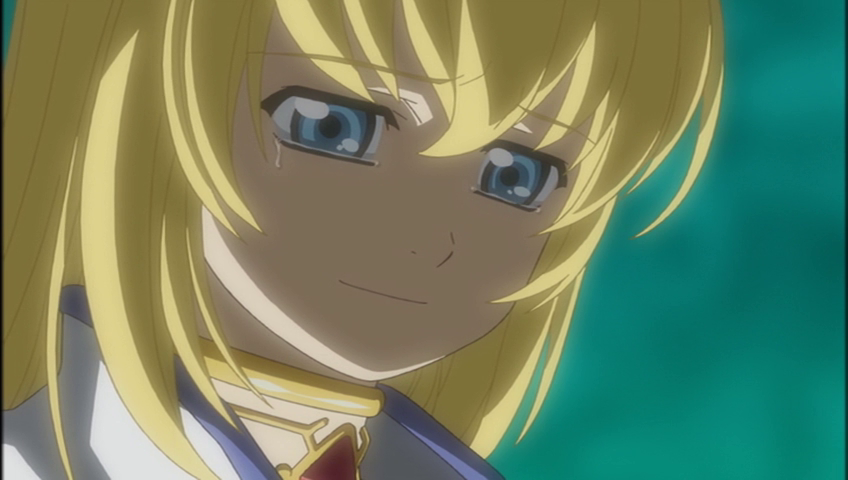
Image result for blast of tempest shakespeare

I feel you, Hakaze.


Kiznaiver, Where Change is Worth the Pain | OWLS “Disruptors”

Chances are that if you were linked here from another blogger pal, then you might be new. To those first-timers, “Hi, I’m Takuto, welcome to my anime cafe!” As part of the OWLS blog tour’s first monthly topic, “Disruptors,” I decided to incorporate what would have been my standard Kiznaiver review into this discussion on peaceful protest. Something different to mix things up, right?

“To disrupt” has a negative denotation, but rather than looking at the verb in a negative light, we are going to use the verb in a positive way. It’s like the word “protest,” which has positive and negative connotations depending on the perspective of the person.

Disruptors: An individual or a group disturbing a system/set of social norms that they believe is destroying what is morally right.

I got this. Thanks Lyn for the prompt!

Image result for kiznaiver screenshots


A brief discussion of the spring 2016 anime “Kiznaiver,” produced by Trigger, directed by Hiroshi Kobayashi, based on the original story by Mari Okada.

When You Hurt, We All Hurt

Kids being subjected to horrific sociological experiments lurking within the shadows of a metropolis is a trend that, by now, anime is no stranger to. Just look at A Certain Scientific Railgun S and Terror in Resonance among others for proof. The newest “toddlers in test tubes” flick to come from Japan features kids not bound by grades, smarts, or other great potentials, but by blood–specifically pain–instead.

That’s right, they’re blood brothers (and sisters), and when one kiddo cries, the agony is divided. But like most scary psychological tests, the experiment is eventually caught, abandoned, and deemed a failure.

Image result for kiznaiver screenshots

Years later, seven teenagers–who would otherwise NEVER be friends with one another–find themselves confronted by Noriko Sonozaki, a bland yet mysteriously cruel high-schooler clad in a suit and long pale blue hair. She sets up an elaborate scheme to trap and force these clique representees into one small conflicted group in order to revive the “Kizuna System.” All of its members, or “Kiznaivers,” become connected through pain in a farfetched attempt to thoroughly understand what truly binds people.

Image result for kiznaiver screenshots

In a fashion very reminiscent of The Breakfast Club, the Kiznaivers must learn to get along with each other and accept one another’s differences and desires, or else risk receiving much more than a bad lab grade. Little do these wandering teens know that pain is not always a physical ailment.


This slideshow requires JavaScript.

Disrupting the Social System

Whether lifting weights or running sprints, it’s easier to relate to people by saying “Ah god that sucked!” after the workout rather than during while you’re dying. Similarly, we quickly learn that it is not pain that binds the group, but the absence of that pain the minute the torture stops.  Basic application of sociology practices can easily tell us that breaking “social statics,” the order that holds society together, can lead to psychological effects both beneficial and disastrous. How are the three main broad modern perspectives of sociology displayed in Kiznaiver . . . ?

Related image

First is the functionalist perspective. “Society is a set of interrelated parts that work together to produce a stable social system.” This refers to the seven deadly sins that reflect each character. I didn’t tell you about them? Oh, well, here’s a pretty infographic for that:

kiznaiver

I did not make this infographic. Character images belong to Studio Trigger.

Like The Breakfast Club was trying to strike home with at the end, society CANNOT function WITHOUT these individual traits, and that each of these traits–to a certain degree–exist within each one of us. Through a mutual hostility towards Sonozaki and the Kizuna System, consensus is achieved within the group . . . . that is, once they finally make the “high and mighty” Maki come around. They quickly realize that if each of one of them does not sacrifice himself to the collective, then their summer would be dreadful as hell. The dysfunctions that the group encounters, such as embarrassing reveals and aching hearts, do, in the end, lead to social change in order to fix their wavering social instability.

Related image

Second is the conflict perspective. Oh yes, it wouldn’t be anime if our main cast wasn’t chased by idiots in ridiculous suits, racing against the clock to solve a simple equation of personality or reach the checkpoint in some quirky game. Sonozaki doesn’t like waiting for the pot to simmer, and we see this through her hiring of goons and manipulating of the higher ups to reach quicker means of an end. She exercises calm yet absolute control over her lab rats, and her form is only disturbed when Katsuhira Agata, our quiet protagonist, invites her in on the fun. Sonozaki may not be the best-developed of her kuudere kind, but her use of conflict as the prominent source for change adds a fair degree of speed and excitement to this show bombarded by melodramatic twists.

Image result for kiznaiver gomorin

Third is the interactionist perspective. The name’s self-explanatory. “It focuses on how individuals interact with one another in society.” Our crew of seven fall back on this perspective as they uncover their true selves and unravel the hearts of others. This perspective is interested in the ways in which individuals respond to one another in everyday situations, which is why Kiznaiver is rife with scenes where these unrelated characters are just eating or lying on the couch and talking to each other nonchalantly. Slice-of-life interactions and witty dialogue are what keep this anime afloat, after all. The show gets its edge from the characters’ constant defining and interpreting of each other’s actions.

Related image

REMEMBER, They Didn’t Chose This Life

It’s easy to forget that our seven peeps weren’t chosen heroes, but actually lab rats of a terrifying experiment lost in the past. In other words, they didn’t chose to save society by disrupting the immoral, negative flow–they were FORCED to make change, and I think that’s why they struggled so hard. If anything, they dedicated themselves to taking down Sonozaki and the supposed system designed to achieve “world peace.” These kids just wanted to continue being normal . . .

Katsuhira, a victim unresponsive to pain,

Chidori, a silent lover in denial,

Tenga, a street thug to pass the time,

Maki, a bookwork undetected by her peers,

Yuta, a popular kid distanced from his past,

Niko, a spoiled delusionist by choice,

Hisomu, a hospital resident seeking pleasure,

Sonozaki, a child in fear of suffering . . .

But because these seemingly unrelated individuals were bound together by fear itself, they learned to welcome the bizarre, the wacky, and the weird that resided within each of their souls, and to protest against the elusive faults of a perfect society so that their new bonds of friendship could persevere through even the thickest of storms. In the final bout to save themselves, the Kiznaivers resolved to defy the social norms dictating their lives, for in the deepest, darkest, most-messed-up cores of each other, they found only themselves staring back.

Image result for kiznaiver screenshots

“Everyone wants to carve their scars into someone else. Everyone wants to connect with someone else.” – Noriko Sonozaki


Pay no heed to the slightly pessimistic tone there at the end–it’s supposed to be a good thing! Also, don’t feel bad if you didn’t recognize any of the science I was spittin’ out at the beginning. I just happened to be in the sociology neighborhood at school. So, what have you learned from this? Well, other than that Sonozaki is kinda a mad, lovesick bitch on sedatives, we found that sometimes it is not always the positives that make people seek change. The Kiznaivers were tired of wallowing around with cringy, disgusting insides that decayed their spirits.

To eliminate that self-pity, they helped each other, which in turn helped themselves find personal salvation, which finally led to an improvement within their squad, which was reflected as a mirror of society itself. By putting their differences aside, disrupting social norms, and coming together with a strong goal in mind, they effectively corrected some of the dysfunctions of society, even if only for a brief moment. That, is understanding. That, is change. That, is healing. There, look at me finding the positives!

Kiznaiver is by no means one of the best anime out there–I’d welcome it as a “Coffee” here at the cafe. But, if you look hard enough, you might be surprised with what’s actually lurking in the belly of the beast. Perhaps seven deadly sins? All 12 episodes of Kiznaiver can be found on Crunchyroll if I’ve at all intrigued you! If you liked The Breakfast Club, then this also might be for you. And if things just don’t jive with you too well, heck, at least Trigger’s animation and Yuuki Hayashi’s music are entertaining enough. Oh, and we can’t forget its true legacy, the opening”LAY YOUR HANDS ON ME” by BOOM BOOM SATELLITES.

This concludes my January 27th entry in the OWLS “Disruptors” blog tour. Please check out Pink-chan (Pinky’s Palace) who did a lovely job right before me (as did everyone else) discussing the modern dystopian classic PSYCHO-PASS, one of my top favorites, no less! Oh, and get psyched for one of my best blogger buds Lita (LitaKino Anime Corner) to wrap up this exciting month with Samurai Seven! Until next time, this has been

– Takuto, your host

Image result

To disrupt, or not to disrupt: that is the question of change.