Celebrating the End of an Era: Millennium Actress Revisited

Amidst birthdays, passings, and celebrations of life, join me in honoring one of the most brilliant auteurs to ever grace cinema, Satoshi Kon.

It’s been too long since I last revisited one of my favorite anime. I apologize. I meant to do one of these reflections with Code Geass following my rewatch, and perhaps I still will someday *hopefully* soon.

In the meantime, I had recently celebrated my birthday with my family last weekend. (My real birthday is actually today, so happy birthday to me I guess!) We chowed down on way too much Chinese food, played way too much BTS UNO, and double-downed on way too much cake for our own good. It was an incredible 22nd birthday, certainly much better than my lonely 21st.

But what I hadn’t realized was that, amidst a celebration of my life, anime Twitter was also celebrating another: the life of famed director Satoshi Kon.

Kon died too soon. Pancreatic cancer. He was 46, and would be 56 if he were alive today. That’s right, August 24th was the 10th anniversary of Kon’s passing.

And I—not knowing any of this—really did unintentionally rewatch Kon’s Millennium Actress on the day before this anniversary as a way to end my own birthday celebration.

In a single weekend, I celebrated the life of two people that mean quite a lot to me: myself, and director Satoshi Kon.

I put that “director” in there to establish distance between us; Satoshi Kon director Satoshi Kon led an accomplished career in the anime industry, leaving behind several legendary films that would go on to be studied in film classes around the world for years to come. He was a visionary auteur, one that would shape my own life with works like Paprika (which I’ve actually written academic papers over), Perfect Blue (which still scares the shit out of me), Tokyo Godfathers (which I still need to watch the dub of), and Millennium Actress (which I still need to rewatch).

Oh wait, I guess I can cross that last one off the list.

It’s still kind of weird to me, though. I mean, I’d never watched a single Kon film until just a year or two ago, and now I can’t imagine my MAL watch list without him. My buddy Scott really put it best when he tweeted:


A decade ago, I didn’t even know who he was. Now I know we are missing one of the greatest minds who ever lived.

Scott (Mechanical Anime Reviews)

Damn, dude. I think I really almost cried when I first read that. Thank you for sharing these sentiments.

Now that I’ve talked for over 400 words about director Satoshi Kon and how splendid my birthday weekend was, I can finally get into the meat of this post: my latest thoughts on Millennium Actress, which come exactly five months after I initially reviewed it back in March.

And I hate to have kept you in suspense this whole time, but honestly— EVERYTHING I said in that post still holds true with how I feel about it now, on the night of writing this, a day before my actual birthday.

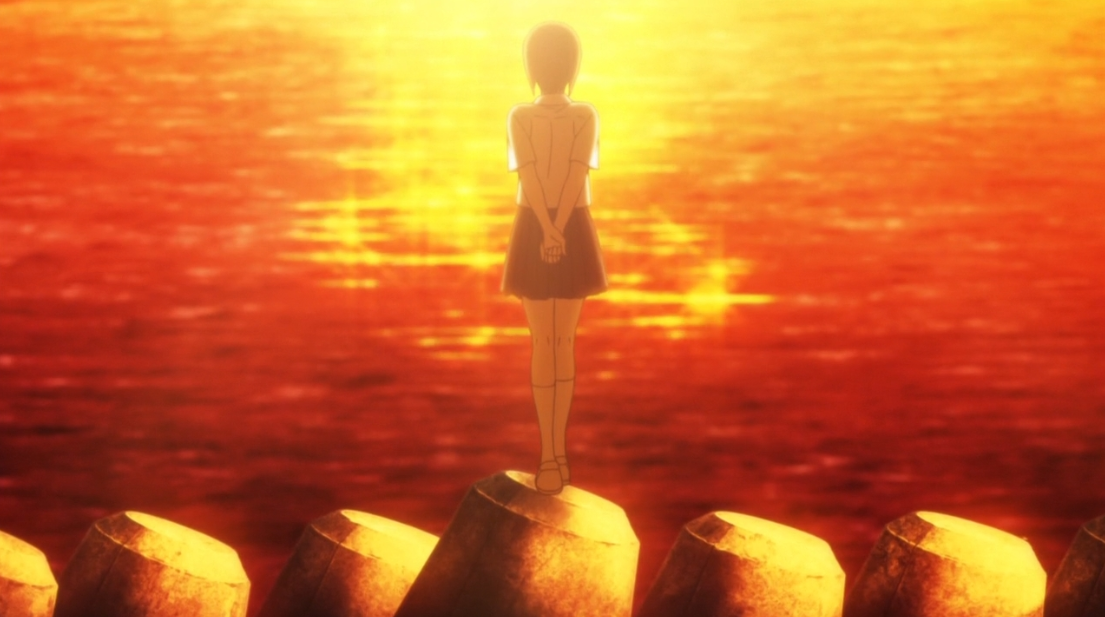
No single shot of that film feels lazy, out of place, or lacking in value; Millennium Actress is a masterpiece of a movie, which, ironically, is about the art of film itself.

Seamlessly weaving through a thousand years of Japanese history in cinematic form, the film—unlike any of his others—honors the passage of time in a way that is truly extraordinary and awe-inspiring. In an effort that’s full of character and heart, Genya Tachibana wishes to recognize the long and accomplished life of his idol, Chiyoko Fujiwara, by placing the sweetheart of Shouwa Era cinema back in the spotlight one last time.

This act can only come thanks to the countless scores of hours that Chiyoko put into mastering her craft, but equally so the admirable number of hours that Genya spent rewatching her films over the years. A simple yet dedicated man like Genya manages to honor their time by catching Chiyoko Fujiwara on camera before the curtain on her life falls for the final time, and the result is an engaging, unforgettable ride through the life of a historic Japanese artist—and the history of Japan itself.

As we navigate through our own daily troubles and trivialities, films like Millennium Actress continue to age like a fine bottle of wine. (No, I don’t drink, but I really like the expression and thought it fit well here.) In other words, for every day that passes, Kon’s legacy only expands, drawing in new viewers, fans, and inspired artists like moths to a flame. (That’s another expression I really like using.)

Truly, the passage of time—something so inherent, basic, and unconsciously experienced—is a remarkable advent. I would try and persuade you to note it down on your calendar somewhere, but I suppose the existence of the calendar itself is proof of my point: time is strangely unforgiving, yet also tends to honor artists. You could almost call the Clock any artist’s biggest fan, but that would only make Genya jealous, wouldn’t it?

Yesterday, I was 21. Today, I’m 22. I’ll probably get a couple of congratulations from my few closest family and friends (which includes you, of course), but likely no more than that. The truth of the matter is, at this point in time, I’m only worth celebrating if only for the fact that I go to school, teach kids how to play the cello, make some people laugh, and write on the internet. (And I’m perfectly content with that!!)

But I absolutely encourage YOU to celebrate the life and death of your favorite artists as often as you can. Go rewatch your favorite films of theirs, reflect on their best works, and share them with as many others as you possibly can. Promote art, and always promote the artist with it—the only way they live on is if we continue to celebrate their works.

Maybe my passion for Kon’s films is why I decided that instead of spending another birthday evening further inflating my ego, I went ahead and showed my family Millennium Actress for the first time.

And I sincerely hope that they—and everyone else who decides to give it a (re)watch—will fall in love with a film that truly celebrates the shining end of an era—and the brilliant beginning of the next, whatever it may bring.


With feelings of gratitude for all that is good in this world, I put down my pen. Well, I’ll be leaving now.

Satoshi Kon

These kinds of posts really are my favorite to write, I ought to do it more often. Anyone else feeling kinda emotional? Just me? Well, that’s ok too. I’ll never be done with talking about this film, but I think for now this will do. In Kon’s own words, allow me to put my pen down here and offer one last tidbit before parting with Chiyoko Fujiwara’s story . . .

In her final hours, Chiyoko Fujiwara left behind a treasure trove of insight to her incredible life as an actress. In his passing, Satoshi Kon left behind a contagious love for cinema that still burns brightly in the hearts of film lovers. In my lifetime, what can I leave behind and impart with all those who come across my name?

Maybe I’ll use 22 to figure out the answer to that question.

Thank you so much for reading. ‘Till text time!

– Takuto

Demon Slayer: Crying Under the Light of the Moon || OWLS “Folklore”

Chances are that if you were linked here from another blogger pal, then you might be new. To those first-timers, “Hi, I’m Takuto, welcome to my anime cafe!” For the OWLS blog tour’s eighth monthly topic of 2020, “Folklore,” I decided to ditch reviewing Kimetsu no Yaiba in favor of discussing the fascinating world of Demon Slayer where dark creatures of the night stalk humanity in plain sight.

This month’s OWLS topic was inspired by the name of Taylor Swift’s new album, Folklore. Yet, rather than using her conceptual definition of what “folklore” means, we are going to use its original meaning: we are going to explore the traditions and cultures of a specific group and community within pop cultural texts.

I figured it was a no-brainer that Demon Slayer would be a “Cafe Mocha” title here at the cafe, so I’m glad to be able to do something a bit more interesting than my usual review. Thanks Lyn for the prompt!


A brief discussion of the 26-episode Spring 2019 anime series “Demon Slayer: Kimetsu no Yaiba,” animated by ufotable, directed by Haruo Sotozaki, and based on the manga of the same name by Koyoharu Gotouge. Images may include spoilers!

A demon killed his family. But, when faced against the darkness, Tanjiro hesitates to pull his sword.

Enter the Taisho Period

High up in the mountains, young Tanjiro Kamado works hard to sell charcoal for his less-than-fortunate family. Although his father passed away when he was young, Tanjiro has shouldered the burden of supporting his entire family with admirable optimism. On his way back up the mountain one wintry night, Tanjiro takes shelter in the house of a strange old man who also tells Tanjiro to be wary of flesh-eating demons that roam in the shadows.

To his disbelief, Tanjiro returns home the following morning to the horrifying sight of his whole family, slaughtered and soaked in crimson blood. Worse yet, his sister Nezuko somehow managed to survive—only now she has been turned into one of those bloodthirsty demons of lore. Overwrought with rage, Tanjiro swears to avenge his family and save his dear sister’s remaining humanity. Guided by his unusually keen sense of smell, Tanjiro seeks a way of getting stronger, which leads him to joining a secret society devoted to slaying demons and protecting mankind: the Demon Slayer Corps.

Perhaps one of the most fascinating aspects of the series is its setting’s historical roots—Demon Slayer is actually set during the Taisho Period of Japanese history (think early 1900s). It was the beginning of modernity for Japan, but all kinds of traditional charms are still adorned by the setting in characters. Tanjiro’s signature green-checkered haori, for instance, is an artifact that embeds us in this era. The same could be said of the traditional blue tile-laden roofs of the various tatami-lain village houses that decorate the landscape. Demon Slayer unashamedly embraces history, and I find that to be one of its greatest strengths.

To Devour and Destroy

On the surface, Demon Slayer is your typical shounen action anime with all kinds of exciting supernatural twists and powers. The demon slayers bravely traverse the land to vanquish human-hunting demons, despite the risks to their own lives out in the dangerous wilderness. Their main objective: tracking down and eliminating Muzan Kibutsuji, a heartless progenitor demon whose rare ability to turn normal people into powerful, murderous demons leaves carnage and bloodshed wherever he goes. It’s a simple premise, yet one carried out with remarkable pacing and world-building.

And it’s actually on that note that I want to talk about the demons from the human POV. No matter how you spin it, guys, the world would be far better off without these creatures. They indiscriminately destroy lives, taking whatever life they can for themselves just so they can continue devouring the next day. It’d be near impossible to convince someone that they are a benefit to human society. Thus, the demon slayers are wholly good and just in their mission, right?

Right?

It doesn’t take Tanjiro long to figure out that, yes, even demons have souls. After all, these creatures were once human, and they still retain some remnants of their humanity in their mannerisms, desires, and deepest wishes. Seeing their entire lives flashing before his eyes upon death, Tanjiro comes to realize that no demon truly wanted to become such a creature. Whenever he swings his sword to kill, he really is taking a human life.

Tanjiro’s continuous encounters with the demons compels him to deliver not curses, but salvation to the demons he slays. To that end, Tanjiro arms himself against these creatures not with blind hatred, but a newfound sympathy for their individual struggles and heartache. I guess trying to understand the demons only makes the job of extinguishing them that much harder, though . . .

Something More than Survival

Although we are only teased with a brief inside look at Muzan Kibutsuji’s deadly league of demons, the Twelve Kizuki (or Moon Demons), we can see that the demons aren’t simply a chaotic mess of evil like folklore might dictate. Over and over again we are told that the demons blindly consume, thinking only of themselves and answering to no one. This is not true. Yes, some demons are doomed to roaming the countryside, aimlessly fending for themselves, by themselves. Others decide to move in groups, however, and this single fact changes everything for the Demon Slayer Corps.

Over time, Muzan Kibutsuji has silently amassed a force of demons that swear absolute fealty to only him (else they be shredded to pieces by Kibutsuji himself). He manipulates the hearts of people with little chance or will for themselves, transforming them into these horrid creatures and commanding their lives henceforth. Some of the Twelve Kizuki follow him out of a sick devotion to his cause; others out of blackmail. But all obey him out of fear, and there is no undoing his curse.

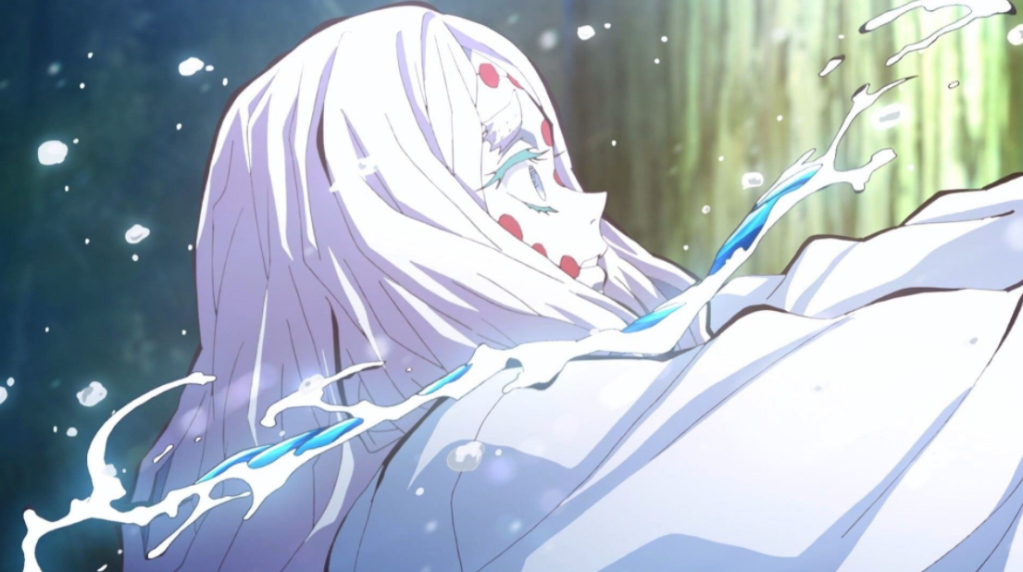
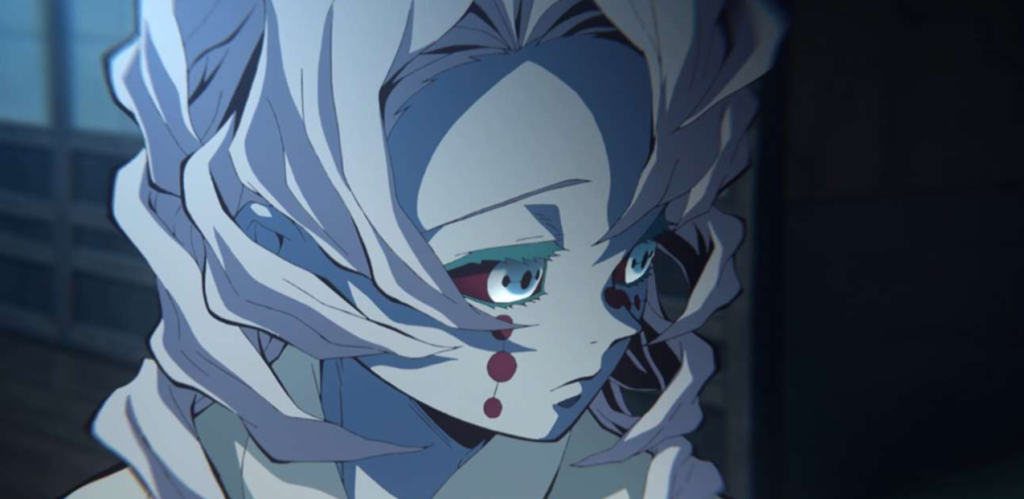
Under the light of the moon, the Twelve Kizuki commit cruel organized crimes and claim their territories by staining them with blood. Using the terrifying powers gifted to him by Kibutsuji, one particular Twelve Kizuki tries to establish a family of demons for himself, something which has never been heard of before (save for the case of Nezuko Kamado). While his means are grim and appalling, he’s a breathing example of defying the common lore surrounding the demons. Yes, they kill a lot of people—but is there something more beyond merely wanting to survive as a demon? In this society where demons stalk the shadows of the mortal world, one can never truly trust the legends.

What the Stories Don’t Tell You

Like the silk of a spider’s thread, Demon Slayer navigates through an intricate web of conflicts where the main goal is to survive through the night. When two cultures collide, one supersedes the other, proving that the two cannot thrive simultaneously. Similarly, as Tanjiro and the other demon slayers uncover more about the suffering of their common enemy, the line dividing murdering out of hatred and murdering to protect becomes increasingly blurred.

Despite how purely wicked some of these demons seem—despite how earnestly I wish Tanjiro would just cut them down and move on with things—I can’t help but feel pity for the demons. Really, it’d almost be easier if Tanjiro didn’t get that glimpse of their life right before their inevitable death—if he didn’t see their tears bubbling forth as their decapitated head rolls to the floor. It’s just . . . sad. (But it’s a greater shame that some demons, like some humans, choose to do evil for evil’s sake, and thus are hard to earn sympathies from.)

At the end of the day, I’m honestly not sure I could do the work that Tanjiro and the demon slayers do. The Demon Slayer Corps hypes up this idea that killing demons is a just and noble thing. Meanwhile, the demons are drowning in their suffering, agonized and deeply tormented day and night by their conflicting urges to kill for survival and earnest wishes to remain human. So, raise your blade, but keep your ears and heart open: What the stories don’t tell you is that there’s a lot of loss, grief, and pain in the life–and death—of a demon. 


Those who regretted their own actions. I would never trample over them. Because demons were once human too! Just like me, they were human too!” — Tanjiro Kamado


Afterword

I find it most difficult to talk about the series that are most popular, but there you have a few of my thoughts over Demon Slayer. It’s an incredibly compelling piece by studio ufotable, and one that I’m so glad I finally got around to! If it weren’t obvious enough, Demon Slayer: Kimetsu no Yaiba is a certified “Cafe Mocha” title, and a series you should absolutely check out if supernatural action anime are your thing. Even if you’re not a fan, there’s enough historical depth and cultural exploration that makes Demon Slayer‘s world so intriguing on its own. But hey, you can let me know: if you were in Tanjiro’s shoes, could you be a demon slayer?

This concludes my August 20th entry in the OWLS “Folklore” blog tour. My good friend Irina (I Drink and Watch Anime) went right before me with a fantastic post discussing the mundane yet charming yokai that are tsukumogami, which you can read right here! Now, look out for Dale (That Baka Blog) with a post coming Tuesday, August 25th! Thank you so much for reading, and until next time!

– Takuto

Sakurada Reset: Supernatural Mysteries and Missed Opportunities || Review

A brief spoiler-free review of the 24-episode Spring 2017 anime “Sakurada Reset” (also translated as “Sagrada Reset”), animated by David Production, directed by Shinya Kawatsura, and based on the light novel by Yutaka Kouno.

Haruki can reset time but forget she ever did. Meanwhile, Kei remembers everything.


A Town of Supernatural Gifts

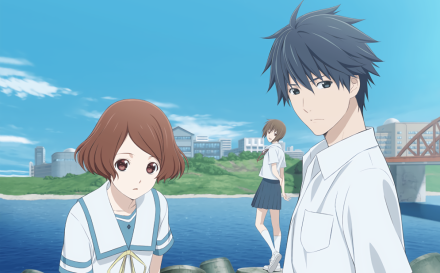
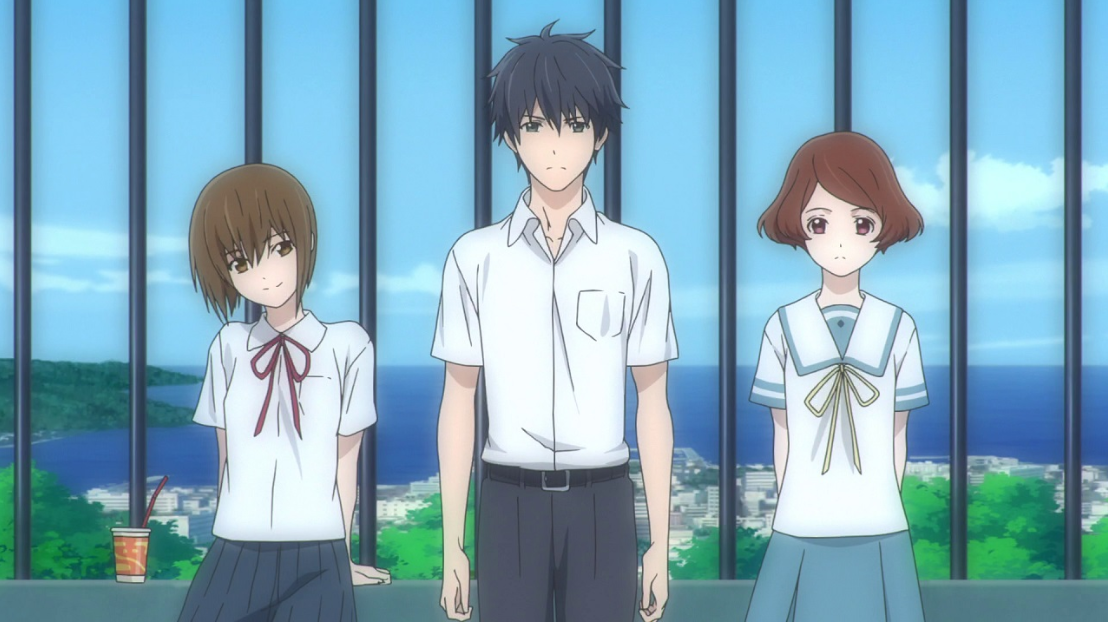
Sakurada isn’t your average seaside town. Unknown to anyone else, its inhabitants are born with strange psychic powers. Upon being summoned to the school rooftop one day, Kei Asai meets Misora Haruki, a quiet apathetic girl with the power to reset time. Her gift comes with certain limits, however: she can only go back up to three days, and she can’t use it within 24 hours of the last reset. To make matters more complicated, she doesn’t ever remember using her power when she resets time!

This is where Kei comes in. His ability to remember everything and anything allows him to recall changed timelines and Haruki’s resets. Together, they wield their unique powers with their Service Club friends to aid the problems of others. As the club starts taking on increasingly difficult and crucial missions for the mysterious Administration Bureau—an organization which manages all the abilities in Sakurada for the sake of justice—Kei finds that the machinations of eerie organization go far beyond simple acts of service.

I love time travel stories. I know many people dislike the trope, but it never ceases to entertain me. When paired with a plot like Sakurada Reset‘s—saving others, government conspiracies, romance drama, etc.—you basically get a knock-off Steins;Gate (which is one of my faves). The only problem is that, aside from the last couple episodes, the series is really, really boring. Given that I find everything else about the series to be incredibly interesting, I’m chalking up Sakurada‘s slow and lackluster nature to the direction. At least our time traveling heroes are somewhat inspiring, right? Right???!

sakurada characters

Apathy is Contagious

Sorry to be the bearer of bad news, but Kei is one bland dude. Despite possessing one of the coolest abilities in the series, photographic memory, the gift does very little to make him likable. Like, he’s not rude or disrespectful, but he’s not exactly exciting to be around, either. I suppose he’s a SAFE option as a lead, but I’d rather my time travelers have a screw or two loose (like they tend to do) or have one overwhelmingly eccentric trait than be completely nonchalant about everything.

And sadly, Kei’s partner in crime isn’t much more interesting than him. In fact, Haruki’s hallmark is her absolute BLANDNESS, which allows Kei to tell her whatever he wants and she’ll do it. While I appreciate the sense of mutual trust that slowly starts to develop between them, I did notice that this kind of just left Haruki to be another tool for Kei to use (and not in the fascinating way that Code Geass‘ C.C. is to Lelouch). I’ll say that she’s reliable as a heroine, but not much else.

The rest of the cast ranges from similarly bland (man, apathy sure is contagious!) to unnecessarily complex. One example of bland is Kei’s best friend, Tomoki, whose abilities as a telepath makes him little more than the series’ top CHAD. Another is Seika, a girl who can communicate with cats, but is a weirdo and hard to converse with. On the flip side, Eri Oka, a punkish girl introduced later on who can implant memories, did nothing but make me want to pULL MY HAIR OUT, she’s so annoying. Same with Murase, a girl with an amazing power that basically makes her invincible, but boy is she a grade-A B*TCH to deal with sometimes. I could go on with describing my frustrations. Point is, they’re all good kids (kinda), just needlessly stubborn.

sakurada ocean

Calm and Quiet Seaside Energy

As Kei and friends continue to explore the city, I did slowly start to fall in love with Sakurada. Many sights became familiar, almost nostalgic, and I do think that the seaside setting does wonderful things for the story. Having the plot unfold in a smaller community than, say, Tokyo, allows characters to conveniently run into each other on the streets (which happens quite often) without seeming far-fetched. Plus, they have the ocean, and the sea is always a magical place for me.

If I had to describe the art and animation, I’d say what I have been about basically everything else—it’s safe. Not below average by any means, but decently pleasant, if not stiff and stale. (It sure doesn’t help that the MC’s script is boring as hell.) David Production took zero risk in making the powers in Sakurada look cool or exciting, which is SUCH a missed opportunity given how intriguing espers can be. Bummer. At least the music was good.

I couldn’t find credits for any other well-known work, but Rayons’ orchestral soundtrack compliments the pace of Sakurada Reset very well. The way some of the sad piano pieces transition to some of the series’ more casual, slice-of-life moments almost feels more like it’s music for a visual novel than an animated series. (There’s one particular piano/vocal track that really tugged at my heart.) This becomes more apparent when you start to realize that, for some reason, the music plays at a consistent volume THE ENTIRE TIME. No one “heartbreaking” moment felt more dramatic than the next, and I strongly believe that’s because the sound direction here—like the rest of the series—is so friggin’ lame. Again, good OST, just missed opportunities. WEAVER’s work on the second OP was BANGERS though!!

sakurada op

A Series of Missed Opportunities

For a supernatural school drama anime with mystery and time travel at every turn in the road, Sakurada Reset comes together as a strikingly unremarkable package. Its direction is steady (and sometimes quite artistic), but otherwise too slow to convince me to get excited about anything. Despite possessing unique super powers, the characters’ personalities are either disappointingly ordinary or straight-up noisome. And that’s too bad, really, because nothing about the series is terribly bad. It’s just average, and probably forgettable give or take a month or two.

If you came from a show like In Search of the Lost Future (wow, now THAT takes me back) and were hoping for something a bit more, Sakurada Reset will serve you well. It explores living with regrets, human longevity, and trust much better than other time travel romances do. However, if you came expecting a masterpiece like Steins;Gate, prepare to be disappointed—you won’t gain much from these long 24 episodes.

sakurada tree


We’re connected by our abilities. Since we have abilities, the two of us were able to stay together all the time, automatically, as a matter of course. Kei Asai


Afterword

In continuing to tackle my never-ending backlog, I was happy to be able to cross this one off the list. It sure was mediocre, but not something I regret watching. For all those curious, I consider Sakurada Reset a “Coffee” rating, and only recommend it if you’re longing for a particular kind of feeling, something transient and fleeting but, also, not wholly unenjoyable. If you have taken the one-way train to Sakurada by chance, be sure to let me know your thoughts about the series in the comments! Thanks for reading, and ’till next time!

– Takuto

Den-noh Coil: The 2000s Sci-Fi Anime You Never Watched (But Should) || Review

A brief spoiler-free review of the original 26-episode Spring 2007 anime “Den-noh Coil” (also translated as “Dennou Coil”), animated by Madhouse, created and directed by Mitsuo Iso.


Nostalgia, Child’s Play, & the Internet

In the near future, people have integrated augmented reality their daily lives through the use of specialized cyber glasses. A virtual world of “E-spaces” overlays Daikoku city’s electronic infrastructure. Viruses hide in plain sight, yet only glasses wearers can see these virtual hazards. Children in particular find immense joy in tracking down old abandoned E-spaces and using them for their own game. Hacking spaces, switching servers, discovering damaged domains—it’s like the coolest game of geocaching you could ever play! Some have even taken interest in hunting for metabugs, small gems which can be converted into currency or special items in the digital world.

This brings us to Yuuko “Yasako” Okonogi and her family, who have just moved to Daikoku City despite rumors of some people mysteriously disappearing. While searching for her cyberdog Densuke, Yasako encounters Fumie Hashimoto, a playful classmate and member of “Coil.” Comprised of other community youngsters, the small unofficial detective agency helps glasses wearers solve various cyber troubles. The girls’ meeting also brings Yasako’s snappy grandmother back into her life, who just so happens to run a shop that sells illegal tools which interact with the virtual world AND is the bright mind behind Coil.

Like any program, however, there are many bugs in the system, dubbed “illegals.” Some are lost, aimlessly wandering the digital landscape to eternity. Other illegals exist to cause mayhem, and some are harmless yet like to follow humans around, much like a household pet would. Another girl, Yuuko “Isako” Amasawa, is also investigating these corrupt spaces, but her abrasive hacking style (and attitude) deters her from making friends. The kids in Coil are determined to discover the truth behind the mysterious viruses and disappearances, but little do they know what corruption lurks on the dark side of the web.

yasako and fumie

Virus Attacks & Friendly-Fire Hacks

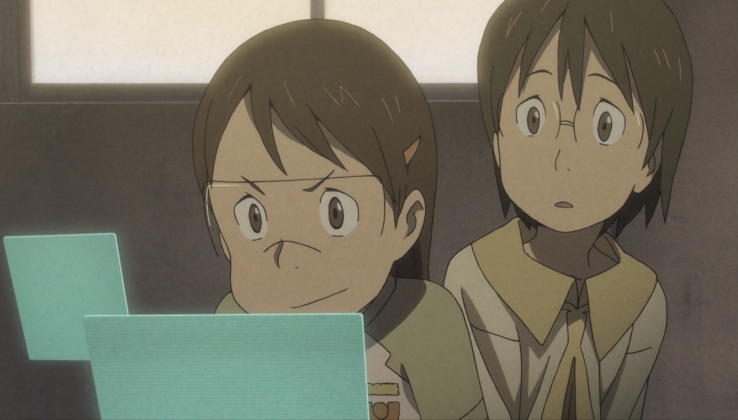
For the entirety of the series, Yasako serves as our blank canvas as Fumie guides us through the ins and outs of the virtual world. The two girls become best friends, and Fumie’s intelligent yet loud personality meshes well with Yasako’s soft naivete. Navigating through scary virus attacks and friendly-fire hacks from their fellow classmates, the go quite well together as a pair.

But, if there’s one giant brick wall stopping them from having fun in this digital space, it’s going to be Yuuko Amasawa. To avoid confusing the two Yuuko transfer students, the kids call her Isako. And boy is Isako one tough nut to crack. She’s standoffish, rude, and totally not interested in making friends; rather, her eyes are set solely on collecting metabugs for her own personal mission.

To complicate matters, the incredibly obnoxious and bratty Daichi Sawaguchi (along with his self-named “Hackers Club” goons) are also trying to snatch up metabugs, drawing out much of the conflict in the series’ first half. As things get weirder and weirder on the digital side, these hidden secrets tell of disastrous things happening in Daikoku City. Maybe, just maybe, the forces undermining the kids’ efforts will allow them to start seeing eye-to-eye.

isako hackers club

Given that practically the entire cast of this one is made of children, I’m SO glad that the English dub from Maiden Japan cast all the young boys with female dub actresses. (It just helps avoid the cringe of hearing a 30-year-old man voicing a ten-year-old.) I’ve never heard a dub where the children—to this extent—act and sound so much like children should. These kids are FUNny and are a hoot to watch! (And I LOVE Specs Granny!!)

Whether chasing down urban legends, stalking haunted hotspots, or connecting dreams and memories across time and digital spaces, these kids go on quite the coming-of-age journey. Together, they prove that the Internet can be a fantastic place for self-discovery—but also a potentially hazardous landscape without practicing proper safety.

dennou coil kids

Integrating CG with the Digital World

Although the show has a quiet, lukewarm start to it, the talents at Madhouse breathe astonishing life into Den-noh Coil. Mitsuo Iso not only directed AND created the entire story—he also drew many of the key frames himself! His style is jerky yet detailed, full of motion and expression. There’s some really well-animated character work done here, and it’s all in the details. Whether fidgeting children, readjusting glasses, or making silly faces, the animation fully encapsulates the behaviors and mannerisms of goofy 6th graders.

Despite coming from an era of anime where the use of CGI was almost purely experimental, the 3D CG works remarkably well here since Den-noh Coil‘s world is deeply intertwined with the digital space of the Internet. Muted, drab, washed-out Tokyo landscapes provide a unique, small-town community atmosphere to the series. Much of the AR special effects work is done with CG, giving us a nice distinction between the bleak watercolor skies of the real world and the quirky (yet dangerous) E-spaces that the kids are so fond of exploring.

I also found the entire soundtrack of the show to add a unique quality to Den-noh Coil. The series is accompanied by soft acoustic guitar and the quiet cascade of digital sound effects whenever the kids are dueling in back alleyways. Tsuneyoshi Saito’s OST, as with most of his other works (most notably Fafner), showcases the strengths of orchestral music. If we’re not getting weaving wind ensembles, we may hear the solemn beat of tribal drumming, or even the tender, evocative enchantment of the piano. It’s classic, and this kind of music will always win me over.

searchie

Connection, Disconnection, & Loss

Den-noh Coil takes a bit to get going, but enjoy its comedy/slice-of-life beginning. Trust me. These early-middle standalone episodes explore youth, life, and living side-by-side with this digital world, and are by far some of the strongest in the series. (The beard episode was especially great.) I’d argue that the episodic direction in the middle is far stronger than the main overarching story. Then again, I just find that the episodic style suits the series’ world and setting better.

About two-thirds of the way in, this sci-fi adventure kicks up the mystery with a starkly different plot set in motion. The character drama in the middle is also strong and even stronger at the end, which ties in well with the creepier subjects of the series’ finale. It’s a striking tone switch, but it really makes for an exciting finale.

yasako laser

These days, no one talks about Den-noh Coil (which is partially why I was drawn to it in the first places). I think that’s sad, because it’s more relevant now than it ever was in 2007 when it first came out, and I can’t help but think how highly people would praise the series if it was put out today. Certainly, it’s one creative piece of sci-fi.

Den-noh Coil tackles themes of connection, disconnection, loss, extinction, living within boundaries, and learning to push beyond certain limits. It explores what can go wrong in a world that lives side-by-side with technology, a world that can be hacked AND hack you just the same. Some stories are silly and eccentric; others are thought-provoking and startlingly philosophical. If you’re wanting an anime that explores transience in the digital age and you’re tired of being directed to Ghost in the Shell or Serial Experiments Lain, go give Den-noh Coil some love. It’s TOO overlooked and under-appreciated, and I guarantee it’s the early 2000s sci-fi anime you never watched—but absolutely should.

yasako and isako


What is real? Does being able to touch things make them real? If something can’t be touched, does that mean it isn’t real? What things are really, truly here? What things are actually here for sure?  — Yuuko “Yasako” Okonogi


Afterword

I had to sit on my rating for Den-noh Coil for a while. On one hand, it’s slow, a bit drab, and unnecessarily confusing with all its technobabble nonsense. On the other, however, it’s surprisingly dynamic and full of interesting ideas. And you know what, it’s for these reasons that I welcome Den-noh Coil as a certified “Cafe Mocha” title. THIS right here is what we call an anime gem, and you should seriously consider adding it to your watch list if you love sci-fi or augmented reality in the slightest! Had I watched it as a child, I couldn’t even begin to imagine the boundless fun I would’ve had with it! Are you one of the rare few who have seen Den-noh Coil? Please let me know, as I’m looking for fellow Coil kids to love this show with! Thanks for reading, ’till next time!

– Takuto