PyeongChang on ICE!!! Celebrating Team Spirit in the 2018 Winter Olympics | OWLS “Competition”

Chances are that if you were linked here from another blogger pal, you might be new to this place. To those first-timers, “Hi, I’m Takuto, and welcome to my anime cafe!” As part of the OWLS blog tour’s second monthly topic for 2018, “Competition,” I decided to try something new. Instead of analyzing a certain anime, breaking it down to what makes it relative for the month’s theme, I wanted to chronicle a certain experience instead.

As I’m sure you all know, the 2018 Winter Olympics is happening right now in PyeongChang, South Korea. And if you follow me on Twitter, you’ll know that I am very enthusiastic about all of the competitions that have unfolded, and the awe-inspiring feats we’ve been lucky to witness. For this post specifically, I’d like to look at Olympic figure skating, as well as some of #TeamUSA’s most incredible moments out in the wintry tundra of PyeongChang.

In honor of the 2018 Winter Olympics, this month’s topic will focus on the theme “Competition,” as the Olympics is where athletes from all countries join together to compete in sporting events. Through these games, we see how “competition” brings out the grit, the teamwork, and the competitive spirit within athletes. We will be exploring anime and pop culture media that discusses the good and the bad when it comes to competition, and what it can teach us about ourselves and the world around us.

Image result for pyeongchang olympics shibutanis

After consulting the OWLS team, it was brought to my attention that the Olympics does, indeed, fall under popular culture. So, in taking a slight break from anime and manga, please enjoy this figure skating recap and also a truly rare side—the winter sports fanatic side—of me, Takuto! Thanks Lyn for the exciting prompt!


A brief look into the world of figure skating—a visit to the 2018 Winter Olympics in PyeongChang (Feb 9, 2018 – Feb 25, 2018) and the thrilling successes we’ve seen thus far. Again, these are all my personal favorite highlights, so for full Olympic coverage, visit their official site. None of these pictures belong to me. 

A Little Background

Contrary to what you may believe, my love for the figure skating did not begin with Yuri!!! On ICE. The popular anime which took the world by storm did make me more invested in the sport to the point where I am now, but the truth is that I’ve always enjoyed the non-typical U.S. favorites like swimming, diving, dancing, gymnastics, and of course, figure skating. I’ve never been big on sports. Like, at all. But there’s an allure to the ones I listed above—an artistic beauty—that transcends “Who can run the fastest?” and “Who can be the strongest?”

These athletes still want to be the best, but to me, their hard work and struggles translate more as a story than a game of football ever could. In a sense, figure skaters are performers putting on a show, artists who match unique music to physical movement, rhythm, technicality, emotion, and expression. Given my own background in the performing arts, I can relate to them.

So naturally, I find myself hooked to the only sport which unifies the entire world through music in one glorious cup for sportsmanship: the Olympics. Unlike figure skating’s ISU Championships, including World, European, Four Continents, World Junior Championships, and the Grand Prix (as made popular by YOI), the Winter Olympics is the only figure-skating comp which receives worldwide coverage on just about every news outlet. As such, the joys of the beautiful sport became a quadrennial treat; every four years brought a reunion for my love of the ice; likewise, every other four years, I got to enjoy some swimming.

After Vancouver in 2010 and Sochi in 2014, the Winter Olympics are back for 2018 in PyeongChang! As a half-Korean myself (my mom was adopted from South Korea many years ago), the political intensity between the North, the South, and the whole world, really, made skeptical and a bit cautious. What if something horrendous happened? How would that forever shake up world history? Here we are, almost finished with the Winter Games’ and honestly, it couldn’t have gone better! From North Korea’s permitted entry to the ENTIRETY OF NORTH AND SOUTH BEING ANNOUNCED UNDER ONE SATISFYING “KOREA,” all felt oh-so right with the world.

With what I understand, one of the loudest cheers heard in PyeongChang was actually Korea’s joint entry, and reports say that the Koreans have been overly kind and supportive of ALL teams and nations. Simply incredible spirit, and it makes my heart so happy!

Image result for pyeongchang olympics cauldron lighting

Major victories were made before the Olympics even started, and now that the brilliant cauldron has been lit, it’s time to begin the games! Here are some of my favorite skaters!

The Members of Team USA

Image result for olympics 2018 figure skating team usa

Bronze Medalists in the Team Event!

Nathan CHEN

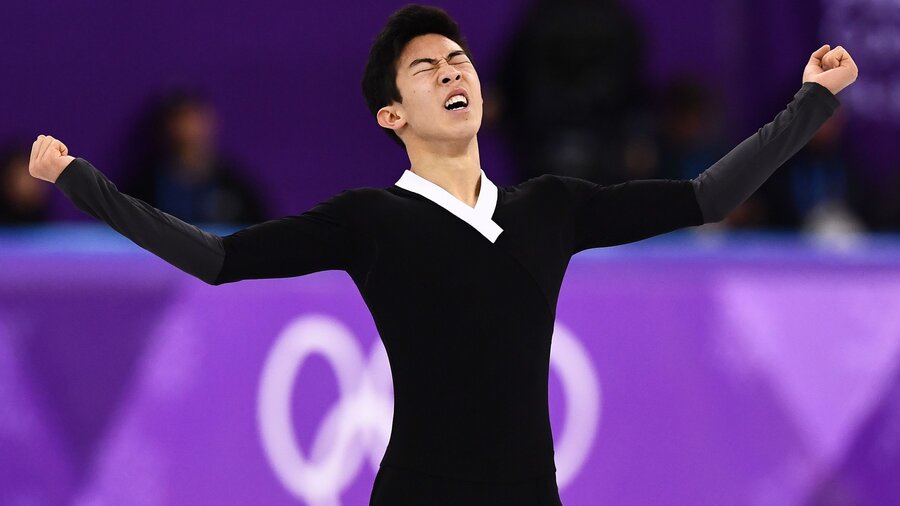
Building up over months of media pressure and hype, Nathan Chen’s Olympic debut was met with love by his supporters despite a short and free program full of falls in the team event. I felt so sorry for the poor dude, as he’s ONLY 18, but hey, we all have our bad days, and Nathan’s true fans know what even a normal day looks like for him (which is, well, quad after quad after quad). After moving on to the men’s single, he turned out another disappointing performance. By this point, I just wanted him to be out of the media’s way. But then it happened: Nathan Chen had a good day. A very good day.
Related image

For his last skate, Nathan went out and showed us what he’s truly capable of, reminding us that yes, THIS is the 2015-16 Junior Grand Prix Final Gold Medalist he was celebrated for being, one of only a handful of “Quad Kings” out there (and likely the best). In this wicked free program, he became the first skater to ever cleanly land FIVE quads at the Olympics, and, arguably more impressive, the first to try a SIXTH. If that’s not an EPIC comeback, I’m not sure what is. Nathan scored the highest free program technical score in history, pulling him up from 17th place to 5th. PLUS, he was the first to ever land a quad flip at the Olympic Games. In an interview afterward, he stated that he just wanted to “try it, as he’d been practicing it,” and that he had “nothing to lose by this point.” And BOY did it go for it! He’s young, he’s a hard worker, and he’s an absolute beast on the ice—and I can’t wait to see the heights he climbs to next.

Adam RIPPON

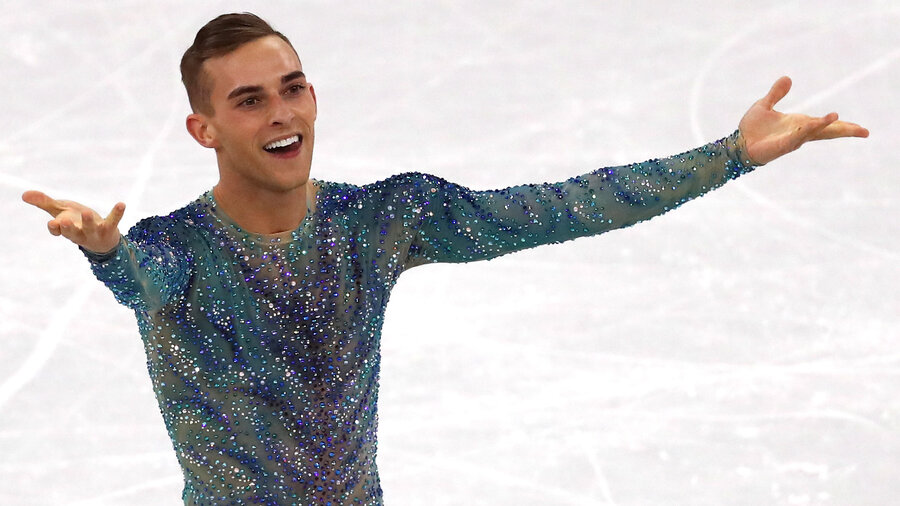
I’m sure the whole nation if not the world is already acquainted with this flamboyant skater, but beyond his little political skirmishes, Adam inspired many around the world as the first openly gay athlete to compete at the Winter Olympics. He’s absolutely full of himself at times, but it’s that combination of sass, charm, and pride that made him stand out in the first place. On top of it all, he’s one of the most beautiful skaters to compete in 2018; after not qualifying for Sochi in 2014, Adam went up to his roof with best friend and fellow skater Mirai Nagasu, ate junk food, then kicked it into high gear to make it to PyeongChang as a 28-year-old. His performances may not have had the highest technical base scores, but in each of the four times Adam Rippon went onto the ice, the whole world stopped for a moment and stared in awe at Adam’s swooping elegance and magnificent pride.
Related image

Alexa and Chris KNIERIM

Showing us ultimate #couplegoals as the power of love (and hard work) pushed them to 4th place, Alex and Chris are the sweetest pair skaters out there. They didn’t score as high as they’d like to, but each performance (team and pair) was absolutely gorgeous and made me want to follow their Olympic journey via social media. The way Alexa and Chris interact is so wholesome (his giant V-day teddy bear at the kiss and cry, UGH), and they shared such a precious moment each time they skated together.

Related image

Mirai NAGASU

Though we can’t underestimate her 2nd place victory in the team event’s ladies single free skate, Mirai’s claim-to-fame occurred when, right at the start of her program, performed the triple axel, becoming the first American female figure skater to land the stunning jump at the Olympics, and the third woman from any country to do so. She’s a fantastic skater whose programs’ base level points are always leagues ahead of the competition. Daring, kind-hearted, and supportive of her team, Mirai knows exactly what she wants and how to get it—even if it means smashing records, baby! In the ladies single short program, she missed the triple axel, causing her to fall to 9th place. But even so, she’s still a strong, accomplished Asian-American female! Girl, you rock!

Related image

Alex and Maia SHIBUTANI

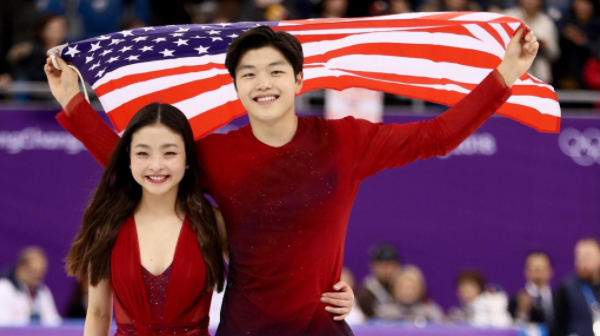
Efforts by Asian-American siblings Alex and Maia SHIBUTANI (AKA best pair!!) pulled the US forward in the team ice dance short program, scoring 2nd place with their exciting Latin dance. I just love these two so much, and their performance also made me start following the #ShibSibs on social media! BUT WAIT, they get better. In the individual ice dance short program, they repeated that exact same number and grabbed even more of the world’s attention. Finally, in what has already been a back-to-back series of best performances ever, the Shib Sibs gave everything they had left into the free dance, pushing them to win YET ANOTHER Olympic bronze to add to their incredible Olympic debut!
shibutanis.PNG

Alex and Maia stand as favorites YES because of their amazing sibling bond, but also because they bring to pair ice dancing a kind of love and passion unique from the typical “sex appeal” of couples. They redefine this side of figure skating with every inspiring performance (heck, they made Coldplay’s “Paradise” actually enjoyable for the song’s haters), and I’m just so proud of their ability to monopolize on their strengths and fight on equal terms by unashamedly using their own style of pair dancing! WOOHOO! Love you Shibs!!

The Members of Team Japan

Miu SUZUKI and Ryuichi KIHARA

We were treated to a real surprise when in the pair skating short program when this pair brought Yuri!!! On ICE to the real world. Skating to Yuri Katsuki’s own free program song, the two captured the hearts of fans (myself included) and proved that YOI was more than just a show, but a phenomenon. Though they ended in 8th here, no amount of statistics or ratings could tell me that the weren’t magical in every sense of the word. LOVED THEM!
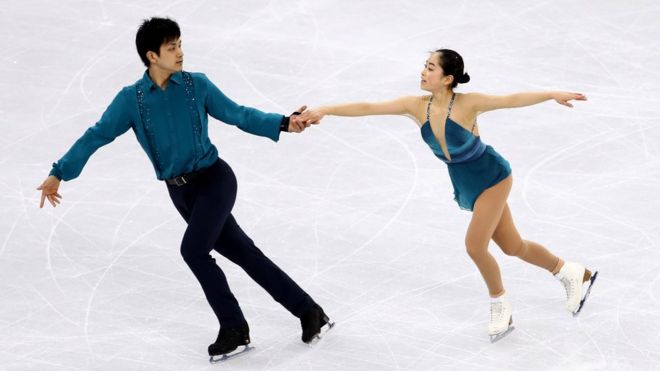
Image result for olympics 2018 figure skating yuri on ice

Shoma UNO

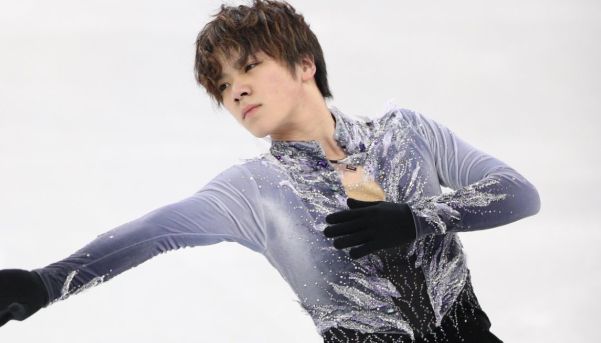
My personal FAVORITE solo skater, this sleepy boy stole an overwhelming lead in the team event’s men’s short program by almost 15 points with Vivaldi’s Winter’s 1st Movement! Following lackluster performances from Patrick Chan (Canada) and Nathan Chen (USA),  Shoma showed up at the very end and pulled the ice out from under everyone, granting Japan those gratuitous 10 team points. Whether he knows it or not, scoring above 100 in the short (103.25) is a tremendous feat (an Olympic record, in fact), and it’s unbelievable that he’d go on to do even better in the single!
shoma.PNG

The men’s single short program rolled around and Shoma, somehow nonchalantly, shrugged off his Olympic record-breaking skate WHICH HE JUST PERFORMED: 104.17, not the best in the world but a personal victory for the guy (leaving him in third place). Skating last in the men’s free, he was challenged by needing to overcome both Javier and Yuzuru’s perfect performances. And again, Shoma delivered!! After falling during an attempt at his first quad, Shoma began laughing to himself, letting the positive vibes of officially being done pump his adrenaline. Culminating in his final efforts to surpass his best friends and rivals, Shoma exploded in the VERY LAST MINUTE, pulling off all kinds of insane jumps back-to-back and landing them flawlessly—I honestly couldn’t believe how driven he was to reach the top! Shoma finished with Olympic Silver, placing himself right in front of Javi but before his “eternal goal, his eternal idol” Yuzuru Hanyu.
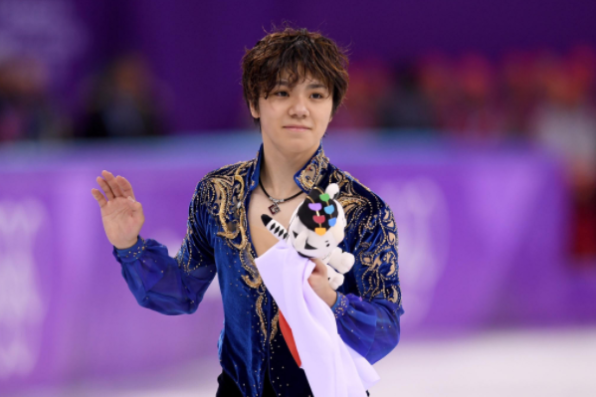
shoma flag.PNG

To quote a fan I follow on Twitter:

The boy who quietly carried Japanese figure skating through two Grand Prix assignments, the Grand Prix Final, Japan Open, 4CC, the Olympic Team Event, and the individual who placed 1st or 2nd every single time. Thank you for all you’ve done. I am so proud of you.

Shoma Uno had yet to completely step out of Hanyu’s shadow, but in the 2018 Olympics, Shoma proved to the world that he was more than worthy of standing among figure skating’s greatests. Now, go get some sleep, my guy—you’ve got a lot of video gaming to catch up on!

Yuzuru HANYU

At this point, I’m not even sure what I can add about Yuzu. Coming out of a terrible ankle injury in 2017, Hanyu just began jumping again a few weeks before the Olympics. He had a lot to live up to as the best skater in the world, but he was more than determined to fight for his championship title. Winning gold at the Sochi Games in 2014, was Hanyu honestly able to hold his own against the world?

Clearly, we had nothing to worry about.

Related image

Claiming first in both the men’s short and free programs, Pooh-kun rained down from the heavens, shocking viewers who were unfamiliar with the tradition of his fans. Yuzuru’s performances were absolute healing wonders, his short program’s technical score breaking the previous Olympic record (which I believe he had set). Nathan Chen might’ve broken the record for the free, but Yuzuru’s consistency in executing his masterpieces made him the real gold winner here.

At the end of a long and stressful season, Yuzuru Hanyu—the living legend, the King of the Ice—defended his Olympic Championship title, and I wouldn’t have had it any other way. Among all his other successes, he will be remembered as the skater who rose from injury to infinity through sheer strength (and unity) of body and mind, a reminder not to underestimate the great athlete of Japan.

hanyu.PNG

Competition Around the Globe

Javier FERNANDEZ (Spain)

One of the few skaters I knew before the Olympics, Javi is such a charmer both on and off the ice. Though he’s rinkmates with defending champion (among many, many other titles) Yuzuru Hanyu, even sharing the same coach (Brian Orser), there’s never any animosity detected between the two. The two are real dorks around one another, actually, and when Shoma’s there, it’s the GPF triplet that goes waaaay back. I have Javi on this list not only because he skated excellently (earning a season’s best in both of his skates, ultimately placing him in third), but also because he became the first skater from Spain to ever medal in the Olympics. Following Shoma’s skate, Javi told Yuzuru that this was likely the end of his career, to which Yuzu broke down into tears repeating “I can’t do this without you.” As if my heart hadn’t shattered enough, in a closing interview, Javi confirmed that he was pulling out of the the World Championships in Milan. The accomplished Spanish skater unexpectedly swooped in and snatched my heart, proving that long-lasting friendship IS possible (and beautiful) in competition.
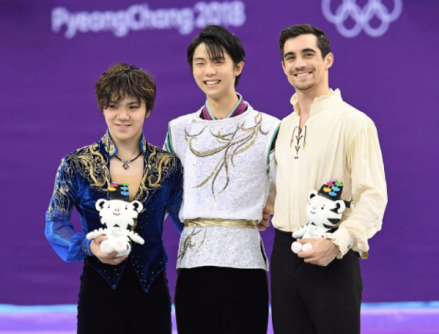
gpf trio.PNG

That concluded the men’s single: Javier, Shoma, and Yuzuru—dream results for any longtime fan of this GPF trio of friendship!

Gabriella PAPADAKIS and Guillaume CIZERON (France)

Papadakis is an incredible skater who shouldn’t have had to deal with a wardrobe malfunction—of all things—at something as big as the Olympics. What hurts even more was that BOTH their short and free programs were flawless, meaning that they WOULD have taken first (which they held for a while), as their score in the free was a point higher than reigning champions Tessa and Scott of Canada’s free score (which also means they would’ve set a world record). Heck, the poor woman should’ve been given extra points for coping with such a trivial matter! But unfortunately, that’s not how the game is scored, and the show must go on.
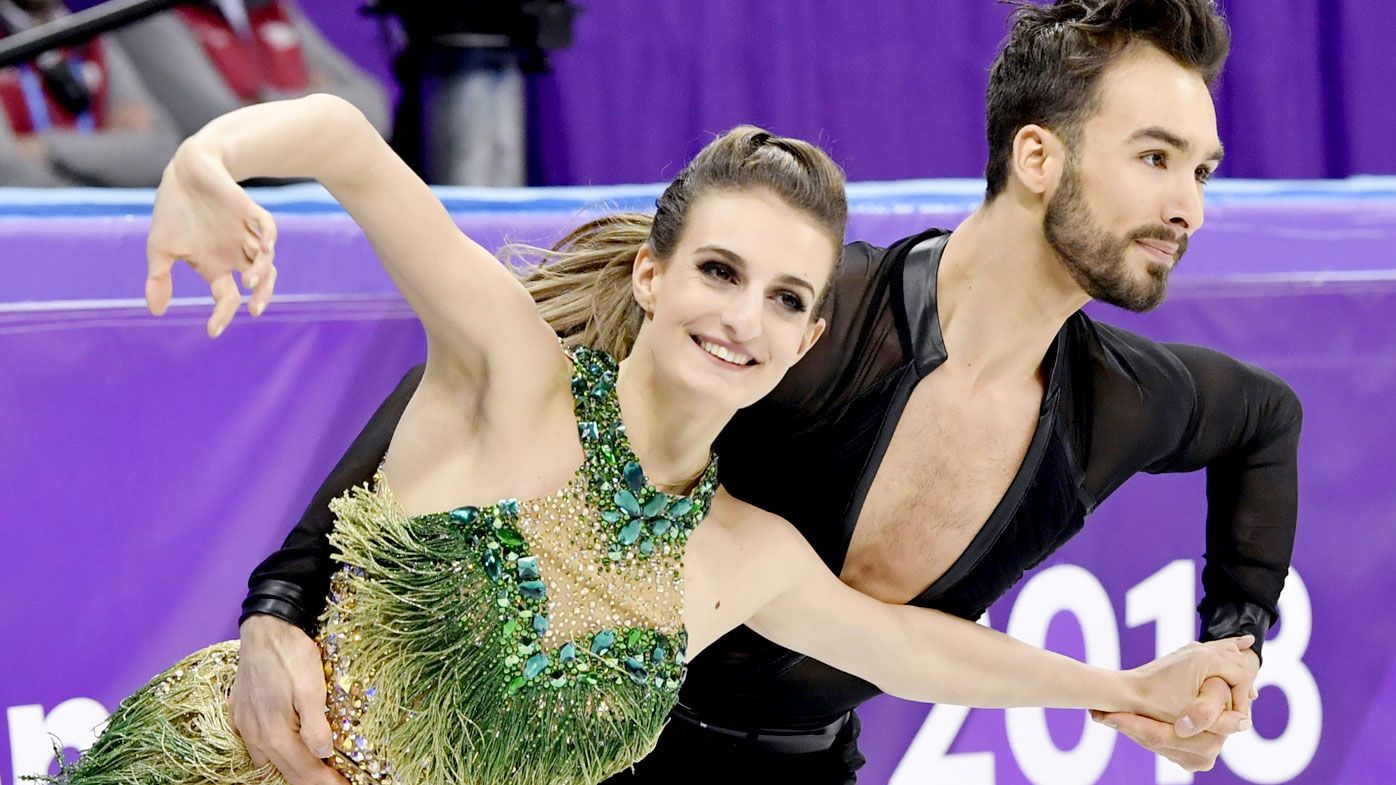
Image result for olympics 2018 figure skating papadaki

Evgenia MEDVEDEVA (OAR)

Ahhhh, oh Evgenia. Beloved as an 18-year-old Russian superstar and a open young fan of anime and Japanese media, Evgenia didn’t let a foot injury sustained back in 2017 stop her from continuing to achieve new heights. She opened up the ladies short program in the team event by breaking her own record set in the short—of which she broke again in the single short program! Perfect jumps, strong lands, and masterful conveying of emotion EVERY TIME. Also, her arrangement of Chopin’s Nocturne in C Sharp Minor (No. 20) was so, sooo beautiful. I’ve really come to love Evgenia’s journey both as an anime fan and the world’s greatest female skater. She always seems to have fun with the sport and its peoples, but also never underestimates their abilities and individual hard work. If you enjoy watching young champions fight for their title, be sure to follow Medvedeva in the last event of the Olympics, and perhaps beyond this great competition!

Related image

Alina ZAGITOVA (OAR)

A rising star in figure skating, 15-year-old Alina Zagitova poses more of a threat to Evgenia’s supremacy than any other female skater in the world. She’s already bested her in one major competition, and Alina’s only direction is up. Alina’s style is very Russian, sticking to classical music, the finesse of ballet, and using her slender figure to pull off some explosive jumps. Zagitova is chaos perfected, and as she maintains the lead on the ladies single short program, surpassing Evegenia’s newly set world record RIGHT AFTER SHE MADE IT, you can guarantee that the thrilling free program finale will continue the Olympic Battle of the Russian Princesses.

Image result for olympics 2018 figure skating alina

Aliona SAVCHENKO and Bruno MASSOT (Germany)

Of all the stories here, Aliona’s surprisingly is my favorite. When the Aliona first stepped onto the scene, I found her looks to be way too “prickish” for my tastes. But once the downbeat of “That Man” by Caro Emerald played, Savchenko burst into life, becoming the fiercest, sassiest woman in the entire stadium. Love may be a drug, but the charisma Savchenko was addictive. Their performance was more engaging and playful than any of the pairs’ out there, and though she was able to hold up 3rd in the team’s short program (right in front of the Knierims), they fell apart in the team’s free.
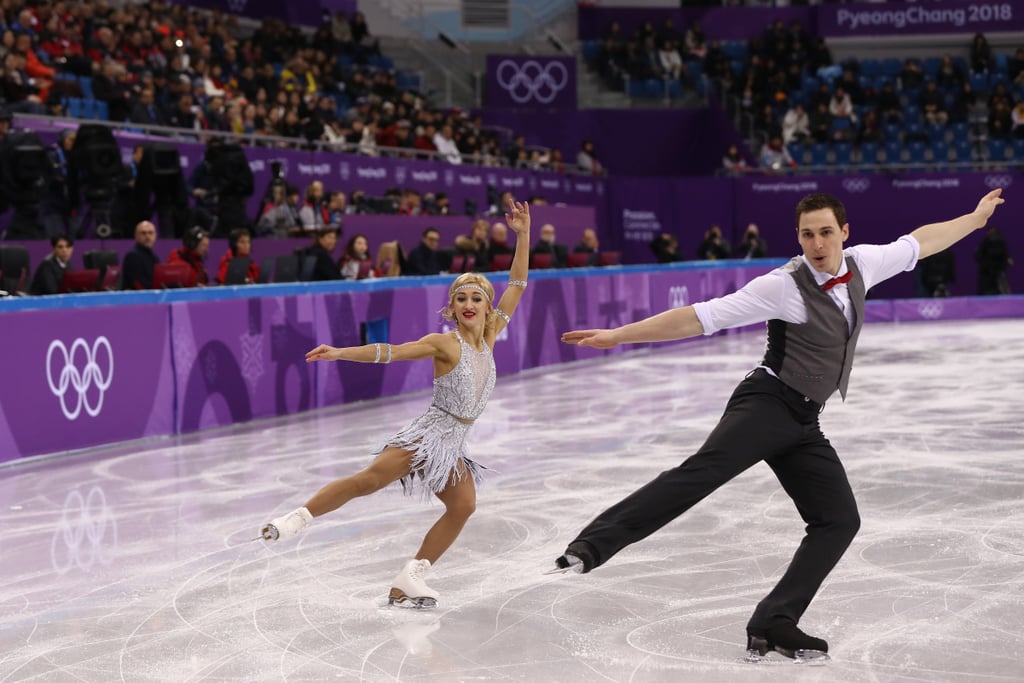
Image result for olympics 2018 figure skating savchenko

This was Savchenko’s FIFTH FREAKIN’ OLYMPICS and all she wanted was the gold. FIVE OLYMPICS. The woman is old, 34, and her time in the spotlight was quickly fading—if it wasn’t going to be here, it was never meant to be. In terms of Olympic records . . . five visits, over twenty years of waiting, many partners, and only two bronze medals to show for it? Yeah, she wasn’t going to have a single mistake.

So she skated her heart out in the pair skate short and free programs—with Massot, of course. For someone her age, physically, this was the end. To her, age was just a number. And though one may call it luck, or chance, or even karmic destiny, it was really Savchenko’s unwavering passion for victory—and Massot’s want to not fail her—that finally, FINALLY won Aliona Savchenko the gold medal. Earning the highest score ever recorded in pairs free skate, it was one of the most masterful, intense dances I’ve ever seen in my life, and it ended in her crumbling to the ice smiling, crying, winning.

In her fifth trip to the Winter Olympics, Aliona Savchenko finally won gold. 

Image result for olympics 2018 figure skating savchenko

Through her competitive edge and triumph, I saw firsthand that hard work, grit, and perseverance will never let a person down. When faced with failure: try, try, try, and try again. One day, you’ll get there, and the achievement will be everything that you dreamed of and more.

“All competitors who are competing here are really strong, not only in body, but strong inside because we are sportsmen.” —Evgenia Medvedeva

Bringing it All Together

I think I’ve fanboyed enough about the Winter Games. Unlike any other competition in the WORLD, the Olympics has the power to unite practically all people on the planet in harmonious sportsmanship. It’s a fun, vibrant time to be alive, always full of excitement, team spirit, friendship, and the hope that we can reach our true potential through bridging the language barrier and competing against the best and the brightest. The world is much larger than we often think, and by watching the Olympics, we are reminded that talented, hardworking individuals reside all over the place—the Olympics just grants them the spotlight, and helps draw out that spirit for all to see.

If you missed the 2018 Olympic Winter Games, never fear—you can always catch highlights on the news, as I’m sure the athletic high will linger for a while longer. I can’t encourage you enough to join everyone in Tokyo 2020 for the Summer Olympics, and then back in Beijing for 2022—the completion of this Asian circuit!
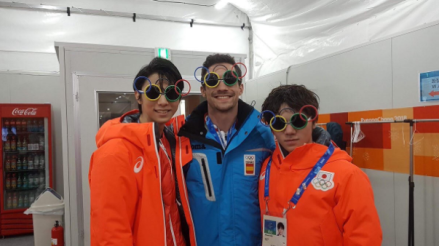
legendary olympic glasses.PNG

Did you have a favorite sport to watch this winter? What teams, individuals, or pairs did you find yourself cheering for? Favorite moments? Believe it or not, there’s SO much I left out (like Canada’s victories, China’s tranquility, and Italy’s cool numbers), so I want to know all about YOUR Olympic viewing journey! Don’t forget that as far as figure skating is concerned, the ladies free is still left on Thursday—a thrilling battle between the Russians, no doubt! Let me know what you thought of this coverage post down in the comments!

This concludes my February 20th (whoops!) entry in the OWLS “Competition” blog tour. Anituber Gigi of Animepalooza has a video for you on one of her favorites, the rivalries in Yowamushi Pedal which you can watch right here! Catch the amazing Irina (Drunken Anime Blog) today, February 21st, on the beloved Hikaru no Go, as I’m positive it’ll be an impressive write-up (as always)! Thank you so much for reading, and until next time, this has been

– Takuto, your host

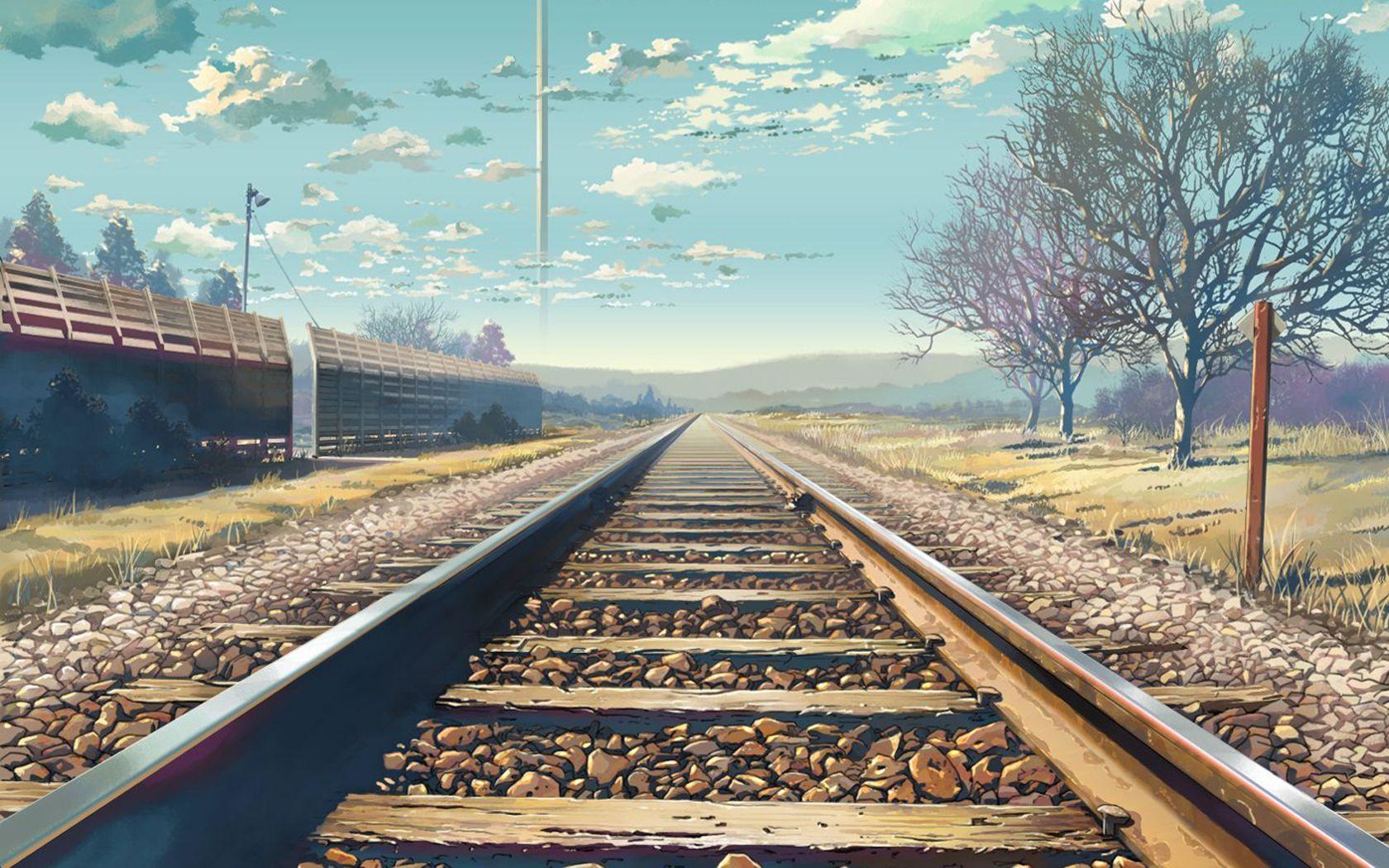
On Love, Loneliness, & the Growing Distance Between Us | The Works of Makoto Shinkai

Have you ever had that “feeling”? You know the one—when you notice yourself suddenly skipping about here and there, flattering others in an uncharacteristically cheery way that makes them remark, “I want what they’re having!” Some call that expression—that intense feeling of deep affection, interest, or yearning—love. It’s but a simple four-letter word, and yet it can give some people enough purpose and motivation to perform wild, breathtaking feats, going to the greatest of lengths just for that shared pleasure of joy. “Love makes the world go round,” it truly does.

Such a complex and powerful emotion often finds its way into animation. Specifically, the romance genre of anime holds steady as one of the field’s experts. Its incredible variety masterfully demonstrates that love is not only sweet and tender, but can also be realistically crushing and emotionally devastating.

Image result

The latter is the kind of stories director Makoto Shinkai likes to tell. Rather than measuring up as a statistically sound series or film—that is, a rated “10/10” on various elements such as plot, pacing, characters, animation (his forte), sound etc.—Shinkai films excel at eliciting a feeling, usually on the heartache end of the emotional spectrum. To quote his latest award-winning hit, Your Name., Shinkai’s films provide, simply put, “Nothing more or less than a breathtaking view.” Each possess their own fair share of flaws, some more than others, but beyond the little plot holes lies a relatable character struggle that just might tread a path you yourself have walked.

And it’s exactly that strong resonance between one’s own experiences and Shinkai’s ill-fated cast which makes him one of the bests in the industry. Everyone wants to feel connected to others, and Shinkai depicts through his picture-perfect worlds what that connection is really like, and why it isn’t always everything that we wanted after all.

In the iconic, beautifully cruel style which solidified his films as masterworks of modern animation, Makoto Shinkai appeals to humanity’s most innate fears of rejection and loss by directing his characters through the timeless themes of love, loneliness, and the growing distance which separates people as time goes on. These lessons teach us that though life has its fair share of heartbreak, each relationship we stumble into and every opportunity we miss out on still carries the potential to live out a better tomorrow—you just have to look beyond the distance.

Image result


A comparative study and light analysis on the works of Makoto Shinkai. For each title, I will delve into the big issues or “separators” at hand, factoring in whether the story’s realism and emotions which the endings provoke somehow determine the possibilities for happiness and sadness alike. As such, SPOILERS for nearly all of his films WILL BE PRESENT. Also, these will NOT be individual reviews for each title. For those prepared to relive all of these amazing films, enjoy!

flowchart shinkai.PNG

(NONE OF THIS GORGEOUS ARTWORK BELONGS TO ME. All praise and ownership goes to Makoto Shinkai and CoMix Wave Films.)

She and Her Cat (1999)

I will always be by your side. After all, I am your cat.

Image result

Aside from the music (by Tenmon), this 4-minute short was completely created by Shinkai alone, marking the early beginnings of his budding career as not only an animator and writer, but also a director. It’s the short tale of an average Japanese girl living in an apartment told from the viewpoint of Chobi, her beloved cat. Chobi speaks formally and passionately about his owner, yet he still has this pure, unclouded perspective of a cat. Arguably his softest work yet, She and Her Cat: Their Standing Points stood out due to its innovative (and awfully cute) exploration of love.

What ultimately separates the two from “eloping” is, well, obvious—“She” is a human girl, a woman, while Chobi is a cat. It’s an unusual relationship, but that doesn’t stop the film from being so unrealistic as to the plot being “impossible.” The woman, nicknamed Kanojo by the community, faces her own hardships in the real world (including a possible love interest), and though Chobi would like to know what she does and where she goes once she closes their apartment door, he understands that her life likely isn’t all sunshine and roses—it doesn’t really concern him. All that matters to him is that she returns home at the end of a long day.

Like with all of Shinkai’s films to follow, what separates them (different species, the “language barrier”) also unites them, for through each others warm embrace—that of a cat and his owner—they find comfort and care. Simple, peaceful, heartwarming.

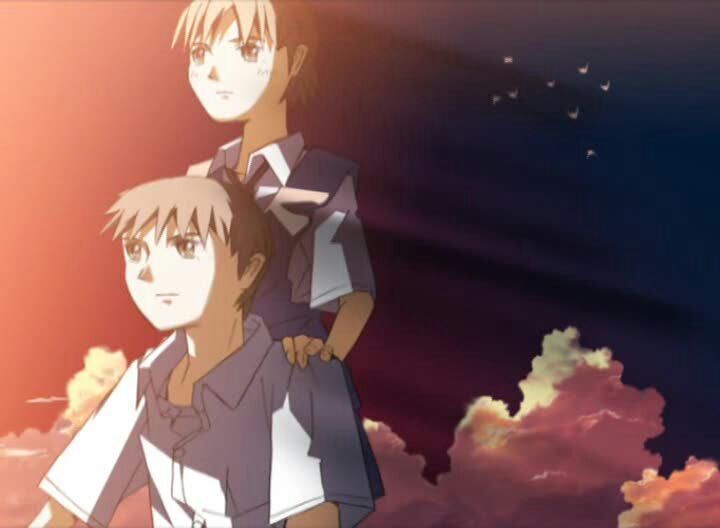
Voices of a Distant Star (2002)

We may be the first generation of lovers separated by time and space.

Image result

Stepping up his game, yet still working alone (aside for Tenmon’s gorgeous piano and string score), Shinkai quotes this rather aged 2002 short film as the piece which put him out in the world. Set in the near future, mankind’s ambition to explore space separates Nagamine and Noboru, a young girl and boy in junior high. As Noboru enters high school, Nagamine is sent off on an expedition into space’s infinite depths. The farther she strays away from Earth and her Noboru-kun, the longer it takes for their texts to reach one another. Minutes turn into hours, days, weeks, months, and soon—

Image result

Though inventive at its time, the 3D graphics haven’t aged all too well. But thematically, Voices of a Distant Star packs more of an emotional punch than most 12-episode series could today—and this film only clocks in at 25 minutes, including the credits! It seems as if the big separator in Voices is the physical distance, but waiting for their messages of goodwill to traverse the vast blank void that is space ushers in another factor: time. As Nagamine’s unchanging body fights on (in what I can only imagine to be early-2000 Shinkai’s mecha dream-of-a-giant robot), Noboru ages at what feels like an alarming pace. In reality, his growth rate is no different from any of ours is, but the way Shinkai conveys the rapid passage of time only accentuates our lovers’ tragedy. Is it realistic? Even as a sci-fi flick, not really. But does its bittersweet run end on an ambiguously hopeful note? Absolutely.

Voices is arguably the first film in Shinkai’s line-up to convey this notion that perhaps the lack of realism can lead to a happy ending. Very interesting . . .

The Place Promised in Our Early Days (2004)

On those now-distant days, we made a promise we couldn’t keep.

Related image

To tackle the 1 hr. 30 min. length of this next film, Shinkai needed a team. Between his early beginnings and now in 2004, he partnered with the animation studio CoMix Wave Films. The results—The Place Promised in Our Early Days visually blew audiences away, nearly more so than with 2002’s Voices. Set near the turn of the century in an alternate reality Japan, which is split by America and the Soviet Union, young boys Hiroki and Takuya aim to fly to the top of the fantastical, unbelievably high Hokkaido Tower using an old drone. While at first a secret for just the two of them, Sayuri, a girl Hiroki and Takuya both like but would never admit to one another, discovers their secret, leading to the boys putting their project on indefinite hiatus. When Sayuri suddenly disappears from their life, however, the two come to realize that reaching the mysterious tower—the promised dream of their childhood—might be the only way to save her.

Image result

Hiroki and Takuya experience a loss of youth, of innocence, as they learn to develop their own dreams and ideologies different from their childish musings. What once united them in friendship tears them apart, and the disappearance of Sayuri and discovery of her untimely illness are what kicked off the depressing events that plague the film’s middle. To watch two friends come at each other’s throat can be painfully real to some, as we’ve all have our fair share of little spats with friends. Additionally, I’m sure we’ve all seen sickness and temptation take the life of a loved one and push them into a place beyond our reach. Thankfully, a happy reunion awaits the cast at the end, leading to the belief of how sacrifice can yield rebirth.

Once again, Shinkai writes with a science fiction mind, and although people still relate to Hiroki and Takuya, the entire premise is unrealistic, nothing more than a child’s fantasy. Can you still learn from it? Of course, but come Shinkai’s next film, reality takes a turn for the worst—the start of a tragic trend.

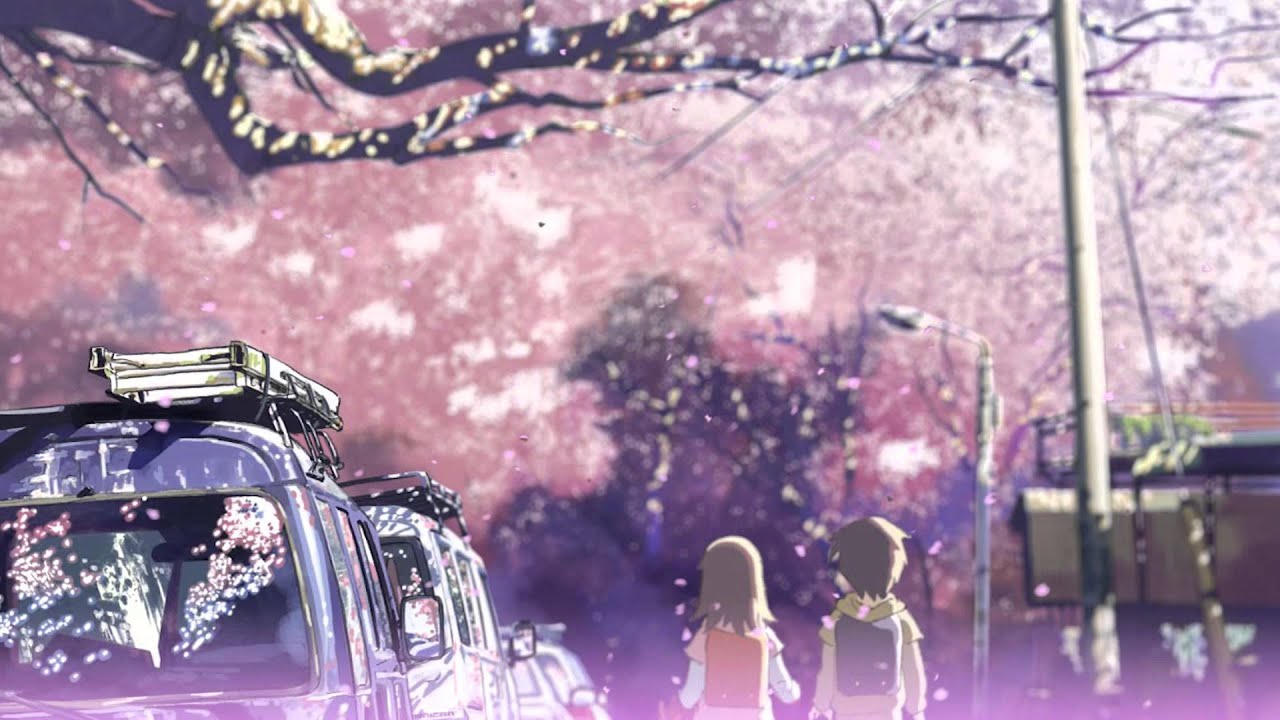
5 Centimeters Per Second (2007)

At what speed must I live to be able to see you again?

Image result

Here it is, Shinkai’s greatest creation (thematically, that is). I’m sure it needs no introduction, unlike his more obscure early works, but in case you forgot, it’s the story of two very close friends and classmates: Takaki Toono and Akari Shinohara. Elementary school should be a time of play and triviality, but for these two, such isn’t the case. Rather than run around on the playground, Takaki and Akari would rather read in the library, or simply chat about life’s musings. Just as they become close, however, Akari’s family plans to move. Takaki and Akari send letters to one another, but Akari only continues to move further and further away. In a final attempt to see Akari before she’s beyond his limits, Takaki sets out to reunite with her. His unlucky trek attracts a cold winter’s blizzard, delaying the series of trains to Akari’s town. But that doesn’t stop the two from finally, FINALLY meeting once again. And boy, does your heart just melt the frost away.

Equal parts faith and love, Takaki made the effort to travel out in the cold, sure, but Akari was the one who waited—the one who sat there miserable and alone with nothing to do but pray that her young love was on his way. It was proof that their love should be everlasting, but alas, that’s not the story Shinkai is trying to tell. In this first episode, it is a physical distance which separates our main couple.

Image result

A chain of short stories about their distance.

After this touching first episode, the film enters its next “story.” Time passes on. Takaki, too, moves away from his hometown to the warm regions of Tanegashima (a stark contrast to the first episode’s frigid finale). Now a high schooler, Takaki meets a new girl, and though she tries to admit her feelings to him, Takaki knows all along that his heart only belongs to one person: the woman of his past. Time and other relationships have left him traveling aimlessly. In the final episode, Takaki is old. Maybe not in the physical sense, as late 20s—early 30s is still quite young, but his spirit definitely seems lost—his heart broken from years without seeing or hearing from her.

The painful reality is that, as life would have it, she has moved on, already engaged to another man. And that’s just it—the final separator which drives these now-unrelated adults is life itself. Life is always changing, and as we continue down our own paths, we sometimes have to leave others behind.

Image result

At its core, 5 Centimeters Per Second strives to present one’s “first love,” and how difficult it is to hold onto it—so much so that it almost feels not worth experiencing at all. Takaki, by his end, is lonely, depressed, and empty. It’s a sad film, yet a brutally honest one. Shinkai’s first feature-length film in a world without giant robots or fantasy towers is painfully real, and that aspect remains what distinguishes Shinkai from today’s anime directors. By this point, Makoto Shinkai had earned the appreciation and respect of his more mature adult viewers.

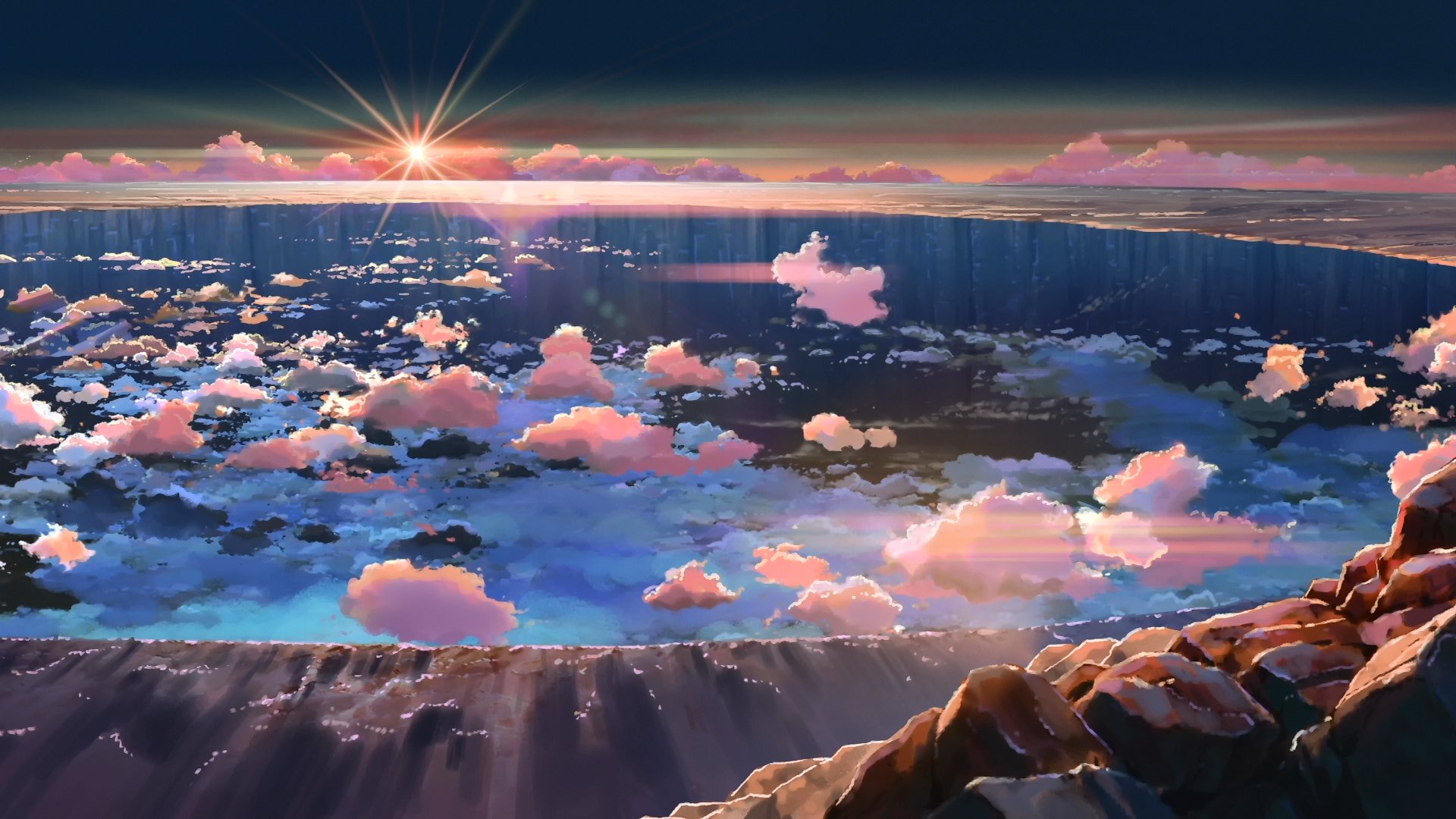
Children Who Chase Lost Voices (2011)

This is the journey to know the meaning of “goodbye.”

Image result for children who chase lost voices

Shinkai returns to the realm of fiction with this next film. Clearly inspired by the magical presentation of Studio Ghibli movies, the story follows young Asuna, an excellent student who maintains her family’s house in a rural town during her mother’s absence. Aside from spending time with nature, Asuna is alone. She finds escapism in her secret hideout up in the mountains, and frequently tunes into her old crystal radio for relaxation. One day, she unexpectedly picks up on a curious frequency: a rather melancholic melody, different from any song she had ever heard before. As if fated to meet, a mysterious boy named Shun rescues Asuna from a wild, bizarre creature, unintentionally dragging Asuna and her teacher, Mr. Morisaki, on a perilous journey to Agartha, a land long-lost to time and human presence.

Though not his smartest film by any means, Shinkai has been longing to visit this colorful, enchanting world—Agartha—for some time now. The luscious planet upon which Nagamine lands in Voices of a Distant Star; the domain where the comatose Sayuri resides in The Place Promised in Our Early Days; Takaki Toono’s realm of dreams in 5 Centimeters Per Second—each time this wondrous world reappears, it offers comfort to the characters. Not coincidentally, the design remains the same, too. From the gorgeously iconic “Shinkai clouds” to the seas of green grass and remains of old ruins, Agartha FINALLY gets the thorough fleshing-out that it has since deserved, and I’m just glad we got to go there at long last.

Image result

But Children Who Chase isn’t all sunshine and roses. Awaiting Asuna and Morisaki is an adventure rife with death, and a thorough demonstration as to what happens when man attempts to bring those passed back to life. Foolish, blind greed and a gaping sense of loss are what separate Morisaki from someone pure-hearted like Asuna. But in the same way, the journey of letting go and understanding what “goodbye” truly means allows for the film to end with an odd, lukewarm sensation of happiness. Adventure yields danger, but to those who learn their lessons, the hope to live a fulfilling life burns on. God may be a cruel teacher, but so is history.

Image result

Children Who Chase Lost Voices is far from a realistic story, and thus, the pattern of Shinkai’s fantasies ending contentedly continues. Is he trying to say that reality is just full of heartache and nothing else? Perhaps so with his next couple of films.

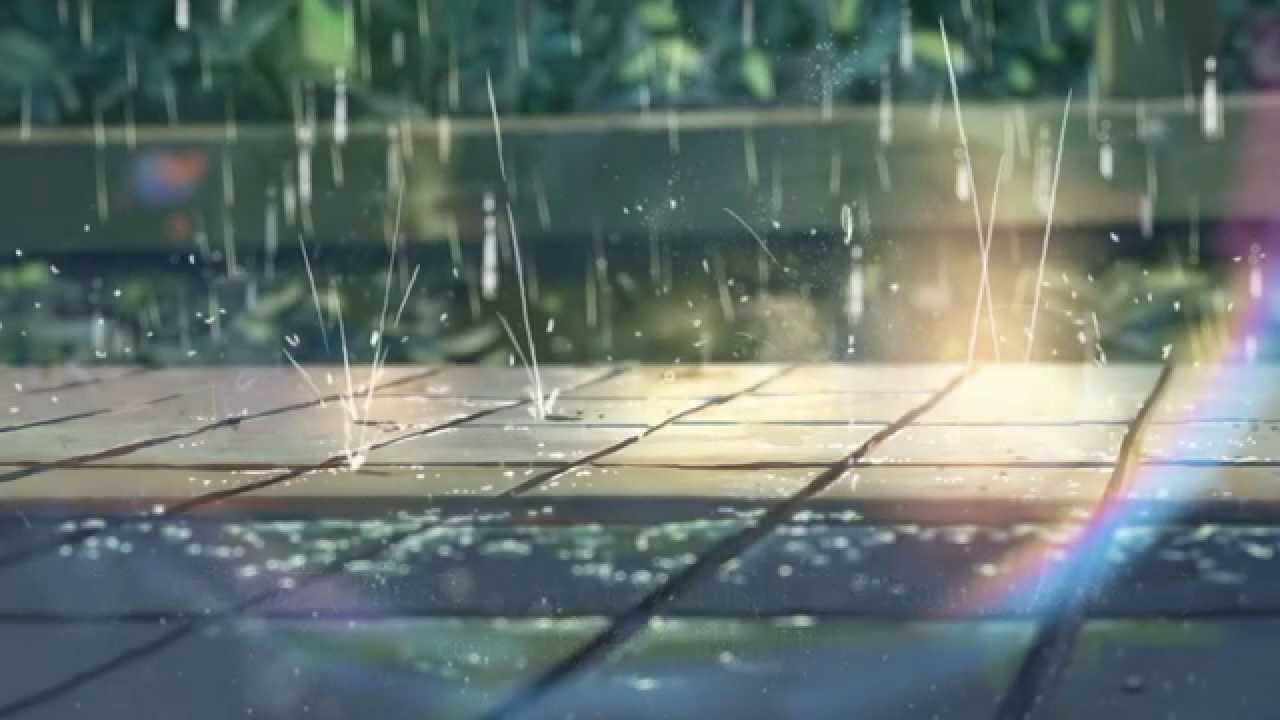
The Garden of Words (2013)

Before there was love, there was loneliness.

Image result

A personal favorite of mine, Shinkai’s The Garden of Words provides a 46-minute feels trip through an unusual couple’s short-lived romantic spat.

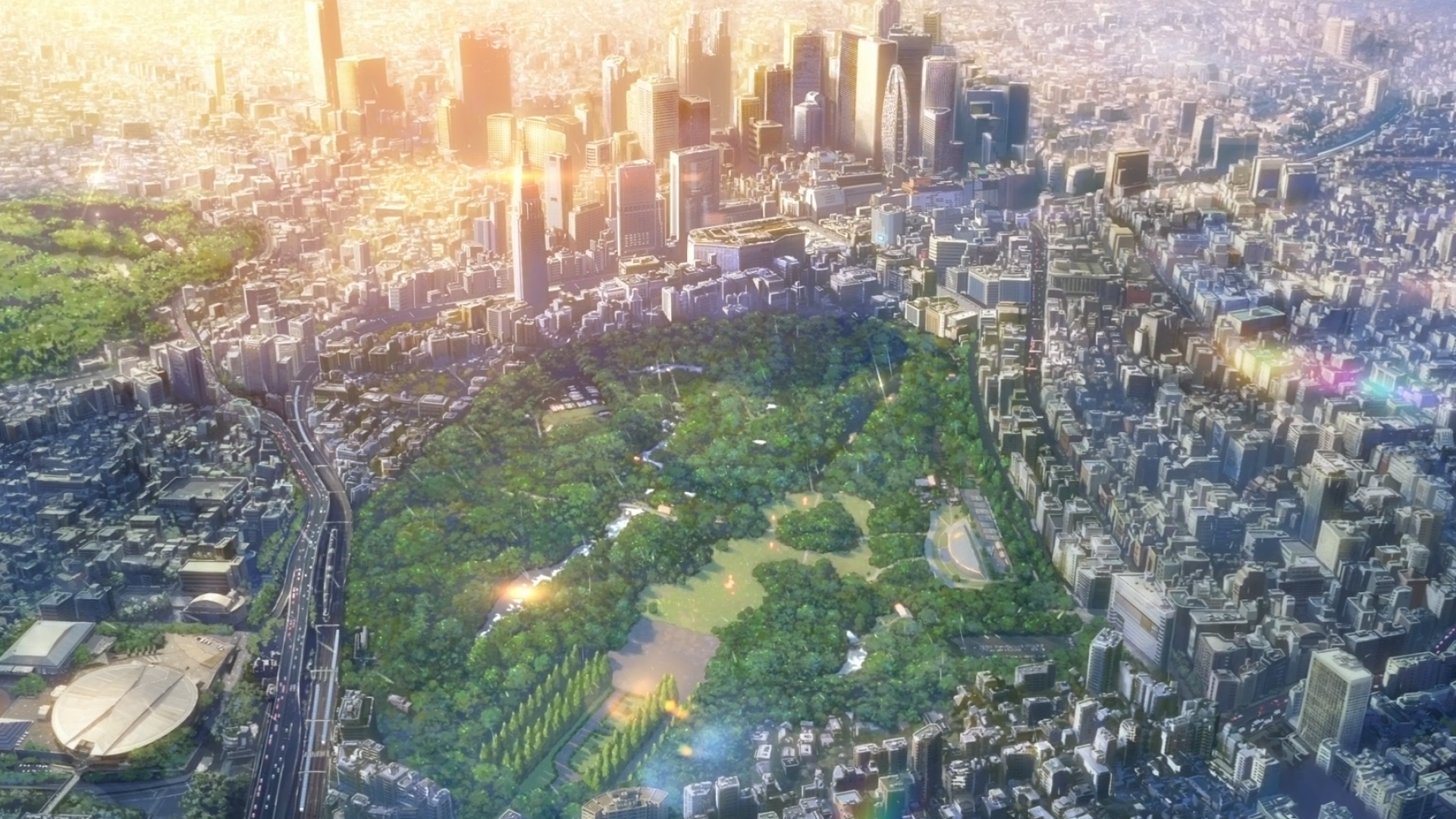
Tenmon takes a break from the music to allow talent like Daisuke Kashiwa’s immersive piano soliloquies to establish an atmosphere unlike ANY other. And the visuals—THIS is the incredible level of quality which defines Makoto Shinkai’s digital landscaping, lighting, and realism today. Visually, The Garden of Words remains the most beautiful short film I have ever seen, and it will probably hold that title for a long time to come!

Related image

On a rainy morning in Tokyo, aspiring shoemaker Takao Akizuki does what every student on a rainy day wishes they could do—he skips class to sketch designs in the city’s beautiful garden. Thinking he’d be all alone in this calm misty weather, he accidentally meets a beautiful yet reserved young woman. Her name is Yukari Yukino, and though she continues to skip out work to drink and eat chocolates in the garden, Takao takes a liking to her poetic words. To [figuratively] get her back on her feet, Takao offers to make Yukino new shoes. And thus they vow to themselves: for each day it rains, I will spend time with her/him.

More rainy days arrive, and as the two secretly convene in their garden of words—of shared acceptance and belonging—the two unknowingly start to lighten their own personal burdens just by being together. Tokyo’s rainy season may be long, but like all good things, it doesn’t last forever. As warmer days creep ahead and the chance for precipitation diminishes, Takao and Yukino’s relationship risks drying up like the rain which brought them together.

Image result

The Garden of Words paints the true vision of life’s loneliness before love intervenes. It’s the gentle story about finding solace in another, and learning to alleviate one’s personal worries through something as simple as conversation. At first, a lack of courage casts Takao and Yukino as an awkward couple. Only after Yukino is revealed to be a teacher at his school do we see the true separator at hand: the age gap, and the societal notions that place stigmas on teacher–student relationships. YUKINO KNEW THE WHOLE TIME, yet held of on saying anything for fear of judgement. And in the end, Takao yells at her, forcing her on her feet through their compelling emotional conflict.

Realistic in every sense of the word, its finale feels bittersweet, yet resolved. Separated from each other, the two resume pursuing their own personal aspirations. Though somewhat sad, in truth the ending is optimistic about the different directions Takao and Yukino take, as it was through comfort in one another’s presence which allowed them to find their way back on the path—and with a stronger, more confident “footing” this time around.

The Garden of Words rings true as the new Shinkai standard, but thematically, it revolutionized Shinkai’s game: for the first time, a realistic story does, in fact, yield a happy ending.

Someone’s Gaze (2013)

There are a lot of things you two have forgotten.

Image result

Returning to form, Makoto Shinkai cranks out another charming yet touching short (6 minutes in length) with the release of The Garden of Words. It hearkens waaay back to his beginnings, with the simple yet relatable tale of a girl and her cat. Aa-chan lives in a near-future Japan, and has recently made the big transition of living on her own following graduation and the start of a new job. With her mother working overseas as a doctor, her loving father is left behind at the apartment with the family cat, Mii-san, who happens to be very old by this point. Seeking a way to reach out to her, her father tries several times to reconnect with his distancing child, but the gap is too awkward for him to bridge. Eventually Mii-san passes away, but this sudden grief holds the power to reunite a tired daughter, a busy mother, and a lonely father.

All that emotional energy conveyed in such a short time serves to remind us as to Shinkai’s greatest strength, that is, being able to make his viewers experience heartbreak followed by hope (or hopelessness) in a matter of mere minutes. Someone’s Gaze is especially relatable, as the burnout experienced by today’s youth and the parental fear of their children growing up in today’s world both hit us hard at some point in our lives. With maturity comes opportunity, but that often involves temporarily leaving an old way of life—and the people in it—behind. In truth, familial bonds change over time, and as we grow up, it can be hard to maintain that “want” to communicate.

Like The Garden of Words, Shinkai permits for a realistic story to end optimistically hopeful, perhaps marking that the guy really is turning a new leaf from his long history of depressing, failed love stories.

Cross Road (2014)

I sought to find something great, and while it may not have been what I expected, I found something . . . or rather, someone. 

Image result

Although this latest short is actually just a 2-minute commercial for the Z-Kai cram schools, it was still directed by Shinkai, and holds that same breathtaking, picture-perfect style to boot. As college entrance examinations draw near, two students living completely different lives focus their time and energy into a correspondence education service. Juggling their studies with their already-involved daily lives, the two diligently work towards that high goal of college admission, unaware of how much they share in common. It’s a brief yet inspiring “work hard, play hard” preview into a film that I can only imagine would’ve been absolutely stunning had it received the length it deserved. Not as absurd as those 30-second Cup Noodle ads, but even just a couple minutes more would have doubled the story’s length. I suppose we don’t always get what we want; such is life.

Despite the let-down of a run time, Cross Road still manages to follow a truncated version of the Shinkai formula: two individuals in similar situations are separated by different lives, but their unexpected meeting reveals that, through hard work, the hope to overcome their challenges increases. Call this a lighthearted take on the next and final film—the realistic outcome of what possibly could have been.

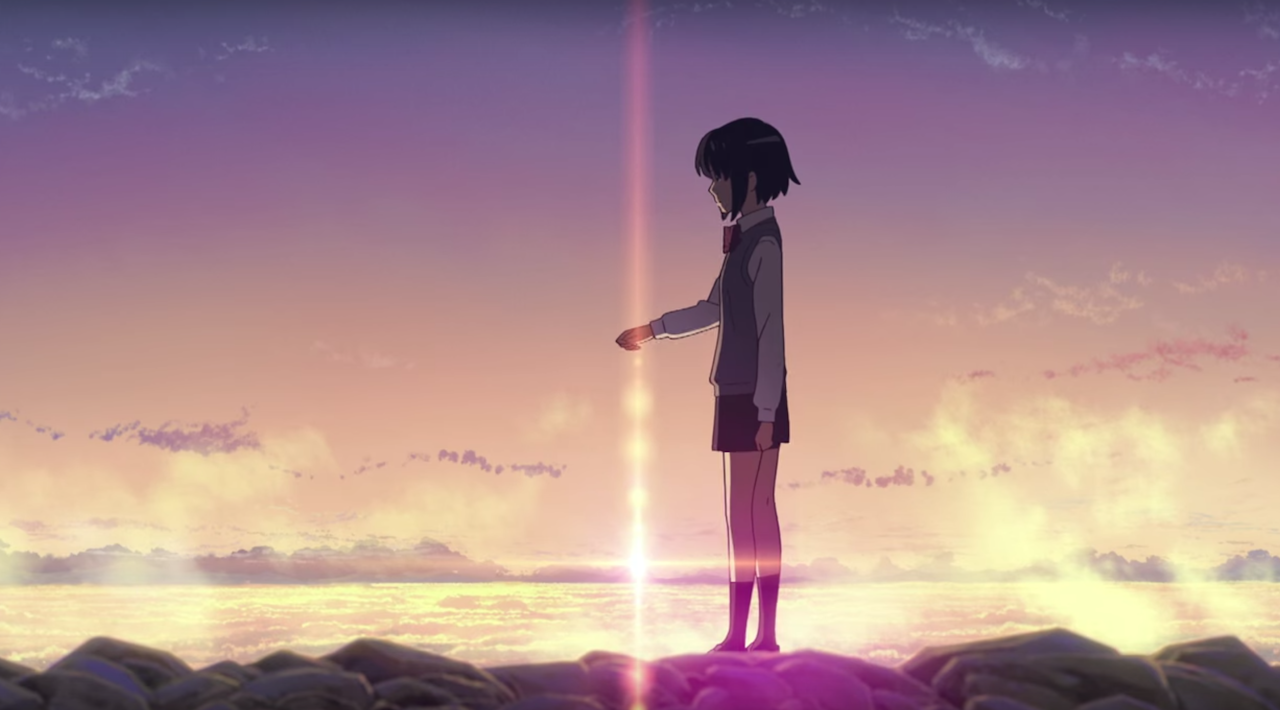
Your Name. (2016)

Wherever you are in the world, I swear I will find you again—no matter what. 

Related image

Your Name. exploded onto the anime scene, continuing to break record after record until it became the highest-grossing anime film in the world (among other nominations). Funimation and Madman Entertainment’s combined efforts to license, dub, and promote the film through staggered theatrical releases maintained its hype not just for the remainder of 2016, but for most of 2017, too. Even now, anime fans who are finally getting around to watching it share their praise with the community, reviving the excitement of this rom-com drama to no end. By this point, Your Name. wasn’t just another Shinkai film—it was a moving, breathing phenomenon.

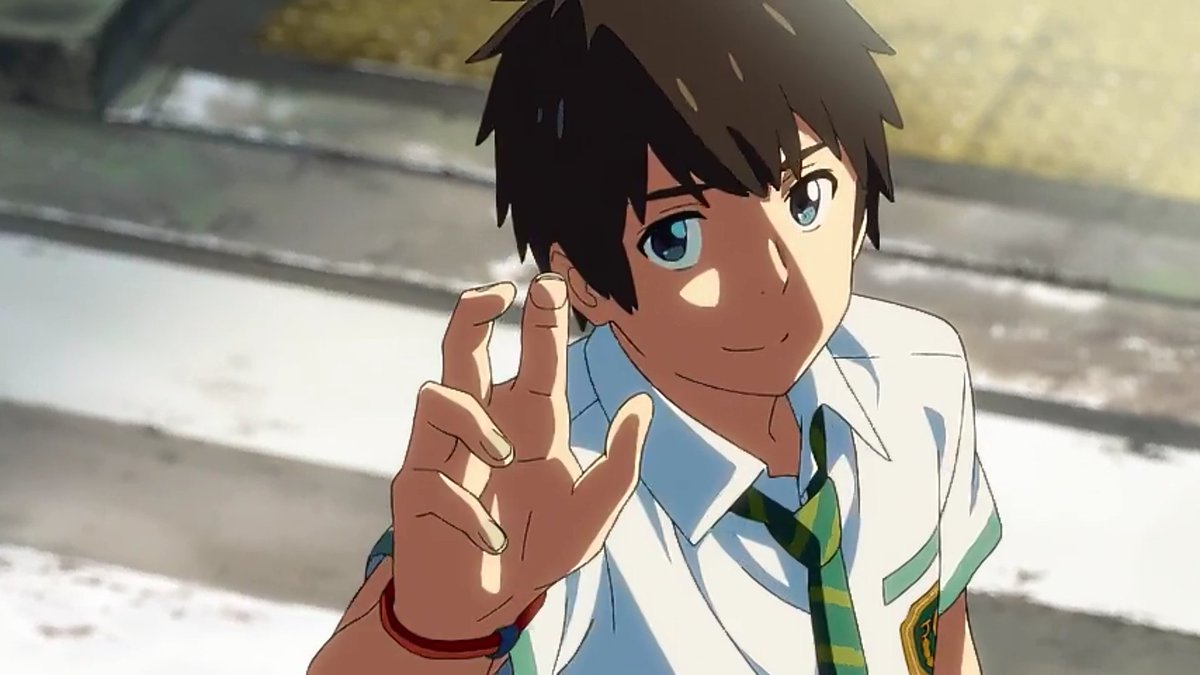
Like any high school girl born and raised in the Japanese countryside, Mitsuha Miyamizu craves the wonder and excitement of city life. Unfortunately for her, the family’s shrine needs its maiden, restricting Mitsuha to her life in the boonies. Meanwhile in the lively Tokyo, high school student Taki Tachibana labors away at his part-time job with the hopes of eventually pursuing a career in architecture.

Related image

One day, Mitsuha awakens to an unfamiliar ceiling, but the chic apartment and bright view of the city skyscrapers instantly identify as Tokyo. “This is my dream life! But wait . . . wha—I’m in a boy’s body!” Out in the countryside, Taki finds himself waking up in a similar frightening situation. A strange phenomenon swapped the two’s places, and in order to figure out the reasons for their predicament, Taki and Mitsuha live out random days in the other’s shoes, learning about the differing lifestyles, and that above all, fate works in mysterious ways. As Taki and Mitsuha desparately begin searching for the other, their actions begin to dramatically impact the course of destiny, forever altering the threads of fate which tie them together.

Related image

Your Name. almost feels like the culmination of all of Shinkai’s themes, plot points, and even character personalities that make a work, well, Makoto Shinkai’s. Enormous skies, photo-realistic cities, intense lighting, a calm atmospheric music score, themes based on things taken for granted in daily life, and lots of trains. THIS is what Shinkai represents to us now, and on that cinematographic level, Your Name. is perfection. (Also, like, Radwimps wrote the greatest insert songs to an anime EVER.)

A girl and a boy torn apart by an impossible distance, but brought together through circumstance and, of course, fate. At first, that distance is literal: Taki lives in Tokyo, while Mitsuha resides miles away living her humble country life. And part of that is the trick, the gimmick behind the landscape facade, for as soon as the big reveal of the comet Tiamat’s destruction is made, BOOM—time turns out to be the true separator here. Though Taki felt confident and sure of this feeling tugging at his heart, his confession was sadly three years too late.

Related image

And because of this he suffers. Mitsuha suffers. These star-crossed lovers save their beloved Itamori and all its kind, caring folk, BUT—as if their story weren’t painful enough—one last divider severs their last chance of reuniting: their memories of each other are lost to time. Is it a realistic element? Hardly, but it does lead to one of the most happily fulfilling endings I’ve ever experienced. Here’s why.

Makoto Shinkai’s latest film borders on tragedy. Up until this point, it was about to become the biggest heart-breaker in anime film history. But thankfully, Your Name. appreciates a sort of cosmic balance to all the good we do—Shinkai calls that seemingly magical, underlying, connecting force musubi, and we can thank it for honoring Mitsuha and Taki’s feelings for one another. By the film’s end, the two are left with just that—a subtle feeling of the all their shared struggles, surprises, happiness, sadness, inspiration, appreciation, love. . . now memories lost to a different time.

Related image

But when distance tried to physically separate them, Taki and Mitsuha took the trains;

When time placed a rift between them, dreams gave them clues to find each other;

When katewaredoki briefly cut their first meeting short, Mitsuha fought on to finish Taki’s mission;

When memories of one another’s name left their minds, love held on tightly to that lingering feeling—that’s why Taki wrote “I love you” on Mitsuha’s hand, for bridging the timeline gap at twilight involves giving up memories of the other. Names will fade, but emotions have the power to transcend time;

And when tragedy attempted to end their tale of romance and miracles, fate reconnected the strands of love to the cord of hope. Thus, Taki and Mitsuha became destined to meet again.

Separated by distance, connected by fate.

Related image

What Shinkai’s Works Have Taught Me

Have you ever felt that “feeling,” that despair of something that can’t be changed or is beyond your reach, but you still long for it anyway? I’d like to call it “love,” but Makoto Shinkai interprets such a complex emotion as “longing in solitude.” It is only through loneliness that we understand what compassion really feels like, after all.

Shinkai’s works tend to feature unusual yet somewhat realistic relationships, which more so play out as bittersweet than truly tear-jerking (save for maybe Your Name.) He covers a broad range of relationship stages, too, from the cutting of ties and moving on (5 Centimeters Per Second) to the early beginnings of expression (Garden of Words). Unlike most film writers and directors, he delves into themes like pain, longing, yearning, loneliness, and emptiness to give the audience stronger, almost more common emotions to connect with. His creative use of time laps emphasizes this distance or emotional disconnect that the characters and audience experience, and his hyper-realistic visuals never fail to immerse you in the setting he wants, be it on faraway roving fields of green, a quiet Tokyo apartment, or a rainy day in the park.

Related image

Most of all, through distance, Shinkai is able to explore the gap between two people’s feelings: why it exists, and how it is a natural part of the human experience. Life isn’t that glamorous fairy tale that Disney or Hollywood make it out to be. Instead, Shinkai tells us it can be messy, and often times painful to shoulder alone. It’s okay to fall both in love and out of it, as people are always changing. He also teaches that you can, in fact, grow as an adult; emotional maturity has nothing to do with one’s age, for even as adults we can get lost on our path. 

None of us are invulnerable to emotional struggle, grief, and even depression. But none of us are forever doomed to loneliness, either—such is why even his most realistic works end in both sadness and happiness. After studying all of his films, I can confirm that NO CORRELATION between the level of realism and whether the ending is positive or negative exists, as Shinkai doesn’t sugarcoat the reality we live in. He presents it for what it is, which has its fair share of good and bad times.

Related image

Ultimately, no amount of magic or sci-fi gimmicks can determine whether YOU chase after the ending you want, for you, too, are constantly growing and learning new things. The hope that we can always change for the better resides within us all—you simply have to decide who you want to be for yourself, and make that leap of faith over the scary distance to connect with another. While you’re at it, don’t forget to enjoy life’s little things we often take for granted.

In Makoto Shinkai’s picturesque, emotionally charged films, I found a rekindled passion for life’s hidden beauties, and so long as he continues to explore the growing distance between us and how finding solace in another can heal our emotional wounds, I’ll always look forward to his next creation.

I still don’t know what it really means to grow up. However, if I happen to meet you, one day in the future, by then, I want to become someone you can be proud to know. –Makoto Shinkai, 5 Centimeters Per Second

Related image


Afterwords

At a touch over 5,000 words, this is officially the longest post I’ve ever written, and if you read all of it, you’re my favorite person ever—I hope you learned something new! As you can tell, Makoto Shinkai’s works mean a good deal to me. Most find them repetitive, as in “If you’ve seen one, you’ve seen them all.” But really, that’s not the case, as each offers a different commentary on relationships and life, even if the execution or premises feel very much the same. So instead of fighting against the argument, I wanted to write this—to leave behind my innermost thoughts and emotions on Shinkai’s films in hopes that whoever stumbles upon this in the future might feel the same way, and that I can comfort them with my musings.

Have you ever resonated with one of Makoto Shinkai’s films, be it his oldest shorts or his latest hits? If so, do you happen to have a favorite or two? I want to know! If you’re fairly new to this director, was Your Name. your introduction to Shinkai’s scenic style? You have to let me know that, too! I’ve met several new faces (including a dear friend) through Your Name.‘s theater experience (which you can read about here), and I hope that you, too, get the chance to share one of his films with a friend or even a lover.

Related image

This officially concludes my comparative study over the creative works of Makoto Shinkai. It’s been a long time coming, what with the writing process and reserving time to rewatch ALL of Shinkai’s films in order, and I’m finally glad I got to share it with you. Despite being terrifyingly long, it’s one of those posts I feel proud to have written. Please let me know any thoughts of the films or this post down in the comments, as I’d love to hear your feedback! Also, feel free to share this to any Shinkai fans you know out there!

As it happens to be on love and romance, I saved writing this post for February, so Happy Valentine’s Day, my dear readers! Whether you spend this season of love with others or save it for yourself, know that I’ll always be wishing you good health and happiness! Thank you so, so much for reading this lengthy analysis—’till next time!

With much love,

– Takuto, your host

Devilman Crybaby – Ugly Tears, Bleeding Hearts, & The Pain of Modern Tragedy | Review

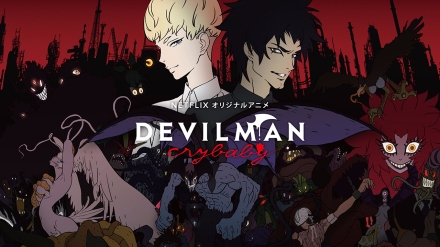
A brief spoiler-free review of the 10-episode winter 2018 anime “Devilman: Crybaby,” produced by studio Science SARU (and Netflix), directed by Masaaki Yuasa, written by Ichiro Okouchi, and based on the manga by Go Nagai. 

Image result


A Wild Night Out

Akira Fudo is a crybaby. He’s always been, and he always will be. Akira’s high school career takes a trip to the wild side when his best friend from many years ago, Ryou Asuka, suddenly reenters Akira’s life. This surprise reunion excites Akira, but unfortunately, Ryou isn’t back so the two can play on the playground again. Instead, he informs Akira that hiding amongst the shadows of their picture-perfect reality are monstrous demons, and that soon the demons will revive to reclaim the world from the humans. To combat their brute, supernatural strength, Ryou has a plan: to fuse a human with a demon.

Related image

Those who conquer their “literal” innermost demons can master the power over them. And thus, after violently loosing his innocence at an infamous nightclub rave suspiciously titled the “Sabbath,” Akira becomes Devilman, a being with the power of a demon and the heart of a human. Finally seeing the darkness that humans have hid for so long, Akira feels blessed to now be able to save others, but more so cursed because he will likely never be understood ever again. But he has Ryou, and for Akira, that’s enough to make the pain worth suffering. Or so he hopes.

Image result

A Tragedy Fit for Our Time

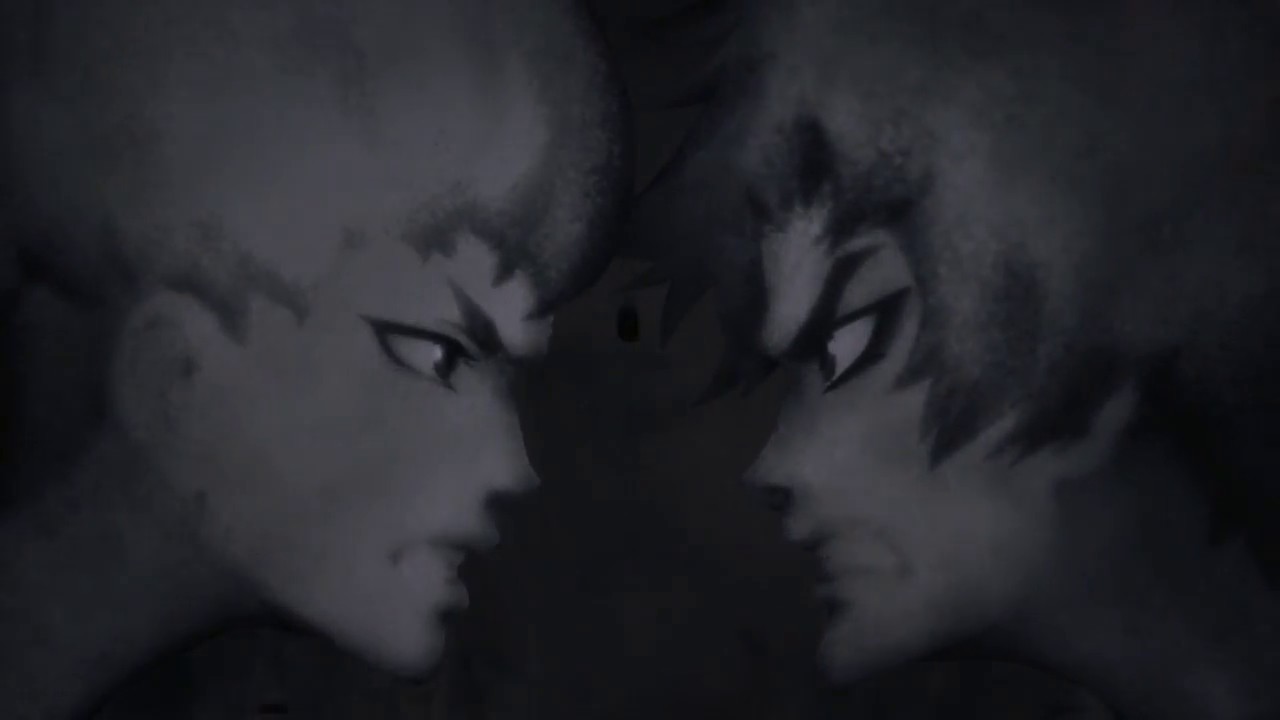
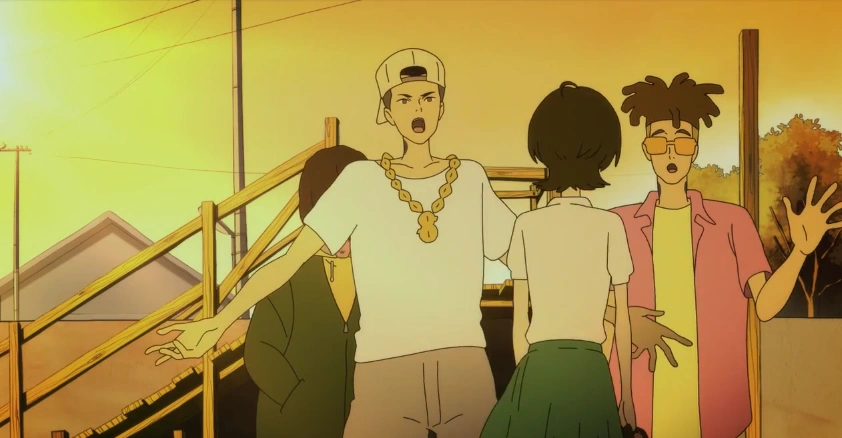
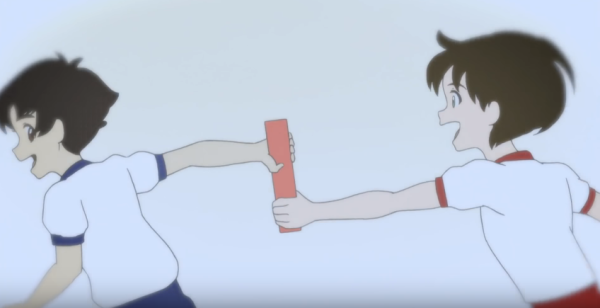
By mere story alone, Crybaby is a masterpiece. Having heard the crazy amounts of praise that have been circulating already for a couple weeks now, this should be no surprise. It starts at zero, at everyday life for a young boy and his relay mates, and quickly escalates into a bloody, traumatic, world-ending experience for both the characters and the viewers. As a standalone piece of fiction, it’s a modern tragedy made fit for the decade—complete with its OWN FREAKIN’ CHORUS in the form of some swaggy J-rappers—a series that is and should be celebrated for the, might I say, “daredevil” tale it sets out to tell. So many countless symbolic, societal, and sexual metaphors make the story incredibly compelling, and the religious undertones work wonders in creating this gritty, larger-than-life epic.

Image result

And the best part of all is that the series isn’t just “depressing” to be called tragic—rather, it lives up to the classical standards of Greek tragedy by existing to A) prove the faults in our own lives, B) present a heroic attempt at handling them, and C) leave us with a cathartic end to cleanse the insanity that just befell the cast. It’s a masterful formula from the humble beginning through to its apocalyptic end, and as the media outlet Polygon states, the finale is “beautiful, devastating perfection.”

The only [minor] problem with a story of this magnitude is that Crybaby has very little time to tell it: only ten episodes, to be exact. While the pacing for the first several episodes feels spot-on, there is a significant push, particularly in the last two episodes, that does seem rather hectic. To be fair, however, the gruesome content and big reveals in episodes nine and ten ARE time sensitive; dragging these plot twists and dramatic developments out beyond an episode’s time would ruin their effects. Besides, perhaps that rushed sense of mayhem is what contributes to the explosive, catastrophic nature of the Devilman franchise.

Related image

Akira and Ryou: Cuter When They’re Young

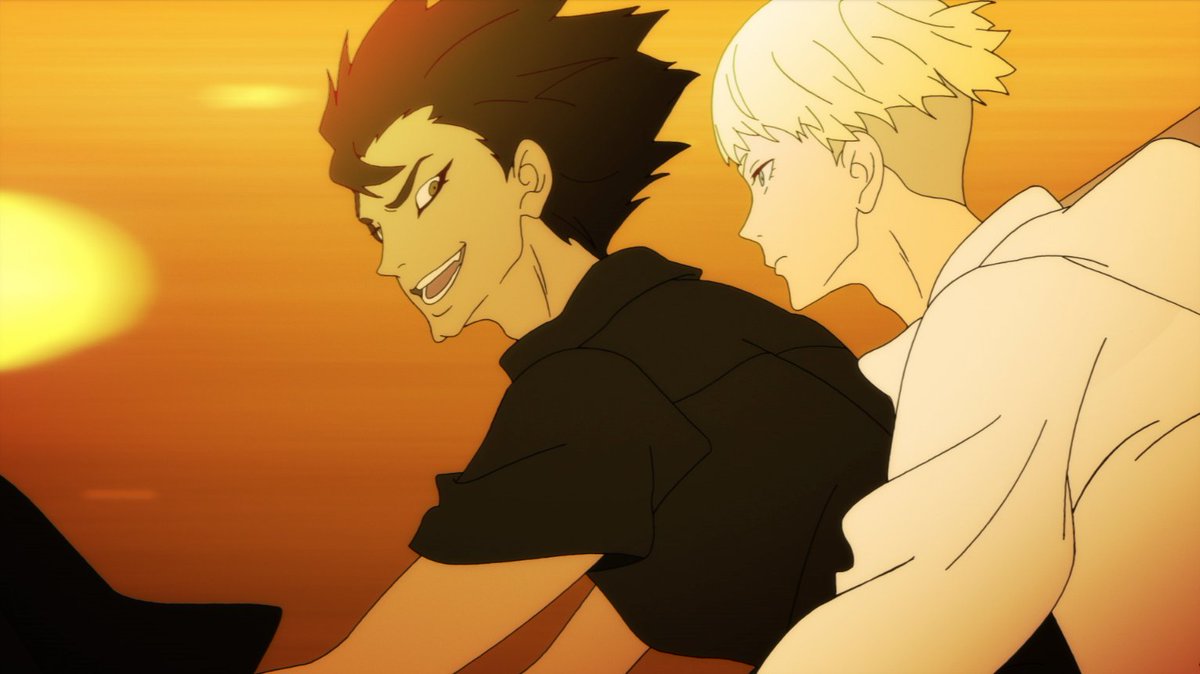
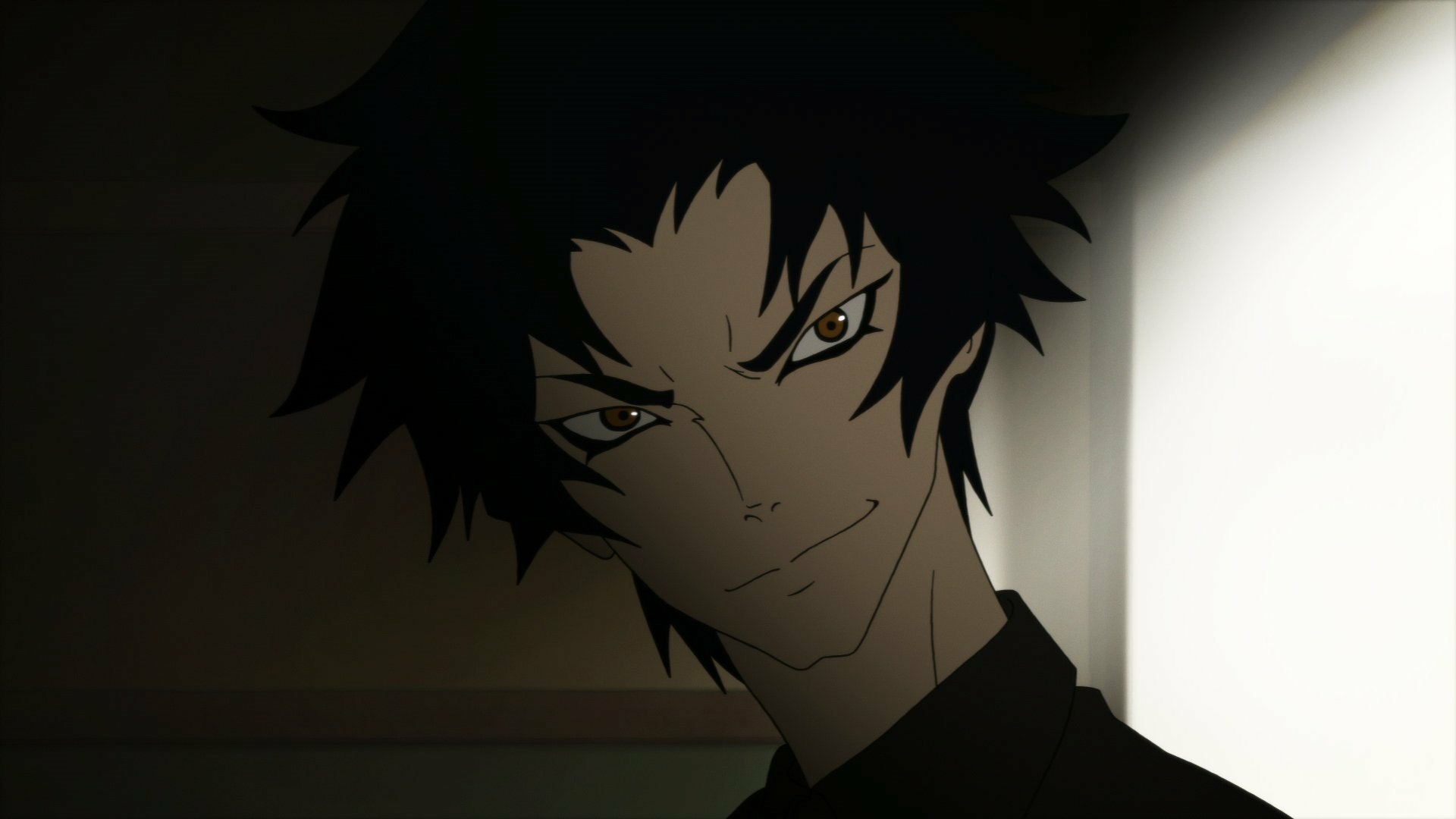
As far as characters are concerned, I won’t go into much detail simply because half of the thrill stems from witnessing just who some of these characters really are, and exactly what they will eventually become as the plot edges further and further on borderline insanity. Akira Fudo’s deal with the devil surprises all those around him, sure, but his grotesque change conjures up more mental conflict than physical ailment. He’s honestly a gift to mankind who doesn’t belong in this cruel, cruel world, and as he teeters on the edge of his own humanity—of a dying hope vs. an unflagging despair—he realizes that, at the darkest roots of their heart, people can be even more vile, disgusting, and sinful than any demon to roam the planet. Compared to his cute, scrawny self at the series’s beginning, the superior antihero Devilman that Akira becomes is stronger in nearly every way—all except for that tender, still-broken human heart of his.

Image result

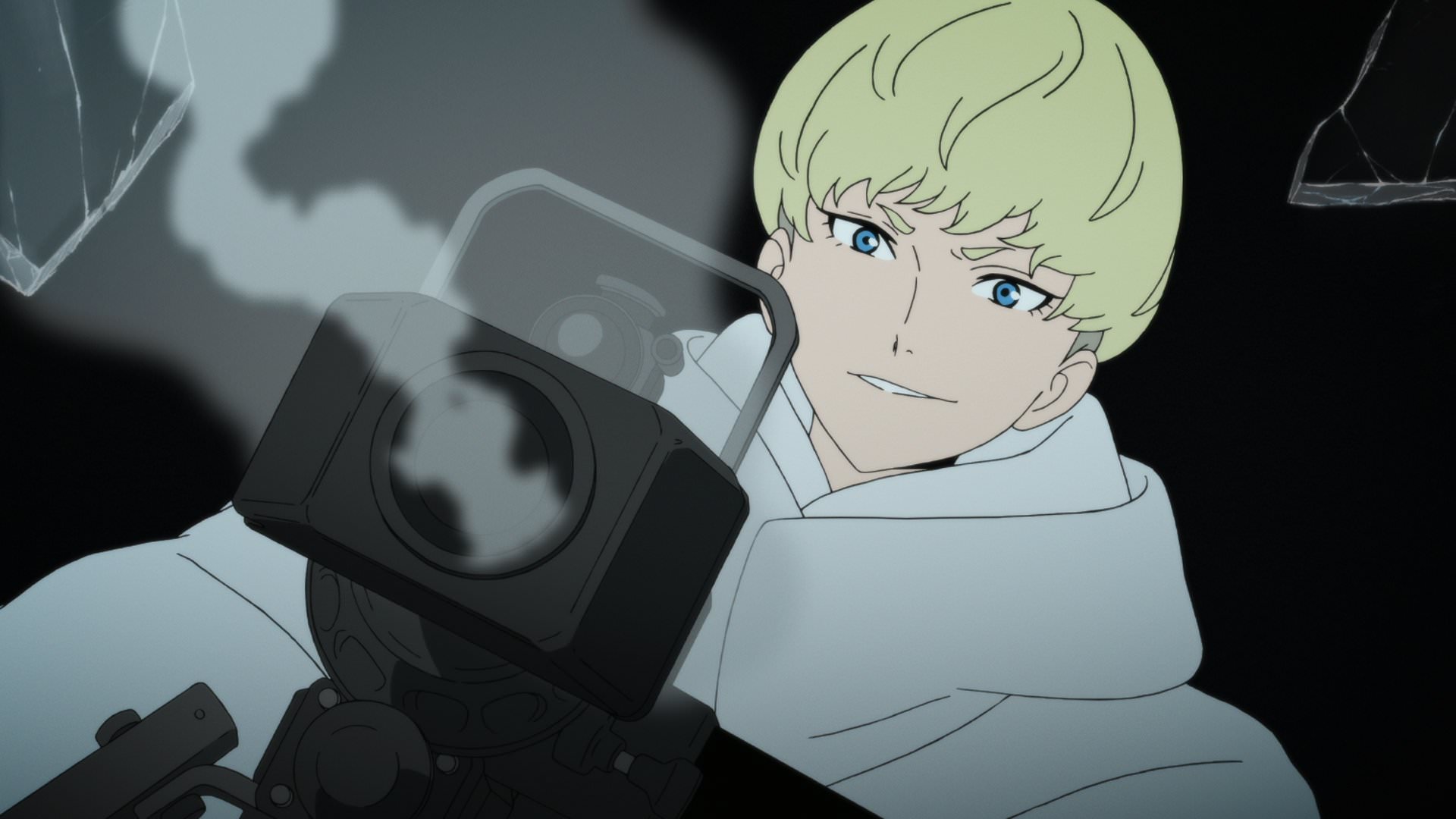
Ryou’s fluffy, blonde-bowled, bishounen design may seem inviting, but don’t let that charismatic baby face fool you: underneath that puffy white coat is a deadly machine gun and cunning wit, both which are fully loaded at all times. From that first smooth car ride Ryou and Akira share together, you already get the feeling that Ryou is scheming something (as if the glaring camcorder he films on 24/7 wasn’t evidence enough). Still, he is doomed to a fate just as tragic as Akira’s—if not more so. Ryou is one baaaaaad boi, but I loved his development way too much to hate him.

Image result

I Don’t Know How to Rate The Animation . . . 

I’m not kidding. Devilman: Crybaby has some of the downright UGLIEST animated sequences I’ve ever seen. From the hilarious attempt at depicting just how “speedy” devilmen can run to the blobby, disproportionate, and completely uncensored sex scenes, by visual standards, Crybaby is not a pretty-looking show.

But does an anime need to be “pretty” to have it’s own beauty? Absolutely not. Or, well, at least Crybaby says so.

You see, the series has this certain edge to it, a certain grit that is hard to explain. The animation outlines, for instance, are cleanly drawn and look quite fresh (faces in particular). But then you have the action scenes, which are just SO freakin’ bizarre to watch. Like, I couldn’t even tell you if some scenes were, in fact, “poorly animated” because the ENTIRE SERIES has that same exact look. The lack of detail in light-hearted moments (like Akira’s high school, or his quiet past) compared to the almost sickening actions of other demons and humans alike gave form to a style that I can’t quite put my finger on. It’s as if the animation is “untamed,” or “knows no bounds”—yet it all flows well as its own style within the context of the story. Not to mention that the compact 10-episode run and smart directing allow for each and every shot to carry some sort of secondary meaning, however unnecessarily violent or sexual or BOTH the risqué presentation seems to people.

Image result

I, for one, felt that all of the overly grotesque scenes brutally tread some sacred ground of entertainment that hasn’t been touched in decades with a bloody tank. It’s a unique visual style that I frankly haven’t seen anywhere else, and it was depicted brilliantly.

But I Know I Loved the OST!

As I am currently writing this, the Devilman: Crybaby soundtrack is humming in the background for inspiration. What about it is so special? Well, it has great balance; it’s epic (“D.V.M.N.” – Main theme), startling (“Miki The Witch”), playful (“Wishy Washy”), intense (“Anxiety”), entrancing (“Beautiful Silene”), heart-pounding (“Smells Blood”), uplifting (“Prayer”), cathartic (“Pathetique”), and so much more. Composer Kensuke Ushio (Ping Pong The Animation, Space Dandy, A Silent Voice) knows how to write excellent orchestral/synth pieces, I tell ya!

There’s a little tune that is repeated throughout the entire soundtrack that can be any of the emotions listed above, so long is the right instrumentals is paired with the mood. My personal favorite IS a reprise of this gorgeous melody line, and it just so happens to be the very last song played in the series, the End of Devilman: Crybaby, so-to-speak. It’s appropriately titled “Crybaby,” and if it doesn’t move your heart to the point of tears, forcing you to recall Akira, Ryou, Miki, and Miko’s shared heartache and tragedy, then I’m not sure what will.

Oh yeah, there’s also a remake of the original Devilman opening included with the soundtrack, which, if you SOMEHOW haven’t heard yet, is SUCH A BOP HOLY SHIT. I STILL listen to it religiously.

The Destructive Darkness Within Us All

By Devilman:Crybaby‘s end, there is arguably no sadness left for the characters, no more tears to cry. It should feel complicated, as the amount of despair is simply undefinable. But instead, all you can wonder is how things got to this point, and how what you witnessed was, in fact, the end brought upon by humanity. The ending is completely unfair, yet it balances the scales with terrifying perfection. You could feel sad, or depressed, or enraged at how BLIND people can be, but instead, all of it feels pointless, as if nihilism just inducted you to suddenly became one of its patron saints.

The ending of Devilman: Crybaby is indeed a very empty one. And that very catharsis, that feeling of emptiness and pointlessness, is what lies at the heart of a well-written tragedy. 

Image result

As happy and sad memories alike resurface for these two boys, Akira and Ryou come to realize that, without one another, life before friendship was boring and often cruel. It was lonely, and it was meaningless. But through the ugly tears they cry, the bleeding hearts they endure, and the tragic fates that they cease fighting against, the two learn to finally accept love, for it is really love, not hate, which makes the world go round. And so to tear up the ENTIRE world just to tell this seemingly small message—Yes, such is what completes the horrifically tragic Devilman: Crybaby as a modern masterpiece.

You’re crying too, Ryou-chan. You’re crying too . . .  – Akira Fudo

Image result


Afterwords

Devilman: Crybaby is raw, brutal, yet oddly honest about its understanding of cause and effect and the power of compassion. It doesn’t forget to throw in a few laughs, though. As the community has already remarked, this show is ABSOLUTELY NOT for the faint of heart. This series showcases the worst aspects of humanity—of vengeance, overindulgence, paranoia, and immorality—and for many, that can be hard to watch (plus, it’s like, mega gory and sexual). You’ll be asking yourself “WTF is this even real?” many times, and you’ll feel absolutely disgusted with humanity. But have faith that there is a reason for the madness. I walked into this action series not knowing a lick about the Devilman franchise (aside from the old dub clips, heh heh) and obviously enjoyed the HELL out of it.

devilman crybaby

If such disturbing material doesn’t bother you, then I’m sure you’ll also enjoy this wild ride through the bloody and the occult, as there are a fair amount of life lessons to be learned. I’m giving Devilman: Crybaby the honorary “Caffe Mocha” title because of its unexpectedly high emotional impact (you gotta love the indirect End of Eva references, too)! There’s a particular scene in I think episode 8 or 9 that absolutely wrecked me, and the powerful ending . . . wow . . . I’m sure I won’t be forgetting about that for a long time. If you are thinking about watching this anime, or have already seen it, you HAVE to let me know what you thought about it! I’m dying to dig the series back up, even though much of the hype has died down, haha! Let me know if I did a decent job by hitting the like button (I appreciate it!), and until next time, this has been

– Takuto, your host

relay.PNG