Claudine: Sexuality, Tragedy, & Growing Up Transgender || Review

A brief spoiler-free review of the standalone manga title “Claudine,” story and art by Riyoko Ikeda, and licensed in English by Seven Seas Entertainment.


19th Century French Romance

Since he was eight, Claudine was convinced he was born into the wrong gender. He grows up beautifully, more so than any of the men and women in Vernon, yet struggles through life with a series of depressing relationships. Only a handful of people reach out to Claudine and see him for who he is, but no one truly understands his heart. Claudine simply wishes to find true love, yet his efforts continue to end in tragedy as he is unable to be accepted as a man by society and his peers.

As a piece of historical fiction, Claudine offers a timeless story full of heartbreak. Riyoko Ikeda of The Rose of Versailles fame paints a picture of France that is rich in culture, but also a bit too melodramatic at times. Characters overreact to the smallest things with vivid expressions that can dominate several panels, which can make the read feel overwrought with agitation.

Without spoiling anything, some characters even dare dedicate their entire lives to destroying the hearts of others—an unfortunate trend which feels straight out of a wild telenovela or K-drama. Or, you know, The Rose of Versailles. This kind of thing might work well with a long-running series. But as a single volume work, the repetition of shocking reveals can feel overwhelming and excessive.

All that said, however, very few manga can make a drama feel as compelling as Riyoko Ikeda does, and to that I applaud Claudine. As a standalone piece, this is the kind of artistic mastery that most short story mangaka may struggle with. Here, the romance feels real, but so does the grief and misery that comes with rejection. Claudine explores sex and gender identity in a way that is poignant, respectful, and anything but forgettable.
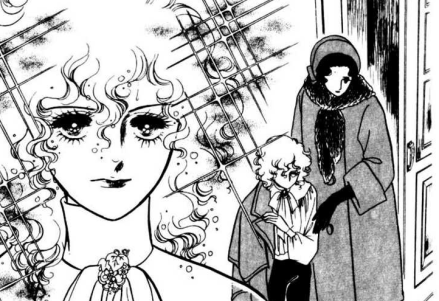
young claudine

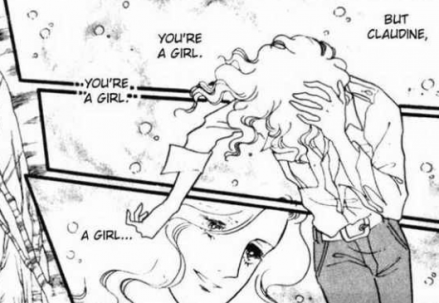
“But Claudine, You’re a Girl”

Not sure of what to do with her own child, Claudine’s mother takes him to a psychiatrist who reappears at a few major junctions in Claudine’s life. This was customary for the time, as being gay or trans was considered an illness, and thus treated as something that would eventually “go away” just as it came. We know now that this is far from fact. However, this is the best Claudine’s mother could do, and I believe she meant well by it.

Claudine’s father Auguste, on the other hand, was a mostly good man. A “large-hearted, manly dilettante with a variety of interests,” Claudine’s father was the only one willing to raise the child as he saw himself. Claudine expressed interested in equestrianism, hunting, sports, literature, and world history, to which his father only helped to provide the best resources to raise Claudine just as well as his other three accomplished sons. Loving Claudine wholly, Auguste says it himself: “That she doe not have a man’s body is honestly a mistake on God’s part.”

We follow Claudine through childhood flings, teenage romance, and relationships in adulthood. The women he encounters transform his life, although whether these interactions are for the better or not is definitely up for question. There’s one particular childhood lover, Rosemarie, who annoyingly clings to Claudine and causes him nothing but trouble. As he navigates through life, Claudine finds that it isn’t wrong of him to be a transgender person so much as that being trans is just highly ill-advised when no one can accept you for it. His emotions are understandable, and his actions are largely respectable.

Friends, strangers, and even his own family turn Claudine away from them on account of their own ignorance. A deeply seeded disgust for gay and transgender people plagues the populace of 19th century France, and—as it has continues to do today—only serves to ruin Claudine’s life. Despite his graceful air, his love of knowledge, and his deep compassion for helping others in need, Claudine is dejected again, and again, and again by women who have mixed love and kindness with lust and sin.
we are both girls

Why We Have To Do Better

This is a breathtaking manga. Although it was published way back in 1978, so much of this shoujo-ai drama can speak for the view of transgender individuals held by most conservative-minded people today. The story is highly relevant, and I’m so thankful Seven Seas was able to publish it when they did. Their restoration of this vintage shoujo manga is gorgeous, and the large trim format is greatly appreciated.

More than feeling upset, frustrated, or annoyed at the terrible ways Claudine was betrayed, I can only really sum up my thoughts on the ending with this: Claudine’s story is a sad one. It’s tragic, it hurts, and yet it’s an unfortunate end many transgender people find themselves meeting. Guys, it’s tragedies like this that remind me we still have a long way to go. For people like Claudine, for people who are confused or still in the closet, for people who are out and proud of it—We have to do better. So. Much. Better. And that begins with accepting these identities—NOT just acknowledging them.

From cover to cover, Riyoko Ikeda explores gender and sexuality, identity, culture, and self-acceptance in a coming-of-age tale so sorrowful and heartfelt that I can only want to express how important Claudine’s story is. It is works like this that can easily impact people, and even leave behind impressions that can hopefully change lives for the better. Certainly, I won’t be forgetting Claudine anytime soon.
claudine art page


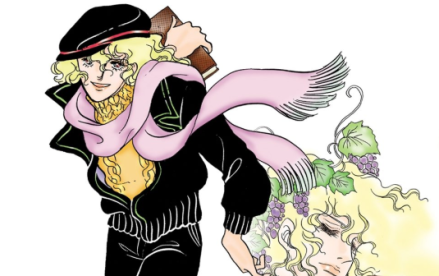
They lived together, deceiving the world, behind the backs of their friends. But like a flower waiting for rain, their caged love finally surged out, shining. I believe this was a true love, surpassing all preconceived notions, entirely moving.Claudine’s doctor


Afterword

What a great read this was. Riyoko Ikeda’s art style is not only iconic, but truly emblematic of early 70s and 80s shoujo manga. Sure, it’s a bit over-the-top at times, but what would a Riyoko Ikeda manga be without her signature dramatic twists and sparkling style? For telling an admirable albeit tragic tale about a respectable transgender man and his struggles with finding love and self-acceptance, I welcome Claudine as a “Cafe Mocha” title, a rating reserved only for the bests out there. Did I mention that the dad is actually a GOOD guy in this one? Normally it’s the other way around, so this was quite a pleasant surprise!

Anyone else read Claudine? I’d love to hear your thoughts on this old but classic shoujo read. I’m so glad I got to include a manga with a transgender focus this month with something like Claudine. My next Pride Month post will be over something much more modern, Bukuro Yamada’s Melting Lover, so please look forward to that! ‘Till next time!

– Takuto

Candy Color Paradox: Sweet Yet Sour || First Impressions

First impressions for volume 1 of Isaku Natsume’s yaoi manga series “Candy Color Paradox,” initially published in 2019 by SuBLime Manga.


Pictures and Pride

Satoshi Onoe is an honest-to-goodness reporter at a weekly magazine company. He takes great pride in his writing and is valued for his ethical approach to reporting. In an industry that is all about chewing people up and spitting them out, it’s no wonder a total softy like Onoe would struggle with exploiting celebs and exposing back alley dealings.

Although he does well at his job, the one co-worker he can’t stand is Motoharu Kaburagi, an ill-mannered photographer who’s done nothing but steal Onoe’s time in the spotlight since day one. When the company chief decides to shuffle around the stakeout teams, Onoe is forced to partner with Kaburagi or let the man ruin his career. Kaburagi’s unethical reporting methods and his streak as a ladies’ man bother Onoe to no end. But, perhaps a little time and experience in the field will show Onoe a side to Kaburagi that’s a bit sweeter than anyone’s ever seen.

I love occupational romances. The office setting is one of the quickest ways to make your story relatable, and the drama is enhanced when our characters are trying to “make it work” while on the job. There may not be much explicit content until the last couple pages of this first volume, but I guarantee subsequent volumes will only get spicier.

What I don’t particularly love about Candy Color Paradox, however, is the nature of our main characters’ work. To me, news tabloids and articles that are only out to “expose” people are full of bullshit. I don’t like reading them, and I certainly don’t like reading about them. This kinda made both Onoe and Kaburagi difficult for me to like, as I find the work they’re doing—despite the tireless effort—to ultimately be full of crap. While the story isn’t about “what is right” or “what is wrong” per se, finding the “next big scoop” for their weekly magazine is a core element of the story, and often the segue for deepening Onoe and Kaburagi’s precarious relationship.

CCP intro

Writer x Photographer

Along with not loving this field of work, I immediately disliked how Natsume framed Onoe’s stance on attraction. The dude literally had a girlfriend and even proclaimed “I’m not gay!” in a bar, and I find that incredibly off-putting given that he’s supposed to be our MC. I get that this is a story from 2009, so Natsume is probably playing this off more as a joke, but c’mon, this is such a stereotypical thing to say. Unless it’s with the intent to explore one’s sexuality, I’m over characters that deny their sexual interests.

In typical uke style, Onoe gives us constant poutiness and confused gay crying. He’s full of pride in his work, and isn’t afraid to take a jab at Kaburagi whenever he can. Some will find his loud personality and flustered antics annoying—I know I did. But, despite his notoriously unscrupulous occupation, Onoe remains dedicated to his honest writing, and I can at least appreciate him for that.

On the flip side, Kaburagi can be a frustrating guy to get behind, both for Onoe and the reader. His scruffy appearance and initial attitude toward Onoe immediately leapt out at me as toxic masculine behavior. Unlike Onoe, Kaburagi uses his looks and charmed words to draw out the scoop he needs to land him the cover page story. As we quickly realize, he’s also an avid liar, which is a turn-off for me. The end of this first volume had me believing that there may be much more to Kaburagi than this initial assumption, but as it stands, I only really like Kaburagi because he seems just as lost in this newfound love as poor Onoe does.

CCP mid

Maybe it Gets Sweeter

As a license rescue release from 2009, Candy Color Paradox embodies the essence of yaoi rom-com workplace dramas popular during its time. Natsume’s art style also reflects this era of BL where tall skinny men and cartoonish expressions dominated the series. For me, it’s kinda bland to look at, but if you like the look of The World’s Greatest First Love or Junjou Romantica, you’ll probably enjoy this too. Also, I’m not the biggest fan of the rivals-to-lovers trope in my BL manga specifically, but Onoe and Kaburagi are quicker to admit their feelings to one another than most BL couples are, so I can bear it.

By the end of this first volume, our characters have made their way to the bedroom. The beginning may not be explicit, but I can see the next volumes being full of smut. So, if explicit BL is your thing, just know that you’ll want to pick up at least the first two volumes.

As to whether I will be getting more Candy Color Paradox or not, I’ll probably hold off for now. Between not caring for Onoe and Kaburagi’s field of work (which is essential to the plot) and finding Onoe a bit too over-reactive, I found myself rushing through this first volume just to finish it and read something else. Whenever next I’m feeling up for a steamy, less-than-serious workplace drama, I’ll consider picking this back up again. until that time, however, Candy Color Paradox just isn’t my taste.

CCP end


I wish that I really had been fooled by that charismatic mask he wears. Then I would be able to tell myself that I was just infatuated with a lie. — Satoshi Onoe


Afterword

I find that Candy Color Paradox is supposed to be a sophisticated read. It pokes fun at “being gay” whenever it can (e.g., Onoe getting overly flustered every time they have to do a stakeout from a love hotel room), but otherwise is just a fun and simple little BL title. I’ll pass on reading more for now, but don’t be surprised if I decide to pick this one back up again. If you’ve read Candy Color Paradox, what do you like about it? Let me know in the comments! My next Pride Month read, Claudine, will dip into the story of a transgender man and his struggle with identity and sexuality. You won’t want to miss it! Thanks for reading, and ’till next time!

– Takuto

Seven Days: Will You Still Love Me When Monday Comes? || Review

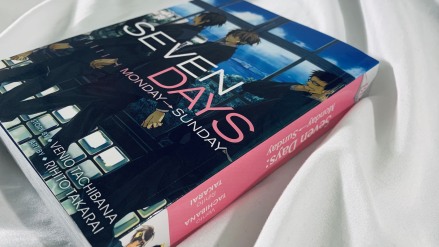
A brief spoiler-free review of the 2-volume manga series “Seven Days – Monday to Sunday,” story by Venio Tachibana, art by Rihito Takarai, and re-licensed in English by SuBLime Manga.


What Started as a Joke . . .

One week. That is all the time any lucky girl who dates Seryou Touji will spend with him. You can’t hate the guy, though. After all, he supposedly makes you feel like the most special person in the world during that time. Rumor has it that at the start of the following week, he’ll date the first person to ask him out that Monday morning, no tricks—and no strings attached either.

Curious about the mysterious first-year playboy himself, equally attractive third-year Shino Yuzuru decides to jokingly ask Seryou out one morning. True to the rumors, however, Seryou takes Shino’s offer seriously, and thus begins Shino’s fleeting seven days with him.

Although license rescued and released by SuBLime Manga, a company typically known for grabbing some of the harder yaoi works on the BL market, Seven Days much more belongs in the shounen ai or even school romance genre. Nothing about the story is explicit, making it the perfect gateway BL for newcomers ready to wet their feet.

Within just 13 chapters (or one omnibus volume), the entire story wraps up well enough to not warrant a continuation. Shino and Seryou’s week of dating and hanging out is also well-paced. Each day is divided into chapters, which means we literally are getting the full play-by-play for this awkward dating situation that started out as a joke but turned into much more.

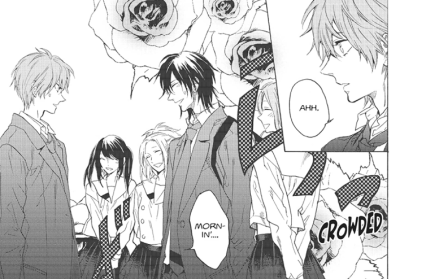
morning surrounded

Not Gay, But Gay Enough

What made the story somewhat difficult to get into was the fact that, technically, neither of our boys here are gay. That is, Shino and Seryou don’t actively seek males as a dating preference to females; if anything, they’re both well-known ladies’ men, and they know it, too.

So, how can two “straight” dudes fall for each other? For one, they’re both undeniably the hottest men in their school. Second, they share a pastime together—archery—which often leads to the start of many conversations (and playful teasing). Third, and this might just be me reading into it, but Seryou might actually have been gay from the start. The first-year can’t seem to fall in love with any of the many girls he dates. Yet, when approached by Shino that Monday morning, he doesn’t refute him. It could be that he was curious all along, and took the offer when it came to him.

It’s a little frustrating to cheer two guys on when neither is really into the same sex (unless . . . ), but at the same time, it’s amazing what dating one another allows the boys to see about themselves. Despite his graceful nature and pretty face, Shino is a pretty laid-back, impolite guy, not to mention being seriously blunt about everything he notices. Dating Seryou makes Shino realize that his worst traits really can hurt people—but also that they are what make Shino himself.

Then there’s Seryou, also a pretty boy but drastically bad at reading people. Unlike Shino, Seryou wears his expressions on his face, and even though he thinks he’s being transparent, Seryou isn’t as good at knowing others as he might believe. In fact, he’s kind of shallow in his romantic encounters, which Shino quickly picks up on. Even though he can let girl after girl live their high school fantasy, at the end of the day, Seryou doesn’t even save their contact information on his phone. He sure was quick to memorize Shino’s number and email by heart, though . . .

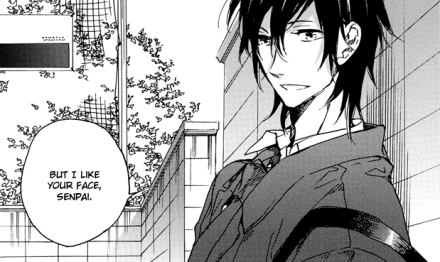
seryou charming

The Look of Early 2000s BL

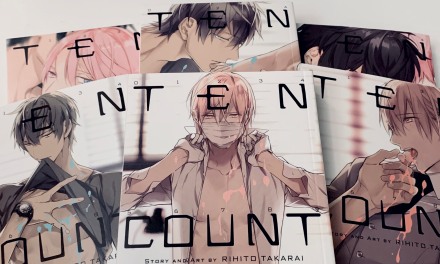
Although Ten Count was the first yaoi series I’ve ever read, I’m definitely no stranger to the BL genre. I’ve seen plenty of screenshots of early 2000s BL manga on the internet and have flipped through my own fair share of yaoi manga at used bookstores. It’s nice to finally have purchased my own copy of one of these works, and I feel even more pride in having it displayed on my shelves. Seven Days is a nice little title to have for sure.

Aside from the license rescue stirring news in the manga community, however, what initially pushed me to buy and read Seven Days was because it shared the artist of Ten Count, Rihito Takarai. Having recently been acquainted with her series work, I wanted to see how her older art held up. Boy, has she improved. But also, WOW, she’s been this good from the start!?

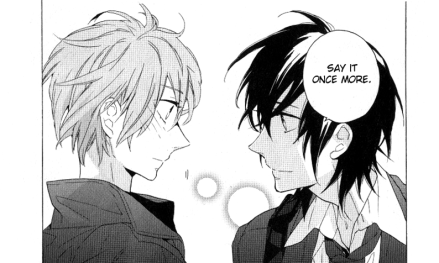
Takarai knows how to draw pretty boys. Both donning that signature uke and seme look with their tall, lanky, yet athletically built figure, Shino and Seryou walk like gods among men. Their chiseled features, large eyes, and pointy noses hold all the indications of desirable beauty, especially of BL characters in pre-2010 works. Perhaps you could call Seven Days an early 2000s time capsule that most would still love and enjoy today.

It was probably the hair styling, however, that first caught my eye and stays in my mind now. Shino’s medium-long chestnut hair creates an elegant, almost foreign bowl-cut look. Similarly, Seryou’s longer black hair would make anyone who had it look like a thug, but on him serves to make him look dashing and poised. The use of scenery (LOTS of fences), while modest, also sets the scene for this cute slice-of-life romance. Also, likable female characters are present in this manga—and they’re NOT evil, hooray!

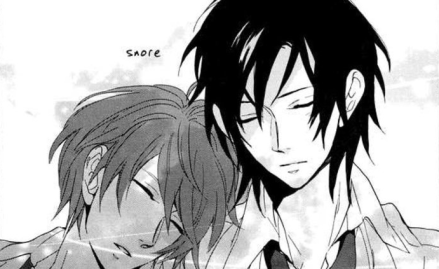
seven days seryou and shino

The Perfect Gateway BL

I swear, this really is one of those stories where a whole week of “not knowing how the other feels” could’ve been resolved by Tuesday night had Shino and Seryou sat down for five freakin’ minutes and just talked it out like any normal couple would. It’s annoying how characters can feel like they’re just being strung along, only to find out by the end that their partner was “madly in love with them the whole time.” Especially in this story where the reader can be unconvinced of author Venio Tachibana’s intentions, it can come across as a strange case of queerbaiting. Trust me when I say it that Shino and Seryou are falling for each other, though—they just might not know it yet.

And that’s the huge draw of Seven Days: Shino and Seryou aren’t your typical BL pairing. Neither knows what they want, both in themselves and in relationships, and that makes finding love all the more difficult. While I bite back and wish Tachibana was more transparent about their love, I also find myself realizing that, yeah, I’m not sure I could so easily admit my own feelings if I were in their situation either.

Surprisingly full of more introspection than it’d have you believing, every single chapter of Seven Days was a gift. Force yourself through this playful senpai-kohai shtick and it’ll be the longest week of your life. However, with a little patience, you might unexpectedly find yourself relating to this drama that spans just seven short-lived, transient days.

shino seryou sleep


I wonder how many girls stood right here and closed their eyes just like this? And when they did, how did Seryou respond? — Shino Yuzuru


Afterword

I had to flip back at some of the chapters to write this review and, ahhhh, it’s such a cute story! I wish I could read more stories with Takarai’s art in it, but that’s all I’ve got for now. Seven Days was definitely stronger than Ten Count, but I think I still like it about the same, if not slightly more. With very little to complain about, Seven Days is a wonderful “Cafe Mocha” title here at the cafe! If you only get to read one shounen ai story, this is my go-to rec for the time being. Have you read Seven Days? I’d love to hear your thoughts down in the comments! My next Pride Month post will likely be a first impressions on Candy Color Paradox, so please look forward to that. ‘Till next time!

– Takuto

Ten Count: My First Yaoi Manga Series || Review

A brief review of the 6-volume manga series “Ten Count,” story and art by Rihito Takarai, and licensed in English by SuBLime Manga. MINOR SPOILERS WILL BE PRESENT.


Counseled into Love

Tadaomi Shirotani suffers from extreme obsessive-compulsive disorder wherever germs are concerned. While he manages to get his corporate secretary work done efficiently enough, his social life is practically nonexistent as a result of his condition. Upon saving Shirotani’s boss from a fatal car accident, behavior therapist Riku Kurose takes an interest in helping Shirotani overcome his germophobia. As Shirotani navigates through Kurose’s proposed ten-step program designed to cure his compulsion, the patient’s attraction to his therapist grows.

As far as romance dramas go, Ten Count starts off relatively tame, especially for a BL series. In fact, there’s nothing really explicit until the end of the second volume, of which there are only six. This relatively slower-burn intro allows us to really understand the position Shirotani is in, his feelings and his frustrations with his condition. Although Shirotani’s list of ten self-chosen tasks seems like an excuse to up the sexual tension step-by-step, I assure you that the series has more twists in store than finding out what Shirotani’s final tenth step is (even if they’re a bit more controversial).

One of my favorite aspects of the series is how, foundationally, Kurose’s psychological techniques (namely the titular “ten count”) are rooted in actual behavior therapy practices. (Trust me—I took a class for this!) Exposure and response prevention therapy (ERP) is a real therapy designed to treat anxiety disorders. By gradually introducing stimuli to the patient and slowly increasing the strength of the stimulus, an individual undergoing ERP therapy can hope to see at least some relief from their OCD symptoms. It doesn’t suddenly cure all—which Rihito Takarai respectfully acknowledges—but it can help relieve some of the stresses that come with anxiety or PTSD.

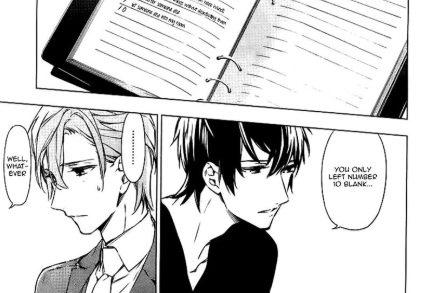
ten count list

The Patient-Therapist Relationship

From the start, Shirotani is a man bogged down by the pressures of society. His signature gloves may seem like a fashion choice, but they actually serve to shield his hands from potential germs. If he just wore the gloves, he’d see himself as looking foolish, though. Thus, he also dons a suit for both his job and personal life to seem less odd. I thought this was a sad detail, if not a pertinent one to telling us what kind of person Shirotani is: an extremely cautious and self-conscious individual. His condition interferes with his daily life, clearly, and he’s in dire need of help even if he refuses to admit it.

Kurose comes off as a little standoffish and weirdly intimate, and that’s also a result of a troubled past, no doubt. While he’s able to comfort Shirotani and make him feel good about himself, Kurose also has this aura of being impossible to read. For a corporate office guy with crippling OCD, this can pose major problems. Understandably, Shirotani fears the unpredictable, and even more so when it concerns human contact. What Kurose wants out of Shirotani might not be what he expects. At the same time, perhaps Kurose’s guidance and friendship are the exact things Shirotani wants out of this unconventional patient-therapist relationship.

shirotani kiss

To Fetishize Another’s Pain

Let me start this part by saying that Rihito Takari’s art is divine. Her characters are beautifully drawn, the panel construction serves to capture Shirotani’s feelings of isolation and anxiety, and the sex is hot, straight up. (I mean, Kurose’s jawline, C’MON.) Takarai also has an eye for aesthetic, her characters living clean, realistic lives, although on the lighter side. I cannot deny that reading this manga was enjoyable, if only for the art alone. It’s great. If explicit BL is your thing, Ten Count will serve you wonderfully.

Ok, now I can nitpick. SPOILERS for one of the later narrative twists, but WTF Kurose?? The dude likes—no, prefers—“people like” Shirotani because they have a germophobic condition . . . and he likes making them dirty . . . and corrupt like him?? I’m sorry, I just couldn’t with this reveal. It’s a shame, too, cause the series really started strong when it was just Shirotani meeting up with Kurose at their usual coffee shop to celebrate Shirotani’s progress.

The fetishization of mysophobia in Ten Count made the last couple volumes a struggle to get past. I really disliked finding out that, rather than love out of personality or charm, Kurose’s biggest draw to Shirotani was because of his suffering. It only confirmed my suspicions about Kurose from the beginning that the guy was a little messed up. While I appreciate the backstories for both of these characters (and can understand the effects that childhood neglect or trauma can have on someone), I couldn’t really find myself appreciating Kurose after discovering his kink.

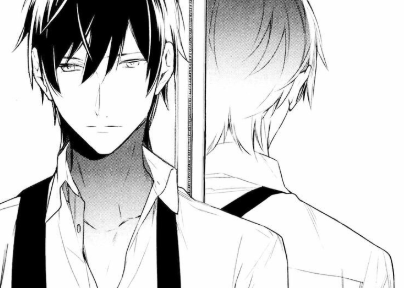
kurose

One Step Forward, Two Steps Back

As a BL manga, Ten Count starts strong but falls into some of the unfortunate schemes of the genre that I’ve become aware of thanks to fellow bloggers and booktubers. It comes across as realistic and understanding of people with anxiety disorders, yet eventually succumbs to a somewhat insulting case of deception. I wanted Shirotani and Kurose to end up together out of a deep fondness and caring for one another, and it only feels halfway satisfying.

With any type of behavior therapy, it can often feel like you’re making leaps and strides one day, only to wake up the next feeling like you haven’t progressed past start—and that’s absolutely normal. For Shirotani, his lowest lows caused him to skip work, neglect his social life, and even turn down potential relationships. But on his best days, he stepped outside his comfort zone and took risks he normally wouldn’t have. Simply, he tried to live a better, more fulfilling life, and I can commend him for that.

Looking back, I find my liking for Ten Count to be the same way. The chapters where Kurose was genuinely trying to encourage Shirotani to go to the book store, buy a new suit, or actually drink the coffee at a coffee shop—those were great! When it just seemed like Kurose was trying to get his hands down Shirotani’s pants, however, I wasn’t quite rooting for either of them (which is kinda opposite of the intent the fanservice is supposed to do in this series).

As my first yaoi manga series, I don’t hate Ten Count, though. Rihitio Takarai’s plot has its problems, sure, but her art and character designs really are appealing. There’s a lot of self-torment going on throughout the series, but I do believe that in itself is a huge part of life. If the romantic story of a therapist and his patient sounds enticing, go ahead and give the first volume a shot. Just don’t be surprised when certain characters start revealing their true nature in the bedroom—unwonted fetishes and all.

ten count color


It’s because I finally realized that I love you and you reciprocated that love that I’m learning to love myself. — Tadaomi Shirotani


Afterword

I feel I could talk at length about Ten Count, but I’m honestly not sure whether I’d be saying primarily bad things or good things. Probably a mix of both, because despite its problematic concerns with trauma and sexual arousal, I did enjoy reading about Shirotani and Kurose’s relationship (and the many, many back-and-forth turns it takes). I know this series stirred a lot of buzz when it was first brought over in 2018, but what are your thoughts on Ten Count? For my first yaoi manga series, I feel like I picked a decent one, but you be the judge of that.

I’ll pass Ten Count as a “Cake” title here at the cafe if only for the fact that Shirotani’s story is fleshed out in a lovely six volumes and not just two or three. If you’ve got any BL recommendations, I’d also love to hear those. I’ve got more Pride Month content coming soon, so if BL is your thing, you’re in luck! Thanks for reading, and ’till next time!

– Takuto
Pride Month 2020 Celebration Announcement: Anime & Manga Edition!

Hello all!

I realize that these are some of the most important times we are currently living in. Crazy times, but crucial nonetheless. However, it would be a crime to forget the importance of June to the LGBT+ community. After all, they make up a huge part of our own anime and manga community, as well as include some of my dearest friends.

In honor and celebration of gay pride and equality, I’ve decided to dedicate the entire month of June to posts about BL manga and anime! These posts will range from soft shounen-ai to some of the, well, harder subjects in yaoi and BL. Such posts may be full series/book reviews, first impressions, or anything in between. Really, I haven’t figured out how I want to talk about all these works. But, I do know some of the titles I want to recognize on my blog.

I’ve never celebrated pride month in such full capacity. Truly, though, I owe it to the LGBT community for being a pillar for acceptance and visibility of all people on the sex and gender spectrums. I want to highlight some of the prominent works being discussed, not only because I have a lot of BL manga sitting on my shelf just waiting to be talked about, but also because I love and support this community and what it stands for 100%.

I also want to recognize all the people and companies working their butts off to bring these works to us. Really, I’m thankful to be able to buy these kinds of books and be part of a discussion that is much larger than myself.

So, in addition to my usual reviews and shenanigans, please look forward to this exciting month of content ahead of us! If you’re also doing some pride month posts, feel free to link those below or tag me on social media so I can share them.

Stay wonderful, and stay safe, my friends.

– Taku

Sarazanmai & the Price of Connection | OWLS “Vulnerable”

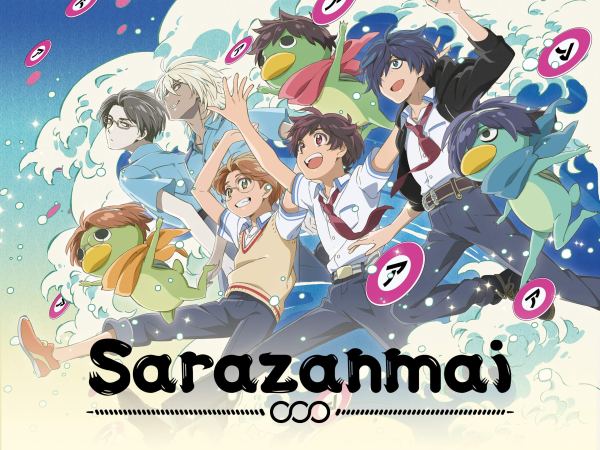
Chances are that if you were linked here from another blogger pal, then you might be new. To those first-timers, “Hi, I’m Takuto, welcome to my anime cafe!” For the OWLS blog tour’s sixth monthly topic of 2019, “Vulnerable,” I wanted to give some character spotlight to this spring season’s craziest title: Ikuhara’s Sarazanmai. 

In the month of June, we will be discussing what it means to be vulnerable. To some individuals, being vulnerable could be seen as a sign of weakness, but in fact, vulnerability is actually a sign of strength. We will explore what it means to be vulnerable and how certain characters in pop culture glamorize vulnerability. When do we show our vulnerability? How do we express vulnerability? Why should we show vulnerability? These are questions that we will be discussing in our posts featuring characters that show vulnerability and/or sensitivity and what we can learn from them or even our own personal stories.

I was pretty stoked when this month’s theme was announced. “How unusual, yet cool,” I remember thinking. Sarazanmai definitely fits the bill well, and what do you know—it’s even got some queer representation in it, perfect for pride month! Thanks Lyn for the prompt!

kazuki kappa wet.jpg


A brief discussion of the original, 11-episode spring 2019 anime “Sarazanmai,” animated by MAPPA and Lapin Track, directed by Kunihiko Ikuhara and Nobuyuki Takeuchi, and written by Ikuhara and Teruko Utsumi. SPOILERS for episodes 1-3 will be present. 

We’re All Connected

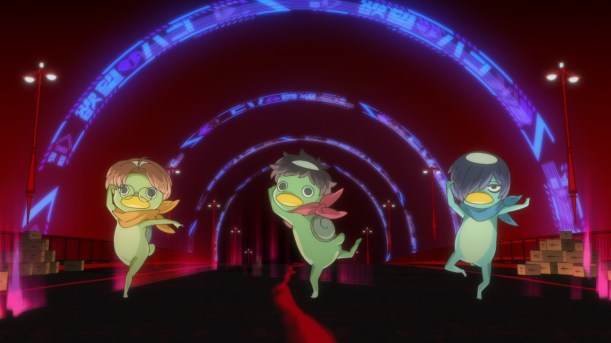
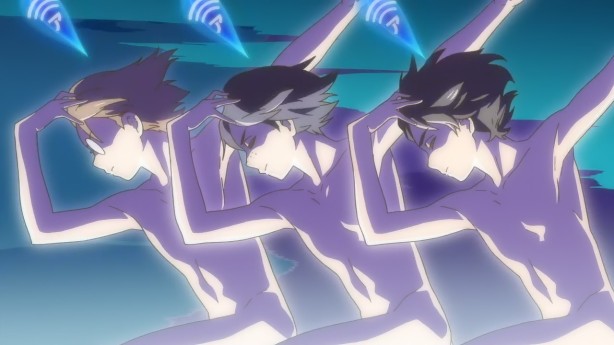
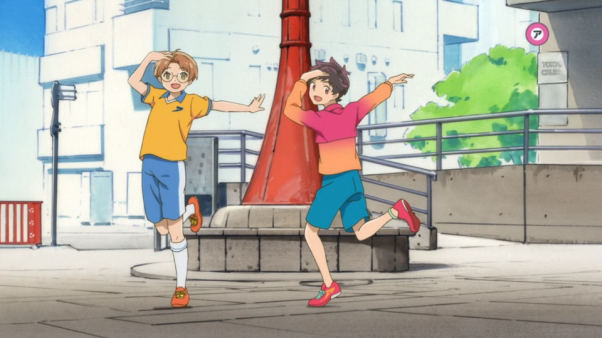
What does it mean to connect? Middle school boy and Asakusa local Kazuki Yasaka is trying to figure that out for himself. After accidentally breaking a statue of a kappa, Kazuki and his friends Enta Jinnai and Toi Kuji find themselves transforming into the very creature of Japanese folklore at the behest of Keppi, prince of the Kappa Kingdom. To become human again, they must fight against the kappa-zombies, even stranger beings birthed from human desires and created by Keppi’s enemies: the Otter Empire.

If that weren’t already enough, to kill the kappa-zombies, the trio must perform the “Sarazanmai,” a sound produced only when the three are united. But making such connections are much easier said than done. What’s even worse is that each time they emit the sound, one of their secrets are revealed to the others! (Vulnerable in every sense of the word, am I right??)

For their efforts, Keppi cuts them a deal: Collect the rampant desires of the kappa-zombies and he’ll bestow upon them the “Dishes of Hope,” plates Keppi can create from humanity’s darkness that can make their wishes come true. When Kazuki, Enta, and Toi find that it takes five plates to make even just one wish come true, however, the friendship of these three boys is challenged. With every new fight springs forth another one of their innermost secrets, whether they like it or not! It’s only a matter of time before one of the boys breaks—but will the connections to their loved ones shatter with the fall?

kazuki embarassed.png

Sarazanmai is equal parts sarcastic and dramatic in its storytelling. During half of it, you are allowed to laugh at the silliness of it all. Probably for more than half, actually. To obtain the desires of the kappa-zombies, Kazuki and friends must enter the, ehem, *anus* of the demons and steal their shirikodama, a mythical orb said to contain the desires of one’s soul. Sound kinda dumb? Well, don’t blame the writers (or do for going through with it), because that’s actually how the legend of the Kappa goes, believe it or not!

And that’s just the beginning of the absurdity. Wait till we introduce the fortune-telling idol girl, the boy who cross-dresses as said idol, the other boy who shot a yakuza when he was just a wee tot, and the gay cops!! Oh Ikuhara, you’ve really created art with this one!

Joking aside, Sarazanmai is a neat little coming-of-age fantasy story for three poor youths who can’t seem to understand their place in the world. They don’t feel connected to anyone, lost adrift the tumultuous sea of love, and that’s what makes the moments when they realize the true meaning of their bonds so tender. Unconventional in execution, perhaps, but still immensely entertaining to follow.

sarazanmai singing.jpg

So, What is the Sarazanmai?

Is it a song? A dance? Something you can eat? Keppi says that: “Sarazanmai” refers to a connection of mind and soul. You share all your deepest secrets as well.”

So it’s abstract, but still simple to grasp. Humans are connected through their shirikodamas. When they lose them—as when Kappa Kazuki steals it to perform the Sarazanmai with Enta and Toi—they become incapable of connecting with anyone else, and they get kicked out of the circle that makes up the world (also quoted by Keppi). Yeesh, talk about a soul-siphoning ceremony!

By uniting in the Sarazanmai, Keppi can obtain these captured desires. Much like a double-edged sword, however, some of the users’ own desires inadvertently “leak” in the process. We’re talking about these boys’ private diary-grade secrets, which is what I want to talk about next. Trust them on this one: it ain’t easy being green.

sarazanmai dance.jpg

I Want to Connect, But . . . 

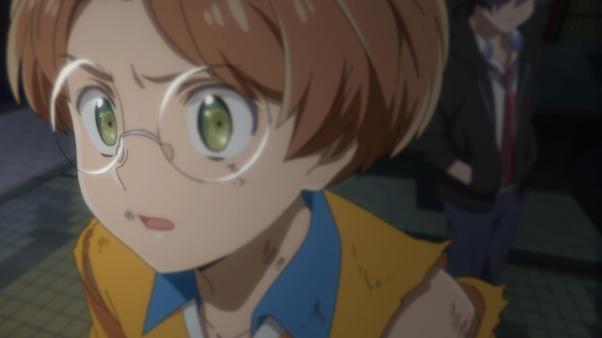
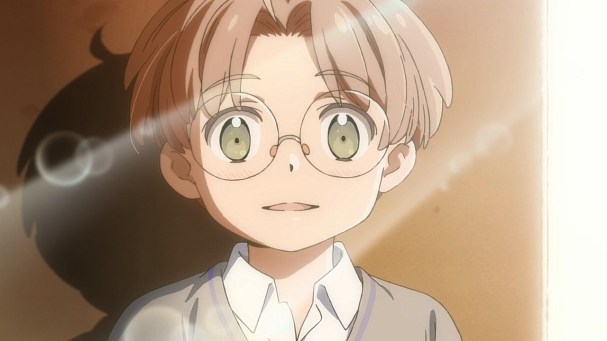
Reaching out to others is hard. It can be especially scary if you already think little of yourself. For whatever reason, trust me, we’ve all been there, and so have Kazuki, Enta, and Toi. Because Kazuki’s backstory carries more significance with the latter half, Toi’s with the show’s ending, I’ll be focusing on the Enta, our glasses wearing member of the “Golden Duo” meant to last all time!

Kazuki and Enta have been best friends ever since they met. After watching the other boys kick the soccer ball during practice for several weeks, a young Kazuki finally extends a hand to Enta to join the team. He was invited inside the circle, and granted permission to interact with an all-star like Kazuki. It sounds like a cold way of viewing their initial exchange, but this is how Enta, with all his self-doubts and insecurities, felt towards soccer and this new life.

golden duo.png

But feelings of more than just friendship blossomed for Enta. A closeted gay kid, Enta fell in love with his straight best friend. He felt blessed for having such a friend in his life, but cursed for feeling things that otherwise conflict with both the object of his affection and the status quo.

So like any shy gay boy, Enta hid these unacceptable feelings. He hid it all, months, years—

Until he performed the Sarazanmai. 

sarazanmai kiss.jpg

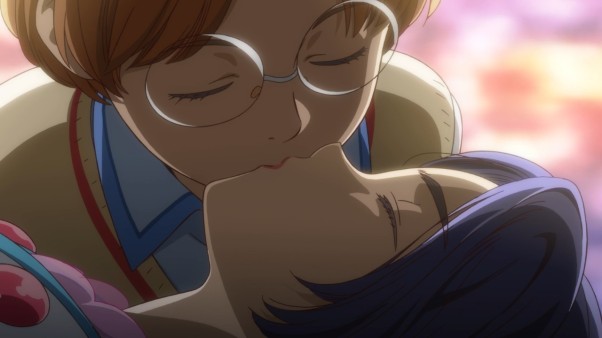
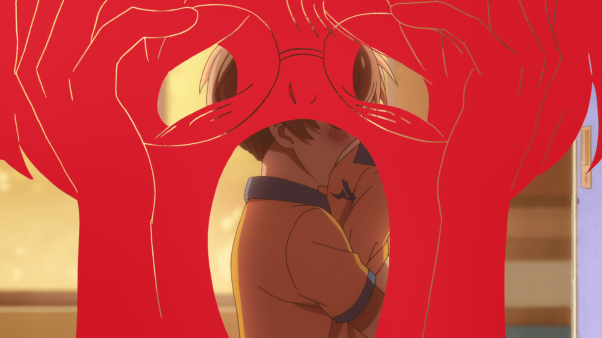
Despite how hard he sheltered his secrets, all finally came bursting at the seams. Enta was left 100% unguarded, vulnerable. The boys saw how Enta inhaled Kazuki’s scent on his jersey in the locker room—how Enta’s expression glowed with lust when he placed his lips on Kazuki’s recorder—how Enta even KISSED Kazuki’s lips while he lie asleep. It was too much, way too embarrassing!! Kazuki was shocked, but blew it off under the assumption that his teammates dared Enta to kiss him. For Enta, however, his feelings were rejected, and not just trivialized, but entirely unacknowledged.

To be looked away by his love crushed him. Enta wanted to connect, but it wasn’t meant to be. Enta wanted to connect, to lie about what he did, but the Sarazanmai only reveals the truth. Enta wanted to connect, but to take more than what he could have. He wanted to connect, but Kazuki was so far away. And at the very end, when Enta stole the dishes for the chance to satisfy his own selfish wish, he couldn’t be forgiven. Lover became stranger, and Enta lost sight of himself.

sarazanmai enta jersey.png

Love Yourself, & Cherish the Bonds You Form

I think if Sarazanmai has a bigger message under its themes of connection and expression, it’s this. When his whole life came crashing down on him, Enta first had to learn to be happy with himself if he was to not give up on his wish. Sure, he betrayed his friends, but he never gave up on Kazuki, even if Kazuki hated him for his actions.

We have to learn to be happy with ourselves if we are to form genuine connections with others. That said, we can still dislike parts of ourselves. I don’t think Enta ever wanted to have the feelings that he did for Kazuki, nor did he like feeling like a bystander all the time. But he eventually embraced those parts of himself, and found that all of these aspects—the good and the bad, the black and the white, the lustful and the loving—made up who he was as a person.

enta angry blur.jpg

Underneath its wacky, circus-like presentation, Sarazanmai is story about victimization, victimizing, and inadvertently hurting the people you love most to protect yourself. It shows us the price of maintaining connections with others, the deadly costs and the sinful pleasures alike. Each of the boys got to the point where they couldn’t even tell their closest friends about what was going on in their life, and that’s deeply eye-opening. Some connections cause you pain, yet you have to hold on to them.

Full of hidden meanings and rife with cultural symbolism, Sarazanmai delves into messy territory with philosophy on what it means to form genuine connections with others. How much should I give in a relationship? What should I be receiving in return? Is a connection supposed to be completely reciprocal, or . . . is it ok for one party to wind up with more? 

What does it mean to love someone, as opposed to desire something? How can my dreams help others, or why do my desires always hurt someone else? Merely living might be the hardest part, but true human connection and love make it all worthwhile. So long as we try to reach out to others and form connections, we’ll always be vulnerable to attack, physical or emotional.

But more importantly, just by trying, we’ll always have the chance to be happy—and not even a desire-snatching kappa can steal that opportunity away from you.

sarazanmai enta happy


Never forget that only those who connect their desires through the pain of loss can take the future in their hands. — Azuma Sara


Afterword

There’s A LOT going on in Sarazanmai, and a lot of good, might I add. This was easily one of the most fun watches I’ve had in a long time, and I hope the series stays on the radar for longer than this spring season. I would’ve loved more time with the characters, but I don’t feel like anything essential was left out. Maybe I’ll revisit it in a future post, but until then, Sarazanmai is honored here at the cafe as a “Cake” title, a show too sweet to miss out on. (Although if you’re not careful, this one might give you a cavity!)

So many people dropped this series, and that saddens me immensely considering that the ending is so rewarding. What did you think of Sarazanmai? Was it too weird for you, or right up your alley? Who was your best boy? I’d love to know in the comments! My love goes out to these precious kappa kids!

sarazanmai header.jpg

This concludes my June 29th entry in the OWLS “Vulnerable” blog tour. Carla over at Pop Culture Literary gave us a very interesting post about Jen Wang’s comic The Prince and the Dressmaker that you can read right here! Now, look out for Fred (Au Natural) as he rounds out this exciting pride-filled month with his own take on vulnerability on Sunday, June 30th! Thank you so much for reading, and until next time, this has been

– Takuto, your host