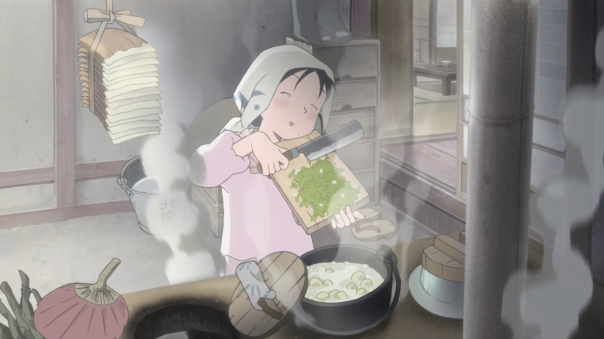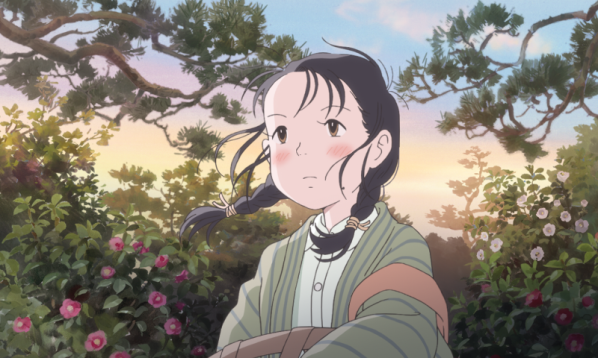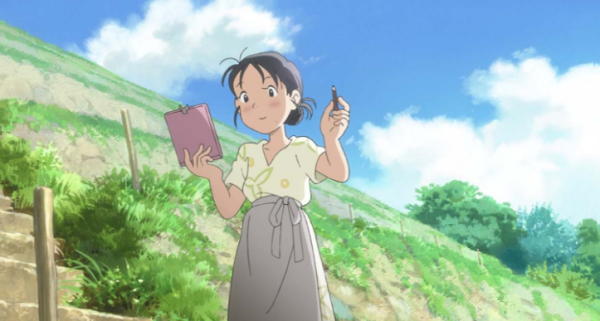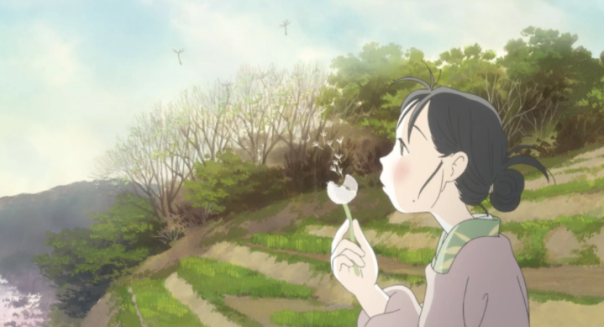
Anime at the Theaters: My “Your Name” Experience! | Blogmas 2017 Day 10

Hey everyone, welcome to (a very belated) day 10 of Blogmas (whoops)! I know today’s topic isn’t necessarily “new” for 2017 (nor is it for years prior), but this was the first year I was able to attend a theater to watch anime on the big screen!

blogmasday10

Anime at the Theaters!

From Funimation’s screenings of films for Project Itoh, Dragon Ball, Fairy Tail, One Piece, Black Butler, Attack on Titan, Psycho-Pass, The Boy and the Beast, and In This Corner of the World, to live action films like Tokyo Ghoul, Rurouni Kenshin, and Shin Godzilla, anime has been on the rise, as most of these titles were indeed screened this year. And they’re not stopping at 2017; they’ve already lined up the beginning of 2018 with theatrical releases for the widely anticipated first Eureka Seven Hi-Evolution film!

Heck, even Viz Media had joined in on the fun with its grand premiere of Sailor Moon R: The Movie this past winter (which was, by the way, promoted with the red carpet treatment, complete with a voice actor/pro-cosplayer meet-up, AND a spotlight on Snapchat—FREAKIN’ SNAPCHAT). The same goes for Aniplex of America and their latest (successful) efforts with Sword Art Online: Ordinal Scale and Fate/stay night: Heaven’s Feel. Oh, and we can’t forget Sentai Filmworks with the big debut of the No Game No Life: Zero! Though Aniplex has been in the game much longer, it’s only now that their publicity has reached far enough to include theater screenings not just limited to the California area. And this trend will likely increase for all of these companies as the years go on, which is awesome because when more anime goes around, we get more of it!

I unfortunately wasn’t able to see this film (or any of the ones listed above, for that matter), but I did try, I did! ;_: Now I own the DVD. :3

It’s not often that anime “strikes rich” with U.S. audiences, though. The fan base and popularity expand, sure, but the monetary gain from screening anime films in the U.S. is nothing compared to what Warner Bros., Sony Pictures, Walt Disney Studios, or even some indie films earn. But every bit helps, and seeing as how screenings of our favorite niche titles keep popping up, we can only imagine that it’s all helping the anime industry in Japan. Anime News Network wrote an article during the film screening boom awhile back, so you might want to check that out if you’re curious to know the “science” behind it all.

As I was saying, very rarely do anime films earn household names thanks to theater screenings: Akira, Ghost in the Shell, and most Studio Ghibli films are pretty well recognized thanks to their unique artistic styles and of course, classic nature. Just this past spring, Funimation streamed a little title called Your Name.—ever heard of it? Yeah, I’m sure you have, and you’ll probably already know that it’s now the world’s highest-grossing anime film, finally beating out Ghibli staples like Spirited Away (2nd), Howl’s Moving Castle (3rd), and everyone’s favorite fish-girl with the round tummy, Ponyo (4th). No, it’s not a competition, but credit should be given where it’s due, and Your Name. IS one incredible, breathtaking film. While Japan is still loyal to Spirited AwayYour Name. did manage to climb all the way up to become the fourth highest-grossing film in the nation. If that doesn’t speak volumes about the film, I’m not sure what will.

Image result for your name funimation

My “Your Name.” Experience

(This is not a review. That will come out in early 2018, fingers crossed >.<)

Have you ever been to a Warren Theatre? They’re apparently prominent in the big midwestern cities, but essentially, they are luxurious movie theaters heavily decorated and inspired by Hollywood during the Roarin’ Twenties. Very Gatsby-esque and decked out to the extreme, one wearing athletic shorts and a t-shirt (me) would feel very out of place. EVERYTHING is gold in that place—no, literally, there are tall pillars embossed with shiny gold-colored plating. Exquisite paintings hang on the gorgeously patterned walls, and the staff are finely dressed in slick black suits. Even the bathrooms are paved with solid ebony marble flooring with rows upon rows of ridiculously clean stalls. There are several open little outlets that line the curtained walls, each containing waiting rooms with comfortable maroon leather couches and, wait, yes, a fireplace.


[Pictures from Google]

All-in-all, my mom, dad, and sister and I were very shocked. Very shocked. The place was simply stunning, and I couldn’t recommend it enough. The Warren is an experience, not just another place to watch movies.


[They even had this cool giant promotional poster for the Ghost in the Shell live action, which I was absolutely enamored by! You can bet I took pictures posing by this, haha!]

So the Warren was hella lit, but what made the three-hour journey to see Your Name. all the more worth it was the meet-up. (Woah, Taku has friends that like anime IRL?! Yup, you bet.) If you didn’t already know, music was my thing from basically birth up through high school (and even now, too). I play the cello, and on my second year with the All-State Orchestra, my sister made friends with her fellow stand partner. He was also Asian, so there’s kinda that instantaneous bond right there, and we all kept in contact after that fateful encounter.

Flash forward, and he starts talking about this film he saw on his way back from Japan, a title that, though unfamiliar with my sister, was screaming at me because of all the recent hype: Your Name., Makoto Shinkai’s latest creation. He recommended the film because he’d seen it, I knew how to get us to see it, and my sister was the glue that held us all together. The only problem—he lives across the state, over three hours away, and while it might not seem like much for the average traveler, you can’t forget that we’re youngins, and that distance was enough to keep us apart.

So we agreed to meet halfway. He chose a conveniently located place where we’d meet up to eat (which was a really awesome and tasty Japanese restaurant similar to how Qdoba or Chipotle are fashioned—how fitting, I know), I found the Funimation-approved theater, and my sister kept us all excited (well, more than we were, at least)! Several laughs later, it was time to make our way across the parking lot, and before we knew it, we were ushered into the theater balcony where we were seated before a giant red curtain. That’s right, this movie theater opens and closes its screenings with the grand red curtain. God, did I mention that I love this place??
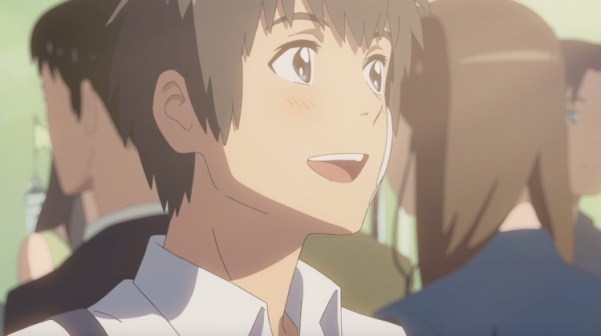
IMG_9494

So the great curtain raised and the great curtain lowered. The film was over, and it was admittedly hard not to cry. So many things had led up to this one moment:

  • Hearing about the rapid success of Your Name.
  • Attending All-State Orchestra and meeting a new friend
  • Funimation announcing a theatrical release
  • Reconnecting via technology and setting up a reunion
  • Traveling the distance, meeting the other halfway
  • Walking into the Warren
  • Reuniting for a delicious lunch
  • Seeing one of the greatest films ever created
  • Feeling the emotions of the characters, together

I mean, all this considered, it was so very difficult to believe that this dream of mine would quickly come to an end. It was not only a bittersweet ending for Mitsuha and Taki, but for the three of us, too. Honestly, bidding farewell to a friend had never been harder. But we agreed to meet again, and sure enough, just this past weekend, we met halfway once again to have fun at the city’s mall. We were going to ice-skate all together, but he had a piano competition coming up and his mom didn’t want him risking his wrist—perfectly understandable, and we had fun nonetheless. (Our family did go ice-skating, though :P)


Thoughts on Life, Transience, and Memories

It’s not often that an anime film gets screened here in the states. And it’s also not often that said movie becomes the highest-grossing anime film in the world.

Similarly . . . 

It’s not often that we get to have perfect long-distance friendships. And it’s also not often that we get to cross that seemingly great distance to have our own Your Name. experience. Little did we know it, we, too, traversed the state in search of the other and promised to meet up again someday. And when someday finally came, we were all just so, so happy.

We have to take advantage of the fleeting opportunities that life presents us with. Not every moment will be magical, but when you make the most of what you have—pouring all your heart into what you want most—sometimes chance grants you that picture-perfect moment . . .

Only for it to quickly fade into a memory. 

Cherish the friendships you currently have, relish in the art that entertains you, and I cannot express this last one enough: Take as many photos as you can. I say it all the time, but the reality is that life goes by quicker and quicker with each passing day. Don’t let thinking about the “could have beens” before they even happen stop the “can be” that you can make possible. There was a point where I considered not reaching out to my sister about the film because I thought it wasn’t going to work for some reason. I was wrong. We can make beautiful memories to last a lifetime, and we can take risks to pursue happiness.

It’s all a matter of taking the first step and hoping that it leads you to enjoying the step after that.
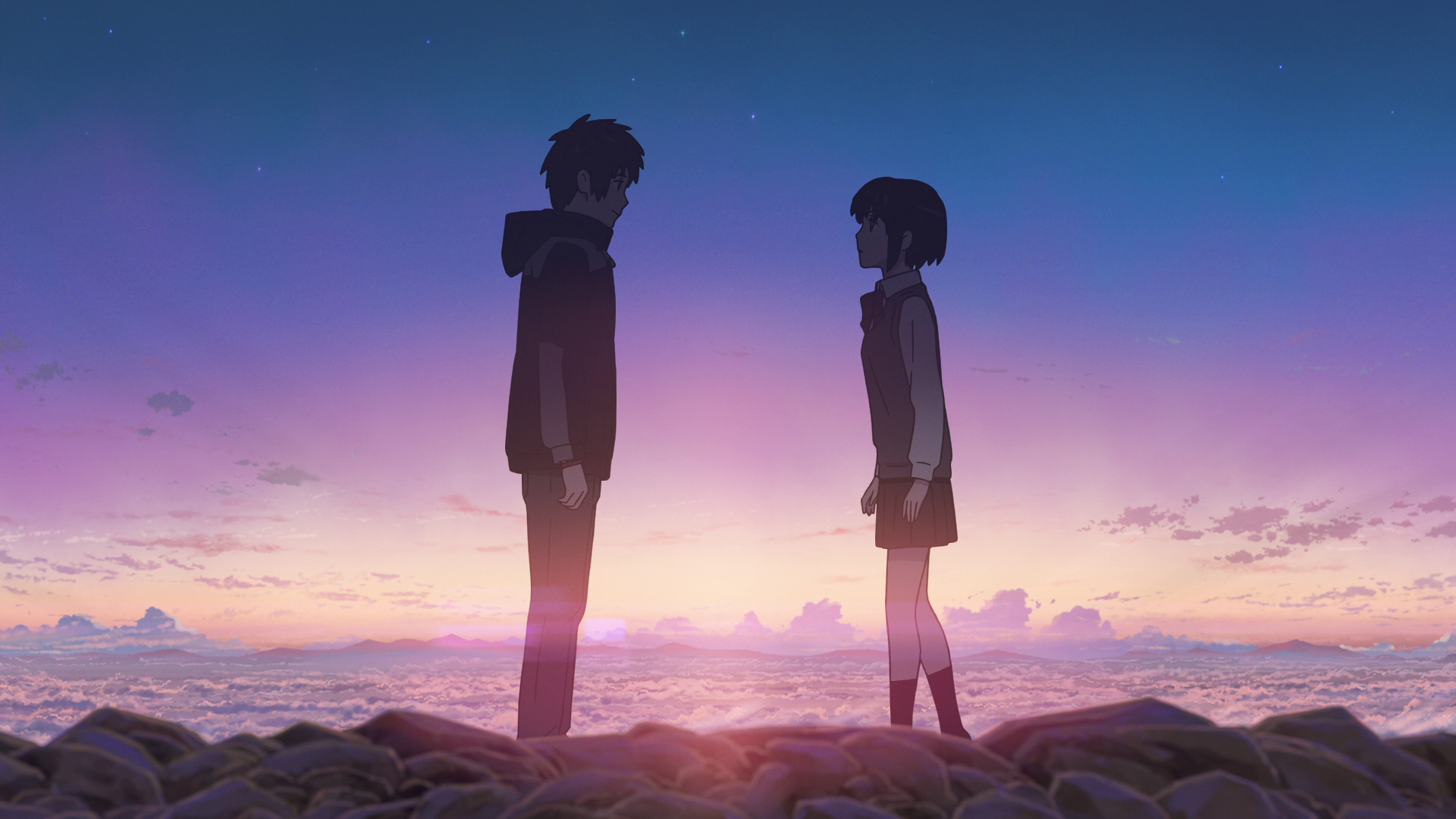
Related image

Wherever you are in the world, I’ll search for you. – Taki Tachibana


Maybe now you understand why getting to see Your Name was one of my highlights of 2017. Did anyone else have the opportunity to visit anime in theaters this year? If so, what did you see, and how was your experience? I’d love to know! I’ll be logging this as a “Cafe Talk,” so feel free to let your thoughts loose on this post or anything else related to it!

I’m on a bit of an odd schedule now thanks to the holidays, but this concludes Blogmas Day Ten of the 12 Days of Anime. Thanks for reading, and I’ll catch you shortly with another belated post!

– Takuto, your host

In This Corner of the World: A History Lesson on Hope & Healing | OWLS “Warmth”

Chances are that if you were linked here from another blogger pal, then you might be new. To those first-timers, “Hi, I’m Takuto, welcome to my anime cafe!” As part of the OWLS blog tour’s twelfth monthly topic, “Warmth,” I decided to incorporate what would have been my standard review of In This Corner of the World into a sympathetic discussion on the hardships of war and loss, and how love gives us the strength to continue being compassionate through even the worst of times.

It’s the season of joy, thankfulness, and love. This month’s topic is “Warmth.” Whether it is spending time with family members during the holiday season or with that special someone during New Year’s Eve, we will be discussing moments in anime and pop culture media that convey a feeling of happiness in our hearts. During times of struggles, we look towards the things that matter to us as a source of strength, hope, and happiness. We hope you enjoy this round of posts and that you, too, will have a wonderful holiday season!

inthiscorner.png

I’ve nothing else to say for the intro! Thank you Lyn for twelve consecutively thoughtful topics to ponder each month—I’ve enjoyed writing for all of them!


A brief spoiler-free discussion on the fall 2016 anime film “In This Corner of the World,” produced by studio MAPPA, directed by Sunao Katabuchi (“Black Lagoon”), based on Fumiyo Kouno’s award-winning manga of the same name.

New Life, New Opportunities

In 1944, life for Suzu Urano starts slipping through her tiny calloused fingers. For one, she is married to Shuusaku Houjou, a reserved young clerk, and is sent off to the small town of Kure in Hiroshima where her husband works at the local naval base. Now living with the Houjou family, Suzu must adjust to her new life, which is made especially difficult since she quickly becomes an essential meal-making, chore-doing crutch for the family. She does all of the daily housework during the tough wartime conditions, and the familial disconnect Suzu experiences between her sister-in-law—timed with the regular air raids—makes both the political and household climates feel like battlefields.

Image result

When intense bombings by the U.S. military finally reach Kure in 1945, devastation to Hiroshima and its townsfolk, as well as its culture, forever shake the nation, and Suzu’s life is permanently impacted by the tragedies. “Much is gained by living in Kure, but with war, many things cherished are also lost.” It is only through the greatest perseverance and courage that Suzu manages to continue caring for those around her, and to truly live life to the fullest.

“Torn apart by war. Brought together by love.”

By its end, In This Corner of the World is a somber ode to history, wherein the tragedies of WWII’s Hiroshima bombing are experienced firsthand by the main characters. But before the bomb is dropped, the entire first half of the film winds us back to the 1920s, Suzu’s peaceful childhood. It starts this way to not only show Suzu’s developing story from beginning to end, but also to create the picturesque vision of pre-war times in Japan, specifically Hiroshima and its surrounding towns. As every 5 or 10-minute interval—marked by on-screen dates—brings us closer to that horrific day, August 6, 1945, your stomach starts churning in dreadful anticipation; you know what’s about to happen, and you’re almost left disbelieving how Suzu’s whole life could just fall apart in an instant.

Related image

Akin to African author Achebe’s world-renowned novel, Things Fall Apart, which was written to show that life, law, and liberty already existed before the white man saw the need to organize, colonize, and, get this, “save” Africa, Fumiyo Kouno’s story serves to inform the viewer about the other side of the Pacific. You are put through the trials and tribulations of Suzu’s daily life, from learning to properly make a meal using rations to understanding the familial benefits of marriage, in order to hopefully understand that despite their differing customs, both the attackers and the attacked have things they want to protect.

I set up a pretty overwhelming historical background here, but the film really isn’t that political at all. Rather, its a drama centered around one little girl’s average life during WWII, and how no matter the global circumstances plaguing a household cause ruin and chaos, life goes on. That’s right, life will always go on. There are always things to be fixed, clothes to be washed, and food to be cooked. Suzu understand this, and that’s why she faces each painstaking day blessed that there’s still a roof above her family’s head. In This Corner of the World, though rife with tragedy, is ultimately a heartwarming tale of Suzu’s prevailing love and healing hands.

Related image

A Hero at Home: Suzu Urano

Characterized as tiny, optimistic, and a bit aloof at times, Suzu Urano goes through great lengths to help in anyway she can, even if her assistance comically ends up backfiring in the end. She’s also incredibly creative, shown in both her beautiful landscape sketches and paintings, as well as when she wields her knowledge of samurai food rationing to construct some, at the very least, “interesting” dishes. Her artistic talents act as a sort of sanctuary for her, and it is through her simple yet gorgeous works that she meets many new friends and even potential lovers. But like all artistic endeavors, chores come first, and slowly you start to see the hobbies that she once did for herself fade away to make room for aiding the family.

Related image

On top of working her hardest around the house (her efforts eventually exceeding those of everyone around her), Suzu is a girl, a soon-to-be-woman who undergoes all of the same treatments that Japanese women received during the 1900s. From stricter expectations in the kitchen and household to family-controlled courtship, rarely is Suzu the master of her own fate. Yet somehow, Suzu makes the best of what is given to her, for merely being allowed to experience the tranquility and joys of everyday life in Kure is enough to give her hope and purpose. Honestly, what a woman!

Image result

Suzu only speaks out once or twice in the entire film—remember, this is a film that chronicles Suzu’s ENTIRE life! She many not be honest to herself all the time, frequently disregarding her own happiness and well-being for the sake of her family and her nation’s pride, but Suzu knows how to fight the good fight, as well as when to keep pushing on through the toughest of hardships. Between watching her frugal attempts at fitting in with her husband’s family, her struggle to adjust to life in Kure, and the tragedies of war she later encounters, it feels as if you physically and emotionally cannot go through as much heartache that is thrust upon her and make it out ok. Yet Suzu manages to bandage up her scars and continue making herself useful to everyone. The warmth she brings to the war-torn world embodies the purest light of hope in a time of darkness.

Visually, the Softest Movie I’ve Ever Seen

“It was like Studio Ghibli meets the Peanuts and together they talk about some pretty serious stuff.” This was my immediate reaction to the film which I posted on Twitter, and I still stand by these words now. The backgrounds are painted so smoothly, giving off an immense sense of ease, and the magical watercolor touch just feels so right. Even the characters, for a lack of a better word, look so . . . “soft.” There’s a lack of detail in their physical features, but it’s their sometimes cute, sometimes sorrowful mannerisms and words that convey their true characters. Seeing characters this adorable almost feels wrong for the tone of the film’s second half where the air raids become prominent, but it somehow works altogether as one moving, breathing, snapshot of history.

Related image

(If you watch the special feature clip “Hiroshima & Kure: Then & Now,” you’ll understand how and why it all looks so historically accurate; the attention to detail in re-creating several destroyed sites where famous architecture once stood was very commendable.)

The luscious animation is accompanied by equally gentle music, as kotringo’s (Rieko Miyoshi) soundtrack matches perfectly with the tone. At times uplifting, other times more tender or melancholic, tracks like “Kanashikute Yari Kirenai” or my personal favorite, the ED theme “Migite no Uta (みぎてのうた)” provide lovely messages to live by: “Even in this painful and broken world, there IS hope.”

Image result for in this corner of the world hiroshima

Learn From Fiction: Heartwarming Tenderness Comes From How We Live

It is stories like Suzu Urano’s that give us all the fuzziest feelings of contentment and comfort. But like all stories, they eventually end, and once they’re over, the books get placed back on the shelves, and the DVDs and Blu-rays are ejected from their players. And that’s it. It’s all just entertainment, anyway.

*If you’ve ever thought this, then you completely missed the point as to why certain works even exist in the first place.

All fiction is written with messages, no matter how significant or insignificant. With the case of In This Corner of the World, it’s to showcase the tragedies of war firsthand, and the devastation that comes with violence. That should’ve been apparent from the synopsis alone. Looking deeper, we can understand more big takeaways from the film:

  • Hardships exist everywhere—someone is always struggling
  • Protect family, for without it we are fundamentally alone
  • Gender roles can limit individuals from reaching their full potential
  • The youth of today ARE our future
  • With destruction comes the joy of rebirth
  • By rebuilding from the ground up, we build a stronger foundation than the one before it
  • Make the most of your life—you only get one, and it goes by incredibly fast
  • WE ALL have the choice to be happy or sad, rude or nice—live the way you want to
  • Be thankful for what the earth provides, and what you can do for it in return
  • And lastly, to quote The End of Evangelion, “Anywhere can be paradise, so long as you have the will to live”

Just LOOK AT ALL OF THOSE THINGS I CAME UP WITH. And that only took me a couple minutes of reflection.

inthiscorner2.PNG

History will always be our greatest teacher

Authors, directors, artists, musicians—Creators improve on what skills they already have in order to teach us invaluable lessons about the human experience. They have the power to take all the world’s evil and tell us that life can be incredible, so long as we don’t repeat history’s mistakes. Don’t just watch a film: enjoy what it is trying to show you. Don’t just read a book: revel in the messages left in-between the lines. Take what you learn and monopolize on it! Essentially, BE the good in the world!

In This Corner of the World presents the catastrophic effects of humanity’s cruelty, savagery, and barbarity—yes, absolutely. But it also exists to tell us that through the ashes, we can rebuild; that we can be kind to others, even if they treat us harshly; that most of all, we have the choice to see the good in this wild, wicked, unfair world.

inthiscorner3.PNG

As a race, we have this terrible tendency to appear on the wrong side of history (if you know what I mean). The title In This Corner of the World refers to both Suzu’s tiny Kure house on the hill AND a state of harmony achieved by acknowledging and balancing the positives and negatives that life throws at us. A heartbreaking historical ballad for those we have wronged, and the terrible things we have done, In This Corner of the World is here to say that life goes on, and that as long as we try to understand one another, hope and a warm heart will always allow us to move forward.

We can love. We can rebuild. We can move on. But we’ll never truly forget.

There is only one corner of the universe you can be certain of improving, and that’s your own self. – Aldous Huxley


This can be a hard film to watch, but it all depends on how seriously you decide to take it. It has several comedic points of value in it, as well as a very cute presentation style, but don’t let those two aspects close you off from In This Corner of the World‘s subtle brilliance and emotional depth. As a powerful, touching work of art, this film is awarded the “Caffe Mocha” seal of approval, a rating for those special titles that I consider to be a must-watch!

Image result

This concludes my December 20th entry in the OWLS “Warmth” blog tour. Arria Cross of Fujinsei went right before me and expressed her sincere gratitude to all of her fellow readers, bloggers, and OWLS members in one emotional, heartwarming post. Now, look out for fellow aniblogger LitaKino (Lita Kino Anime Corner) with a surprise celebratory birthday video this Friday, December 22nd! Thank you so much for reading, from my first OWLS post in January to here at the end—I do hope you have enjoyed them, as I do really, really like writing them! Until next time, this has been

– Takuto, your host

Shin Godzilla is a Terrifyingly Realistic & Meaningful Ode to History | Review

A brief discussion on the summer 2016 Japanese film “Shin Godzilla” (also known as “Godzilla: Resurgence”), produced Toho, co-directed by Hidaeki Anno and Shinji Higuchi, based on the original story by Anno (Evangelion). 

*I am not overly familiar with the Godzilla franchise (meaning I cannot properly decide whether it is a particularly “good” or “faithful” addition), but I do respect it and the impact it has had on the Japanese people and the rest of the world.*

“A God Incarnate. A City Doomed.”

This is how Funimation captions the deadly film containing the biggest, baddest Godzilla known to mankind, and accurately so. (He’s literally the tallest in the franchise!) But before the King of Monsters surfaced from the deep, it was just another quiet day for Japan. Chaos quickly floods the scene when a giant, strange gilled creature explodes from the ocean’s surface and begins tearing through the city.

Prioritizing citizen safety above all else, the government attempts to keep the situation under control, only to realize that their technicalities and formalities are useless in the face of true terror. It’ll take a rag-tag team of volunteer scientists, engineers, and public safety officials to come up with some sort of way to combat this seemingly perfect lifeform. “But time is not on their side—the greatest catastrophe to ever befall the world is about to evolve right before their very eyes.” – Funimation

Image result for shin godzilla screenshots

More Than BOOMS! and BANGS!

Despite boasting action (it’s a Godzilla film for crying out loud), there’s a surprising amount of substance, particularly a possible social commentary on the hierarchy of the Japanese government and they way the nation handles foreign affairs during war time. Specifically, we are frequently shown how frustrating and slow policy can be. The film’s first half centralizes on political officials arguing about who should do what, when, and their reactions to the unbelievable events unfolding—most were consumed with disbelief, in fact, except for the young yet forward-thinking Deputy Chief Cabinet Secretary Rando Yaguchi, our basically-main character (and wow, what a title).

Image result for shin godzilla kayoko

We join Yaguchi in his frustration against the higher-ups, as well as his struggle to make amends with the innocent lives lost because of the government’s inability to act early on. While those above him in rank merely wish to hold fast to their comfortable, well-paying seats, shrugging off the impending doom that is about to likely kill them all, Yaguchi pulls together every asset that he can to find out what Godzilla is, and solve the mysteries surrounding Goro Maki’s research on the subject. It’s sad to admit how painfully real the execution of this all is.

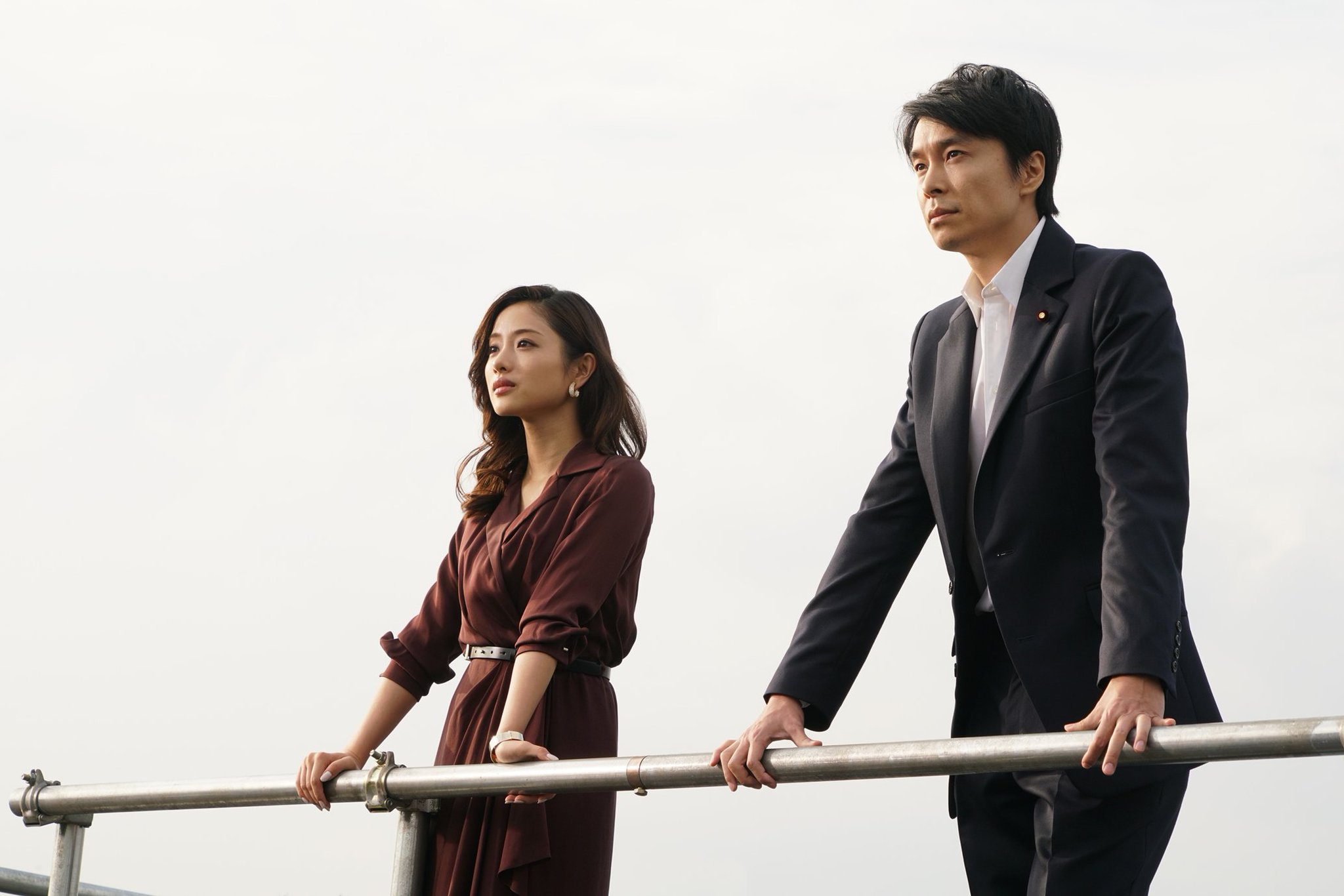
Unlike the other officials who merely bicker about bureaucratic protocol and semantics (and not take things seriously), Yaguchi deals with exactly what’s in front of him. He knows he’s trapped within the system’s web, but he doesn’t fear questioning those above him in order to do his job correctly and honorably. Actor Hiroki Hasegawa conveys the complexity of Yaguchi’s character impressively, balancing fitting facial expressions for each emotional hit: a mix of concern, anger, sadness, and confusion.

Image result

As I side note, I thoroughly enjoyed the excitement that came with watching Godzilla transform from the weird gilled lizard on all fours to the menacing tower of terror we’ve come to know and love. It was so much fun! One small small complaint that I did have was (and I’m not sure if this actually counts) that I couldn’t really tell if the CG done on Godzilla was “good” or not. Seriously, I couldn’t. Was he creepy lookin’? Sure, but I’m not sure how this makeover compares to previous ones. Also, while his explosive beams later on looked absolutely terrifying, I didn’t like the cheesy sound effects for the explosions—they felt like they were missing a low boom to ’em, or perhaps an epic bass you’d expect from a Hollywood explosion.

Intense Dialogue, and the Engrish Doesn’t Help

Most of the film’s complaints are targeted at the lead female, Kayoko Ann Patterson, portrayed by Satomi Ishihara, whose unfortunate script is loaded with English-heavy dialogue. In an interview, she even stated “Sometimes it’s so frustrating, I just want to cry,” and by NO means is any of this her fault—that’s a director issue. Her character is meant to seem very American, and while we definitely get that feeling, I can’t help but think that her normal Japanese speaking would’ve sufficed the whole way through. Anyway, I still love Kayoko to death because of how her character acts as an excellent foil to Yaguchi’s—both see themselves in higher positions, but for now, they work together efficiently with what they’ve got in their own ways.

Image result

The Engrish problem is solved by switching the language settings to Funimation’s English dub, which is especially wonderful because the subtitles just fly by! Shin Godzilla is a film about talking through the problem, and less about any spectacular human actions. The political nonsense in the first 20 minutes, as well as the ending with solving Maki’s quote (which I’ll get to) are much easier to understand with the dub. If you don’t mind live-action dubs, do give this one a go—it could help immensely with understanding the film’s main messages.

Understanding the Legacy of the Atomic Bomb

More than having knowledge of the franchise, it’s historical context that is needed for full emotional effect here. Japan was rocked not once but twice by an evil that shouldn’t have even been unleashed on the planet: the atomic bomb. History has learned that the destruction that follows an atomic bomb is not cool. It’s not something the U.S. or any country should glorify, and this film makes sure of that. Godzilla was birthed once the long-term effects of radiation poisoning revealed themselves as something just as fearsome and frightful as the bomb itself—gosh, perhaps worse.

This brings us back to the film, which could stand an allegory for nuclear war and its long-standing effects, Godzilla itself mirroring the disastrous earthquakes, tsunamis, and radiation that hit the poor nation all at once. Unlike normal action films where you’re just waiting in anticipation for the bad guy to unleash their awesome powers, I was left not cheering, but shaking with fear of the results that, very closely, mimic an atomic bomb. The theme of destruction is a powerful one, a scary one, and that’s how this film shocked the viewers—the moment Godzilla unleashes its wrath is one that can only be witnessed . . . and feared.

Image result

The People that Made this Experience Special

1. Sharla (Sharmander on YT)—Being one of my favorite YouTubers, it’s rare to ever hear about her work life as a dialogue coach, and so I was ecstatic once she put out a video saying that she worked with the cast (particularly Yaguchi and Kayoko on those stubborn English lines) and Anno himself.

2. Shiro Sagisu—Known for his epic music in Evangelion, Shiro gives the film a really neat character. His famous “intense operations planning” music that plays throughout the franchise makes several appearances in this film, and though it felt overplayed at first, a second watch through with the dub made it all feel like it blended seamlessly, as if Eva and Godzilla were truly “a match made in kaiju heaven!”

3. Hidaeki Anno—THIS MAN puts me through so much stress, and yet I can’t ever look away whenever I hear his name involved in a project. He is the reason I jumped into this foreign franchise, after all, so that’s got to mean something, right? He perfectly combs together realism, destruction, and rebirth in such a way that merits a masterpiece with every work. In Shin Godzilla, he took me back to the first time when I saw Evangelion and was impacted in such a way that I’d never be the same without it. I’m glad Anno took the break between 3.0 and the final Rebuild film, because hey, sometimes we have to “Do as we please,” and I respect that.

Thank you for giving me my Evangelion fix—it was an incredibly enjoyable experience!

“Do as you please.”

These are the few words left by the enigmatic Maki, and yet, they remain the strongest message within the work. It’s something so simple, to do as you want to, though I get the impression that it’s not a common Japanese lesson taught. No, this isn’t a wish or a passing thought, but a statement aimed DIRECTLY at Japan. Towards the end of the film, the Prime Minister must either give consent to or deny the United States’s declaration against Godzilla: “Take care of it now, or we will nuke it.” That’s right, history will repeat itself. Japan would risk losing the pride and dignity it spent so many years recuperating to the humiliation of starting at ground zero once again.

With the titular creature MIA towards the end and the U.S.’s threat, it almost begs the question: Are humans deadlier than Godzilla?

But oh, “Danger is an opportunity for personal growth,” remarks the U.S. President in the film. Yeah, not for this country. The true climax of the film comes down to a duel between philosophies—to accept help and then rebuild, or own up to the situation. And when Japan finally does decide to take matters into its own hands, fighting the way only they do best by studying their enemy, the scientific team makes work of the King of Monsters in a way that, without spoilers, makes me proud to be human. Using science, mankind’s greatest weapon, the team transforms the impossible into plausible—theory into reality.

It’s that moment when you realize you CAN stand for yourself WITHOUT having to kill another being—THAT is the big takeaway. Take pride in the things you can create and accomplish together, NOT destroy. And finally, for ONCE in your overly obedient life, do as YOU please, NOT what the others want.

Image result

Shin Godzilla is incredibly smart, realistic, meaningful, and genuinely scary at times. Most of all, my god, if this film had come from my country, I’d be overflowing with pride, too.

“Accountability comes with the job. A politician must decide to own it or not.” – Rando Yaguchi 

Image result

(None of these screenshots belong to me. No copyright infringement is intended.)


Have I been completely Godzilla-fied? Haha, not quite, but I will definitely be keeping an eye out for future installments, including the wildly anticipated CG Godzilla film directed by Gen Urobuchi, another one of my favorite directors in the industry! Shin Godzilla may not be anime, but I’ll let it slide into the “Caffe Mocha” selection as grade-A movie material for sure, and for everything it stands for. Shout-out to Scott (Mechanical Anime Reviews) for hyping me up about it, and for covering the film way better (and quicker) than I did here.

Lastly, thank you so much for reading, as this was a film that has grown to mean a lot to me. I’m dying to know what you thought about Shin Godzilla, especially regarding its production, so let me know your thoughts in the comments! Until next time everyone, this has been

– Takuto, your host

Time of EVE Welcomes Impartiality Through Reflection | OWLS “Mirrors”

Chances are that if you were linked here from another blogger pal, then you might be new. To those first-timers, “Hi, I’m Takuto, welcome to my anime cafe!” As part of the OWLS blog tour’s  seventh monthly topic, “Mirrors,” I decided to incorporate what would have been my standard Time of EVE review into this reflection on artificial intelligence and robotic spirit.

“Magic mirror, on the wall—who is the fairest one of all?” When we look in the mirror, what do we see? Do we see ourselves or someone we don’t want to be? For this month’s theme, we will be exploring some of our favorite anime and other pop culture media that redefine individual beauty—inside and out. Some topics we may explore are physical appearances, social expectations on gender, and the importance of self-confidence.

I’ve always loved that wicked mantra, so thanks Lyn for the prompt!

Image result for time of eve


A brief discussion on the spring 2010 anime film “Time of EVE: The Movie,” produced by Studio Rikka, directed and created by Yasuhiro Yoshiura.

She Left the House, and He Got Curious

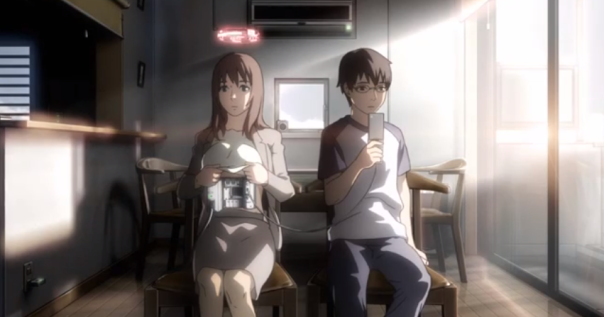
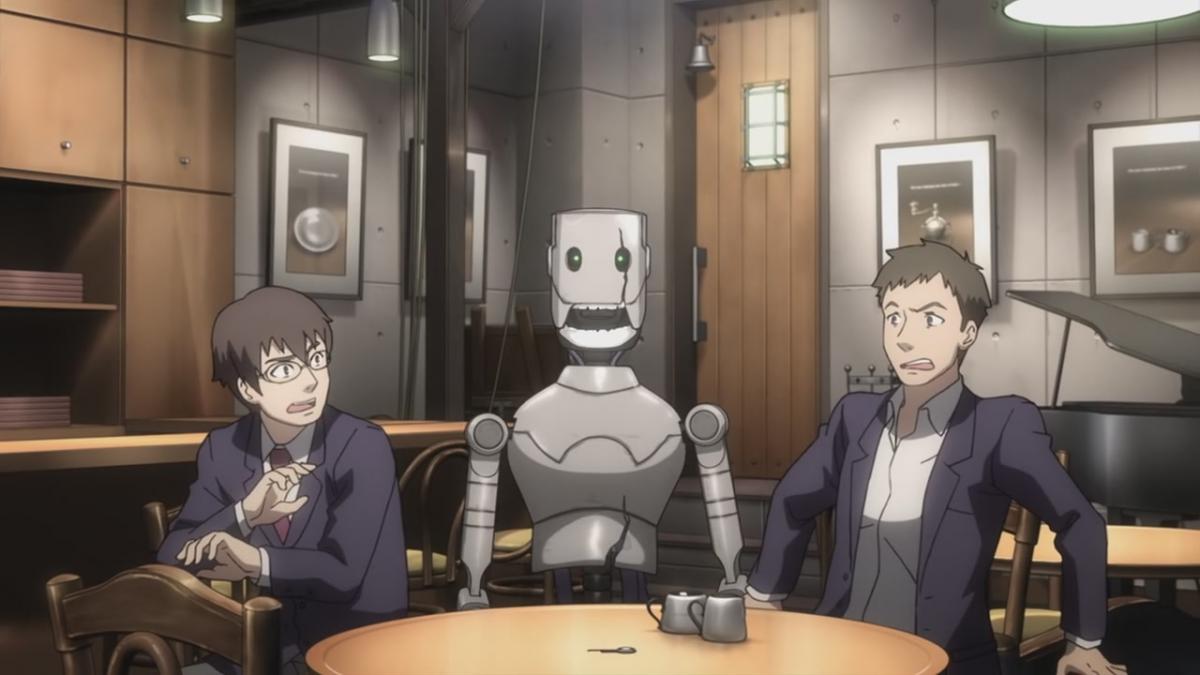
Rikuo is just another Japanese student owning an android in the near future. While checking his android’s behavioral log one day, he notices odd check-in and check-out times. When Sammy, his android, finally takes another detour, Rikuo and his friend Masaki head out and stalk her. It turns out Sammy frequents a hidden cafe called “Time of EVE,” and the cafe’s barista Nagi only has one request: that there is no discrimination between humans and androids.

Being the compilation of a 6-episode series by the same name, Time of EVE follows a pretty basic formula: Rikuo and Masaki frequent the cafe in order to uncover more about each of its interesting patrons and, of course, find out just what kind of character Sammy really is. A tale of unrequited feelings, childhood dreams, and understanding comes to fruition.

Image result

Director Yasuhiro Yoshiura solidified his wacky and weird yet oddly comedic and intelligent presentation style with this one. It’s subtle in execution, but anyone could still identify it as science fiction—and good sci-fi at that. I know people who don’t care for sci-fi that walked away loving Time of EVE, and I think that’s largely because the film aims at much more than pondering ideas like sci-fi does; instead, it goes deeper, showing you that the genre also has a lot of heart once you pull the wires away. The story is touching, sometimes even hilarious with all the sudden zoom-ins, and its visual artistry still holds quite well as a visionary piece even today!

Related image

THIS 10/10 AESTHETIC IS WHAT INSPIRED MY CAFE 

Yup, that’s right. Time of EVE so inspirational to me that it inspired the clean and modern look of my cafe here (or at least I hope it comes across this way . . . do I need to remodel!?). If I could spend all of my days writing and reading in one place, it’d be here, at the Time of EVE! Everything just feels so sleek and simple, yet intricate and “underground” at the same time. Like, the coffee (EVLEND) cups, the bar, the tall tables, the ceiling fans, the smooth jazz music—ALL OF IT! It’s just a chill, quiet, aesthetically pleasing place = The perfect kind of place for me.


And I couldn’t forget Tooru Okada’s VERY 2008 soundtrack, which just happens to be included on the Blu-ray release, yay! The music adds wonderful immersion into the wonder and fun of the cafe, not to mention all of the very peculiar interactions that take place. The energetic child, the grandpa and his crazy kid, the sexy couple, and even the stoic man in the back: it’s as if they all have their own track, as well as a story to be told within the music and the dialogue. I’m very pleased that the show was crowdfunded via Kickstarter with a dub, too. (I only wish I could have participated to get the coffee set >.<)


Related image

Sammy, You are an Android

a letter from Rikuo to Sammy, written by Takuto

Sammy, what is it that you see in the mirror each morning when you wake up? I’ve noticed that you tie your hair up with a headband, scrunchy, or a flower when you go out sometimes. It’s unusual. You are an android, but don’t let that stop you from looking the way you want to look.

Now, Sammy, who is it that you see in the mirror each morning when you wake up? I’ve picked up on your subtle cues as to my tastes, preferences, and mannerisms. Perhaps that’s just the activity log recalling my “most recent selections.” But I like to believe that you’re growing, just like all of us are each and every day. You are an android, but if you find yourself wanting to be happy or sad, angry or surprised, I’ll understand. 

After frequenting that place you visit, that Time of EVE, I realized that it’s no ordinary cafe, but a safe haven from prejudice and routine. I’m kind of a nerd, one who gets picked on sometimes for saying please and thanks to you, my android, and if I had a place where I could go to escape all of the name-calling and expectations, well, I’d probably be at that cafe all the time, too. 

We live in a pretty convoluted world. It’s not necessarily bad, but people make it much harder than it needs to be. Why does it matter if you’re an android or a human? If we both value our own lives and only wish to help each other out, then I’d just rather avoid “things or beings” altogether. Sammy, you’re an android, and in this world so bent on exclusion and division, I only wish you the best. 

The fact that we gaze into the mirror to begin with reveals that we’re only insecure about something, really. But last I checked, androids don’t “feel insecurity,” only assurance in their code. This proves you can be anything and anyone you desire, so do it with pride for not only yourself, but anyone you inspire in the process, like Nagi, Masaki, and myself. 

For me, however, just please stop looking into the mirror—you look great with that headband on.

– Rikuo

Image result


“Are you enjoying the time of EVE?” I sure am, so much so that I wish I never had to leave, haha! For Sammy, reflection about who she wanted to be came from her experiences with the world around her, a bold fashion decision, and, of course, a secret trip to the cafe. Through the interactions with Rikuo, Nagi, and the other “people” at the cafe, she, an android, found individuality and character for herself, defying the laws of her creators and the social norm—strict servitude to the master. Considering its impact on myself, this blog, and sci-fi entertainment in anime, Time of EVE: The Movie is undoubtedly awarded the “Caffe Mocha,” a film for all those even remotely interested in AI, as well as what it means to be human. It’ll fill you with warm fuzzy feelings for sure. Let me know your thoughts on this post and show if you’ve seen it!

Image result

This concludes my July 17th entry in the OWLS “Mirrors” blog tour. Please check out Rai (Rai’s Anime Blog) who went right before me and wrote about accepting every fiber of one’s being in the gorgeously grim Elfen Lied. And now, I’ll turn it over to Carla (Pop Culture Literary) on Wondering Son and its visual portrayal of gender norms this Wednesday, July 19th! Thank you so much for reading, and until next time, this has been

– Takuto, your host
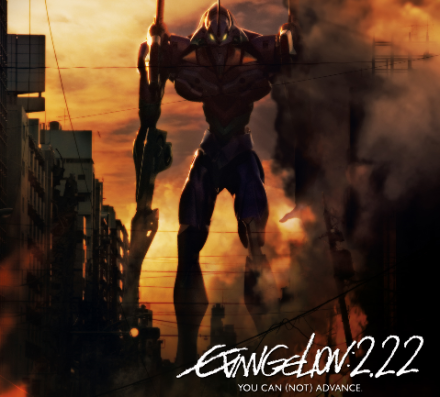
Evangelion: 2.22 You Can (Not) Advance. Review

If there’s one thing that I’ve learned, it’s that Evangelion is much more than a robot fight . . .

The Evangelion franchise holds a very biased but special connection with me, for reasons unknown. I get thrilled by the interesting story, the amazing action, and especially, I love the characters. But what happens when one of my favorite series throws a world of hurt on my favorite character? I get angry, and 2.22 did me in.

Leaving off from the first film, 2.22 centers on four psychologically-damaged teens that pilot synthetic humanoid robots called Evangelions, where their mission is to protect mankind from the wrath of the heavens. On the horizon looms a secret organization that plans to initiate the Third Impact, which will somehow destroy the world.

Possibly one of the best anime openers I’ve seen, the film kicks off with two new Eva pilots taking out two new Angels. These couple of introductory fights really draw the viewer back into the chaotic world where mass destruction became commonplace.

All of the intense Angel clashes are exhilarating, as execution timed with high stakes makes for desperate situations that are completely entertaining in all aspects. You can’t  simply call it a Rebuild anymore, as Studio Khara has outdone themselves by completely transforming a beloved series into a dazzling spectacle. Evangelion will be around for a while, and these Rebuild films make it cut in stone. Animation of architecture is clean-cut, the CG Evas and Angels are terrifyingly gorgeous, and the characters stand out wonderfully against the detailed, digitally remastered world.

The movie rolls along smoothly between fights, developing Shinji and Rei’s relationship in a quicker and more delicate manner than the original series. Possibly because a lot of their uninteresting scenes are taken out, I definitely like the Rebuild‘s Rei over NGE‘s. Shinji and Rei’s characters act much more natural, allowing personal growth and maturity to take its roots earlier on. I mean, boy-wonder makes a couple decisions for himself and quiet girl grows emotions – it’s already miles ahead of their original status!

Then there’s the mysterious Mari, a character who, despite not knowing much about, adds a new enjoyable level to Evangelion. The fun fourth pilot reveals she fits the pattern for traumatized individuals when she brutally forces control over a transformed Eva Unit 02 towards the end, a gruesome scene so aggressive that it still stuns me now! It’s interesting to note, however, that she’s always in full control, never once letting the Eva take her over instead. This one intriguing difference sets her piloting abilities above the Second Child, whom I’ll talk about next.

Here’s where I really hate 2.22 and what they did. First off, Asuka’s name has been changed from Asuka Langley Soryu to Asuka Langley Shikinami – it just doesn’t sound very German anymore, which she is. Second, Asuka is known for her dominating attitude and brash, “high and mighty” sass-talk. They reaffirmed that, which was awesome, but they took out a scene where Asuka, speaking in German, answers a call from her home. It was a small yet memorable scene from NGE that created my love and interpretation for one of my favorite anime characters EVER. She’s still an ass to everyone, yes indeed, but she doesn’t feel like the same Asuka I came to love from the original.

*Spoiler Rant Ahead*

The true “break” starts when Asuka test pilots the new Eva Unit 06, rather than Shinji’s friend Touji. If you remember NGE, Unit 06 ascends into the next Angel, which Shinji must kill – pilot included. So when Asuka gets brutally crushed and torn to pieces (shortly after she was revealed to be still alive), I WAS FURIOUS! Never have I ever seen something in anime so insulting that left me more enraged than this gut-wrenching horror scene. I honestly couldn’t believe my eyes to see Asuka ripped to sh*t like this, and it didn’t help that the calm child folk song “Tsubasa wo Kudasai,” sung by Megumi Hayashibara, was the only thing you could hear. Well, that and the screams.

Rebuild 2.22′s ultimate climax invokes similar feels to Instrumentality in The End of Evangelion. The film even has its own relaxing slow song “Komm, süsser Tod” scene infamous to Hideaki Anno’s work, where chaos, death, and transcendence has never looked so beautiful yet depressing. Ending the film is an acoustic version of Utada Hikaru’s “Beautiful World,” which is a reprise of 1.11’s ending. Such a fitting trance song ~

As much as I abhorred the abuse of Asuka in this film, I can’t help but admire the fact that an anime made me feel something so powerful and emotional. Because Evangelion: 2.22 You Can (Not) Advance managed to rip at my heartstrings, provided top-notch animation quality, and proceeded with its own continuation of a spectacular series, I must award the film a 5/5 in the entertainment category. The Rebuild rekindles my mind and emotions, and most of all, it reminds me why I fell in love with Evangelion in the first place. Though it is not the same mindset, it is still the same, great Evangelion.

+ Stunning, crisp animation, most effective CG

+ Improved character development, great new additions

+ Music adds to film, interesting insert songs

+ “Break” route proves a masterful addition to the franchise

– Asuka swap with Touji is inconceivable

– Song that plays during Unit 06 scene could have been more epic

– It’s only another movie in the series, still needs an ending

There! I’m finished with my Evangelion experience until 3.33 comes out, which it better this year cause it’s 2015! You should immediately pick up 1.11 and 2.22, as they are fairly cheap, house cool extras about the animation, and are both dubbed by FUNimation, who knows exactly how to execute an English dub! I recommend the Rebuild series to fans of NGE, individuals who are exploring the mech genre, and to those looking for something that’ll rack your brain. This film was an exhilarating, surprising, and brutal follow-up – I Was (Not) Disappointed! Until next time, this has been

– Takuto, your host