Arslan Senki, When the OP/ED is Better Than the Actual Show

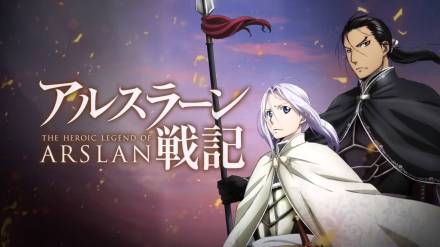
A spoiler-free review of the 25-episode spring 2015 anime “The Heroic Legend of Arslan,” produced by LIDEN FILMS and SANZIGEN, based on the manga (story) by Yoshiki Tanaka.

Undefeated King Andragoras rules over the flourishing kingdom of Pars with a firm grip through his mighty Royal Capital, Ecbatana, a city structured around a slave system that fuels the royal palace. However, the baby-faced prince Arslan, a wide-eyed and curious boy, knows deep down that he does not possess the same iron fist that his father, the King, leads with.

Pars Era, Year 320. At the tender age of 14, Arslan sets out on his maiden battle at Atropatene only for everything to go up in flames. Ecbatana falls to the Holy Lusitanian Empire, an enemy not only smart on the battlefield, but one that follows their all-empowering god “Yaldabaoth.” The youthful Arslan witnesses bloodshed of his people and the capture of his glorious Ecbatana. Arslan quickly flees the war mounted on the steed of his faithful knight, Daryun. It is at this moment that Arslan’s destiny is written in the stars, and through the help of his new followers and friends, he will rise to reclaim his golden capital no matter the cost.


At its core, this anime is about growing up and finding the courage to lead, and it pulls this decently enough. Arslan is faced with countless tasks that he must overcome before he begins his reclamation: Inviting members to join his party, establishing his force, rebuilding his army, seizing a base of operation – those are his main goals. But there are many bumps in the road for the poor blue-eyed prince. He must first find his drive to fight, his charisma to keep others around him, and lastly, his ethical approach to war. All of this ties into leadership, and through the guiding pen of Narsus, the master tactician, Arslan’s ideals become clearer.

Arslan Senki is set in a world based on past historical cultures, and I can proudly say has it done its research quite well. Although I’ve never been out of the country [yet], its portrayal of distant desert lands are captured in such a rich manner that I feel as if I’m actually sitting on a silk cushion in bright banquet room watching minstrels and men get heavily drunk!

You must not forget that Arslan is a fantasy. The magic may only be sneaking in the shadows (receiving no explanation whatsoever), but it’s still there. And since there is a hint of magic, it seems that the anime takes the typical fantasy copout: “It’s magic. I ain’t gotta explain sh*t.” Know that it works in mysterious ways, charming characters in the background, but it’s not the main focus. That’s on our characters.

Wait, what? No. Go home.

We’ve already talked about Arslan; decent kid, fair development, a bit bland, but not a poor character. Following Arslan right by his side – both his sword (javelin-thing) and shield – is Daryun. Daryun’s loyalty to his “prince” is admirable by many and his strength is unmatched – even by those in foreign lands. When he is not speaking to his prince, Daryun chats with Narsus, an old pal of his from back in the day. The two share conversations of strategy and wit, a combo both deadly and humorous. Just don’t bring up Narsus’ side-hobby of painting. Really, don’t.

Hey buddy, that’s what I thought

The other two I enjoyed were also fine warriors in their own rights. Gieve, a whimsical “traveling musician” who can skillfully wield many weapons and the chill Farangis, a muscular yet enchanting cleric and master of the bow which whom Gieve proclaims his love to. Although they are somewhat a gag duo, Gieve neither siding with Narsus nor the enemy half of the time, they receive very little backstory (specifically Farangis) – which is the biggest disappointment. I would have sacrificed ten Arslan balcony-contemplation scenes for one Farangis side story if I could.

That’s right. Slip and slide outta that room Gieve, you perv.

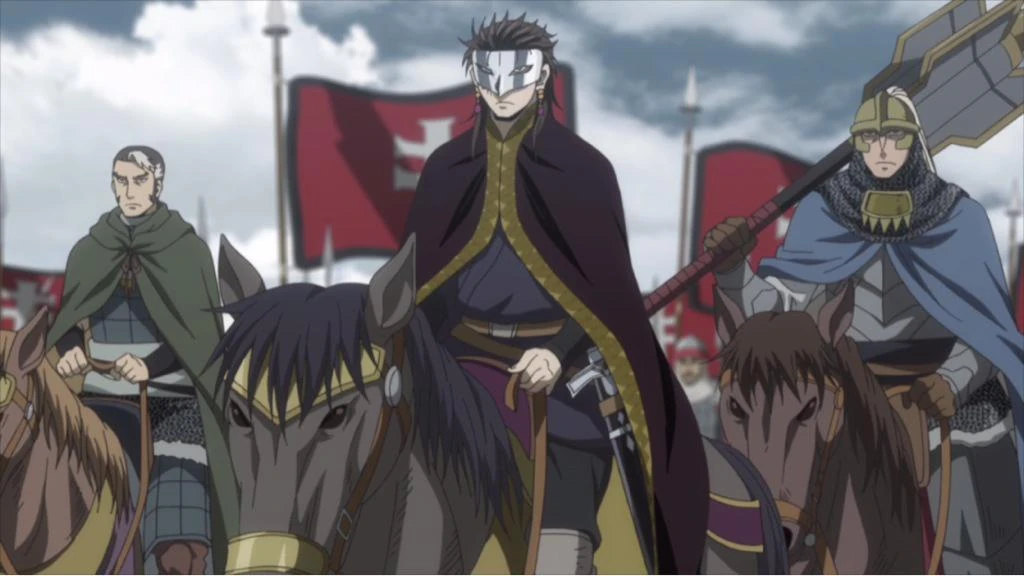
These adventurers along with a couple others compose Arslan’s force against lord “Silver Mask” (oh the cheese, it hurts), an incredibly skillful brute who is after Arslan’s head for some reason . . . Among the challenges that Arslan faces, this is his toughest one yet! This man is what triggers Arslan’s moral conflict. I won’t say much, but it was an intense endeavor for the crew to keep away from this madman.

Too bad NO ONE knows who you are even without the mask

Now, if you’ve thought that up until now Arslan Senki was an A+ for me, you’re incredibly mistaken. The entire show is one sloppy quest, and here’s why:

They say adventures are all about “the getting there,” and that the resolution just happens to tie loose ends. But Arslan Senki doesn’t give us either of these things! Instead it drags on for 25 boring episodes of pointless side plots doing FLIP that take far too long to resolve – Speaking of, IT DOESN’T END. Spoiler alert, but it doesn’t. Instead, we have Arslan and the gang mounted majestically, waiting to take back the kingdom until blah blah blah “here’s a season two B.S. announcement because we couldn’t get our crap together in the first.” Seriously, WHAT!?

Yuck

More yuck

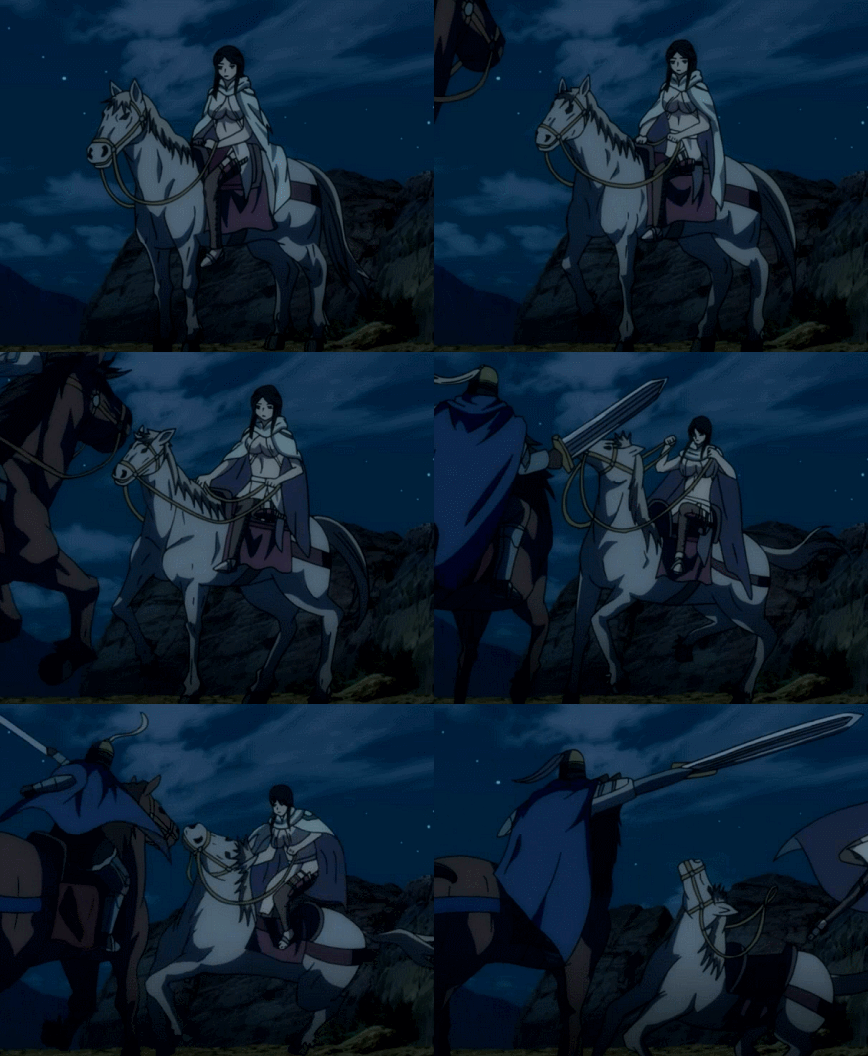
Don’t even get me started with this anime’s production value. It’s TERRIBLE. I’ve had enough of CG-gummy army men, retarded-angry horses, and derpy Arslan faces to last me enough time to figure out the secrets of “Silver Mask” and overthrow Pars THREE times over. The animation is extremely inconsistent, relying on its few high-budget fight scenes and opening animation alone, and it really drags the show in the mud. You know it’s bad when you can tell where the money went in each episode. Art may look pretty, but for the love of Yaldabaoth DO NOT get this show in motion!! It’s so IRRITATING.

Heavens, I find that very hard to believe
Why do those horses look so . . . evil?

why do they go to the dark side

No seriously, what the hell IS that??
23WCsqc

“Yes, he’s supposed to be killing that horse.”

And now for the music. Does it fail epically like its visuals? Well, slap UVERworld, Eir Aoi, and Kalafina in the same anime and you tell me. The first opening “Boku no Kotoba de wa Nai, Kore wa Bokutachi no Kotoba” by UVERworld is pretty darn solid, and the second, “Uzu to Uzu” by NICO Touches the Walls has that quality “second half” feel to it. Once you hit Eir Aoi’s ending “Lapis Lazuli,” however, you’ve entered my top 5 endings. If Arslan is remembered for one thing, it’s gonna be this song (that moment when the OP/ED is better than the show). Lastly, Kalafina brings all under their graceful wings with “One Light,” the second ending, giving us some air of conclusion to grasp onto.

I’ll give Taro Iwashiro’s soundtrack props to filling out the fantasy-adventure tone enough to immerse me in the setting. No tracks in specific to highlight, but being supportive is all I could ask for with this shambling show.

So whoopty-freakin’-doo, there are my thoughts on The Heroic Legend of Arslan, or more accurately titled, The Heroic Legend of Asslan, pardon my French. Unless you are an absolute diehard fan of the fantasy-adventure/war drama genre, then throw this one out with yesterday’s garbage. We don’t need it, and certainly not a flippin’ sequel. That’s bullticky. Now if you’ll excuse me, I’m going to go find Farangis’ cult and burn crosses in Lusitanian yards.

“The throne itself does not have a will of its own. Depending on who sits in it, it can be the seat of justice or it can be the seat of inhuman cruelty. As long as it is a man, and not a god, doing the governing, he can never be perfect. But should he neglect to make efforts to reach for perfection, a king will surely tumble down the slippery slope towards evil with no one around to stop him.” – Farangis, and amen at that

+ Arslan’s main troupe, though a bit lacking in development, comes across as a pleasant party

+ All openings and endings were the only features keeping me attached to this show

– IN-CONS.ISTENT. ANIMATI-ON.

– Sloppy execution of story, not enough character spotlight, specifically for Farangis and Arslan

– So much wasted potential in all categories, ending was unsatisfactory

For the café rating, it’s average even during its best moments. Did anyone else feel disappointed with this anime? If you had other thoughts, I’d be very interested to read them, but otherwise charge into the like button if you found my “spittin’ fire” on Arslan at all amusing. “Yashasuiin!” I won’t lie, if felt darn good to hate on something since all I do is spread cheer about shows. And right as I return, I must bid you all farewell again, so until next time, this has been

– Takuto, your host
Fate/stay night: Unlimited Blade Works 1st Season English Dub Thoughts

As you all know, I once again sold my left arm and my magic circuits over to Aniplex of America so that I could purchase their DVD set of the first season (episodes 1-12) for Fate/stay night: Unlimited Blade Works (TV). The fantasy action anime all about the 5th fight for that elusive chalice includes an all-new English dub. This is particularly exciting considering that I’m a veteran who watched the original Fate/stay night (2006) and the Unlimited Blade Works Movie (2010) in SUBTITLES. Curiosity did get the best of me, and I ended up watching segments from these Studio Deen adaptations, but their dubs sucked (just cuttin’ to the chase). Luckily, I pretty much only have positive reviews for the Ufotable version, so read on for more depth!

zxuY9g2.jpg (703×1000)

This is just epic. To watch it go from simulcast, to Japanese set, to English DVD is a beautiful journey.

114242.43778624_1000X1000.jpg (765×1117)

While the image above is the cool slipcover art, the DVD case itself contains this absolutely stunning artwork. The only difference is that where the text is, the English logo for F/sn: UBW is stamped.

Let’s kick things off with Shirou Emiya, portrayed by the infamous Bryce Papenbrook. Now, Papenbrook has quite the streak in misplaced voice acting, his role of Kirito being my biggest turnoff. But for a character like Shirou, his age and position, I thought Papenbrook pulled things off without a hitch! He does a damn good job at imitating Noriaki Sugiyama’s rather high and somewhat obnoxious voice, so my hat’s off to you, Papenbrook!

On to everyone’s favorite tsundere mage, Rin Tohsaka is voiced by Mela Lee. Apparently Lee’s been with Tohsaka since the first dub of the adaptations, but every one of her performances lacked the natural stuck-up attitude I’ve been searching for – Until now. Once you get past the first hour-long pilot, Lee’s voice stops ringing in my ears and becomes one of the more fun – and pretentious – performances to hear from. It sure isn’t as great as Kana Ueda, but it’ll do.

B*tchy-Mc-B*tch-Face Archer is brought to life by the smart-assy Kaiji Tang (as you can see, I don’t fancy Archer). Brilliant in every way possible, Tang milks all that he can out of Archer and puts up a stunning fight on the vocal front. He, too, fits the range of voice necessary to Archer’s arrogant dialect. Love it!

And last (but certainly not least) for the main cast, Kari Wahlgren once again dons armor and all to surmise Queen-friggin’-Arthur herself – Saber! *Slight spoilers* Because she is no longer partnered with the cold and distant Kiritsugu from Fate/Zero, Saber speaks with much more curt and “oogly” expressions as she develops her relationship with her idiot partner. And since I don’t speak Japanese, Ayako Kawasumi’s five-star performance doesn’t come for me as naturally as it does with my native speak. I’m obviously biased to this [literally] English role, so I stop before the sparkles start gleaming ^.^

Since those are the main characters, I’ll just list the minors with a brief reaction:

Todd Haberkorn as Assassin – F*ck yeah, even though I kinda forgot whom he was in the original, I’ll now never forget! Just YES, YES TO ALL!

Megan Hollingshead as Caster – THIS RIGHT HERE was surprisingly fantastic! Caster’s sly, mature voice reflects so well in Hollingshead’s performance. It was also so darn sexy 😉

Matthew Mercer as Kiritsugu Emiya – He’s only around for a couple of flashbacks, but those are just enough to bring tears to your eyes as you recall Fate/Zero‘s tragedy.

Julie Ann Taylor as Fujinee, or Taiga Fujimura – Always. Excited. Is the Taiga. Fujinee~ has a very nice English voice actress, simple as that!

David Vincent as Gilgamesh – More F/Z carry-over drama, and in fact, Vincent has such a pompous and snarky that its perfect for the King of Heroes. We’ll hear more of him in the second season, though.

Dorothy Elias-Fahn as Kane Himuro – One of Tohsaka’s classmates, can’t say she was very memorable, but not bad either

Crispin Freeman as Kirei Kotomine – This is one “fake priest” that you don’t want to run into on a dark night. Freeman will never be as solid as Jouji Nakata, but so, so damn close! It was a pleasure to listen to Kirei’s rich, melt-in-your-mouth voice again.

Lex Lang as Souichirou Kuzuki – “Mr. Kuzuki” as he is in the dub also shares the same voice as Count Cruhteo from A.Z, who just happened to be one of my favorites! Ironically, he was Issei in the old dub, the student who shares residence with Kuzuki.

Tony Oliver as Lancer – Oh boy, oh boy, Lancer’s English voice will not disappoint whatsoever! I’ll admit, Nobutoshi Canna was excellent, but Oliver wins it for me!

Erica Lindbeck as Kaede Makidera – Another one of Tohsaka’s gals, nothing fancy

Kyle McCarley as Shinji Matou – Now, this might be the only exception to an otherwise wonderful English dub. McCarley’s not by any means bad; Hiroshi Kamiya just has a skimpier edge and superiority to the damned Shinji we all know and hate :>

Cristina Vee as Sakura Matou – Agh, it’s Cristina Vee – and aww, it’s Sakura! This combo goes hand in hand, but I’m interested to see if they’ll keep the same actress when “Heaven’s Feel” makes it over here in the States, fingers crossed.

Brina Palencia as Ayako Mitsuzuri – Mitsuzuri is given a shocking amount of lines despite her role, and it was on the tip of my tongue as to who voiced her – and it was this chick all along! Hooray for Brina Palencia, I just love hearing her voice 🙂

Melissa Fahn as Rider – And the most enchanting voice goes to Rider without a doubt!! *Slight spoiler* It’s a shame she doesn’t last very long, as I could listen to Rider talk on and on. Yet another reason why they should’ve adapted F/sn instead of UBW, but I digress. Fantastic job, Fahn!

Robbie Daymond as Issei Ryuudou – Just another guy in glasses, what can I say?

Jessica DiCicco as Yukika Saegusa – A friend of Tohsaka’s? Gosh, I don’t even remember who this is.

Stephanie Sheh as Illyasviel von Einzbern – We’re gonna finish this dub reaction strong with another veteran from the original series and Fate/Zero. Sheh’s “Time to kill you” cute/deadly Illya voice is one I really enjoy. While she did sound too mature in F/Z, her older reappearance tosses that issue away easily. I love Illya, and Sheh does her justice, she really does, and I can’t wait for the epic fight in the second half. The only thing I’ll miss is her charming “Bah-sah-kah” *cue superhuman barbarian with a huge-ass club charging at you*

Below is the English Dub Trailer Aniplex posted a while back. See it for yourself!

I don’t care who says they hate this dub. I don’t care who thinks Papenbrook is a terrible Shirou. I don’t care how much people think Rin’s voice is a letdown. I LOVE THIS DUB, and I will be buying the second season, mind you! It’s gonna be a tragic long wait for the second half, and yes, it will break my wallet, but what can I say – I support things that I like! For those curious, the sub is still superior, and I recommend watching the entire series on Crunchyroll before blindly buying this uber-expensive dub (cause it was an atrocious $80 USD for only the first half on DVD only). However, like with A.Z, I had so much fun each night plugging in each of the voices and watching the first half of the Fifth Holy Grail War play out all over again . . .

But you mages and Masters, what did you think of this new English dub? How do you think it stands up to all of the previous versions and the Japanese itself? I’ll await your answers in the comments below, and until next time, this has been

– Takuto, your Servant, in this war or the next

Nagi-Asu: Proving that Life is Simply Better Down Where It’s Wetter

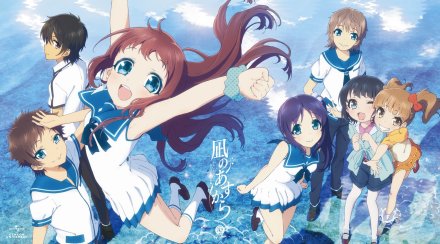
A spoiler-free review of the 2013-2014 anime “Nagi no Asukara” or “Nagi-Asu: A Lull in the Sea,” produced by P.A. Works.

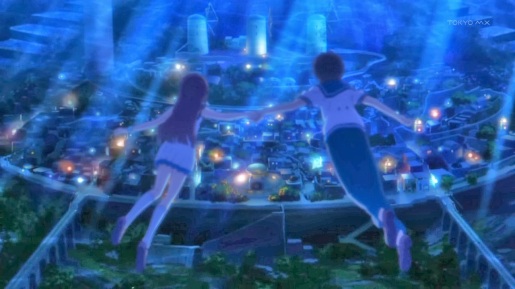
I will sacrifice all of my worldly possessions if I could live in Shioshishio for a year. In fact, Umigami, just take my soul. I’ll even be the Ojoshi-sama if it means visiting this dreamlike underwater village. Please, give me Ena ~

Shioshishio, the enchanting undersea village

Since the dawn of humanity, civilization had lived on the ocean floor. As curiosity tugged at their legs (or fins), however, several humans migrated to the land, which caused a huge splintering in lifestyles. Upon their undersea school closing, Hikari, Manaka, Chisaki, and Kaname – four 14-year-old middle school kiddos – are forced to eke out education on land and adapt to the unfamiliar environment. They aren’t alone in terms of emotional struggle, though. Three surface kids – Tsumugu, Miyuna, and Sayu – must also confront their feelings before the whole lot grows older, and the rift between the sea and the land, old and young, tears the two parties apart.

It should become clear right off the bat that we’re dealing with seven individuals, which means in terms of coupling someone will be left out. As dramatic as that sounds, Nagi-Asu manages to keep a level head, never allowing said drama to grow out of hand nor become overbearing. That’s not to say that the show is lighthearted, though! Uh, no, it’s got just the right amount of spice, but in that way, has its own way of plucking your heart strings, and thankfully it doesn’t ever snap them. The anime incorporates themes of love by using slice-of-life tactics, and it overwhelmingly succeeds on this front.

See, love – it’s easy as Hikari loves Manaka, but Manaka falls in love with Tsumugu, though Chisaki might have a crush on Hikari, but Kaname is already in love with Chisaki, and . . .

Oh the water physics – don’t try to wrap your head around it. Just admire its subtle beauty and convenience . . . writing on paper, running around, boiling food on the ocean floor . . . What is this, SpongeBob!?

tumblr_mxsgh10THD1sax5fho4_500

But moreover, once the drama wave sinks back into the ocean, we are left with a story about innocent crab children crawling out of their shells to deliver their unrequited love to one another. Because the characters are so unexperienced with the notion, and have even grown up together in the local village, it’s vital to pay attention to each of their reactions to the sudden emotional turns taken in the series. Thankfully, the animation directors have a very keen eye for these delicate matters, and display facial expressions with such passion! Props to the VAs, too, for putting up equally impressive vocal performances, especially Hanae Natsuki’s youthful role as Hikari and Kana Hanazawa’s adorable Manaka!

Let’s talk about those characters now. I’ll admit, they’re a great, well-developed bunch, but the only one whom particularly snatched my attention was the main character himself, Hikari Sakishima. Born ‘n raised in the deep blue, he harbors a distinct hate towards the land people. Specifically speaking, he loathes the silent but strong Tsumugu for him loving his little Manaka – or rather, Manaka sneaking a peak at this dark-tanned land dweller. Underneath his layers of stubbornness, Hikari prematurely believed that he and Manaka were an assumed pairing. Manaka has other plans. Throughout the series, Hikari struggles with his passive relationship with his other friend, Chisaki, and we witness him grow from a boy to a man (kinda sorta, not physically at least :3)!

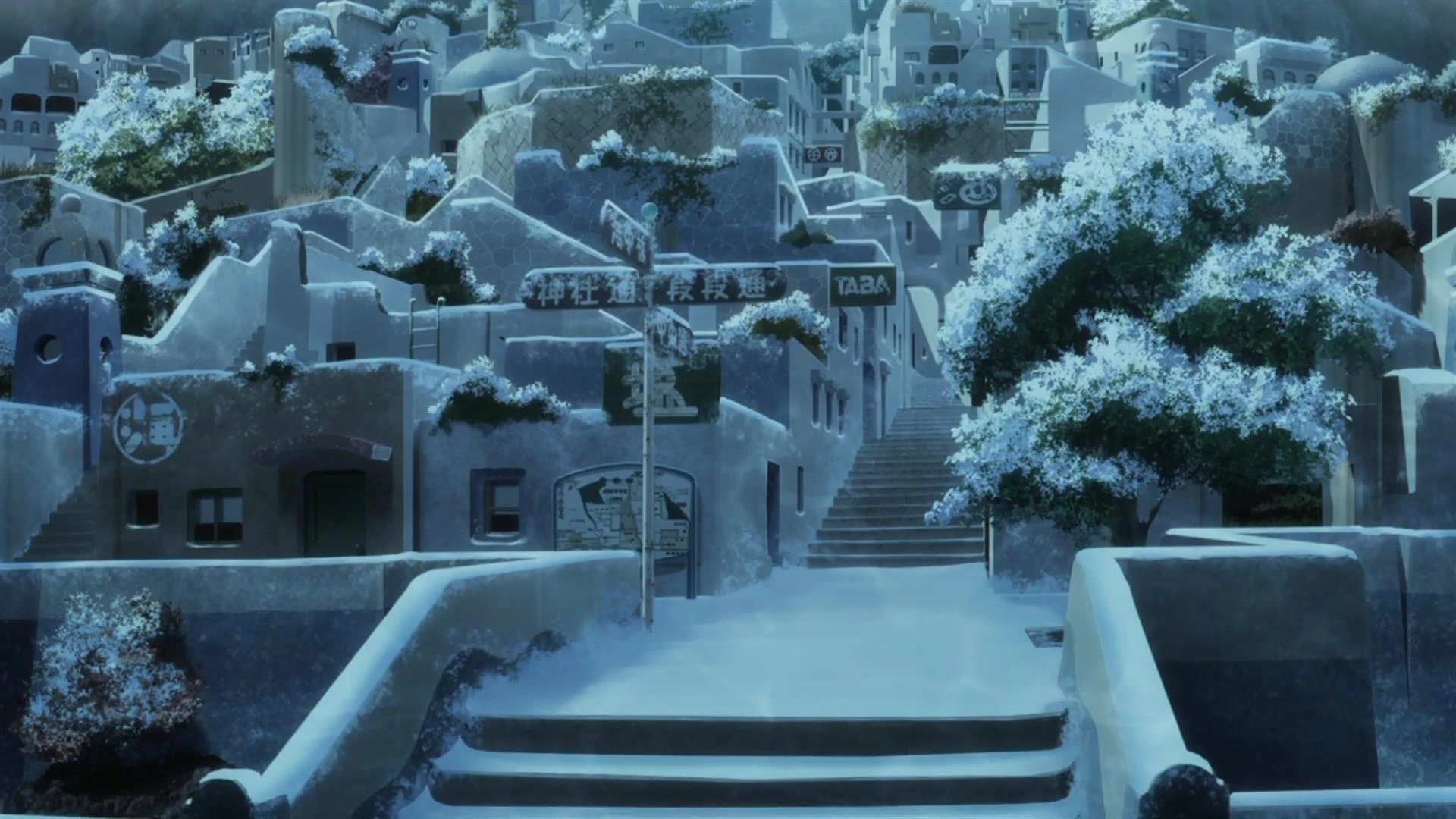
I have much to say about the art and animation, but it’d do you justice to simply marvel at the “environmental porn” surrounding the sea village itself and its sister harbor above. The animators always use the color blue. In fact, it’s in every frame of the series. Sharply contrasting the magnificent hue is orange, blue’s complementary color. Whether it be the rust on the boats moored at the dock or the land school’s uniforms, orange manages to cancel out blue’s magic. Not only is it smart cinematography, but the most effective. Nagi-Asu is truly is the prettiest anime series I have ever seen!

There’s only one word to describe this OST: Heart. It has a lot of heart. While lively guitar strums out the cheerful opening tone, fitting for the youthful boasts of Hikari, a bittersweet piano slides in to caress the emotional moments featured in the series. “Cry for the Moon,” “Tears of the Sea,” “Prayer,” “Solitude,” and “The Ofunehiki Song” are the best examples of this mood. I could listen to this soundtrack for hours on end, but then only feel depressed that I spent so much time out of the water’s embrace 🙂

To add to the praise, I must admit that both of Ray’s openings, “lull ~Soshite Bokura wa~” and “ebb and flow” are so incredibly fitting for the undersea atmosphere! They make me want to swim around in cool, clear waters with all of my friends. But we can’t forget “Aqua Terrarium” by Nagi Yanagi, the first ending, which depicts the cold, deep blue ocean floor with a frozen Manaka.

It would be a crime to not watch Nagi-Asu. The art is divine and animation of this quality is rare to come by! Always, the story kept me intrigued, and the romance between the characters tied the package all together! But I can’t help but regret the switch to the above ground in the second half, especially when they had so much going for them down where it was wetter. So much life; carefree days of youth. The surface is a bitter cold. Adults struggle to make a living, and kids don’t have as near wide of smiles as the Shioshishio squad. Growing up and realizing your feelings, whether they are for others or nature, was a deeply felt theme in the anime. However much I disliked the change, the two halves of the series were the twin tides that brought the message in the bottle to the salty shore; truthfully, both were needed.

“Having feelings for someone just brings sorrow to someone else. Someone always gets sacrificed and suffers. If this is what it means to fall in love . . . then falling in love is terrible.” – Hikari Sakishima

+ Story felt fresh; romance and drama were never too overbearing, but enough to convey true feelings of love

+ Characters were very well-developed and entertaining, notably Hikari and maybe Chisaki

+ Themes of old vs. young, love of people vs. nature were demonstrated with a content satisfaction

+ UNDER THE FREAKIN’ SEA, absolutely stellar art and consistent superior animation quality

+ A rich OST full of heart, appropriate instruments to enhance the mood

– Switch from underwater to above land was somewhat disappointing

– A few interfering elements to the story were ‘too’ supernatural

I have returned to anime reviews! Do you prefer this new format over the previous one? It’s a work in progress, but I’m trying to find a style I’m completely satisfied with. Did you have similar thoughts about this under-the-sea fantasy drama/rom-com? Different? For the café menu, Nagi-Asu receives a solid 9/10, and I strongly recommend you watch this show on Crunchyroll – and it’s free of all things, so no excuses! If you enjoyed the review, feel free to caress that like button like a red-bellied sea slug, as that’ll let me know if you like my content! Ah, how grand it feels to be back to these reviews ~ Until next time everyone, this has been

– Takuto, your host

30-Day Song Challenge Day 2: Songs That Helps You Clear Your Head

It was quite hard to come up with a match for this one, considering that each song that I listen to only ushers in waves of feels and memories. So after a bit of browsing, I finally remembered an inspiring tune or two that fit the bill. I can’t deny the fact that both of these songs carry so much sweet reminiscing for me, but it’s a different kind of recollection; they’re not necessarily heavy in the heart, but open in the mind, if that makes any sense at all. Whenever I boot up some soundtracks to listen to, they’re the first I pick because they don’t drag me into a state of senseless staring, but clear up my thoughts and bring a cloudless sky into view. I hone in on whatever I happen to be doing, open up my head, and focus 100% on my mission (which is usually just searching the web -__-). Anything prior to my moment with these songs becomes irrelevant, and that can be especially helpful after a busy week. Enjoy ~!

Maoyū Maō Yūsha Main Theme: “Beyond the Hill” by Takeshi Hama

Do you remember Maoyu? It’s a charming show, isn’t it? I came across this song in the depths of YouTube and thought, yeah, this is pretty neat, OOH it’s an anime, too?! Slowly but surely, I realized that this was not the main theme, waiting all 11 or 12 episodes just for this song to be heard in the background. It finally did play, I honestly can’t remember when, but it was only once. 😦 And though we never truly got beyond that hill, I still found closure in this song’s low violin and flute swing.

Log Horizon Main Theme: “Log Horizon” by Yasuharu Takanashi

First off, let me just announce that Log Horizon‘s OST is one of THE BEST SOUNDTRACKS TO EXIST FOR ANIME EVER. But this song, man, I can’t even express how epic it is. When this song plays, my game face is on, and be prepared to lose all ya damn hit points!! I could go on and on about this one track, but you should just go watch the anime to capture all of Shiroe’s legendary-ness. Awesome show, brilliant anthem!

And those are two songs that I listen to for an open mind. Both fantasy songs, too, so maybe it’s something about that type of music that gets me? As a person involved in music, they’re definitely the most fun to play, that’s for sure! Until tomorrow, this has been

– Takuto, your LV 90 host

Log Horizon Review

Log Horizon is the newest “stuck in a video game” anime since Sword Art Online. Rather than try to escape as the main goal, however, one brave geek steps out of his cloak and glasses to answer “Who’s gonna do what, what we’re up against, when things are going down, where we’re going next, but interestingly, not why we’re here” – and that could be Log Horizon‘s biggest fault.

Eight-year Elder Tales Veteran Shiroe among 30,000 Japanese players (700,000 worldwide) are suddenly transported into game that they all love upon installation of the “Novasphere Pioneers” expansion pack. Most everyone quickly realizes that the game is not quite as friendly when you’re actually in it: all of the food taste like the same mush, combat with the menus spinning around your head is difficult, and if you made your game avatar a little taller or shorter than in real life, well, now you have to adjust to it!

But here’s the most intriguing bit: when you die in the game, you simply revive at the cathedral, just like normal so no big deal . . .

That means you are trapped in the game.

With no known way out, no sense of order, player killers running about, and the CPUs (now “People of the Land”) acting strangely personal, the level 90 enchanter Shiroe picks up that you can’t just play in Elder Tales anymore – you have to live in it. Partnered with the faithful ninja Akatsuki and the beefy guard Naotsugu, Shiroe takes on his own quest of restoring order to Akiba, even if it means becoming a “Villain in Glasses” instead.

What’s best about this anime is the way it handles situations. Covering food to personal qualms to economics to ethics to community issues -all of these critical points in structuring modern civilization are hashed out with incredible detail and with consideration of the characters’ emotions. For instance, sparking the industry with the invention of the Crescent Burger was not only creative but it mattered in the context. The people wanted flavorful food and Shiroe need more money to execute his plan, so what a better way than that? It’s probably one of the best examples of world building I’ve ever seen.

Acting as the mastermind behind all operations is Shiroe, a socially awkward young man who is an expert strategist. To the kids, he’s a savior and a teacher, but to adults he’s a creepy guy with mysterious intentions. I’d say Shiroe’s a good mix of both; he means well, but the way he performs maneuvers could be considered rather extreme. He’s willing to make himself look like the bad/strict guy if it’s to better the people, which aggravates the ones that love him. Regardless, Shiroe’s best feature is that he values progress. He is the most achieving character I’ve seen in a long time, but often times, the plot just uses Shiroe as a means to convey this progression rather than developing his character.

Also, instead of the frontline swordsman, he’s the man pulling all the strings and gauging the stats, and makes for a really fresh, enjoyable point of viewa view not usually popular with this kind of story.

Though the majority of characters in the series lack any real development, there are several characters that I enjoyed because of their quirks: Akatsuki’s loyalty and shyness is super cute; Marielle and Henrietta (the playful Crescent Moon gals) are not only hilarious to watch, but a hardworking team, too; RUNDEL HAUS CODE and Isuzu are quarreling lovers that receive the best development; and finally Lenessia, a straightforward, lazy, cowardly princess who makes a few damn good speeches despite her lack of attention. Log Horizon‘s cast may be large and unremarkable, but it’s well-balanced and enjoyable as you’re watching.

Animation by Satelight is by far the show’s weakest point. Characters can look really botched at times, though during some of the fights scenes you’re sitting on the edge of your seat! The luscious green background of Akihabara is also standout artwork in itself. I guess the word is inconsistent.

Driving the fantasy story and installing bravery into the characters is the wonderful soundtrack composed by Yasuharu Takanashi, now a music genius in my book. The grand main theme “Log Horizon” is the most notable for carrying out Shiroe’s plans. “Daisaigai” welcomes players to foreign, mysterious lands with an eerie tone. “Akiba no Machi” celebrates with festivals, food, and friends. Finally, the “Elder Tale Waltz” elegantly reminds adventurers of their love for the game. While the story is inventive and the characters are fun, to me, the surely overused music is the best feature!

The obvious big problem for this series is that it’s only a small portion adapted from the books as well as not explaining the reason they were trapped there in the first place. Wouldn’t you be dreading to know what was happening to your body in reality? Why are we here? Apparently, the adventurers don’t seem to care, but hey, I’m glad they just didn’t drain episodes into this cause – there are a lot more interesting factors to consider besides whining to go home.

I was never much of a hardcore gamer, just glazing the surface when it tickled my fancy, and that was part of another problem as I watched this show. Terminology such as battle positions and skills/combos glazed past my ears, but the approach is what gripped me most. The show takes a very economic and political approach to a usually action-dominated premise, which is something that I am slowly starting to love. Rather than sword and shield being the issue, it’s supply vs. demand that we have to fight! Start stocking those shelves, boys! 😀

Log Horizon is a very peculiar show, as rather than acting with the laws of the land, characters like Shiroe constantly challenge the rules. He rebuilds the world with all things considered and frankly, it’s just fascinating to watch! Yes, the pacing can be slow with the kids arc, and yes, a lot of the opening dialogue is quite cheesy, but beyond that is Shiroe, a thinker, an enchanter, a teacher, a gambler, and a villain. If you understand the concept of RPG styled gaming and also love anime, drop what you are doing right now and check this show out! If not, well then, it’s completely up to you. Just know that all of us “gamer geeks” will be enjoying the ride.

“If you can’t do something, then don’t. Focus on what you can do.” – Encouraging words of Shiroe himself

+ Classic concept with a very different yet much more interesting viewpoint and approach

+ Story always seems to have some things kept secret, Shiroe’s world building experiments and rule-challenging offer engaging twists

+ Fantastic fantasy-appropriate OST with game theme included in story

– Filler episodes and slow pacing during times without Shiroe drag on

– Does not answer “why” they are there, does not end (more to come)

Presently Collections 1 and 2 of Sentai Filmwork’s Log Horizon English dub release stand fantastically on my shelf awaiting my next login to the hearty world of Elder Tales. The dub by the way is outstanding, new actors and actresses all around, my only problem being Nyanta the cat chef – what happened there?? *shakes head with disapproval*

Thanks for reading my review of a “Caffé Mocha” worthy series I absolutely love! Have you seen this anime? Comment below with your thoughts because I want to talk with you all! Want more Log Horizon? Check out my season two review here! Until next time, this has been

– Takuto, your host

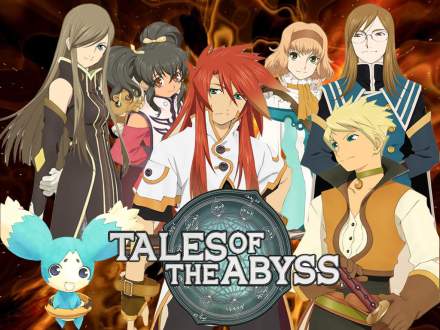
Tales of the Abyss: The Animation Review

After watching Tales of Symphonia I just had to check out more from the Tales series. Sadly, Tales of the Abyss was more of a letdown for me. So if I didn’t care for it then why write a review? Plot ideas can be tricky to come up with, I’ll admit, but when a story has too many ideas it ends up as a convoluted train wreck. The main story of Abyss derails itself so often that I found myself sleeping during the show, only waking myself up to see the character back stories. With that said, I want to inform you of the really cool aspects of this show, the occasionally crumbling plot aside.

Set in the common medieval atmosphere the Tales series likes to enforce, Auldrant is a world run by the Score, a prophecy written many years ago. Luke fon Fabre, the spoiled yet confined heir of the kingdom of Kimlasca, spends his afternoon in sword training with Master Van until a mysterious woman by the name of Tear Grants shows with the intent of taking Van’s life. Suddenly, Luke and Tear are warped across the world to the opposing empire of Malkuth. Now that Luke has the freedom he has dreamed of for so long, he begins to realize why he was restricted from the world, who he really is, and what his hidden powers are. All the while there is a band of look-alikes that are trying to kill the heroes, a not-so-holy church that wants Luke, a sea of miasma that threatens to destroy the planet, and an oncoming war between the two kingdoms.

These plot ideas sound kinda cool, no? But when all of them are thrown together it doesn’t benefit the anime.  Speaking of adaptations, Tales of the Abyss the Animation is actually based on an RPG, but an anime was released later on. You can ask anyone, but Tales of the Abyss is by far the closest recreation of a Tales RPG in anime format. Most of the scenes are translated exactly like they appear in the game, not taking away from the Abyss vibe.

I do not remember all of the characters from this series, and that is really a bummer because they all link together in one way or another.  Tear, a Seventh Fonist for the Order of Lorelei is a character I enjoyed because of her straight forwardness and her knack of guiding Luke in the right direction. She remains a strong and reserved character through the duration of the story. Though she acts coldly to Luke on occasion, she is quite respectful and well-mannered to everyone else. A second character whom I enjoyed was Jade Curtiss, the necromancer of fonic artes and a Malkuth army colonel. He is a generally happy character, but he doesn’t reveal his preferences or personality, making him seem complex to the other characters. With his dark background, one couldn’t tell if Jade was acting for the greater good or if he had something planned up his sleeve. The only problem with Jade was that some of his later happenings were predictable, but it is also like this in the game, so whateves. I love the way the Japanese always pronounced him as “Jeido Kaatisu” – I still call him that today!

Other than those couple characters, I found the rest of the cast to be decent, but nothing spectacular. Most of the best scenes were not when something epic was happening, but when all of the characters were just conversing with one another. The interactions were golden, especially any of them with Jade or Tear. The anime had also included many notable flashback scenes in just the right places to help flush out characters. A character death in particular made me bawl for hours; it was the way in which he made it sound that did me in. With as big a cast as this one, it felt as if some characters (clones or noblemen) were placed in just to balance another, and that is not how it should be! But it is an RPG, so some of those characters are necessary. Other than that, character motives made sense and dialogue was pretty interesting.

The OST for Abyss stands as . . . suitable, actually. Listening then and now, the concert band songs are beautiful and express grandeur. They keep to a fantasy adventure theme that sounds as if the pieces came straight out of the game, which they might have. Some tracks like Tear’s song that she sings and “Peaceful Times” are especially easy to remember. Most of the characters have a fitting theme that is a perfect reflection of their personality. The opening theme “Karma” by BUMP OF CHICKEN is the same opening the game uses, so fans of the game can appreciate that. Personally, I rock out to that song! All-in-all, the soundtrack is decent classical dance as it appropriately captures the moments from traumatizing to engaging.

Tales of the Abyss was animated by Sunrise Inc. in 2008, and they did a great job of adapting the art from the game into an anime. Again, I have not played the game, but if you view some concept art you will notice the breathtaking similarities. One of the highlights for this show was the artwork for the landscapes. Characters might just be conversing or walking into town and the background animation is just splendid! Adding in that and the year it was done up makes Tales of the Abyss one of the best animated adaptations for the Tales series.

While I may have been bored or confused at times, that does not mean that the entirety of the show was uninteresting. There were many entertaining scenes that make up for the tedious ones. The anime is definitely an adventure, but whether it is one I would traverse, I would have to say no. Show-wise I was amused, but it was not a driving force by any means; it is not one where you would drop whatever you were doing just to watch it.

I was not changed or moved in any way by this anime. It was good, yes, but no more than that. Other than a few characters and plot points, I can’t recall much from this anime other than it was a mess. While this show did not push me to do anything in particular like high-ranking anime should, this show was my first “okay” anime, for everything up until then was no letdown. If you enjoy somewhat heart-filling adventures with action and great music, are investing yourself in the vast Tales series, or are looking for new ideas to use in writing, gaming, or whatever, then this show is for you. Otherwise, spend your time with something more beneficial and organized.

Though I didn’t pick up a copy, you can purchase all four parts by Bandai Entertainment (sub only) on Rightstuf.com. I’m sorry if I sound like I hate this anime – maybe I just can’t appreciate all that it has to offer. Hopefully you will have better luck with this one! Until my next review, I’ll pass on Tales of the Abyss with a push of my sketchy Jade glasses and a wave of fonon arte magic as I steal an apple from the Malkuth marketplace, because, you know, “why do I have to pay for it?”

Thanks for reading!

– Takuto, your host

Tales of Symphonia: The Animation Review

In the summer of 2012, I happened to be browsing for cool J-pop music and ran into Starry Heavens by Day After Tomorrow – Tale of Symphonia’s game opening. After brief research over the game, I noticed that this game had an animation for it as well. This made me curious. I watched all of the episodes on YouTube until I reached the unfinished United World Arc. When the last two episodes were later released, I couldn’t help but smile and share this to a couple others.

The two worlds of Sylvarant and Tethe’alla share a mana link between each other, which is unknowing to the population of the world. When one world gets mana poured into it, the other is drained. To restore her world with beauty and life, Colette Brunel, the chosen, who has the job of reawakening seals to become an Angel, must set out on a journey of World Restoration. Along with the protagonist Lloyd Irving, their intelligent friend Genis Sage and his older sister/their teacher Raine Sage, Colette and Co. begin to realize that their world is actually more twisted than it seems. Interesting characters who also tag along include a clumsy ninja, a lifeless girl with crazy strength, a former baron and now fighter, a mercenary who stays quite and a bumbling ladies-man – all of which who have their own tragic and memorable back stories.

The story itself is best told through the view point of Lloyd Irving, whom struggles with school but makes up for in sword skills. Why this person? Not only is Lloyd the main protagonist, but he is also unintelligent, meaning that when the plot needs to be explained, the series just uses Lloyd to vent out the news to the viewer. When Lloyd figures something out or learns something new, so do you. I find this concept of two worlds, one of which is always in decline, to be exciting. It adds for two distinctive ways to see the world. Is it loving and beautiful, or is it actually cruel and dry? This theme can be applied to parts of the our world today, which makes it more relatable and powerful. All in all, it is a fairly solid idea that can lead to many open opposing stories and character view points.

The only thing that drags down the plot is the fact that it’s an animation based on a game, which means that there are many terms that are randomly thrown in there because they were in the game. Because the series fails to link some of these devices, there can be many WTF moments at times.

I can recall the main casts’ names and their stories – even a couple years later. Namco Tales Studio did a phenomenal job on the character designs and motives. What was nice was that I couldn’t brand characters by a stereotype, as they were all really intricately done. Sheena Fujibayashi, for instance, was the clumsy ninja whom I mentioned earlier. While she appeared as an assassin out to get the Chosen who also had love quarrels, she bore a really strong and sorrowful weight from her village.

Zelos Wilder was by far the most unpredictable character out there. Not only is he half comical and half murderous, he also works for several opposing forces in the Symphonia world. Whenever he betrayed a group I got really mad and started to hate him, but then he always came back and I admired him once again.

All of the older characters, Yuan, Kratos and a few of the generals also had intriguing pasts. One of my favorite parts of this anime was seeing the past of the main antagonist, _______, for he ended up being much more than the rumored hero of the Kharlan War. Long live the Four Seraphim!

One downside to this selection was actually the main character Lloyd. I found him to be caring yet annoying at the same time. He was that only exception to the sterotype list, and that is that he is the hero. He wants everyone to live in peace and harmony and blah blah blah – it gets annoying really fast! If you can get past some of Irving’s dramatically heart-filled speeches, then you will find this cast to be one of the best you’ve ever seen.

I’ll immediately start with the show’s second opening, “Canary in the Sky” by Nana Mizuki. Holy Hima it is amazing! Its effective use of a violin and a guitar take my breath away. The song fits and represents the Symphonia series perfectly. Whether this anime is interesting to you or not, go ahead and give it a listen – you will not be disappointed. As for the rest of the OST, the only stand out moment was at the end of OVA nine. TO THIS DATE, I have only encountered few plot turners who threw me for a loop like this one. The song “Ta ga tame no sekai” sung by Shikata Akiko is one of my top few favorite ending themes, as it transcends the series to a whole new level of epic. Her voice is haunting and calming at the same time and when she is accompanied by the upbeat drums and a full on choir who sing with her, I could just die right then and there. I also love the series’s last ending 🙂 . So tropical!

The animation was done by Ufotable, who is good at what they do and this is no exception. Action scenes and attacks were splendidly animated and the way the technology appears in the series is just cool. You can really tell the difference in quality when you compare the first arc done in 2007 compared to the last episode in 2012. One thing I did notice is that on occasion, the faces would look funny, as in the eyes just didn’t line up correctly. On that note – where are their noses!? In some scenes they have no nose, which is very distracting. However, I think the game is like that too at times

I distinctly remember sleeping through the first four episodes of the series. The Sylvarant Arc was so slow I almost dropped the series as a whole. It was only because of its music and characters, however, that led me onward. When you watch it, just know that it gets a hell of a lot better when you hit the second arc, Tethe’alla. For the rest of the series, I was thoroughly enjoyed. All of Symphonia’s epic chorus songs make me wanna wave around a sword, too!

I always doubt this series when I compare it to others. But then I realize – this show was actually really good! It has enough plot twists to keep one interested and it provides excellent sad stories to pass the time (if you can say that sad stories are “excellent” :P). The relationships the characters share are priceless and respectful to witness as well. I did love this series, a lot. If I’ve inspired you at all to go for this series, do keep in mind that it is based off of a game, so some of its conclusions will seem a little far-fetched.

This show is not available for purchase in the states, but the sorrow of Mithos, the goodness of Lloyd and the faith of Colette rest in a seed of remembrance at the bottom of my heart.

Thanks for reading!

– Takuto, your host