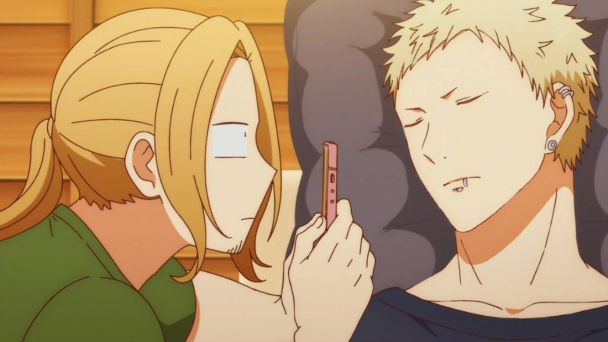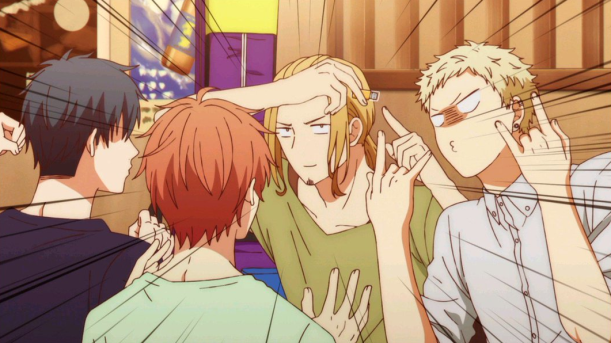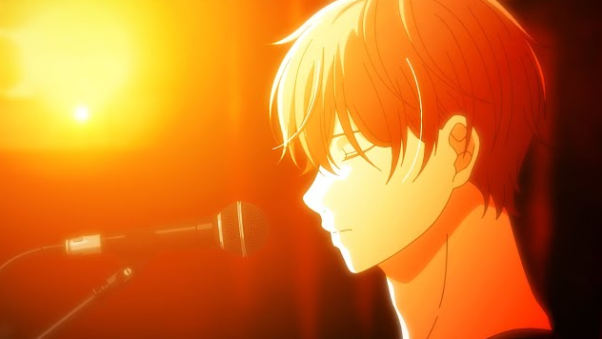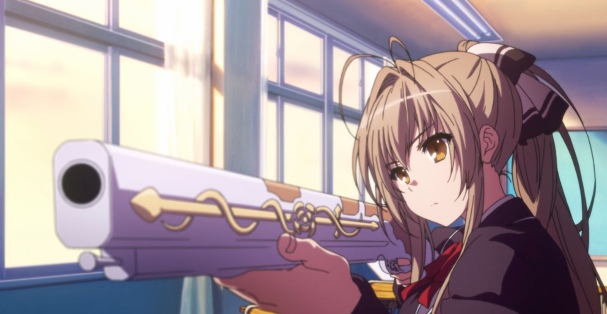
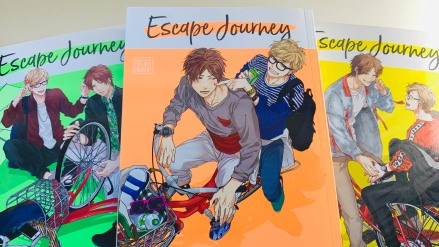
Escape Journey: Chasing After Love in a Heteronormative World || Review

A brief review of the 3-volume BL manga series “Escape Journey,” story and art by Ogeretsu Tanaka, and licensed in English by SuBLime Manga. MINOR SPOILERS for Volume 1 will be present.


A Rough Ride

Naoto’s first day of college was turning up roses—until he unexpectedly comes across his high school ex, Taichi, whom he’d dumped after a huge argument. Even though time has healed some wounds, not all scars fade, and Naoto slowly finds himself irresistibly drawn to Taichi once again after seeing just how much he has matured. When another girl, Fumi, starts to take an interest in Taichi, however, the secret bond between two men is tested.

Most of this yaoi drama’s main story is resolved by the first volume. Volume one takes us through Naoto and Taichi’s reunion into each other’s life, the push and pull of their churning relationship, and, of course, several rounds of make-up sex. In fact, Taichi always seems so ready to get dick-down that it leads Naoto to believe that all he wants from their relationship now is sexual satisfaction. We know that’s not true, but it takes several chapters (and meeting Fumi) to get Taichi to open up about his family situation.

By the end of the first volume, Naoto and Taichi have made up, and all’s well that ends well. You could even stop here if you feel satisfied enough with Escape Journey. What are volumes two and three about, then? The second volume introduces Nishina, an in-the-closet art student, whose unfortunate experiences with a past love causes envy of Naoto and Taichi’s relationship (and lots of trouble, no doubt).

Lastly, the third volume completes the story with the last couple chapters, ending their school festival and providing an aftermath for our characters. Despite all the heartache leading up to this volume, the ending is lovely and highly satisfying. If you’re in this one for all three volumes, just make sure to buckle up—this one’s a bit of a rough ride!
escape journey bike

Friends for Life

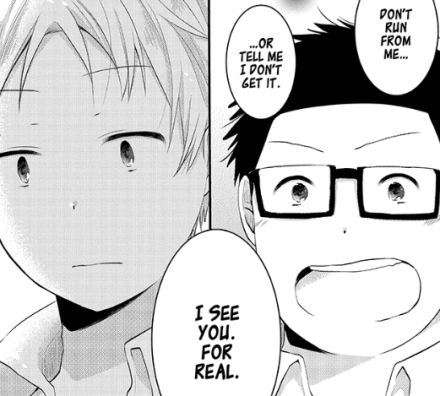
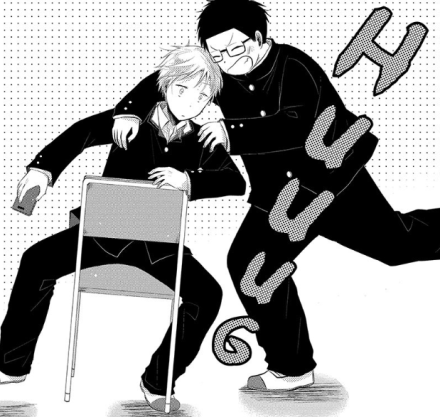
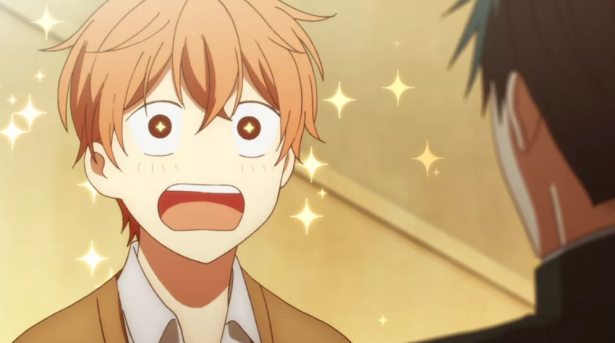
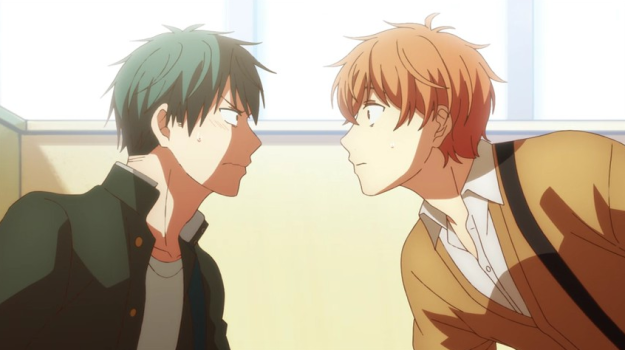
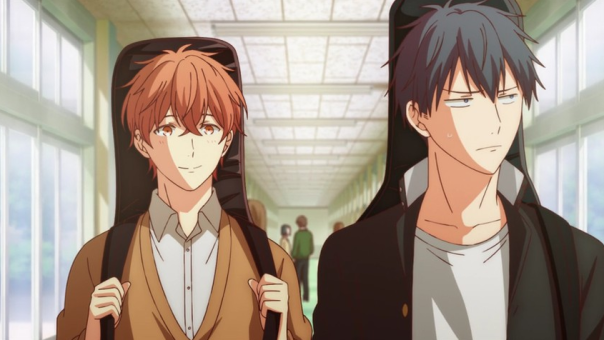
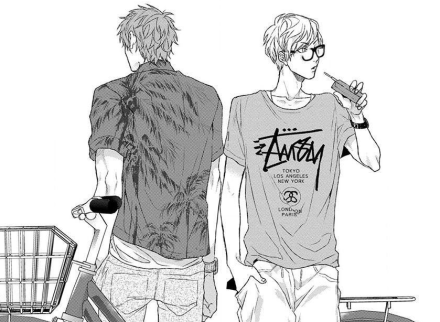
For most readers, Naoto (the one wearing glasses) will be a mixed bag of a protagonist. On one hand, he’s sweet, extroverted, and cares deeply about his friendships (which are essential to the story). On the other, he’s a cheeky, obnoxious brat and totally a little shit towards his peers. I will admit that I didn’t appreciate Naoto at first, but he did grow on me as the series went on. Perhaps that’s because other characters (notably Taichi and Nishina) start to notice what they like about Naoto, which becomes apparent to the reader. Or, maybe it’s due to the immense character growth that Naoto undergoes. The kid really comes far, and it’s nice to see him learn when it’s appropriate to joke around and when a guy should take a person’s feelings seriously.

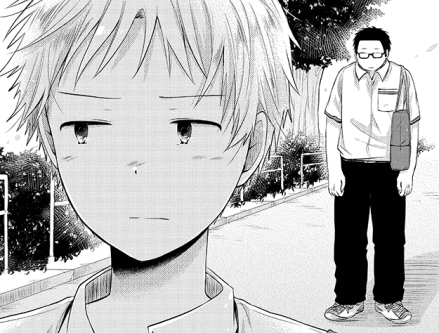
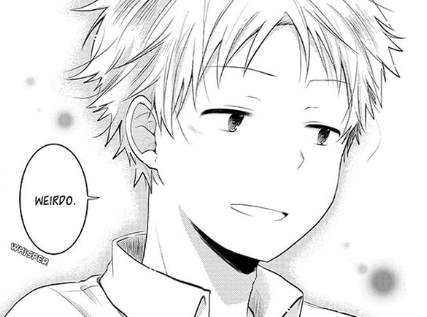
About Taichi, he’ll also be a toss-up for most readers. To fully appreciate him, it took A LOT of getting to know Taichi’s home life situation, which can be frustrating to wait for. It sure doesn’t help that his introduction is a flashback where he calls Naoto just a “fuck buddy” he used to blow off steam with, and that he mistakenly forces himself onto Naoto in the middle of the first book (which he regrets, but still). Whereas Naoto is a well-known ladies’ man, Taichi is the popular, handsome, stoic dude that all the girls look up to. Even though all his friends would choose Taichi, I still find Naoto to be the cutest character in the series.

One last annoying character quirk that I found with these two was how, like most BL written by women, none of the men actually claim to be gay. That is, they’re in denial of liking other men, but make exceptions for their one true love. It’s whatever at this point, but especially with this manga, Naoto can seem unconvincingly “straight” at times.

On the good side, however, I really, reeaaallly like Naoto’s friends, specifically the female characters. Fumi turns out to be such a sweetheart who ends up supporting Naoto and Taichi’s relationship, and Mika-rin is ABSOLUTELY every gay’s best friend. I loved every scene with Mika-rin and Naoto getting loud and drunk together, and her finding out about Naoto and Taichi’s relationship in the final volume made my heart completely melt. Even Nishina, though a disruption, isn’t wholly a bad guy. So yeah, Escape Journey has friends for life!
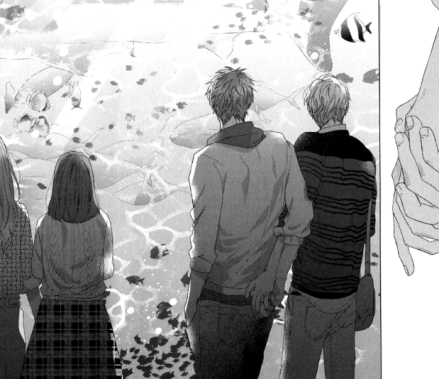
escape journey aquarium

What Comes After Love . . . ?

Despite having only three volumes, Escape Journey is densely packed with text bubbles and hyper-detailed backgrounds. Ogeretsu Tanaka also draws her tall, beautiful bishounens (and their sex) with an amazing range of expressions. If smut is all you want, you won’t be disappointed, trust me. But, there’s so much more to Escape Journey than pretty boys and steamy sex scenes. Naoto and Taichi come a long way, both as a couple and as human beings trying to understand people better.

What I found even more enjoyable about this read, however, was how Ogeretsu Tanaka confronts the issue of gay lovers wanting to run away from their heteronormative society (hence the name, Escape Journey). She explores options for gay couples in Japan, including buying an apartment together, getting married, and adopting a child, but also the rejection (or acceptance) an individual can face by coming out to their family. Some musings are more bleak than others, but the ending is a powerful and satisfying one. More than obsessing over creating a positive outlook for Naoto and Taichi’s future together, Tanaka’s story feels very real, and I respect it for that.

For most gay lovers in this heteronormative world, the road to happiness is lined with bumps, divots, and many rough patches. Not all people will expect or accept this kind of relationship, and that’s just something you’ll have to move past. Even if the journey is a hard one, the destination can be incredibly satisfying when the right people come along for the ride.

Naoto and Taichi’s love will continue to spur on their little fights, but like most old married couples, I’m sure the two will be able to work things out so long as they remember why they set out on this emotional journey together in the first place. As to what comes after love, who really cares—Naoto and Taichi have an entire lifetime ahead of them to figure that out.
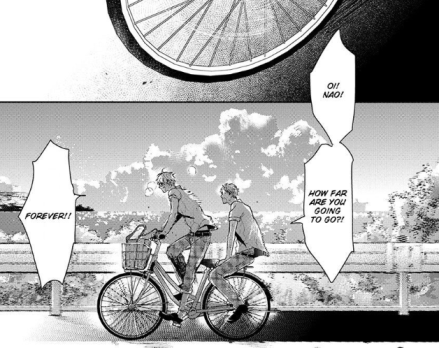
escape journey riding


I know that our relationship isn’t something that will be universally accepted. We should expected people to wish us well . . . But deep down inside, I can’t help but wish people would just see us and accept us for who we are. — Taichi Hase


Afterword

And there’s another phenomenal BL read about self-acceptance and coming out that I ended up enjoying much more than I thought I would. This recommendation came from Simply Gee over on YouTube, so I really have her to thank for this little series. In case you’re wondering if you should read it too, Escape Journey is a “Cake” title here at the cafe. I found the main characters to be annoying at times, especially when they’d get into little spats (which is part of their flaw, I realize). Still, you should read it if you’re searching for a solid [EXPLICIT] yaoi series that looks at relationships beyond the dating phase. It’s great, especially for a college romance.

For my next Pride Month post, I’ll be diving into some yuri with I Married My Best Friend to Shut My Parents Up, so please look forward to that. Be sure to share your thoughts on Escape Journey with me down in the comments, and ’till next time!

– Takuto

That Blue Sky Feeling: Preciously Queer & Wholeheartedly Delightful || Review

A brief review of the 3-volume manga series “That Blue Sky Feeling,” story by Okura, art by Coma Hashii,, and licensed in English by Viz Media. MINOR SPOILERS for Volume 1 will be present.


Have You Heard the Rumors?

High school transfer student Noshiro may seem like a cool and outgoing guy to his new classmates, but Noshiro’s big, bumbling heart is his best feature. Although he’s inexperienced in love, he finds himself drawn to Sanada, the school outcast, who is rumored to be gay. While most would get squeamish at the thought, the rumor only further fuels Noshiro’s interest and determination to get close to Sanada. Set in motion is a bittersweet tale of self-discovery, friendship, and first love.

Marketed under the shounen demographic, this school romance drew a lot of its appeal from the relatable character drama presented and Coma Hashii’s soft and cute character designs. With only three volumes, the story reads quickly, but methodically guides us through Noshiro and Sanada’s entire first year together as classmates. Showcased are the attempts made by Noshiro to become friends with Sanada, all of the ups and downs of this rocky relationship, the misunderstandings, and the persistent efforts to grow closer.

From the start, this seemingly simple story of exploring a rumor opens up to much larger contexts, including social pressures and the meaning of “being gay” itself. Using Noshiro’s naivete as a lens for self-questioning, Okura has carefully crafted a cast of characters that investigate the notions of sexuality, attraction, and “liking”—and largely without even being aware of it! This is the kind of title that doesn’t break boundaries so much as explore how these boundaries form, why they do, and how people are affected by them.

noshiro and sanada

Straight, Gay, and Curious

Dai Noshiro is the open-book kind of character. He’s silly, easily approachable, and loud, which (often to Sanada’s dismay) attracts a huge crowd wherever he goes. It’s refreshing to have a lead character in this type of story who isn’t some tall and skinny bishounen. If anything, being built and a little on the round side (or as Sanada calls him, a “country potato”) is celebrated in That Blue Sky Feeling as a body type that characters like Sanada and energetic underclassman Morinaga actually hold as a preference. This definitely met my approval!

Having a guy like Noshiro who knows virtually nothing about the LGBT community (or relationships for that matter) makes him the perfect voice for Okura’s discussion on what it means to be a closeted gay kid—or being gay in general. Noshiro is new to this kind of thing. He straight . . . or, at least, he thinks so—he hasn’t ever given relationships much thought. But we know he’s uneasy, curious even, and I can’t blame him. This really is a smart move on Okura’s part, as now Noshiro functions both as a likable MC and a subtle proxy for self-exploration. Nothing in That Blue Sky Feeling is forced. Like clouds, these musings come and go, occasionally bringing a little rain or blocking out the sun.

Then there’s Kou Sanada. As the quiet closeted kid, Sanada strays away from anything that would draw attention: sports, clubs, even leisurely activities like swimming. He’s standoffish, dismissive, and get’s irritated easily. Sounds like no one would like him, right? Well, that’s where I was wrong, too. Sanada is just misunderstood. He doesn’t fit in with the other boys because he often can’t relate to any of them without fearing they’d leave him for thinking he’s weird. I mean, how regularly do you see gay people hanging out alone with their straight friends of the same gender? I suppose it’s different for everybody, but I get why Sanada distances himself. (I JUST WANT MY SLEEPY BOY TO BE HAPPY.)

If any part of Sanada will be a mixed bag, it’s his past relationship . . . with a 26-year-old man named Hide. I don’t think Okura is trying to condone pedophilia, but Sanada and Hide really did go out, and Hide’s not afraid to poke fun at their past together. Now, hear me when I say that Hide is genuinely a good guy. He serves as a mentor of sorts to Noshiro when it comes to gay stuff, and he only aims to help, not harm. I was uneasy about Hide at first, but—thankfully—I ended up being wrong about him.

dai pushing chair

Subtlety is Blue Sky‘s Greatest Strength

Okura’s story is wonderful, truly, but the biggest draw to That Blue Sky Feeling would easily be Coma Hashii’s art. The series has this wondrously soft aura to it, which is in no surprise thanks to Hashii’s character designs. Fun fact: The Blue Sky I am able to enjoy now is actually a remake of Okura’s original web comic series. When a book publication was announced, Okura brought on Hashii to redraw the entire series with greater quality art and the gentle touch Blue Sky is now beloved for.

Sanada and his dear childhood friend and classmate, a girl named Ayumi Yamamoto, are drawn with a slimmer build and bigger eyes. (Sanada’s cat-like design really accentuates his sleepy aura.) Other characters like Noshiro and Hide are noticably more rotund but still very cute. Like the story itself, the character expressions are never overdone, and that subtlety works to Okura’s writing immensely. I mean, a character turning away from someone—only to reveal bright blush marks on their cheeks—can speak where words wouldn’t quite do those feelings justice.

kou blushing

Unexpectedly Falling in Love

What does it mean to be normal? What does it mean to be weird? Navigating through the complexities of making friends as a young homosexual in a heteronormative world, That Blue Sky Feeling handles first love and the notion of “inexperience” with surprising delicacy and innocence. Even when things get heated, the characters try to better themselves by digging deep within and honestly asking what it is they want, and how they can present their truest self to others.

Everyone in That Blue Sky Feeling has an unbelievably pure heart. Just as prominent as the exploration into friendship, liking, and being gay is the theme of unrequited feelings. For a series to have such a tangled web of complex feelings, Blue Sky‘s characters hold their heads high and continue to remain friends despite all odds. This kind of content is the exact opposite of “toxic,” and is the reason I fell in love with Noshiro, Sanada, Ayumi, and everyone else.

As the gap between Noshiro and Sanada slowly shrinks, we come to see how two very different high school boys can find themselves unexpectedly falling for one another. Noshiro quickly finds that, perhaps, labels aren’t suited for everything, especially people and relationships. Wishing only for the happiness of these kids, That Blue Sky Feeling is preciously queer and wholeheartedly delightful.

sanada whisper


What does it mean to like someone? Going out. Boyfriends. Girlfriends. I never thought about it, never worried about it. Until I met Kou Sanada — Dai Noshiro


Afterword

Guys, I love this manga with all my heart. ALL MY HEART. If you couldn’t already tell, that means That Blue Sky Feeling is another certified “Cafe Mocha” for me! I can see why people may find Hide and the age gap to be a turn-off, but that kind of stuff happens in real life, too, and we eventually have to move past it. I love Noshiro’s loudness, Ayumi’s sweetness, and grew quite fond of Sanada’s character. (He really is charming when you get to know him!) Viz’s releases of this series are also pretty in pastel colors, I’m so thankful to them for such pleasant publications!

But I’ve talked enough, what did you think of That Blue Sky Feeling? Let me know in the comments. To shake things up, my next Pride Month post will be over the anime Love Stage!!, so please look forward to it! Thanks for reading, and until next time!

– Takuto

Claudine: Sexuality, Tragedy, & Growing Up Transgender || Review

A brief spoiler-free review of the standalone manga title “Claudine,” story and art by Riyoko Ikeda, and licensed in English by Seven Seas Entertainment.


19th Century French Romance

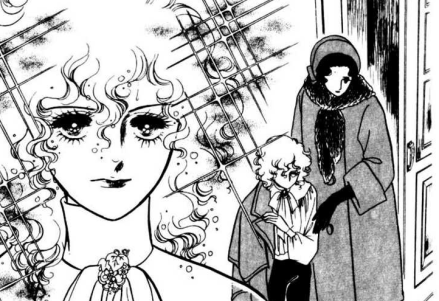
Since he was eight, Claudine was convinced he was born into the wrong gender. He grows up beautifully, more so than any of the men and women in Vernon, yet struggles through life with a series of depressing relationships. Only a handful of people reach out to Claudine and see him for who he is, but no one truly understands his heart. Claudine simply wishes to find true love, yet his efforts continue to end in tragedy as he is unable to be accepted as a man by society and his peers.

As a piece of historical fiction, Claudine offers a timeless story full of heartbreak. Riyoko Ikeda of The Rose of Versailles fame paints a picture of France that is rich in culture, but also a bit too melodramatic at times. Characters overreact to the smallest things with vivid expressions that can dominate several panels, which can make the read feel overwrought with agitation.

Without spoiling anything, some characters even dare dedicate their entire lives to destroying the hearts of others—an unfortunate trend which feels straight out of a wild telenovela or K-drama. Or, you know, The Rose of Versailles. This kind of thing might work well with a long-running series. But as a single volume work, the repetition of shocking reveals can feel overwhelming and excessive.

All that said, however, very few manga can make a drama feel as compelling as Riyoko Ikeda does, and to that I applaud Claudine. As a standalone piece, this is the kind of artistic mastery that most short story mangaka may struggle with. Here, the romance feels real, but so does the grief and misery that comes with rejection. Claudine explores sex and gender identity in a way that is poignant, respectful, and anything but forgettable.

young claudine

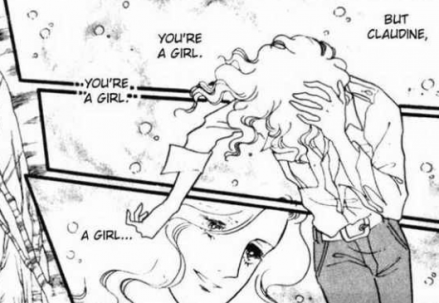
“But Claudine, You’re a Girl”

Not sure of what to do with her own child, Claudine’s mother takes him to a psychiatrist who reappears at a few major junctions in Claudine’s life. This was customary for the time, as being gay or trans was considered an illness, and thus treated as something that would eventually “go away” just as it came. We know now that this is far from fact. However, this is the best Claudine’s mother could do, and I believe she meant well by it.

Claudine’s father Auguste, on the other hand, was a mostly good man. A “large-hearted, manly dilettante with a variety of interests,” Claudine’s father was the only one willing to raise the child as he saw himself. Claudine expressed interested in equestrianism, hunting, sports, literature, and world history, to which his father only helped to provide the best resources to raise Claudine just as well as his other three accomplished sons. Loving Claudine wholly, Auguste says it himself: “That she doe not have a man’s body is honestly a mistake on God’s part.”

We follow Claudine through childhood flings, teenage romance, and relationships in adulthood. The women he encounters transform his life, although whether these interactions are for the better or not is definitely up for question. There’s one particular childhood lover, Rosemarie, who annoyingly clings to Claudine and causes him nothing but trouble. As he navigates through life, Claudine finds that it isn’t wrong of him to be a transgender person so much as that being trans is just highly ill-advised when no one can accept you for it. His emotions are understandable, and his actions are largely respectable.

Friends, strangers, and even his own family turn Claudine away from them on account of their own ignorance. A deeply seeded disgust for gay and transgender people plagues the populace of 19th century France, and—as it has continues to do today—only serves to ruin Claudine’s life. Despite his graceful air, his love of knowledge, and his deep compassion for helping others in need, Claudine is dejected again, and again, and again by women who have mixed love and kindness with lust and sin.

we are both girls

Why We Have To Do Better

This is a breathtaking manga. Although it was published way back in 1978, so much of this shoujo-ai drama can speak for the view of transgender individuals held by most conservative-minded people today. The story is highly relevant, and I’m so thankful Seven Seas was able to publish it when they did. Their restoration of this vintage shoujo manga is gorgeous, and the large trim format is greatly appreciated.

More than feeling upset, frustrated, or annoyed at the terrible ways Claudine was betrayed, I can only really sum up my thoughts on the ending with this: Claudine’s story is a sad one. It’s tragic, it hurts, and yet it’s an unfortunate end many transgender people find themselves meeting. Guys, it’s tragedies like this that remind me we still have a long way to go. For people like Claudine, for people who are confused or still in the closet, for people who are out and proud of it—We have to do better. So. Much. Better. And that begins with accepting these identities—NOT just acknowledging them.

From cover to cover, Riyoko Ikeda explores gender and sexuality, identity, culture, and self-acceptance in a coming-of-age tale so sorrowful and heartfelt that I can only want to express how important Claudine’s story is. It is works like this that can easily impact people, and even leave behind impressions that can hopefully change lives for the better. Certainly, I won’t be forgetting Claudine anytime soon.

claudine art page


They lived together, deceiving the world, behind the backs of their friends. But like a flower waiting for rain, their caged love finally surged out, shining. I believe this was a true love, surpassing all preconceived notions, entirely moving.Claudine’s doctor


Afterword

What a great read this was. Riyoko Ikeda’s art style is not only iconic, but truly emblematic of early 70s and 80s shoujo manga. Sure, it’s a bit over-the-top at times, but what would a Riyoko Ikeda manga be without her signature dramatic twists and sparkling style? For telling an admirable albeit tragic tale about a respectable transgender man and his struggles with finding love and self-acceptance, I welcome Claudine as a “Cafe Mocha” title, a rating reserved only for the bests out there. Did I mention that the dad is actually a GOOD guy in this one? Normally it’s the other way around, so this was quite a pleasant surprise!

Anyone else read Claudine? I’d love to hear your thoughts on this old but classic shoujo read. I’m so glad I got to include a manga with a transgender focus this month with something like Claudine. My next Pride Month post will be over something much more modern, Bukuro Yamada’s Melting Lover, so please look forward to that! ‘Till next time!

– Takuto

Candy Color Paradox: Sweet Yet Sour || First Impressions

First impressions for volume 1 of Isaku Natsume’s yaoi manga series “Candy Color Paradox,” initially published in 2019 by SuBLime Manga.


Pictures and Pride

Satoshi Onoe is an honest-to-goodness reporter at a weekly magazine company. He takes great pride in his writing and is valued for his ethical approach to reporting. In an industry that is all about chewing people up and spitting them out, it’s no wonder a total softy like Onoe would struggle with exploiting celebs and exposing back alley dealings.

Although he does well at his job, the one co-worker he can’t stand is Motoharu Kaburagi, an ill-mannered photographer who’s done nothing but steal Onoe’s time in the spotlight since day one. When the company chief decides to shuffle around the stakeout teams, Onoe is forced to partner with Kaburagi or let the man ruin his career. Kaburagi’s unethical reporting methods and his streak as a ladies’ man bother Onoe to no end. But, perhaps a little time and experience in the field will show Onoe a side to Kaburagi that’s a bit sweeter than anyone’s ever seen.

I love occupational romances. The office setting is one of the quickest ways to make your story relatable, and the drama is enhanced when our characters are trying to “make it work” while on the job. There may not be much explicit content until the last couple pages of this first volume, but I guarantee subsequent volumes will only get spicier.

What I don’t particularly love about Candy Color Paradox, however, is the nature of our main characters’ work. To me, news tabloids and articles that are only out to “expose” people are full of bullshit. I don’t like reading them, and I certainly don’t like reading about them. This kinda made both Onoe and Kaburagi difficult for me to like, as I find the work they’re doing—despite the tireless effort—to ultimately be full of crap. While the story isn’t about “what is right” or “what is wrong” per se, finding the “next big scoop” for their weekly magazine is a core element of the story, and often the segue for deepening Onoe and Kaburagi’s precarious relationship.

CCP intro

Writer x Photographer

Along with not loving this field of work, I immediately disliked how Natsume framed Onoe’s stance on attraction. The dude literally had a girlfriend and even proclaimed “I’m not gay!” in a bar, and I find that incredibly off-putting given that he’s supposed to be our MC. I get that this is a story from 2009, so Natsume is probably playing this off more as a joke, but c’mon, this is such a stereotypical thing to say. Unless it’s with the intent to explore one’s sexuality, I’m over characters that deny their sexual interests.

In typical uke style, Onoe gives us constant poutiness and confused gay crying. He’s full of pride in his work, and isn’t afraid to take a jab at Kaburagi whenever he can. Some will find his loud personality and flustered antics annoying—I know I did. But, despite his notoriously unscrupulous occupation, Onoe remains dedicated to his honest writing, and I can at least appreciate him for that.

On the flip side, Kaburagi can be a frustrating guy to get behind, both for Onoe and the reader. His scruffy appearance and initial attitude toward Onoe immediately leapt out at me as toxic masculine behavior. Unlike Onoe, Kaburagi uses his looks and charmed words to draw out the scoop he needs to land him the cover page story. As we quickly realize, he’s also an avid liar, which is a turn-off for me. The end of this first volume had me believing that there may be much more to Kaburagi than this initial assumption, but as it stands, I only really like Kaburagi because he seems just as lost in this newfound love as poor Onoe does.

CCP mid

Maybe it Gets Sweeter

As a license rescue release from 2009, Candy Color Paradox embodies the essence of yaoi rom-com workplace dramas popular during its time. Natsume’s art style also reflects this era of BL where tall skinny men and cartoonish expressions dominated the series. For me, it’s kinda bland to look at, but if you like the look of The World’s Greatest First Love or Junjou Romantica, you’ll probably enjoy this too. Also, I’m not the biggest fan of the rivals-to-lovers trope in my BL manga specifically, but Onoe and Kaburagi are quicker to admit their feelings to one another than most BL couples are, so I can bear it.

By the end of this first volume, our characters have made their way to the bedroom. The beginning may not be explicit, but I can see the next volumes being full of smut. So, if explicit BL is your thing, just know that you’ll want to pick up at least the first two volumes.

As to whether I will be getting more Candy Color Paradox or not, I’ll probably hold off for now. Between not caring for Onoe and Kaburagi’s field of work (which is essential to the plot) and finding Onoe a bit too over-reactive, I found myself rushing through this first volume just to finish it and read something else. Whenever next I’m feeling up for a steamy, less-than-serious workplace drama, I’ll consider picking this back up again. until that time, however, Candy Color Paradox just isn’t my taste.

CCP end


I wish that I really had been fooled by that charismatic mask he wears. Then I would be able to tell myself that I was just infatuated with a lie. — Satoshi Onoe


Afterword

I find that Candy Color Paradox is supposed to be a sophisticated read. It pokes fun at “being gay” whenever it can (e.g., Onoe getting overly flustered every time they have to do a stakeout from a love hotel room), but otherwise is just a fun and simple little BL title. I’ll pass on reading more for now, but don’t be surprised if I decide to pick this one back up again. If you’ve read Candy Color Paradox, what do you like about it? Let me know in the comments! My next Pride Month read, Claudine, will dip into the story of a transgender man and his struggle with identity and sexuality. You won’t want to miss it! Thanks for reading, and ’till next time!

– Takuto
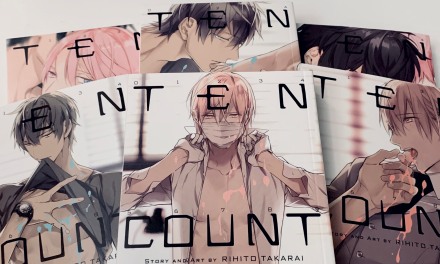
Ten Count: My First Yaoi Manga Series || Review

A brief review of the 6-volume manga series “Ten Count,” story and art by Rihito Takarai, and licensed in English by SuBLime Manga. MINOR SPOILERS WILL BE PRESENT.


Counseled into Love

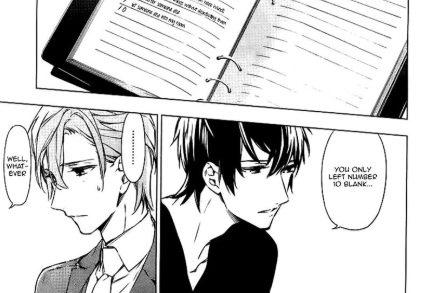
Tadaomi Shirotani suffers from extreme obsessive-compulsive disorder wherever germs are concerned. While he manages to get his corporate secretary work done efficiently enough, his social life is practically nonexistent as a result of his condition. Upon saving Shirotani’s boss from a fatal car accident, behavior therapist Riku Kurose takes an interest in helping Shirotani overcome his germophobia. As Shirotani navigates through Kurose’s proposed ten-step program designed to cure his compulsion, the patient’s attraction to his therapist grows.

As far as romance dramas go, Ten Count starts off relatively tame, especially for a BL series. In fact, there’s nothing really explicit until the end of the second volume, of which there are only six. This relatively slower-burn intro allows us to really understand the position Shirotani is in, his feelings and his frustrations with his condition. Although Shirotani’s list of ten self-chosen tasks seems like an excuse to up the sexual tension step-by-step, I assure you that the series has more twists in store than finding out what Shirotani’s final tenth step is (even if they’re a bit more controversial).

One of my favorite aspects of the series is how, foundationally, Kurose’s psychological techniques (namely the titular “ten count”) are rooted in actual behavior therapy practices. (Trust me—I took a class for this!) Exposure and response prevention therapy (ERP) is a real therapy designed to treat anxiety disorders. By gradually introducing stimuli to the patient and slowly increasing the strength of the stimulus, an individual undergoing ERP therapy can hope to see at least some relief from their OCD symptoms. It doesn’t suddenly cure all—which Rihito Takarai respectfully acknowledges—but it can help relieve some of the stresses that come with anxiety or PTSD.

ten count list

The Patient-Therapist Relationship

From the start, Shirotani is a man bogged down by the pressures of society. His signature gloves may seem like a fashion choice, but they actually serve to shield his hands from potential germs. If he just wore the gloves, he’d see himself as looking foolish, though. Thus, he also dons a suit for both his job and personal life to seem less odd. I thought this was a sad detail, if not a pertinent one to telling us what kind of person Shirotani is: an extremely cautious and self-conscious individual. His condition interferes with his daily life, clearly, and he’s in dire need of help even if he refuses to admit it.

Kurose comes off as a little standoffish and weirdly intimate, and that’s also a result of a troubled past, no doubt. While he’s able to comfort Shirotani and make him feel good about himself, Kurose also has this aura of being impossible to read. For a corporate office guy with crippling OCD, this can pose major problems. Understandably, Shirotani fears the unpredictable, and even more so when it concerns human contact. What Kurose wants out of Shirotani might not be what he expects. At the same time, perhaps Kurose’s guidance and friendship are the exact things Shirotani wants out of this unconventional patient-therapist relationship.

shirotani kiss

To Fetishize Another’s Pain

Let me start this part by saying that Rihito Takari’s art is divine. Her characters are beautifully drawn, the panel construction serves to capture Shirotani’s feelings of isolation and anxiety, and the sex is hot, straight up. (I mean, Kurose’s jawline, C’MON.) Takarai also has an eye for aesthetic, her characters living clean, realistic lives, although on the lighter side. I cannot deny that reading this manga was enjoyable, if only for the art alone. It’s great. If explicit BL is your thing, Ten Count will serve you wonderfully.

Ok, now I can nitpick. SPOILERS for one of the later narrative twists, but WTF Kurose?? The dude likes—no, prefers—“people like” Shirotani because they have a germophobic condition . . . and he likes making them dirty . . . and corrupt like him?? I’m sorry, I just couldn’t with this reveal. It’s a shame, too, cause the series really started strong when it was just Shirotani meeting up with Kurose at their usual coffee shop to celebrate Shirotani’s progress.

The fetishization of mysophobia in Ten Count made the last couple volumes a struggle to get past. I really disliked finding out that, rather than love out of personality or charm, Kurose’s biggest draw to Shirotani was because of his suffering. It only confirmed my suspicions about Kurose from the beginning that the guy was a little messed up. While I appreciate the backstories for both of these characters (and can understand the effects that childhood neglect or trauma can have on someone), I couldn’t really find myself appreciating Kurose after discovering his kink.

kurose

One Step Forward, Two Steps Back

As a BL manga, Ten Count starts strong but falls into some of the unfortunate schemes of the genre that I’ve become aware of thanks to fellow bloggers and booktubers. It comes across as realistic and understanding of people with anxiety disorders, yet eventually succumbs to a somewhat insulting case of deception. I wanted Shirotani and Kurose to end up together out of a deep fondness and caring for one another, and it only feels halfway satisfying.

With any type of behavior therapy, it can often feel like you’re making leaps and strides one day, only to wake up the next feeling like you haven’t progressed past start—and that’s absolutely normal. For Shirotani, his lowest lows caused him to skip work, neglect his social life, and even turn down potential relationships. But on his best days, he stepped outside his comfort zone and took risks he normally wouldn’t have. Simply, he tried to live a better, more fulfilling life, and I can commend him for that.

Looking back, I find my liking for Ten Count to be the same way. The chapters where Kurose was genuinely trying to encourage Shirotani to go to the book store, buy a new suit, or actually drink the coffee at a coffee shop—those were great! When it just seemed like Kurose was trying to get his hands down Shirotani’s pants, however, I wasn’t quite rooting for either of them (which is kinda opposite of the intent the fanservice is supposed to do in this series).

As my first yaoi manga series, I don’t hate Ten Count, though. Rihitio Takarai’s plot has its problems, sure, but her art and character designs really are appealing. There’s a lot of self-torment going on throughout the series, but I do believe that in itself is a huge part of life. If the romantic story of a therapist and his patient sounds enticing, go ahead and give the first volume a shot. Just don’t be surprised when certain characters start revealing their true nature in the bedroom—unwonted fetishes and all.

ten count color


It’s because I finally realized that I love you and you reciprocated that love that I’m learning to love myself. — Tadaomi Shirotani


Afterword

I feel I could talk at length about Ten Count, but I’m honestly not sure whether I’d be saying primarily bad things or good things. Probably a mix of both, because despite its problematic concerns with trauma and sexual arousal, I did enjoy reading about Shirotani and Kurose’s relationship (and the many, many back-and-forth turns it takes). I know this series stirred a lot of buzz when it was first brought over in 2018, but what are your thoughts on Ten Count? For my first yaoi manga series, I feel like I picked a decent one, but you be the judge of that.

I’ll pass Ten Count as a “Cake” title here at the cafe if only for the fact that Shirotani’s story is fleshed out in a lovely six volumes and not just two or three. If you’ve got any BL recommendations, I’d also love to hear those. I’ve got more Pride Month content coming soon, so if BL is your thing, you’re in luck! Thanks for reading, and ’till next time!

– Takuto

ID:INVADED & Searching for the Answers || OWLS “Adapt”

Chances are that if you were linked here from another blogger pal, then you might be new. To those first-timers, “Hi, I’m Takuto, welcome to my anime cafe!” For the OWLS blog tour’s fifth monthly topic of 2020, “Adapt,” I wanted to showcase one of the cool psychological sci-fi series that aired this past winter season, ID:INVADED. Although this would’ve been THE perfect month for Shirobako (which I talked about in last month’s OWLS post), I find the premise of a detective constantly dealing with memory erasure to be equally fitting for this topic.

Right now, we all have lost something or gained something in return during this dark time. Our lives have been completely altered due to coronavirus. For this month, we will be talking about anime series and other pop culture media where we have characters having to adjust to changes in their environment. Whether it’s adjusting to a new school or heading towards an isekai fantasy world, we will be discussing characters that had to make changes within themselves in order to adapt to the circumstances they are in. This will also give us an opportunity to express our own personal lives as we try to adjust to a “new normal.”

This all sounds very relevant to our current lives, doesn’t it? Thanks Lyn for the prompt!

sakaido


A brief discussion of the 13-episode Winter 2020 anime “ID:INVADED,” animated by NAZ, directed by Ei Aoki, and based on the original story written by Ōtarō Maijō.

A New World Every Time

Specialized police squad Kura solves crime a little differently than your average public safety agency would. Just sitting in the Mizuhanome, a highly advanced system that allows users to enter the minds of others, can help find the culprit at an astonishing pace. It’s an efficient system, and by detecting “cognition particles” left behind at the crime scene by the perpetrator, Kura’s detectives can manifest a criminal’s unconscious mind and dive into this virtual world—the “id well”—and thus reveal the identity of the culprit.

There’s a catch to entering the mind of a killer, though: only killers themselves can comprehend the bizarre stream of thoughts belonging to one of their own. Enter former investigator Akihito Narihisago, once a respected member of the police, and now the “brilliant detective Sakaido” on the other side of the law. Although his gifted detective skills assist him and Kura immensely in the id well, the latest set of crimes bear an uncanny relationship to one another that the agency just can’t seem to shake.

A psychological sci-fi mystery series with a hard law-and-order edge to it, ID:INVADED intricately crafts its entire world from the ground up—in some cases, this is literally meant. We are immediately drawn to the quasi-virtual world of the id well, and how the strange physics of each killer’s mind create a unique set of obstacles for the great Sakaido to overcome. Whether soaring through broken architecture in a zero gravity space or attempting to uncover the logic behind a puzzling stream of numbers, the laws of physics that we know are hardly applicable to the unconventional landscapes of the id well.

id well

The Brilliant Detective

Each time he enters the id well, Narihisago immediately forgets everything he once knew about himself. It is only when he stumbles upon the body of Kaeru, a mysterious girl who is the only constant between id well dives, that Narihisago remembers: he is the “brilliant detective” Sakaido, and it is his mission to solve the workings of this world to find the culprit. Who is Kaeru, and why is she always deceased upon discovery? Sakaido and the Kura team have yet to figure that out. But what they do know is that she’s on their side, as the state of her corpse always possesses a clue to the how and whodunit.

As much as ID:INVADED banks on the whole crime thriller shtick, it really is a story about redemption. For Narihisago, it’s about accepting the loss of his wife and daughter and his own transgressions as their murderer’s killer. The budding young detective Hondoumachi also uses her field experiences to find where she truly belongs in this wild agency. For Tamotsu Fukuda, it’s the chance to help the good guys solve a crime, even if he’s a criminal himself. The mind of a murderer is dangerous, absolutely, but it sure is insightful for tracking down fellow killers.

Kura’s detectives have to be sharp thinkers, but even more so the brilliant detectives risking their own psyche for sitting in the Mizuhonome. Between logging into unfamiliar worlds and dealing with wacky circumstances, it quickly becomes apparent that adaptation plays a critical role in this is a sci-fi mystery series.

kaeru

Deconstruction and Reconstruction

More than any other component, the visual element of ID:INVADED has to be solid in order for this kind of story to work—and thankfully, studio NAZ knew exactly what they were doing. While there are more than a handful of character design inconsistencies (particularly misalignment in the face and eyes), the whole of this project truly does handle director Ei Aoki’s vision astonishingly well.

Especially as an original project, viewers have little to go off of other than the posters and episodes themselves, but the series really works as a wholly unique and compelling visual piece. Sakaido’s mission to unravel the inner mechanisms of each id well relies on confident and daring animation, to which NAZ delivers. The animation supports this theme of reconstructing a deconstructed world.

Abstract puzzles and challenges await the brilliant detective, and as he is quick to think on his feet, Sakaido has to possess an unmatched flexibility to be able to adapt to anything the id well—or his fellow detectives—throw at him. The story largely retains its ability to entertain by following Sakaido has he adapts, reconstructs, and discovers the truth hidden amidst the chaos.

id invaded first id well

Flexibility Paves the Way

We try to show only the best sides of ourselves, but in the process we relinquish the parts that really make us humans, well, human. Some individuals like Tamotsu carry a deep sadness with them, despite the foolish smiles on their face. Others can seem rough around the edges yet are actually quite pleasant to get to know, much like Hondoumachi’s senior and mentor Matsuoka. We truly do not know the extent to someone’s character unless we actively try to understand them—all while keeping an open mind. 

As Narihisago realizes before any of his co-workers, a detective cannot be successful without thinking outside the box and being aware of the seemingly unimaginable. Not every crime is as it seems; similarly, not every person shares with you everything there is to them. Facades and farce run abound in ID:INVADED. Some people can be forgiven, and some people simply can’t. But one thing’s for certain, and you can trust Narihisago on this one: No person is without their flaws. 

mizuhanome


Who would’ve thought that one needs to lose something in order to feel complete. — Tamotsu Fukuda


Afterword

While I only followed a few shows this past winter season, I thought that ID:INVADED was definitely among one of the better watches. For filling the urge for psychological mystery in my heart and giving my mind a bit to chew on, I happy welcome ID:INVADED as a “Cake” title here at the cafe. Should you, too, be looking for something a bit more experimental while adhering to the staples of the crime genre, I strongly recommend this one. If you’ve seen it, I’d love to hear your thoughts on the series or this post down in the comments.

This concludes my May 23rd entry in the OWLS “Adapt” blog tour. My good friend Aria (The Animanga Spellbook) went right before me with a post covering the societal struggles faced by the characters of Wandering Son that you shouldn’t miss! Now, look out for my buddy Scott (Mechanical Anime Reviews) as he shoots for the moon and beyond in his post on Banner of the Stars this Sunday, May 22nd! Thank you so much for reading, and until next time!

– Takuto

Millennium Actress & Our Obsession with the Chase || OWLS “Devotion”

Chances are that if you were linked here from another blogger pal, then you might be new. To those first-timers, “Hi, I’m Takuto, welcome to my anime cafe!” For the OWLS blog tour’s third monthly topic of 2020, “Devotion,” I wanted to give special spotlight to a recently rescued and released anime film that I’m sure many fans of the early 2000s era might recognize: Satoshi Kon’s magnificent Millennium Actress!

When we talked about fandoms, we show our appreciation and support by buying merchandise, cosplaying, writing fanfiction and etc. In fact, our appreciation can end up looking like a sign of religious worship. For this month, we will be talking about how certain characters express devotion to others, objects, and values. We will also be discussing how devotion can turn into an unhealthy form of passion and obsession and the implications of that.

I’ve got an interesting angle for this one that I hope you guys will enjoy. Thanks Lyn for the prompt!

chiyoko rides


A brief discussion of the 2002 anime film “Millennium Actress,” animated by Madhouse, directed and based on the original story by Satoshi Kon and Sadayuki Murai. 

A Once-in-a-Lifetime Opportunity

Have you ever been starstruck? You know, met or have worked with someone so cool, famous, or at least well-renowned in your area that you find yourself absolutely mesmerized by this person’s presence, their every word? Well, that was budding filmmaker Genya Tachibana to Ginei Studio’s star actress, Chiyoko Fujiwara, many decades ago.

Now, at the turn of the millennium, the legendary studio is set to be demolished. As an ex-employee, Genya decides to honor this occasion with a special commemorative documentary about Ms. Fujiwara herself. Having retired at the height of her career, the sweetheart of Shouwa Era cinema has lived a reclusive life up in the mountains. With the hour now at his chance, an eager Genya cannot be more excited to place his lifelong idol back in the spotlight one last time.

As a young lover of film and the industry, Millennium Actress quickly won my heart. Navigating through over a thousand years of Japanese history, the film seamlessly bobs and weaves through entire eras by showcasing all of the major roles Chiyoko has played throughout her prominent career. Nearly an hour and a half of carefully crafted cuts and quick visual tricks culminate in an experience that is as unique as it is autobiographical and personal to this now very tired, very humble elderly woman.

Chiyoko’s narrative gracefully guides us through the three major periods of her life: adolescent fame, her blossoming teenage years, and her still-yet accomplished adulthood. Specifically, we see how a young girl’s early encounter with love shaped the rest of her life. Driven by romance and adventure yet saturated with the pains of drama and missed opportunities, Kon’s film—with Chiyoko’s character—lives on today to inspire an entirely new generation.

chiyoko elder

A Fateful Encounter Under a Full Moon

From samurai to spacesuits, Chiyoko Fujiwara has played them all throughout her fabled career. To call her a person of passion would be an understatement; very few actresses can embody the wide range of personalities appropriate for acting as a woman living in so many different historic eras, as well as so many countless roles. And yet, our “millennium actress” is capable of being the perfect heroine for all time! So what drove the idol of Genya’s dreams to become a master of her craft? Well, like it might happen for any of us: she fell in love. 

Before she became a household name, Chiyoko was caught in an incident which involved her helping an injured man. Although he supposedly may have been an “art thief” on the run, that didn’t stop childhood Chiyoko from being swept off her feet that fateful night. In their short time, they bond over simple life pleasures together, one of those being the moon.


Chiyoko looks up at the night sky, remarking how beautiful the full moon will be tomorrow. But the “man with the key” says that it is most beautiful now, for once the full moon is here, it only begins to wane. Whereas, it is under this this sky that you can spend the whole night looking forward to what the moon will become.


I think that this single, beautiful metaphor is representative of the entire film. I’m sure the mysterious man with the key who lives day-to-day may value this philosophy due to his risky occupation. But after her date with destiny, Chiyoko won’t ever be able to shake the man’s charm from her memory. In a long-winded and tiring search spanning a lifetime, Chiyoko scours all of Asia for any chance to reunite with the man. Even when she loses the one symbolic representation of their relationship—the key which unlocks “the most important thing”—she never stops longing for his love. She chases after him, and relentlessly so. After all, the chase kept her excited—-kept her living on the edge of love, forever—-and allowed her to feel eternally young at heart even as her hair grayed and memories began to fade.

chiyoko runs

It Was Never About the Destination

Hidden high up in this quiet mountain home is a thousand years of Japanese cinematic history just waiting to be narrated. Chiyoko’s deep reflections of the past take Genya and the viewer on an illusory journey through the saga of an actress’s career and her incredible filmography. As the actors in her life blend with the characters on screen, the tatami beneath their feet shifts from stage to stage, and the present completely blends with the past.

This is the extraordinary tale of a phenomenal actress who was so devoted to pursuing the love of her life that she stumbled through a legendary film career in the blink of an eye. Similarly, we also see how a fan’s positive and passionate devotion to his idol can lead to wondrous outcomes with the right intent behind them. Though the remarkable actress may have retired at the height of her career decades ago, Satoshi Kon’s directorial magic absolutely has you convinced that the curtain on her life’s stage has yet to fall.

chiyoko key

Does Chiyoko ever see the man with the key again? Well, does it really matter? If nothing else from this story, what we come to understand is that when we have our eyes set on only one thing in life, the meaning for everything else can start to fall from our view. Perhaps, just perhaps, we had what we really wanted all along. Like the night before a full moon, maybe the longing for some things—the journey itself—is more satisfying than the destination will ever be . . .

And so, as Genya presents an elderly Chiyoko with the very key she lost so many years ago, she at last finds what “the most important thing” to her was. After a long pursuit spanning a thousand years, it finally dawns on her that perhaps she was never in love with the man to begin with—she was just lost in the tremendous thrill of the great chase. 

chiyoko sakura


After all, it’s the chasing after him I really love. — Chiyoko


Afterword

Some beauty really is timeless. There’s so much cinematic and storytelling gold here that I could write a hundred—no, a thousand—posts on this film. I’m definitely glad I held off on this one for as long as I did, but even more so thankful to Eleven Arts and Shout! Factory for licensing this gorgeous film (the Blu-ray restoration is terrific)! Need I say more for now? Millennium Actress may just be the best film Satoshi Kon ever made, a certified “Caffe Mocha” for all those who know how I do things around here. But what are your thoughts on this timeless classic? I’d love to hear them in the comments!

This concludes my March 27th entry in the OWLS “Devotion” blog tour. My dear friend Mel (Mel in Anime Land) went right before me with a post on K-pop and idol culture that you can read right here! Now, look out for Megan (A Geeky Gal) with a post on one of my favorite romance anime, My Love Story!!, this coming Monday, March 30th! Thank you so much for reading, and until next time!

– Takuto

The Loneliest Girl in the Universe: A Thrilling Ride Through Space || Review

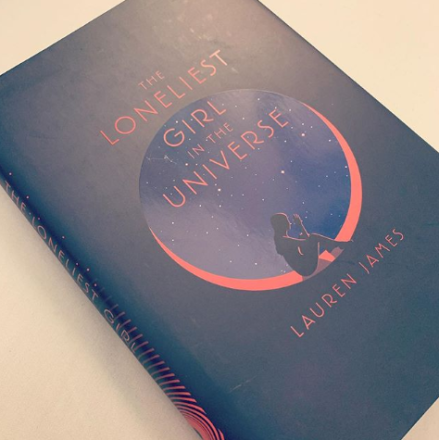
A brief spoiler-free review of the young adult fiction novel “The Loneliest Girl in the Universe,” written by Lauren James, originally published in 2017 by HarperTeen.


Adrift in Space

Carrying with it the hope of humankind, The Infinity continues its noble trek through the blackness of space, despite all but one of its crew having died on board in a horrific accident years ago . . .

Although she bears the title of first child born in space, Romy Silvers only has connection to her therapist on Earth and her wits to occupy her as she drifts alone in deep space aboard The Infinity. But to her surprise, Romy’s mundane life in space suddenly picks up when she finds out that a new NASA ship, The Eternity, has set course to meet her on her long, lonesome journey to a new planet—and sooner than she ever could have anticipated.

While initially eager to unite with another of her kind, cryptic emails from both Earth and J, the friendly pilot of The Eternity, start to trigger anxiety-filled memories of the past and terrifying visions of the future. Perhaps, as she quickly realizes, there are worse things than being alone . . .


The Infinity is the biggest, most expensive scientific mission in history. I get to be the very first person to see the results. I’m so lucky. — Romy


A slow-build yet gripping sci-fi thriller with a sprinkling of romance throughout the journey, the plot of The Loneliest Girl in the Universe begins leisurely by showing us several chapters of Romy’s character and daily routine, but rapidly escalates in the last third of the novel (AKA the big plot twist part). To build this energy up, author Lauren James features a countdown system instead of traditional chapter titles or numbers, most beginning with “365 Days Until The Eternity Arrives,” then “364 Days . . .” and so on. 

The book’s printing is quite large and generously spaced out, making these 300 or so pages seem like they just fly by. It helps that James writes short chapters, most being no more than a couple pages. Like a series of diary entries strung together in one large narrative, we quickly get a feel for who Romy is, and why things like people—not the black abyss of space—scare her most of all. 

Finding Strength in the Darkness

Lemme begin by getting it out there: If you’re wanting a story with strong feminist energy and mental illness rep, this one’s all for you. Romy may only be sixteen years old, but given her scary close relationship with loneliness and anxiety, she’s one hell of a ship commander. I really appreciate the mental illness rep going on here. Romy’s severe anxiety doubles as both something she must learn to accept (or fight) AND a first-person story-telling trick: the unreliable narrator.

Sometimes we have to question whether the sights and sounds Romy experiences in the night are real terrors or nightmares stirred by her anxiety, and Lauren James handles the balance between the real and surreal with incredible deft and care. James has created a feminist character who’s stronger than she knows, and following her journey has me inspired to face some of my own fears with isolation and nihilism.


It’s hard to focus on the future when the past is so distracting. — Romy


One of Romy’s qualities that I absolutely commend is how—despite having the ability to spoil herself—she always puts the needs of The Infinity first. Always. It’s her ship, clearly, and she feels strongly for it just as how any of us would for our own children. When ship efficiency emails start to suggest that Romy observes using less electricity by turning out the lights early or conserve water by taking shorter showers to maintain ship’s water supply, she obliges, even if the message’s sender seems sketchy.

She knows that being the sole commander of The Infinity comes with it the responsibility to maintain the vessel; making necessary sacrifices is just one part of the job. This respect and care for her ship—her home—is no doubt a trait she inherited from her dutiful parents, especially her good-natured father whom Romy was especially close to. As the story unravels, we gradually find out how they met their end, as well as the understand the tragic events that occurred during Romy’s early childhood that led to her being alone.


My life is a gambling chip thrown carelessly across the universe in the hope it’ll land somewhere my descendants can survive. I represent the culmination of centuries of human achievement and exploration. But who cares if my name goes down in history, if no one remembers who I really am? — Romy


Thrilling to the Very End

If you couldn’t already tell, I had a blast getting to know Romy and speculating with James as to what interstellar travel may be like in the near-distant future. I also loved the messages of longing and learning to love yourself, even if that process can be slow, confusing, and often painful. While I had my suspicions about certain plot twists, I was completely thrown off by the exciting change of pace near the finale—what a fantastic ending! It makes me appreciate even more the 150-200 pages of careful build-up that Lauren James so meticulously crafted—and I was already enjoying the adventure since the first page!

For those looking for THE perfect solitude-vibes title during this quarantine we’re all under, I cannot recommend The Loneliest Girl in the Universe enough. Lauren James has laid out a carefully plotted journey beginning as early as the title itself. There’s also a lot of references to pop culture—including YouTube, Netflix, and even fanfiction communities—that help bring Romy and her situation to life.

Just know, though, that this isn’t your typical fluffy long-distance romance plot. Sometimes the story is uplifting and kind, but other times it’s really gonna try and scare ya—don’t underestimate that part. Intelligent, suspenseful, and deliberately cautious, The Loneliest Girl in the Universe is thrilling to the very end—even in its quietest moments.

loneliest girl insta


This voyage was never meant to be easy. It was meant to be important. — Romy


Afterword

Man, what a wonderful, terrifying, and weird little book this was. Special shoutout to Natalie (Book of Bee) over on YouTube for recommending it to her viewers—it was delightful! While not technically an anime or film, I’ll gladly welcome The Loneliest Girl in the Universe here as a certified “Caffe Mocha,” a rating reserved only for the best works! If you read this novel, PLEASE, tell me what you liked or disliked about it in the comments! Also, if you’ve got any recommendations that are similar to this one, be sure to leave those too. ‘Till next time!

– Takuto
Given: Broken Heartstrings & Unforgettable Sounds || Review

A brief spoiler-free review of the 11-episode summer 2019 anime series “Given,” animated by Lerche, directed by Hikaru Yamaguchi, and based on Natsuki Kizu’s manga of the same name.

starry mafuyu.PNG


Rocky Starts, Aching Hearts

Between playing basketball at high school and dabbling on the guitar in his small band, Ritsuka Uenoyama has found himself stuck wandering the lonely desert of academic boredom. He dozes off in class, sleeps during break, and only looks forward to jamming out with a couple of upperclassmen college friends in the evening.
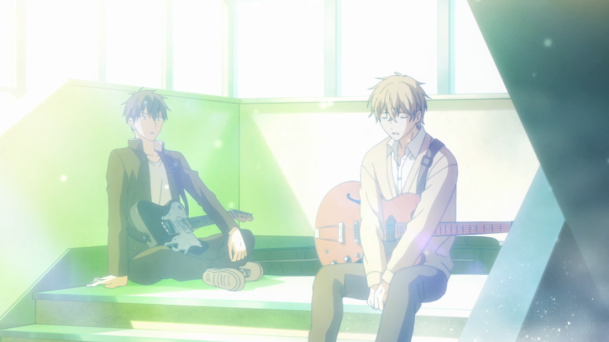
One day, he sees a classmate of his, Mafuyu Sato, cradling a broken guitar on a secluded staircase. Although Uenoyama makes nothing of restringing Mafuyu’s red guitar for him, Mafuyu becomes completely attached to the dark-haired musician and insists Uenoyama teach him how to play it. Uenoyama initially shrugs him off, but when he hears Mafuyu singing for the first time, his voice leaves a deep impression on him. He can’t get it out of his head, and eventually finds himself drawn to Mafuyu’s aloof yet mysterious allure.
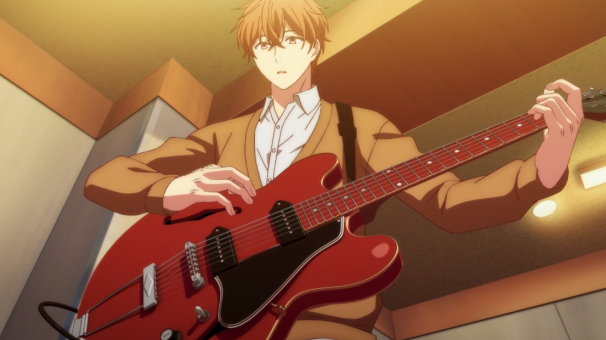
Given is a single story split among four separate narratives, each with their own unique perceptions of the conflicts presented throughout the series. Equal parts slice of life and drama, the series follows four students in an amateur rock band and the dual romantic relationships that form among them: between shy vocalist Mafuyu and passionate guitarist Uenoyama, and between the caring bassist Haruki and stoic yet silly drummer Akihiko.

uenoyama and mafuyu stare.PNG

Given is also a BL adaptation, and it doesn’t ever stray from that intent (which I respect). But hear me out. At most, the series presents its shounen ai relationships with genuine care and realism. It’s far less sugarcoated than most BL anime out there, and frankly just a really good romantic drama about curious feelings and the closet. This particular set of 11 episodes tells the story of the band coming together, their complex feelings toward one another, and specifically the growing relationship between Uenoyama and Mafuyu leading up to their first performance. The series never felt rushed, nor does it end too optimistically to be true, which is probably what I appreciated most out of the series—aside for the characters themselves, of course.

Complicated Feelings, Complex Characters

The main focal point of this series is around Uenoyama and Mafuyu’s relationship, which admittedly has a rocky start and is only littered with more misunderstandings as they go along. But somehow, like with most love stories, the two make it work.

From the get-go, Uenoyama is about as relatable as they come. Uncomfortable with relationships (in general), unsure of how to express his feelings, questioning what these sudden emotions of his are and where they come from—the whole confused teen-sexuality shebang. We see jealousy build up in Uenoyama as he unravels Mafuyu’s past relationship with another boy, and how this jealousy and regret slow down his performance both on the court and in the practice room. His declining musicianship is called into question by Haruki and Akihiko, and from there the upperclassmen work to help out his love life (and in their own unique ways). I just love Uenoyama’s character arc, and I’m really satisfied with how he grows from a dense lump of laziness to a person who actively seeks to understand both himself and his partner.

mafuyu and uenoyama hallway.PNG

Mafuyu. Oh lost little Mafuyu. Cute little Mafuyu. This kid really does resemble a puppy, no lie! Introverted, quiet, and reserved, Mafuyu is on a quest to reconnect with a person from his past, unbeknownst to any of his new band mates. He’s never picked up an instrument before, yet seems to have a talent for singing. This secret agenda AND hidden talent of his are what guide him to Uenoyama and the band. Little does he know that through their mutual love for music, Mafuyu’s past is dragged out into the open and exposed—but also cared for and carried together with his newfound friends. While I personally found the plot spinning him in some moments that were a bit too melodramatic, I still like Mafuyu a lot, even if he isn’t the one I identify with most.

Haruki and Akihiko, bassist and drummer, are the other pairing in this story. While doomed with an obsessive, unrequited love, Haruki secretly fawns over Akihiko, even if the guy’s a big musclehead. It’s unfortunate that Akihiko just might already have a partner, but manbun can’t help himself anyway. The way Akihiko sleeps, the way Akihiko compliments him in practice—Haruki just can’t get enough. But as the band’s “leader,” he is torn between resisting his urges and pursuing his own happiness in love, despite this directly violating his philosophy that relationships between band members just doesn’t work out in the long run.

haruki and akihiko.PNG

More of Haruki and Akihiko’s relationship will be explored in the 2020 Given film, but I really like these two dorks a lot (especially manbun) and how they make the effort to support one another and their band mates. Such bros.

Iridescence in Motion

Lerche really is my favorite animation studio, without a doubt. Given boasts a visually bright style to highlight the beauty of youth and the joys of love in this series about those two very concepts. While the screen is light and colorful nearly all the time, we see color drain as winter sets in towards the end of the series—the pivotal climax where potential heartbreak lies. I use the term iridescence because, like emotions, these luminous yellow, tangerine, and turquoise filters shift when we see the same set from a different angle. It’s clean. And it’s aesthetically pleasing.

mafuyu sings to uenoyama.PNG

Giving new meaning to the phrase “lighting design,” Hikaru Yamaguchi’s strong direction really shines in both the intense moments and those of tranquility or thoughtfulness. And the attention to detail in the instruments is NUTS, not to mention the studio painting a timeless picture of modern day Tokyo. The guitars, amps, and drums look AND sound incredibly authentic, and the detailed city backgrounds are delicately crafted with architecture that mirrors real life Shibuya and Machida, down to the last little street sign and business advertisement. Lerche makes anime reality look even better than REAL life in this beautifully made series.

mafuyu guitar.PNG

Character designs also glow with this attractive and cute aura while maintaining respective ages. (It’s nice to see college dudes that LOOK like college dudes and not 40-year-old men!) Speaking of characters, I don’t really give shoutouts to seiyuus unless they particularly stand out to me, but wow, here we’ve got four fantastic leads! Shougo Yano brings to Mafuyu a high-pitched innocence that has made characters (and fans) fall for his charm left and right. Yuuma Uchida gives Uenoyama a grumpiness and stubbornness that suits his character so very well. Masatomo Nakazawa makes hearts swoon as Haruki, and I just adore his sass whenever Akihiko requests something of him. And none other than Takuya Eguchi brings this lovable lug to life, perfectly capturing Akihiko’s serious and goofy sides.

got the flashdrive.PNG

A music anime has to have good music in it, obviously, and Given does not disappoint. Michiru provides a musical score full of chill blues guitar, casual jam session rifts, and delicate melodies to make any grown man cry. My favorite piece of music from the show is the energetic yet wistful OP “Kizuato” by Centimilimental. Mafuyu’s VA sings for us the tender ED, “Marutsuke,” which appropriately features animation of a puppy rolling around during the theme. Mafuyu also gets his own little song that I won’t spoil for you, so all-in-all, you’re in for a real treat with the music this time around!

A Given from the Start

Is it okay to be happy when you know someone you loved had to suffer for it? The answer, of course, is yes. So long as we are alive, we will always have the chance to be happy. What matters most is whether you are able to accept what has passed and move on for yourself. That’s what Mafuyu has to find out for himself; Uenoyama just nudges in the right direction, and even gives him happiness in the present.

Having watched the series, there’s still lots I want to know about. What happens to the characters from here? Does the band go on to perform more concerts? Does Uenoyama still write music for Mafuyu to sing? For now, however, this is a strong step forward for BL anime, and incredible representation for the genre as a whole.

I like music anime, great romance stories, and studio Lerche. Perhaps it was a given from the start that I’d love this show, but the series has proven that if you surround yourself with positive influences, good things will surely come your way. At times painfully resonant, other times light-hearted and fun, Given will continue to pluck at your heartstrings both throughout each emotional episode and long after the series is over.

mafuyu at the mic 2


Hearts are like guitar strings. They won’t play sound if they’re too loose. You have to wind them up until they’re about to break, and that’s when they become a wave the hit your eardrums. — Ritsuka Uenoyama


Afterword

Yeah, I liked this one a lot. No surprise here, but Given is certified “Caffe Mocha” stuff, and easily one of my favorite titles from 2019. I wonder who will pick up the license for this gem and give it the physical release (and dub!) it deserves. Until then, I’ll keep recommending this title through Crunchyroll—as all of you should be doing! I’m happy the reception for this series was so overwhelmingly positive, but I’d still love to hear your thoughts on Given or this review down in the comments. (Plz, I’m lonely and need someone to love this show with!) Until the next review, this has been

– Takuto, your host

Amagi Brilliant Park: The Most Fun I’ve Ever Had With KyoAni || OWLS “Believe”

Chances are that if you were linked here from another blogger pal, then you might be new. To those first-timers, “Hi, I’m Takuto, welcome to my anime cafe!” For the OWLS blog tour’s eighth monthly topic of 2019, “Believe,” I wanted to spend some time revisiting one of Kyoto Animation’s most fun yet often overlooked titles: the incredible, the amazing Amagi Brilliant Park!

Kyoto Animation. We all have that one anime we enjoyed from Kyoto Animation. Whether it is pain or joy, Kyoto Animation has brought to life stories that can touch our emotions. For the month of August, we will be honoring Kyoto Animation and all it has done for art, storytelling, and popular culture by discussing some of our favorite Kyoto Animation series. We will discuss what we love about these series and what they taught us.

The fire that happened at the studio is indeed a tragedy. We pray for the lives that were lost in this tragedy and the families that are suffering at this time. Fires may be dangerous, but there are flames that burn within us that spark passion, hope, and belief in ourselves.

I think it’s so wonderful that bloggers, YouTubers, and fans in this community have been reacting to this tragedy by sharing what they love most about the studio and its people. Although my words will not likely reach them, I hope our collective sentiment does, even it’s just to say a heartfelt “Thank You.” Lyn, thanks for this prompt!

amabri sento gun


A brief discussion of the 13-episode fall 2014 anime “Amagi Brilliant Park,” animated by Kyoto Animation, directed by the late Yasuhiro Takemoto, and based on the light novel series of the same name by Shoji Gatoh.

A Land of Magic and Fun

Seiya Kanie is one good-lookin’ high school dude, and boy does he know it. Of course, this smart yet extremely narcissistic guy would believe that the quiet and beautiful Isuzu Sento has invited him on a date at an amusement park (even if she threatened him at gunpoint to get him there). His expectations are shattered when the bus pulls up to a run-down facility, where Seiya discovers that the titular Amagi Brilliant Park is running itself into the ground.

An employee herself, Sento takes Seiya through various disappointing attractions. Eventually, she brings him to see the owner of the theme park, Princess Latifa Fleuranza, who reveals to Seiya that Amagi is no ordinary amusement park. That very sentiment wins him over when Latifa bestows upon Seiya magical powers of his own. To further prove her point, she tells him that many of the park’s employees hail from her kingdom of Maple Land, and that they are mysterious magical beings who are nourished by animis, or the energy created by people having fun.

Because of his impressive intellect and natural charisma, Sento recruited her classmate not for a date, but to become the park’s new manager. Why so desperate? As per the park’s land-use contract, Amagi has less than three months to meet a quota of 500,000 guests. If they fail, the park will be closed for good, and all of its employees will have to scrounge up jobs—and a living—elsewhere. Entrusted with the hopes and dreams of this far-off enchanted land, Seiya declares he’ll use his many skills to bring Amagi back on its feet within this three-month span, or else watch it crumble to the ground.

amabri latifa.jpg

Amagi Brilliant Park is a fun fantasy romp that balances comedy and drama surprisingly well. You come for the stupid gags and lewd humor, but stay for the heartfelt character moments and the blood, sweat, and tears that come with hard work. Although the end wraps up a bit quicker than I’d have liked, this is ultimately just an adaptation of a much larger story.

Meet the Cast of AmaBri!

Seiya Kanie’s time at AmaBri challenges his character in a sort of redemptive way. As he comes to know the quirks of the park and its staff, he realizes that his boundless narcissism won’t help him through all situations. Sometimes he needs to lend a hand; other times, an ear will do just fine. That doesn’t stop him from gazing at his own reflection to remind himself of his dashing good looks.

amabri kanie mirror.jpg

Our broad-shouldered, dead-panned Isuzu Sento is our female lead and Seiya’s partner in crime. She means so, so well by her actions, but her history as one of the Princess’ soldiers from their Maple Land days has whipped her into a prim and proper manager’s secretary that just can’t take a joke. Many of the park staff have a love/hate relationship with Sento, as her soldier instincts lead her hand to her magic rifle to solve any problems with rascally customers or staff. As she watches Seiya and learns from his diplomatic skills, however, Sento’s feared reputation slowly dissipates, as does that expressionless face of hers.

amabri sento shooting moffle.jpg

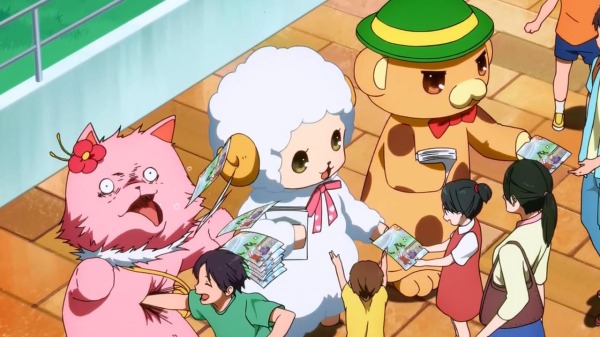
The majority of AmaBri’s other staff are magical misfits from Maple Land, from cute talking sharks, digger moles, and dragons, to an anthropomorphic wrench and . . . a globe? Yeah, they’re a buncha of weirdos for sure. But the true stars of the park are the biggest freaks—and in the most unconventional way. Who knew a perverted cat, a foul-mouthed sheep, and an overly aggressive, umm, Moffle (?) would be Seiya’s biggest headache.

Seriously, Tiramie the flower fairy, Macaron the music fairy, and AmaBri’s sweets fairy mascot Moffle are an absolute HANDFUL, but man are they THE trio of goons. Most of the series’ hilarious moments come from Macaron’s laziness (a true artist must “take time off” if they’re not feeling inspired), or Tiramie’s perverted gawking and awful facial expressions. Overall, such a fun, endearing cast, even if their main purpose is just to put a smile on your face (kinda like . . . a theme park’s staff). 😉

amabri fairies.jpg

KyoAni IS the Magic of AmaBri

Animation lies at the core of anime, and like any comedy series, delivery is everything. Timing hilarious visuals with outrageous sounds is the goal with these kinds of shows, and in regards to humor, Amagi Brilliant Park is one of the bests out there. For me, much of Tiramie and Macaron’s slapstick comedy landed so hard I was left laughing hours after the episode ended. Not only do their faces twist in wacky, grotesque expressions, but the dialogue itself is absolutely hysterical.

Seriously, the dub script is GOLD, and the delivery by the actors has gut-busting potential. Can Adam Gibbs just voice every KyoAni male protagonist from now on, because he just has that perfect blend of charisma, charm, and awkwardness down pat. He can be goofy, but also attractive, which fits very well with Seiya’s personality. Molly Searcy’s Sento is much stiffer than what even the writing makes her out to be, but it grew on me throughout the series. Other fave performances included the dynamic duo of Tiffany Grant and Allison Keith as Moffle and Macaron, respectively. Hearing two of Eva‘s most iconic characters as giant stuffed cussing mascots was just awesome beyond words.

amabri macaron.jpg

Despite how perfect I thought the anime’s comedy skits were executed, I actually found the drama moments to land even better. Moments of bitter pain or sudden realization are captured perfectly by not only the characters’ facial expressions, but the space they inhabit. When Sento and Seiya were deeply pondering how much one meant to the other, deep blue shadows are cast over a blinding orange sunset, filling the screen with contrasting colors and conflicting emotions.

And of course, the all scenery is just beautiful to take in. The bright-colored landscapes work well with the cheery, cartoonish character designs. Plus, Seiya and Sento, as well as the other “human” characters, look very pretty—the KyoAni standard. In fact, had any other studio adapted AmaBri‘s story, I can bet you money that it wouldn’t have turned out as nearly as magical and fun as it did here with KyoAni.

Image result for amagi brilliant park

On the audio side of things, Shinkichi Mitsumune’s soundtrack supports all the laughs and the feels with incredible emotion. And if there’s a song more positive and upbeat than AKINO and bless4’s OP “Extra Magic Hour,” I haven’t heard it yet!

The humor hits home, and the drama is very much respected by the late Yasuhiro Takemoto’s sensitive directing style. Sure the story and characters were written long before the show was created, but Kyoto Animation, YOU were the ones who put the real magic into this series, and it shows with every laugh I gave and every tear I shed while watching. You are the magic that saved AmaBri, and I honestly can’t celebrate my enjoyment with this series enough!

amabri ferris wheel.png

Dreams Only Come True if You Believe

Amagi Brilliant Park is a story about a boy who prides himself above others, thinking that he is good at everything, and that same boy’s struggle to help those that don’t believe in themselves become proud of their own abilities. It’s a story about give and take, hard work, and at the end of the day, finding the fun in what you do for a living. Seiya may manipulate and play on the staff’s whims and emotions throughout the series, but a strong sense of trust always lies at the core of his plans.

Seiya’s magic doesn’t stem from his newfound power—it comes directly from his belief in the resilience and strength of all the people of Maple Land. Seiya makes an investment in these people, pouring all his time and energy into transforming the workers of AmaBri into employees worthy of their gifts.

Seiya draws out the inner passion for their work, and with a little faith, is rewarded with the park’s continual success. It is a belief driven by transformation and grounded by trust. Trust in Seiya’s process, and you, too, will enjoy one of—if not—Kyoto Animation’s most fun creation they’ve ever given us.

amabri cast hd


If you wanna make people dream, you’ve gotta start by believing in that dream yourself! — Seiya Kanie


Afterword

At LAST, I’ve written the post about AmaBri that I’ve been wanting to ever since I saw it a couple years back. Again, I’d like to extend my thanks to the lovely Kyoto Animation for giving us the gift of fun all wrapped in a pretty little bow—I hope I was able to do the series justice! Amagi Brilliant Park is one of the studio’s most underrated series, and I hope some of you will decide to watch this hilarious and heartwarming “Cake” title! To those few who have actually seen this gem, you ought to let me know your thoughts!

This concludes my August 10th entry in the OWLS “Believe” blog tour. Mel (Mel in Anime Land) wrote about Free! and Tsurune, two of my favorite series by the studio, that you can enjoy right here! Now, look out for Scott (Mechanical Anime Reviews) also with a post on Tsurune (ahh, all the love!) tomorrow, August 11th! Thank you so much for reading, and until next time, this has been

– Takuto, your host