Kino’s Journey: Navigating This Beautiful World | OWLS “Technology”

Chances are that if you were linked here from another blogger pal, then you might be new. To those first-timers, “Hi, I’m Takuto, welcome to my anime cafe!” For the OWLS blog tour’s seventh monthly topic of 2019, “Technology,” I decided to go with a slightly less-than-obvious choice, the incredibly profound yet humble Kino’s Journey (2017). Odd pick, right? Just wait, I think I can make it work!

For this month’s topic, we will be discussing how technology impacts our relationships with others and how it improves our lives (such as in communication, education, etc.) by exploring the technology used in various anime and pop culture worlds.

A simple prompt, but an exciting one nonetheless. Thank you Lyn and Aria!
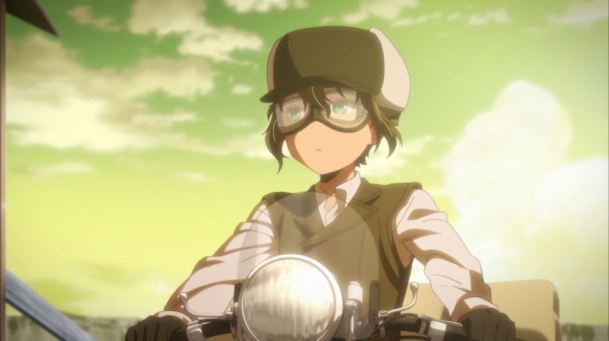
kino riding.jpg


A brief discussion of the 12-episode fall 2017 anime “Kino’s Journey -the Beautiful World- the Animated Series,” animated by Lerche, directed by Tomohisa Taguchi, and based on the light novel series of the same name by Keiichi Sigsawa.

From Country to Country

Three days, two nights. No more, no less. That is the only rule Kino made for herself before she set out on her talking motorcycle, Hermes. Whenever the 15-year-old feels bogged down by heavy thoughts or unpleasant memories, she travels. For Kino, few things in life can compare to the joy that comes with exploring the wild yet wonderful world around her, as well as understanding the diverse ways in which people live.

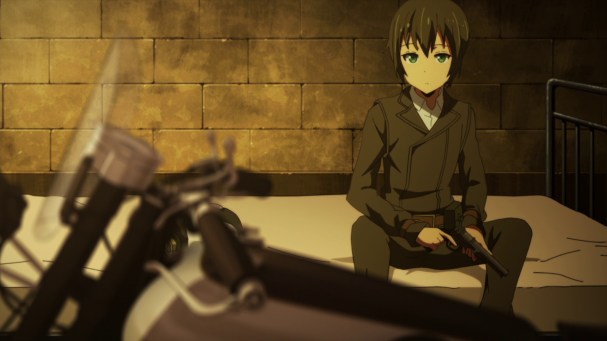
But don’t let Kino’s cute, slightly androgynous appearance and courteous demeanor fool you: Kino isn’t afraid to kill if it means protecting herself or Hermes. A diplomat, sure, but a pushover—hardly. If she needs to kill, she won’t hesitate. Otherwise, Kino ekes out a peaceful life of traversing foreign lands with her best friend and loyal partner.

Sprawling cityscapes and vast countrysides, mountain villages and tiny valley towns, grassy prairies and open seas—Kino and Hermes are here for all of it. As these partners in crime encounter new people and learn the rules of their *often quirky* civilizations, they grow to find out more about their own values and virtues. But as Kino immerses herself more deeply in discovering the world around her, she also finds herself facing dangers that linger within the beauty of the great unknown.
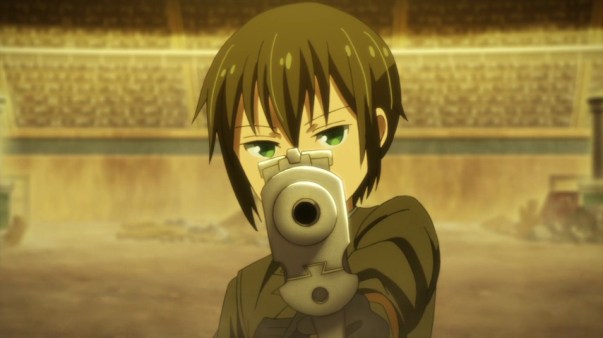
kino gun.jpg

The World is Eccentric

Countries that roam atop the plains using caterpillar tracks, others that float in great ships on the open seas. Countries that reside within enormous walls, and others that are located deep within the earth. Countries of unimaginable size, others so small they might as well be cults. No two countries look nor feel alike, making each stop one full of intrigue and curiosity.

From cryptic laws to hysterical citizens, the written or mutually understood way of life for a country is almost always shrouded in mystery. Either for its dark history or doomed future, these eccentric countries operate with irrational decisions, or a mindset that is far too rational to make any practical sense. Some countries are understandable (if not a bit extreme), while many are frustrating and deeply flawed. Kino’s Journey is a fun watch, don’t get me wrong. But to say it isn’t hella weird at times would be far from the truth.

If things sound too good to be true, it’s because they are. And if the country feels too dystopian, there’s ought to be a silver lining in it somewhere that Kino can find. She wields only her her guns and her wits as she travels, yet on her shoulders is a level head and an open mind that is truly one of a kind. If we were following anyone besides Kino, the journey—and all of its crazy tales—would be drastically different. I suppose that’s why it’s Kino’s Journey, not anyone else’s.
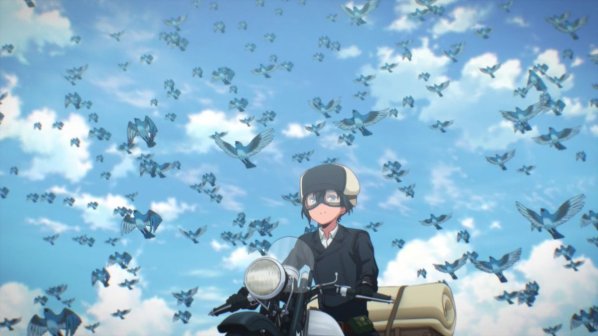
kino birds.jpg


Every country, just like every man, causes some degree of bother to others merely by existing, yet we all must carry on. — Public Servant from the Bothersome Country


Friendship Comes in Many Forms

Through her splendid little motorrad, Kino explores the beautiful world around here, all its happiness and wickedness alike. Hermes and Kino keep each other company like no one else could for the other. They are not the standard traveler, but exceptions to the rule. Rather than seek fame and fortune, Kino and Hermes yearn for psychological satisfaction. They talk not of grandeur, but of philosophy around the campfire. Seeking what cannot be seen, Kino takes delight in everything the journey has to offer, sorrows and hardships included, and Hermes is a huge part of her willingness to keep exploring. Exactly half of it, in fact.

A loyal, sentient motorcycle, Hermes, allows Kino to deeply connect with the many lands and peoples along her journey without a destination. And this very motorrad is the technology which I’m spotlighting in this post.
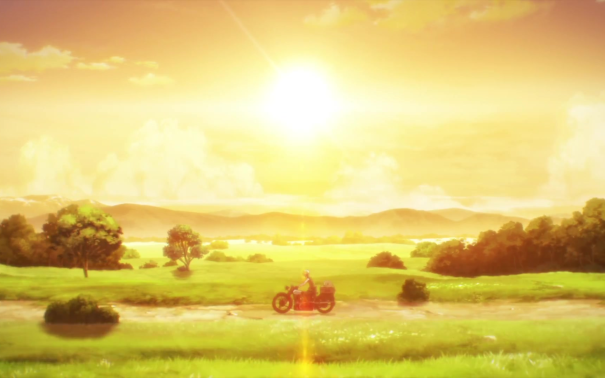
kino sunset.png

One thing I love about the world of Kino’s Journey is the acceptance of technology used by travelers. Even though it’d be the first point to bring up by you or myself, no one seems to have questions or qualms about the talking motorcycle. Weird, right? Regardless of whether they hail from proud medieval villages or urban metropolises, the people of any given land posses neither curiosity nor despise for Hermes. He just exists along with his traveler, and thus saves Kino from having to continuously explain Hermes’ unusual sentience, which would get quite old within just a couple episodes.

The more I got to thinking, I started to realize that the internet is my Hermes that connects me to all of you. I have seen so many sights, heard so many sounds, and felt so many stories just through the power of the internet. And in the process, I found friends, too, much as Kino did in Hermes. To a traveler, the motorrad is literally a vehicle for communication and connection, and also an unlikely friend.
kino and hermes.jpg

How Technology Connects Us

Technology only works if you try to work with it, as we see in Hermes’ relationship with Kino and all the unique, technologically developed civilizations they encounter. Much like people, some countries are outwardly hostile, while others welcome travelers with outstretched arms instead. Regardless of their attitude towards outsiders, each country uses almost radically different forms of technology. From medieval pitchforks and knives, to guns and ammo of the Wild West, and even robots from the far future, technology has found itself embedded in humanity’s existence.

Some people are protected by technology. Others are haunted by it. Some use it to connect with people and society, while others use it to live peaceful, solitary lives. Kino comes across many stories of horror and hope alike, but technology is almost always somehow involved. Above all, what Kino learns from these tales is that people leave technology behind—or worse, are left behind by it.
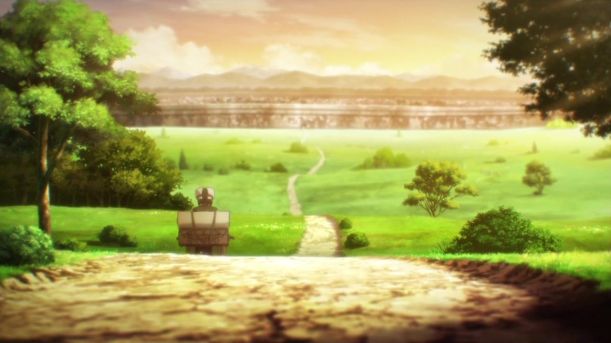
kino driving away

The metaphor I’m trying to make is a simple one: Hermes connects Kino to the world just as the internet connects me to all of you colorful people. Even if I come across sadness or heartache through my internet explorations, there’s always positivity and kindness to be found as well. I’ve been able to learn about so many real-world countries, real-world customs and cultures that would’ve been impossible otherwise (or at least not as easily accessible).

Blogging, social networking, and even just browsing the internet in general has transformed me into a person who knows of what the world outside is like, and as a direct result, I’ve learned how to broaden my horizons and accept and appreciate diversity of all things in life. Hermes takes Kino to unimaginable lands and their people, and the internet brings me to all of you.

kino smiling.jpg


A pact is an agreement to help each other out a bit. As long as I handle the balance, keep him fueled, and plot our destination, he’ll give me all the speed I could ask for. And with that, travel gets a lot easier, also more fun. — Kino


A Traveler’s Tale

Kino’s Journey (2017), like its 2003 “predecessor,” employs the time-honored motif of the road trip as a vehicle for self-discovery and universal truth. Deeply meditative, thought-provoking, imaginative, and sometimes disturbing, Kino’s journey is told in an episodic style with an emphasis on atmosphere rather than action or plot, though still present.

Each country has its own customs, some of them strange, some interesting. And just as how every place has a story, every story most certainly has a place. All who travel leave their mark behind, and I’m talking about more than just the tire treads of Hermes’ wheels in the mud.
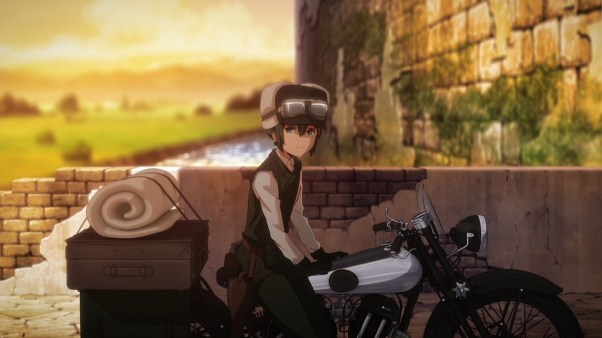
kino at the gate.jpg

Unlike the loud excitement of a road-trip adventure, Kino’s Journey delights in the philosophical banter between two very old, quiet souls. In this wacky and weird world, technology allows Kino and her best friend to expand their knowledge of the world, but also learn a thing or two about one another and themselves along their journey. Their meandering through various lands bring with them their own challenges of how to connect with a place’s people.

A series of vignettes, a collection of stories. Some “tales from the wise” are nice, others less so. But all of them are fascinating in their own way. Human decency, empathy, respect—these are all qualities people from different lands define in different ways. And that is fine.

Often, the problems Kino encounters with Hermes are not with law or culture, but with people. Where there are people, there will always be problems—that much is inevitable. But when we can accept one another’s differences and see the order in the world, the world itself becomes much easier to live in. A bothersome world, sure, but a beautiful one nevertheless.
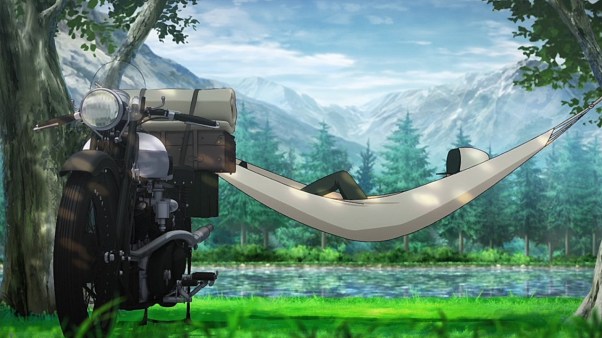
kino sleeping.jpg


I’m not sure if this world is beautiful, but it sure is big. — Hermes


Afterword

I could’ve easily have picked Evangelion given both how central technology is at the story’s core and that I’m almost finished with my rewatch of the series on Netflix. But I didn’t, as that would’ve been too easy, not to mention obvious. I like picking more unique titles for these OWLS tour posts, and I hope I was able to do Kino’s Journey justice. By the way, the series is a “Cake” title here at the cafe!

There’s so much depth to this title, both the old one and the new one, and I hope that, if you’re ever needing a quiet escape journey, you’ll take Hermes for a spin with either the 2003 or 2017 adaptation. The latest remake is beautiful on the outside and adapts previously untouched chapters from the novel, while the early 2000s version uses storytelling methods and imagery that transcend the outdated visuals. My opinion? Watch them both! More Kino is a good thing, after all!

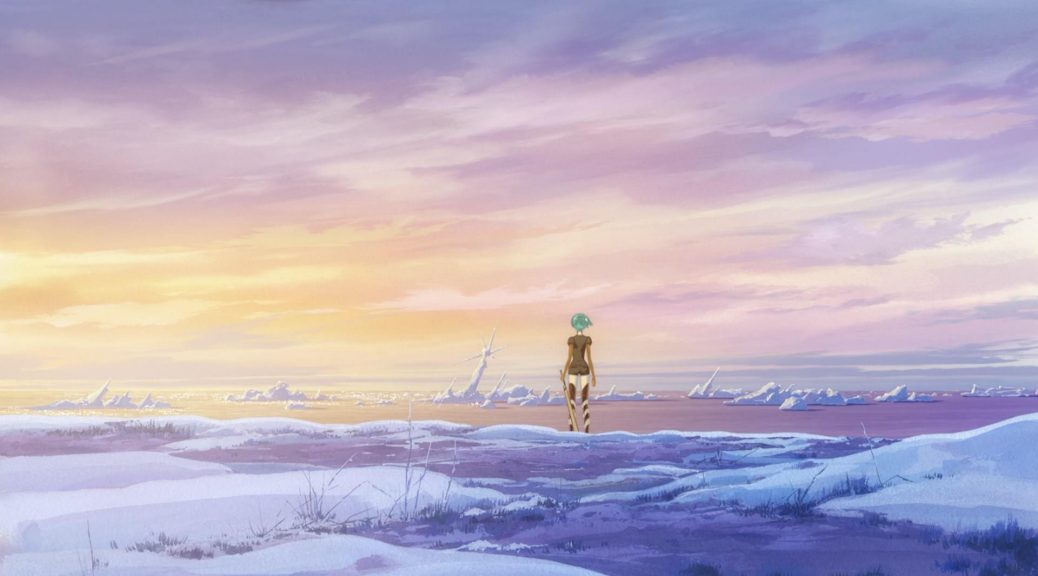
Speaking of beautiful, I didn’t even mention how just draw-droppingly gorgeous Lerche’s visuals are. Along with A Lull in the Sea and the works of Makoto Shinkai, I truly believe that Kino’s Journey (2017) features some of the most colorful, alluring, and enchanting landscapes anime has ever seen! Plus, Kino’s new character design is just fantastic, a charming look fit perfectly for our titular traveler!

kino flower bed.jpg

This concludes my July 7th entry in the OWLS “Technology” blog tour. Jack (Animated Observations) went right before me with a post on Psycho-Pass, a textbook pick for this tour and one of my favorite anime that you can read right here. Now, look out for Lyn (Just Something About LynLyn) with a post on one of my favorite films ever, the world famous your name.tomorrow, July 14th! Thank you so much for reading, and until next time, this has been

– Takuto, your host
Sarazanmai & the Price of Connection | OWLS “Vulnerable”

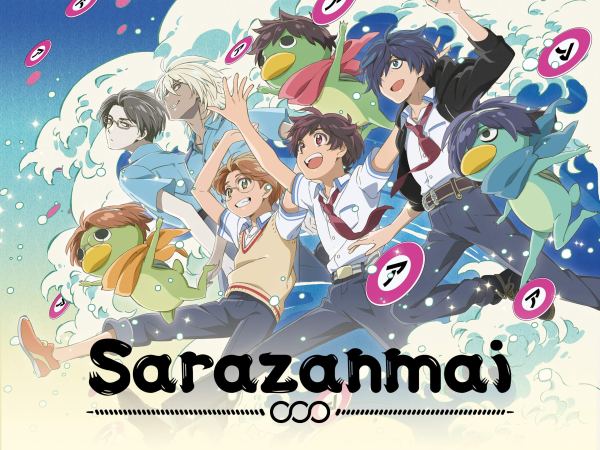
Chances are that if you were linked here from another blogger pal, then you might be new. To those first-timers, “Hi, I’m Takuto, welcome to my anime cafe!” For the OWLS blog tour’s sixth monthly topic of 2019, “Vulnerable,” I wanted to give some character spotlight to this spring season’s craziest title: Ikuhara’s Sarazanmai. 

In the month of June, we will be discussing what it means to be vulnerable. To some individuals, being vulnerable could be seen as a sign of weakness, but in fact, vulnerability is actually a sign of strength. We will explore what it means to be vulnerable and how certain characters in pop culture glamorize vulnerability. When do we show our vulnerability? How do we express vulnerability? Why should we show vulnerability? These are questions that we will be discussing in our posts featuring characters that show vulnerability and/or sensitivity and what we can learn from them or even our own personal stories.

I was pretty stoked when this month’s theme was announced. “How unusual, yet cool,” I remember thinking. Sarazanmai definitely fits the bill well, and what do you know—it’s even got some queer representation in it, perfect for pride month! Thanks Lyn for the prompt!

kazuki kappa wet.jpg


A brief discussion of the original, 11-episode spring 2019 anime “Sarazanmai,” animated by MAPPA and Lapin Track, directed by Kunihiko Ikuhara and Nobuyuki Takeuchi, and written by Ikuhara and Teruko Utsumi. SPOILERS for episodes 1-3 will be present. 

We’re All Connected

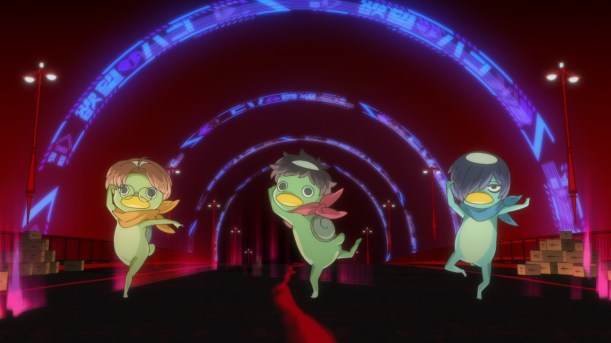
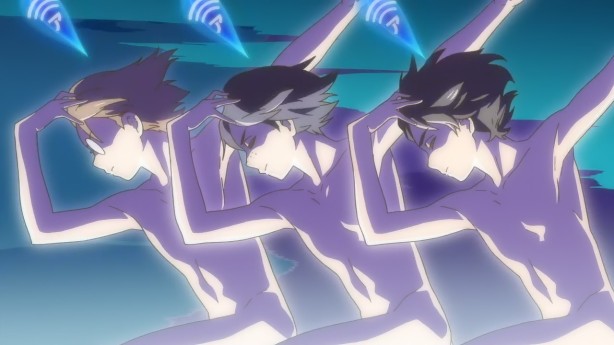
What does it mean to connect? Middle school boy and Asakusa local Kazuki Yasaka is trying to figure that out for himself. After accidentally breaking a statue of a kappa, Kazuki and his friends Enta Jinnai and Toi Kuji find themselves transforming into the very creature of Japanese folklore at the behest of Keppi, prince of the Kappa Kingdom. To become human again, they must fight against the kappa-zombies, even stranger beings birthed from human desires and created by Keppi’s enemies: the Otter Empire.

If that weren’t already enough, to kill the kappa-zombies, the trio must perform the “Sarazanmai,” a sound produced only when the three are united. But making such connections are much easier said than done. What’s even worse is that each time they emit the sound, one of their secrets are revealed to the others! (Vulnerable in every sense of the word, am I right??)

For their efforts, Keppi cuts them a deal: Collect the rampant desires of the kappa-zombies and he’ll bestow upon them the “Dishes of Hope,” plates Keppi can create from humanity’s darkness that can make their wishes come true. When Kazuki, Enta, and Toi find that it takes five plates to make even just one wish come true, however, the friendship of these three boys is challenged. With every new fight springs forth another one of their innermost secrets, whether they like it or not! It’s only a matter of time before one of the boys breaks—but will the connections to their loved ones shatter with the fall?

kazuki embarassed.png

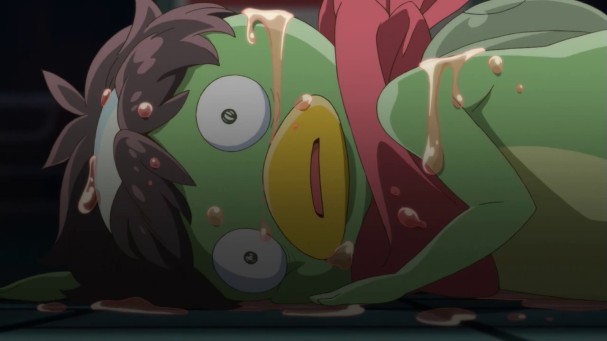
Sarazanmai is equal parts sarcastic and dramatic in its storytelling. During half of it, you are allowed to laugh at the silliness of it all. Probably for more than half, actually. To obtain the desires of the kappa-zombies, Kazuki and friends must enter the, ehem, *anus* of the demons and steal their shirikodama, a mythical orb said to contain the desires of one’s soul. Sound kinda dumb? Well, don’t blame the writers (or do for going through with it), because that’s actually how the legend of the Kappa goes, believe it or not!

And that’s just the beginning of the absurdity. Wait till we introduce the fortune-telling idol girl, the boy who cross-dresses as said idol, the other boy who shot a yakuza when he was just a wee tot, and the gay cops!! Oh Ikuhara, you’ve really created art with this one!

Joking aside, Sarazanmai is a neat little coming-of-age fantasy story for three poor youths who can’t seem to understand their place in the world. They don’t feel connected to anyone, lost adrift the tumultuous sea of love, and that’s what makes the moments when they realize the true meaning of their bonds so tender. Unconventional in execution, perhaps, but still immensely entertaining to follow.

sarazanmai singing.jpg

So, What is the Sarazanmai?

Is it a song? A dance? Something you can eat? Keppi says that: “Sarazanmai” refers to a connection of mind and soul. You share all your deepest secrets as well.”

So it’s abstract, but still simple to grasp. Humans are connected through their shirikodamas. When they lose them—as when Kappa Kazuki steals it to perform the Sarazanmai with Enta and Toi—they become incapable of connecting with anyone else, and they get kicked out of the circle that makes up the world (also quoted by Keppi). Yeesh, talk about a soul-siphoning ceremony!

By uniting in the Sarazanmai, Keppi can obtain these captured desires. Much like a double-edged sword, however, some of the users’ own desires inadvertently “leak” in the process. We’re talking about these boys’ private diary-grade secrets, which is what I want to talk about next. Trust them on this one: it ain’t easy being green.

sarazanmai dance.jpg

I Want to Connect, But . . . 

Reaching out to others is hard. It can be especially scary if you already think little of yourself. For whatever reason, trust me, we’ve all been there, and so have Kazuki, Enta, and Toi. Because Kazuki’s backstory carries more significance with the latter half, Toi’s with the show’s ending, I’ll be focusing on the Enta, our glasses wearing member of the “Golden Duo” meant to last all time!

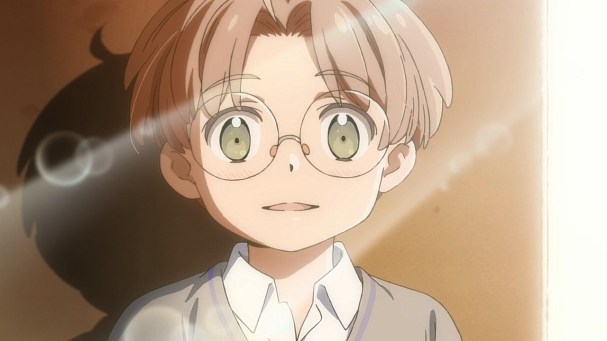
Kazuki and Enta have been best friends ever since they met. After watching the other boys kick the soccer ball during practice for several weeks, a young Kazuki finally extends a hand to Enta to join the team. He was invited inside the circle, and granted permission to interact with an all-star like Kazuki. It sounds like a cold way of viewing their initial exchange, but this is how Enta, with all his self-doubts and insecurities, felt towards soccer and this new life.

golden duo.png

But feelings of more than just friendship blossomed for Enta. A closeted gay kid, Enta fell in love with his straight best friend. He felt blessed for having such a friend in his life, but cursed for feeling things that otherwise conflict with both the object of his affection and the status quo.

So like any shy gay boy, Enta hid these unacceptable feelings. He hid it all, months, years—

Until he performed the Sarazanmai. 

sarazanmai kiss.jpg

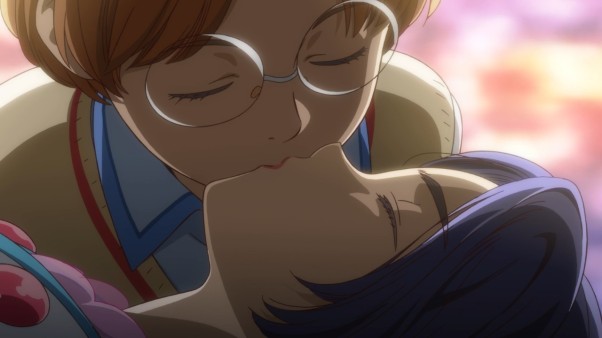
Despite how hard he sheltered his secrets, all finally came bursting at the seams. Enta was left 100% unguarded, vulnerable. The boys saw how Enta inhaled Kazuki’s scent on his jersey in the locker room—how Enta’s expression glowed with lust when he placed his lips on Kazuki’s recorder—how Enta even KISSED Kazuki’s lips while he lie asleep. It was too much, way too embarrassing!! Kazuki was shocked, but blew it off under the assumption that his teammates dared Enta to kiss him. For Enta, however, his feelings were rejected, and not just trivialized, but entirely unacknowledged.

To be looked away by his love crushed him. Enta wanted to connect, but it wasn’t meant to be. Enta wanted to connect, to lie about what he did, but the Sarazanmai only reveals the truth. Enta wanted to connect, but to take more than what he could have. He wanted to connect, but Kazuki was so far away. And at the very end, when Enta stole the dishes for the chance to satisfy his own selfish wish, he couldn’t be forgiven. Lover became stranger, and Enta lost sight of himself.

sarazanmai enta jersey.png

Love Yourself, & Cherish the Bonds You Form

I think if Sarazanmai has a bigger message under its themes of connection and expression, it’s this. When his whole life came crashing down on him, Enta first had to learn to be happy with himself if he was to not give up on his wish. Sure, he betrayed his friends, but he never gave up on Kazuki, even if Kazuki hated him for his actions.

We have to learn to be happy with ourselves if we are to form genuine connections with others. That said, we can still dislike parts of ourselves. I don’t think Enta ever wanted to have the feelings that he did for Kazuki, nor did he like feeling like a bystander all the time. But he eventually embraced those parts of himself, and found that all of these aspects—the good and the bad, the black and the white, the lustful and the loving—made up who he was as a person.

enta angry blur.jpg

Underneath its wacky, circus-like presentation, Sarazanmai is story about victimization, victimizing, and inadvertently hurting the people you love most to protect yourself. It shows us the price of maintaining connections with others, the deadly costs and the sinful pleasures alike. Each of the boys got to the point where they couldn’t even tell their closest friends about what was going on in their life, and that’s deeply eye-opening. Some connections cause you pain, yet you have to hold on to them.

Full of hidden meanings and rife with cultural symbolism, Sarazanmai delves into messy territory with philosophy on what it means to form genuine connections with others. How much should I give in a relationship? What should I be receiving in return? Is a connection supposed to be completely reciprocal, or . . . is it ok for one party to wind up with more? 

What does it mean to love someone, as opposed to desire something? How can my dreams help others, or why do my desires always hurt someone else? Merely living might be the hardest part, but true human connection and love make it all worthwhile. So long as we try to reach out to others and form connections, we’ll always be vulnerable to attack, physical or emotional.

But more importantly, just by trying, we’ll always have the chance to be happy—and not even a desire-snatching kappa can steal that opportunity away from you.

sarazanmai enta happy


Never forget that only those who connect their desires through the pain of loss can take the future in their hands. — Azuma Sara


Afterword

There’s A LOT going on in Sarazanmai, and a lot of good, might I add. This was easily one of the most fun watches I’ve had in a long time, and I hope the series stays on the radar for longer than this spring season. I would’ve loved more time with the characters, but I don’t feel like anything essential was left out. Maybe I’ll revisit it in a future post, but until then, Sarazanmai is honored here at the cafe as a “Cake” title, a show too sweet to miss out on. (Although if you’re not careful, this one might give you a cavity!)

So many people dropped this series, and that saddens me immensely considering that the ending is so rewarding. What did you think of Sarazanmai? Was it too weird for you, or right up your alley? Who was your best boy? I’d love to know in the comments! My love goes out to these precious kappa kids!

sarazanmai header.jpg

This concludes my June 29th entry in the OWLS “Vulnerable” blog tour. Carla over at Pop Culture Literary gave us a very interesting post about Jen Wang’s comic The Prince and the Dressmaker that you can read right here! Now, look out for Fred (Au Natural) as he rounds out this exciting pride-filled month with his own take on vulnerability on Sunday, June 30th! Thank you so much for reading, and until next time, this has been

– Takuto, your host
I Finally Watched the Old Fruits Basket | Review

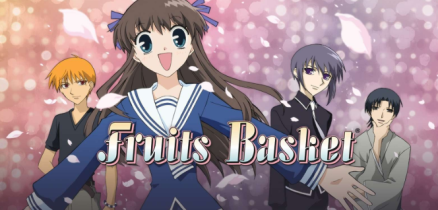
A brief spoiler-free review of the 26-episode summer 2001 anime “Fruits Basket,” animated by Studio Deen, directed by Akitarou Daichi, and based on the manga of the same name by Natsuki Takaya.

zodiac cat.PNG


The Girl with a Big Heart

Despite losing her mother in a car accident and being kicked out of her grandfather’s house due to renovation, 16-year-old Tohru Honda manages to love life like no one else you’ve ever known. Lying to her friends and family that she’s already found a new place to stay (so as to not burden them) Tohru sets up camp *literally* in the woods.

One fateful night after a long shift at work, Tohru returns to her tent only to find it crushed and flattened by a landslide. Desperately digging through the rubble for the last precious picture of her mother, Tohru faints in the mud. Luckily, the prince of her high school, Yuki Sohma, and his author cousin, Shigure Sohma, come to her aid and even invite Tohru to stay with them until her grandfather’s home renovations are finished.

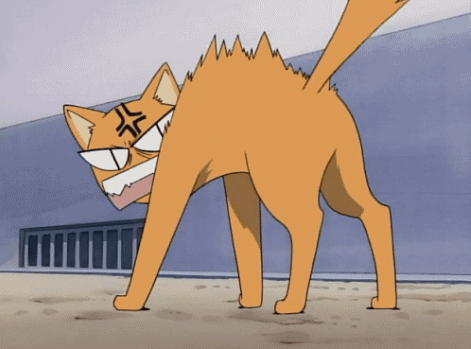
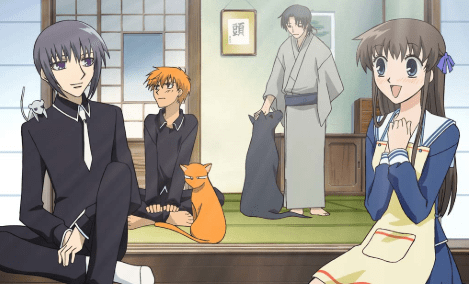
But as life (and the shoujo genre) would have it, a roof over one’s head doesn’t come free, and so Tohru works as a housekeeper at the Sohma house in return for room and board. The Sohma’s aren’t an ordinary family, however: if a Sohma is hugged by someone of the opposite gender, POOF, they temporarily transform into one of the animals of the Chinese zodiac! (Plus, they return to being human without their clothes on.) Toss in Kyo Sohma, the fiery zodiac cat, and you’ve got quite the crazy household.

Image result for fruits basket 2019 kyo

While the Sohmas’ secret causes more sticky (and silly) situations than not, this strange phenomenon isn’t all giggles for Tohru and especially the members of her new family. Rather, the curse of the zodiac has caused all of the Sohmas to bear the tremendous weight of their dark family history. Some are more complacent about the situation than others, but none of them are happy with what the curse has brought them.

As Tohru meets more of the family’s members, she continues to see the light casting such great shadows across each of their hearts. But even with her unusually big heart and kind yet resilient nature, is there a limit to the heartache that Tohru can take?

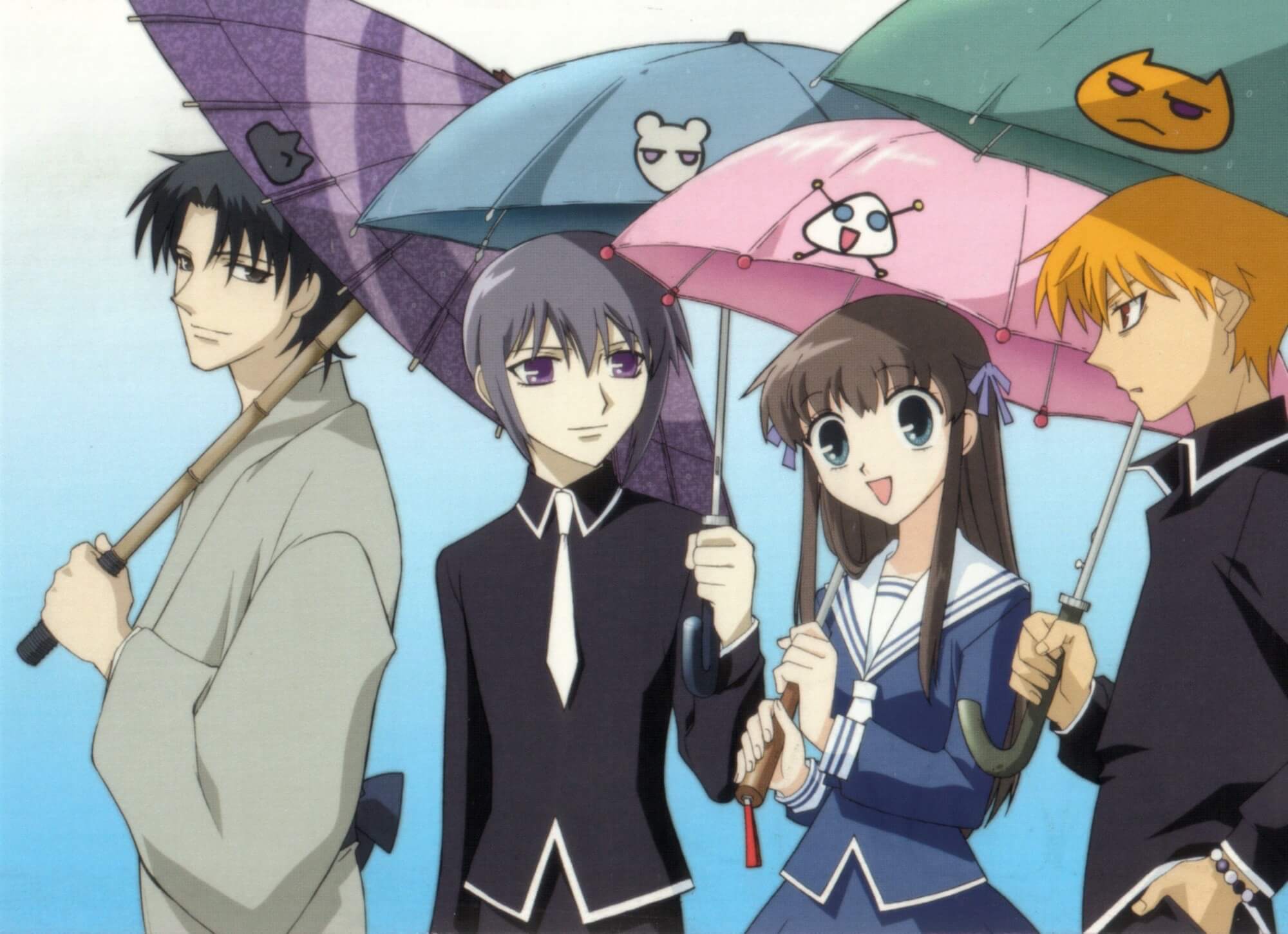
kyo and yuki.PNG

Welcome to the Sohma Household!

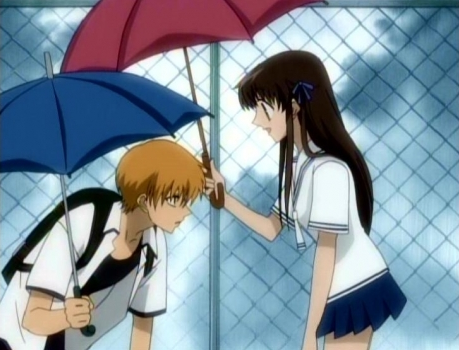
Oh Tohru, where to begin with you! She’s just about the sweetest young lady you’ll ever meet, so determined and steadfast, yet also gentle and supportive. Full of gratitude for her life and warmth to spare, I couldn’t think of a better protagonist for such a story as this. I love Tohru’s character, I really do, and I totally get why you all do, too! But as a dub fan myself, I couldn’t fully appreciate Tohru without giving praise to Laura Bailey for bringing this clumsy yet polite high school girl to life. UGH, I just love listening to old dubs and hearing Laura Bailey as anything, but this, without a doubt, is a hallmark role for a reason.

kyo and tohru

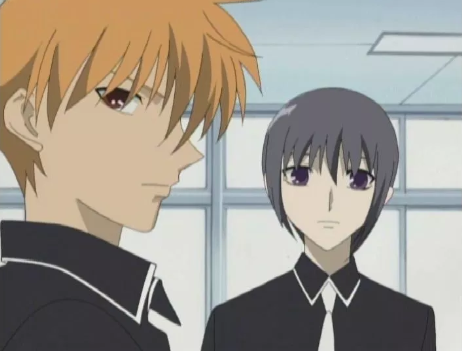
Now for mah boys, where are my Prince Yuki fans? Kyo Sohma stans?? Prior to watching, all I knew about Fruba was that all of the male Shomas were supposedly boyfriend material. I get it now. Kyo and Yuki are ICONIC, like fire and ice, cat and mouse (rat), respectively; the Asuka and the Rei of the shoujo world. The smart one perfectly imperfect, the stupid one imperfectly perfect. Although both are unable to open their hearts to “normal” people, these two rivals in arms compete for the affection of Miss Honda without holding back, unbeknownst to their own feelings in the beginning.

And yeah, in case you were wondering, #TeamKyo ALL THE WAY. After voicing Kaworu in Eva 3.33, I never thought I could fanboy over Jerry Jewell this badly. Turns out, I can.

I couldn’t wrap up the Sohmas without mentioning some of my other favorites, however; if Kyo is #bestboy, then Shigure is best man cause DADDY AM I RIGHT. Jokes aside, I really do love the zodiac dog and all his whimsical teasing. John Burgmeier’s Shirgure is just as slippery as his personality should be. Same could be said about Chris Sabat’s overly frilly pompousness for Ayame Sohma, our resident snake, cause wow, just such dream casting.

fruits basket sohmas.PNG

Sweetly, Softly, Serenade Me

Ah, here we are, Fruba‘s biggest deal-breaker: the animation. Studio Deen isn’t known for producing the most beautiful works by any means, and it pains me to report that as much as I love the characters, the show kinda looks like ass. To be honest, not many early 2000s anime fair as well as those that came before (and most certainly those we have now), but the inconsistently drawn faces and blocky body structures make Fruba 2001 a pretty bland watch, especially when compared to the 2019 remake (I mean, I would hope so, at least). The chibi art style for the many comedic moments in the series is iconically well-done, however, so I’ll at least give it points for being extra cute and even hilarious at times.

There’s also a problem with the anime-only ending, but I can’t and won’t add more on that simply because I do not know how faithful that ending is to the manga. While it may seem totally out of touch given the fluffier content of the earlier half, perhaps the original story does go that dark, that suddenly, to which I can only really say . . . yikes. Emotional, absolutely, but it still hits hard from waaaay outta left field.

Much of the actual OST for me is a blur, but I loved the reprises and acoustic versions of the OP and ED featured throughout the series’ run. The actual theme songs happened to exist during the days of dubbing the music, so the OP and ED are in English. And I love that too. Hearing Laura Bailey softly signing along to “Chiisana Inori” at the end of each episode was the gift you earned for having to watch the drab animation. But to hear the bittersweet “For Fruits Basket” immediately following as the OP was, well, emotionally draining to say the least. (It really just HITS ya.) Ahh, my heart, what a lovely pair the two make!

for fruits basket.PNG

Acceptance Begins with Understanding

From the synopsis alone, I can see why the series has become so iconic to the genre. The scenarios in Fruits Basket are as classic as they get—I can only imagine, if there’s an anime romance trope out there, Fruba‘s got it. Whether the quirkiest or steamiest of situations, however, the series handles the delivery more gently than most. It’s almost as if the series, despite how depressing it can be, is too kind for its own good. And you can bet Tohru is a huge part of why Fruba manages to be simultaneously innocent and full of depth and heart.

The story is richly woven with character dramas and inspiring little tales reminiscent of a child’s bedtime storybook, Tohru serving as both the narrator and the characters’ guiding light. Each of the Sohmas possess an individually distorted view of their dark pasts, and after years of rejection, isolation, oppression, and feeling like an outcast, who could blame them? These are wounds that even time cannot heal—scars that will never fade—and yet, Tohru tries to bandage them up anyway. Through her accepting essence, Tohru allows Kyo, Yuki, and so many others in the family to vent their frustrations, their past errors, and their regrets.

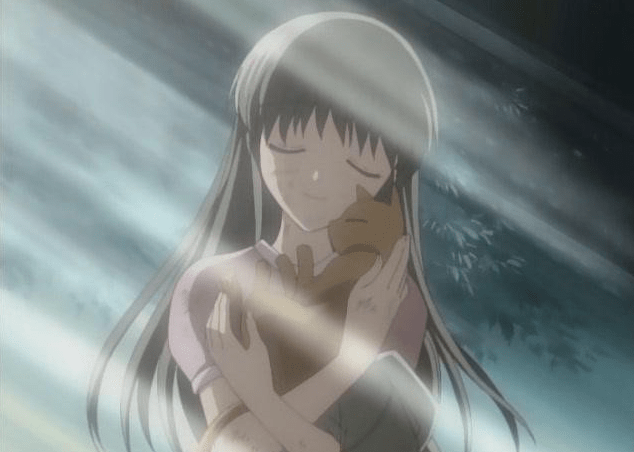
tohru hugging kyo.PNG

After what feels like a long, exhausting therapy session, our zodiac friends slowly come to peace with themselves and, at last, feel proud for being who—not what—they are. As someone willing to understand them, Tohru offers to do what no outsider has ever done before and help shoulder their burden, however tremendous the weight, and I couldn’t even begin to fathom how relieving that must feel. “Finally, I can tell someone. FINALLY, I can be me!”

From me to you, don’t sleep on this story as long as I did. With the new season airing, tons of fans around the world are reconnecting with their favorite zodiac friends and passionate OTPs and ships. To miss out on such fun would be tragic. So, whether the old, stale, yet genuine 2001 version or this latest vibrant retelling, watch Fruits Basket. Then you, too, will see what all the ruckus is about in the Sohma household—and why it’s such a heartwarming, endearing little place to stay.

Image result for fruits basket sohma house

You never know what will happen tomorrow! If it’s not tomorrow, then maybe the next day. Maybe after a year, or even ten years . . . But even so, as long as you’re alive, things keep happening. As long as you’re alive, wishes keep getting made. — Tohru Honda


Afterword

What more can I say, Fruits Basket is a classic after all. So classic, in fact, that I’m awarding this long-awaited series with the “Cake” title, a series so sweet it’d be a crime to skip out on. That said, I’d only make it a true must for shoujo fans. If romance and cutesy fun stuff ain’t your thing, skip it, or better yet try the 2019 version. At least that one looks pretty (not to say I won’t crush over 2001 Kyo for the next year). There’s so much heart in this series, guys—I GET WHY Y’ALL LOVE IT SO MUCH. And the dub, oh my god, they really milked this one for all its worth. So honestly, truly wonderful.

Image result for fruits basket anime yuki

Do you have any memories with Fruits Basket 2001? Ooh, what about a favorite zodiac member?? You’re gonna have to let me know in the comments for sure! I’ll forever treasure this past spring, spending my weekends watching this beloved show with my sister. In fact, the remake may be why I decided to watch it now, but my sister’s the one who shared this series with me in the first place! Thanks so much for reading another rambling gush-fest of mine, and until the next post, this has been

– Takuto, your host

Alita: Battle Angel — A Warrior’s Tale | Review

A brief spoiler-free review of the 2019 American cyberpunk action film “Alita: Battle Angel,” produced by 20th Century Fox, written by James Cameron and Laeta Kalogridis, directed by Robert Rodriguez, and based on the 1990s manga “Battle Angel Alita” (or “Gunmn” in Japan) by Yukito Kishiro. 

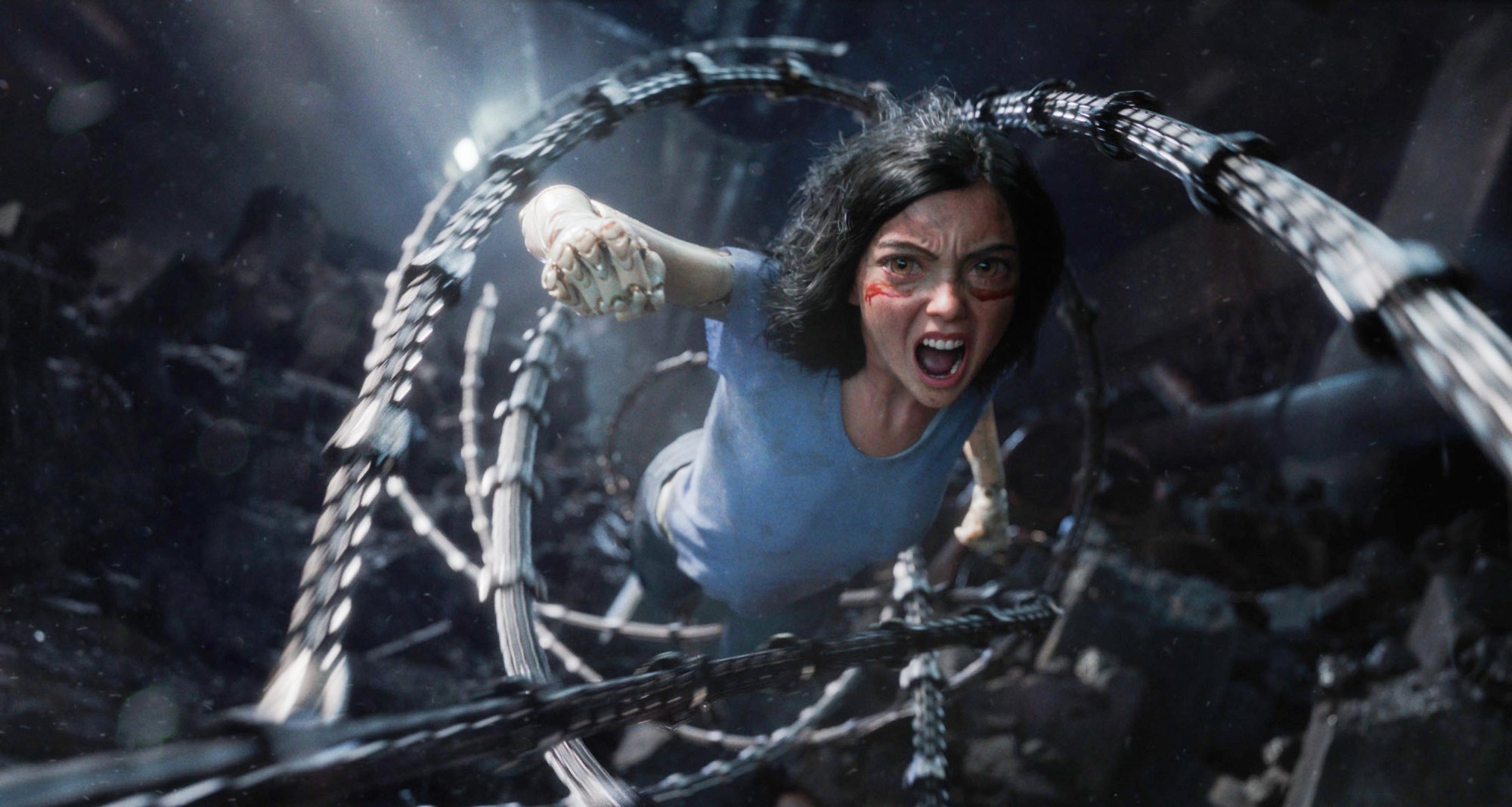
Image result for alita battle angel trailer 3


After the Fall: An Origin Story

Still recovering from a catastrophic war referred to as “The Fall,” humanity remains determined to eke out a living on a devastated Earth in the year 2563. While scavenging the junkyard metropolis of Iron City, Dr. Dyson Ido, a renowned cyborg scientist, stumbles across a disembodied female cyborg—human brain still fully intact. Taking the remains back to his lab, Ido rebuilds the cyborg and gives her a name: “Alita.”

Although she has no recollections of her past, she is able to create new memories thanks to the doc’s healing hands. She eventually meets Hugo, a teenage boy who dreams of one day moving up to the wealthy city in the sky, Zalem. He introduces her to the competitive, cutthroat sport of Motorball, an every-man-for-himself race where cyborgs fight to the death for a chance at ascending to Zalem if victorious.

But sinister connections tie even the friendliest faces to the shadows, and as Alita quickly comes to realize that there’s no force more powerful than the game, the titular cyborg sets out to learn about her past to save the ones she loves most in the present.

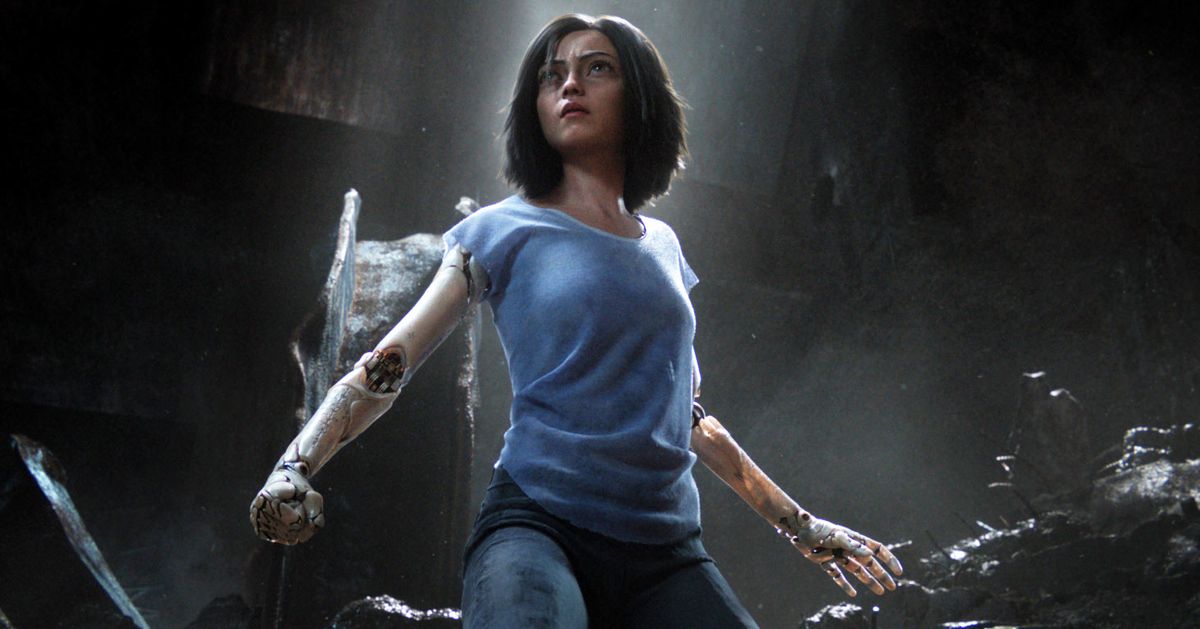
Related image

Alita: Battle Angel may be my first introduction to this much beloved franchise, but man, what solid footing director Robert Rodriguez and writer James Cameron provide for this classic origin story. Going in blind, I can already tell you that the franchise is worth the investment. This live action film, albeit a bit fast-paced, serves as a fantastic place to start if picking up four volumes of the manga just isn’t an option for whatever reason.

Admittedly, there’s some cheesy villain dialogue that sours the seriousness at times, and while I wish these lines weren’t delivered with such blatant “evilness,” the script actually feels more anime because of it. Critics may have blasted the script and the plot for their lack of ingenuity, but I—and most audiences, apparently—seemed to enjoy it regardless. Alita‘s wild betrayals and reveals may come as a shock to some; others may have seen the twists from a mile away. But if you still enjoy the story, that’s all that matters. To quote Dr. Ido:


“But that’s just a shell. It’s neither bad nor good. That part’s up to you.”


Surprisingly, the film contains includes a decent amount humor to remind you that Alita is—as much cyberization and machine-slaughter as the plot contains—a very human story. Although the environment is both visually and aesthetically astounding to take in, it’s the characters of Alita that make this powerful story of purpose and destiny resonate with newcomers and longtime fans alike.

Related image

Alita, An All-or-Nothing Gal

From design to personality, I fell in love with Alita the moment I first saw her in the promotional trailers months back. I knew she’d be your typical brave girl fighting against the system character, but I wasn’t expecting her to be the feisty rascal kind—a delightful surprise. Brazen and bold, the girl is drawn to danger like a moth to a lamp. It’s always all or nothing with her, and Alita’s rebellious free-spirited nature makes her a refreshing heroine to cheer for—even if her recklessness tosses her down the rabbit hole more than a few times.

Did I mention that Rosa Salazar is freakin’ OUTSTANDING as the titular role? Cause she’s absolutely phenomenal, able to communicate to the audience that she struggles with fighting this world’s injustice, but is always eager to learn something new. Salazar’s gradual transformation from fluffy, chocolate-loving teenager to hardcore warrior is impressive to behold. Every second Salazar is on screen feels genuine. Through this loss of innocence, she doesn’t let the emotions hold back (even during the tender moments). If she induces a tear in your eye as you watch, I’m not sorry. She’s that awesome.

alita tear.PNG

The rest of the cast deserves a round of applause too, especially Christoph Waltz’s portrayal of Dr. Ido for making him this benevolent yet fascinating foster figure. What a dad. (And bless his aide, Gerhad, whose mere presence provides enough support for Alita.) The same glowing things could be said about Keean Johnson’s semi-dreamy Hugo, the junk dealer.

As for the villains, Mahershala Ali’s acting is perfect for the intimidating “king” of Iron City, Vector, but his character’s status(es) needed stronger clarification, as I didn’t even realize what his roles were until halfway into the film. Same for Jennifer Connelly’s Dr. Chiren, a somewhat frustrating character given her circumstantial duality.

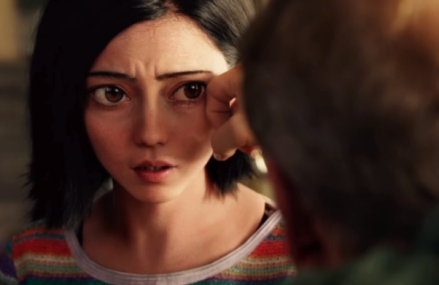
And NO, the large CG-altered eyes don’t detract from the narrative one bit. After five minutes, they just became part of her charm, and I didn’t even realize it afterwards.

Image result for alita battle angel trailer

Motorball & The World Below

Between the numerous sci-fi action sequences and the stunningly brutal sport of Motorball, Alita is a visual feast. Whether fighting in back-alley slums, the dark sewers below, or on the exhilarating race track surrounded by stadium lights and roaring cheers, there’s never a dull moment in this film. And Motorball though, WOW, one of the franchise’s biggest spectacles is brought to life through stellar visual effects and cyborg goodness to make any sci-fi junkie drool just watching.

Alita also does something really neat with visual lighting. The film begins in the rustic, sunlit scrapyard, which transitions to an even brighter, cheerier atmosphere when Alita meets Hugo. But when rain begins to fall, the dark and dreary cityscape—lit only by holographic street signs and neon lights—emphasizes the literal night journey Alita embarks on. Once she uncovers the truth, light returns as she confronts Vector and his pawn Grewishka to finally deliver justice.

Related image

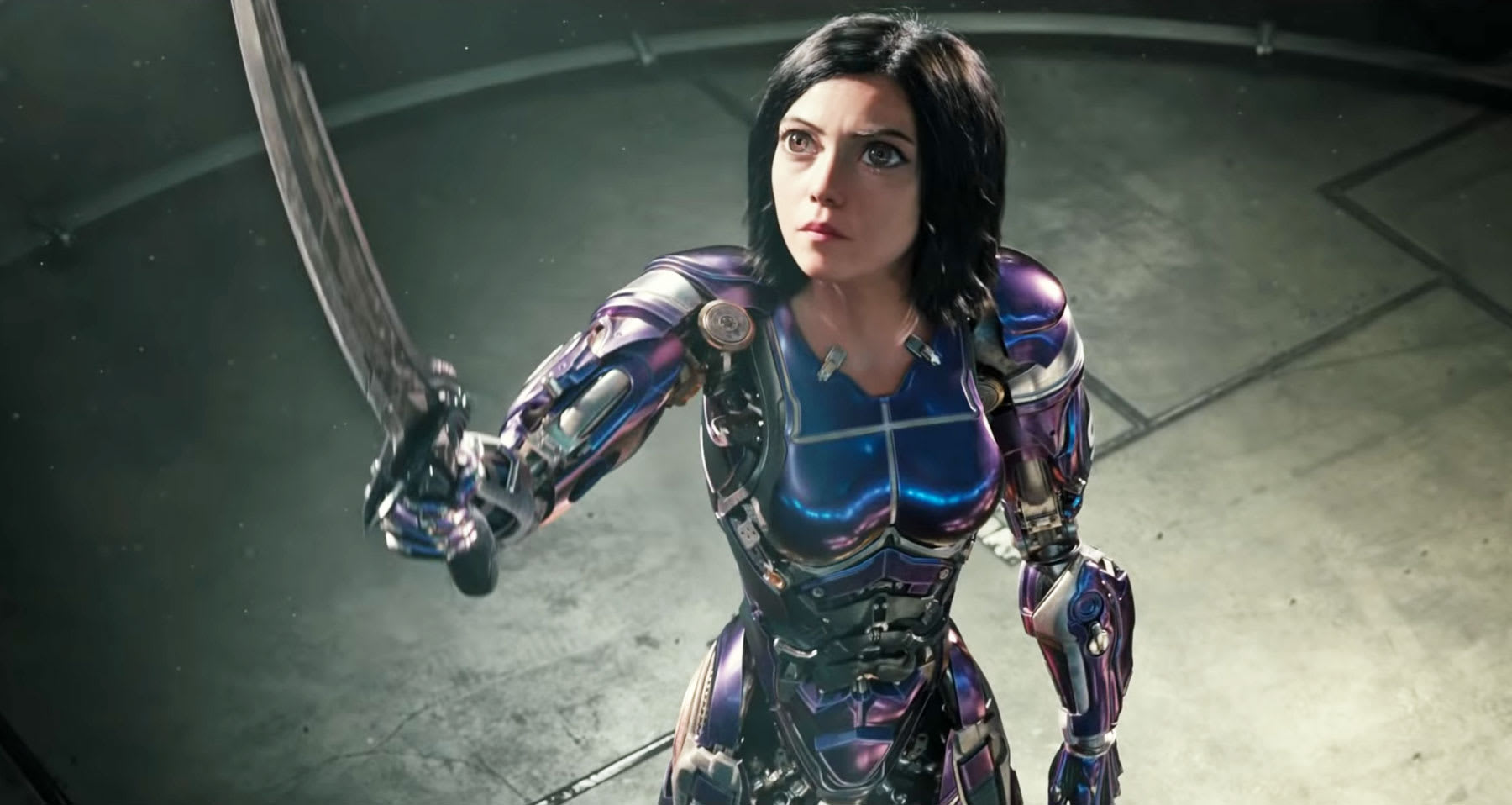
From the intricate and gorgeous detailing of Alita’s cybernetic body to the remarkably thrilling fights, the attention to detail in crafting this postwar cyberpunk world is on a level of its own. If this isn’t a faithful adaptation of the manga, I cannot even begin to imagine what greatness Yukito Kishiro’s original story contains.

No great sci-fi movie is complete without an equally epic score, to which Tom Holkenborg overwhelmingly pulls through. Between the strong symphonic opening in “Discovery” and “Motorball” busting through the gates with its powerful rhythmic tribal drumming, the harmonic balance between strings and dubstep is just right. For the credits, Dua Lipa’s “Swan Song” also ties in well as a piece addressing social injustice and change. Thank god for Apple Music, because I’ll be listening to this soundtrack for weeks to come.

But Will it be Enough?

With so many moments where you just want to pump your fists in the air and cheer, Alita does everything it needs to do to be a great movie. Gripping, emotional, heartfelt even, but will it be enough? Will this be the last we hear of Alita and company on U.S. theater screens, or will Rodriguez and Cameron’s efforts be enough to finally end the trend of live-action anime adaptations being one-off movies?

Either way, I support everything this film tried to accomplish and then some—heck, I went to the theaters twice, and totally would’ve gone a third if my schedule wasn’t so busy as is. Beyond the issues of faithful source reconstruction or the present lack of a thorough conclusion, all I wanted from Alita: Battle Angel was an entertaining film that holds on its own—and boy does Alita stand proud and tall.

Related image


I do not stand by in the presence of evil. — Alita


Afterword

Oh man, such a GOOD MOVIE my friends!! Job well done to the cast and crew for sure, as this is already a good contender for my favorite non-anime film of the year. Whether in theaters or on your home screen in the near future, I hope you got (or eventually get) a chance to watch it, cause Alita‘s not one to miss. They did this one right, holy shit.

I don’t really ever review live action films, but for Alita’s charm, I’ll make an exception. 2019’s Alita: Battle Angel is certified “Cake” here at the cafe, and should we ever see a sequel, there’s a solid chance I’d bump this one up to a “Caffe Mocha,” without a doubt! Guys, let me know your thoughts about this kickass LA-anime-done-right down in the comments, be it your praises or your criticisms, and until next time, this has been

– Takuto, your host
A Sister’s All You Need: The Perverted Life of a Light Novelist | Review

A brief spoiler-free review of the 12-episode fall 2017 anime “A Sister’s All You Need.,” animated by Silver Link., directed by Shin Oonuma, and based on Yomi Hirasaka’s light novel series of the same name.

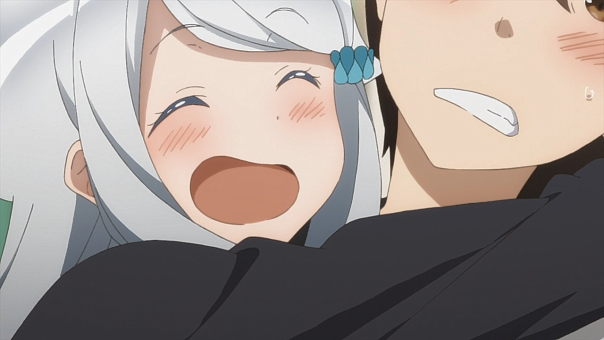
nayu and itsuki.png


A Hilarious Glimpse into Light Novel Culture

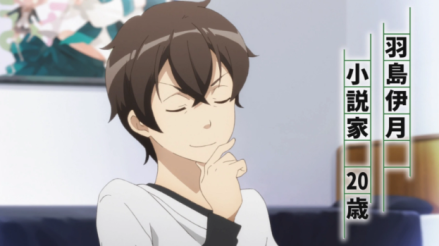
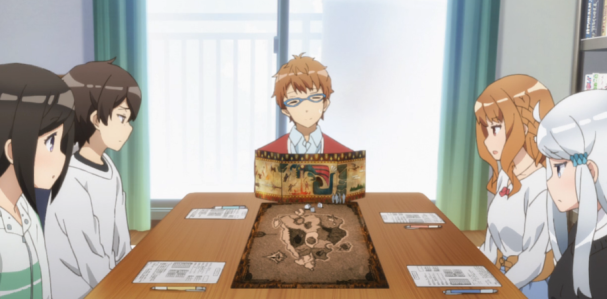
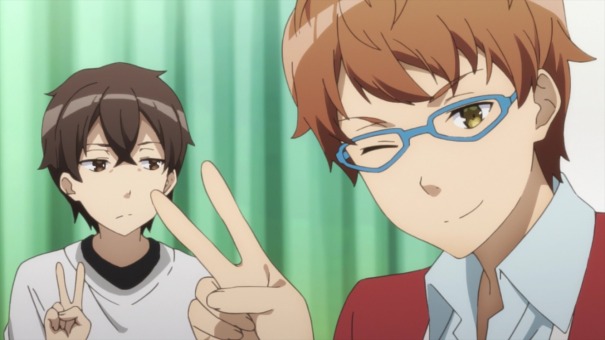
Arrogant, foolish, and always fighting his editor for procrastinating on deadlines, Itsuki Hashima is a light novelist in modern day Japan whose obsession with little sisters constantly finds its way into his stories. Despite his problematic personality and siscon fixation, the single 20-year-old author has garnered a tight circle of friends: Nayuta Kani, a young genius novelist yet grossly perverted girl who’s head-over-heels for Itsuki; Haruto Fuwa, a fellow male light novelist who frequently sees success with his series; Miyako Shirakawa, a friendly girl Itsuki met during his brief time in college; and Chihiro, his LITERALLY PERFECT younger step-brother who comes over on occasion and takes care of the housework and cooking.

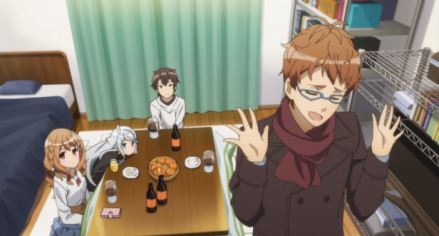
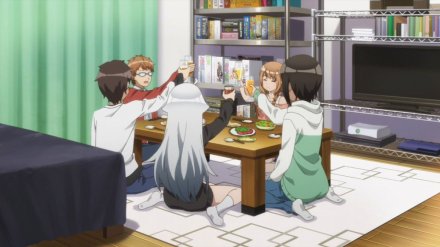
Together, this oddball batch of young adults play strange (and fun) games, flee on spontaneous journeys across Japan, crack horny jokes, and celebrate each other’s successes with alcohol abound. Just as how work is full of ups and downs, however, each of these hesitant individuals must eventually deal with their own set of headaches, whether that’s battling the next deadline or deciding what one truly wants to do with their life.

itsuki

The overarching story of A Sister’s All You Need is simple: watching Itsuki and his friends find success with their work. Almost episodic in a sense, we follow these struggling authors through severe cases of writer’s block, the rare advent of dealing with another’s prosperity, and of course, deadlines. How each of them tackle these various problems speak volumes about their characters; Itsuki escapes to cultural hot spots around the country as sources of inspiration for his siscon trope story, while Nayuta gets her writer’s high from, well, “feeling up” another girl’s naked body, usually Miyako’s. (Yep, the wildly perverse girl, definitely a light novel staple.) Either way, they seek out their creative boosts by reminding themselves of their, errm, other passions, and that’s where the comedy (or enlightenment) ensues.

Full of meta humor for being a light novel adaptation about writing light novels, the series offers an fascinating social commentary on light novel culture, what it has become, and a parody of what its audacious authors must be like. (Cause all light novelists must’ve walked in on a girl who’s stepped out of the shower, baring it all, and got kicked in the nut sack for it, right?) It’s a series full of light novel tropes ironically about writing light novel tropes, and while it sounds dumb, the characters—when they want to be endearing—somehow make it work.

haruto.PNG

A Group of Friends is All You Need

I’m going to start by writing that I love these characters. They’ve got such rare, humorous chemistry together, and only when Itsuki’s apartment was full was I thoroughly entertained. That said, Itsuki is an incredible narcissist and resident little shit while Nayu is practically a whore. Any chance he gets, he shamelessly plugs his pitiful writing in conversation (usually while in a drunken storm), and Nayu? Well, she strips down. With her, it’s always boobs, butts, and dicks [insert me still giggling like a middle school boy]. It’s repetitive, almost obnoxious, and STILL, I thought they were fun characters. I adored having the shy and typically out-of-the-loop Miyako play the straight man (woman?), and I got a kick out of Haruto’s “online gay facade to attract more female fans” charade. It was all so funny to me—THEY are all so funny to me—and although the comedic gags are dumb, I still enjoyed our time spent laughing in Itsuki’s little apartment immensely.

Beyond the pervy foreplay and dick jokes, this series’s characters are some of the best of its kind: Haruto is a hard worker battling on the same front as his talented friends; Nayu is a gifted writer seeking a more personal connection beyond words on a page; Miyako is starting to find herself by venturing out of her comfort zone; and Itsuki still yearns for . . . a little sister? No, hardly. All he needs is a good group of friends, and fortunately for him, he’s already got that.

IMG_5930

There’s NO WAY These Guys Are “Adults”

Is it just me, or do all of the characters in a Silver Link. work look like they’re ten years old?  Apologies, random point there, but the cute, underaged character designs continue in A Sister’s All You Need. Despite being a series about adults surviving on their own (except for Nayu, age 18, and Chihiro, age 16), all of the characters look like they could still be in high school. Itsuki, who is supposed to be 20, looks like a friggin’ middle school boy, and Haruto doesn’t look a day over 16 himself despite being Itsuki’s 22 year-old friend/rival. TWENTY-TWO YEARS OLD GUYS. And it’s even more conflicting when these full-blown “young adults” start going off on wildly inappropriate and lewd discussions about, well, whatever it is that gets light novelists going.

IMG_5130.jpeg

Although the visuals might disappoint adult viewers anticipating a cast of accurate-looking adults, the art style is still nice and easy on the eyes, even if the balance between seriousness and comedy looks very inconsistent at times. (I swear, there is never “one” Itsuki, as he looks different in every frame.) On the subject of comedy, each of the tabletop games the cast play are visualized in unique styles to bring them to life. Also, all of the games they play ARE, in fact, REAL board and card games, which is awesome! I love how a group of authors play such creatively-stimulating games—it makes the life of a light novelist feel all the more real! As you can expect, I ended up buying and introducing the storytelling card game “Once Upon A Time” to my own friends, and while it requires a good amount of mental stamina, it is tons of fun.

rpg.png

For the English voice cast, VA Stephen Fu overwhelmingly excels at bringing Itsuki’s narcissistic charm and asinine snarkiness to life. (Seriously, why don’t we hear from this guy more often??) While sounding a bit too old for Nayu’s character, I can’t think of anyone better than Jamie Marchi to make those insatiable lines just roll of the tongue. While I think Sara Ragsdale’s voice is not as full and confident as I’d like, I did find her extreme timidness here appropriate. And of course, it’s always nice to hear Eric Vale lay down some smack as Itsuki’s nagging editor, Kenjirou Toki.

Finding the Inspiration to Write Through Friendship

Underneath all its abundant layers of lewd nakedness, somehow, there’s something in A Sister’s All You Need. that makes me want to sit at the keyboard and write myself. I was able to find inspiration for writing in the most unlikely of places, and that to me elevates this seemingly ordinary, dime-a-dozen siscon anime based on a light novel to merit it worth the watch. For not particularly liking the little sister trope, I surprisingly enjoyed myself a great deal. You’ll also find yourself wanting to support fellow novelists after watching, or even become interested in light novel culture as a result!

IMG_5127.jpeg

There’s also an interesting philosophical struggle tugging at our authors: whether to appeal to what’s popular—what people are currently into—and build yourself as a person to sell your books (Haruto), or to write exclusively about what you enjoy, even if that in itself might not appeal to a large audience (Itsuki). As a blogger, this is something I must always consider when publishing a post (though I’m usually the latter, as I can’t keep up with today’s standards haha).

At its worst, this stupid comedy series is downright weird and too far out-there to make any logical sense. But at its best, like when Itsuki [stops being a self-indulgent ass and] legitimately wants to try his hardest as to not fall behind Haruto or Nayuta’s immediate successes, it’s surprisingly a very compelling, almost inspiring, story. Victory and defeat come hand-in-hand, after all, and the publishing world is not exempt from that law. The biggest problem with the series right now is that, like most light novel adaptations, the story of Itsuki and his friends is far from over. This first season is but a hilarious, heartwarming glimpse into the perverted life of a light novelist, and I do hope author Yomi Hirasaka gets the green-light for a second season of his own work in the near future—and that he, too, will celebrate his success with good company, games, and a round of drinks!

table of friends.jpg


What you want, someone always has. And usually, it means nothing to the person who actually has it. It’s pretty much a miracle when you have what you want, and most comedies and tragedies happen due to the absence of that miracle. It may not be fair, but that’s just how the world works.Itsuki Hashima


Afterword

With all its light novelist insight, comedic overtones, homoerotic undertones, and dick jokes abundant, I confidently recommend this silly light novel adaptation as a “Cake” here at the cafe, as its characters lay down fascinating intentions and promising developments straight from the start, plus it’s hella funny. Just like Itsuki’s outrageous little sister stories, there’s a “mysterious appeal” to A Sister’s All You Need., and I consider it a miracle that I admittedly enjoyed it, let alone to the degree that I did. It’s simply a fun series, and if the premise of authors drinking and playing tabletop RPGs together intrigues you, all the more reason to watch it!

book cover.jpg

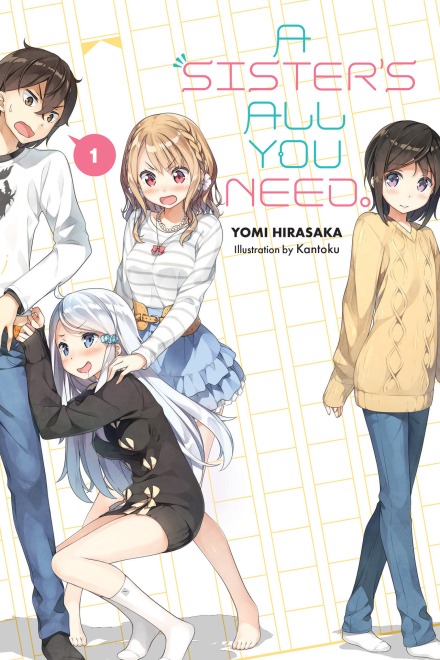
Surprisingly, the anime baited me into buying the first volume of the light novel series recently published by Yen On, so that’ll be an exciting read which I’ll definitely write about if the new developments are fulfilling enough! But what did you think about this lascivious little series? Did you find it too dumb ‘n dirty or hilarious and oddly pleasant? I’d love to hear your thoughts! Thanks for reading, and until the next time, this has been

– Takuto, your host
All That Glitters IS Gold in “Land of the Lustrous” | OWLS “Revival”

Chances are that if you were linked here from another blogger pal, you might be new to this place. To those first-timers, “Hi, I’m Takuto, and welcome to my anime cafe!” As part of the OWLS blog tour’s first monthly topic for 2018, “Revival,” I decided to incorporate what would have been my standard review of Land of the Lustrous into a short, shimmering reflection on the main character’s journey of self-discovery, and how even though our emotional selves may fracture, we can still be pieced back together—and return stronger than ever before.

A new year implies “new beginnings.” Yet, rather than discussing the “new,” we will be discussing the “revival.” “Revival” has multiple definitions, but the meaning we will be focusing on is the improvement, development, or refinement of something. Our posts will be about characters that undergo a positive or negative transformation and what we can learn from them.

Related image

Thanks Lyn for the prompt—what fitting way to kick of the New Year!


A brief spoiler-free discussion on the 12-episode fall 2017 anime “Houseki no Kuni” or “Land of the Lustrous,” produced by studio Orange, directed by Takahiko Kyogoku, and based on Haruko Ichikawa’s manga of the same name.

NOTE: The characters in this anime are genderless, and I will do my best to watch my pronoun usage.

Enter the Radiant Land of the Lustrous

Not all clothes are cut from the same cloth. In Land of the Lustrous‘s case, not all gemstones are cut from the same rock. Or are they? In a distant fantasy future, a new immortal and genderless life form called Gems (the “Lustrous”) roam what inhabitable remains of Earth are left. We’re not really told what happened, other than that the mainland in which the story takes place is under attack by the Lunarians (or “Moon Dwellers”), mystical cloud-like Buddha-looking beings who regularly abduct the Gems to turn them into jewelry—to turn a proud race into frivolous decor.

Related image

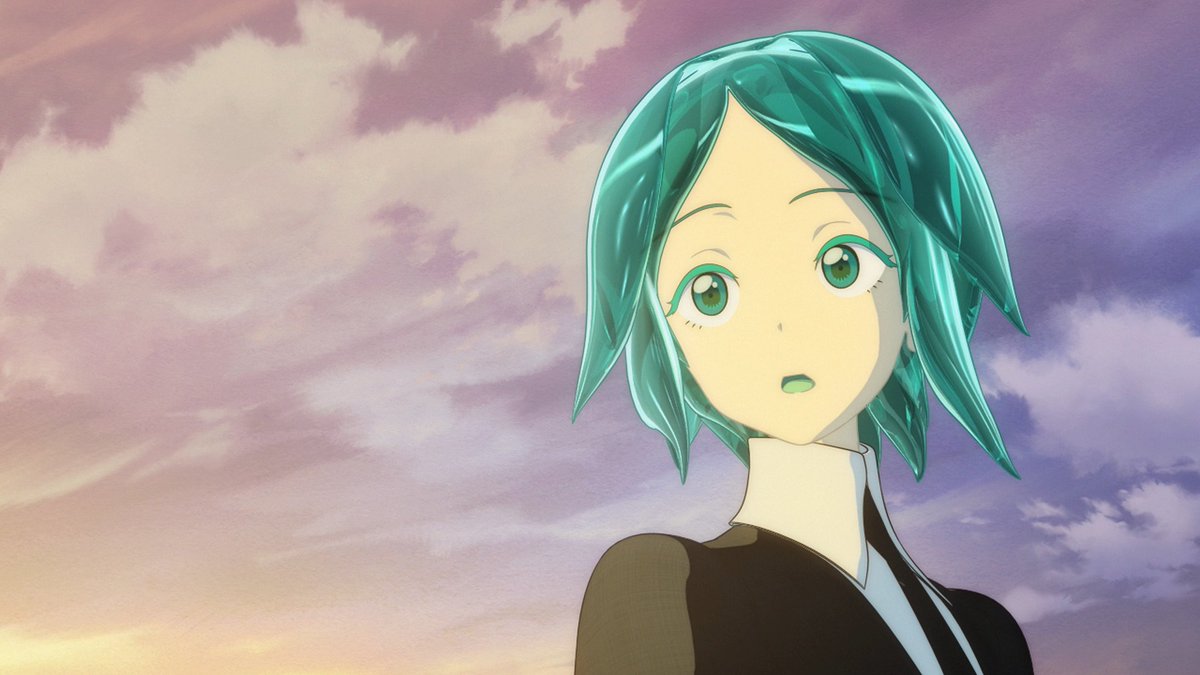
Phosphophyllite, or simply Phos, is the youngest of the Gems, and though their 300 years on Earth has given them much time to play and mess around, having a hardness of only 3.5 makes them more fragile than glass on the battlefield. Set in a tribe-like school of sorts where one’s hardness determines whether they are deemed fighters or medics, Phos is neither suited for battle nor the books. As such, Phos is treated trivially, and is often met with belittlement or noisome glares by their peers.

Phos’s feelings of being an outcast diminish when Kongou (Adamantine), the master of Gems, assigns Phos the unique task of creating a natural history encyclopedia, an archive of the nature of their world. Though everyone—including Phos—knows that the pointless job is just to keep them out of trouble, no one could’ve imagined the incredible journey Phos was about to take, and the impact their transformation would have on their entire civilization.

Related image

From the synopsis alone, Land of the Lustrous (what a cool title, BTW) already sounds plenty weird. The anime is categorized under the genres of action, fantasy, and seinen, but it proves itself even more interesting by also harboring an underlying mystery element. Who are the Lunarians, and why do they really want the Gems? What is Master Kongou’s relation with the moon people? What truly happened to humanity? Constantly, I found myself hitting the next episode button in eager anticipation of learning the secrets to this fascinating world. And the sudden loss of Amazon’s Anime Strike program (you will NOT be missed) allowed me to stream seamlessly without fear of paying double the price. I generally like to take my time watching a series; rarely do I gulp an entire series down in a single weekend, but I finished all 12 episodes in just two days. Yes, it was that entertaining. Not all my questions got answered, but it definitely ends ready for more, and it did encourage me to want to start reading the manga.

While its premise, setting, and characters are all quite creative, humanity’s nature is unchanging. Much like any child would, Phos experiences loneliness and a sense of uselessness, but through their peers, Phos also comes to understand important values like perseverance, respect, kinship, and the payoff of hard work. They also face the realities of their once thought-to-be fairy-tale world, revealing that life does have its cruelties. The anime’s messages are endearing, even if we’ve already seen them a hundred times, and that’s probably thanks to Land of the Lustrous‘s fantastic set of characters: the 28 Gems that make up this sparkling society.

Shine Bright Like a Diamond

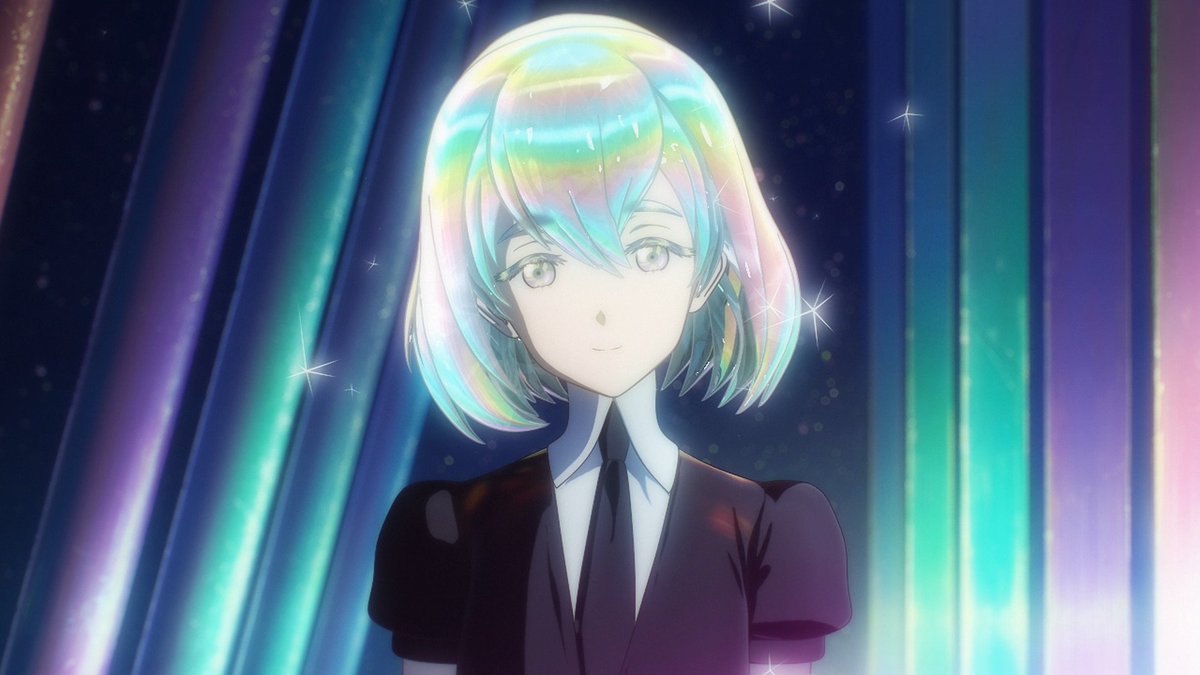
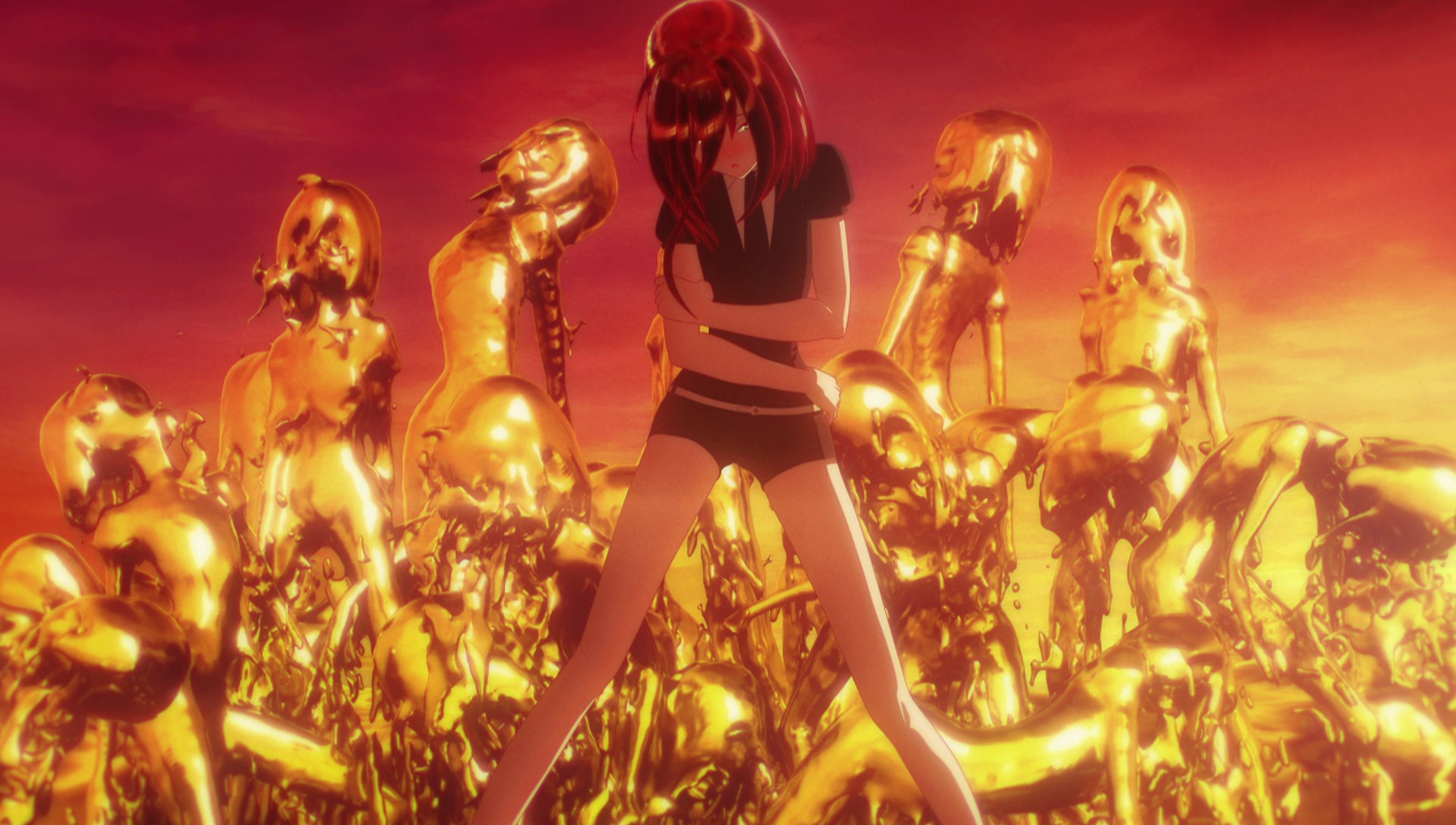
Variety is the greatest spice of life, and Land of the Lustrous‘s gleaming cast of Gems is definitely the series’s leading feature. Ordered appropriately according to the Mohs scale of mineral hardness, the jewel people are all given characteristics that match the features of their own gemstone. Cinnabar is a soft toxic mercury ore (the same bold red used as a pigment); correspondingly, Cinnabar’s character only has a hardness of 2, and their ability to produce a lethal poison prevents them from interacting with the other Gems. And just as how diamonds are used for precious moments, and are regarded as the world’s prettiest jewel, “Dia” is literally a sparkling, pure, kind-hearted individual with hardness 10, and is almost always seen “engaged” (see what I did there) with a certain Gem.

The attention to detail here goes far beneath the surface, feeling much richer than some cheap gimmick. Here, an imaginative use of characterization births some of the most unique and heartwarming characters I’ve ever seen, and though each gem’s screen time is limited to showcase one another’s distinctive traits, you still get a wholesome feel for who most of these polished beauties are. I imagine that this show would be any mineralogist or gemologist’s wet dream!

IMG_9823.jpg

Shout out to all the fans and artists over on Twitter for convincing me to watch this show, and for making me love the characters beyond what the series presents! So much pretty artwork, and I can’t get enough of it! Oh yeah, and Antarcticite is best . . . Girl? . . . Boy? . . . Androgynous gem person!

This IS the Best CG Anime EVER

I was incredibly surprised with how 2017’s Kado: The Right Answer was able to shake up the CGI reputation in anime. It crafted a setting in which CG-animated elements not only worked, but actually enhanced the out-of-this-world story being told, as well as the wondrous anisotropic devices presented. Complaints were still to be made, however, most regarding that the normal people were also animated in CG when they totally didn’t need to be. In typical CG fashion, it made the character actions look a tad awkward.

But from characters to concept, Land of the Lustrous both fits as a CG anime AND looks absolutely stunning doing so. First, the CG mapping allows the character designs to appear consistently gorgeous. The beautifully colored jewel people’s hair radiates with a twinkling, glistening shine—something that could only be achieved using this 3D technique—and their fights against the Lunarians prove to be engaging, expectation-shattering spectacles! Not to mention, the 2D painted backgrounds are works of art all on their own! This 2D-3D blend was clearly well-thought out and executed marvelously, for all that glitters IS gold on the animation front.

Image result

Before I leave the production side of things, I do want to mention that Yoshiaki Fujisawa’s soundtrack provides such an atmospheric, entrancing allure that I can only express in these words: it is a soundtrack suited perfectly for this anime.

Bonds Stronger Than Any Glue: Phos’s Transformation

As stated previously, Land of the Lustrous is a coming-of-age tale where a clumsy, useless, and worthless individual tries to find not only a reason to live, but a place to belong. It’s a story about being useful to those you value, even if those people don’t value your own effort to establish teamwork.

Like people, Gems can be brittle beings with fragile hearts. Phos both mentally and physically “breaks” several times throughout the course of the series. In the search to finally be useful to others, Phos seeks change. Phos just . . . wants to be special. Well, change of any kind comes at a price—to gain something new, something must be lost—and unfortunately, that price is the precious time of others. Or, at its worst, the life of a friend. With an almost foolish bravery and air of bad luck, Phos pursues many partners in an effort to improve—to refine those blemishes of their personality, and to forever eliminate the imperfections that cause them mockery and shame.

But change is scary. It can be painful, it can be sudden, and it can be dangerous.

Related image

Every try, every fail—no matter what, Phos desperately continues to pursue a reason for being. And through each failure, Phos learns a priceless lesson about what it means to feel valued and helpful. Smash your frail legs? Find stronger ones to replace them. Fracture your tiny arms? Hunt for a material that can better weather the crushing pain of defeat. Lose a beloved friend:

Make them proud by living for them. Do what they couldn’t by becoming someone you would both be proud of. Being immortal means each rupture can and DOES lead to a chance to return stronger and shinier than before—to feel reborn anew, to feel revived. And Phos doesn’t let that precious opportunity go to waste.

Image result for land of the lustrous yoichi nishikawa

Putting the Pieces Back Together

Change involves suffering, but that grief is a necessity for growth. Phos will shatter again, and again, and again, picking up the sad, broken pieces of their shiny shell. Yet with the help of some friends, these shards can be pieced back together to continue fighting on. The bonds that Phos forms, unlike their lustrous figure, are unbreakable. It’s a powerful positive transformation, absolutely, but it comes at very critical costs.

Phos can do it, though. Slowly but surely, Phos comes to realize that self-worth isn’t determined by the people around you, but rather what YOU make of yourself. With great determination, Phos knows the road to truly reviving their spirit is paved with hardship and loss. The world is cruel, after all. But so long as we can hope to become better individuals—actively seeking to help others in return—change and improvement just might someday find us, too. And it’s that seemingly small sentiment that makes Land of the Lustrous shine brighter than all the diamonds in the night sky.

You’ll grow stronger. You’ll be fine . . . Somebody will figure out a way. You won’t get any worse. You must change. You must find courage. You’ll make it. But you don’t have time. – Voice from the ice floes, the reflections of our innermost thoughts

Image result for land of the lustrous yoichi nishikawa


As emotional as I make it sound, Land of the Lustrous is just such a cool, unique show unlike ANYTHING I’ve ever seen. It’s a neat twist on science matched with a budding mystery that I cannot wait to uncover in the manga! I’m awarding Land of the Lustrous with the “Cake” title, as it’s certainly an elegant show, but its lack of a “true ending” leaves many titillating questions unanswered. You ought to let me know what you thought of this anime or this post down in the comments, as this “hidden gem” (haha ok I’ll go home) was a big hit for some and a sleeper for many others!

Oh, and if you enjoyed this series, consider checking out Yuki Yuna is a Hero for scarily similar-looking antagonists (and overall concept of fighting), A Lull in the Sea for its similar take on village life and growing up, or lastly From the New World because, well, just trust me on this one. In the meantime, I’ll be praying for a classy LTD ED release of this show by Sentai Filmworks, hopefully complete with Yoichi Nishikawa’s end card art cause HOLY BAUBLES, them beauties!

This concludes my January 10th entry in the OWLS “Revival” blog tour. Moonid (Random Garage) went right before me and wrote a bit of a character analysis over Nightingale from the Chinese fantasy web novel Release that Witch. Now, look out for Zoe (Let’s Talk Anime) with ReLIFE, a title that I really need to watch, and Arata’s second chance at youth on Friday, January 12th! Thank you so much for reading, and until next time, this has been

– Takuto, your host
The Ravishing, Elegant Imperfections of “Welcome to the Ballroom” | Blogmas 2017 Day 9

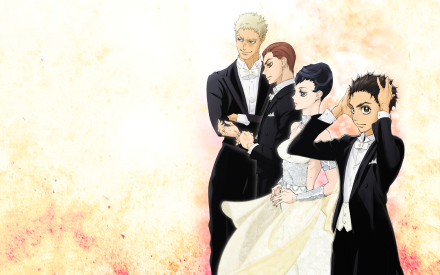
Hey everyone, welcome to (a very belated) day 9 of Blogmas (whoops)! This past summer, two sports anime aired simultaneously, and I decided to follow them to see which would wind out on top! Today I present a review of the show that finished airing about a week or so ago, the anime about a young boy’s experience as a ballroom dancer, and how the sport challenged and changed him for the better!

blogmasday9.PNG

The Summer of Sports: A Review of Welcome to the Ballroom


A spoiler-free review of the summer 2017 anime “Welcome to the Ballroom,” produced by Production I.G, directed by Yoshimi Itazu, based on the manga by Tomo Takeuchi. 

Entering the World of Dance

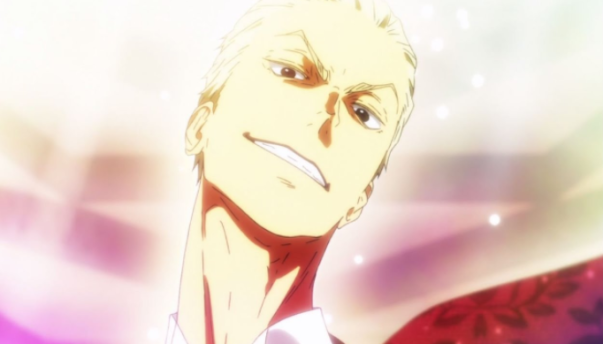
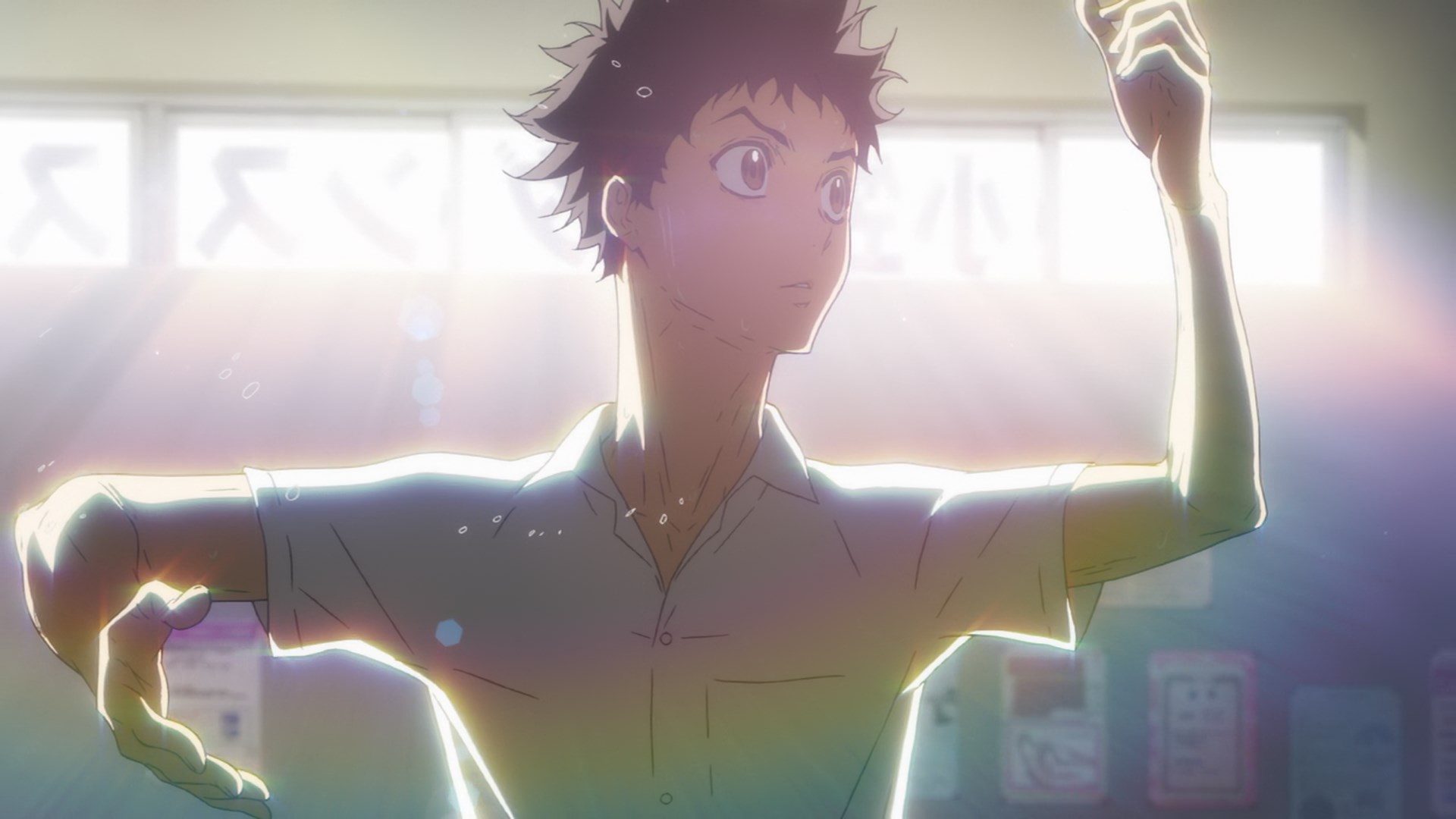
Tatara Fujita’s another one of those introverted third-year middle schoolers with no aim in life who very soon has to make the big high school decision. On one of his particularly average days, he is harassed by delinquents, only to suddenly be rescued by an imposing gentleman on a motor cycle. His name is Sengoku, an energetic professional dancer on the international level, and it is through some miscommunication on Sengoku’s part that Tatara ends up at his dance studio. There, he meets a girl from his school: Shizuku Hanaoka—the woman of his dreams—and it is partially because of both her charm and Tatara’s own desire to change himself that he enters the world of dance. The free-spirited Sengoku sees potential in young Tatara, and thus decides to show him the steps.

sengoku shine.PNG

Through his experience with dance, Tatara meets many people, friends and rivals alike, who will each challenge Tatara not only as an athlete, but as a young man coming of age. And it is through this same interaction with Tatara that other dancers feel encouraged to take steps to overcome their own issues and flaws. His feet will get plenty sore, and he’ll fall on the dance floor many, many times in practice, but Tatara keeps on going because of the enjoyment and wonder dancing brings into his otherwise goalless life.

Wonder

From Slouch Stance to Swing Dance

One of the most exciting times to be alive was Welcome to the Ballroom‘s beginning. Its first six or so episodes set up a pretty strong premise, not to mention a promising standard of animation quality. From Tatara understanding how to stand up straight and correct his terrible slouch to learning the waltz’s basic box pattern, I truly felt inspired to try waltzing around my room like I used to so many years ago. You just want to see more and more of the characters and the sport they all love—it’s first several episodes are addictive! But it’s hard to maintain that same adrenaline over the course of one dance competition alone. Let me elaborate.

Over the course of 24 episodes, we only bear witness to what, three, maybe four competitions. And it is from each of these arcs that we are expected to understand that Tatara’s skills accelerate at a terrifyingly quick rate. One does not instantly become a pro by attending merely a couple competitions, though; the reality is that it takes tens, if not hundreds of events like competitions that challenge one’s entire range of skills. I know Tatara wasn’t defined as a “pro” by the end of the series, as he clearly still has much to learn, but the fact that he was able to equally rival some of the series’s known-to-be-greatest dancers felt somewhat unbelievable.

Image result

And while we’re on the subject of shounen arcs, a single dance could last two or three episodes, while a competition could span as great as nine or so episodes. What’s with that pacing? Had the competitions made shorter, we could’ve made room for more of them, which might’ve balanced the characterization better. In its defense, I imagine that my issues with the slow pacing would be way less apparent watching it now in marathon format as opposed to over the course of SIX MONTHS.

Where the series fails to be a completely smooth run here and there, it definitely makes up for it by proving to be VERY entertaining. Each episode does leave you craving to know what might happen in the next round, or perhaps to see which couples end up clashing on the dance floor. My pacing dissatisfaction wasn’t from “bad episodes” or “poor directing choices,” but rather a lack of action worthy enough to fill a whole episode (especially by the end). It’s not filler, it’s just slow-moving, and I suppose I’d rather a show take its time than push forward and leave out development.

Related image

Finding Something to be Good At: Tatara & Dance

To give him credit, Tatara Fujita does practice A LOT. He’s a hard worker, and in fact, many shots in the series focus on characters walking into the studio, only to discover a tired Tatara training through the early hours of the morn. Where he struggles with verbal teachings, Tatara is incredibly gifted at duplicating dance moves he has seen. Odds are that this is the reason why he is able to fair well against many dancers, including the experienced ones.

Either way, he struggles with communicating what he wants, and as such fails to grasp the masculine hold that a couple’s lead should possess. This translates across to his external conflict: great shyness, nervousness, and a lack of self-confidence around others. He dances in secret, embarrassed by being a male dancer, and is unable to make friends as a result, nor tell his dad about his newfound hobby. Mentally, he is fighting to “man up,” accept dance as a part of himself, and discover what dancing really means to him—this is all while chasing after Sengoku’s shadow, of course. Overall, I like Tatara, as his conflicts are not only relatable, but his efforts to respect and embrace what he truly loves are praiseworthy, too! Through an unlikely sport like dance, Tatara finds that one thing he wished he could be good at, as well as a way to express his true, repressed, artistic spirit.

Image result

Finding Kinship in Competition: Hyoudou & Gaju

As mentioned, several challengers oppose Tatara over the course of the series. Though they are mainly boys a tad older than he is, there are a couple of older men who provide valuable lessons and wisdom on the sport. Sengoku is the obvious culprit, but his lack of attention to Tatara kind of makes him a dick of a coach. He does have his own professional career to worry about, I suppose. And I do see why Tatara (and heck, everybody else) idolizes the guy: for all his goofiness and trouble with verbal instructions, Sengoku knows his stuff, and he sure is one eye-catching, dynamic dancer.

Image result

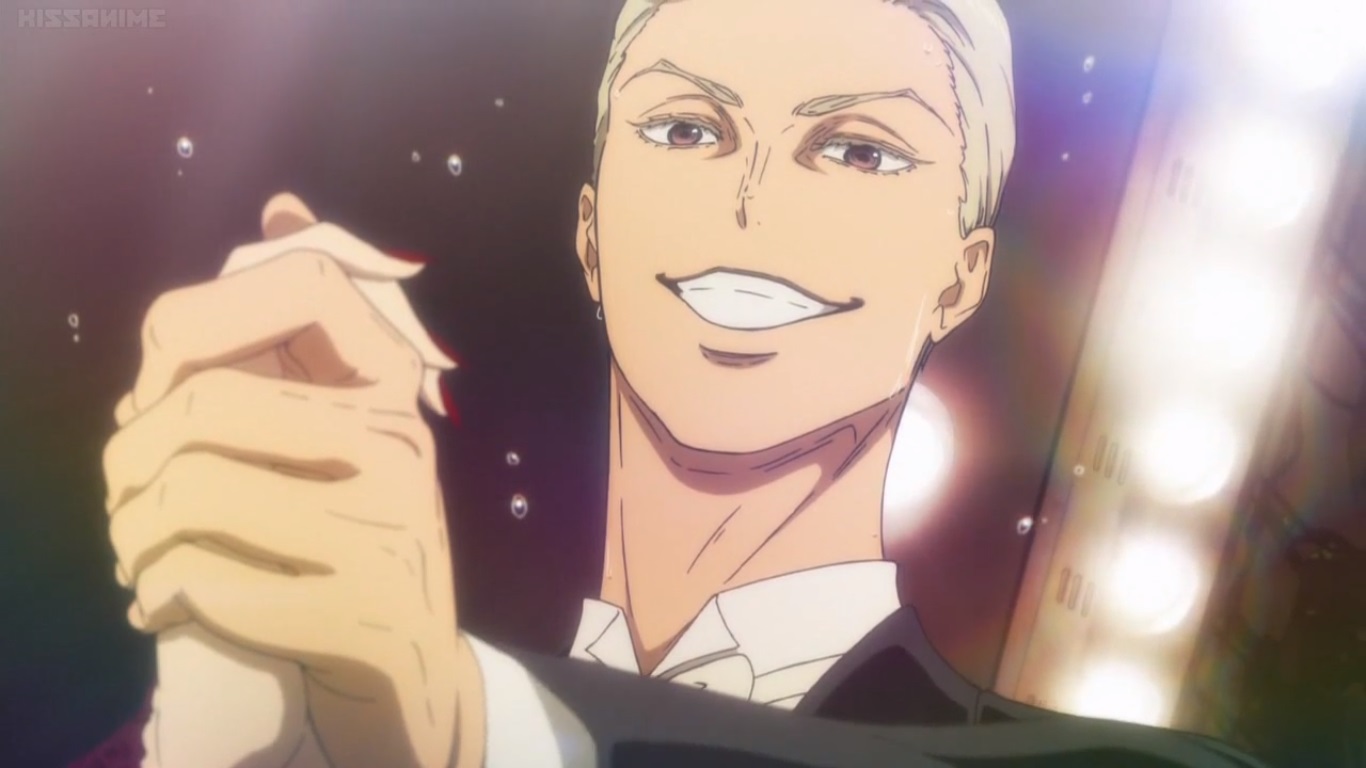
Then there’s the other leads, namely dancing prodigy Kiyoharu Hyoudou and the brash, loudmouth Gaju Akagi. On their own, Hyoudou’s seemingly perfect career is suffering from a hidden injury, and the way the show handled his behavior and mannerisms was quite realistic and well-handled. It’s always a surprising dilemma to see “the star” in trouble, but it can happen to anyone, and the road to recovery can really deter one’s once-blazing determination. Every time he appeared from the shadows and opened his smart mouth to make some stupidly detailed analysis of Tatara’s mistakes, however, I did low-key want to punch him in the face.

Related image

If Hyoudou is Tatara’s foil, then Gaju would be more like your standard, overly zealous competitor, the epiphany of dominance over one’s partner. He is the glue that holds the group together, though, and in times of relaxation and relief, it’s Gaju’s presence that brings out the casts’s nice chemistry.

Image result

Finding a Partner: Chinatsu & The Struggle to Connect

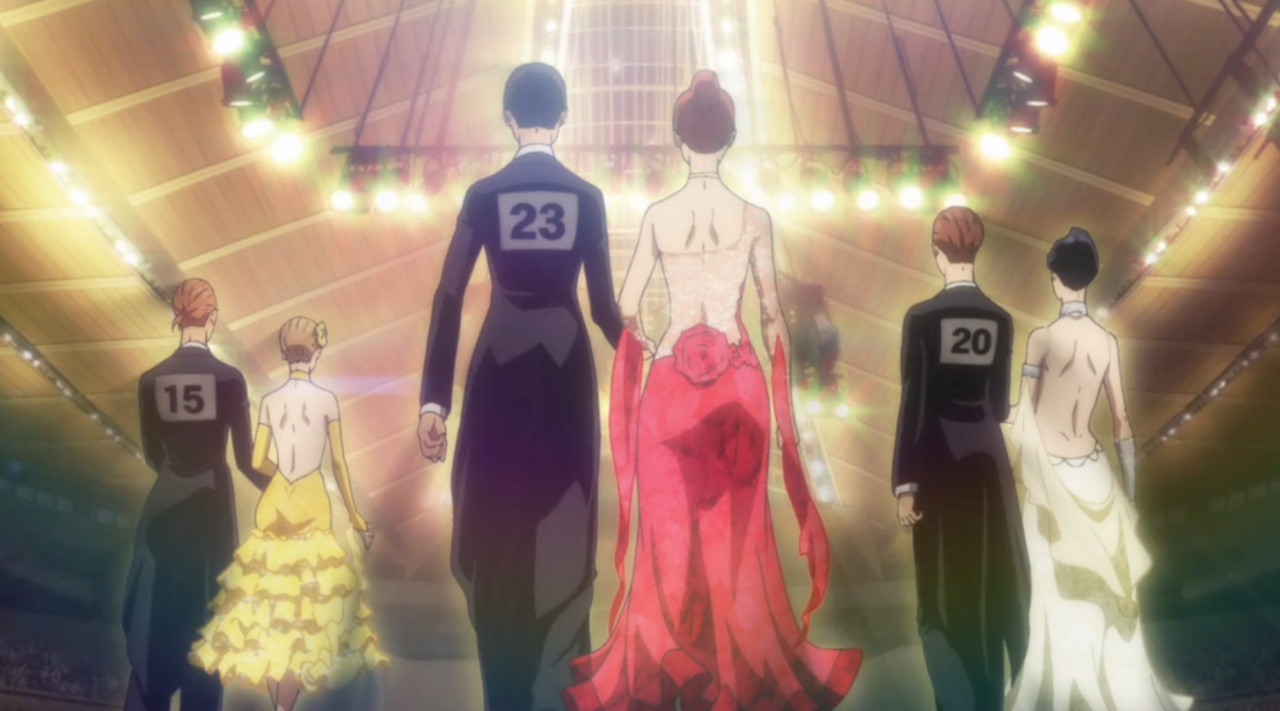
At first, the other female dancers seem like standards for Tatara’s partner(s) to reach and eventually pass, but thankfully, that’s not how Ballroom works. While I’m told the manga (which I can’t wait to read) fleshes out the female characters better, as you get read their thoughts, I found myself nonetheless enjoying Hanaoka’s untouchable nature and the cute Mako Akagi’s hidden glam (seriously, the Tenpei Cup final was EPIC, and I love Mako’s yellow dress). Even the adult females like Sengoku’s partner Chizuru or Hyoudou’s mom Coach Marisa serve more purpose than just being there for Tatara—they all feel like real people with their own attitudes, weaknesses, and ambitions.

Image result

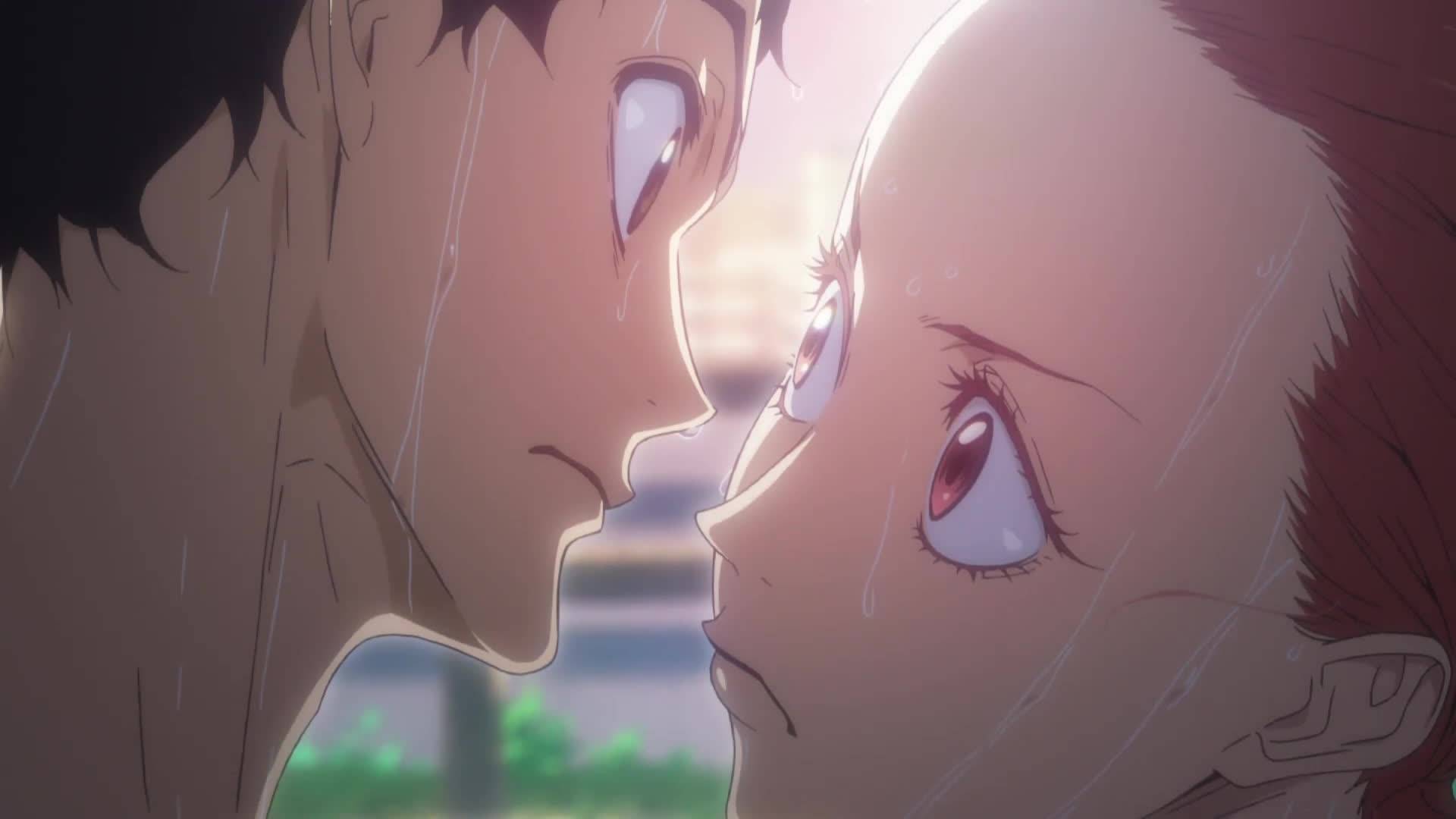
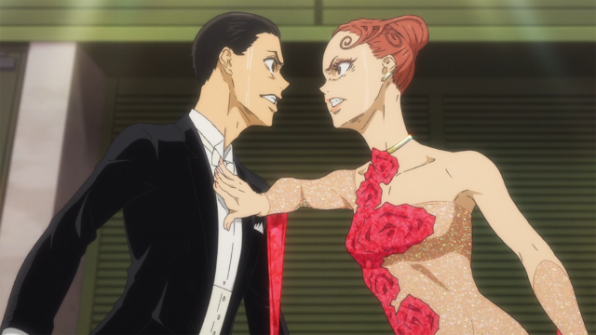
As much as I loved Mako’s adorable yet strong-willed spirit, my favorite female character was one introduced in the show’s second half: Chinatsu, Tatara’s fiery future partner. Characterized as the polar opposite of Tatara—fierce, strong, bold, and most of all, a true leader—Chinatsu poses a lot of problems for Tatara (and frustration for the viewers, too). She’s essentially everything that he’s not, and her unwillingness to accept her own issues and work through them calmly (and fairly) with Tatara sets up a rocky, explosive relationship just waiting to burst. How Chinatsu’s existence changes EVERYTHING reminds me so much of Shinji and Asuka’s relationship from Evangelion, and it’s probably the reason why I like their dynamic so much.

Simply put, she’s everything that makes him uncomfortable, and he’s everything that challenges her very being. 

Image result

The anime’s ending tries to cap off their relationship with a sudden “everything’s gonna be ok,” but we all know that more fights and fits are bound for this couple in the future. Their animosity was just handled so well, so powerfully, and it arguably made the long second half bearable for me. The struggle to connect and find a partner is a very intimate, vital thing, and I’m glad it wasn’t underplayed.

Related image

(To avoid spoilers, obligatory shoutout to Kugimiya and his partner Idogawa, as it was their character development that made the final competition so impactful!)

A Dancing Anime Without the “Dance”

Ballroom blossoms beautifully when it’s moving. Seriously, it’s freakin’ wonderful. But fluid scenes on the dance floor are sadly few and far between, which is odd considering that a powerhouse like Production I.G is behind the helm. This was most viewers’ biggest beef with the anime adaptation, as the manga’s pages are rife with striking, expressive motion (which seems odd for paper, but just open up a volume whenever you get the chance). Way too often than what should be allowed for a sports anime, we are treated to still frame, after still frame, after still frame, which are guided by someone annoying (like Hyoudou) verbally leading us through what should have been a thrilling, visual feast! Don’t get me wrong—Every. Single. Frame. Of this anime is drop-dead gorgeous. Like, those dresses, holy shit, wow! But man, I was sighing throughout so many of the dance scenes because I just wanted to see SOMETHING move. It could literally be a ribbon or a dress sequin—JUST MOVE IT. I really hope some animation is added to the Blu-ray releases.

Related image

(As for the giraffe necks, I didn’t mind too much. They’re glaring at first, but after a few episodes you don’t even notice how wrong it is.)

Music, the Soul of Dance

Thankfully, Ballroom manages to stay somewhat engaging during these motionless shots because of its delightful soundtrack. Perhaps this is because of musician Yuuki Hayashi’s own experience as a rhythmic gymnast; the man already knows how to match tempo and tune with fancy footwork. Hayashi is a rising favorite of mine, as he knows how to perfectly time moments that should be epic with music that is absolutely epic. From moving ensembles like “Ballroom, Shakou Dance” to THE MOST UPLIFTING BEAT OF THE CENTURY, “Ganbaritai Kimochi,” how you can’t NOT feel the emotional weight? And don’t even get me started on the dance music—waltz, salsa, jazz, swing, samba, cha-cha, Charleston, Merengue—so many styles, and so much respect for each time period’s jams!!

Hayashi’s able to take a simple melody and turn it into a gorgeous, heartwarming waltz, or even a snappy, saucy tango. I was just so happy to see my favorite time signature, the waltz’s 3/4, be revived in modern anime akin to Ouran High School Host Club‘s brilliance. It’s a shame that his dance-themed tracks would be frequently swapped out for the main OST mid-dance, unlike the continuous play like in Yuri!!! On ICE, but I suppose that makes anticipating each lovely track all the more exciting. There’s a raw love for classical strings, piano, and a bit of drums for movement in Hayashi’s internationally-infused music, and that’s why I’ll always look forward to his perfect, inspiring scores.

https://www.youtube.com/watch?v=6pGAUF9cJTY

“Tatara’s Waltz,” “Hyoudou Tango,” “Blooming On Our Way,” “Tango City,” “Viennese Waltz,” “It’s like a symphony,” “Quick Step B,” “La Cumparsita, “Las Patineurs,” “Sing, Sing, Sing . . .” HOW CAN YOU NOT LIKE THIS VARIETY???

I’ve already talked way to much about the music in this anime, but on top of featuring a well-rounded soundtrack, Ballroom has TWO amazingly energetic openings that create so much HYPE! Both by UNISON SQUARE GARDEN (which I will now keep an eye out for), “10% roll, 10% romance” and “Invisible Sensation,” my favorite of the two, have made my “Current Faves” playlist. And I couldn’t forget about the first ED theme, “Maybe the next waltz” by Mikako Komatsu, which was sung, yes, AS A SWEET WALTZ. I JUST LOVE THIS ANIME’S STYLE SO MUCH!!

Dismantling the Stereotypes: The Beauty of Evolution

As a final note, Ballroom makes quick work of eliminating any frivolous or “girly” things you previously thought about ballroom dance. Its appropriate depiction as an equally sweaty, vigorous sport is eye-opening, and you can feel that all the people behind the project had a great respect for the sport. The anime is aware of this, and repeatedly nails in the idea that ballroom dance IS, indeed, very difficult. From the pain-staking accuracy of the sound that certain shoes make, to the flow and friction of suits and dresses, incredible attention was put into the sound effects to fully immerse you in the bustling dance floor atmosphere. Lastly, both the anime’s culturally diverse soundtrack and fashion sense pay ode to dance’s professional realities, culminating into an accurate depiction of dance’s heaviest hardships and most joyous pleasures alike.

Image result

When it wants to be, the show is also very funny, using quick-witted humor and hilarious facial reactions to lighten an unnecessarily tense mood—something that we routinely find ourselves in.

Welcome to the Ballroom clearly has many strengths, but also several weaknesses. It boasts the allure of dancing, yet frequently fails put the concept into motion. It showcases how thrilling the sport can be, yet often drags out the effect nearly to the point of boredom. But above its faults, Ballroom promotes the beauty of evolution, the purity of youth, and the countless many possibilities that come with change and transformation. It’s a dramatic story of motivation, inspiration, and progress, both for its characters and the future of the sport itself. And by its end, I couldn’t help but applaud the valiant effort made to enlighten me on the world of dance and all its ravishing, graceful, and truly elegant imperfections. It’s that rare kind of show that doesn’t come around often—and one that should not be missed.

Dance’s physical and emotional expressions seem close, but they aren’t easily tied together. It can’t be considered a real expression unless you can reflect the outside knowledge and experiences you’ve gained. That’s why with an emotional dance, you can see through the dancer’s entire life. Joy and sorrow. Love and hate. A dance with a variety of emotions adds depth. Don’t you think that becomes meaningful enough to dedicate the time in your life to dance? – Coach Marisa Hyoudou

Image result


Production and pacing problems aside, Welcome to the Ballroom‘s biggest issue right now is the lack of a licensing, as Anime Strike doesn’t count for CRAP! Seriously, someone please get a hold of the polished Japanese Blu-rays, dub it if you want, and I’ll buy three. This was such a long review, my goodness, but I wanted to make sure that I covered EVERYTHING about it! If you managed to make it from beginning to end, give yourself a pat on the back, and let me know in the comments what you thought of Welcome to the Ballroom in the comments! It’s a sweet, delicious “Cake” here at the cafe!

This concludes Blogmas Day Nine of the 12 Days of Anime, as well as part 2 of “The Summer of Sports!” If you couldn’t already tell, Ballroom definitely won the match, but I do love them both! Thanks for reading, and I’ll catch you shortly with another belated post!

– Takuto, your host
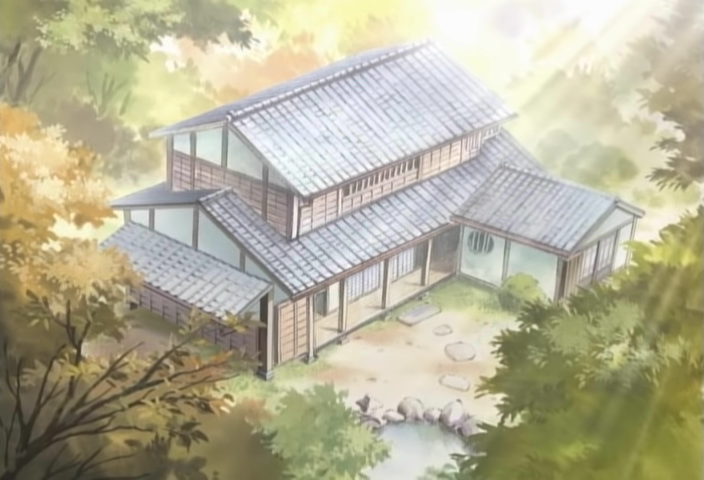
Image result