Loss Has Little Meaning in Yuki Yuna | Hero Week Review

A brief review of the 12-episode fall 2014 anime “Yuki Yuna is a Hero,” produced by Studio Gokumi, based on original story by Takahiro and Makoto Uezu.

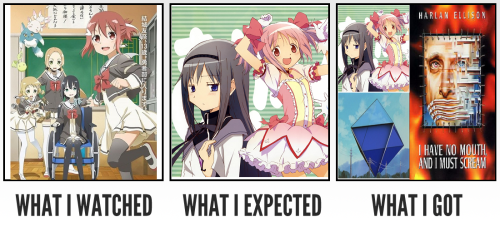
For the third segment of Hero Week, I’ll warn you now that this anime is extremely hit or miss, especially if you’re familiar with Madoka Magica. Despite any polarizing comments I make, I’d like to let you know that this happens to be my favorite of the three Hero Week anime I’ve reviewed, regardless that it is indeed the “worst-written one,” should I even have to pick. I found that it had the most to offer, and I have to be critical of it because something that means so much should be sought in full light.

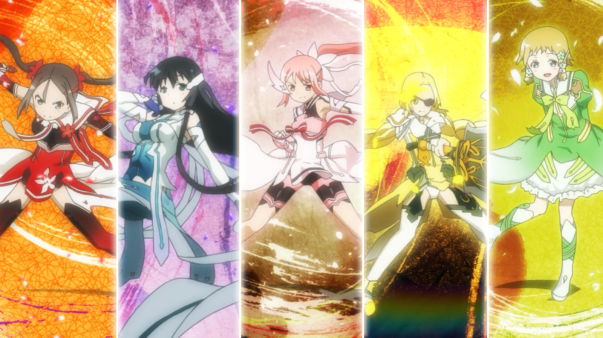
Five middle school girls—Yuuna, Togo, Fu, Itsuki, and Karin—are on a quest to save the world. That is, community service, volunteer work, and puppet shows for local children. It all seems trivial on the outside, but their Hero Club is determined to do good deeds for love, justice, and happiness, goals which are outlined and pursued religiously in the club’s Five Tenets. Such is the sweet and simple life of Yuuki Yuuna.

The club’s charismatic president Fu is living two lives, however, and upon phone call is forced to drag her friends into a mystical realm. There, they are to protect the God of the natural world and human blessing, the Shinju, from strange geometric entities called Vertexes. By the single tap on a phone app, the girls are transformed into the extraordinary heroes they so desired to be. But transcending the realm of God and obtaining unimaginable power comes with a price almost not worth paying.

As the girls fight for their lives and the people they love, their perception of the world dramatically warps into a cruel land of delusional grandeur. In the depressing struggle for power, the girls might have to point their guns at beings besides the Vertexes in order to preserve their very belief of what it means to be a true hero.

One of the biggest problems I had with Yuki Yuna was the lame world building. Had I not read the summary provided by Crunchyroll, I wouldn’t not have noticed that the story is set in the far future—YEAR 300, the Era of the Gods. WHAT, but it looks like modern-day Japan?! I enjoy it when stories have good reasons to break the rules set by the setting, but you can’t rebel against an outline that otherwise doesn’t exist!

My second beef with the anime was the lack of each girl’s unique drive to be a magical girl. They just sort of accepted the role because of the club’s influence. Individual motive is largely what make hero stories interesting and standout, so to have such weak trope characters (besides Fu and Togo) was a huge shame. For instance, what if the wheel-chair-bound Togo wanted to keep fighting because she could walk once again? That’s much more compelling than “I’ll do it because Yuna needs my help.” The way Yuna clings to the club tenets is also a bit cheesy and a weak excuse for ‘development.’

This is obviously less apparent if you are unfamiliar with it, but the last somewhat spoiler-free issue I had were the painfully obvious similarities to Madoka Magica. The magical girl system, character destinies, and dark, depressing themes in the second half all have strong correlation with its critically-acclaimed predecessor. Heck, even the music (which is still really, really good) and the animation sometimes feel like snippets borrowed from Madoka. While it is occasionally disappointing, Yuki Yuna managed to have fun longer than Madoka did, heavily maximizing its slice-of-life side for the earlier parts. And while I wanted darker, more twisted, nastier Madoka narrative, watching those girls have fun was what I needed more.

On a positive note, the animation was surprisingly incredible. The Vertexes themselves are CG, but because they are basically Evangelion angels crossed-over with the zodiac, it all works to create a fantastic off-putting vibe. I also appreciated the vivid color patterns for the Shinju realm and the cool magical girl outfits (Yuuna’s elegant armor was actually what got me into this show). The style was more rooted in Asian culture (petals, shrines, zodiac), while something like Madoka featured more European-like classical culture (columns, gates, witches).

HERO WEEK SEGMENT: Archetypical Hero qualities represented by Yuuna

I’ve taken a quick trip to Google to provide qualities of the typical hero. Let’s briefly exercise each prompt:

  • Hero is of humble origins
    • Yuuna is a very friendly and open girl, often willing to accept help and help others at no cost.
  • An event, sometimes traumatic, leads to adventure
    • The Taisha, the organization dedicated to the Shinju, calls upon Fu to advance on the incoming Vertex. Yuuna, even though given a choice, steps up to bat and becomes a magical girl
  • Hero has a special weapon only he can wield/always has supernatural help
    • Yuuna is a hero just like her friends. What makes her stand out is her unwavering devotion to the hero cause and her gifted fighting abilities. In episode one, she doesn’t just suddenly transform like the other girls, but is able to gradually make her armor appear upon demand. Her unusually rare strength and “true maiden’s heart” make her unstoppable on the battlefield.
  • The Hero must prove himself many times while on adventure
    • Besides fighting off the Vertexes, Yuuna must be able to lift the spirits of her comrades as the show’s ideal hero. The others will lose their way, and it’s up to Yuuna to lead them back on the path of righteousness. She doesn’t seem like a main character, nor does she change much as a character, and that’s mostly because I believe she’s not supposed to; she’s the guiding light of hope and justice, and as such doesn’t stop fighting even at the end.
  • ***SPOILERS START HERE***
  • PLEASE CONSIDER THIS THEORY TAG BEFORE PROCEEDING
  • The journey and the unhealable wound
    • In the end, the effects of going through Mankai so many times and taking on all of her friends’ pain leaves Yuuna in a catatonic state. When she does reawaken, her physical body is only a crutch for her soul, which is always off fighting. Upon the rebellion, Shinju-sama must have changed the rules so that girls don’t have to suffer long-lasting disabilities in the real world. This makes ALL LOSS ESSENTIALLY MEANINGLESS—All of the heartache the girls go through, then you turn around and say, “Oh, yeah, they don’t have to suffer anymore.” Now, I didn’t want a sad ending for the girls, especially Yuuna, but doesn’t that take away most of the emotional weight? Yuuna’s dedication to the heroic spirit causes her to be Shinju-sama’s ultimate protector, and is forced to keep on fighting even though her friends are retired.
  • Hero experiences atonement with the father
    • I like to consider the “father” not as Shinju-sama or the Taisha, but as the intelligent Togo instead. At first, Yuuna finds most of her purpose for fighting in protecting her friend and vice versa. When Togo is able to walk again at the end, she somewhat pities herself for letting Yuuna burden everyone’s pain even though she shouldn’t. Yuuna is praised like a goddess but somewhat frowned upon as a fool for sticking so close to the hero path.
  • When the hero dies, he is rewarded spiritually
    • Because I find the theory to be so interesting and quite possible, we can conclude that though her real-world body is somewhat “dead,” Yuuna is still alive and fighting behind the scenes. Her reward? She transcends the mortal world and becomes a goddess who will never stop fighting. Not exactly the prize I would want, but because Yuuna fell hook, line, and sinker for the whole hero bait, I’m sure that’s exactly how she would have wanted it from the beginning.
    • In the end, everyone’s illnesses go away, which contradicts the heavy theme of sacrifice Yuki Yuna spent its entire run on building up.
  • ***SPOILERS END HERE***

Much of Yuki Yuna is unexplained or at least not evident in the anime adaptation. Should the prequel light novels and the sequel manga ever make it here in the U.S., then I would be thrilled to revisit the franchise. Its fascinating world and the somber warriors fighting to protect it have so much more depth to them, and that lack of depth in the anime hinders a truly wonderful experience. The entire story and production of Yuki Yuna also has too many underdeveloped and forced ties to Madoka Magica, which sadly tampers with the mind-blowing aspect of it.

As a fantasy, drama, slice of life magical girl anime that attempts to see Madoka in a different light, I can appreciate all that it tried to pull off. It tackles the painfully realistic hero themes in the most interesting (and very dark) way that just excites me, yet also has rare moments of joy for our characters and a real built sense of unease instead of just scary/dark imagery like Madoka. Even though it stumbles in appreciating loss, we do wind up with one solid ideal: Ultimately, fight for what you want to save, not for what you are burdened by.

“You know that the fairest flowers fade first. But I made it.” – Fu Inubouzaki (best girl)

I award Yuki Yuna is a Hero with a benefit of the doubt 8/10, narrowly allowing it to breach the “Caffé Mocha” classification. It combats the fantastic with heavy ideals and characters that are honestly cared about (can’t say that for most series). Yuki Yuna won’t impress all—most are quite hard on it, actually—but I still encourage people to try it out especially if you like the wildly mentioned Madoka Magica. I’ve been forgetting, but both ERASED and Yuki Yuna is a Hero can be viewed for FREE on Crunchyroll! While I’d LOVE to own it on DVD, Ponycan is releasing these ‘premium’ sets with an okay English dub for a ridiculous $70 each—AND THERE ARE THREE OF THEM. How do you think Yuki Yuna did? Also, do you think Yuuna is a good hero? How about the other girls? Comment below!! Until next time, this has been

– Takuto, your host

One Punch Man is Absurd, Out-of-this-World Fun! | Hero Week Review

A brief review of the 12-episode fall 2015 anime “One Punch Man,” produced by Madhouse, based on the web manga by ONE (story) and Yusuke Murata (manga art).

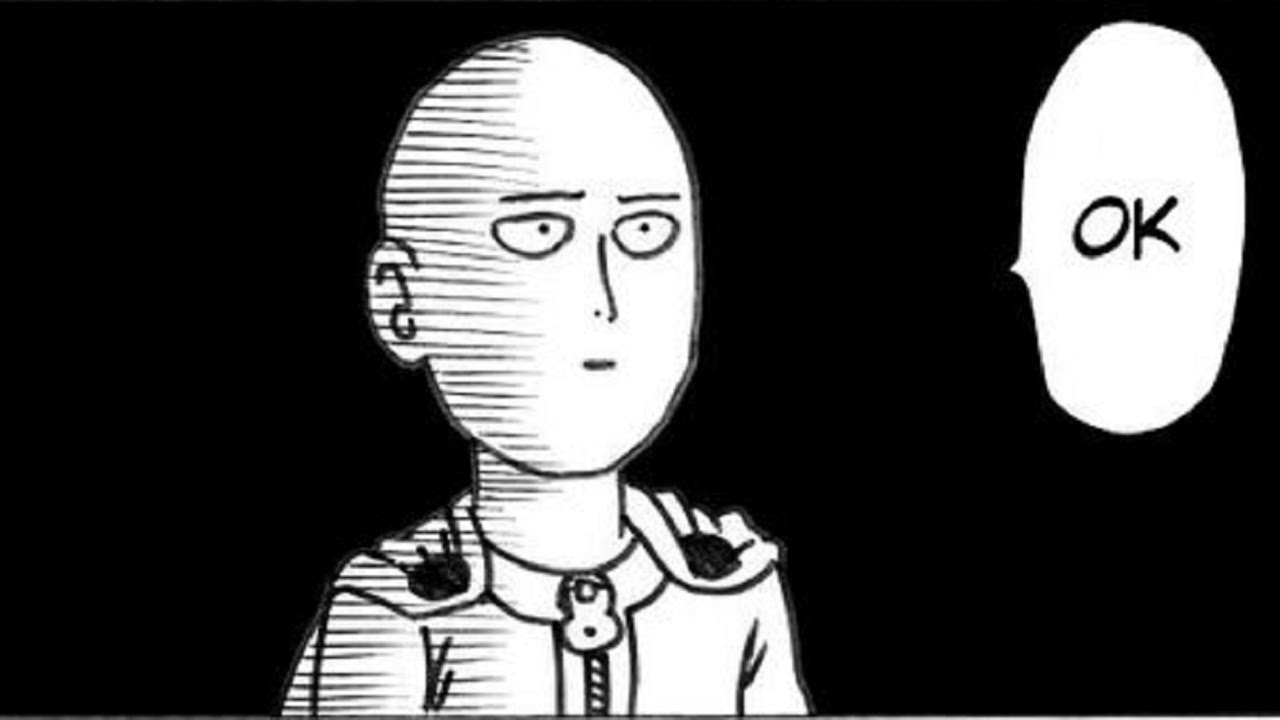
Travel back one season from ERASED and you have the anime that etched 2015 in history: One Punch Man. Its grossly over-popular yet dorky concept captivated web manga fans, and when an anime adaptation by THE Madhouse was announced people went hysterical; cosplay, fan art, and “OK.” memes circulated like no other. But what gives OPM a fiery kick like no other, and why do fans gloriously rave about this bald athlete?

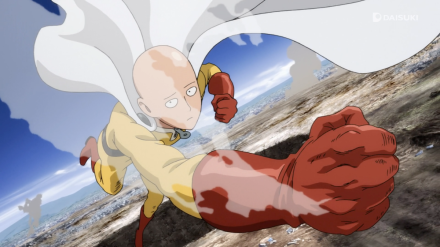
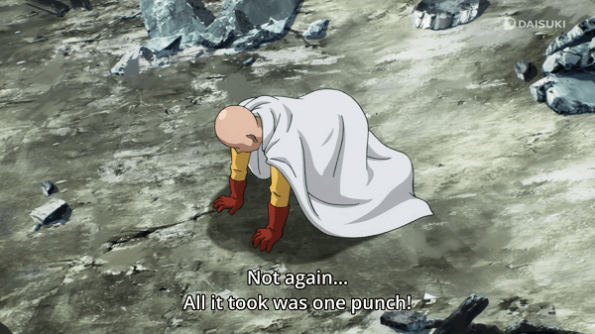
In a world under siege by gigantically wacky monsters and bizarre extraterrestrials, Saitama wanted to be a hero. So, he trained ruthlessly for three years, got abs, but lost his hair. Now he has arguably become the world’s strongest hero. Unequivocal strength comes with a price, however, as now all it takes is a single punch—ONE PUNCH—to knock is opponent into next Tuesday. What was thought to be a thrilling and rewarding hobby became tedious and unsatisfactory. Because he defeats his foes in an unbelievably swift manner, people and the media are also unable to credit him properly.

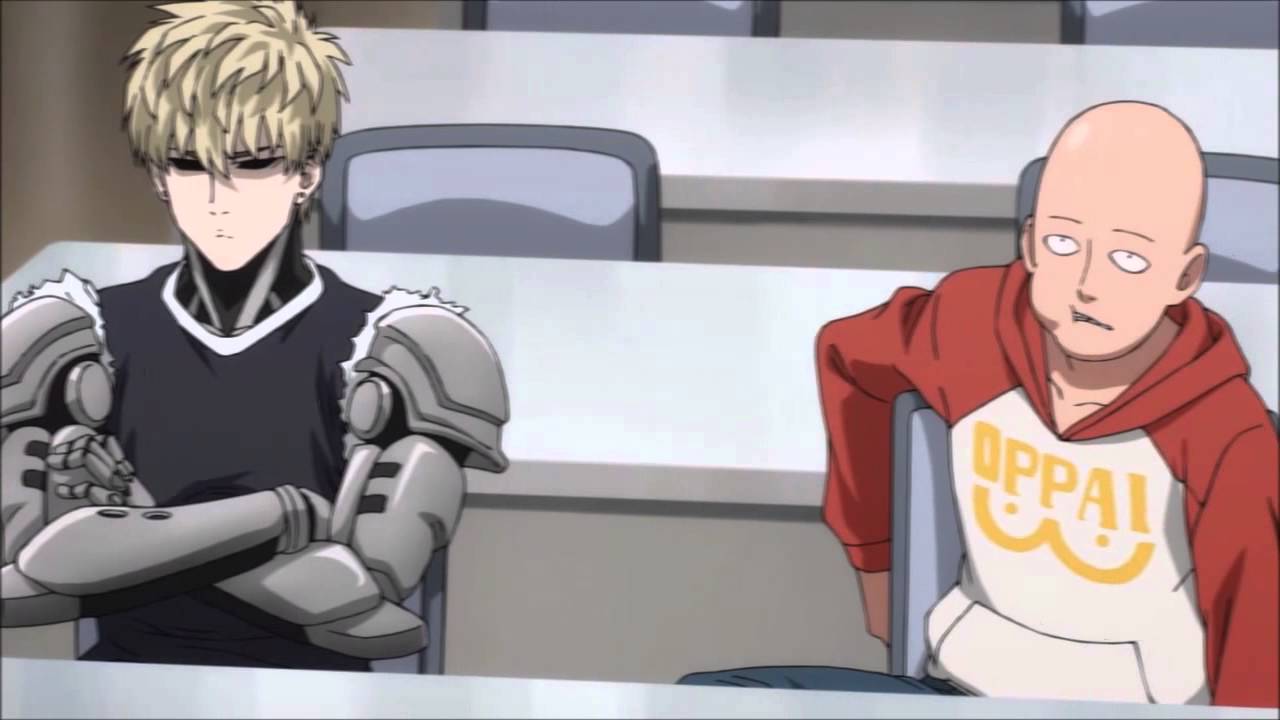
To keep the story fresh, life must change for Saitama. And it does. A cold, brutal, 19-year-old cyborg by the name of Genos stumbles upon the one-hit-wonder’s performance, and urges Saitama to take him as his disciple, admitting he has much to learn from him. Genos then leads his master to the Hero Association, where the two can become certified heroes and *fingers crossed* be officially recognized (and rewarded) for their work saving City Z. As anticipation reignites in odd Saitama’s eyes, he clings to the hope that tougher enemies will head his way, and that one day soon, the people might actually turn to him for help in this chaotic world.

One Punch Man is simple; a tough guy follows his all-powerful master in hopes that the two find excitement in experience, challenge, and fame. While most of the intent is on the explosive battles, much of what people took away from this experience was the comedy, in that it doesn’t try too hard to make us laugh because it’s inherently goofy. The whole scenario of a bald, self-proclaimed hero in a mustard-colored onesie running through the streets yet managing to obliterate any target in one punch is satire in itself. Saitama is an unapproachable fool who defies the typical superhero because he’s an egg-head who exercised a sh*t ton—not receiving any supernatural/monetary help as we know it—to become strong. Since battles are nothing for him, where we see Saitama struggle is against the public eye and the Hero Association’s ranking system itself.

But with the crudely drawn monsters and frankly disgusting defeats, I was turned off by the extreme ends of the repetitive earlier fights. I admit, I thought the anime would run out of steam quite early on, making it just another shounen series out there (but epic-er). Then episode 5 came around—the bout between Genos and Saitama—and I fully realized that this was going to be a good show.

I should applaud Makoto Furukawa’s performance as Saitama because holy crud, how can anyone sound so bland and ordinary yet make me sh*t bricks whenever he opens his dumb mouth?? He really did capture our Egg-head’s nonchalant dialogue, yet appropriately ramped it up for intense battles. I ended up enjoying Saitama as a character much more than I thought I did, for even though he’s clearly the world’s strongest man, he grows as a human in seeking attention and ‘raise’ Genos at the same time. Like the seemingly basic plot, much more development boiled within each emotional scene.

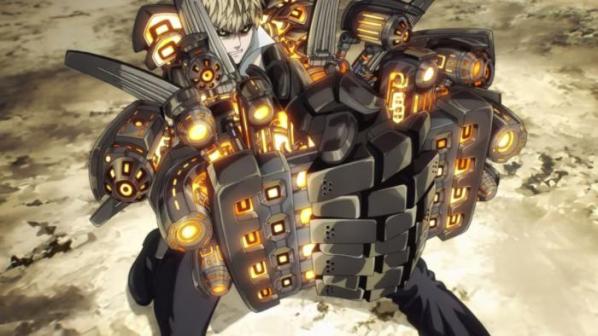
Genos is your typical knight in shining armor (literally, hah!), needing little introduction to sway the crowd in his favor. He’s a straight-up badass cyborg, after all, though he too knows his flaws and overly criticizes himself for the few things he couldn’t do rather than celebrating his accomplishments—there’s always room for improvement. I sympathize with Tin-can on this one. Good thing Genos has a buddy to support him.

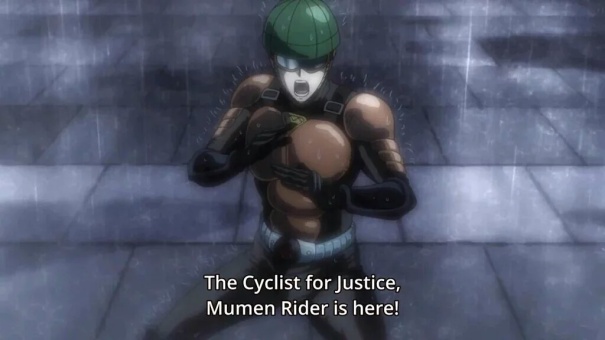
We also get to see the variety of heroes, low and high rankings, which are part of the Hero Association. Most A Class top dogs tend to do it for the fame and luxury life, while the C Class underdogs usually put the good of the cause before themselves. Such is the instance of MUMEN RIDER, a “catch-my-flying-balloon” hero who cycles all across the atomically-wrecked City Z to fight evil (even though he’s typically too little, too late). More than that, he represents the “man at the bottom of the totem pole,” and though his arms are weak, his heart burns passionately like a fool trying to stop the rain by yelling at it.

Madhouse. Ah, Madhouse. I’ve seen very little by them, and honestly, the first couple episodes made me cringe more than anything . . . until that episode 5, man, I’m telling you that’s the crazy action I was anticipating from the beginning. Each match just tries to absurdly 1-Up the one that came before it. After that, I was pretty much glued to the screen, appreciating the contrast between Genos and Saitama’s menial routine (hilarious faces and gestures, oh god) and the ridiculously high-octane fight sequences.

A musical score rides side-by-side with the energetic animation. Makoto Miyazaki combines fierce electric guitar rifts with overpowering strings and techno beats to form the definition of “action film music.” Personal favorites include the eerie “Kowa,” the epic “Crisis,” and of course, the “Theme of ONE PUNCH MAN” and its many acoustic and piano renditions. It’s enough to make you want to jump out of your bed each morning, shout a bloodcurdling cry, then proceed with air punches and a billion push-ups.

Where would I be without mentioning the show’s anthem OP “THE HERO!!” by JAM Project? While it alone contains enough awesomeness to serve as a substitute for your morning coffee, I also speak for the ending, “Hoshi yori Saki ni Mitsukete Ageru” by Hiroko Moriguchi. It was just such a nice balance between “GOOD FREAKIN’ MORNING, NOW GO GET ‘EM” and “Welcome back ~ it’s been a long day. Rest.”

HERO WEEK SEGMENT: Archetypical Hero qualities represented by Saitama

(Why not Genos? Because that cyborg fits the formula all too well. With One Punch Man also being an adaption of a longer-running series, we do not know how the overarching story ends. I have taken those bullets out to accommodate this cut-short adaptation.)

I’ve taken a quick trip to Google to provide qualities of the typical hero. Let’s briefly exercise each prompt:

  • Unusual circumstances of birth; sometimes in danger or born into royalty
    • We assume that Saitama is as average as middle-aged upstanding Japanese citizen as you can get.
  • Comes from humble origins
    • Saitama is about as humble as you can get. You’d frequently encounter him at the local convenient store.
  • Leaves family or land and lives with others
    • Again, we don’t know about his family background, but we can guess he lives alone and has bent his life’s goal on becoming a hero for the fun of it.
  • An event, sometimes traumatic, leads to adventure
    • No trauma here. Just a monster-invaded world that needs a hero to combat evil. I guess he trained daily with “100 PUSH-UPS, 100 SIT-UPS, 100 . . .” yeah, enough of that.
  • Hero has a special weapon only he can wield/always has supernatural help
    • Actually, no. This is just a normal dude who exercised like a maniac to be fit.
  • The Hero must prove himself many times while on adventure
    • It’s quite hard for Saitama to prove himself if every challenge just isn’t challenging. Instead, he must be deemed heroic by the public, and as frustrating as that often is, he somehow manages to push through if even just by a tiny margin. He must also prove a worthy master to Genos and a notable hero for the Association, which though humorous at times, it’s all ultimately not enough to bring about complete development (that is mostly due to it being a mere adaptation).

Notice the lack of similarities between typical heroes? Unlike ERASED’s Satoru Fujinuma, who received supernatural help, fought on to improve himself and save others, and even challenged fate, Saitama is a laughing stock, and his anime, the “proclaimed satire of hero genre” is more just for action and comedy than anything. HOWEVER, Saitama still manages to mangle himself into the hero mold—especially by the end—and I only wish we got more. I’m sure much deeper and emotional struggles await ALL of the cast, but based on these 12 episodes, you’ll walk away giggling rather than contemplating heroism and life as we know it, that blah-blah stuff. We like Saitama because he’s different—because he’s a dork.

Watch One Punch Man for the grotesque, energetic, explosive, out-of-this-world action scenes and the natural hilarity and fun that is Saitama. Should neither of those things intrigue you, then it wouldn’t be a crime to skip it (Genos might say otherwise). I had an epic time with the show, and I’ll leave you with an inspiring quote to contrast the nonsense the anime is more infamously known for. One Punch Man is A-“OK.”

“The true power of us human beings is that we can change ourselves on our own.” – Saitama

ZOOM-BANG-POW! These are my thoughts on 9/10 “Caffé Mocha” One Punch Man. As you can tell, I was pretty darn satisfied with what I signed up for. Most people were. Did OPM satisfy your craving for brutal bashing, or did the quirky facial expressions fuel your smiles? You really ought to let me know! Also, do you have any Saitama or Genos-like figures in your life? I’ve known this guy who’s always trying to do the right thing, but his clunky demeanor and unsuspected heroic deeds hardly ever get credited. Haha, the whole situation just makes me laugh, but should I? ‘Till next time everyone,

– Takuto, your host

This is why people are awesome. See? I’m not crazy. He does look like an egg.