I know we all are a bit quirky, but in the universe of My Hero Academia, 80% of humanity takes quirkiness to the next level. Recently discovered super powers, otherwise known as “quirks,” have overtaken the daily lives of most people. Not all were blessed with powers though, Izuku “Deku” Midoriya being one downtrodden soul.
So while all of his friends (more so enemies) set their sights on the prestigious UA High School, an intense school dedicated to raising heroes, Deku continues his menial routine of taking abundant notes on local big-shot heroes and especially eyeing his idol – The almighty All Might!!! (Yes, the exclamation points are necessary).
When Deku is suddenly caught in the chaos of rescuing his rival from a hideous slime villain, All Might, upon witnessing his unwavering heroism, vows to train young Deku into a muscular man and eventually pass on his quirk to him (because his quirk relies on inheritance).
Flash forward past the months of rigorous training and it’s enrollment time – and Deku is intent on making the student roster. Not surprised to see his rival sitting at the back of the classroom, Deku’s new life full of new friendships and hardships begins. And through his academia, he will learn both the harsh realities and unmistakable joy that come with being a true hero.
My thoughts:
I like My Hero Academia. There’s not much else to be said that hasn’t been already. It’s a show about growing up, one of those feel-good anime that make you want to run out and punch a guy in the face after watching just because you swallowed your cat’s hair. But seriously, we’ve had more development with Deku and his two classmates than we’ve had with all of the characters in this season’s The Lost Village combined – and there are over 30 of those guys!
Deku is a kid with a big heart for heroes, and I wish I could say that about most people. Even though he’s been quirk less since birth, his dreams are still set on UA and All Might, and while it was shattering to see that flashback of him finding out, I think that is what has made him such a loveable guy. Being of humble origins, obtaining powers from a supernatural source, and faced with challenges every day, every hour of the day, Deku practically had the hero formula drilled in him – And he knows it, too!
That development is nothing fresh, however, considering that it’s the same underdog story we all wish to resonate with. It’s managed to keep me invested thus far, and I’m daring to call it out as best anime of the season already just because of how straightforward and honest these first five episodes have been.
It helps that the animation is bright, active, and uncensored in the body fluids department . . . I’m talking about blood, sweat, tears, and snot, of course. The action scenes with All Might are particularly empowering. It’s saddening to see him shrink to his normal scrawny human physique after being buff and superior. I hope the anime carries that torch straight through to the end, just like Deku is so far.
Music is also pumped-up for the hero scene, yet more emotional to fit Deku’s resolves and inspiring speeches with his mentor. What especially caught my ears was the opening, “The Day” by, don’t laugh, Porno Graffiti (hah!). I can’t stop grooving to that and Kabaneri’s addicting OP.
Full of colorful action, comedy, super powers, and likable characters, My Hero Academia is a comic book come to life by THE studio Bones being Bones again. If you’re not already heading to class each week with it, what’s going on? Add this anime to your schedule!
– Takuto, your host
(PS: Sorry if any of this looks rough. I tried doing it all on my phone ^.^)
A brief review of the 12-episode fall 2015 anime “One Punch Man,” produced by Madhouse, based on the web manga by ONE (story) and Yusuke Murata (manga art).
Travel back one season from ERASED and you have the anime that etched 2015 in history: One Punch Man. Its grossly over-popular yet dorky concept captivated web manga fans, and when an anime adaptation by THE Madhouse was announced people went hysterical; cosplay, fan art, and “OK.” memes circulated like no other. But what gives OPM a fiery kick like no other, and why do fans gloriously rave about this bald athlete?
In a world under siege by gigantically wacky monsters and bizarre extraterrestrials, Saitama wanted to be a hero. So, he trained ruthlessly for three years, got abs, but lost his hair. Now he has arguably become the world’s strongest hero. Unequivocal strength comes with a price, however, as now all it takes is a single punch—ONE PUNCH—to knock is opponent into next Tuesday. What was thought to be a thrilling and rewarding hobby became tedious and unsatisfactory. Because he defeats his foes in an unbelievably swift manner, people and the media are also unable to credit him properly.
To keep the story fresh, life must change for Saitama. And it does. A cold, brutal, 19-year-old cyborg by the name of Genos stumbles upon the one-hit-wonder’s performance, and urges Saitama to take him as his disciple, admitting he has much to learn from him. Genos then leads his master to the Hero Association, where the two can become certified heroes and *fingers crossed* be officially recognized (and rewarded) for their work saving City Z. As anticipation reignites in odd Saitama’s eyes, he clings to the hope that tougher enemies will head his way, and that one day soon, the people might actually turn to him for help in this chaotic world.
One Punch Man is simple; a tough guy follows his all-powerful master in hopes that the two find excitement in experience, challenge, and fame. While most of the intent is on the explosive battles, much of what people took away from this experience was the comedy, in that it doesn’t try too hard to make us laugh because it’s inherently goofy. The whole scenario of a bald, self-proclaimed hero in a mustard-colored onesie running through the streets yet managing to obliterate any target in one punch is satire in itself. Saitama is an unapproachable fool who defies the typical superhero because he’s an egg-head who exercised a sh*t ton—not receiving any supernatural/monetary help as we know it—to become strong. Since battles are nothing for him, where we see Saitama struggle is against the public eye and the Hero Association’s ranking system itself.
But with the crudely drawn monsters and frankly disgusting defeats, I was turned off by the extreme ends of the repetitive earlier fights. I admit, I thought the anime would run out of steam quite early on, making it just another shounen series out there (but epic-er). Then episode 5 came around—the bout between Genos and Saitama—and I fully realized that this was going to be a good show.
I should applaud Makoto Furukawa’s performance as Saitama because holy crud, how can anyone sound so bland and ordinary yet make me sh*t bricks whenever he opens his dumb mouth?? He really did capture our Egg-head’s nonchalant dialogue, yet appropriately ramped it up for intense battles. I ended up enjoying Saitama as a character much more than I thought I did, for even though he’s clearly the world’s strongest man, he grows as a human in seeking attention and ‘raise’ Genos at the same time. Like the seemingly basic plot, much more development boiled within each emotional scene.
Genos is your typical knight in shining armor (literally, hah!), needing little introduction to sway the crowd in his favor. He’s a straight-up badass cyborg, after all, though he too knows his flaws and overly criticizes himself for the few things he couldn’t do rather than celebrating his accomplishments—there’s always room for improvement. I sympathize with Tin-can on this one. Good thing Genos has a buddy to support him.
We also get to see the variety of heroes, low and high rankings, which are part of the Hero Association. Most A Class top dogs tend to do it for the fame and luxury life, while the C Class underdogs usually put the good of the cause before themselves. Such is the instance of MUMEN RIDER, a “catch-my-flying-balloon” hero who cycles all across the atomically-wrecked City Z to fight evil (even though he’s typically too little, too late). More than that, he represents the “man at the bottom of the totem pole,” and though his arms are weak, his heart burns passionately like a fool trying to stop the rain by yelling at it.
Madhouse. Ah, Madhouse. I’ve seen very little by them, and honestly, the first couple episodes made me cringe more than anything . . . until that episode 5, man, I’m telling you that’s the crazy action I was anticipating from the beginning. Each match just tries to absurdly 1-Up the one that came before it. After that, I was pretty much glued to the screen, appreciating the contrast between Genos and Saitama’s menial routine (hilarious faces and gestures, oh god) and the ridiculously high-octane fight sequences.
A musical score rides side-by-side with the energetic animation. Makoto Miyazaki combines fierce electric guitar rifts with overpowering strings and techno beats to form the definition of “action film music.” Personal favorites include the eerie “Kowa,” the epic “Crisis,” and of course, the “Theme of ONE PUNCH MAN” and its many acoustic and piano renditions. It’s enough to make you want to jump out of your bed each morning, shout a bloodcurdling cry, then proceed with air punches and a billion push-ups.
Where would I be without mentioning the show’s anthem OP “THE HERO!!” by JAM Project? While it alone contains enough awesomeness to serve as a substitute for your morning coffee, I also speak for the ending, “Hoshi yori Saki ni Mitsukete Ageru” by Hiroko Moriguchi. It was just such a nice balance between “GOOD FREAKIN’ MORNING, NOW GO GET ‘EM” and “Welcome back ~ it’s been a long day. Rest.”
HERO WEEK SEGMENT: Archetypical Hero qualities represented by Saitama
(Why not Genos?Because that cyborg fits the formula all too well. With One Punch Man also being an adaption of a longer-running series, we do not know how the overarching story ends. I have taken those bullets out to accommodate this cut-short adaptation.)
I’ve taken a quick trip to Google to provide qualities of the typical hero. Let’s briefly exercise each prompt:
Unusual circumstances of birth; sometimes in danger or born into royalty
We assume that Saitama is as average as middle-aged upstanding Japanese citizen as you can get.
Comes from humble origins
Saitama is about as humble as you can get. You’d frequently encounter him at the local convenient store.
Leaves family or land and lives with others
Again, we don’t know about his family background, but we can guess he lives alone and has bent his life’s goal on becoming a hero for the fun of it.
An event, sometimes traumatic, leads to adventure
No trauma here. Just a monster-invaded world that needs a hero to combat evil. I guess he trained daily with “100 PUSH-UPS, 100 SIT-UPS, 100 . . .” yeah, enough of that.
Hero has a special weapon only he can wield/always has supernatural help
Actually, no. This is just a normal dude who exercised like a maniac to be fit.
The Hero must prove himself many times while on adventure
It’s quite hard for Saitama to prove himself if every challenge just isn’t challenging. Instead, he must be deemed heroic by the public, and as frustrating as that often is, he somehow manages to push through if even just by a tiny margin. He must also prove a worthy master to Genos and a notable hero for the Association, which though humorous at times, it’s all ultimately not enough to bring about complete development (that is mostly due to it being a mere adaptation).
Notice the lack of similarities between typical heroes? Unlike ERASED’s Satoru Fujinuma, who received supernatural help, fought on to improve himself and save others, and even challenged fate, Saitama is a laughing stock, and his anime, the “proclaimed satire of hero genre” is more just for action and comedy than anything. HOWEVER, Saitama still manages to mangle himself into the hero mold—especially by the end—and I only wish we got more. I’m sure much deeper and emotional struggles await ALL of the cast, but based on these 12 episodes, you’ll walk away giggling rather than contemplating heroism and life as we know it, that blah-blah stuff. We like Saitama because he’s different—because he’s a dork.
Watch One Punch Man for the grotesque, energetic, explosive, out-of-this-world action scenes and the natural hilarity and fun that is Saitama. Should neither of those things intrigue you, then it wouldn’t be a crime to skip it (Genos might say otherwise). I had an epic time with the show, and I’ll leave you with an inspiring quote to contrast the nonsense the anime is more infamously known for. One Punch Man is A-“OK.”
“The true power of us human beings is that we can change ourselves on our own.” – Saitama
ZOOM-BANG-POW! These are my thoughts on 9/10 “Caffé Mocha” One Punch Man. As you can tell, I was pretty darn satisfied with what I signed up for. Most people were. Did OPM satisfy your craving for brutal bashing, or did the quirky facial expressions fuel your smiles? You really ought to let me know! Also, do you have any Saitama or Genos-like figures in your life? I’ve known this guy who’s always trying to do the right thing, but his clunky demeanor and unsuspected heroic deeds hardly ever get credited. Haha, the whole situation just makes me laugh, but should I? ‘Till next time everyone,
– Takuto, your host
This is why people are awesome. See? I’m not crazy. He does look like an egg.
A brief, spoiler-free review of the 12-episode winter 2016 anime “Dimension W,” produced by Studio 3Hz, based on the manga by Yuji Iwahara.
Enter the near future – 2071 to be exact – and you’d find a world transformed and reinvented by “coils,” battery-like bolts which tap into the fourth dimension to channel unlimited energy. Though New Tesla energy company’s coils can be bought off shelves, secretive bootleggers would rather sell illegal coils to earn a living in this seemingly Utopian era.
Not if they are stopped by Collectors, though. These individuals hunt down private companies and illegal coils for a bounty, often living reckless and dangerous lives lit by the night sky. Dimension W enlarges the life of Kyouma Mabuchi, a Collector with a pretty scarred past that caused him to detest coils—He refuses to use them for anything, be it powering his car or a gun. On one particular spree, Kyouma runs into Mira, a robot girl who runs on coils like we rely on blood. As Kyouma grudgingly extends his rough hands for a partnership in the biz, the two uncover the truth of this elusive fourth dimension and how its entire foundation might actually stem from Kyouma’s long-lost past.
Looks are deceiving. Much as how Mira (despite being a robot) is surprisingly more humane than Kyouma, Dimension W has the solid setting to create an unimaginable sci-fi story, yet falls short in nearly every department. Namely, it fails to further explain what exactly a “coil” is. We know what they can power (and what happens when they are disrupted), but we don’t know how they work. And for a science fiction series, breaking down what futuristic concept is being introduced should be the first priority. Now, we did get a half-assed reasoning in the last episode, only to find out it was based on a faulty concept all along. Pretty sure that’s not how energy works . . .
Where this anime does shine is in its characters. Specifically, the leads, Kyouma and Mira. The dynamic between them is great, the vintage Kyouma always muttering “piece of junk” rather than the android’s name as if he defies the idea that coils can produce something so human in nature. In fact, he’s like an old man resisting an iPhone because he knows how unprotected technology leaves folks these days. Kyouma’s veteran past may have left him stubborn and grim, but Mira, for some odd reason, is able to break through his wall and find a beating heart under that worn, red happi coat of his. I mean, Mira is adorable as f***, so it makes sense. Over the course of the series, Kyouma will grow to accept and respect this lime-haired heroine, and that development in itself is a huge driving factor for the show.
The actual plot lacks a cohesive run. Dimension W’s first five episodes are an incredible mix of mystery, high-energy action, and wonder (I even thought for a while there the title’s “W” stood as such), but after an intense two-episode story midway, the setting is shifted towards a location rooted in memories of the past – Easter Island – and the plot becomes unraveling the events which took place back during Kyouma’s Grendel days. We seem to have ditched building on the futuristic setting and the ‘wonder’ surrounding the coils for a lame survival battle with a crap ton of new characters with zero background. Like, what? I thought the show was about Mira and Kyouma and their suspenseful jobs as Collectors fighting off the enigmatic masked cyborg “Loser.” This could’ve been the next Psycho-Pass, but instead we got yet another sci-fi with an unmemorable plot! All was especially disappointing considering FUNimation Entertainment’s first-ever assistance/partnership with the show’s production. I was really hoping for a bang!
At least the technical execution was pretty faithful. Very little has come from Studio 3Hz, but the team managed to pull off a halfway decent-looking anime. While watching Kyouma throw his skewers all over the place was amusing, there were quite a few noticeable shortcuts made. One is that on occasion, characters will be zoomed up during dialogue with solid-colored backgrounds behind them. Another was the lazy animation in the last couple of fights, particularly that of with the show’s lame antagonist. Again, I really enjoyed the character designs and the first few episodes. After that, not so much.
What really got me was Yoshiaki Fujisawa’s epic music. You may recognize his soundtracks in Gate, Love Live!, Yuri Yuri, and others. Watching FUNimation’s Production Diaries on YouTube, we got insight into his inspiration for writing not only DW’s music, but soundtracks in general. Really interesting stuff for a music buff like myself.
By now it should be no surprise to you that I was pretty disappointed with this anime, especially after seeing many behind-the-scenes clips and knowing the work that went into the project. When it comes down to it, the plot is the one at fault. Dimension W had great potential, starting off with strong leads and an impressive premise. Once the ball got rolling, all I kept doing was looking back at the previous episodes (well, that and the clock to see how much more time I had to wade through), and I felt the show itself was doing the exact same thing. The conclusion was also pretty lousy, given that I came in wanting to exploit the coil system rather than the scientists who made it. Fantastic start, but a hard flop to the finish.
“I think things that remain even after time passes are wonderful. It’s proof that the people who made them and used them were alive. By holding them dear, I think it makes the present shine even more.” – Kyouma’s wife, Miyabi Azumaya
Enough about being trapped in the past! What did you think of Dimension W? Did you make it all the way through? I know several decided to drop the show, and while I wish I was able to do that, I’m the kind of guy that needs to see things through ‘till the end. My report: Dimension W will be recognized as a “Coffee” here at the café! Not bad, just a bit too bitter for my taste. I’m still catching up on comments from the last review, but let’s talk more about the show down below! Until next time, this has been
A brief, spoiler-free review of the 26-episode spring 1998 anime “Cowboy Bebop,” produced by Sunrise, based on the original story by Shinichiro Watanabe.
Come 2071, planet Earth is not the only home for humans. Most of the solar system has been colonized leaving a densely polluted Earth left behind. With a series of space gates that facilitate quick n’ easy cosmic travel, criminals cower to the deepest corners of space while mafias run rampant in the back alleys of distant planets. The Inter Solar System Police can only extend its justice so far, and as a result outlaw bounty hunters AKA “Cowboys” are deployed to muddy their hands with a huge cash reward dangling in front of their noses.
For cowboys Spike Spiegel and Jet Black, a single woolong (a dumb penny) is enough elicit risking their lives in chasing bounties and hauling dinner. Born as men for the good of the cause, life aboard the Bebop goes south when the ship recruits three new members that will eventually detour its steady course: Ein, the last purebred Welsh Corgi; Faye Valentine, a formidable and seductive cowgirl in her own right, yet currently searching for her elusive past; and Ed, a bizarre lil’ fella’ who knows how to use a computer quite well . . . scary well, actually.
As the eccentric crew aboard the Bebop get themselves into all sorts of mayhem, we gradually uncover the shady events that brought them all together.
There are two reasons Cowboy Bebop has withstood the test of time. One is that the animation by Sunrise is stunning and artistic, encompassing more meaningful symbolism and well-choreographed action scenes in the first episode alone than what I’ve seen in entire shows as of late! Two is the fact that its episodic rhythm followed up with its smooth flow of fragmented “memories” detailing the characters’ bygone lives is more than well-written. It’s brilliant, mostly because it doesn’t feel artificial; by the halfway point, we feel the passionate weight these characters are dragging with them, and how their past influences their present choices. Though the story doesn’t get kickin’ until episode five, the action-packed opening episodes are an amusing gateway to the show’s darker themes.
Bebop is not, however, a mind-blowing series of bleak revelations, but a journey cram packed with themes that jive with the soul. It is much more light-hearted, with enough emotional weight to rub the heart in a melancholic way—much like warm chicken soup or a deep blues tune would do—yet not enough turn off the viewer. You can feel this impact with the leads themselves, the subtle placing of the classic jazz-inspired episode titles, or the bluesy soundtrack masterfully composed by Yoko Kanno. All three work together to provoke sorrow, joy, regret, reminiscence, and wonder, in a futuristic world driven by detached hearts and jazz music.
Bebop‘s ending, which perfectly captures the nature of the show.
Most of the light-hearted nature of Bebop comes from the goofy or sassy interactions shared among the crew. Spike (dubbed “Cabbage Head” by my sister) is a way-too-lax and easily irritable man with a particularly complex history that frequently bumps heads with the present. His roots to the mafia come back to haunt him (like the mafia typically does), and his development is found in the monumental decisions he’ll be forced to make regarding the safety of the crew—and that of his own life.
Jet is an ex-cop now bounty hunter. ‘Nuff said. If Spike is the ill-tempered dad who always leaves the house for personal biz, then Jet is that mom who A) won’t tolerate your shit, and B) will cook dinner each night if YOU buy the ingredients. Rough around the edges, yet the one with the biggest heart, Jet serves the plot by being restrictor of reckless actions, even though he occasionally loses his temper. He holds Spike and Faye back from doing stupid stuff that could get them all killed, and as such plays a necessary role for this ragtag crew.
Lastly are the two sisters, one a troublesome teenager, the other a weird child. They are the tough-on-the-outside/terrible gambler Faye and the noodly Edward, and are mainly aboard to service the fans (Faye brings the sexy, Ed brings the laughs). While Faye will go on to have a much darker, richer past, Ed is pretty much there for the ride. The two share one thing in common, however, that being this common question burning the at back of their brains: “Why am I here, and where am I going?” It’s a romantic notion of growing up and dealing with acceptance. And that’s why they both work so well in Bebop—it’s the story of finding your place in this huge, cruel world.
Watching Cowboy Bebop is equivalent to revisiting an old website that you used to frequent back in the day, yet haven’t seen in ages. Does it feel nostalgic? Euphoric? A bit melancholic? Perhaps a bit of all three, but one theme Bebop enjoys feeding us is that internet is more than a tool—it can be a place for some, putting literal meaning to ‘home’ page. For me, this online café has given me a place to chat with and meet new friends. For the characters in the anime, the web is a place for an old man to play one last game of chess before giving his last breath, or for a disabled kid to vent his faith by becoming a God himself. It sounds a bit odd, but seriously, how much does the internet mean to you?
You should watch Cowboy Bebop because, in one way or another, it’s the story of our lives. Everything that challenges the Bebop crew and everyone they meet along the way represent a fragment of our deepest worries and regrets. Should you merely enjoy this anime for the comedy, then hey, that’s awesome, it’s got a lot of funny moments! But Bebop sure does have this genuine way of letting you know you’ve reached the end when it comes. With all of the interlaced light-hearted moments, it’s as if the show is reminding us that “Nope, sorry, this wasn’t the show you signed up for—and you know that.” Instead, you’re probably like myself and most Bebop fans, in that once it’s over, you’ll find yourself detached from the solar system, solemnly jiving to The Real Folk Blues.
“Life will challenge you to do things . . . sometimes, you just have to let go!” – Spike Spiegel
However you watch this anime, here’s advice straight from the Host: DO NOT string your viewings out for THREE months! It’s terrible! I endured this journey with my family, and being like all families, it’s hard to squeeze in quality movie time. But we did it, and now who knows what we’ll watch together, if anything. Rated a “Caffe Mocha” here, did you enjoy my review of this classically-acclaimed space western? Also, what’s your favorite aspect of Cowboy Bebop? Should it have lasted longer? I barely scraped the surface to avoid spoilers, but let’s talk about it in the comments! Thanks for reading and until next time, SEE YOU SPACE COWBOY . . .
Here lie my thoughts on the 2012 anime film “Evangelion: 3.33 You Can (Not) Redo,” also known as “Evangelion Theatrical Edition: Q Quickening,” produced by Studio Khara and Gainax, original story by Hideaki Anno. Specifically, this is a bit of a review, analysis, and diatribe . . . thing . . . over FUNimation Entertainment’s February 2nd, 2016 release of the prolonged English dub and translation. Be forewarned, we breech SPOILER TERRITORY, and this post will be rather lengthy and out-of-the-ordinary in comparison to my typical reviews. This compilation will (not) be for everyone, clearly, but if thus far you have enjoyed the musings of Takuto the host as a person, do consider taking the time to carefully read. I would greatly appreciate it.
While my Eva celebration concluded a week ago, I held off on this review. It’s not only hard to talk about from a statistical standpoint, but difficult to pass judgement on an emotional level. I think I’m finally ready to wrap this up, though. No spoiler, I enjoyed myself. However, my voicing of CONCERN for a franchise has NEVER been stronger than what is contained below – And I watched PMMM: Rebellion! For both of us to navigate this wasteland of crushed dreams and abundant thoughts, I’ll be dividing this into sections. Read parts of it, all of it, just the end, none of it – Whatever you’d like.
CG Evas never weighed so little! Also, best soundtrack to date!
This’ll be the easiest area to cover, as the quality of the Rebuild continues to impress. The dynamic perspectives in space, the desolate tone of old NERV HQ, the unbelievable action sequences, that godly piano scene, oh my!! I only hope that the last film (whenever it gets here, *sigh*) doesn’t rely so heavily on CG mapping because seriously, the entire first third of the series (which really feels like its own episode) is all CG, save for the characters. It’s not a bad thing, per say (the Mark.04’s last form looks like a shitty CG fan blade and the Wunder, Misato’s flagship not only lacks explanation for its abilities, but also looks dorky), I just remember when the Evas had so many moving CG parts and details, and now just a black line down the middle can replace that? Um, no. Also, not sure how I feel about the sharper face designs.
Yeah . . . ten-year-old me might have been a fan, but now . . .
Unit-08 in the trailer in 2.22
What we actually got in 3.33. Yeah, it sucks.
This was from the trailer (not that we should trust them anymore) for the last film. Doesn’t it look kinda ugly?
And why are they now weightless?? Giant robots are flyin’ all over the place towards the end looking like sprinting drunk fools. Also, do you remember when beast mode was a special thing only Shinji could do in NGE and 1.11? Well, not only can Mari do it (2.22) but so can Asuka now *facepalms*. Is best mode just a gimmick now, because it’s not even cool, neither does it make sense. The animation otherwise is absolutely stunning, and I mean that with every sense of the word! I still hope Khara is saving the good stuff for last . . .
Shiro Sagisu has done it again, that is, knock the atmosphere of EVANGELION OUT OF THE PARK!!! This was probably my favorite part of the entire film, his epic and otherworldly soundtrack elevating the stakes on every scene. While I love the reprisal of his old stuff, his new pieces, full orchestra or melancholic piano, are not something to cast aside. “The Ultimate Soldier,” “The Wrath of God in All its Fury,” “God’s Gift,” and “Scarred and Battled” are all bone-chilling masterpieces. They add SO MUCH to the movie! While at first I was very disappointed with Hikaru Utada’s new ending theme “In the End (or Sakura Nagashi), as the anticipation from the first two blew me away, I have come to delight in this change of pace. As for the English dub, it too is excellent! Not sure why a translation took so long, but hey, the acting is wonderful, and it’s so great to hear Allison Keith as Misato and Tiffany Grant as Asuka once again.
Not the world we thought we knew: Reintroduction and Basic Summary
Following the cataclysmic Third Impact initiated by Shinji Ikari at the end of 2.22, 14 years of undefined strife have passed, leaving the Earth stained red. SEELE, revealed to be nearly crippled by mysterious attempts behind the scenes, has entrusted “World’s Best Dad” Gendo Ikari to carry out the remaining mission of returning mankind to a world free of human suffering and sin: Instrumentality. But Dr. Ikari has anticipated this, and instead proceeds with his own selfish plan of using the Evas to eradicate God in return for a reunion with his wife, Yui, who is revealed to be “trapped” inside the purple Unit-01.
Not all of the adults were very pleased with NERV’s true motives, however, and as a result Wille was born out of the crimson fires of rebellion. Headed by Misato, Ritsuko, three familiar NERV faces, and some new recruits, this “Will” is the only remaining organization fighting for the People.
While a decade and a half has transformed everyone around him (the “Curse of the Evas” preventing Mari and Asuka from physically aging, though), Shinji remains the same old idiot brat. He clearly still hates himself, and, upon hearing that he is no longer useful to anyone he loved AND that he failed to save his beloved Rei, fleets in anguish and rage.
Upon returning to old NERV headquarters, the third child encounters SEELE’s boy, Kaworu Nagisa. The majority of the film develops their intimate relationship, but when even more lies and secrets sneak their way out, Shinji once again mentally teeters on the brink of destruction, setting the stage for the beginning of the end of humanity.
The first ten minutes were fascinating – that space battle entranced me and left me dazed! What was so promising, however, became unexplained motives just for SHOCK VALUE. I wasn’t digging the Wunder or any of Wille’s musings at all simply because I don’t recognize anyone there! I can’t sympathize with something that has no feelings for its viewer! After, when we return to Shinji at NERV, things get a little more interesting but continue without regard to us watching. It was a deadly cycle of WTF after WHY?
This is how I felt.
3.33 is set in a world gone to shit. Our favorite mentally-disturbed NERV-lings now grit their teeth and point guns at each other. I understand wanting to shock the individual through Shinji’s dusty reopened eyes, but there is a difference between sudden character development and dun-dun-dun PLOT TWIST. The tonal shift is absolutely effective, but everything just feels wrong with this movie. It’s as if I’m stuck in the worst dream of my life, yet waking up is impossible not because I’m trapped, but because this intangible hope still fascinates me; an urge to scratch an itch.
Despite my love for its previous “Angel of the week” setup and watching the robots fight, Evangelion has always been more than that – It’s an assessment of the human condition, how we cope with loss, and the relationship between troubled individuals . . . With the Rebuild, I almost have to discard both of these beliefs because, after reading the pamphlet the set came with, it read:
“Volume 3 plunges headlong into unknown territory as it presents the viewers with unconventional plot twists that they never could have imagined. At the same time, it brings together all the story elements as “Shinji Ikari’s Story.”
That second bit could possibly explain the entirety of this new direction. It’s “Shinji Ikari’s Story” now, not necessarily being about the others. Shinji’s new development is much less noisome compared to the original. That might be a plus for some, but for others (NGE fans) the choices he makes and the unexpected backbone grown feels even more disconnected than before. He’s suddenly able to save chicks and initiate Third Impact just by going berserk, which makes NO SENSE considering that Third Impact is a ritual of sorts contained with the Dead Sea Scrolls. Then you want us to believe that Third Impact was prevented, yet it still managed to destroy the world?? What the hell?! 3.33 is more emotionally invested at the cost of its linear storytelling built by the first two films, and that investment is totally dependent on ridiculously high stakes timed with over-the-top action sequences – NOT character mentality. I want my real characters with real problems back, not heroes saving princesses.
Familiar faces . . . or are they?
I’ll get right to it. I hate this new Misato. The Misato that we’ve come to love from the previous two films would have understood Shinji and tried to comfort him like a mother. At the end of 2.22, she even remarks that he shouldn’t care about the rest of them or the world. “Do what you think is right” coaching. The only subtlety of her kindness is when she refuses to detonate the DSS choker around Shinji at the end of the first third. That part makes sense, but THAT’S ABOUT IT. It doesn’t help when she, being a main character in the first two films, gets a combined 5 minutes of screen time, if that. I despise those who keep comparing this series to the original, but we were cheated out on the beautiful relationship between Kaji and Misato. It was one of my favorite moments from the show that dives into the complex mind of NERV’s bossy gal.
And Ritsuko, HOLY GOD WHERE IS YOUR HAIR?!?! Like Misato and the rest of the crew, no explanations as to what occurred during that 14-year gap were given. In the original series, this would’ve been the point when Ritsuko fought with her past – her mother. While the absence of Misato and Ritsuko’s stories isn’t world-crushing for fans of the original series, it would be such a disappointment for someone who only knows of the Rebuild. At this point, Misato and Ritsuko are just hot husks for shock value, and that makes me cry.
Don’t even get me started with Asuka and Mari. At this point, they’re both in it just to say they were in it. Asuka is mad at Shinji and continues to bring the best fights in the entire franchise. Wow, that’s new. Had I only watched the Rebuild, I wouldn’t have even thought that she suffered from acceptance issues by her mother, and that the Eva is the only way of showing how awesome she is. Want to know why? BECAUSE WE DON’T KNOW IT! It’s that stupidly simple!
And Mari, oh poor Mari. She gets 2 minutes of screen time standing in the background sniping things that DIDN’T MATTER IN THE SITUATION. She’s clearly back up for Asuka at this point, but god is she unappreciated. Also, her psychologic state receives zero background, adding nothing new here. It only adds fuel to the fiery debate that Mari is pink fan-service that serves no purpose in the Rebuild. Is it sad that I’m starting to side with them? I feel disoriented with the Rebuild’s characters, much like Asuka spinning around in the dark loneliness of space.
As for Touji’s sister Sakura and the other old/new recruits? Either give us more than 10 minutes of Wille interactions or don’t add them at all. To quote the new Misato, “You do nothing.” Interestingly, for as much that explodes in our faces, 3.33 is the shortest film in the series. Would 20 extra minutes of integral building on Asuka, Misato, Mari and the others have helped the movie? You bet your sweet ass. This is yet another reason why I feel so cheated on by 3.33.
. . . Rei fans? Not anymore . . .
Ignorance of the hedgehog
SHINJI IS FOR ONCE A RELATABLE CHARACTER. If you woke up after a 14-year-long coma and everyone wanted to wring your neck – yet not tell you why – How angry and disoriented would you feel?? Shinji has every right to storm out of the Wunder. Wille did NOTHING to better the situation. By leaving Shinji in the dark then getting mad at him and scolding him, of course he’d be sick of it all! He didn’t intend to destroy the world, let alone do it a second time at the end. Why doesn’t someone inform him? Kaworu tried, but he’s too cryptic for Shinji to understand. Fuyutsuki told him about his mom, but this information only explains Gendo’s motives – NOT what he has done “wrong” as a human.
Finding love in a war-torn world, A “fanfiction come to life?”
Sittin’ in the cock . . . pit.
That’s right you KawoShin fans, here’s the part you’ve been waiting for. The film takes on the emotional side of the franchise, especially the pinnacle of Shinji’s depression: The rejection of others and the loss of a dear friend. 3.33 invests more emotional build up through this pairing and the opposition that Shinji is once again faced with, though this time feeling more artificial. In a world where no one will accept Shinji for whom he is anymore, seeking refuge with a new-found friend was the happiest thing for me. I was ready for the movie to end when they were tangled up in the magic of music, THE MOST beautiful scene in the entire movie in terms of emotion – I dare say of the entire Rebuild. I fangirled HARD. Kaworu filled the holes (in more ways than one *wink*) left after everyone’s betrayal and gave the first child a purpose for still living. More than that, he gave Shinji a friend. He needed that. The DSS choker, bearing the weight of sin, is taken by Kaworu, which signifies that atonement can be achieved through hope. “What was caused by an Eva can be fixed by an Eva.”
The HOPE for rebirth is out there . . .
I read a comment on YouTube a few days ago:
“Don’t worry Shinji, Rei’s got your Walkman, Asuka’s got your hand, Mari’s got your back, and between them they’ll eventually talk Misato around.”
The only problem with this is lovely statement is that in order for Shinji to cope with his depression in this route, the radio has to be left behind. It is, in short, the unwillingness to open up; the grudge against a cruel world and his father; a pact with solitude. I have a strong feeling that we won’t be hearing the next track in that same old player – It’ll be something new and full of hope because it HAS to be. 3.33 leaves us with Shinji, Asuka, and Rei (no Mari, see, even Anno doesn’t care anymore) ready to traverse the bloodstained wasteland. By themselves. No one else. This is very exciting!
The Rebuild has given up on coping with issues like depression and loss. That much is clear. Instead, it goes for a more conventional theme: Hope. 3.33 ends with neither closure nor satisfaction, and that is very frustrating. If EVERYTHING is explained and built upon in the fourth installment, then cool, this is a masterpiece. But that is highly unlikely. The Rebuild doesn’t need to look back at this point. The stage is set for the final act, and its heading is definitely fixated forward. In its third chapter, we were thankful that the ROE was focusing all of its energy on cohesively developing its main character, “Shinji Ikari’s Story.” Sadly, this comes at the incredible cost of its other leads and a cohesive plot. I fear more than anything that these great sacrifices and risks won’t be worth it.
Consider me shocked and impressed, but I’m not at all comfortable with these new developments quite yet. The Rebuild of Evangelion is still in the closet (with this film, in more ways than one). Not a whole lot was accomplished, as yet another step in Gendo Ikari’s ever-expanding, world-deconstructing plan was fulfilled, and it only leaves us on another verge as to what will ‘impact’ us next. Though it has blinded us with myriad shades of red, it has yet to show us its true colors. What will unfold? Only God knows.
A spoiler-free review of the 12-episode summer 2015 anime “Rokka no Yuusha” or “Rokka: Braves of the Six Flowers,” produced by Passione, based on the light novel by Yamagata Ishio.
– View in browser, not app, for best experience –
Whenever you’re out driving, do U-turns scare you? Oh man, they do me in. Usually swift and unannounced, what was the car ahead of me casually cruising along suddenly burns rubber and whirls around to oppose me.
So maybe I’m dramatizing U-turns a bit (also, they’re probably illegal in most areas), but doesn’t that abrupt 180-degree flip potentially ruin a nice drive? Well, if the other driver knows exactly how to pace it, direct it, and drive it on home, then no, not at all.
That’s what Rokka here did, and boy was it a spectacular turn.
This setting is gorgeous.
Long ago when the Demon God plagued the world with darkness, the Goddess of Fate came down and sent the demon back into the shadows – Not before splitting her powers amongst six heroes, though. Now in a present-day yet still fantasy-Aztec land, the Demon God has awoken numerous times, only to be quelled time and again by new rotations of these “Heroes of the Six Flowers.”
See? Not lying at all.
The self-proclaimed “strongest man in the world” Adlet has been selected to be one of these six braves. To prevent the Demon God’s next return, the six heroes band together and venture into the dark lands in hopes that they will save the wor–
Woah woah, slow down there. It sounds like a feasible action/adventure anime thus far, but right after episode four, it’s time to slam the breaks – Rokka wants a complete change of pace. What happens to our heroes?
Nothing. All seven meet up at the rendezvous point before plotting their attack. Wait . . . I thought there were just six braves . . .
There are. A magic barrier goes up around the temple, thick fog fills the air, and everyone is trapped in. Someone is an imposter.
If that’s not a 180-degree flip, then I’m not sure what is (I get chills just reading it). Rokka spends the first third showing off its heroes and their skills as such. It acts like your normal fantasy anime but then decides to try something new. The introduction of mystery to the fantasy/adventure genre is something I’ve never seen before. And through its fresh direction and pre-establishment of the cast, it moves forward without hesitation.
Squad goals.
The sheer amount of suspense that Rokka builds up is absolutely incredible. Its clever hashing-out of your typical fantasy party members makes it a hot game of Dungeons & Dragons runnin’ around on the Clue game board. You wanted adventure? Not anymore. Take this murder mystery instead because it’s cooler. The gimmick works so well because we know these characters – All we have to do is roll the dice and start throwing accusations. You’ll have so much fun watching your options drop out as the game soars to its climax.
Spooky spooky ~ Who is the Seventh???
As a side note, I was a bit spoiled by the identity of the fake, but even that didn’t faze me. Seeing how all of the clues slid into place and watching the insanity unfold gave me more than my fill of entertainment. The anime still kept me guessing to the very end, regardless of those damn trolls. That goes to show how exciting Rokka is.
I have to mention the studio behind this anime because their name was completely new to me: Passione. I was 100% impressed by the superb animation quality and fantastical artwork. Due to the unusual yet intricate designs of each hero and their unique repertoire of arms, action scenes were bloody intense and wicked smooth.
“I am the bone of my –“ Not now? Oh, okay.
For music, we had the reoccurring yet beloved fantasy artist Oshima Michiru (FMA, Sora no Woto) who filled the still, foggy air with an engaging score. Of its many OPs and EDs, my favorite was “Secret Sky” by MICHI for being everything I listen for in this wonderful genre.
With puzzling motives, characters we’ll all recognize, and shocking plot twists at each episodes’ end, Rokka no Yuusha was without a doubt 2015’s hidden gem. The only reason you don’t remember this title was because you stopped after episode three. Rokka‘s not without its flaws, however: Some less-major characters could have used more backbone, the opening is admittedly a bit slow, but biggest of all – This is ultimately only a preview into Rokka‘s grand scheme, and as such leaves us with jaws dropped begging for a sequel. I hate this. Don’t worry, we still get an ending that ties all of this up, but for those wanting to know how the legend ends better start supporting the franchise.
You should watch Rokka: Braves of the Six Flowers because it’s something new. It takes a wild idea and runs hella far with it, leaving you clinging on for your dear life! Fans of the adventure genre especially won’t be disappointed with Rokka‘s new entry to the fray.
“That’s the first thing my master taught me. To laugh.” – Adlet
+ Despite being abrupt, fantastic new direction taken with strong, clever writing
+ suspense, Suspense, SUSPENSE
+ Studio Passione did an incredible job putting everything together
– ‘Supporting’ heroes could have been given more background, little more depth for all
– Unfavorable localization (Ponycan’s ridiculous prices without an English dub)
– Cliff-hanger ending = WE NEED MORE ROKKA, DAMMIT
Now, I’m still cautions with those U-turners, but Rokka really impressed me guys. It’s a solid “Caffe Mocha” in this little establishment, but again, you should spread the word so we can eventually devour more! You can watch the entire anime on Crunchyroll for FREE if that site is available to you, to which I recommend “full speed ahead.” I only cry because Ponycan USA is releasing this epic without a dub. If you took a liking to my tentatively new and less-wordy format, let me know by hitting that “like” button and commenting below. It helps me immensely! Thank you all for reading and as always, until next time this has been
A spoiler-free review of the 25-episode spring 2015 anime “The Heroic Legend of Arslan,” produced by LIDEN FILMS and SANZIGEN, based on the manga (story) by Yoshiki Tanaka.
Undefeated King Andragoras rules over the flourishing kingdom of Pars with a firm grip through his mighty Royal Capital, Ecbatana, a city structured around a slave system that fuels the royal palace. However, the baby-faced prince Arslan, a wide-eyed and curious boy, knows deep down that he does not possess the same iron fist that his father, the King, leads with.
Pars Era, Year 320. At the tender age of 14, Arslan sets out on his maiden battle at Atropatene only for everything to go up in flames. Ecbatana falls to the Holy Lusitanian Empire, an enemy not only smart on the battlefield, but one that follows their all-empowering god “Yaldabaoth.” The youthful Arslan witnesses bloodshed of his people and the capture of his glorious Ecbatana. Arslan quickly flees the war mounted on the steed of his faithful knight, Daryun. It is at this moment that Arslan’s destiny is written in the stars, and through the help of his new followers and friends, he will rise to reclaim his golden capital no matter the cost.
At its core, this anime is about growing up and finding the courage to lead, and it pulls this decently enough. Arslan is faced with countless tasks that he must overcome before he begins his reclamation: Inviting members to join his party, establishing his force, rebuilding his army, seizing a base of operation – those are his main goals. But there are many bumps in the road for the poor blue-eyed prince. He must first find his drive to fight, his charisma to keep others around him, and lastly, his ethical approach to war. All of this ties into leadership, and through the guiding pen of Narsus, the master tactician, Arslan’s ideals become clearer.
Arslan Senki is set in a world based on past historical cultures, and I can proudly say has it done its research quite well. Although I’ve never been out of the country [yet], its portrayal of distant desert lands are captured in such a rich manner that I feel as if I’m actually sitting on a silk cushion in bright banquet room watching minstrels and men get heavily drunk!
You must not forget that Arslan is a fantasy. The magic may only be sneaking in the shadows (receiving no explanation whatsoever), but it’s still there. And since there is a hint of magic, it seems that the anime takes the typical fantasy copout: “It’s magic. I ain’t gotta explain sh*t.” Know that it works in mysterious ways, charming characters in the background, but it’s not the main focus. That’s on our characters.
Wait, what? No. Go home.
We’ve already talked about Arslan; decent kid, fair development, a bit bland, but not a poor character. Following Arslan right by his side – both his sword (javelin-thing) and shield – is Daryun. Daryun’s loyalty to his “prince” is admirable by many and his strength is unmatched – even by those in foreign lands. When he is not speaking to his prince, Daryun chats with Narsus, an old pal of his from back in the day. The two share conversations of strategy and wit, a combo both deadly and humorous. Just don’t bring up Narsus’ side-hobby of painting. Really, don’t.
Hey buddy, that’s what I thought
The other two I enjoyed were also fine warriors in their own rights. Gieve, a whimsical “traveling musician” who can skillfully wield many weapons and the chill Farangis, a muscular yet enchanting cleric and master of the bow which whom Gieve proclaims his love to. Although they are somewhat a gag duo, Gieve neither siding with Narsus nor the enemy half of the time, they receive very little backstory (specifically Farangis) – which is the biggest disappointment. I would have sacrificed ten Arslan balcony-contemplation scenes for one Farangis side story if I could.
That’s right. Slip and slide outta that room Gieve, you perv.
These adventurers along with a couple others compose Arslan’s force against lord “Silver Mask” (oh the cheese, it hurts), an incredibly skillful brute who is after Arslan’s head for some reason . . . Among the challenges that Arslan faces, this is his toughest one yet! This man is what triggers Arslan’s moral conflict. I won’t say much, but it was an intense endeavor for the crew to keep away from this madman.
Too bad NO ONE knows who you are even without the mask
Now, if you’ve thought that up until now Arslan Senki was an A+ for me, you’re incredibly mistaken. The entire show is one sloppy quest, and here’s why:
They say adventures are all about “the getting there,” and that the resolution just happens to tie loose ends. But Arslan Senki doesn’t give us either of these things! Instead it drags on for 25 boring episodes of pointless side plots doing FLIP that take far too long to resolve – Speaking of, IT DOESN’T END. Spoiler alert, but it doesn’t. Instead, we have Arslan and the gang mounted majestically, waiting to take back the kingdom until blah blah blah “here’s a season two B.S. announcement because we couldn’t get our crap together in the first.” Seriously, WHAT!?
Yuck
More yuck
Don’t even get me started with this anime’s production value. It’s TERRIBLE. I’ve had enough of CG-gummy army men, retarded-angry horses, and derpy Arslan faces to last me enough time to figure out the secrets of “Silver Mask” and overthrow Pars THREE times over. The animation is extremely inconsistent, relying on its few high-budget fight scenes and opening animation alone, and it really drags the show in the mud. You know it’s bad when you can tell where the money went in each episode. Art may look pretty, but for the love of Yaldabaoth DO NOT get this show in motion!! It’s so IRRITATING.
Heavens, I find that very hard to believe
Why do those horses look so . . . evil?
why do they go to the dark side
No seriously, what the hell IS that??
“Yes, he’s supposed to be killing that horse.”
And now for the music. Does it fail epically like its visuals? Well, slap UVERworld, Eir Aoi, and Kalafina in the same anime and you tell me. The first opening “Boku no Kotoba de wa Nai, Kore wa Bokutachi no Kotoba” by UVERworld is pretty darn solid, and the second, “Uzu to Uzu” by NICO Touches the Walls has that quality “second half” feel to it. Once you hit EirAoi’s ending “LapisLazuli,” however, you’ve entered my top 5 endings. If Arslan is remembered for one thing, it’s gonna be this song (that moment when the OP/ED is better than the show). Lastly, Kalafina brings all under their graceful wings with “One Light,” the second ending, giving us some air of conclusion to grasp onto.
I’ll give Taro Iwashiro’s soundtrack props to filling out the fantasy-adventure tone enough to immerse me in the setting. No tracks in specific to highlight, but being supportive is all I could ask for with this shambling show.
So whoopty-freakin’-doo, there are my thoughts on The Heroic Legend of Arslan, or more accurately titled, The Heroic Legend of Asslan, pardon my French. Unless you are an absolute diehard fan of the fantasy-adventure/war drama genre, then throw this one out with yesterday’s garbage. We don’t need it, and certainly not a flippin’ sequel. That’s bullticky. Now if you’ll excuse me, I’m going to go find Farangis’ cult and burn crosses in Lusitanian yards.
“The throne itself does not have a will of its own. Depending on who sits in it, it can be the seat of justice or it can be the seat of inhuman cruelty. As long as it is a man, and not a god, doing the governing, he can never be perfect. But should he neglect to make efforts to reach for perfection, a king will surely tumble down the slippery slope towards evil with no one around to stop him.” – Farangis, and amen at that
+ Arslan’s main troupe, though a bit lacking in development, comes across as a pleasant party
+ All openings and endings were the only features keeping me attached to this show
– IN-CONS.ISTENT. ANIMATI-ON.
– Sloppy execution of story, not enough character spotlight, specifically for Farangis and Arslan
– So much wasted potential in all categories, ending was unsatisfactory
For the café rating, it’s average even during its best moments. Did anyone else feel disappointed with this anime? If you had other thoughts, I’d be very interested to read them, but otherwise charge into the like button if you found my “spittin’ fire” on Arslan at all amusing. “Yashasuiin!” I won’t lie, if felt darn good to hate on something since all I do is spread cheer about shows. And right as I return, I must bid you all farewell again, so until next time, this has been
As you all know, I once again sold my left arm and my magic circuits over to Aniplex of America so that I could purchase their DVD set of the first season (episodes 1-12) for Fate/stay night: Unlimited Blade Works (TV). The fantasy action anime all about the 5th fight for that elusive chalice includes an all-new English dub. This is particularly exciting considering that I’m a veteran who watched the original Fate/stay night (2006) and the Unlimited Blade Works Movie (2010) in SUBTITLES. Curiosity did get the best of me, and I ended up watching segments from these Studio Deen adaptations, but their dubs sucked (just cuttin’ to the chase). Luckily, I pretty much only have positive reviews for the Ufotable version, so read on for more depth!
This is just epic. To watch it go from simulcast, to Japanese set, to English DVD is a beautiful journey.
While the image above is the cool slipcover art, the DVD case itself contains this absolutely stunning artwork. The only difference is that where the text is, the English logo for F/sn: UBW is stamped.
Let’s kick things off with Shirou Emiya, portrayed by the infamous Bryce Papenbrook. Now, Papenbrook has quite the streak in misplaced voice acting, his role of Kirito being my biggest turnoff. But for a character like Shirou, his age and position, I thought Papenbrook pulled things off without a hitch! He does a damn good job at imitating Noriaki Sugiyama’s rather high and somewhat obnoxious voice, so my hat’s off to you, Papenbrook!
On to everyone’s favorite tsundere mage, Rin Tohsaka is voiced by Mela Lee. Apparently Lee’s been with Tohsaka since the first dub of the adaptations, but every one of her performances lacked the natural stuck-up attitude I’ve been searching for – Until now. Once you get past the first hour-long pilot, Lee’s voice stops ringing in my ears and becomes one of the more fun – and pretentious – performances to hear from. It sure isn’t as great as Kana Ueda, but it’ll do.
B*tchy-Mc-B*tch-Face Archer is brought to life by the smart-assy Kaiji Tang (as you can see, I don’t fancy Archer). Brilliant in every way possible, Tang milks all that he can out of Archer and puts up a stunning fight on the vocal front. He, too, fits the range of voice necessary to Archer’s arrogant dialect. Love it!
And last (but certainly not least) for the main cast, Kari Wahlgren once again dons armor and all to surmise Queen-friggin’-Arthur herself – Saber! *Slight spoilers* Because she is no longer partnered with the cold and distant Kiritsugu from Fate/Zero, Saber speaks with much more curt and “oogly” expressions as she develops her relationship with her idiot partner. And since I don’t speak Japanese, Ayako Kawasumi’s five-star performance doesn’t come for me as naturally as it does with my native speak. I’m obviously biased to this [literally] English role, so I stop before the sparkles start gleaming ^.^
Since those are the main characters, I’ll just list the minors with a brief reaction:
Todd Haberkorn as Assassin – F*ck yeah, even though I kinda forgot whom he was in the original, I’ll now never forget! Just YES, YES TO ALL!
Megan Hollingshead as Caster – THIS RIGHT HERE was surprisingly fantastic! Caster’s sly, mature voice reflects so well in Hollingshead’s performance. It was also so darn sexy 😉
Matthew Mercer as Kiritsugu Emiya – He’s only around for a couple of flashbacks, but those are just enough to bring tears to your eyes as you recall Fate/Zero‘s tragedy.
Julie Ann Taylor as Fujinee, or Taiga Fujimura – Always. Excited. Is the Taiga. Fujinee~ has a very nice English voice actress, simple as that!
David Vincent as Gilgamesh – More F/Z carry-over drama, and in fact, Vincent has such a pompous and snarky that its perfect for the King of Heroes. We’ll hear more of him in the second season, though.
Dorothy Elias-Fahn as Kane Himuro – One of Tohsaka’s classmates, can’t say she was very memorable, but not bad either
Crispin Freeman as Kirei Kotomine – This is one “fake priest” that you don’t want to run into on a dark night. Freeman will never be as solid as Jouji Nakata, but so, so damn close! It was a pleasure to listen to Kirei’s rich, melt-in-your-mouth voice again.
Lex Lang as Souichirou Kuzuki – “Mr. Kuzuki” as he is in the dub also shares the same voice as Count Cruhteo from A.Z, who just happened to be one of my favorites! Ironically, he was Issei in the old dub, the student who shares residence with Kuzuki.
Tony Oliver as Lancer – Oh boy, oh boy, Lancer’s English voice will not disappoint whatsoever! I’ll admit, Nobutoshi Canna was excellent, but Oliver wins it for me!
Erica Lindbeck as Kaede Makidera – Another one of Tohsaka’s gals, nothing fancy
Kyle McCarley as Shinji Matou – Now, this might be the only exception to an otherwise wonderful English dub. McCarley’s not by any means bad; Hiroshi Kamiya just has a skimpier edge and superiority to the damned Shinji we all know and hate :>
Cristina Vee as Sakura Matou – Agh, it’s Cristina Vee – and aww, it’s Sakura! This combo goes hand in hand, but I’m interested to see if they’ll keep the same actress when “Heaven’s Feel” makes it over here in the States, fingers crossed.
Brina Palencia as Ayako Mitsuzuri – Mitsuzuri is given a shocking amount of lines despite her role, and it was on the tip of my tongue as to who voiced her – and it was this chick all along! Hooray for Brina Palencia, I just love hearing her voice 🙂
Melissa Fahn as Rider – And the most enchanting voice goes to Rider without a doubt!! *Slight spoiler* It’s a shame she doesn’t last very long, as I could listen to Rider talk on and on. Yet another reason why they should’ve adapted F/sn instead of UBW, but I digress. Fantastic job, Fahn!
Robbie Daymond as Issei Ryuudou – Just another guy in glasses, what can I say?
Jessica DiCicco as Yukika Saegusa – A friend of Tohsaka’s? Gosh, I don’t even remember who this is.
Stephanie Sheh as Illyasviel von Einzbern – We’re gonna finish this dub reaction strong with another veteran from the original series and Fate/Zero. Sheh’s “Time to kill you” cute/deadly Illya voice is one I really enjoy. While she did sound too mature in F/Z, her older reappearance tosses that issue away easily. I love Illya, and Sheh does her justice, she really does, and I can’t wait for the epic fight in the second half. The only thing I’ll miss is her charming “Bah-sah-kah” *cue superhuman barbarian with a huge-ass club charging at you*
Below is the English Dub Trailer Aniplex posted a while back. See it for yourself!
I don’t care who says they hate this dub. I don’t care who thinks Papenbrook is a terrible Shirou. I don’t care how much people think Rin’s voice is a letdown. I LOVE THIS DUB, and I will be buying the second season, mind you! It’s gonna be a tragic long wait for the second half, and yes, it will break my wallet, but what can I say – I support things that I like! For those curious, the sub is still superior, and I recommend watching the entire series on Crunchyroll before blindly buying this uber-expensive dub (cause it was an atrocious $80 USD for only the first half on DVD only). However, like with A.Z, I had so much fun each night plugging in each of the voices and watching the first half of the Fifth Holy Grail War play out all over again . . .
But you mages and Masters, what did you think of this new English dub? How do you think it stands up to all of the previous versions and the Japanese itself? I’ll await your answers in the comments below, and until next time, this has been
A review of the 2006-2007 anime “Code Geass: Lelouch of the Rebellion” and its 2008 sequel, “R2”
***Beware of slight spoilers, though everyone should have seen this show by now***
Before I start writing, we must travel back in time to December of last year – my amateur Guilty Crown review *shudders*. In it, I accused GC of “stealing something precious from every solid robot/action anime prior to its own existence,” and that it was “just a messy conglomeration of past sci-fi anime.” I actually confess to being the one guilty here, as prior to that review I was honestly just venting others’ thoughts rather than speaking my own. I knew nothing about the mecha genre of anime! So now, I apologize and atone for my sins by witnessing the very chaos where Guilty Crown got its roots – And it all rises with a single rebellious command.
Secondly, my god, how I love smart characters. Enjoy ~
By 2010, the totalitarian Holy Britannian Empire, which already claims a third of the world, captures and strips the honorable Japan down to petty people. Now renamed to Area 11, the “Elevens” no longer enjoy a life of freedom and pride, but slave away while the Britannian aristocracy stands over them with overwhelming wealth and authority, wine glasses in hand.
Lelouch vi Britannia, a banished royal youth has been taking refuge in the prestigious Ashford Academy with his blind and wheelchair-bound little sister Nunnally. Going by the last name Lamperouge to escape execution, the two became members of the spirited student council. All goes fairly well for the two, but Lelouch can hardly even call hiding in secret day by day living! So when a Japanese terrorist operation results in a horrific highway wreck, the witness Lelouch runs to check on their safety, but instead uncovers a classified Britannian “weapon” of sorts. Her name is C.C. (pronounced C2), and she bestows the near-omnipotent power of Geass upon him – the power of absolute control over another, which merely requires direct eye contact and a command to activate.
It’s at this exact moment that the scheming LelouchZERO begins his awe-inspiring rebellion to destroy Britannia and recreate the world anew, all for the safety of his crippled sister and to uncover the mysteries surrounding his mother’s death. Zero rallies his Black Knights, the Japanese terrorists, and sets his sights on liberation, but by donning the mask of a criminal mastermind and wielding his King’s Power mercilessly, he shall pave his own path of solitude and shoulder all of the world’s evil.
Code Geass is a complex anime to watch. Half of the show is following Lelouch as he scrambles identities from school boy to the anarchist Zero, while the other half is political mumbo jumbo. Between constant Geass brainwashing, royal court betrayals, and countless bickering, national figureheads, each complete with an ideology of their own, it’s quite easy to get lost. The plot also relies on very meticulously placed characters to show you what you need to see, when you should see it. I don’t think this overly convenient placement is considered plot armor for Lelouch, for he is quite the intelligent badass, it’s just that there is an inhuman amount of info to keep track of, considering that each character’s current knowledge, prior history and point of view is equally important toward the end result. One easy slip-up early on and his whole uprising would have fallen flat -_-
As a viewer, I was very stressed to find no answers to any of my several hundred questions after the first season, but in due time, everything became clear. Often, explanations arrive too late in the series, however, which only adds to the long-standing confusion. My episode one qualms no longer seemed relevant to what was going on.
About the mechs. While the first season valued tactics, ahem errr, strategy on the battlefield, the second season’s combat was structured on “my gun is bigger than your gun,” of which the sexy Rakshata or ridiculously quirky “Earl of Pudding” would steal the other’s ideas to invent a better one. These scientific discoveries were pointless compared to the supernatural Geass, though they were at least entertaining. The second season’s use of flight capabilities also took out the thrill that came from ground combat. All in all, I really enjoyed the solidly strategized Knightmare Frame battles, but I could have gone without the boring aerial stuff.
As for characters, we have the aforementioned Lelouch Lamperouge, the brilliant chess master who is justly one of the BEST anime characters EVER, like do I even need to explain? Always several steps ahead of the game, using whomever he needs like pawns to create a new world. One character who constantly bumps heads with him is childhood friend Suzaku Kururugi, a knight of justice who in contrast to Lelouch believes that the means are more important than the end result. Due to “Spinzaku” being Japanese, his righteousness brings punishment from leaders on the both sides, however, and his stubborn will causes never-ending interference with the Britannian nobles and Lelouch. A fine character nevertheless.
And of course, the rest of the cast is extraordinary! Nobles like Prince Schneizel and Cornelia li Britannia (BEST GIRL) continually throw in spicy curveballs. A rebel like Kallen challenges her very existence because of her being half Britannian and half Japanese. Lovers like Lulu’s sister Nunnally, Rolo, Jeremiah, Shirley, Villetta, and eventually C.C. heighten the levels of drama. There are also the Black Knights, Ashford’s student council, and other royals that play their part exceptionally well! Granted some of the characters are incredibly dumb, and in the second season there are a lot of bipolar decisions, I was pretty damn impressed with what we got. Lastly, Code Geass never forgets about a single character; each one is gradually touched on throughout the entirety of the franchise, and that is not an easy feat to pull off!
Animation was done by Sunrise, and since I have not watched many mecha anime, it was a huge change for me to see robots that were all drawn. Unlike most CG, I was never taken out of the world thanks to the drawn appearance, so that’s a plus! Another nice factor was the character designs done up by Clamp. There’s just something so incredibly sexy about those elongated chests and limbs tagged along with bold, charming, unique faces that made me go mmmm. I especially love the eye and hair designs (Leads, Euphemia, Cornelia), so rich and fierce 😉
Ahh, the OST by Kotaro Nakagawa and Hitomi Kuroishi, much like the animation, a strong point. It’s an epic, classical, string based soundtrack, which are my favorite kinds, but occasionally there are soft, Celtic-esque tracks that play during the most depressing moments, milking all that they can out of a scene. Some of the best songs include “Black Knights,” “Beautiful Emperor,” “Lullaby of M,” “All-out Attack,” and the famous “Madder Sky.” But the one that tops them all, possibly my favorite track from an OST, is the bittersweet “Continued Story” by Hitomi Kuroishi, which played in the final episode. From YouTube, this is the song that got me into the show, and literally tears run down every time . . .
The very first and last ending themes, both Ali Project songs, also added fuel to the fire of the rebellion! Check out “Yuukyou Seishunka” and “Waga Routashi Aku no Hana,” as they are both eerie and insane!
I can now easily understand why Code Geass receives so much conversation and the title of classic. I was always trying to guess what Zero would do next, but little did I know that he had everything in the bag from the start, or so I believe. The show excels in all categories and provides the genre with ONE OF THE BEST (TRAGIC) ENDINGS IN ANIME HISTORY. Code Geass is a battle of wit, a competition for science, a war of mechs, a struggle for royal power, a strife for family, and above all, a rebellion to be remembered. By accepting Geass and becoming the world’s greatest antihero, Lelouch vi Britannia dug his own grave, and once he reaches the pits of hell itself, he shall take all of the world’s hatred with him.
“Suppose there is an evil that justice cannot bring down. What would you do? Would you taint your hands with evil to destroy evil? Or would you carry out your own justice and succumb to that evil?” – Lelouch Lamperouge
+ One of the best main characters to hit anime, supporting cast also brilliant
+ Masterful varying portrayals of justice and other ideological themes
+ Gripping, curious, and intense story to the finale, one of anime’s greatest endings
– Plotline involving Geass history/Emperor’s grand plan could have used more combing through
– Several moments were a bit too conventional for Lelouch, some bipolar actions made to keep story moving
– 2 seasons; 50 episodes can be very extensive for some
This was definitely a difficult review to write, as I was pretty much just fanboying the entire time 😀 I did have a few complaints, though. But after considering the clever ride from start to finish, it deserves the Caffé Mocha award without a doubt! 9/10 for both seasons to those following my MyAnimeList. Action, romance, drama, great characters and story – EVERY anime fan must watch this show! The varying genres of school, mecha, war, comedy, sci-fi and more also make this show interesting. I feel I have the room to judge anime a little better now that I’ve seen this classic (and that cart scene, I see what you did there). My god, I’ve never been so entertained by one character in such a long time ahaha AHAHAH MUAHAHA – ALL HAIL LELOUCH!! Now, I command you to like, comment and follow my blog, and until next time, this has been
A review of the 2015 spring anime “Is It Wrong to Try to Pick Up Girls in a Dungeon? (DanMachi)”
I originally entered this anime thinking “This is J.C.Staff. The genre is fantasy adventure with comedic action on the side. It looks and sounds great. I’m gonna love this show too much.” Let’s just say that I slid out of this dungeon with more scrapes and bruises than benefits (also, 😦 I didn’t get any girls).
In the dead center of the medieval city Orario, a land where Gods walk commonly in the streets, stands an impressive tower that has been nicknamed the “Dungeon.” Roaming the several floors of underground labyrinth are strange beasts and mystic lands. Killing and exploring awards adventurers with experience points, gems, and other items, which can be sold for cash or used to create weapons and armor. Bell Cranel is a noob fighter and inexperienced with the ladies, but after being adopted into the Hestia familia (Total members: now two) the big-boobed “Kamisama” raises “Bell-kun” to become a hero.
The anime kicks off excitingly, showing off neatly intertwined RPG gimmicks that actually make up the world. When the social system is based on your adventurer status and level, you’d try damned hard to beat each and every little goblin with your friends to earn the extra pocket change and EXP. Additionally, you return home to your familia each night with your respective God or Goddess smiling upon you, which only increases your determination. It’s like that for Bell, too, but Bell only has Hestia and vice versa, which mean the two quickly become best buds – “HESTIA IS BESTIA” is real BTW.
Though coins and rankings mean absolute bliss for Bell, he’s set his eyes on the gold: Aiz Wallenstein, the Sword Princess. First contact with this babe saving his life brings Bell to his weak knees, and as the series progresses, he becomes entranced with the idea of leveling up to follow her.
About half way through, when I stopped drooling over the pretty art, however, I realized that DanMachi had no idea where it was going. Bell was growing stronger to catch up to Aiz, his party was slowly increasing, and it’s confirmed that a villain looms in the background, but then nothing else was happening. What started off as a promising quest of heroism and mischievous Goddesses soiled a into fan service mess – one adventure I could honestly care less about. Each episode accomplished so little and the anime doesn’t even end properly! I had more concerns stacking up than compliments, only by the end to realize that none of the aspects the story offered were satisfying.
And what’s with that ridiculous title? It doesn’t even apply here, considering that Bell isn’t in the dungeon to “try to pick up girls.” If anything, they follow him! An alternate translation, Is It Wrong That I Want to Meet You in a Dungeon, at least makes sense because Bell trains to be with Aiz. The subtitle Familia Myth is my favorite, though. Simple, applicable, and effective.
For characters, Bell Cranel is an adorable little fluff of white hair and red eyes. Kind, shy, and easily intimidated, he’s oblivious to all of the girls that flaunt over him, as he only sees Aiz in his heart. I’ll admit he does develop, literally standing one whopping level ahead of the other characters, but much like the show itself you start to care less and less about him because his plot armor was so thick. Hestia and Bell’s supporter, Lili, were also decent, but after their introductions, they just become more players to help Bell succeed.
I was also very unimpressed with “Ms. Wallenwhatsit,” for as one reviewer put it, she’s just a “ditz – a complete airhead.” Her one-hit K.O. slices might be muscular compared to Bell’s little knife, but Aiz is just another sleepy, dull adventurer.
As I mentioned earlier, J.C.Staff paints the colorful world of DanMachi through what appears to be the eyes of Sword Art Online. Even the voice actor for Bell is the same as Kirito! Character designs for Bell and Hestia specifically are really cool (such beautiful eyes), and the Elvish flare on other characters thrown here and there help establish the setting. The dungeon fight scenes are also very well done, slick animation with Hestia’s knife, too!
While the OST is nothing remarkable, it wasn’t a weakness, either. Some Irish tavern jigs and one epic string song for Bell are the only tracks I can recall. I enjoyed the opening “Hey World” by Yuka Iguchi, but only because of that “gif-worthy hip-swingin’ teeth-brushin’ groove that Bell and Hestia do!” The ending “RIGHT LIGHT RISE” by Kanon Wakeshima was more preferable for that cute “tutturu” of the trumpet.
At the end of the day, DanMachi is a lost little fan service/comedy/action segment that has no idea where it’s headed besides trying to be cute and leveling up the main character alone. If you have time to waste, which you shouldn’t cause you’re an anime fan with a never-ending backlog, then I suppose it’s worth a hot afternoon go. Who knows, maybe it was just a poor simulcast, and that it should have been viewed with little time in between? Otherwise, there are a plethora of fantasy comedies out there that perform the same skits with actual success.
“I didn’t want you to leave, because you’re you. I wanted to save you because you’re you.” – Bell Cranel
+ Interesting RPG world, but could have used more depth
+ Nice animation on everything but the monsters; too CG, creative character designs
+ Decently entertaining in terms of comedy and fan service
– Does not have a structured plot, just aimlessly following the “Little Rookie”
– Fantastic start, but lack of plot direction resulted in an unsatisfactory ending
In the cafe, this anime is served up with in the “Breads” category. I know DanMachi is only a small adaptation of a larger light novel series, but still, I don’t think I’d watch a sequel if it even got one. Such a shame, considering that it started off as one of the most anticipated shows of the season. Did you also think Is It Wrong to Try to Pick Up Girls in a Dungeon? was a bit lackluster? Comment below! Until next time, this has been

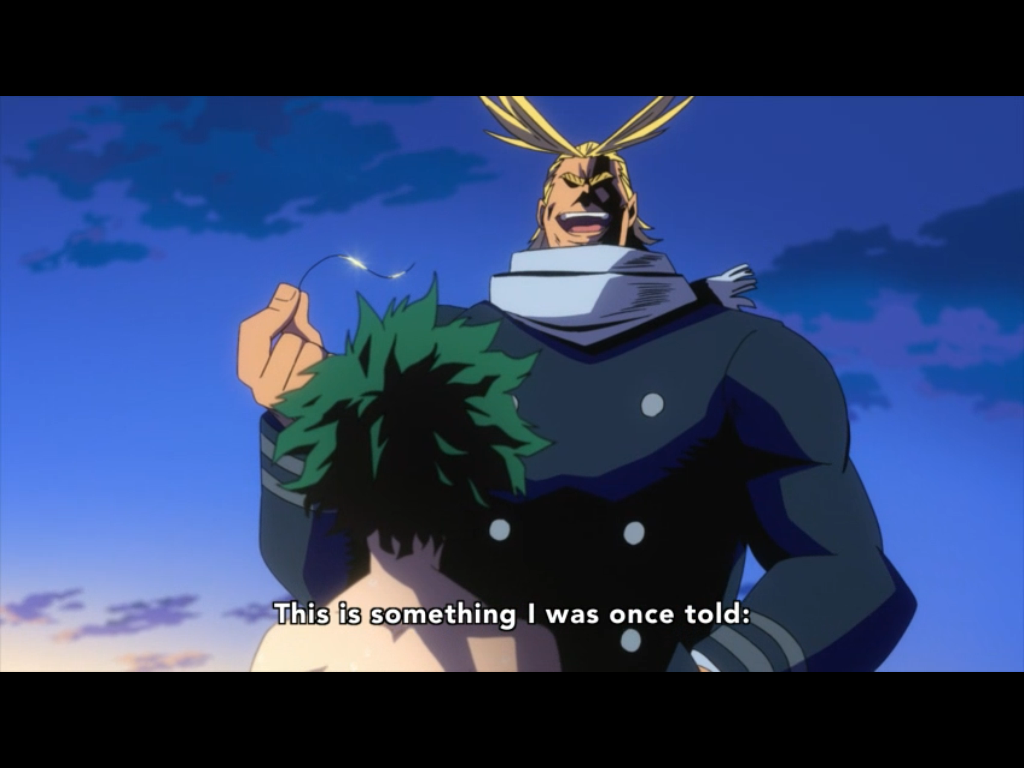
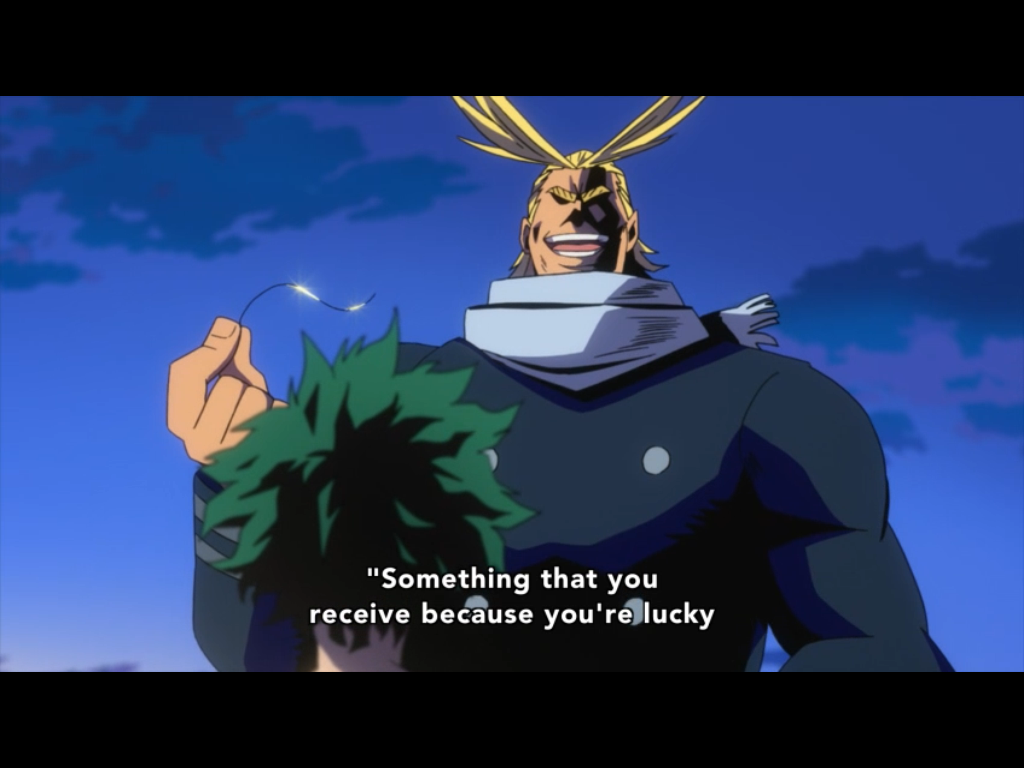


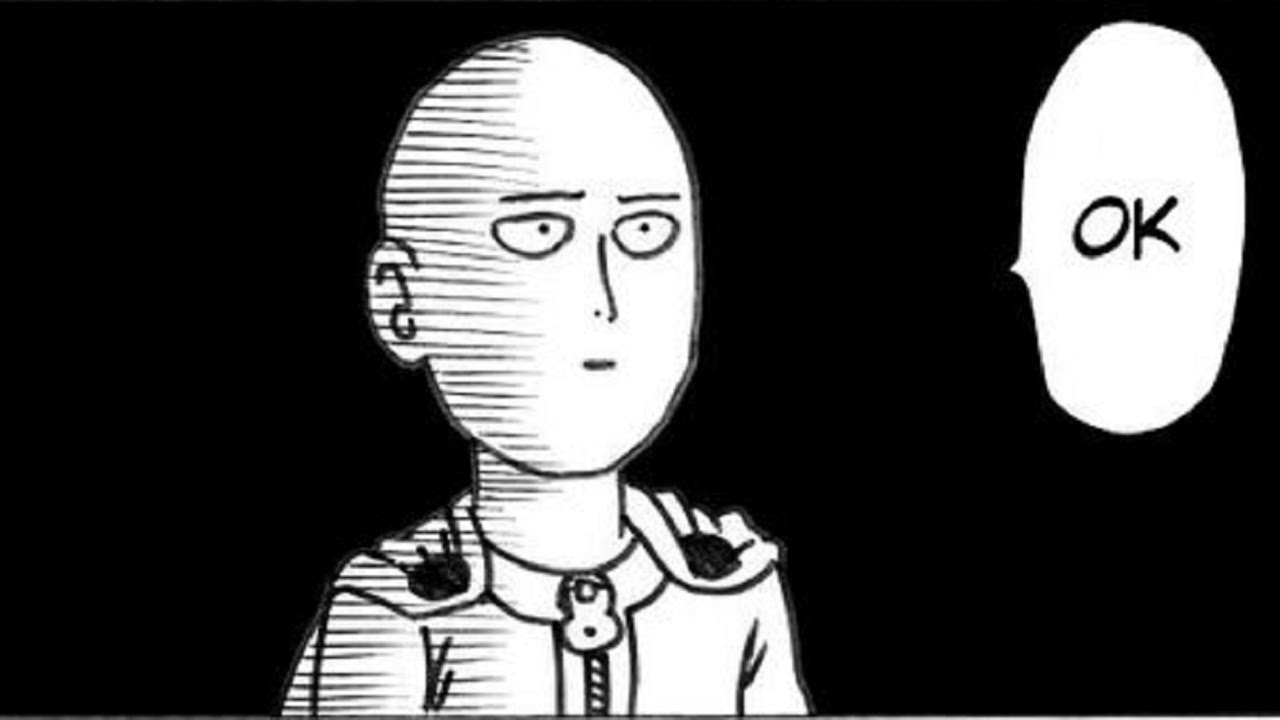


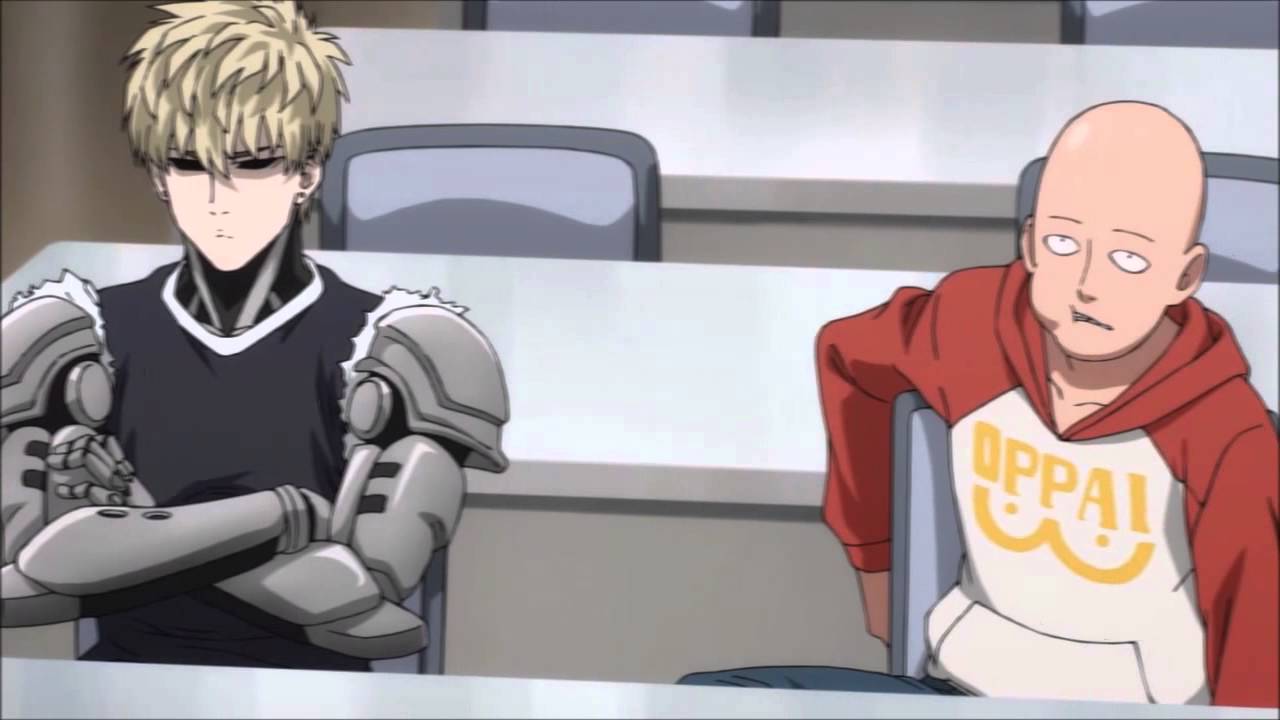

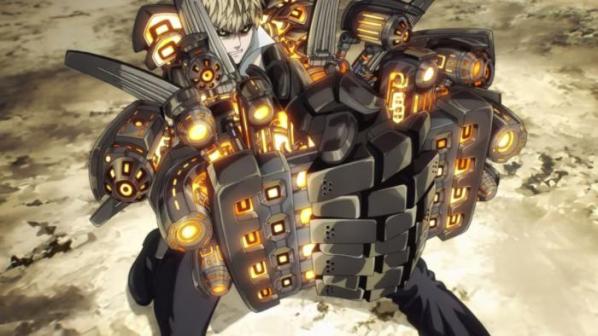
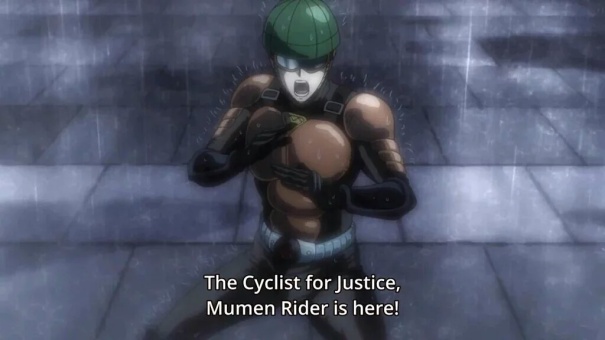


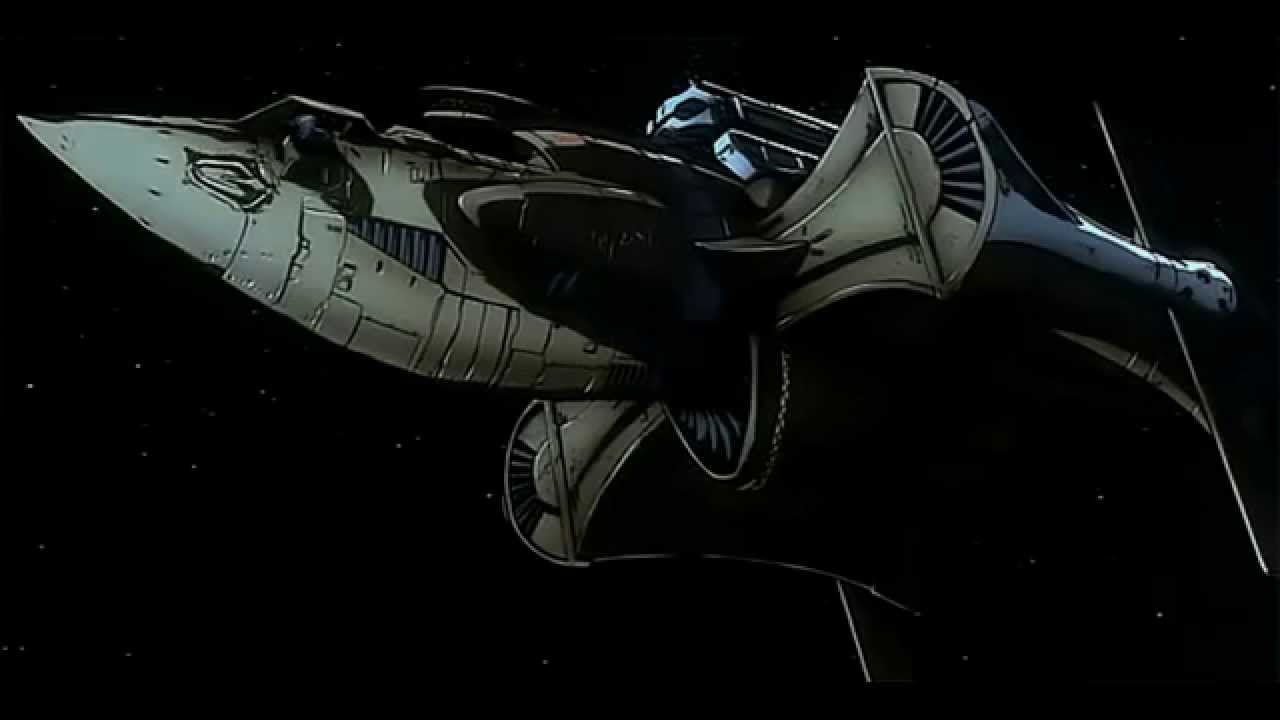
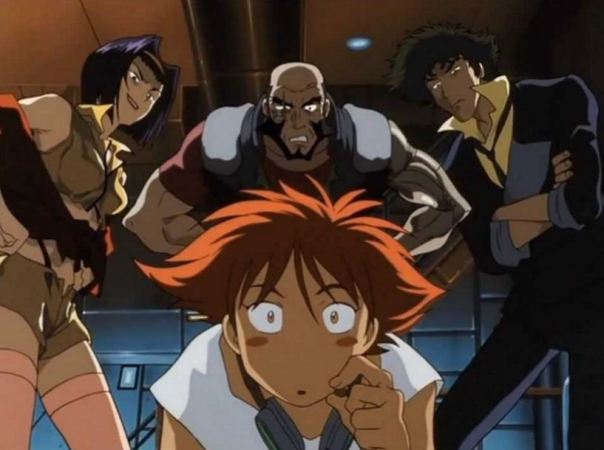


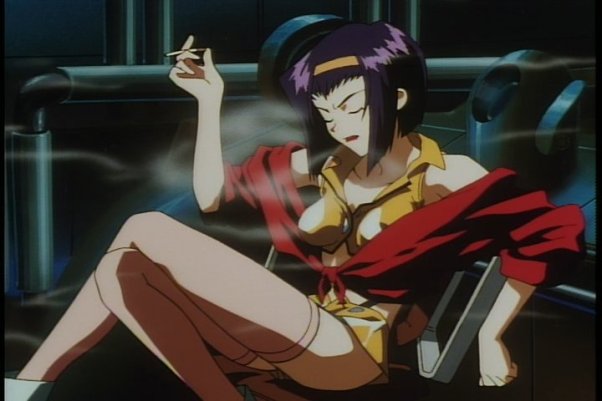
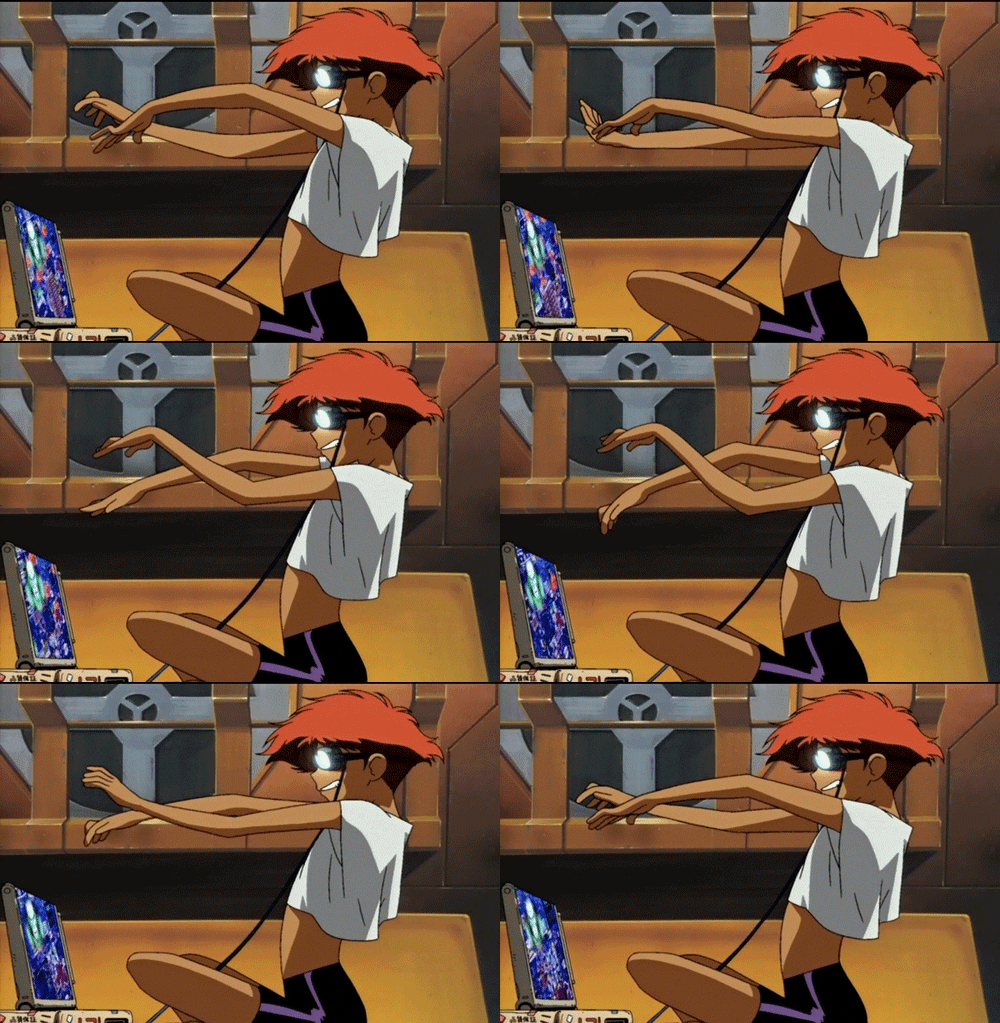

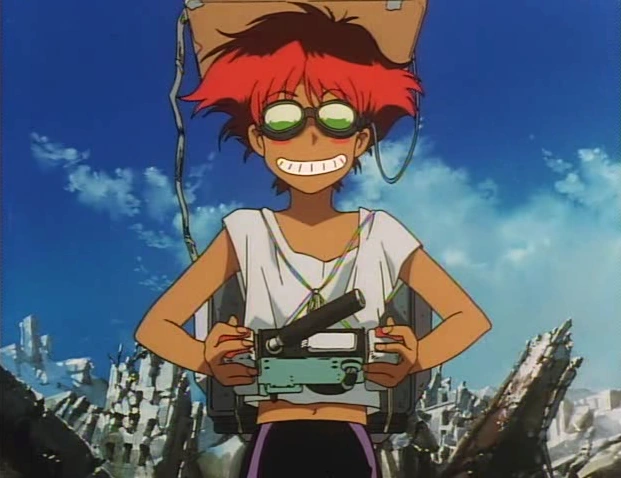


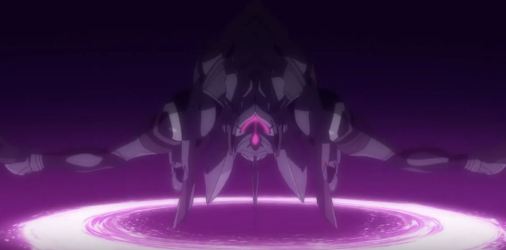


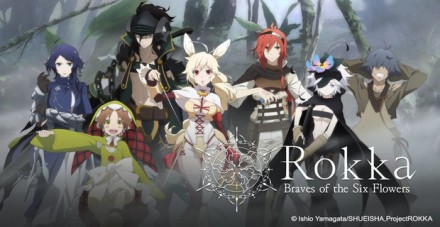
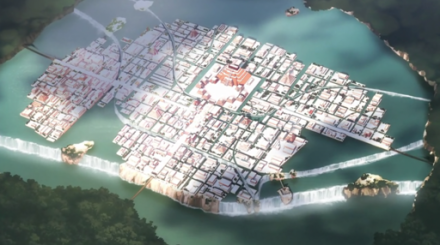
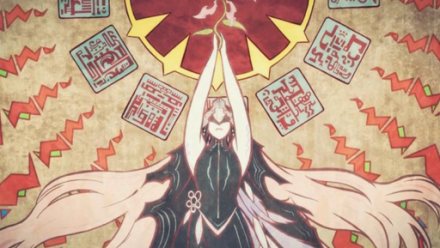
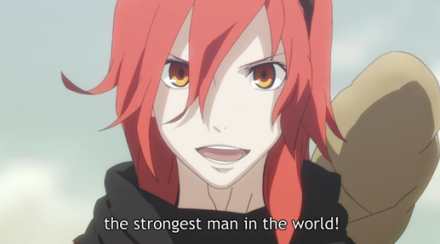
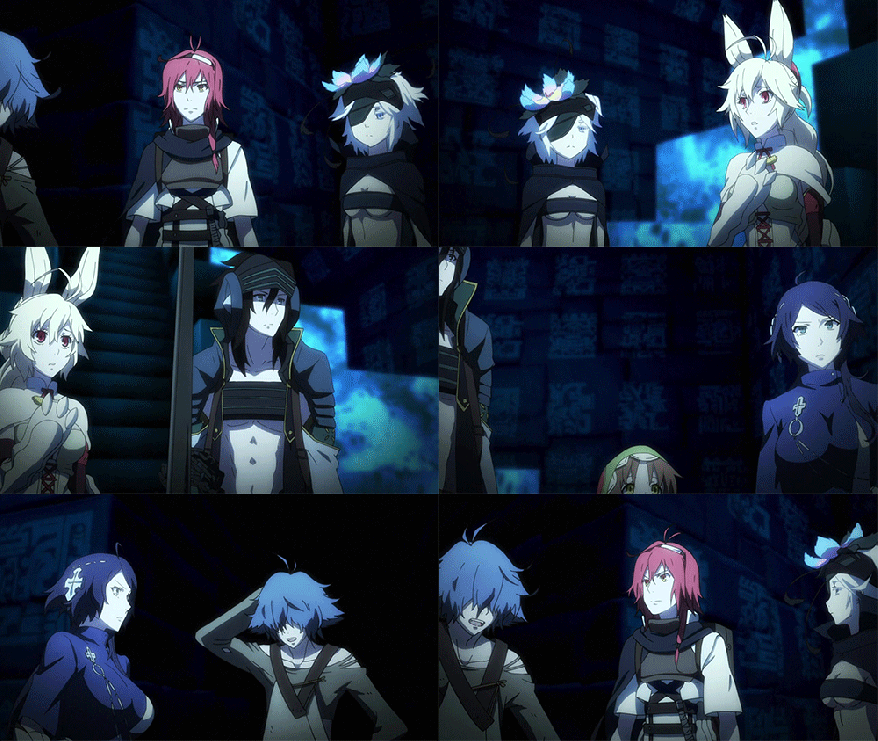
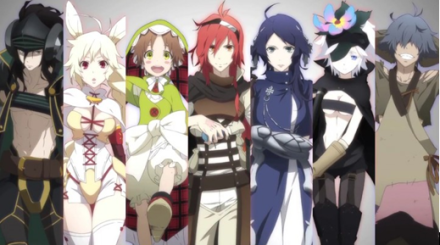
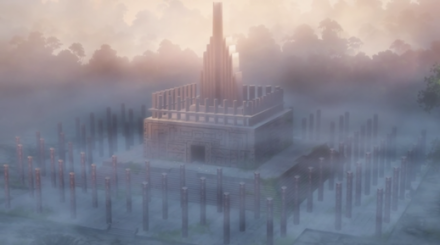
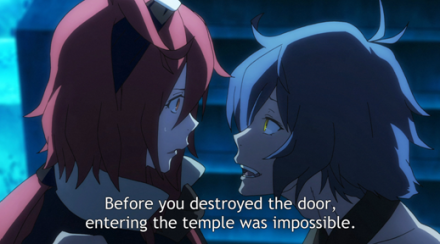
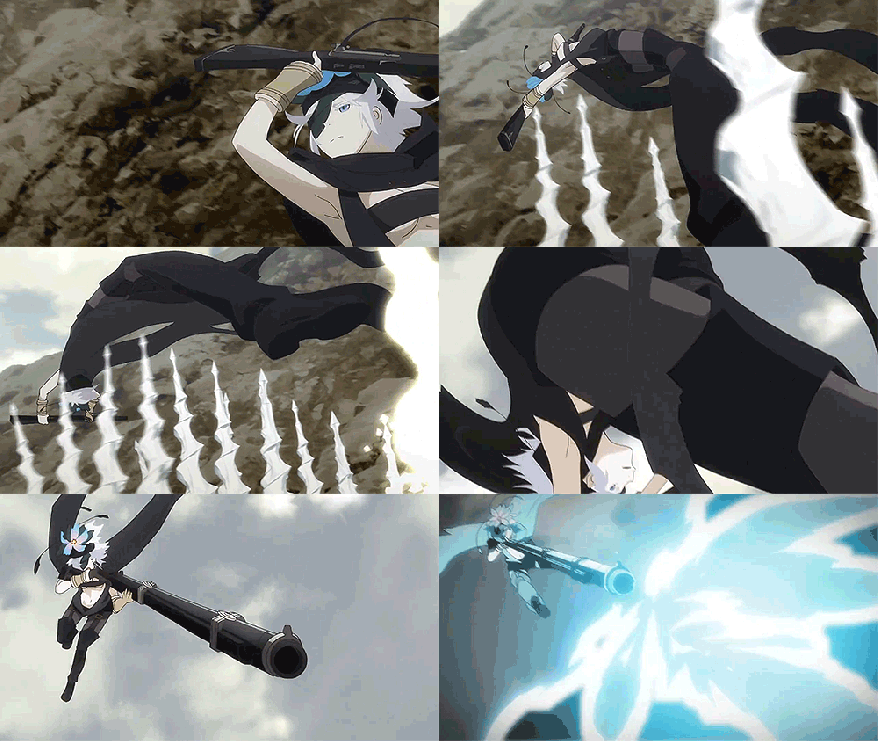
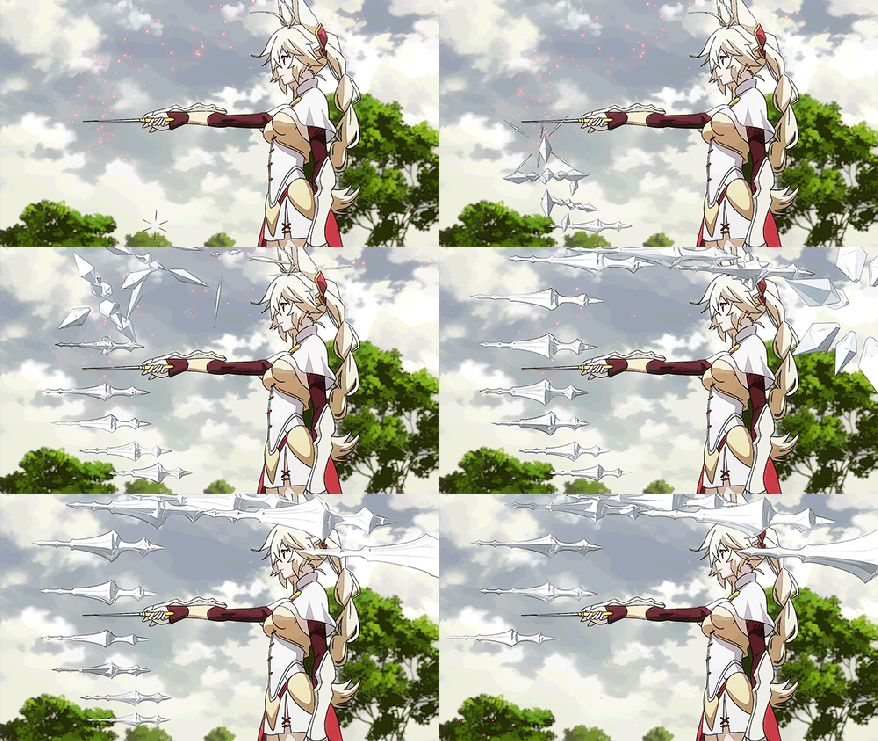
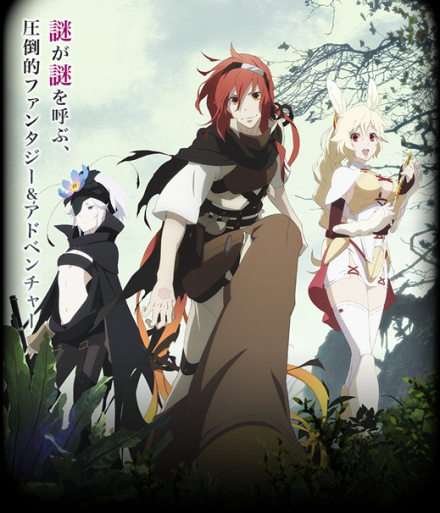
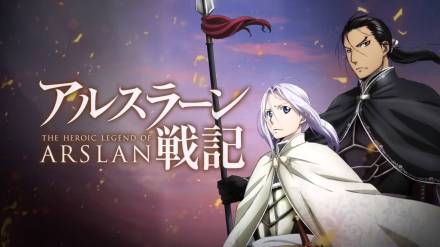


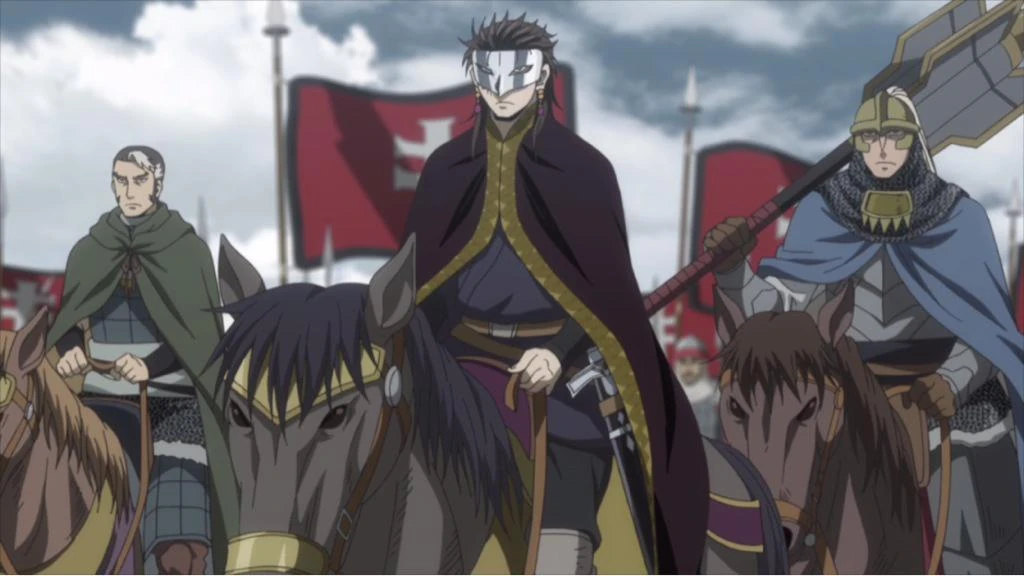



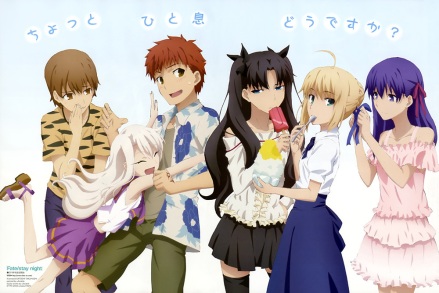


 Takuto's Anime Cafe