But now, I’ll have read the novels . . . and had some time to think.
In 2018, I embarked on a light comparative study over all of the works of Makoto Shinkai completed at the time. It’s a rough-around-the-edges, informal glance at his major and short films through the lenses of love, loneliness, and distance. I would take the time to edit and revise it, but part of me enjoys having a time capsule of my thoughts from back then. I could go in and update the image files and broken links, perhaps. Though, why tamper with old writing when I could revisit Shinkai’s art through a fresh, new adult perspective—one that has since then personally experienced greater joys, denser sorrows, and heavier heartbreaks?
It won’t necessarily be easy, but with Weathering With You rapidly approaching its 5th anniversary and Suzume having surpassed its 1st anniversary last fall (and international release date just this past April) I am more than due for comprehensive rewatch, fresh emotional scars or not.
The skies these days are growing more blue and more thunderous. So this year, this spring 2024, I want to catch Shinkai at the twilight of the season where I find his style resonates with me most. It’s a period as fleeting as the yozakura itself, yet I want to take on this challenge of revisiting his entire filmography before the night ends—and the rainy season begins.
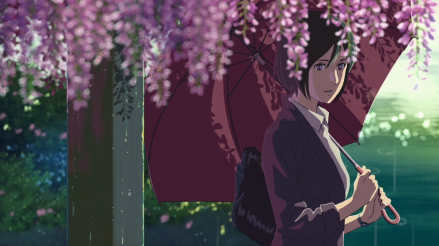
Not only that, but I’ve managed to prepare by reading Makoto Shinkai’s original novelizations of various titles that are available in the States courtesy of Yen Press. Ok technically, once I’ve swept through the rest of The Garden of Words, THEN will I have completed this preliminary step. Still, I think this added insight will alter the way I experience the movies and do so in a mostly positive way. I already know of several animated scenes and characters that, to me, benefit from Shinkai’s novel counterparts. It will be exciting to decide how I might want to incorporate these literary perspectives.
“We might meet again, then. Just maybe. If it rains.”
– Yukino (The Garden of Words)
As I’m typing this closing paragraph, the rain is already tapping on my window, urging me to start this project before it stops. As with anything I do for the blog, expect me to be liberal with the time frame. I’m anticipating this will be a breezier post than the last one, nothing too crazy. Though again, I’d like to release these thoughts before we’re all choked by the summer heat. I hope I’ll be able to deliver on that! Until then, stay cool!
“All of life’s journeys come with meetings, partings, and reunions.”
– Meryl Stryfe
Upon finishing Trigun (1998), Trigun: Badlands Rumble (2010), and Trigun Stampede (2023) for the first time this past February, I surprised myself when I hopped over to the keyboard and realized I had nothing to say. The words simply wouldn’t come. It’s not like I was blown away from witnessing a masterpiece. If anything, my experience felt mostly lukewarm, save for the tingle of relief that came from having cleared out another series in my watch stack.
So, rather than force myself (and any readers) through a more traditional review or reflection post, I figured I’d tug a bit on the unique setting elements that stood out to me either for their sheer creativity or potential historical allusions. Note that this is NOT a formal analysis, nor am I suggesting any authorial intent. Instead, I aim to connect Trigun with a separate history that precedes its creation, that which is bottled within my incredibly limited understanding of the U.S. Wild West, its motifs, and a few themes. Unfortunately for Stampede fans, this means I’ll mainly be sticking to the classic series. Mild spoiler warnings for the entire Trigun animated franchise!
Ready? Steady? Let’s roll!!
No-Man’s Land, an Ever-Expanding Frontier
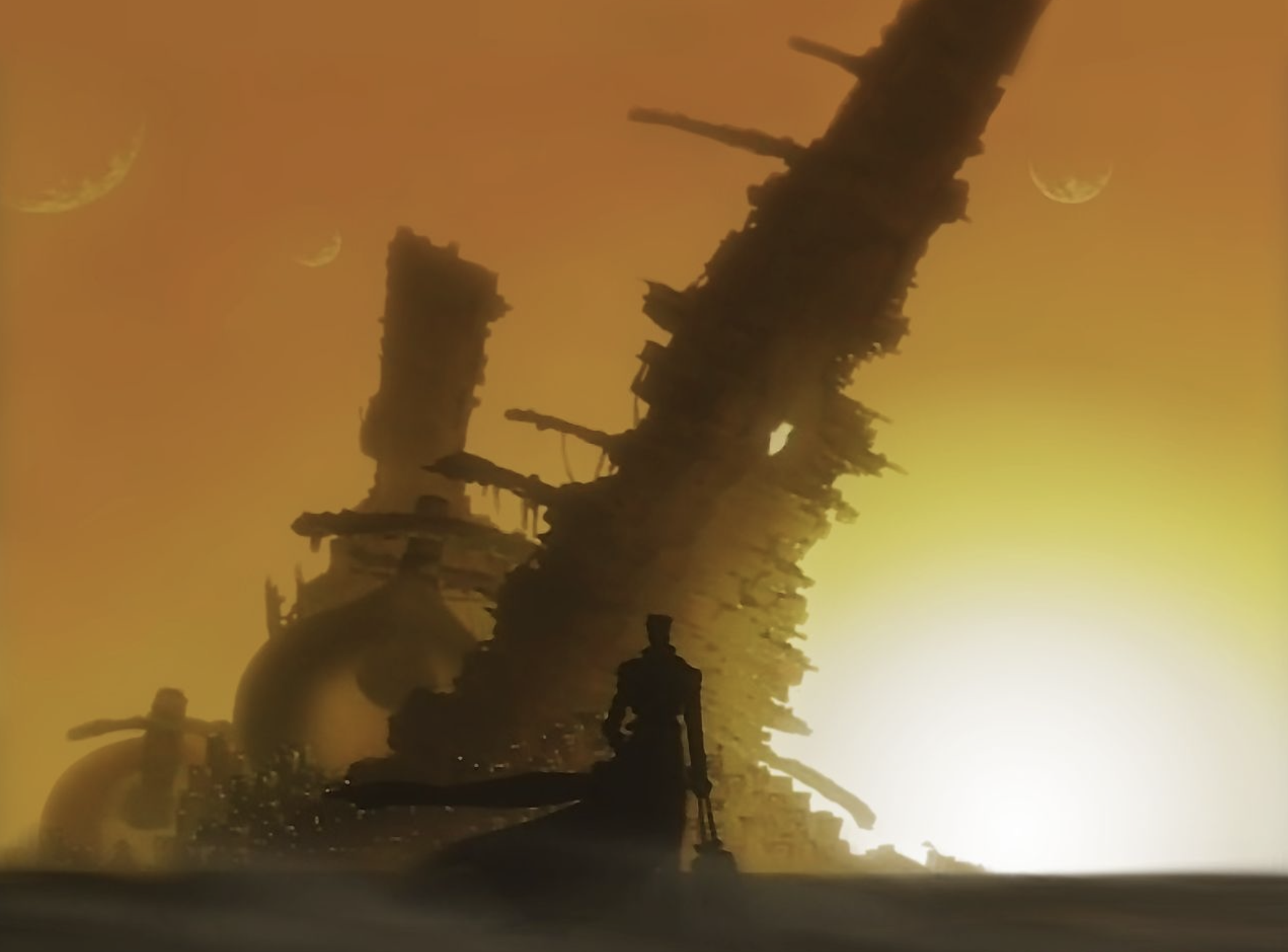
When it comes to Trigun, the biggest draw for me isn’t its flashy characters or high-octane entertainment value. Rather, it’s the world that this sci-fi Western is set within. Some call the desert planet Vash and crew roam “Gunsmoke,” while others refer to it by the equally loving moniker “No-Man’s Land.” (There’s literally a Reddit thread dedicated to fans disputing the planet’s name, I’m not joking.)
However you stack the deck, this barren wasteland offers few sympathies towards the unwary. Although water is as precious as gold out in the dusty field, one can count on the occasional small-town saloon to have its shelves stocked with the goods. The liquor is cold, the women are tough, and everyone owns a gun. By the way, these towns or “Plants” apparently formed out of the husks of massive spaceships that crash-landed on the red planet long ago. This is the world of Trigun.
. . . And call me crazy, but doesn’t it kind of sound like America’s own Wild West?
Historians peg the start of this period being 1800 with Frederick Jackson Turner’s Frontier Thesis declaring the frontier “closed” in 1890. When we think of cowboy Westerns, our minds are pulling on Hollywood portrayals of the peak of this period, around 1865. Given the relatively large span of time, one can interpret the frontier as an idea, a metaphor of process that is not only physical but also political, even psychological. Famously, Turner coined America’s Frontier as “the outer edge of the wave—the meeting point between savagery and civilization.” As adventurers, armies, and settlers pushed toward the Pacific, exploration, struggle, confrontation, and compromise each came to describe this psychological and social expansion. Hence, the frontiersman proved his Americanness by taming this savage Western landscape. Sadly, it was humanity that became (and technically already was) a part of this landscape.
“We are searching for a place where we can live our lives in peaceful days. No wars, no stealing; a place that isn’t run by fear; a place where people can live, and actually trust other human beings.”
– Vash the Stampede
Whether cattle-driving cowboys and pioneers or refugees and migrant families from faraway lands, settlers of the frontier have traversed its rough terrain for centuries. Understandably, travel and setting play crucial roles in Western-inspired stories just like Trigun. More common than not is it to encounter characters in frontier stories moving from one plot to another in the search of a place to call home. (This is arguably the entire plot of Trigun Stampede . . .) Some ventures involve transcontinental travel or a plight from interplanetary worlds; other movements occur in intimate spaces as private as the bedroom or even the human mind. We see this mirrored in the way Vash strips down when he’s alone in his various busted motel rooms. The outlaw’s bright personality grows markedly dismal when he pensively reminisces on his travels, his fears, and his past. Across both anime adaptations, he manages to mask the truth of his identity beneath obnoxious smiles and booze, but it is traveling the frontier with Meryl and friends that slowly starts to wear down his bravado.
The Transcontinental Railroad Sandsteamer
As a child, I used to be a train-kid. Trains occupied such a huge part of my life, so much so that I thought I’d grow up to be a train conductor one day. Oh, if younger me were to find out that passenger cars would become obsolete by the time he became a teenager, he’d probably have lost his faith in humanity much sooner. Thankfully, traveling by train is the best way to cross Trigun‘s seamless deserts, and Stampede made sure not to abandon faith either—even if the redesigns look more like clothes irons than locomotives!
Wait a sec. Sandsteamer. Steam irons. Maybe Stampede is onto something after all.
By connecting the already existing eastern U.S. rail networks to the west coast, the Transcontinental Railroad became the first continuous railroad line across the country. It was constructed between 1863 and 1869, which according to our earlier history lesson matches right up with the height of the Wild West era. No wonder so many Westerns featured precarious showdowns on the roofs of zooming train cars. Trigun pays homage to this combat motif in two drastically different episodic plots depending on the series. The thrilling two-parter arc in the classic version gave us a particularly in-depth look at the sand steamer’s inner schematics, and I’m eternally thankful for it.
Wherever the journey goes, motion accompanies the landscape. Whether traveling by boot, cruising via sandsteamer, or hitching a ride on the back of Meryl’s bird/ostrich thing (or sports utility vehicle in the remake), the travel motif connects us to themes of personal growth, reflections of identity, and the cultivation of the agricultural frontier (for not everyone takes on the desert with pistol in hand).
The Big Electrical Boom
Despite the analogies I’ve made to frontiers and railroads, Trigun isn’t technically a Western; it’s a science-fiction series, one that sometimes toys with elements of cyberpunk through its action-packed set pieces and leather-bound character designs. So, the third connection I make here might seem like I’m reaching (because I am, I always am), but hear me out!
Trigun‘s representations of electrical power “Plants” echo the advent of electricity and the West’s increasing dependence on it for survival.
In studying the fate of the Wild West, three major factors contributed to its end: barbed wire fencing, privatized land, and the railroad. Now, electricity wasn’t commercially available in the U.S. until the LATE 1800s, and western settlers wouldn’t get a taste of it until well into the 1900s, some places as late as the 1950s. (Shocking!) However, what seemed a pleasant commodity at the start eventually turned into a necessity in rural areas. During the Great Depression of the 1930s, communities banded together to bring electricity to America’s farmland. With electricity, farmers could produce greater quantities of food and other resources.
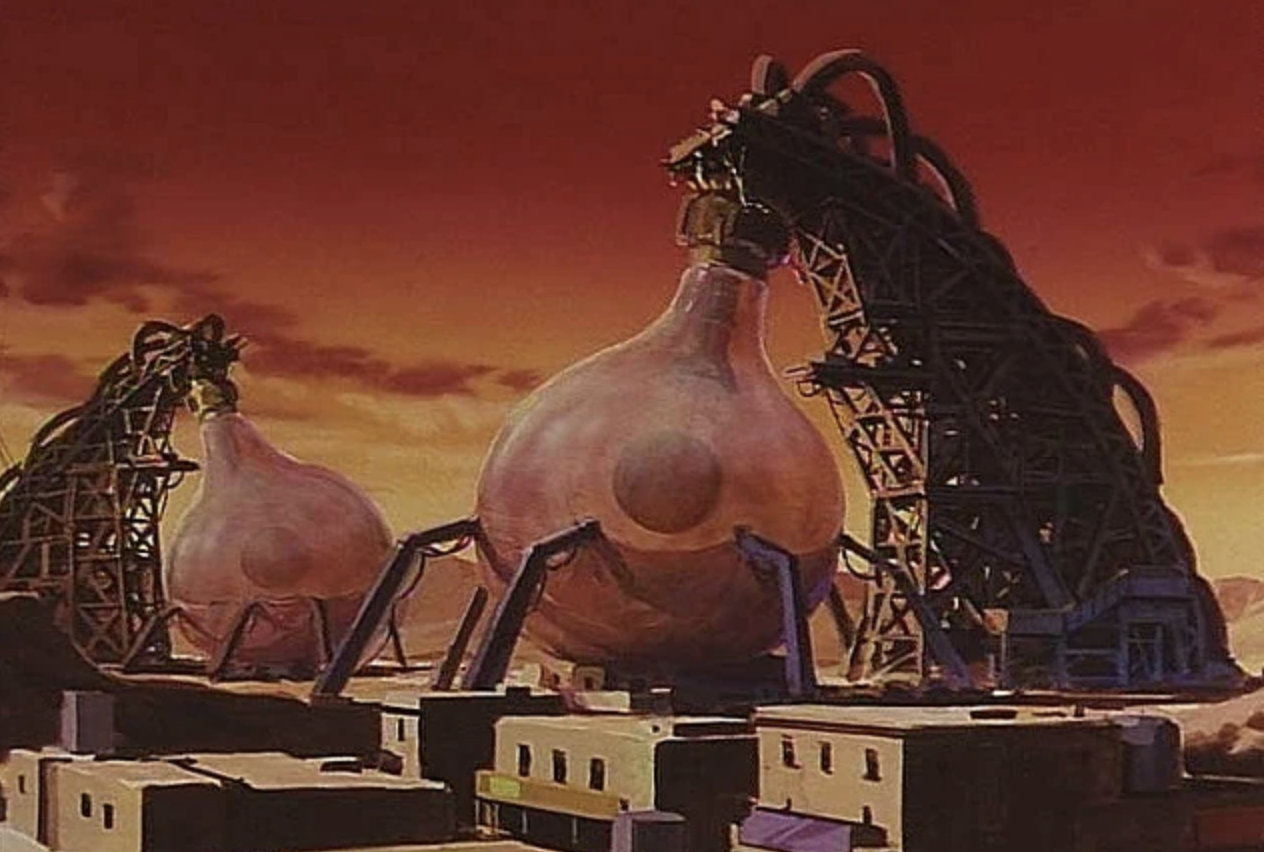
Taken together, I find it most intriguing how the Plants or spaceship remnants that form the heart of each dinky town scattered across No-Man’s Land (AKA Gunsmoke) resemble giant freakin’ lightbulbs. These Plants can generate energy and food/water-based on environmental conditions, which makes them ideal as colonizing vessels. (Remember that point about “taming the land” from earlier?) Not only that, but most residents that Vash and co. run into are doubly sure to cite half of their worries lie with the inevitability that their Plant is DYING and that not a soul knows how to fix them. Except Vash, of course. Family secret and all that, y’know?
Like the dawn of electrical power and the final days of the Wild West, when faced with barren land, humanity had to turn to manufacturing artificial energy to eke out a living. This is the part where I add that my favorite moment in the entire Trigun anime franchise is when a comedically large lightbulb goes rolling down a hill and lands securely in the back of an equally large tank Lupin the Third style. Badlands Rumble, you are a gift to God’s green earth.
Ballad Repetition and Saloon-Style Swing
If you’ve ever watched an old Western, you’d find that, like Trigun, ballads and bars just go hand-in-hand with one another. Across each iteration of this story, Vash, Meryl, Wolfwood, and crew frequent a lot of bars. Like, a Cowboy Bebop number of bars. In fact, the 1998 series opens the first episode inside of one. This, too, would’ve been common for real outlaws both then and now, but I didn’t need to tell you that. Stamped on the cover of my Trigun Funimation DVD set is the iconic yellow subtitle “The Ballad of Vash the Stampede,” a lasting reminder that the series is just that, a ballad: a recount of this pseudo-mythical heroic figure and the dramatic past that immortalized him. (Or permanently labeled him as an outlaw in every town and territory on this side of July City, take your pick.)
The point is, the ballad is the story of an adventure, of a hero, his tragic gifts, and his triumphant deeds. And like any song, it garners strength through repetition. If any story is going to get remade again and again, it’s one in a similar disposition to Trigun where having an evolving audience opens itself up to new variations on the same theme. Even as a standalone ’90s anime, the series uses its episodic escapades to drive the notorious character of the “Humanoid Typhoon” into the viewer’s skull time and time again until the outlaw FINALLY meets his fated showdown against ruthless rival Millions Knives. If Trigun is remembered for anything, it’s without a doubt for being the ballad of one irritating pacifist with blond hair, round shades, and a crimson coat.
As an aside, music is as equally important as giant lightbulbs and steam trains for creating a setting reminiscent of vintage Westerns. Composer and guitarist Tsuneo Imahori brings jazz, folk, electronic, and orchestral genres into the 1998 and film OSTs that I can only call “electrified Western.” One moment the folk-style swing guitar is jamming’ out with the drums, the next moment it’s a storm of freestyle heavy metal. Or steady, sexy tango with bongos. Or smooth sax with jazz-style piano, saloon-style piano, ballad-style piano—look, if you can play it on a keyboard, Trigun has it. Stampede even dusts off its version of a “pipe organ.” Different composer (nothing but respect to my guy Tatsuya Katou), but still.
Whether ballad or blues, Western landscapes and their depiction entail a degree of imagination to create a complete vision of some kind. This is why I position the classic series over the remake; the classic carries charm in all that it does while the remake tries so hard to be “cool” that it feels like any sci-fi CG series with overly wrought apocalyptic tones and a lack of love for its crew. Still, there is motion in each landscape, and how that kinetic energy is directed will convey the magnitude—and the struggle—of the trying journey the frontier vehemently demands from us. And Trigun kicks that frontierism up a notch in every way. It’s not just the Wild West being re-envisioned—it is one wilder yet.
“I meditate diligently every morning. The subject is Life and Love. I quit after three seconds.”
– Vash the Stampede
Afterword: A 25-Year Retrospective Ramble
I’ll finish by addressing my lateness on two accounts.
The first is that this post comes over two months after my announcement that I’d be marathoning Trigun for my blog’s annual Valentine’s Day Special. I don’t really have any excuses aside from that I finished and didn’t really have too much to say on Trigun at the time . . . Now we’re here 2,000+ words later . . . However, this tardiness does not compare to the second offense: my being 25 years late to watching this much beloved sci-fi anime. Granted, it was released before I was born, but I’ve had Funimation’s Anime Classics DVD set collecting dust on my shelf for several years. I’m not sure why I waited so long to start Trigun, but in a way, I’m glad I watched it when I did. Any past iteration of myself would’ve found it annoyingly quirky. Now, after the release of its hotly anticipated remake series, I get to say it’s annoyingly quirky YET better than the original story it was based on. (Sorry, but when one has gung-ho gunslinger Milly Thompson and the other doesn’t, the decision is obvious!)
Trigun was a unique experience for me because it failed astonishingly at making me care about the epic sci-fi plot and the MC redemption arc it was working towards and said, “Hey, check out these lamp cities instead! We have trains, too!” Damn. Looking back, the whole marathon feels like a dream. Glad I dreamt it, but I’m happier to be awake.
Ok, I think I’m done with the ballad of Vash the Stampede and its lovely calamities for a bit. Someone take it away from me so we can queue up a different tune.
This might as well be recognized as some spiritual observation day on this blog, because longtime readers and friends may recognize that tend to go against the flow in favor of harvesting my own nostalgia. (Many bloggers participate in “Mecha March,” which in my mind was completely coined by the incredible Scott of Mechanical Anime Reviews. For me, however, sci-fi has always held a January-February pulse.) Anyhow, we’re back at it again this year, and we’re daring to take on another highly treasured anime property.
BUT, before I make the announcement, let’s look back on the history of this homegrown tradition. Here’s a refresher for those in need!
2013 ~ Steins;Gate
2014 ~ Kokoro Connect (I think . . . )
2015 ~ Neon Genesis Evangelion
2016 ~ The Rose of Versailles (It’s not always a sci-fi watch, I know!)
2017 ~ Ghost in the Shell
2018 ~ Haikyuu!! (Again, not sci-fi!)
2019 ~ RahXephon
2020 ~ Gunbuster (PANDEMIC)
2021 ~ Gunbuster
2022 ~ *SKIPPED* (I did watch Heroic Age, though.)
2023 ~ Evangelion: 3.33 You Can (Not) Redo (REWATCH)
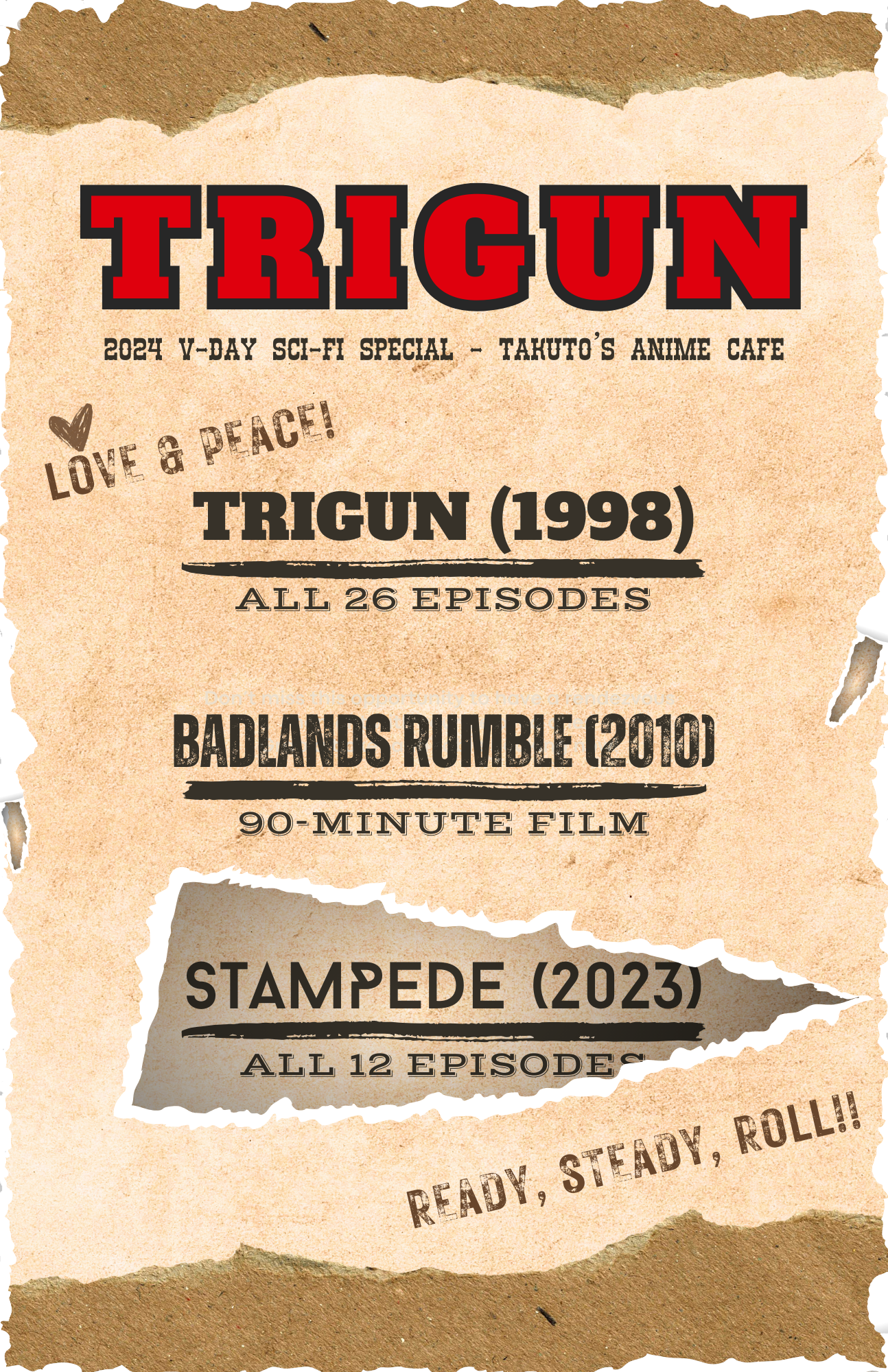
This year, I reached out to Twitter/X and asked YOU to vote for the 2024 V-Day Special. The poll received over 20 votes and multiple comments. AND NOW, after a few years of fighting schedule complications, I’m happy to announce that this year’s V-Day Special will be . . .
2024 ~ Trigun
Not only did Trigun win the majority vote—I sent out a second poll asking what language to watch the series in, and the English dub won out. So, dubbed Trigun it is! Given that this is somewhat of a revival year for this festivity of mine, I even put a little more effort into designing the watch order “roadmap.” Hope y’all like it!
Trigun has been one of those titles lingering in my physical collection amassing a thick layer of dust on its case. After years of neglecting Funimation’s Anime Classics DVD set and the film’s BD on my shelves, it’s time to crack open the cases and give ’em the love they deserve.
Over the next few days, I’ll be hibernating before the TV and munching on the sweet treats in my Sakuraco Box. As I spend this time recollecting myself and appreciating all the things I’ve accomplished within the past few weeks, I hope you, too, will be spending this season of love doing that which makes you happy. Whether that means enjoying time with family, friends, or a loved one, what matters most is that you find and embrace that warm, tingly feeling that makes our hearts flutter. Of course, eating something sweet is a must as well!
When next we meet, I hope I’ll be able to muster the energy to organize my thoughts on the Trigun franchise, be it in the form of a review or a more casual reflection post. Look forward to it with passion!
I realize I said that I’d be coming back and then disappeared for two weeks. (Is it just me or does time fly exceptionally faster for bloggers than any other content creators?) We rang in the new year, then BOOM, it’s already February—
Which means Valentine’s Day is right around the corner.
If you’re new to my blog, let me explain why this is such a spectacular holiday for me. While everyone else in the aniblogger community celebrates “Mecha March” (cause it’s a perfectly catchy name, who wouldn’t is the better question), I have taken the preceding lovely month all to myself to delight in those same mecha and sci-fi titles. It all started when I watched Evangelion for the first time in 2015, during which I blocked out an entire weekend to marathon the entire franchise (all but the final two Rebuild films which had not yet been released on Blu-ray). I have a post floating around here somewhere that breaks down all the titles I’ve watched. Historically, it’s been sci-fi, but I’ve dipped into sports and drama as well. At this point, anything is fair game so long as it’s an “older” title.
Since I’m also in the process of going through seasonal catch-up (see my last post) and working through the physical to-be-watched stack, I figured I’d let my readers decide what I watch this year! I’ve boiled it down to three options:
The Big O (complete series)
Trigun (+ film and remake series)
Patlabor (all of it; TV series, OVA series, 3 films)
You can vote for your top choice through this Twitter/X poll over the next three days. Alternatively, you can leave a comment on this blog with your choice. I’ll tally up the votes and announce the results in an official post sometime after the voting period.
Need to cull the to-be-watched pile. Which throwback anime should I watch this February? You decide!
While the marathon might not occur exactly on Valentine’s Day this year, it’ll still be held within the month of February. I’ll work out a schedule once the voting is done.
I’m back with a more “typical” aniblogger post this time. I’ll have more updates about what I’ve been watching, reading, and listening to in the near future. For this post, I wanted to reach out to you with a question:
What anime from 2023 did YOU think were worth watching?
I caught a couple odd series each season (like finishing Netflix’s CG Ultraman and Attack on Titan: The Final Chapters) but my simulcast slate was mostly clean for the year. This was largely due to preparing for my graduate exam in the spring, studying abroad in the summer, and starting a new job in the fall. Hopefully you’ll agree that it would’ve been a bit tricky for anyone to keep up with what’s current given all I went through in 2023!
I DO come prepared, however, with a small list of titles that I saved throughout the year in my back pocket. So, here’s everything I’d like to watch from 2023!
Winter 2023
Nier: Automata Ver1.1a – I love the game, firstly, and the anime is a pleasant way to revisit this world of machines and ruin. I found the first couple episodes quite enjoyable, so I’m mainly coming back to see how the adaptation turned out. I heard there’s more coming, which makes me excited that A-1 Pictures is committed to adapting the “full” story.
Buddy Daddies – No thoughts on this one other than the premise is cute.
Trigun Stampede – I still need to watch the OG Trigun, but I love the character re-designs!
Tsurune – The Linking Shot – I’ll revisit the first season before watching this sequel. From what I remember, I found the pacing of Tsurune sleepy and the characters somewhat unremarkable. Maybe a rewatch will change that.
Gridman Universe – I’m ALWAYS down for Gridman, and it’s crazy that this is the end! ;_;
Spring 2023
Demon Slayer: Swordsmith Village Arc – I’ve continue to stick with this series because I enjoy seeing the work Ufotable puts out. The previous season was tons of fun, and I’m hoping that this third season carries that energy forward.
Oshi No Ko – This was a much-discussed title! If I have time, I’ll scope it out and see what the hype was about. Cute character designs, too.
Heavenly Delusion – Production I.G is another studio I’m fond of, especially when it comes to their sci-fi catalog. The manga for this mystery/survival series intrigued me awhile back, so if I like the anime, I’ll consider picking up the volumes. Really stoked to watch it!
Ranking of Kings – The Treasure Chest of Courage – Yay, more adventures of Bojji and Kage!
Ooku – The Inner Chambers – This one rides in the same train as Heavenly Delusion does for me. I even own the first volume of the manga. (Don’t ask why I haven’t read it.) Hope the anime turned out well!
Sailor Moon: Cosmos – At last, we’ll see how the new Sailor Moon adaptation ends! I’m a little concerned that Netflix hasn’t licensed it for streaming yet, though. My expectations for the production are somewhat low, so I’m just hoping these final films are able to stir an emotional reaction from a longtime SM fan.
Summer 2023
Jujutsu Kaisen Season 2 – I started the first season on a whim like a year ago, and I got surprisingly addicted to its rhythm of action and comedy. Of course, this has been the only series people have talked about since 😛 so I’ll get around to the sequel eventually.
Fate/strange Fake – Whispers of Dawn – Is this just the first episode? If so, I’ll wait until the full series is released before starting. Looks great, though!
Maboroshi – The latest film from director Mari Okada JUST came out on Netflix the other day! Always happy to see what she’s working on.
Fall 2023
Frieren – Beyond Journey’s End – This was on a lot of friends’ “best of year” lists, and the online response seems to range from “like it” to “LOVE IT.” Can’t wait to put names to all these faces!
SPY X FAMILY Season 2 – This reminds me, I still need to finish the last few episodes of season one! Oh dear, where does the time go!
The Apothecary Diaries – If you followed Frieren and friends this past fall, then you also probably watched this little series. I recall being initially grabbed by the anime’s gorgeous teaser visuals and videos. Now that it’s out, I’m hoping that the characters are as charming as the animation I saw.
PLUTO – Another short series dropped on Netflix, I’m a complete stranger to the works of Naoki Urasawa. I anticipate this will serve as my gateway drug.
Considering the sheer volume of anime that is produced each season, this is a fairly small, manageable list. I handpick everything so carefully because I’m still working through my physical to-be-watched stack. (We’re making steady progress!) Still, hidden gems slip through the cracks, so be sure to let me know what you liked from all the anime released in 2023. Thanks for reading, and ’til next time!
There’s a lot I want to say to you, so I’ll start where I always once used to in my reviews: some background context.
I’ve been time traveling.
!!
(Kidding ~~)
But I dusted off the keyboard and propped open the cafe’s awnings—only to realize that my last post was almost a year ago?? Yeah, it sure does feel like time travel. And as the case is with most travelers, I’ve been irresponsible with time.
Anyway, hello from the future!
My life is very different now, you know?
At some point, I apparently came in and edited my blog’s sidebar bio so that it no longer read that I was a “teenager.” Although, when I think about it, I wasn’t a teenager when I last talked to you on here, either. Regardless, since 2021, I’ve not only completed my undergraduate degree but also a 2-year master’s program AND started my first “adult job” this past fall.
I’ve grown up ahead of the blog, I guess.
With every new year that rolls in (By the way, I hope yours has been kind so far.) I think about this place. Really, I do. This online safe space where I used to greet readers and see them out each hour of the day. It truly is our corner of the internet.
We sure were busy back then, weren’t we? Hah!
All this talk about growing up brings me to what I really wanted to ask you.
//
Am I still . . . weathering with you?
//
Yesterday, I finished reading YenPress’s release of Makoto Shinkai’s Weathering With You novel. It’s a fantastic little book (and it’s actually little, only 180 pages). As I slipped the dust jacket back around the green hardback and archived it on my shelves, I couldn’t stop thinking about how much I love Shinkai’s work. Especially Weathering With You.
Last spring, I was lucky enough that my hometown theater had showings for Suzume, and that encounter, too, had me tumbling down memory lane. Discussions over many of Shinkai’s works have been “served up” here at the cafe over the years. Why I didn’t write about Suzume DESPITE it being my new favorite of his? . . . I had a lot on my mind at the time.
Butback to Weathering With You, ah, my heart! It’s hard to believe that the film (and the book) willbe celebrating 5 years this summer. As I’m revisiting it here, I’m going to spoil the end of the story, so go watch/read it if you haven’t!
Reading the novelization, I couldn’t help but re-realize how rough young people have it these days.
!!!
Seriously! If you make it to the end and can only despise Hodaka for effectively drowningTokyo for love, then you’ve missed the entire point of the story.
How did Hodaka, a child, end up so desperate and starved for connection in the first place?Who put him in a position where all he felt he could do was run further and further away from the responsibility that comes with growing up?
We did. The adults in his life did. And we continue to fail adolescents just like him when we pressure them LIKE ADULTS and then treat their feelings as if they were TODDLERS throwing just another tantrum.
This seems unrelated, but in my recent rewatch of Fire Force (still a banger btw), Captain Obi proudly says that being a grown-up means “caring more broadly and deeply.” From our first meeting with Hodaka, we are already dealing with someone who feels tried and exiled from his hometown. Island life is suffocating, yet at the same time, he is neglected by those few with any real stock in him. With ambition, he leaves. And when he finds the adults in Tokyo just as unwilling, neglecting, and even downright unkind, he’s willing to abandon that world, too.
Caring more broadly and deeply. Ah. Perhaps we wouldn’t have found Hodaka’s entire world cradled in the care of Hina’s tiny, tired hands if the adults back home cared for him an ounce more than they had. He’s genuinely a good kid, too! Traumatized and hungry, all Hodaka wants is a job that can sustain him a little longer while he sorts life out. Thinking about it, it’s sad how it all went down. Thankfully, in the novel, one of Hodaka’s Tokyo “caretakers” and friends is able to learn about the hope that can come with adulthood before some of the others do:
Kid, I’m gonna grow up just a little earlier than you. I’ll become a role model to you and Hina whether you want it or not. I’ll be the kind of adult who makes you want to grow up faster so you can be the same. I’ll be nothing like Kei—I’ll be a fantastic, amazing, super adult like no one’s ever seen.
Natsumi Suga
Tokyo remains plunged underwater in the epilogue, and as gut-punching as the advent is, I closed the book satisfied that Hodaka—that Shinkai—was able to wake [the viewing/reading] society up to the suffering of its young. The endless rain is not only a karmic effect of neglecting an ages old superstition but also a reflection of the way we’ve continuously sacrificed the innocent and the good for our own benefit. Maybe the storms currently ravaging our world are starting to spark the same eye-opening effect that Hodaka and Hina’s rain has on theirs.
I didn’t intend on writing a current issues post, so let me circle back. Tenki no Ko, the Japanese title, translates more accurately as “Child of Weather” in English. Its localized title, however, is also lovely. “Weathering” sounds as if Hodaka and Hina are simply going around making the weather change, which is exactly what they do.
But also, “weathering” is the process that naturally wears down rocks and surfaces, leading to erosion. Finally, to “weather,” as a verb, means to come safely through something (like a storm). When Hodoka and Hina go weathering, I like to think that they are quite literally enduring life the way they’ve only recently discovered how:
By surviving the storm together.
When I asked towards the beginning of this post whether I was still weathering with you (cause that’s not confusing at all!), I was wondering if WE have been able to endure this long rainy season apart from one another—a blogger to his fellow blogger buddies and dearest readers—sincerely confused, anxious, and uncertain about whether we’ve weathered this distance ok.
Have we? Do you remember me?
Do you remember what we used to do here?
Because honestly, I couldn’t forget about you.
Thank you for having me back. For keeping the cafe warm.
If you’ve been following my blog for even a year, you’ll know that V-Day is something I take quite seriously. It has become tradition for me to book off an entire weekend to marathon anime (usually a classic, or something with several parts, such as films, OVAs, etc.) and enjoy quality time with myself.
Well, in lieu of binging an entire series as a challenge to myself (as I’m quite short on time due to my M.A. exam mid-March), I’ve decided to return to Evangelion.
And I’m sure this comes as literally zero surprise to anyone.
I’ve got tasty treats, a comfy couch, and my Funimation Blu-ray of Evangelion 3.33 You Can (Not) Redo.all lined up for me to enjoy this Tuesday evening! I always enjoy an Eva rewatch, but I’m especially partial to 3.33 during this season of love because it’s when I first watched it back in February 2016. Once more, time to relive the nostalgia and bittersweet promises that this title brings to me.
I hope you’re all spending V-Day doing something you love, whether that’s with someone or watching Eva for the hundredth time like me. I’ll be doing a TRUE marathon after my March exam, likely Trigun since it’s what people are talkin’ about these days (plus I’ve had the Anime Classics DVD for YEARS just gathering dust). Please look forward to it!
That’s all for now—stay sweet, and ‘til next time!
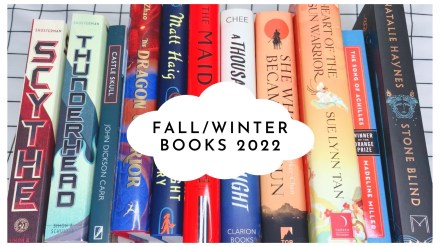
Hey guys, here’s all the non-graphic novel books I accumulated over the last few months of 2022! Let me know if you’ve read any of these titles. I hope to get back into reading more as soon as I graduate!! 😣
Interested in more anime, manga, or K-pop content? Subscribe to stick around 🙏
Thanks for watching~!
Where else can you find me? Linktree | https://linktr.ee/takutoac Twitter | @takutoanimecafe Instagram | @takutoac 🌟NEW🌟 Bookstagram | @takutoreads MyAnimeList | takutoac Blog | https://animecafehost.wordpress.com Business Email | takutoanimecafe@gmail.com
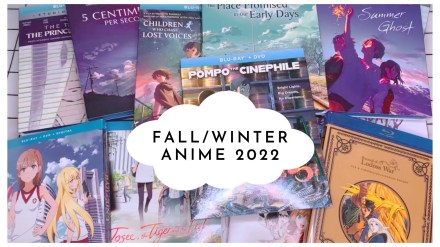
Hey guys, here’s all the anime I accumulated over the last few months of 2022! Let me know if you’ve seen any of these titles. I hope to get back into watching more as soon as I graduate!! 😣
Interested in more anime, manga, or K-pop content? Subscribe to stick around 🙏
Thanks for watching~!
Where else can you find me? Linktree | https://linktr.ee/takutoac Twitter | @takutoanimecafe Instagram | @takutoac 🌟NEW🌟 Bookstagram | @takutoreads MyAnimeList | takutoac Blog | https://animecafehost.wordpress.com Business Email | takutoanimecafe@gmail.com
Hey guys, here’s all the manga I accumulated over the last few months of 2022! Let me know if you’re reading any of these titles. I hope to get back into reading as soon as I graduate!! 😣
Interested in more anime, manga, or K-pop content? Subscribe to stick around 🙏
Thanks for watching~!
Where else can you find me? Linktree | https://linktr.ee/takutoac Twitter | @takutoanimecafe Instagram | @takutoac 🌟NEW🌟 Bookstagram | @takutoreads MyAnimeList | takutoac Blog | https://animecafehost.wordpress.com Business Email | takutoanimecafe@gmail.com