July 2019 Anime, Manga, & Light Novel Pickups | RightStuf 32-Bit Birthday Haul

Hello all!

Since my recent summer Sentai Filmworks haul post was so well received (thank you very much), I figured I’d share some of my other pickups from this past July. There’s a lot to get through, so let’s take a look!

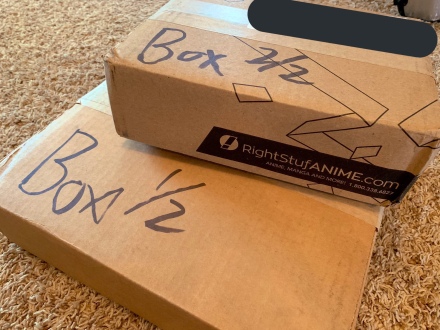
But first, Happy 32nd Birthday to RightStuf! Most of the anime and manga were bought during their sale, so in many ways, this is also one big haul post. Thanks for all the sweet deals!

We’ll start with a couple films. While I’ve never seen Sword of the Stranger, I was convinced to pick this movie up because it’s always featured in those “best fights in anime” videos (plus it was $4). As for Modest Heroes, I can comfortably say I am a Studio Ponoc fan all the way, and will continue support their work however I can!

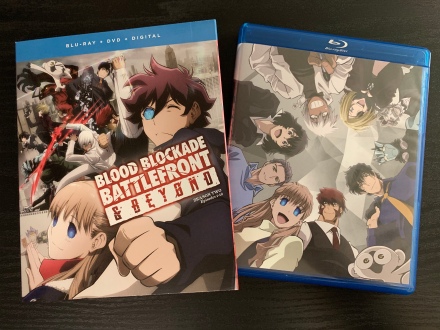
After finally getting around to this well-known franchise’s first season, I decided to get Blood Blockade Battlefront & Beyond to see how it continues. Supposedly it gets better, which is comforting given that I thought the first was slightly above average at best. Love the shiny holo slipcover!

I’ve been such a huge Yona of the Dawn fan ever since the anime aired several years ago—so much so that I even bought the first NINE volumes of the manga in hopes of eventually reading the story past the anime’s untimely conclusion. I decided to opt for the split part one/part two releases (despite a complete collection already in print) to savor all that art on the BDs, only to be disappointed that my part two set didn’t come with a slipcover. Oh well, ya snooze, ya lose. :/

I can bet you already know why I snagged this lovely gem! It’s the Fruits Basket Sweet Sixteen Collector’s Edition, and might I add that this is one nice set.

If you already own any prior LTD ED set, I don’t believe this is necessary. But if you’re wanting it for the upscaled quality, the stylish white chipboard box, or the plethora of decent-quality art cards, then I’d say go for it.

Look at all them cards! So many classic scenes, the umbrella and living room ones being my favorites. As a fan without my own personal set of the series, for $26, how could I refuse?

Onto the manga! And ooh, some LGBTQ+ stuff at that. Honestly, I can’t say much about Our Dreams at Dusk or That Blue Sky Feeling because I told myself I’d read them all the way through once their entire series has been released (Shimanami is 4 volumes, Blue Sky is 3). Happy to have them for when the rest gets released!

On the less innocent side of the LGBT manga in print, we have Total Eclipse of the Eternal Heart (that name, lol) and Escape Journey volume 3. With Syundei’s work being another standalone volume and this being the end for Tanaka’s short BL series, I’m ready to start these whenever the need for smut hits me.

Ooh, big books. Picking up the gorgeous Sailor Moon Eternal Edition releases by Kodansha was never a matter of if, but when. And well, I guess when is now, even though I have so many other things to read. Really, it’s a high quality, lovely publication targeted at both collectors and huge fans of the series that deserves its own post. Maybe in the future.

Oh yeah, and there’s also volume one of Akiko Higashimura’s autobiographical work, Blank Canvas: My So-Called Artist’s Journey, that I have heard nothing but fantastic things about.

More housekeeping with this third and final volume for the Danganronpa 2 spinoff from Nagito’s perspective. I actually reviewed the series and talked about Dark Horse’s very publication that you can read right here!

I also picked up Komi Can’t Communicate‘s first volume as a recommendation from a book-tuber. Excited to read that.

Lastly for manga are the two Viz series that I will not only collect as they are released, but actually read them too. One shoujo and one shounen, respectively, they are Snow White with the Red Hair volume 2 and Seraph of the End volume 17. I’m enjoying these two immensely, and even have a first impressions post for Snow White in the works, so please look forward to that.

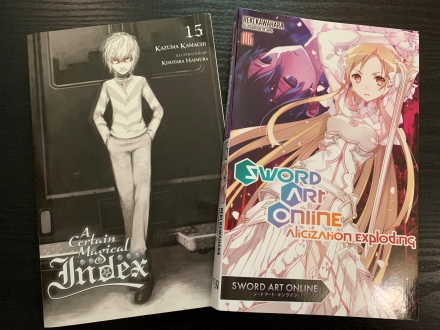
And now for light novels. After finally finishing finishing (more like slugging through) the recent A Certain Magical Index III, I was inspired to resume picking up and reading the LNs. Or, at least, slowly filling in the book perspectives the parts that I thought the anime could’ve done more with (which is, to be honest, all of it). I’ll be hopping around, which is why volume 15 is here.

Continuing my read of Sword Art Online, we have the latest release in the Alicization story, volume 16. I’ll read this when the fall gets closer in anticipation of the anime’s second cour.

More light novels! Eighty-Six by Asato might be a blind buy for me, but with only raving things said about it from even non-LN readers, I wanted to stay in the loop. Plus it looks pretty.

Then there’s my guilty pleasure LN read, volume 2 of A Sister’s All You Need. If you read my review of the anime, you’d know that I positively loved this silly series. I’m currently reading the first book, and am amazed at the word-for-word adaptation that the anime apparently is. Can’t wait to read!

Here we are at the very end, and what a better way to end a haul than with some epic Evangelion stuff. Now, little story here, I’ve actually been excited for this book ever since it was announced in Japan a few years back. I love the Rebuild art and character designs, and at the time, I was so tempted to order a copy even if I couldn’t read it. Welp, I held out, and sure enough, a couple years later Viz announced their licensing of this monstrous art book, and I’m forever thankful.

I’ll probably do a post just for this book, as this thing is MASSIVE. Thought it’d be hardcover, but who cares—I’m just happy we even got a release!


That’s it, that’s the haul. Didja make it to the end? If so, pat yourself on the back, cause I sure did buy a lot of books and movies in July (probably the most in a single month ever, as a matter of fact). Well, maybe. Anyway, did any of these releases stick out to you? Are you currently reading or anticipating one of these titles? If so, which ones? I’d love to hear your thoughts.

Also, let me know if you want more of these haul posts, cause I can definitely make this a regular thing if you’d like. ‘Till next time!

– Takuto, your host

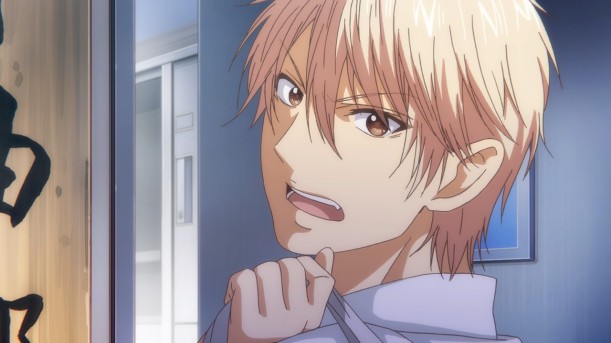
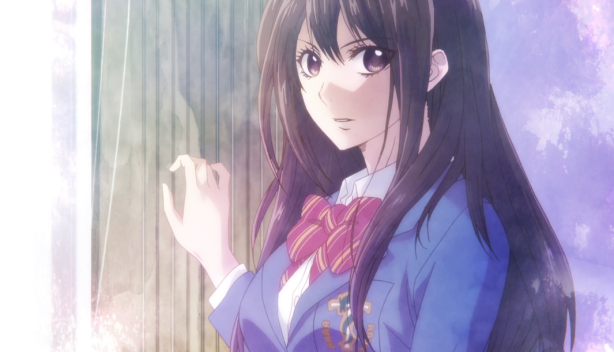
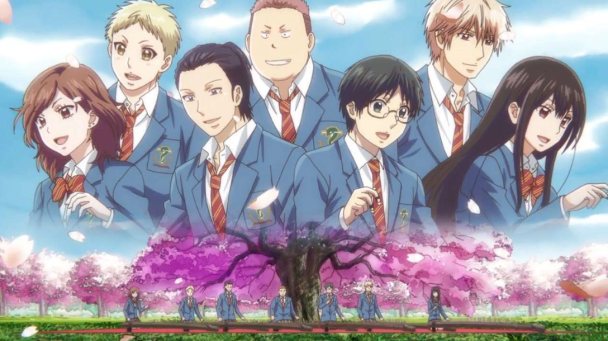
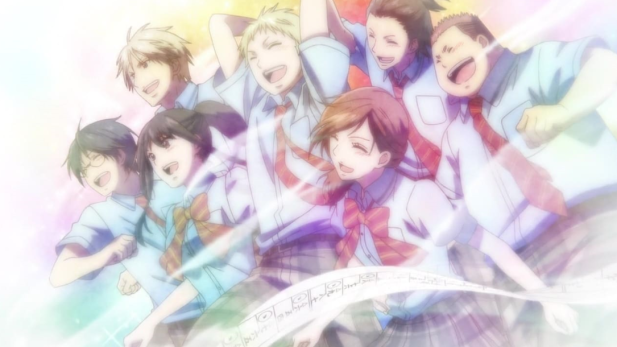
Kono Oto Tomare! – Spring 2019’s Competent, Underrated, Musical Beauty| Review

A brief spoiler-free review of the 13-episode spring 2019 anime “Kono Oto Tomare!” or “Sounds of Life,” animated by Platinum Vision, directed by Mizuno Ryouma, and based on Amyuu Sakura’s manga of the same name.

chika mad.png


An Unexpected New Member

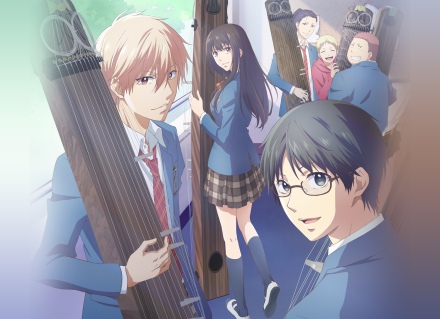
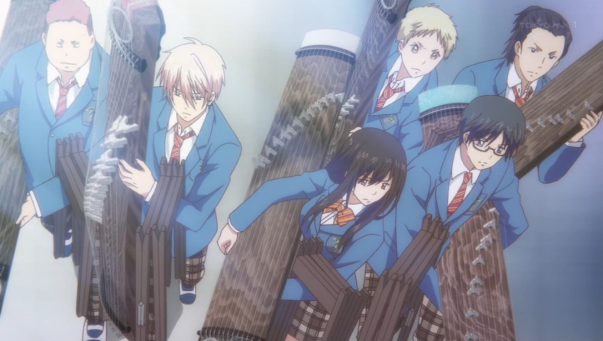
Underclassman Takezou Kurata had a blast last year playing the koto, a traditional Japanese string instrument, with the rest of his club mates. But now that his seniors have since graduated, Takezou will have to seek out new members to join the koto club, or else risk disbandment. Prepared for the worst, Takezou gives in to his club’s fate, when out of the blue a new member barges through the club room door. This would be a great turn of events for Takezou, if only this new member, Chika Kudou, weren’t one of his school’s most notorious bullies!

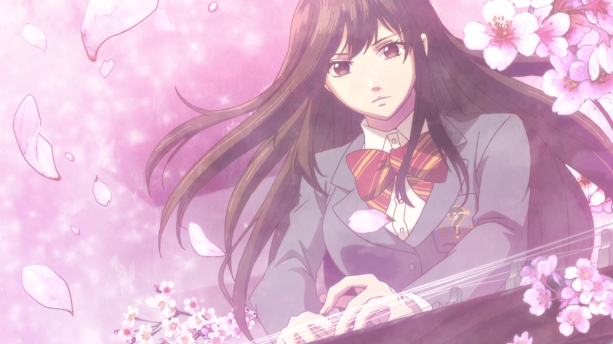
Things get even more wild for this music nerd introvert when Satowa Houzuki, a well-renowned koto player in her own right, decides to join Takezou’s shabby club. What might a pro like Satowa be doing lurking around his little club? And what could a thug like Chika want with something as culturally feminine and delicate as the koto?

As Takezou simultaneously struggles to keep his club alive and maintain the balance between these two wild souls, he slowly starts to realize that the first step to gaining his own sense of self-confidence is by making friends with people from all walks of life.

tomare chika angry.jpg

Trying to Fit Together

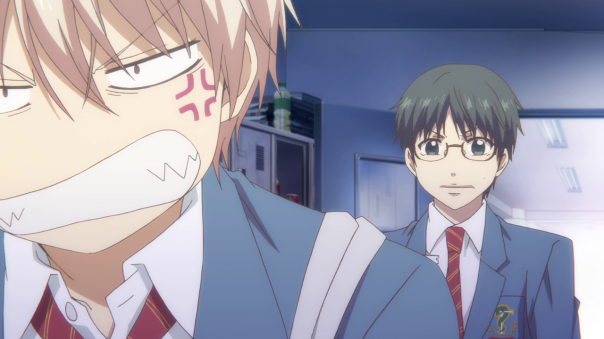
Kono Oto Tomare!: Sounds of Life is a school music drama series with the spirit of a shounen anime and a dash of budding romance. In many ways, it is also an underdog tale, as we root for Takezou’s dysfunctional club members’ various attempts to perform together. This especially becomes apparent when Chika’s three friends also join the club, determined to play with Chika despite not even knowing what a koto is.

In one corner we’ve got an easily frustrated Satowa trying her hardest to dumb down her wealth of knowledge and teach, and in the other we’ve got these three idiots. To top it all off, Chika’s fiery attitude makes him a pain in the rear to work with, and President Kurata doesn’t know what to do about him. It’s no wonder the club’s barely getting by!

At first, the series is about trying to mash these these conflicting personalities together to even play a single piece from beginning to end, while the last few episodes give us a preview into the world of formal competition and school rivalries. The narrative of Kono Oto Tomare! is tightly written, yet it is able to juggle all these character perspectives quite splendidly. From the talented to the talentless, we see that playing the koto isn’t even a matter of being gifted, but rather of hard work and dedication to the art. The same goes for performing as a group. You can’t just play together—you have to understand one another if you are to properly read the other’s cues, direction, and cadence.

And that’s something I thought the series did really well. We are given well-timed character backgrounds to explain these seemingly irrational behaviors, as well as motives for why they joined the club in the first place. Chika and his friends play because they owe someone else their sound; Satowa plays because she wants to make a name for herself. Even if some of these backstories come off as a bit too melodramatic (like, it feels as if y’all tear up about everything), the story is never lacking in heart.

tomare satowa heart 2.PNG

The Club’s Key Players

As a character, Takezou still has a long way to go, but certainly progresses quite a ways from his shy inward self to someone who is willing to give orders (as a good club president should). He often undermines his own musical abilities, despite having played for so long and with so many other great players. Humble, perhaps, but insecure? Definitely. The more he plays with Chika and Satowa, however, the more he is forced out of his comfort zone. And for him, that could be a good thing . . .

For Chika, this is a tale of redemption. To atone for the actions of his past, he takes up the koto with not much else than his determination and the koto his dad left behind for him. Arguably, Chika is the lead in this story, as so many of the interactions between characters are often between him and someone else. Despite his charming looks, his nasty reputation comes from his delinquent attitude and history as a rascal. This earned him few to call a true friend, but the ones he has now really are all he need.

Though she may not seem like it, Satowa is also a character wrapped in layers of insecurity and burdened by childhood scars. The prestige and honor that comes with being a member of the Houzuki school—in addition to being the family’s only daughter—led to a life of social pressures and unreasonably high expectations. Wanting nothing more than to leave that life behind and pursue music through her own virtue, Satowa takes this new life as a second chance carve a name for herself. Naturally, the chemistry between someone as talented as Satowa and a “thug” as lowly as Chika is entertaining. But perhaps their meeting is also the beginning of a loving, supportive relationship. Only time will tell.

tomare characters 2.PNG

In addition to balancing these three leads, the series also features a great cast of supporting characters that are so well-defined on their own that they might as well be leads of this story, too. I’m talking about the scheming and manipulative Hiro Kurusu who practically does a 180 to become one of the series’ most heartwarming characters (and another lady to keep Satowa company). On the con side, there’s Takanami, the club’s really irritating, piece a shit advisor. He may be a necessary evil to draw out Takezou’s confidence, but I’m sure the plot could’ve done that by other means.

And we can’t forget about Chika’s three bumbling friends! They may be idiots, but they’re not just there for comic relief. Kouta, Saneyasu, and Michitaka are honest voices for those unfamiliar with the music world, actively admitting that their fingers hurt when they play too much, that an instrument can be hella expensive, and that standing behind the curtain to go on stage might as well be like walking to one’s own doom.

A show committed to togetherness, friendship, and unity, I really like how the story never forgets about these three goons. While the pros mask their insecurities with their talent, they can tell us exactly what the koto experience feels like. As a character driven piece, it wouldn’t be the same with even just one of these key players missing.

Funimation produces an all-around exceptional dub for this high quality series. English voice actor Alejandro Saab’s Takezou is played with a higher, shakier register, and doubles nicely against Chika’s barreling, rough-and-tough voice. Damon Mills steals the spotlight as Chika, as he not only has the thug voice down pat, but also makes your cheeks blush with his tender tsundere character. Amber Lee Connors follows with an amazingly strong performance as Satowa, and it’s always fun having Josh Grelle (Kouta) and Austin Tindle (Saneyasu) around to make us laugh.

tomare competition 2.PNG

Visuals to Match the Sounds

A good series about music needs good music to back it up, and Kei Haneoka’s soundtrack blends the traditional beauty of the koto with piano rifts and modern pop sounds. The OST especially works well with some of the series’ more intense moments, but is also pleasantly there to lift everyone to their feet when the comedic scenes hit. All of the koto playing itself sounds professional, almost too good for mere high school students (and beginners at that), but it’s never enough to stick out as “impossible.”

I’m just glad that we got to hear so many solos and uncut playthroughs of, what I’d imagine to be, classical pieces for this ancient instrument. Piercing melodies, spiraling duets, precise rhythms, raw tones—it’s all there, and as a string player myself, I found it all to be incredible.

tomare satowa playing

As if this series couldn’t get any better, I’m thrilled to report that Kono Oto Tomare! is lovingly supported by bright, watercolor art and gorgeously fluid animation to match the timeless sounds of the koto. Character designs are reminiscent of this soft, glowing shoujo style: sparkling eyes, blushing cheeks, sunburst filters, the works. The koto itself is laden with pretty wood patterns and textures, complete with shiny metal pegs and gleaming strings. Really, I was floored by it all. What a gem of a show!

Special shoutout to Shouta Aoi’s cheery and uplifting OP theme, “Tone,” which features artistic imagery, vibrant pink and blue hues, and of course, well-timed visuals to Aoi’s wholesome voice.

tomare op tone 2.PNG

Practice Like You Perform

In case you couldn’t tell, I really resonated with this series. At long last, we have a music anime with animation that can actually keep up with the technicality required to play string instruments. While I could have gone for even more full, uncensored music scenes, I’m totally happy with the few all-out performances we got. Every time they strike the final chord, you just want to wave your fist triumphantly in the air like, “YEAH, they did it!!”

If I were to describe this series with one word, it’d be competent. Truly, we are blessed to get a string music anime that not only looks this great, but sounds good, too, and has a story that can more than carry itself. With a second season set to air this fall, Kono Oto Tomare! has proven itself worthy of the koto and its timeless beauty. This only goes to show that, when you practice like you perform, you’ll get the results you expect. In the case of this great music anime that perfectly balances comedy and drama, season two is the encore that Takezou, Chika, Satowa, and the others in this persevering koto club deserve!

tomare episode 12 2.PNG


The stage is a reward for all the hard work you’ve put in. That’s why you have to enjoy it as much as you can.  — Takezou Kurata


Afterword

As it stands, Kono Oto Tomare!: Sounds of Life is a “Cake” title set for the “Cafe Mocha” gold so long as the sequel is able to pick up everything this amazing first season has done so far and run with it. Given the fact that Platinum Vision has only produced a couple anime in the past and that this is Mizuno Ryouma’s directorial debut, I’m not only impressed but surprised at the quality of this work. To music fans, drama fans, or even lovers of comedy, I honestly can’t recommend this show enough!

Who else followed Kono Oto Tomare! this past spring 2019 season? I’d love to hear your thoughts on the series or this review down in the comments, as well as whether you are interested in starting it if you haven’t yet done so. Until the next time, this has been

– Takuto, your host
 

Thank You & Happy Birthday! | Nagisa Hazuki Appreciation Post

Hello!

It’s officially August 1st. I never really do these character appreciation post things, but I make exceptions for those anime characters that hold a soft spot in my heart. And so, I just wanted to say:

Happy Birthday, Nagisa!!

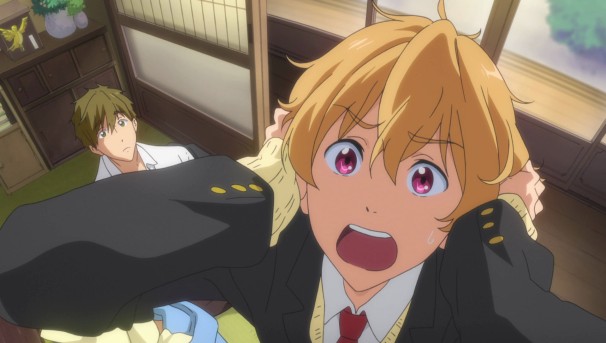
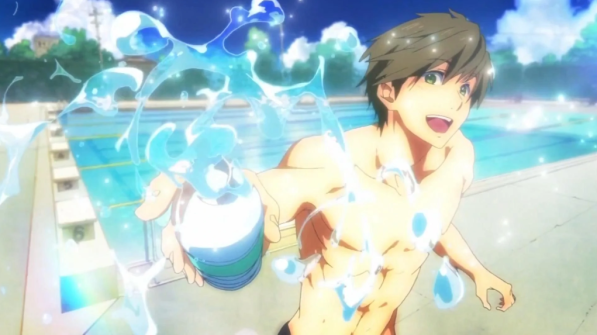
You’re the one that dragged me into the Iwatobi swim club nearly six years ago, back during that fateful summer of 2013, and I still haven’t forgotten ya! Heck, how could I? You’re a sparkling ray of pure sunshine and a little ball of literal sugar cancer for the Iwatobi team, too sweet for everyone’s own good.

In fact, you’re the one that brought the whole team back together and restarted the club, so you’ve got that going for you, too!

You may be the smallest and youngest one of the original team, but you’re never afraid to voice your opinions to your senpai teammates, and that willingness to be straightforward and honest has helped out your friends on more occasions than you can count, trust me!

You’re easy to relax with, but also fun to get fired up with. You can take a joke easily, and also know exactly when and how to lighten the mood when one of your teammates is stuck in a rut. Really, you’re the epitome of playfulness, and that natural enthusiasm will continue to help you and your friends out for the rest of your life!

Sure, you use that baby face of yours to pout when things don’t go your way. And yeah, you could dedicate yourself a bit more to your studies, but you’ve never stopped trying to improve yourself despite just chilling with that awesome breaststroke of yours. As far as I’m concerned, you’re the underrated MVP here! Free! just wouldn’t be the same without ya.

Plus, we know you love studying history, so don’t even try to hide your academic passions!

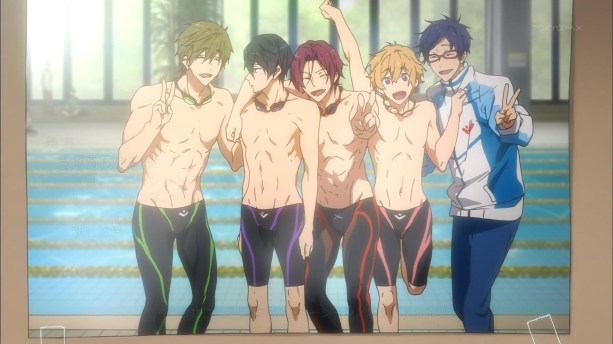
Haru, Makoto, Rin, and Sousuke may feel like the leads here, but don’t ever give up on your teammates and yourself! Even if you feel forgotten at times, the fact that you always try to help those who are also struggling in the spotlight is proof of your character. I’m sure Rei-chan, Ai-chan, and now Romi-chan and Shizu-chan will be there to support you in all you do, especially considering how much you’ve given back to them!

So on this special day, go and enjoy a big cake with all your wonderful friends! You can even have as much Iwatobi Surprise Bread as you’d like, so eat up—just make sure you’re ready for practice again the next day!


To celebrate this day, I just finished watching Free! Timeless Medley – The Bond for the first time, and for a recap movie, I really liked it! The film reminded me of the great journey the Iwatobi team set out on, and all the precious moments the second season brought us. Excited to watch The Promise now to see the story from Samezuka’s perspective.

Thanks again for inviting me onto the team, Nagisa! And to Kyoto Animation, thank you for breathing life into such a beautiful, inspiring cast of characters, and for creating a very special anime for us swimmers. My gratitude is infinite, and I’ll continue to support this franchise for a long time to come!

– Takuto

Deus lo Vult: The Saga of Tanya the Evil | Light Novel First Impressions

A brief, spoiler-free review of the first volume of the light novel series “The Saga of Tanya the Evil,” or “Youjo Senki,” art by Shinobu Shinotsuki, written by Carlo Zen.


Anything BUT Your Typical Isekai 

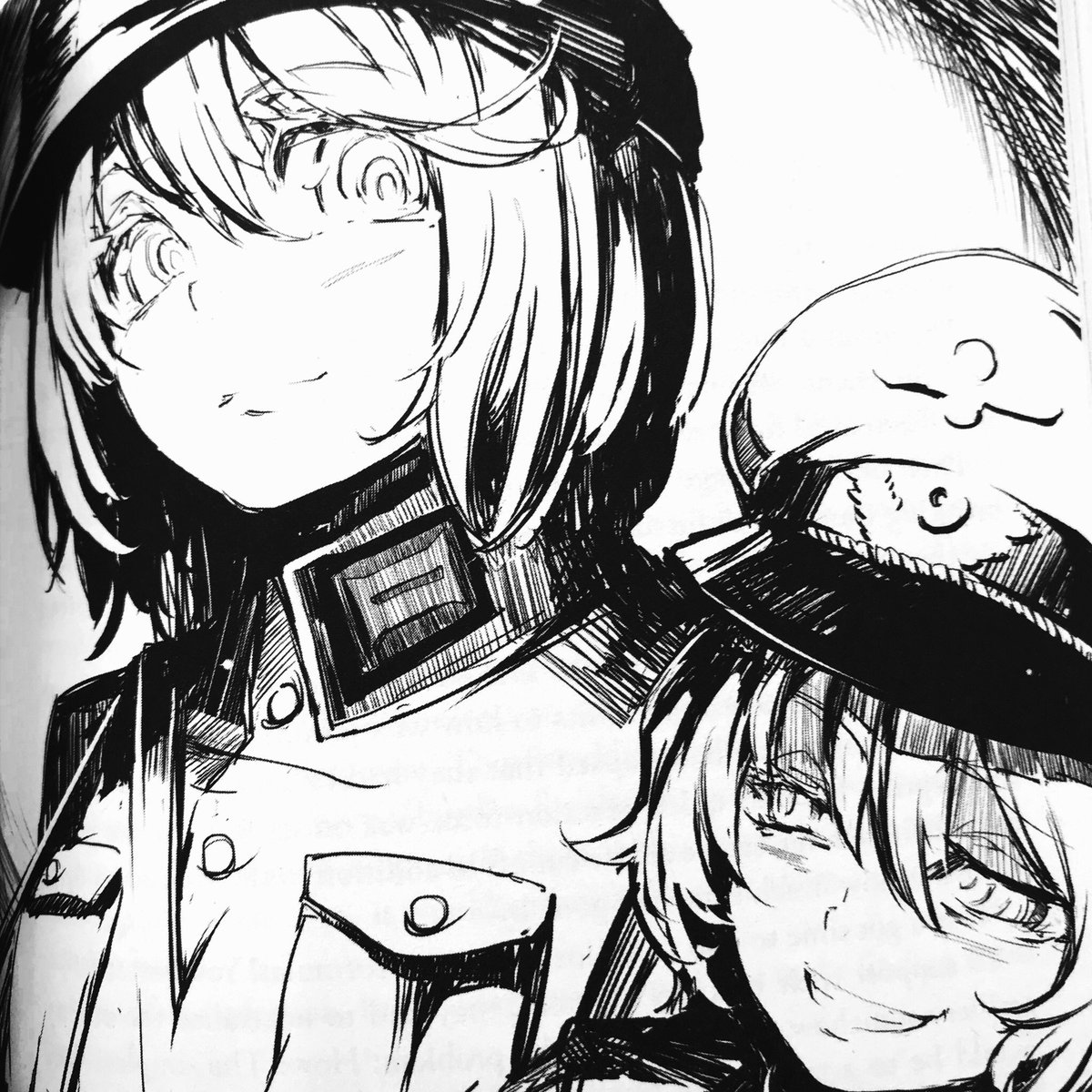
Out on the front line, a little girl with blonde hair and piercing blue eyes dominates the battlefield. Soaring higher than all her fatherland’s foes, Tanya Degurechaff rules the skies, rifle in hand, and victory on her mind. But Tanya didn’t always have this life in the trenches. Once an elite salaryman in modern day Japan, life caught up with his arrogance and before he knew it, he was shoved in front of a moving subway train. After angering a mysterious being X in what can only be described as the afterlife, this “God” grants the man a second chance at life to learn a lesson on humility and faith.

And so, in a horrific twist of fate, “Tanya” was reborn in a World-War-I-esque alternate reality where magic exists. Still retaining her consciousness as a cold, calculating, and resourceful salaryman, however, Tanya secretly wields the intelligence and experience from her former life to not only survive in this new harsh landscape, but to climb to the top of the military’s hierarchy.

Rife with cruel irony, political banter, and struggles for life during a time of untold death, Deus lo Vult chronicles Tanya Degurechaff’s rise to power and lays the groundwork for the explosive world war that is blazing on the horizon.


War is only fun when you’re winning. — Tanya Degurechaff


What sets Tanya apart from other “transported to another world” titles is the narrator’s relationship to young Degurechaff. Plus, I mean, the gender transition, which oddly enough doesn’t seem to perturb the narrator as much as one would think. Carlo Zen writes the novel as if a distance exists between the shell of the young girl, Tanya, and the twisted personality behind her actions, the salaryman or “narrator.” Unlike other isekai titles where the protagonist is placed in another world (or another body) and actively takes in their surroundings and exists in it, the narrator constantly addresses the two separate entities of Tanya and himself.

In other words, the narrator makes Tanya do something, then observes the repercussions of that action from Tanya’s head space. Of course, this calls into question the “Tanya’s” reliability as a narrator, which is the next point I’d like to discuss.

Image result for saga of tanya the evil light novel

Kafka and the Unreliable Narrator

The perspective of the story is always written in first person, but Tanya is consistently referred to by the narrator in third. When Tanya kills an enemy soldier or salutes to her superiors, the narrator makes comments about what kind of face Tanya should make, what her posture should be like, what her tone of voice should be, etc. The narrator doesn’t see himself as “becoming” Tanya, but rather as an existence that puppeteers this young blonde child named Tanya.

This unusual narrative style sets up an intriguing relationship between the two, and also tells us that the narrator might not be as level-headed as we are led to believe, perhaps indicating an unreliable narrator reminiscent of Franz Kafka’s writing. Fused together are elements that feel simultaneously realistic and fantastic, and like Kafka’s other works, an isolated protagonist faces bizarre predicaments and incomprehensible social-bureaucratic powers. Explored are themes of alienation, existential anxiety, the impacts of imperialism, the costs of war, guilt, and absurdity.

You can’t always trust the narrator’s sanity, which reflects in Tanya’s feared character. And yet, despite her brutal, unforgiving nature, you don’t want to see Tanya lose. Carlo Zen has created a fascinating dilemma—if only more of the book itself was about our rather dangerous titular soldier. 

Image result for saga of tanya the evil light novel

A Dense Read

Although it is the saga of Tanya, many events of the book are not observed directly from her eyes. Throughout the novel, we take on the viewpoints of the various members of the military’s general staff, a few of Tanya’s brothers-in-arms, and even a reporter from 40 years into the future. Not only are these mostly just reactions of the same events seen from different perspectives, but they’re hard to follow as well.

I remember reading a passage talking about the war, only to realize a few pages later that this wasn’t the army’s commander or even an Allied Forces captain speaking, but rather Tanya herself commentating on the philosophy of war. The POV often shifts unannounced, too, so you’ll never know exactly who’s shoes you’re in unless you really have a grasp for the characters!


Bravery, glory, honor—all those ideals get covered in mud as they fight to the death, and a handful of exceptions make a name for themselves. — Laeken


I’ll give it to you straight: Tanya‘s first novel is a difficult book to read. Perhaps this speaks to Carlo Zen’s mature writing style, but this is not a novel you’d casually pop open, read for a bit, then put it back down. It’s going to require a bit more commitment than your average light novel series, and while I know some readers crave that kind of challenge, others would be totally put off by it (which is kinda where I fall on the matter).

With constant walls of tiny text, monstrous chapter lengths, and illustrations that are few and far between, you start to understand why it took me a whole month just to read volume one. It doesn’t help that the book is over 300 pages long! So, in addition to being unlike most isekai stories, The Saga of Tanya the Evil is also unlike most light novels.

If God Wills It . . .

Much like the way Lieutenant Degurechaff leads with an iron fist, The Saga of Tanya the Evil is a series that can be very punishing to readers unless they know exactly what they’ve signed up for. It’s a densely packed story with so much going on in it, from the philosophies of war and life, to the increasing global climate of a world preparing for war. Zen uses the dreary historical non-fiction backdrop of a world war to toss Tanya into circumstances of danger, and it is in those moments of insecurity that we see the divine cruelty of one all-powerful, pissed off God.

To say the least, the novel series involves much more than a mad little girl flying around using magic to smite her enemies. If you were coming from the anime expecting action at every bend in the rocky road, look elsewhere. Tanya doesn’t take any prisoners, but to those up for the daunting task: “Spend your days in combat and unfathomable danger. If you return alive, you’ll receive honor and glory.” To those poor soldiers, however, my sympathies—you have no idea that the most dangerous thing on the battlefield is the Devil of the Rhine herself.

Image result for youjo senki ed art


O saints, believe in the blessings of our Lord. Let us be fearless. At the distant end of our journey, let us reach the promised land. — Tanya Degurechaff


Afterword

Looking back on it, I definitely enjoyed this first volume of Tanya. It was a tough read for sure, especially since I was expecting more of something like the anime, but I did like the incredible depth placed in the characters and the world. Should you read it? If you’re wanting a military title with a bit of magic and a more challenging read to entertain you, there’s a lot you’re bound to like in Tanya. Will I be picking up volume two? Yes . . . but not anytime soon. I think I need a bit of a break after just reading this first one! For now, The Saga of Tanya the Evil is a “Coffee” title here at the cafe, but I’m sure the story only gets better from here.

Have you read The Saga of Tanya the Evil? If you have, what did you think of it, and if you have not, has the anime ever tempted you into starting? Let me know! ‘Till the next review, this has been

– Takuto, your host
Ultimate Luck and Hope & Despair: Danganronpa 2 as a Manga . . . From Nagito’s Perspective | Review

A brief, spoiler-free review of the 3-volume 2012-2016 manga “Danganronpa 2: Ultimate Luck and Hope and Despair,” based on Spike Chunsoft’s game “Danganronpa 2: Goodbye Despair,” art by Kyousuke Suga.


A Spin-Off Full of Despair

Sixteen students from the prestigious Hope’s Peak Academy suddenly awaken on a deserted beach. Their teacher, a white and pink “magical girl” rabbit named Usami, proclaims that their first assignment is to become friends with one another by means of touring the island and collecting hope fragments together. Storm clouds quickly gather over this isle of palm trees and blissful breeze when Monokuma, a sadistic bear of monochrome hue, takes Usami down and gives the students a new assignment: to kill one of their peers and get away with murder in the class trial.

To the victor goes the only spoil these teens want—escape from the island. The students swear to one another that they’d never commit such a crime, but as Monokuma slowly and meticulously introduces calculated motives that play on the whims and desires of these kids, temptation is given into, and blood is spilt.

Forced into this deadly killing school trip, what once was an island paradise has become a hell on earth. But when these poor kids find that they’ve been deceived far more than what is even imaginable, the very fabric of their world hangs on the thin threads of hope.

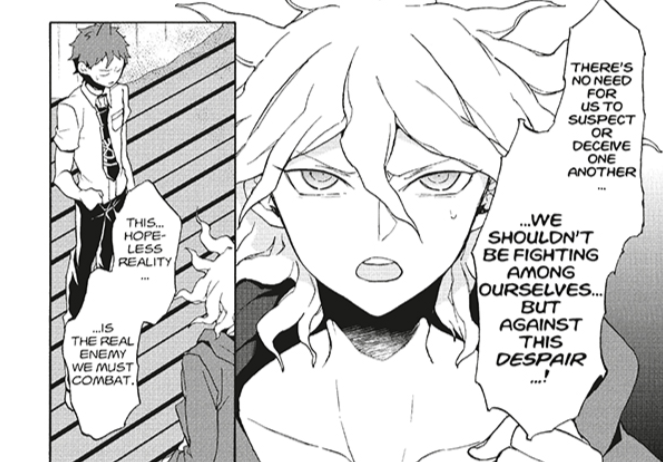
nagito hope

Greatly truncated for the sake of this review, this is the plot of Spike Chunsoft’s groundbreaking game “Danganronpa 2: Goodbye Despair,” and the sequel to the equally influential “Danganronpa: Trigger Happy Havoc.” But as you can tell, this review isn’t about the game; rather, we’re looking at the manga spin-off today. Instead of playing this survival game through the eyes of main character Hajime Hinata, we experience life from the view of Nagito Komaeda, the Ultimate Lucky Student, and the bane of the class’ existence.

The Ultimate Lucky Student

Infamous for his willingness to take his “friends” down yet beloved by the community for his twisted nature and bromance with Hajime, Nagito is a complicated human bound by irrational thinking and a moral compass that always points south. Above all, he believes in the talents of the Ultimates of Hope’s Peak, and the insurmountable hope that can arise from their collective efforts. Weird, I know, but it gets worse.

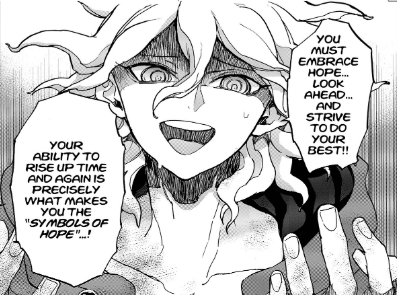
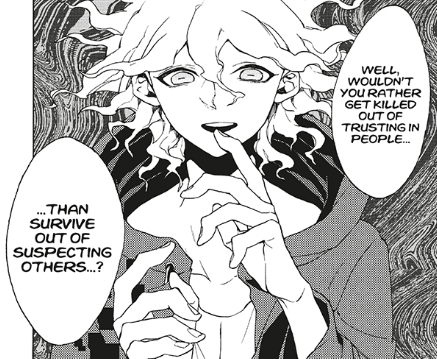
Placing complete faith in his ultimate luck and the hopes and dreams of his friends sounds like a good thing, right? Well, not when you add in that twisted personality part I mentioned earlier. He derives pleasure from inflicting pain, suffering, and humiliation on his peers, without a doubt, but only because he deeply believes that his friends are Ultimates—students handpicked by hope itself. That means that no matter the size of the despair, hope always comes out on top. This flawed logic of his causes him to create scenarios that put everyone at risk just to watch the Ultimates overcome the despair. After all, according to Nagito, their talent can overcome any despair.

So, not only is this scrawny emo a huge Hope’s Peak fanboy, but he’s also a nut job with more than a couple loose screws. The PERFECT player to have in a killing game, right?

nagito belief.PNG

To give him credit, there’s never a dull moment around Nagito. In fact, many of the game’s most exciting moments revolve around Nagito’s lies and schemes. By packing the best reveals and most fascinating plot points into this short 3-volume series, you’ve got a spin-off that is anything but boring. Nagito’s trademark luck carries him through numerous plots and conspiracies—many of which he is directly involved with—at the behest of everyone else’s security.

Madness and Maliciousness in Manga Form

Danganronpa is one of the most stylish games out there, arguably more so than even the hit Persona 5. Its iconic gun-and-target imagery offers fun gameplay effects, sure, but the flashy courtroom gimmicks and screen-shattering special effects aren’t just for looks. The series prides itself with the class trials, the bread and butter of the franchise, and this motif of breaking through lies—shining through despair—to uncover the truth. And thankfully, Kyousuke Suga’s adaptation faithfully adapts this matter of style into the fast-paced panels of his manga.

That’s right. Most if not all of the crucial lines and moments are replicated nearly word-for-word in the class trials. Although we only get the first three (for reasons I can’t explain without entering spoiler territory), I was quite surprised with how full and thorough the trials felt, given the immensely short length.

Like anyone should be, I was skeptical about a measly 3-volumes doing Danganronpa 2 any justice. By limiting the story’s POV to that of Nagito only, however, you realize that the Ultimate Lucky Student’s time spent with the Ultimates of Hope’s Peak is short, perhaps, but immensely impactful.

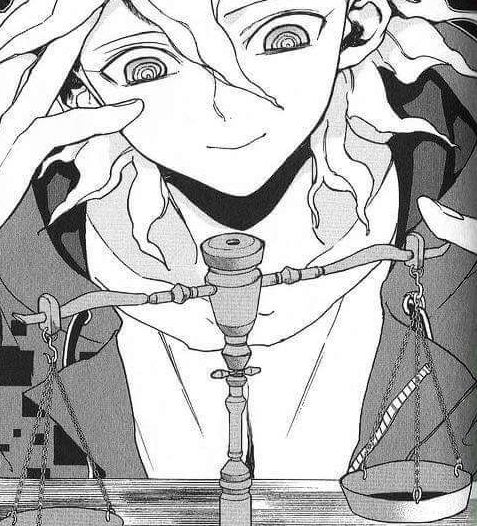
nagito scales.PNG

The only turn-off to this little series is the character designs. All the guys look anorexic, while the ladies have totally unrealistic “curves,” almost as if everything was somewhat over-sexualized. Even if the seemingly sloppy, disproportionate bodies and facial expressions feel uncharacteristic of the game’s original designs (which were boldly outlined and always on point), there’s beauty in the quirkiness of Suga’s style, though.

This lax, less faithful style allows for us to see character expressions and reactions that the game just couldn’t keep up with. A sprite system might feel more stable, but this adaptive style manages to keep up with the subtle dark humor and self-deprecation (given that now we’re Nagito) that I felt the game just didn’t. Suga’s work is much more organic and less “cardboard cutout,” literally, and it makes for a nice afterword piece to the franchise.

nagito and hajime.PNG

Why Should You Read This Spin-Off?

For one, it’s short. At three volumes, I finished it in a day and a half. Plus, it fills in some gaps of the game. During chapters two and three, Nagito is tied up (don’t ask) and unconscious (also don’t ask), meaning that while the others (namely Hajime) are experiencing the events of the story live, Nagito is playing catch-up. And boy does he do a damn good job at assessing the evidence of each crime scene.

Instead of running around and talking to our classmates, we enter Nagito’s nightmares and delusions of self-reflection. We see his fears, understand his motives, and get a better picture of why Nagito antagonizes his peers like he does. Much better than in the game (save for chapter 4), we get inside Nagito’s headspace and see what makes him tick, allowing the viewer to connect with him a bit more—even if he’s still a freak at the end of the day. You can practically regard this spin-off as cannon, as it never strays from the original plot, nor does it add conflicting details. That’s always a plus.

Additionally, we get different angles from the game. The “camera” shows us live conversations with multiple characters in a shot at different angles talking to one another, as opposed to the game where 2D characters are layered on top of a 2D backdrop. Plus, Kyousuke Suga just seems to understand that Nagito is not a character to be disgusted or hated all the time; Nagito is an oddball to the class, an anomaly that can’t always be understood, and I appreciate Suga’s more comedic take on Nags’ obsession with hope.

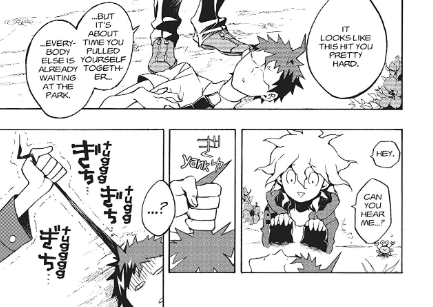
nagito and hajime talking.PNG

Like Loki to Marvel’s Thor franchise, Nagito is a trickster that is fun to watch and frustrating to befriend, but undeniably inseparable from the equally quirky work in which he comes from. As such, it’s a real treat to have an entire narrative devoted to his character, even if it’s both a rehash of the game’s events (with a few dream sequences of backstory and inner monologues added) and, frankly, a series tragically short for its own good.

This manga series shows you some of the parts you wish you saw in the game, and it does so craftily without tampering with the existing plot. Is it for newcomers to the franchise? Absolutely not. But as supplemental material for those pining after anything extra to do with Hope’s Peak Academy’s 77th Class, Ultimate Luck and Hope and Despair is your stepping stone toward hope.

nagito waking hajime.PNG

Komaeda, you aren’t trash. If you died, or helped someone commit murder, it won’t give rise to hope. Just the opposite . . . it’ll wind up extinguising a ray of hope. ‘Cause . . . ’cause hope . . . is already shining inside you, Komaeda. — Monomi


Afterword

I had a blast reading this short little spin-off, especially given that I finished playing the second game right before starting this series. All the parts of this franchise connect together so intricately, so purposefully and creatively, and this manga spin-off is no exception. It’s extra material for sure, but if you love Nagito Komaeda’s guile as much as I do, you’re bound to love Suga’s work.

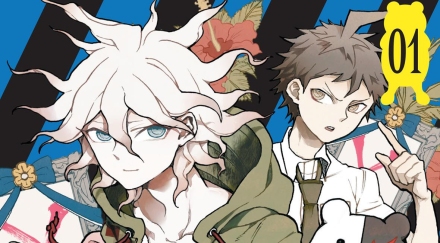
And can we talk about those volume covers?? The first two are so brightly colored and stylish with all the characters wrapping around from front to back, while the third is a haunting minimalist piece of Nagito looking like he’s preparing for the final show (if you know what I mean). I think Suga could’ve split volume three into two separate volumes, adding in more content from the ENTIRELY SKIPPED fourth trial, as the third book is nearly twice the size of the other two. Oh well, at least we got the series (in all its matte-cover glory) thanks to Dark Horse.


I doubt many of you will end up checking out this series, but if you do, I’d love to hear your thoughts on it! Although a manga series, I’ll give Ultimate Luck and Hope and Despair the “Coffee” rating for being a fun read but not an essential one. I believe the regular manga adaptation of the second game along with Ultra Despair Girls are coming out this fall, so I look forward to picking those up. Till the next review, this has been

– Takuto, your host
Sentai Filmworks 2019 Summer Sale HAUL!

Hello all!

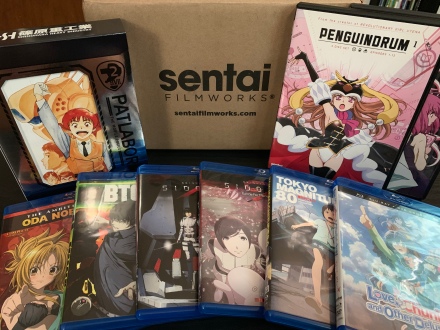
Just as the title says, I caved and spent $107 at Sentai Filmworks’ summer sale. They always go all out, and you know I can’t resist $10 anime Blu-rays.

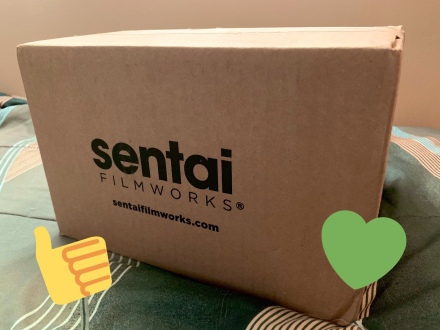
Seeing as how one of my 2019 blog goals was to post more of my hauls (as I tend to buy a lot but not tell anyone, shhhh), here we are. Let’s get this box sliced open and see what’s inside!

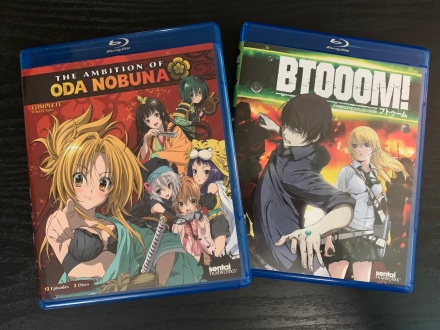
First up is The Ambition of Oda Nobuna and BTOOOM!, two series that I’ve wanted for quite some time, but for entirely different reasons. BTOOOM! I’ve heard is an awesome survival game show, one of my favorite sub genres of the overarching thriller genre, so there’s that. But Oda Nobuna has been a long-awaited buy. I watched it in the summer of 2016, and enjoyed it immensely for some reason. Glad to finally have her in the collection—or should I say, on the throne where she belongs!

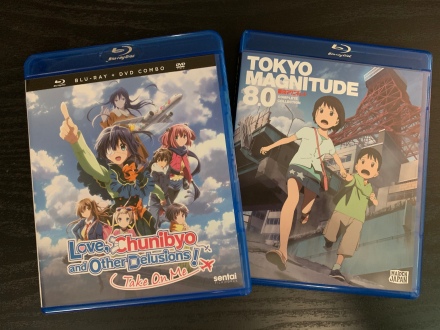
Here’s a couple more pickups I’ve been meaning to make for a while: Tokyo Magnitude 8.0 and Love, Chunibyo, and Other Delusions!: Take On Me, the movie. I’ve heard nothing but stellar things about the former, but it was always out of stock whenever I tried to buy. Happy to have these after all this time!

I wasn’t actually planning on ever watching Knights of Sidonia, let alone buying it. Yet, it would seem even titles produced by Netflix expire on Netflix, meaning it was $20 now or a missed opportunity forever, and I thought hey, CG space fights sound pretty aight.

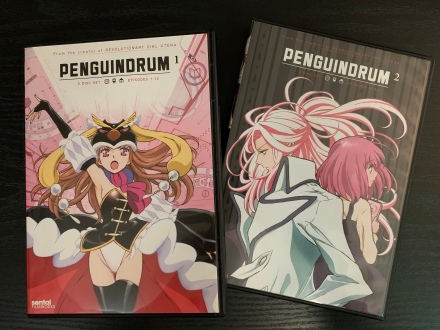
I used to TORTURE myself over whether to settle for DVD or pay practically double for Blu-ray back in the day. Thankfully, with Blu-ray prices steadily declining and DVDs going extinct, I’ve been limited to the obvious choice. It would seem that everyone’s trying to get ahold of this beloved title, however, so it was DVD for both sets or eBay Blu-ray hunting for one of the OOP collections. I chose laziness. Settled for less, perhaps, but was it really worth the effort to begin with? Only time will tell.

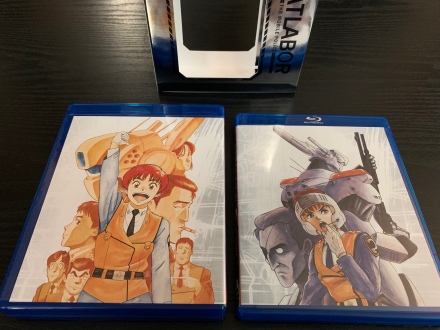
Last, but certainly not least, is Sentai’s massive Patlabor Blu-ray collection, which contains ALL of the classic series. That’s like, 47 episodes, 3 movies, and a boatload of OVAs. And it was just $40! A no-duh purchase for a sci-fi fan like myself, right?

Here’s what the inside cases look like. Love the coordinating art and the blue, white, orange color palette. The silver shine on the “box” also adds a nice industrial feel to the release. Did I mention the window on the box sleeve is really neat, cause it is.

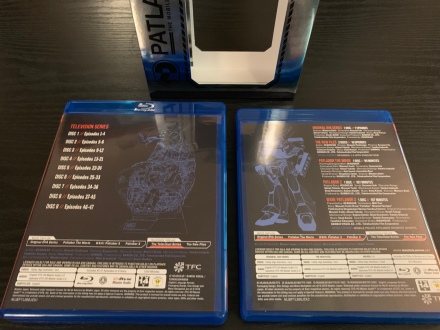
And here’s the back, since I’m feeling generous and all (and I’m totally not exploding with happiness for the quality of this release). They even included a little timeline for all this animated stuff—how thoughtful! Speaking of time, I heard the first film just had its 30th Anniversary this past Monday, July 15th! What a perfect way to celebrate the franchise and its success! (Plus, a wonderful way to end this post!)


I love hauls. No matter the contents, no matter the amount, they bring me so much joy. Did you buy anything from the summer Sentai sale? Show me your haul over on Twitter or let me know down in the comments! Have you seen Patlabor, and did you like what you saw? Let me know that, too!

I typed all of this spontaneous post on my phone, so yay for mobile blogging. I’ll get around to posting a manga review here within the next couple days, so that’ll be cool. Same goes for a summer simulcast line-up . . . it’s, eherm, on the way, yeah. Otherwise, that’s all I’ve got, so till next time!

– Takuto, your host

Kino’s Journey: Navigating This Beautiful World | OWLS “Technology”

Chances are that if you were linked here from another blogger pal, then you might be new. To those first-timers, “Hi, I’m Takuto, welcome to my anime cafe!” For the OWLS blog tour’s seventh monthly topic of 2019, “Technology,” I decided to go with a slightly less-than-obvious choice, the incredibly profound yet humble Kino’s Journey (2017). Odd pick, right? Just wait, I think I can make it work!

For this month’s topic, we will be discussing how technology impacts our relationships with others and how it improves our lives (such as in communication, education, etc.) by exploring the technology used in various anime and pop culture worlds.

A simple prompt, but an exciting one nonetheless. Thank you Lyn and Aria!

kino riding.jpg


A brief discussion of the 12-episode fall 2017 anime “Kino’s Journey -the Beautiful World- the Animated Series,” animated by Lerche, directed by Tomohisa Taguchi, and based on the light novel series of the same name by Keiichi Sigsawa.

From Country to Country

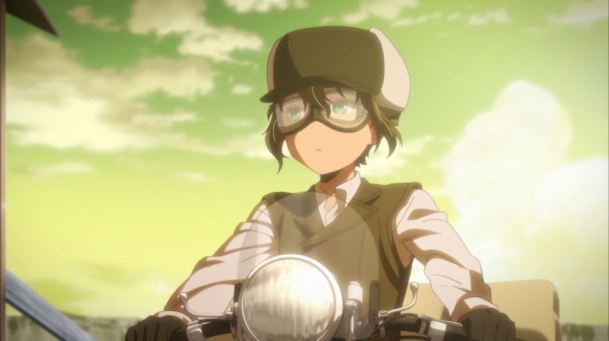
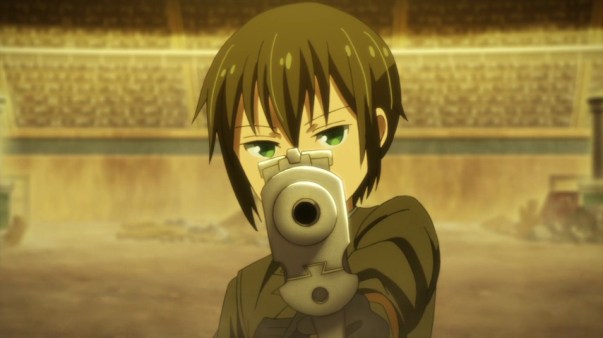
Three days, two nights. No more, no less. That is the only rule Kino made for herself before she set out on her talking motorcycle, Hermes. Whenever the 15-year-old feels bogged down by heavy thoughts or unpleasant memories, she travels. For Kino, few things in life can compare to the joy that comes with exploring the wild yet wonderful world around her, as well as understanding the diverse ways in which people live.

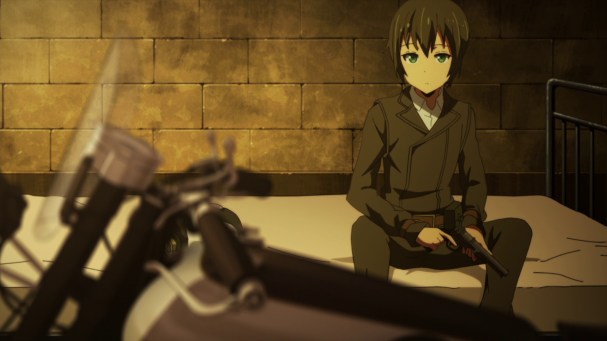
But don’t let Kino’s cute, slightly androgynous appearance and courteous demeanor fool you: Kino isn’t afraid to kill if it means protecting herself or Hermes. A diplomat, sure, but a pushover—hardly. If she needs to kill, she won’t hesitate. Otherwise, Kino ekes out a peaceful life of traversing foreign lands with her best friend and loyal partner.

Sprawling cityscapes and vast countrysides, mountain villages and tiny valley towns, grassy prairies and open seas—Kino and Hermes are here for all of it. As these partners in crime encounter new people and learn the rules of their *often quirky* civilizations, they grow to find out more about their own values and virtues. But as Kino immerses herself more deeply in discovering the world around her, she also finds herself facing dangers that linger within the beauty of the great unknown.

kino gun.jpg

The World is Eccentric

Countries that roam atop the plains using caterpillar tracks, others that float in great ships on the open seas. Countries that reside within enormous walls, and others that are located deep within the earth. Countries of unimaginable size, others so small they might as well be cults. No two countries look nor feel alike, making each stop one full of intrigue and curiosity.

From cryptic laws to hysterical citizens, the written or mutually understood way of life for a country is almost always shrouded in mystery. Either for its dark history or doomed future, these eccentric countries operate with irrational decisions, or a mindset that is far too rational to make any practical sense. Some countries are understandable (if not a bit extreme), while many are frustrating and deeply flawed. Kino’s Journey is a fun watch, don’t get me wrong. But to say it isn’t hella weird at times would be far from the truth.

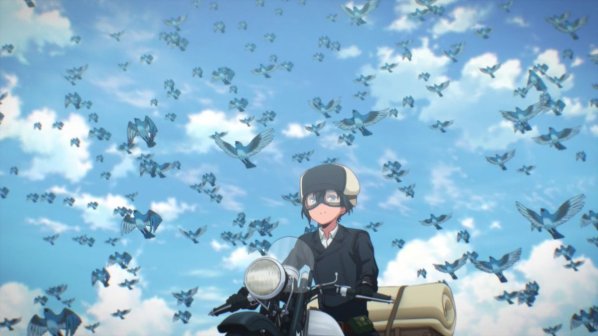
If things sound too good to be true, it’s because they are. And if the country feels too dystopian, there’s ought to be a silver lining in it somewhere that Kino can find. She wields only her her guns and her wits as she travels, yet on her shoulders is a level head and an open mind that is truly one of a kind. If we were following anyone besides Kino, the journey—and all of its crazy tales—would be drastically different. I suppose that’s why it’s Kino’s Journey, not anyone else’s.

kino birds.jpg


Every country, just like every man, causes some degree of bother to others merely by existing, yet we all must carry on. — Public Servant from the Bothersome Country


Friendship Comes in Many Forms

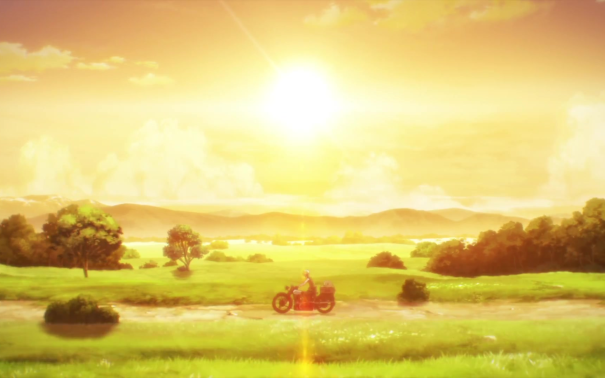
Through her splendid little motorrad, Kino explores the beautiful world around here, all its happiness and wickedness alike. Hermes and Kino keep each other company like no one else could for the other. They are not the standard traveler, but exceptions to the rule. Rather than seek fame and fortune, Kino and Hermes yearn for psychological satisfaction. They talk not of grandeur, but of philosophy around the campfire. Seeking what cannot be seen, Kino takes delight in everything the journey has to offer, sorrows and hardships included, and Hermes is a huge part of her willingness to keep exploring. Exactly half of it, in fact.

A loyal, sentient motorcycle, Hermes, allows Kino to deeply connect with the many lands and peoples along her journey without a destination. And this very motorrad is the technology which I’m spotlighting in this post.

kino sunset.png

One thing I love about the world of Kino’s Journey is the acceptance of technology used by travelers. Even though it’d be the first point to bring up by you or myself, no one seems to have questions or qualms about the talking motorcycle. Weird, right? Regardless of whether they hail from proud medieval villages or urban metropolises, the people of any given land posses neither curiosity nor despise for Hermes. He just exists along with his traveler, and thus saves Kino from having to continuously explain Hermes’ unusual sentience, which would get quite old within just a couple episodes.

The more I got to thinking, I started to realize that the internet is my Hermes that connects me to all of you. I have seen so many sights, heard so many sounds, and felt so many stories just through the power of the internet. And in the process, I found friends, too, much as Kino did in Hermes. To a traveler, the motorrad is literally a vehicle for communication and connection, and also an unlikely friend.

kino and hermes.jpg

How Technology Connects Us

Technology only works if you try to work with it, as we see in Hermes’ relationship with Kino and all the unique, technologically developed civilizations they encounter. Much like people, some countries are outwardly hostile, while others welcome travelers with outstretched arms instead. Regardless of their attitude towards outsiders, each country uses almost radically different forms of technology. From medieval pitchforks and knives, to guns and ammo of the Wild West, and even robots from the far future, technology has found itself embedded in humanity’s existence.

Some people are protected by technology. Others are haunted by it. Some use it to connect with people and society, while others use it to live peaceful, solitary lives. Kino comes across many stories of horror and hope alike, but technology is almost always somehow involved. Above all, what Kino learns from these tales is that people leave technology behind—or worse, are left behind by it.

kino driving away

The metaphor I’m trying to make is a simple one: Hermes connects Kino to the world just as the internet connects me to all of you colorful people. Even if I come across sadness or heartache through my internet explorations, there’s always positivity and kindness to be found as well. I’ve been able to learn about so many real-world countries, real-world customs and cultures that would’ve been impossible otherwise (or at least not as easily accessible).

Blogging, social networking, and even just browsing the internet in general has transformed me into a person who knows of what the world outside is like, and as a direct result, I’ve learned how to broaden my horizons and accept and appreciate diversity of all things in life. Hermes takes Kino to unimaginable lands and their people, and the internet brings me to all of you.

kino smiling.jpg


A pact is an agreement to help each other out a bit. As long as I handle the balance, keep him fueled, and plot our destination, he’ll give me all the speed I could ask for. And with that, travel gets a lot easier, also more fun. — Kino


A Traveler’s Tale

Kino’s Journey (2017), like its 2003 “predecessor,” employs the time-honored motif of the road trip as a vehicle for self-discovery and universal truth. Deeply meditative, thought-provoking, imaginative, and sometimes disturbing, Kino’s journey is told in an episodic style with an emphasis on atmosphere rather than action or plot, though still present.

Each country has its own customs, some of them strange, some interesting. And just as how every place has a story, every story most certainly has a place. All who travel leave their mark behind, and I’m talking about more than just the tire treads of Hermes’ wheels in the mud.

kino at the gate.jpg

Unlike the loud excitement of a road-trip adventure, Kino’s Journey delights in the philosophical banter between two very old, quiet souls. In this wacky and weird world, technology allows Kino and her best friend to expand their knowledge of the world, but also learn a thing or two about one another and themselves along their journey. Their meandering through various lands bring with them their own challenges of how to connect with a place’s people.

A series of vignettes, a collection of stories. Some “tales from the wise” are nice, others less so. But all of them are fascinating in their own way. Human decency, empathy, respect—these are all qualities people from different lands define in different ways. And that is fine.

Often, the problems Kino encounters with Hermes are not with law or culture, but with people. Where there are people, there will always be problems—that much is inevitable. But when we can accept one another’s differences and see the order in the world, the world itself becomes much easier to live in. A bothersome world, sure, but a beautiful one nevertheless.

kino sleeping.jpg


I’m not sure if this world is beautiful, but it sure is big. — Hermes


Afterword

I could’ve easily have picked Evangelion given both how central technology is at the story’s core and that I’m almost finished with my rewatch of the series on Netflix. But I didn’t, as that would’ve been too easy, not to mention obvious. I like picking more unique titles for these OWLS tour posts, and I hope I was able to do Kino’s Journey justice. By the way, the series is a “Cake” title here at the cafe!

There’s so much depth to this title, both the old one and the new one, and I hope that, if you’re ever needing a quiet escape journey, you’ll take Hermes for a spin with either the 2003 or 2017 adaptation. The latest remake is beautiful on the outside and adapts previously untouched chapters from the novel, while the early 2000s version uses storytelling methods and imagery that transcend the outdated visuals. My opinion? Watch them both! More Kino is a good thing, after all!

Speaking of beautiful, I didn’t even mention how just draw-droppingly gorgeous Lerche’s visuals are. Along with A Lull in the Sea and the works of Makoto Shinkai, I truly believe that Kino’s Journey (2017) features some of the most colorful, alluring, and enchanting landscapes anime has ever seen! Plus, Kino’s new character design is just fantastic, a charming look fit perfectly for our titular traveler!

kino flower bed.jpg

This concludes my July 7th entry in the OWLS “Technology” blog tour. Jack (Animated Observations) went right before me with a post on Psycho-Pass, a textbook pick for this tour and one of my favorite anime that you can read right here. Now, look out for Lyn (Just Something About LynLyn) with a post on one of my favorite films ever, the world famous your name.tomorrow, July 14th! Thank you so much for reading, and until next time, this has been

– Takuto, your host
Halfway Through 2019 – What’s New, & Where Are We Headed? | Quarterly Update (Summer)

Hello all!

Can you believe another three months have passed since the last time we met for an update? Why, that was the beginning of April, and now we’re already a week into July. JULY. Crazy, right? I hope all my friends in the U.S. had a happy 4th of July full of friends, family, and good food. To everyone else, I hope you’re summer hasn’t been too hot!

In other news, I’ve been watching and reading a decent amount—which is great considering that one of my 2019 goals was to watching all of the stuff I’ve bought (yet haven’t touched) to justify buying it in the first place. Unfortunately, as soon as I finish one movie, three new ones somehow appear on my shelf. Weird. It’s not me, I swear!

Ok, so maybe the sales have been good to me lately, but I am enjoying getting around to all this stuff. These novels, manga volumes, and Blu-rays were bought for a reason, after all! Without further ado, let’s see how much stuff I’ve been able to knock off my To-Watch backlog! First though, some goal updates . . .

Goal Reflection


#1 – Read More Posts

I’m sorry everyone. My phone’s home screen is once again becoming filled with your posts so that I can read them . . . but they just continue to amass, as opposed to being read and shared. WordPress has made mobile blogging a pain in the ass, in that I cannot comment and like without being logged in—and yet even when I try to log in, it still won’t let me respond to you all! Instead, my phone wants me to use the app and WP reader to communicate with other bloggers, and that’s a real nuisance given that I get most of my reads from Twitter posts AKA posts shared online, not via app. I’ll work hard to clean up my home screen in the meantime, even if it means individually typing out every single post in the search bar and finding it that way.

#2 – Write More Succinct Reviews

I think I’ll be changing this goal to “Write More Succinct Posts (in general),” as it has happened for the most part with all my other posts besides my reviews. And I’m ok with that. Personally, I don’t see 1,300 – 1,600 words as that much for a full-series review. Otherwise, I’ve posted a couple posts that were just like 300 words, and y’all don’t even know how good that felt for someone as wordy as myself! Even if just simple announcement posts, I like to think I’m improving on this goal.

#3 – Post More Often

I’ve continued this next set of three months by successfully managing to publish about one thing a week, which was my goal! In April there were four posts, while in May and June there were FIVE posts per month. Again, it sounds like a really sad goal, just five posts out of 30 days, but this is a huge step for me. I’m proud of the work I’ve done so far, and hope I can keep up at least this much content, if not more, as the summer goes on!

A side note, last year I wrote 27 posts. Yup, that’s it, and that’s not much. As of July 6th, 2019, I’ve already written 30 posts, so I’ll easily double the amount of posts I wrote last year if I continue down this track!

#4 – Bring Back Cafe Talk

Nope, lol. BUUUUT, I did create an entirely new segment on my blog in its place. Called “Anime Revisited,” the posts in this category are just that—shows that I’ve already reviewed, but would like to look at once more under a new light or fresh perspective or whatever. Basically, I rewatched Gurren Lagann and wanted to talk about it again. But “oh no, I’ve already reviewed that series.” No problem, just revisit it! And so I did, and it was received quite warmly by you all, thank you very much.

#5 – Write More Haul/Collection Posts

Yeah, this one has gone no where, and here’s why: I’m really considering an Instagram for all my haul, collection, and cosplay related musings. Like, really thinking about it. Like, it could happen tomorrow, or even today. I’ve still been getting tons of crap, but I’m not sure if I want to junk up my blog with pictures of the stuff I’ve bought as opposed to talking about or analyzing that stuff like an intellectual would. If Insta happens, you all will be the first to know!

What I’ve Watched


Aside from the last couple simuldubbed episodes of Kono Oto Tomare!: Sounds of Life, I’ve finished all the spring shows I’ve been following, including Sarazanmai, Attack on Titan Season 3 Part 2, and Wise Man’s Grandchild. Really tempted on going back for the music drama Carole & Tuesday and Mix, a little baseball series that silently aired this spring. Plus, I haven’t started the new Fruits Basket yet. (I know, I SUCK!) Reviews for the spring content will be rolling out here soon, fingers crossed.

As for Blu-ray watching, I watched Lu Over the Wall, Liz and the Blue Bird, and Mary and the Witch’s Flower, three adorable films that I was supposed to review but haven’t yet (spoiler alert, watch them). I also finished Asobi Asobase, a great comedy series which contains some of the STUpidest shit I’ve ever seen, as well as the second half of Re:ZERO. Definitely not as good as the first half, but still epic (and nail-biting, heh heh).

In the past month, I finally watched Blood Blockade Battlefront, which I’m pretty sure I didn’t like as much as everyone else, yet liked it enough to apparently impulse buy the second season the minute RightStuf’s 32nd Anniversary sale started (my dumb ass, right?). Apparently it’s a fantastic sequel though, so I’ve got high hopes.

Speaking of another questionable move, I watched Majestic Prince and, well, won’t get the time back from watching that LOL. I also rewatched Izetta: The Last Witch, but that one was actually pretty fun to visit again.

One of my favorite watches these past three months was The Great Passage, the dictionary anime that aired in 2016 that everyone (myself included) slept on. After hearing it was by the same person who wrote Run With the Wind, I hustled on down to Amazon, gave it a watched, and fell in love. Review coming soon!

Oh, and I finished Sailor Moon SuperS and the movie Black Dream Hole, too! Although I won’t review anything Sailor Moon (as the nostalgia lens are very foggy with this one), you can bet I loved it. Excited for Sailor Stars!

Another incredible watch was Kizumonogatari Part 1: Tekketsu-hen, the first in a masterpiece trilogy by studio Shaft. It was a pain to spend $50 on a 60 min film through eBay, but it beats the $70 that Aniplex is asking for. At least the set is drop-dead gorgeous. (Which I could show off if I, you know, had an Insta.)

As for what I’m currently doing, I’ve been rewatching Neon Genesis Evangelion since the new dub hit Netflix. The dub is serviceable. Not as near as personable and heartfelt as ADV’s dub, but it works if you’re new to the series or can’t afford the old DVDs. Regardless, I’m still having tons of fun rediscovering why I fell in love with it in the first place. I also started God Eater . . . not much else to say on it. It’s pretty for a monster-slasher series, and I’m sure I’ll have more thoughts once I finish it!

Despair Returns: A Danganronpa Playthrough


I know how all the Danganronpa games go. Same for the anime, and even the novels. I’m a huge fan, a mega fan. An Ultimate Fan, if you will. Since I’d never actually played the games myself and let the LPs and walkthroughs entertain me, however, I thought I’d change that. Oh, and challenge my siblings at the same time!

So now, every chapter, every trial, we switch of players. We finished the first game early June, and are about to finish the second game. The Danganronpa games are tons of fun, so despite knowing how things play out, I’m not sick of it yet. Totally hyped to play V3 all over again, especially since it’ll be their first time with Danganronpa‘s thrilling finale!

My New Job Has Kept Me Away


That’s the simple truth of it all. As you can see, there’s a lot I’ve been watching, but now that I work 30 hours a week (and a 5-hour part time thing), I’m pretty exhausted when I get home. What do I do? I left my old job in food to reunite with my passion: the water. I’m a lifeguard at my university, but also a swim lesson instructor. I love my co-workers (a first!), and oddly enough working with kids is refreshing. I feel more physically and mentally fit than I have in probably a whole year, and even though this job is time-consuming, I thank it for flushing out all the icky in my life. I feel good, great even.

I go to bed at 10:30 each night now, not 2 a.m. I’m home with my family on weekends, and don’t feel bad for going in to work since I now leave for work at the same time everyone else does. It’s win-win, plus I get to swim on the job!

So, I don’t want to push my luck. I could be at the keyboard more often, but it’d cost my anime-watching time, my time with my siblings, and I don’t want to trim those anymore than I already have. I should be writing a little bit more this month, though, so we’ll see if that improves things on this end.

What’s new? The job. Where are we headed in the meantime? Easy: Writing posts for all the anime and manga in my collection that I’ve been watching and reading!

That’s about all I got for now. The 95-degree days are killer, but working at an indoor pool softens the blow immensely. Now, if only the rainy season would last longer, I’d be truly happy, hahaha! It’s crazy to think that the next time I write an update like this it’ll be October. Till then, thank you so much for reading, and take care of yourself!

– Takuto, your host

Sarazanmai & the Price of Connection | OWLS “Vulnerable”

Chances are that if you were linked here from another blogger pal, then you might be new. To those first-timers, “Hi, I’m Takuto, welcome to my anime cafe!” For the OWLS blog tour’s sixth monthly topic of 2019, “Vulnerable,” I wanted to give some character spotlight to this spring season’s craziest title: Ikuhara’s Sarazanmai. 

In the month of June, we will be discussing what it means to be vulnerable. To some individuals, being vulnerable could be seen as a sign of weakness, but in fact, vulnerability is actually a sign of strength. We will explore what it means to be vulnerable and how certain characters in pop culture glamorize vulnerability. When do we show our vulnerability? How do we express vulnerability? Why should we show vulnerability? These are questions that we will be discussing in our posts featuring characters that show vulnerability and/or sensitivity and what we can learn from them or even our own personal stories.

I was pretty stoked when this month’s theme was announced. “How unusual, yet cool,” I remember thinking. Sarazanmai definitely fits the bill well, and what do you know—it’s even got some queer representation in it, perfect for pride month! Thanks Lyn for the prompt!

kazuki kappa wet.jpg


A brief discussion of the original, 11-episode spring 2019 anime “Sarazanmai,” animated by MAPPA and Lapin Track, directed by Kunihiko Ikuhara and Nobuyuki Takeuchi, and written by Ikuhara and Teruko Utsumi. SPOILERS for episodes 1-3 will be present. 

We’re All Connected

What does it mean to connect? Middle school boy and Asakusa local Kazuki Yasaka is trying to figure that out for himself. After accidentally breaking a statue of a kappa, Kazuki and his friends Enta Jinnai and Toi Kuji find themselves transforming into the very creature of Japanese folklore at the behest of Keppi, prince of the Kappa Kingdom. To become human again, they must fight against the kappa-zombies, even stranger beings birthed from human desires and created by Keppi’s enemies: the Otter Empire.

If that weren’t already enough, to kill the kappa-zombies, the trio must perform the “Sarazanmai,” a sound produced only when the three are united. But making such connections are much easier said than done. What’s even worse is that each time they emit the sound, one of their secrets are revealed to the others! (Vulnerable in every sense of the word, am I right??)

For their efforts, Keppi cuts them a deal: Collect the rampant desires of the kappa-zombies and he’ll bestow upon them the “Dishes of Hope,” plates Keppi can create from humanity’s darkness that can make their wishes come true. When Kazuki, Enta, and Toi find that it takes five plates to make even just one wish come true, however, the friendship of these three boys is challenged. With every new fight springs forth another one of their innermost secrets, whether they like it or not! It’s only a matter of time before one of the boys breaks—but will the connections to their loved ones shatter with the fall?

kazuki embarassed.png

Sarazanmai is equal parts sarcastic and dramatic in its storytelling. During half of it, you are allowed to laugh at the silliness of it all. Probably for more than half, actually. To obtain the desires of the kappa-zombies, Kazuki and friends must enter the, ehem, *anus* of the demons and steal their shirikodama, a mythical orb said to contain the desires of one’s soul. Sound kinda dumb? Well, don’t blame the writers (or do for going through with it), because that’s actually how the legend of the Kappa goes, believe it or not!

And that’s just the beginning of the absurdity. Wait till we introduce the fortune-telling idol girl, the boy who cross-dresses as said idol, the other boy who shot a yakuza when he was just a wee tot, and the gay cops!! Oh Ikuhara, you’ve really created art with this one!

Joking aside, Sarazanmai is a neat little coming-of-age fantasy story for three poor youths who can’t seem to understand their place in the world. They don’t feel connected to anyone, lost adrift the tumultuous sea of love, and that’s what makes the moments when they realize the true meaning of their bonds so tender. Unconventional in execution, perhaps, but still immensely entertaining to follow.

sarazanmai singing.jpg

So, What is the Sarazanmai?

Is it a song? A dance? Something you can eat? Keppi says that: “Sarazanmai” refers to a connection of mind and soul. You share all your deepest secrets as well.”

So it’s abstract, but still simple to grasp. Humans are connected through their shirikodamas. When they lose them—as when Kappa Kazuki steals it to perform the Sarazanmai with Enta and Toi—they become incapable of connecting with anyone else, and they get kicked out of the circle that makes up the world (also quoted by Keppi). Yeesh, talk about a soul-siphoning ceremony!

By uniting in the Sarazanmai, Keppi can obtain these captured desires. Much like a double-edged sword, however, some of the users’ own desires inadvertently “leak” in the process. We’re talking about these boys’ private diary-grade secrets, which is what I want to talk about next. Trust them on this one: it ain’t easy being green.

sarazanmai dance.jpg

I Want to Connect, But . . . 

Reaching out to others is hard. It can be especially scary if you already think little of yourself. For whatever reason, trust me, we’ve all been there, and so have Kazuki, Enta, and Toi. Because Kazuki’s backstory carries more significance with the latter half, Toi’s with the show’s ending, I’ll be focusing on the Enta, our glasses wearing member of the “Golden Duo” meant to last all time!

Kazuki and Enta have been best friends ever since they met. After watching the other boys kick the soccer ball during practice for several weeks, a young Kazuki finally extends a hand to Enta to join the team. He was invited inside the circle, and granted permission to interact with an all-star like Kazuki. It sounds like a cold way of viewing their initial exchange, but this is how Enta, with all his self-doubts and insecurities, felt towards soccer and this new life.

golden duo.png

But feelings of more than just friendship blossomed for Enta. A closeted gay kid, Enta fell in love with his straight best friend. He felt blessed for having such a friend in his life, but cursed for feeling things that otherwise conflict with both the object of his affection and the status quo.

So like any shy gay boy, Enta hid these unacceptable feelings. He hid it all, months, years—

Until he performed the Sarazanmai. 

sarazanmai kiss.jpg

Despite how hard he sheltered his secrets, all finally came bursting at the seams. Enta was left 100% unguarded, vulnerable. The boys saw how Enta inhaled Kazuki’s scent on his jersey in the locker room—how Enta’s expression glowed with lust when he placed his lips on Kazuki’s recorder—how Enta even KISSED Kazuki’s lips while he lie asleep. It was too much, way too embarrassing!! Kazuki was shocked, but blew it off under the assumption that his teammates dared Enta to kiss him. For Enta, however, his feelings were rejected, and not just trivialized, but entirely unacknowledged.

To be looked away by his love crushed him. Enta wanted to connect, but it wasn’t meant to be. Enta wanted to connect, to lie about what he did, but the Sarazanmai only reveals the truth. Enta wanted to connect, but to take more than what he could have. He wanted to connect, but Kazuki was so far away. And at the very end, when Enta stole the dishes for the chance to satisfy his own selfish wish, he couldn’t be forgiven. Lover became stranger, and Enta lost sight of himself.

sarazanmai enta jersey.png

Love Yourself, & Cherish the Bonds You Form

I think if Sarazanmai has a bigger message under its themes of connection and expression, it’s this. When his whole life came crashing down on him, Enta first had to learn to be happy with himself if he was to not give up on his wish. Sure, he betrayed his friends, but he never gave up on Kazuki, even if Kazuki hated him for his actions.

We have to learn to be happy with ourselves if we are to form genuine connections with others. That said, we can still dislike parts of ourselves. I don’t think Enta ever wanted to have the feelings that he did for Kazuki, nor did he like feeling like a bystander all the time. But he eventually embraced those parts of himself, and found that all of these aspects—the good and the bad, the black and the white, the lustful and the loving—made up who he was as a person.

enta angry blur.jpg

Underneath its wacky, circus-like presentation, Sarazanmai is story about victimization, victimizing, and inadvertently hurting the people you love most to protect yourself. It shows us the price of maintaining connections with others, the deadly costs and the sinful pleasures alike. Each of the boys got to the point where they couldn’t even tell their closest friends about what was going on in their life, and that’s deeply eye-opening. Some connections cause you pain, yet you have to hold on to them.

Full of hidden meanings and rife with cultural symbolism, Sarazanmai delves into messy territory with philosophy on what it means to form genuine connections with others. How much should I give in a relationship? What should I be receiving in return? Is a connection supposed to be completely reciprocal, or . . . is it ok for one party to wind up with more? 

What does it mean to love someone, as opposed to desire something? How can my dreams help others, or why do my desires always hurt someone else? Merely living might be the hardest part, but true human connection and love make it all worthwhile. So long as we try to reach out to others and form connections, we’ll always be vulnerable to attack, physical or emotional.

But more importantly, just by trying, we’ll always have the chance to be happy—and not even a desire-snatching kappa can steal that opportunity away from you.

sarazanmai enta happy


Never forget that only those who connect their desires through the pain of loss can take the future in their hands. — Azuma Sara


Afterword

There’s A LOT going on in Sarazanmai, and a lot of good, might I add. This was easily one of the most fun watches I’ve had in a long time, and I hope the series stays on the radar for longer than this spring season. I would’ve loved more time with the characters, but I don’t feel like anything essential was left out. Maybe I’ll revisit it in a future post, but until then, Sarazanmai is honored here at the cafe as a “Cake” title, a show too sweet to miss out on. (Although if you’re not careful, this one might give you a cavity!)

So many people dropped this series, and that saddens me immensely considering that the ending is so rewarding. What did you think of Sarazanmai? Was it too weird for you, or right up your alley? Who was your best boy? I’d love to know in the comments! My love goes out to these precious kappa kids!

sarazanmai header.jpg

This concludes my June 29th entry in the OWLS “Vulnerable” blog tour. Carla over at Pop Culture Literary gave us a very interesting post about Jen Wang’s comic The Prince and the Dressmaker that you can read right here! Now, look out for Fred (Au Natural) as he rounds out this exciting pride-filled month with his own take on vulnerability on Sunday, June 30th! Thank you so much for reading, and until next time, this has been

– Takuto, your host

Majestic Prince: The Dumb, the Horny, & the Brave | Review

A brief spoiler-free review of the 24-episode spring 2013 anime “Majestic Prince,” animated by Doga Kobo and Orange, directed by Keitarou Motonaga, and based on Rando Ayamine’s manga of the same name.

izuru smile.jpg


Born to Fight

In the near future, humans have begun to live in space through large satellites connected via space elevator. It’d be natural progression for the human race to eventually leave Earth and migrate elsewhere, but hostile aliens launching attacks from the outskirts of Jupiter are making this progress a little trickier than humanity would’ve hoped.

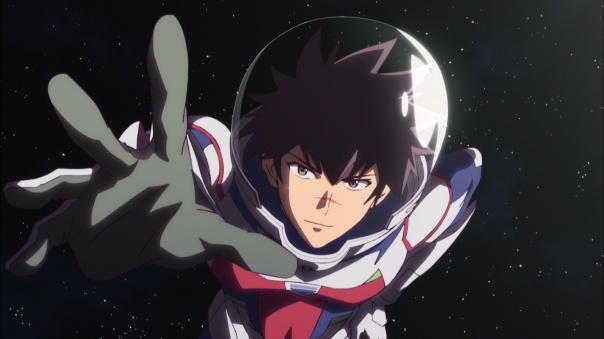
To adapt in their new zero-gravity environment and combat the foreign belligerent threat, genetically engineered children known as “Princes” by the public eye are artificially raised and trained to pilot giant armed robots. These units, the AHSMB, are humanity’s last line of defense, and as the egocentric, lust-driven Wulgaru forces close in on Earth’s orbit, five young pilots from the academic city Grandzehle are forced to fight on the front lines—or die trying to defend their home.

Ginga-Kikoutai-Majestic-Prince-large.jpg

Majestic Prince tells a simple story. Aliens = bad are after human DNA so as to satisfy their hunt for life in the universe. Meanwhile, humans = good are trying to protect themselves from the invaders. I was really hoping for the anime to be at least somewhat more complicated than that, but I’m afraid that’s as gritty as it gets.

Following a lucky victory in the show’s opening episode, Izuru Hitachi and his classmates get a taste of what the battlefield is really like, as well as how society reacts to humanity’s “super soldiers.” After these first six episodes of training, the kids come to realize that their lives are much more complicated and meaningful than fighting aliens. They have become symbols for justice, the “Majestic Princes,” and although Izuru and his friends were not expecting this kind of life post-graduation, such is what fate *cruelly* delivered. 

In a series of 2 to 3-episode mini arcs, our heroic group of teens is given missions involving disabling enemy technology, fighting, or scouting out enemy territory. The goal: push the Wulgarian forces to the edge of the solar system. Despite inching closer towards liberation, each of these little victories feels hollow. Majestic Prince is most certainly a plot-driven series, but despite the progress, the story and all of the pieces that make it up just aren’t that interesting. Plot twists, when unveiled, are few and unsurprising, and the biggest reason for this lackluster delivery lies in the dreadfully written characters, both good and evil.
mjp izuru friends.jpg

The Fail Five (that’s literally their name)

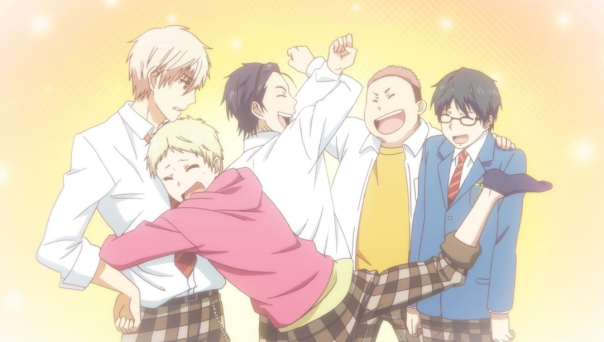
Ok, it’s actually Team Rabbits, but regardless, I don’t really like these kids. Not that I have anything against them, but there’s quite honestly nothing about this cast that stands out. Izuru is the hero (or at least he desparately proclaims himself to be so), Asagi is the friendly-fire rival, Tamaki is the cute one (boooo), and Suruga is the annoyingly smart and techy one (UGHHH, I hate this guy).

The only one of Grandzehle Academy’s infamous “Fail Five” that strays from the mark is Kei, the constantly-tired big-sister-type that ironically sucks at anything home-ec. In any other show with this kind of cast, the hero would be paired with the cute one, but not in Majestic Prince. Instead, the series gives Kei unrequited feelings for Izuru, who’s denser than a brick to notice. I . . . kinda liked this scenario, but the execution is half-assed. The series abruptly ends with no emotional or romantic conclusion for our poor, purple-hued tactician. Talk about a wasted investment.

izuru and kei.png

At least the alien Wulgaru are nasty and cool, right? Hah, WRONG. This is probably the most boring cast of humanoid villains I’ve ever seen in a mech show. Characterized as manifestations of the darker side of human emotions, these pleasure-driven, war-hungry tyrants are only in it for themselves, which would’ve been fine had they served as more than just slaves to this destructive ideology. The Wulgarian elites possess half-hearted motives, and their emperor is a total snooze. He doesn’t do ANYTHING!

I would’ve loved to have seen the drama of betrayal commonly found in any series with a collapsing evil monarchy built up much more than it was, but I suppose even Majestic Prince‘s antagonists aren’t on the bright side.

mjp wulgaru.jpg

Visual Forte: “With Our Powers, Combined!”

Perhaps the animation is the most impressive thing Majestic Prince has going for it. The series is listed with having two production studios; I would imagine that Doga Kobo took over the 2D stuff, while Orange (Land of the Lustrous, Black Bullet, Dimension W) handled all the 3D CG mechas and space fights.

While the quality of the CG is actually pretty good (the mechas themselves looking faaaar more impressive than the Wulgarian blob creatures), the fight choreography can be hard to follow at times. Dramatic zoom ins and outs, constant spinning around the battlefield, no focal point to really anchor at—to be frank, it’s too much at times. You almost get space sick, if such a thing exists.

But, seeing as it’s a giant robot series, let’s talk about those for a sec. It should be the goal of any mecha designer to create a look that is both appealing to look at and memorable in some way, shape, or form. Each of the Fail Five pilot a mecha unique to their strong suits, stylized by mechanical designer Kouji Watanabe. Suruga likes guns, so he’s the sniper. Tamaki and Kei are protectors, so they make up the shield and strategist, respectively. Meanwhile, Asagi is that ninja/senpai figure, so naturally he wields a sword, and our hero Izuru is the fighter, hence fists, guns, and a mild combination of everyone’s skill set, really.

mjp mecha

This works really well for the audience. It allows the viewer to associate not only a color to these frankly unmemorable characters, but also their own unique AHSMB unit. Add in the crisp CG imaging and a little transformation sequence at the start of each battle and you’ve got a good routine going—a factor of many great mecha anime that few seem to acknowledge. Even if the characters all kinda have the same moe face, the distinctions on the battlefield marked by the varying colors, positions, roles, weapons, and unit designs make up Majestic Prince‘s visual forte: the collaboration between these two great studios!

As for sound, Toshiyuki Watanabe’s orchestral tracks add a classic vibe to this series—even if the visual effects are anything but. While I can’t recall any specific music moments (aside from the combat start-up sequence) that caught my ear, Watanabe’s OST adds another wonderful layer to this otherwise high quality production.

mjp izuru mech.png

Another One Bites the Dust

Half of Majestic Prince was boring; the other was unmemorable. Easily, its most interesting plot point was how such a society would view child mecha pilots—and that only lasted throughout the first half. My favorite episode didn’t even have any fighting in it; rather, it gave us insight into what the daily lives of these teens are like, and all the business they must tend to off the battlefield. Whether it’s repping a brand to gain financial support, volunteering community service at a daycare to ensure public trust, or even modeling for the media, these are realistic issues that most mechas wouldn’t dare to waste time on. And yet, that’s where Majestic Prince thrived.

But when you put all the pieces together, something still doesn’t fit quite right, and it’s honestly the characters that ruin Majestic Prince for me. First, the series insults its cast with unintelligently written dialogue. Second, these kids are dumb (a result of their terrible scrips!) and when they try to get you to laugh—cause you know, there’s always some sort of innuendo to be made with a bunch of horny teens around—you find yourself more so rolling your eyes. And third, the series insists on being funny, and yet when it tries to be, it gets worse. Some of the characters even drag porn into the mix just to squeeze a laugh out of the viewer. Straight up PORN. No, I’m not joking, and no, it didn’t work.

Had I been five or even ten years younger, maybe the series would’ve worked on me. But it’s very hard to pass Majestic Prince on anything when its story and characters are so obviously flat and dry. This is especially sad considering that its production values are pretty damn decent for its time, a combined effort between visuals and sound that clearly tries to salvage this wreck. At the end of the day, however, I’d still just prefer to leave this mess out in space—floating with the dust, and far out of my reach.

mjp gdf

I’m not fighting because I want to fight. I’m doing it to protect those who are dear to me. And because . . . I want to become a hero! — Izuru Hitachi


Afterword

Despite my misgivings with the show, I’m glad I finally gave Majestic Prince a watch. It’d been in my backlog (and on my shelf!) for what had felt like forever, and when at last I decided that the wait was over and plugged in the first disc, well, this is what happened. For all its dorky characters and dull plot points, I’m barely letting Majestic Prince squeak by with the “Coffee” rating. Barely. What saves it is its animated space fights, which allows the piece to at least be entertaining at times. Apparently there’s an OVA episode 25 and a film to follow that make the ending feel less abrupt, but I’m in no hurry to get to them, especially since they aren’t currently licensed.

Leave it to me to once again review a throwback that NO ONE asked for, yet I delivered, haha. What did you think of the Majestic Princes (or Fail Five if you fancy) and their valiant efforts to protect Earth? Be sure to let me know, especially if you thought better of the show! Thanks for reading, and until next time, this has been

– Takuto, your host