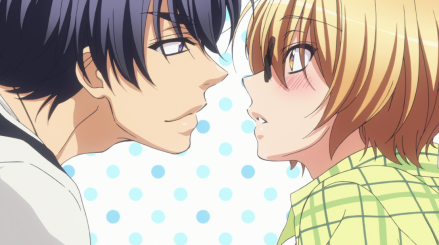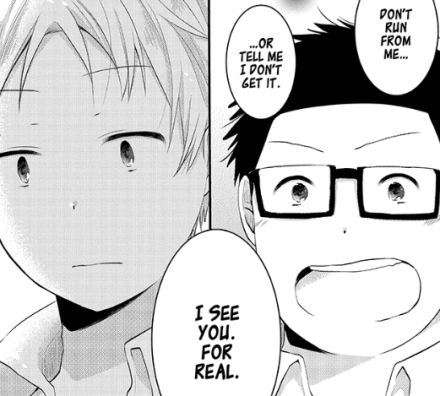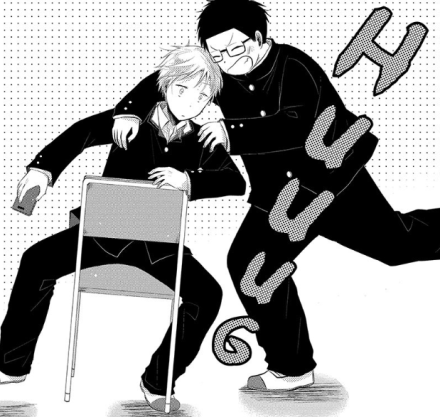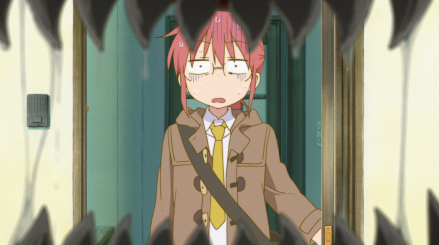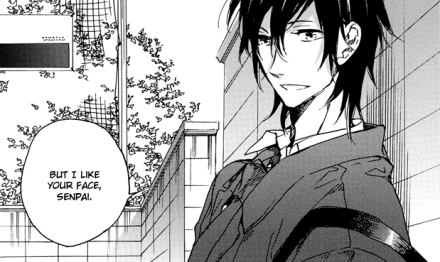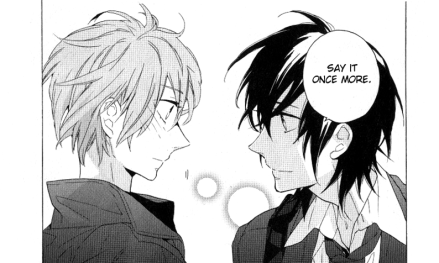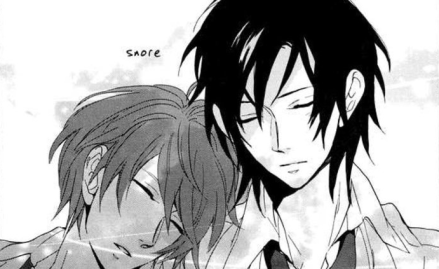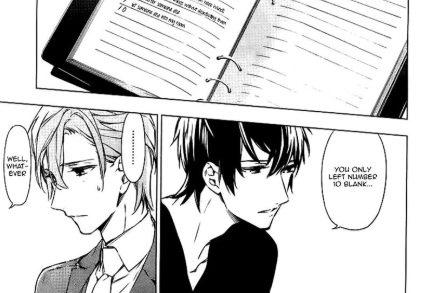
Hitorijime My Hero: Unrequited Feelings & Forbidden Love || Review

A brief spoiler-free review of the 12-episode Summer 2017 anime “Hitorijime My Hero,” animated by Encourage Films, directed by Yukina Hiiro, and based on the manga by Memeco Arii.


Forbidden Love

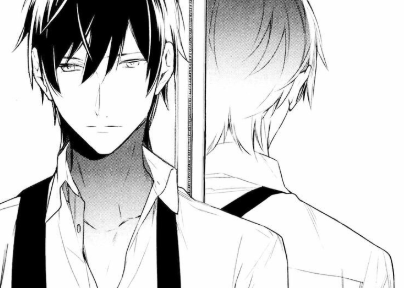
Few teenagers are more hopeless than Masahiro Setagawa. The poor kid got roped in with the wrong crowd from a young age and now serves neighborhood thugs as their errand boy. He may have believed in heroes as a kid, but not anymore. His life takes a drastic turn one day when Kousuke Ooshiba, a local menace dubbed the “Bear Killer,” swoops in to take down the other gang members, saving Masahiro from their grueling low-life ways.

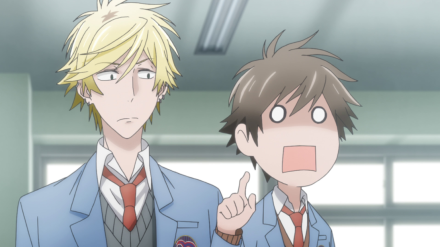
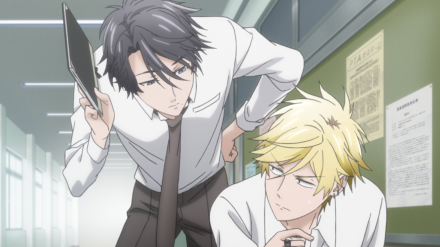
Time passes for Masahiro, and as he and his former friend Kensuke Ooshiba start attending high school, Masahiro is once again reunited with Kousuke—only this time, Masahiro is a student and his childhood hero has become his math teacher! First a hero, then a best friend’s older brother, and now “Mr. Ooshiba!?” To make matters even more complicated, Kensuke’s childhood friend, Asaya Hasekura, returns to his life with the request to be more than just friends this time around.

It’s starting to look busy in the Ooshiba household, and while Kousuke’s own feelings urge him to protect Masahiro like he once did, this sudden entanglement of the boys’ lives creates quite a complex web of relationships. As Kousuke’s lover, Masahiro will eventually have to decide for himself: to resign himself to his unrequited feelings, or to pursue a forbidden love.

This is one of those anime where the 3-episode rule most definitely doesn’t apply. The opening episodes of this shounen-ai school drama hone in on the relationship between Kensuke and Asaya, which is actually the parent story of Memeco Arii’s manga. After that quickly gets resolved, we shift the focus back to Kousuke and Masahiro’s “Teacher X Student” romance for the remainder of the series, which is significantly messier. Obviously, it’s an age-gap romance, which isn’t my thing personally, but at least the characters carry the weight of the show well . . . I mean, they do, right?
masahiro and kensuke

Poor, Poor Masahiro

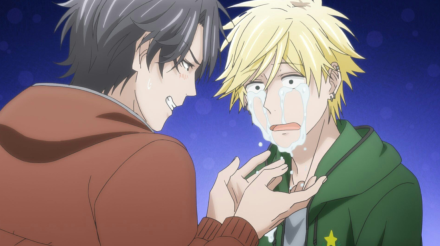
I really need a shirt that says “Masahiro did nothing wrong, y’all are just bullies,” cause MAN, this guy has it rough. Living alone (save for his prostitute mother), Masahiro is one of those kids who was forced to grow up fast. While he cooks fantastic meals for Kensuke and his school friends and diligently cleans the Ooshiba household better than momma Ooshiba even could, these are conditioned responses. With his mother out every night, Masahiro has to cook for himself, and when she comes home a drunken mess, it’s Masahiro cleaning it all up the next morning. He doesn’t belong out on the streets with those thugs, but he doesn’t belong in his own home, either.

AND THEN you have a dude like Kousuke who comes in all grown-up and “mature” just to toy with Masahiro’s heart and throw him into gay panic mode. I don’t really know how to feel about Kousuke. Like, he knows Masahiro is immature in life and in love, and yet Kousuke continues to mislead Masahiro with his words episode, after episode, after episode. He’s supposed to be the “hot teacher seme,” I get it, but I couldn’t help but find some of his actions to be somewhat disrespectful.

The other couple of Hitorijime My Hero doesn’t make things much better for Masahiro. Kensuke is your typical fluffy uke who enjoys snacks and fun, innocently going about his friendships with the youthful naivete of a shounen protagonist. I suppose he is the first to accept Masahiro and his older brother’s forbidden love, which is heartwarming cause #family. And Asaya may be the best-looking boy in this series, but DAMN, the dude is HEARTLESS. I think it was supposed to be funny how Asaya would adamantly give Masahiro the cold shoulder and instead demand he cook for him, but I never laughed. (The other male classmates also used him like this, umm, the heck??) All the guys in Hitorijime My Hero besides Masahiro just felt so selfish. Fear not, there’s a happy ending waiting for everyone, but the road to getting a smiling Masahiro has its fair share of irritating bumps.
hitorijime school

Big-Chill BL Energy

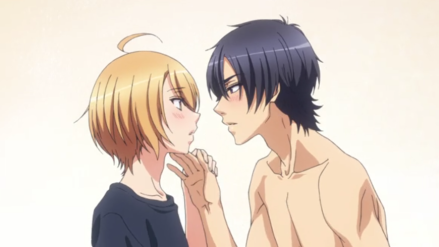
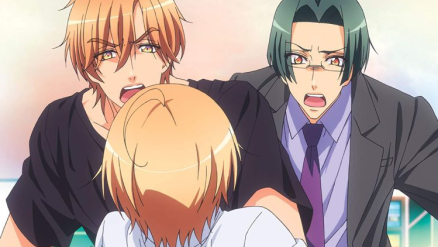
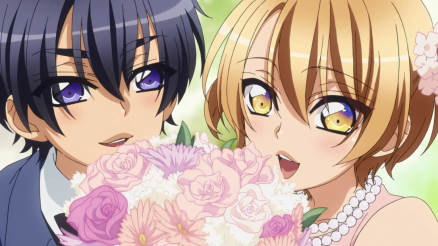
Let’s talk art. Encourage Films is a new studio for me, but Hitorijime My Hero appears to be their leading title—and that’d make sense, because the series is one good-looking BL anime. Seeing Memeco Arii’s original character designs fully animated and chasing after their lovers is really something special. Had I watched this series years ago, I probably would’ve fell even harder for the characters. If you’re wanting a more down-to-earth shounen-ai romance, I would pass Hitorijime My Hero based solely on animation alone.

The entire soundtrack is also fits the mellow vibe of the series. Takeshi Senoo (most notably known for his work on the equally chill Aria the Animation) provides amazing orchestral magic to accompany the drama of the series. He balances the slice-of-life energy of quiet lo-fi beats with the more intense romantic pull of gentle string harmonies, almost as if the OST were for a feature film and not a series. It’s simply wonderful, just like the aesthetically pleasing OP “Heart Signal” by Wataru Hatano and the soft ED theme “TRUE LOVE,” which is sung by the various seiyuus from the series.

Now, it IS Pride Month, and it’d be a crime if I didn’t give special praise to the incredible dub directed by none other than David Wald! (He also directed the Love Stage!! dub and voices the bartender in this show!) Austin Tindle’s Masahiro is just a friggin’ gem, I love how nervous and klutzy he sounds all the time! David Matranga’s Kousuke is BIG SEXY energy (the way he said the F word, woah), which feels surprisingly natural for his character. Hearing Daman Mills as pretty boy Asaya was the biggest surprise for me, and I love how he kept the guy so snide and cruel towards others but would call Kensuke nicknames like “babe” and “Kenny” like it was nothing. Speaking of, Alejandro Saab can do NO WRONG as Kensuke, the purest boi!! Even if the characters were hit-or-miss for me at times, I cannot deny that they had superb VAs behind the mic with excellent scripts to follow, too.
masahiro crying

Not the Best, But a Huge Step Up

While I seem to be pulling these LGBT titles out left and right, I actually haven’t watched that many BL anime. Maybe that’s because I know that BL anime kinda have a rep for not being nearly as good (or respectful) as their manga counterparts. That said, I’m not trashing BL anime (if anything, we can only use more!), but Hitorijime My Hero feels like a huge step in the right direction.

Despite the rudeness of the characters towards poor Masahiro, Hitorijime My Hero feels like a very real, human story (unlike the absurd comedy that is Love Stage!!). I know friends who have gone through exactly what Masahiro did, and maybe that’s why I felt so strongly for this kid. He’s a real boy. Fictional, but also just like that one confused, caring, love-struck individual we may know in our own lives—and even through smiles, that person doesn’t actually have the happiest life. It happens, but if we can be there for people like Masahiro—much as how Kousuke, Kensuke, and everyone else was there for him—hopefully we can become our own kind of hero for these people.
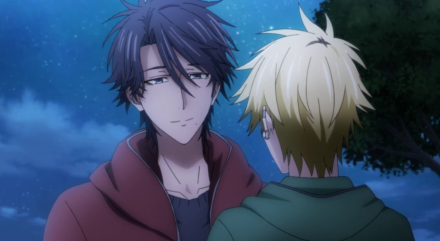
masahiro and kousuke night


Don’t worry about what the world wants from you–worry about the world you want. Sometimes, when your heart is telling you what it wants, you just have to listen. — Kousuke Ooshiba


Afterword

I feel like I did this one dirty, but sometimes you just gotta call ’em out when you see it. (I mean, I get that Kousuke was a “bad boy,” but he literally BROKE A GLASS DOOR to enter Masahiro’s apartment JUST because he didn’t answer his phone, I can’t with this guy.) But what did you think of Hitorijime My Hero? Do you also stan Masahiro or did you think he had it coming for him? Let me know down in the comments. I welcome Hitorijime My Hero as a “Coffee” title, and recommend it if you’re looking for a BL anime that’s probably better than most, but still not as good as Love Stage!! IMO. Maybe I’m wrong—you tell me!

My next Pride Month post will be over another yuri manga, the first volume of Dr. Pepperco’s Goodbye, My Rose Garden, so please look forward to that! Thanks for reading, and ’till next time!

– Takuto
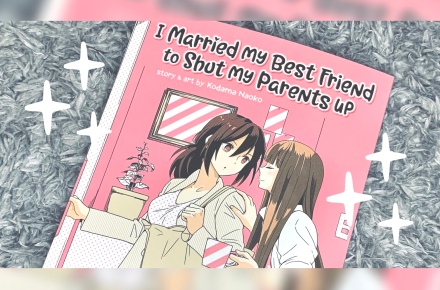
I Married My Best Friend to Shut My Parents Up: Gentle Romance & Silly Humor || Review

A brief spoiler-free review of the standalone yuri manga “I Married My Best Friend to Shut My Parents Up,” story and art by Kodama Naoko, and licensed in English by Seven Seas Entertainment.


A Sham Marriage

Young Japanese professional woman Morimoto wishes nothing more than for her parents to stop trying to get her to marry a man and settle down. Out of no where, her friend from high school, Hana (whom she’s been rooming with), offers to be her wife in a sham marriage. Certainly, this will be enough to deter Morimoto’s parents, right? Well, it works, but this “fake” marriage could now end up drawing out something very real between Morimoto and Hana.

I Married My Best Friend to Shut My Parents Up is just as absurd as it sounds. Two adult women (one of which is out as a lesbian) decide to enter a sham marriage by obtaining a same-sex partnership certificate, and all with the intent of warding off Morimoto’s very traditional parents. The way Morimoto and Hana cohabitate is very peaceful and heartwarming, and I like to think that this one’s a round of “josei justice” what with the way these ladies decide to counter the obstacles in their life (including Morimoto’s homophobic parents and the return of Hana’s ex) by showing the world their love. It’s a simple little story that is resolved in three short chapters, but I found it to be a nice showcase of genuine love between two women.

Also simple is Kodama Naoko’s art that accompanies Morimoto and Hana’s story. The manga paneling is spacious and flows well, making it not only easy to read but also a pretty quick one, too. Minimalist backgrounds allows the characters to pop off the page very well. While I do personally prefer more detailed art, Kodama Naoko’s character designs (most notably the hair styling) create a memorable impression of the characters, even if chibi expressions are used for half the book.

morimoto and hana bed

From Roommates to Something More

On the surface, there’s not much that makes Morimoto stand out from the average businesswoman working long hours in the office. A deeper look shows that she really tries hard at her job, however, and that she’s determined to not let being a woman stop her from turning out better numbers than any of her coworkers. Kodama Naoko just barely dips into this sexist workplace commentary enough to make the reader feel for Morimoto’s position.

Her personal life is even more depressing. Morimoto is awkward in dating as a result of being raised by parents who neglected the importance of forming close, meaningful relationships that weren’t based solely on achieving success later in life. This is why having someone like Hana to welcome her home every day is so important—for all we know, these two only have each other to look out for and care for. In fact, there’s a scene where Morimoto stands up to her mom that I thought was very cool, but the best part was that she didn’t do it for herself. She stood up for Hana, for their relationship, and for their mutual love as women. Slowly, Morimoto starts to surprise herself with the amount of control she is finally exerting in her own life, and it’s satisfying to see.

As for Hana, she’s a funny lesbian who doesn’t take no for an answer. But she’s definitely more than a fluffy girl. Hana is just as hardworking and determined as Morimoto can be, and she works tirelessly all day maintaining the apartment and working on her freelance art. She never forces her love on Morimoto, and I appreciated her because of the way she truly cares for her. Maybe one of these days her roommate will come home and Hana can hear from Morimoto’s lips the words she’s been longing to hear since high school: “I like you, too.”

hana

A Sweet, Simple Yuri Read

Short and sweet, I Married My Best Friend to Shut My Parents Up accomplished exactly what it set out to do. I suppose it is worth mentioning that also included with Seven Seas’ release is a one-off chapter (also by Kodama) titled “Anaerobic Love,” which features two entirely different girls and their budding romance as elite athletes. It ain’t much, but it’s alright. The real meat of this book lies with Morimoto and Hana’s relationship, and even that isn’t anything too serious.

As yuri title about a straight businesswoman and her gay roommate, I couldn’t help but feel that the story needed more realism to truly stand out against the crowd (that or more chapters). But, I suppose that would defeat the purpose of it being a light shoujo-ai read. If you’re looking for a yuri romance with gentle romance and silly humor, I Married My Best Friend to Shut My Parents Up may be just the manga you’ve been looking for.

morimoto and hana hug


I’ve spent my whole life obsessing over the “right answer.” Maybe that’s why I’ve never really considered my own desires . . . my job . . . who I like . . . — Morimoto Machi


Afterword

This was such a pleasant read, and I’m glad I picked something on the lighter side for my first yuri manga. It does help that I’m already biased towards the josei demographic, and that this is a story about adult women and not high school kids, though. I’ll happily welcome I Married My Best Friend to Shut My Parents Up as a “Coffee” title here at the cafe, as it’s nothing super substantial, but it’s still sweet enough to recommend to people. You’ll have to let me know your thoughts on this new Seven Seas title down in the comments!

Pride Month is coming to a close, but we’re not done yet! My next read will be over the anime Hitorijime My Hero, so please look forward to it. Thanks for reading, and ’till next time!

– Takuto
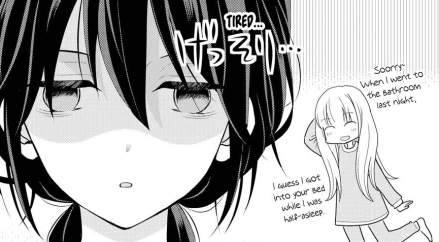
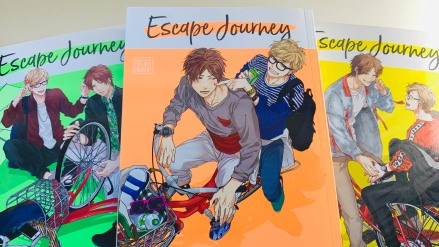
Escape Journey: Chasing After Love in a Heteronormative World || Review

A brief review of the 3-volume BL manga series “Escape Journey,” story and art by Ogeretsu Tanaka, and licensed in English by SuBLime Manga. MINOR SPOILERS for Volume 1 will be present.


A Rough Ride

Naoto’s first day of college was turning up roses—until he unexpectedly comes across his high school ex, Taichi, whom he’d dumped after a huge argument. Even though time has healed some wounds, not all scars fade, and Naoto slowly finds himself irresistibly drawn to Taichi once again after seeing just how much he has matured. When another girl, Fumi, starts to take an interest in Taichi, however, the secret bond between two men is tested.

Most of this yaoi drama’s main story is resolved by the first volume. Volume one takes us through Naoto and Taichi’s reunion into each other’s life, the push and pull of their churning relationship, and, of course, several rounds of make-up sex. In fact, Taichi always seems so ready to get dick-down that it leads Naoto to believe that all he wants from their relationship now is sexual satisfaction. We know that’s not true, but it takes several chapters (and meeting Fumi) to get Taichi to open up about his family situation.

By the end of the first volume, Naoto and Taichi have made up, and all’s well that ends well. You could even stop here if you feel satisfied enough with Escape Journey. What are volumes two and three about, then? The second volume introduces Nishina, an in-the-closet art student, whose unfortunate experiences with a past love causes envy of Naoto and Taichi’s relationship (and lots of trouble, no doubt).

Lastly, the third volume completes the story with the last couple chapters, ending their school festival and providing an aftermath for our characters. Despite all the heartache leading up to this volume, the ending is lovely and highly satisfying. If you’re in this one for all three volumes, just make sure to buckle up—this one’s a bit of a rough ride!

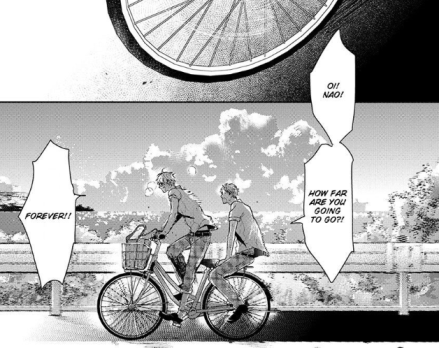
escape journey bike

Friends for Life

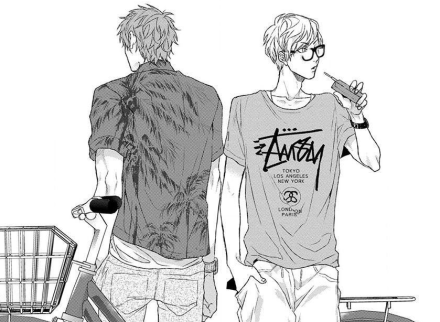
For most readers, Naoto (the one wearing glasses) will be a mixed bag of a protagonist. On one hand, he’s sweet, extroverted, and cares deeply about his friendships (which are essential to the story). On the other, he’s a cheeky, obnoxious brat and totally a little shit towards his peers. I will admit that I didn’t appreciate Naoto at first, but he did grow on me as the series went on. Perhaps that’s because other characters (notably Taichi and Nishina) start to notice what they like about Naoto, which becomes apparent to the reader. Or, maybe it’s due to the immense character growth that Naoto undergoes. The kid really comes far, and it’s nice to see him learn when it’s appropriate to joke around and when a guy should take a person’s feelings seriously.

About Taichi, he’ll also be a toss-up for most readers. To fully appreciate him, it took A LOT of getting to know Taichi’s home life situation, which can be frustrating to wait for. It sure doesn’t help that his introduction is a flashback where he calls Naoto just a “fuck buddy” he used to blow off steam with, and that he mistakenly forces himself onto Naoto in the middle of the first book (which he regrets, but still). Whereas Naoto is a well-known ladies’ man, Taichi is the popular, handsome, stoic dude that all the girls look up to. Even though all his friends would choose Taichi, I still find Naoto to be the cutest character in the series.

One last annoying character quirk that I found with these two was how, like most BL written by women, none of the men actually claim to be gay. That is, they’re in denial of liking other men, but make exceptions for their one true love. It’s whatever at this point, but especially with this manga, Naoto can seem unconvincingly “straight” at times.

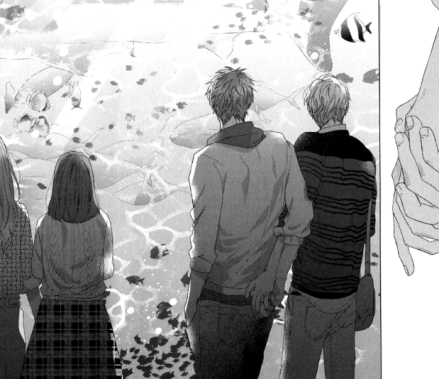
On the good side, however, I really, reeaaallly like Naoto’s friends, specifically the female characters. Fumi turns out to be such a sweetheart who ends up supporting Naoto and Taichi’s relationship, and Mika-rin is ABSOLUTELY every gay’s best friend. I loved every scene with Mika-rin and Naoto getting loud and drunk together, and her finding out about Naoto and Taichi’s relationship in the final volume made my heart completely melt. Even Nishina, though a disruption, isn’t wholly a bad guy. So yeah, Escape Journey has friends for life!

escape journey aquarium

What Comes After Love . . . ?

Despite having only three volumes, Escape Journey is densely packed with text bubbles and hyper-detailed backgrounds. Ogeretsu Tanaka also draws her tall, beautiful bishounens (and their sex) with an amazing range of expressions. If smut is all you want, you won’t be disappointed, trust me. But, there’s so much more to Escape Journey than pretty boys and steamy sex scenes. Naoto and Taichi come a long way, both as a couple and as human beings trying to understand people better.

What I found even more enjoyable about this read, however, was how Ogeretsu Tanaka confronts the issue of gay lovers wanting to run away from their heteronormative society (hence the name, Escape Journey). She explores options for gay couples in Japan, including buying an apartment together, getting married, and adopting a child, but also the rejection (or acceptance) an individual can face by coming out to their family. Some musings are more bleak than others, but the ending is a powerful and satisfying one. More than obsessing over creating a positive outlook for Naoto and Taichi’s future together, Tanaka’s story feels very real, and I respect it for that.

For most gay lovers in this heteronormative world, the road to happiness is lined with bumps, divots, and many rough patches. Not all people will expect or accept this kind of relationship, and that’s just something you’ll have to move past. Even if the journey is a hard one, the destination can be incredibly satisfying when the right people come along for the ride.

Naoto and Taichi’s love will continue to spur on their little fights, but like most old married couples, I’m sure the two will be able to work things out so long as they remember why they set out on this emotional journey together in the first place. As to what comes after love, who really cares—Naoto and Taichi have an entire lifetime ahead of them to figure that out.

escape journey riding


I know that our relationship isn’t something that will be universally accepted. We should expected people to wish us well . . . But deep down inside, I can’t help but wish people would just see us and accept us for who we are. — Taichi Hase


Afterword

And there’s another phenomenal BL read about self-acceptance and coming out that I ended up enjoying much more than I thought I would. This recommendation came from Simply Gee over on YouTube, so I really have her to thank for this little series. In case you’re wondering if you should read it too, Escape Journey is a “Cake” title here at the cafe. I found the main characters to be annoying at times, especially when they’d get into little spats (which is part of their flaw, I realize). Still, you should read it if you’re searching for a solid [EXPLICIT] yaoi series that looks at relationships beyond the dating phase. It’s great, especially for a college romance.

For my next Pride Month post, I’ll be diving into some yuri with I Married My Best Friend to Shut My Parents Up, so please look forward to that. Be sure to share your thoughts on Escape Journey with me down in the comments, and ’till next time!

– Takuto
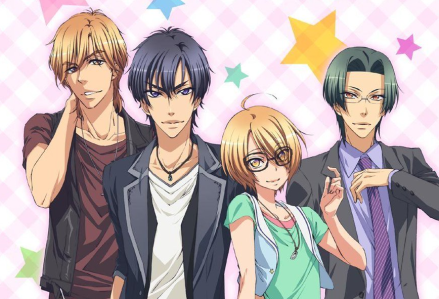
Love Stage!! – A Coming-Out Worth Celebrating || Review

A brief spoiler-free review of the 10-episode Summer 2014 anime “Love Stage!!,” animated by J.C.Staff, directed by Kenichi Kasai, and based on the manga by Eiki Eiki.


A Shocking Reunion

Izumi Sena comes from noble blood. Not the stuff of knights and kings, but family fame. His mom’s a famous actress, his father’s a successful producer, and his loud, obnoxious older brother is currently Tokyo’s biggest rockstar. It would surprise anyone to hear that the youngest Sena wasn’t in showbiz. But Izumi didn’t ask for any of this. Instead, Izumi aims to become a manga artist, despite possessing no talent for the craft! In fact, the only way he’s been able to completely avoid the limelight is thanks to his reclusive otaku hobbies.

I suppose “completely” isn’t the right word, though. Technically, Izumi cross-dressed as a girl for a wedding commercial skit ten years ago, which still haunts him to this day. But, a decade after the shoot, the same wedding company wishes to put together a 10th anniversary ad—and staring the original child actors for the project, no less!

This reunites Izumi with Ryouma Ichijou, who’s gone on to become a popular actor. Little does Izumi know that Ryouma’s been looking forward to this day ever since he fell in love the first time they met! As he did then, however, Izumi’s feminine appearance and unisex name still have Ryouma believing that little boy was actually a girl. BUT, even after discovering the truth, Ryouma can’t seem to shake off his feelings. Thus kicks off a series of troubles for Izumi’s big coming out—and in more ways than one.

Love Stage!! is a short romance comedy series based off the original BL manga. Most of the fun in watching comes from the hilarious drama that ensues between Izumi and Ryouma. Whether you’re a fan of BL or not, these two idiots will make you squirm and squeal—and I mean that in a good way. They’re genuinely funny and good-natured, as well as have an amazing chemistry together (even if their initial meeting would technically be viewed as an assault).

Even then, Ryouma spends the entire series redeeming himself and righting this wrong by actively trying to support Izumi and his personal endeavors. Ryouma loves Izumi, no two ways about it. It now becomes a matter of whether Izumi is willing to return that affection or deny the country’s favorite rising star actor.

izumi and ryouma romance

Lovable Leads, Hilarious Heart

As I mentioned above, the leads of Love Stage!! are easily what make this series so enjoyable and accessible, too. Izumi is a lovable character. His earnest dreams of being a mangaka (when clearly he has no skill whatsoever) probably ring true to many fellow otaku. Izumi just wants to give back to the medium that has given him so much, and his pursuit is a noble one, if not a tad far-fetched. Still, he works tirelessly and dedicates his entire being to making the manga of his dreams, and I admire his unwavering perseverance.

In contrast to Izumi’s cute appearance and large round eyes, Ryouma’s leading features are his charm and captivating presence. The guy is straight SEXY, no doubt about it. But, as we get to know him beyond his actor persona, we see that he’s also just as hardworking and determined to achieve his dreams as Izumi. This includes, of course, getting together with the crush of his childhood.

There’s this ongoing gag in the series that Ryouma is bad at everything he does for the first time, but quickly improves with dedication and experience. Whether allowing people to meet his true self, making friends, or moving things to the bedroom (heh heh), you can only imagine the hilarious outcomes from Ryouma’s “first time” with anything!

The two also have their own family, friends, and industry rivals that spark plenty of entertaining dialogue. For instance, the Sena family manager, Rei Sagara, has a no-nonsense tolerance for anyone’s shit (except when he’s willing to let cute little Izumi slide past him). As a caretaker of sorts, Rei acts more as a doting mother than his own mom, which I suppose doesn’t say much since she’s so full of herself (in the most fabulous way possible). As he realizes his own feelings, Izumi slowly starts coming to Rei with all his questions about life, love, and sex with another man. Their relationship is adorable and handled with surprisingly good guidance.

Rei also helps manage the relationships between Izumi and his brash brother, Shougo, Ryouma’s own manager Shino, and even Ryouma himself sometimes! He’s seriously great, and as the series progresses, we find that many of the cast actually share relationships with one another behind closed doors. Such developments really up the character drama and intrigue!

izumi rei shougo

The Best-Looking (and Sounding) BL Anime

I admittedly haven’t seen much BL anime, but from what I understand, this has got to be one of the best currently out on the market. J.C.Staff really went ham on this one. Bright colors constantly dominate the screen, enhancing the light romantic feel for the series. The characters themselves look very attractive, what with their bold expressions, blushy cheeks, and rainbow-colored hair and eyes. It’s nice to see a simple BL anime adaptation look just as amazing as most other high quality rom-com titles.

A lot of people don’t talk about it, but the music is also shockingly good. Yes, the ED “CLICK YOUR HEART!!” by Kazutomi Yamamoto is an absolute bop, but I’m talking about the OST. Composer Ryousuke Nakanishi is probably most famous for his work on The Devil is a Part-Timer!, so you already know he’s got the balance between comedy and drama down pat. I often found the music to carry the emotions almost better than the dazzling visuals did—but then again, I would be remissed if I didn’t talk about the fantastic English dub performances.

This is probably THE best Sentai Filmworks Dub I’ve ever listened to, PERIOD. (Ok, maybe one of them. They’ve really knocked it outta the park recently!) Even with his squeaky voice, Greg Ayres does a fantastic Izumi, providing just the right tinge of embarrassment and self-pride for each of Izumi’s little stunts. Adam Gibbs’ Ryouma is the real winner here, though, cause MY GOD, this man made even me all hot and bothered. Gibbs sounds just as brash and big-headed when he should, but also shows off a softer, more innocent side to Ryouma that is just as captivating as his ambitious, energetic side. Izumi and Ryouma were perfectly cast!

But it doesn’t stop there. David Wald—who graciously lent his own experience as a gay man to bring this dub to life—not only directed Love Stage!!, but also voices Rei Sagara with a snappy, matter-of-fact voice that only he could bring. It’s also always a pleasure to hear John Swasey doing the dad thing as the illustrious Seiya Sena, and the very same to Monica Rial’s lovely (if not hilariously self-absorbed) Nagisa Sena. Lastly, Tia Ballard is sprinkled around as various voices, and she’s always a pleasure to hear in any capacity!

izumi ryouma young

A Coming Out to Celebrate

I honestly came into Love Stage!! thinking it’d be a lot more problematic than it was. Thankfully, I found the series to be one of the most fun watches I’ve enjoyed in quite some time. While it has a somewhat rough start, Love Stage!! only gets better as the plot progresses. Almost everyone in the cast means well to one another, and it’s heartwarming to see so many icons watching each others’ backs. My only wish was that we got a second season to complete the story, as these 10 episodes (plus the hysterical OVA) adapt half the completed manga story.

Whether you’re gay, straight, or somewhere in between, you’ll probably love this series if anime rom-coms in general are your thing. The visuals are extremely pretty, the music’s wonderful, and the English dub is cooked to gay perfection (should you choose to eat your anime this way). I know it was a fight to get this thing dubbed, but BOY did they it to ’em, and for that reason alone I find that Love Stage!! is a coming out worth celebrating.

izumi and ryouma close up


Somewhere in this world, there is a door that leads me to my dreams. I don’t know where that door is. I may not find it in my entire life. And even if I do find it, it may be locked to me . . . — Izumi Sena


Afterword

As a blossoming adult, a budding actor, and definitely a gay man, Izumi’s big coming out story is full of ups and downs. I really cannot recommend this series enough, especially now that I’ve finally seen it! So cute, and sooo good!! Because the story has yet to truly finish, I’ll welcome Love Stage!! as a “Cake” here at the cafe, a title too sweet to miss out on—and especially that dub though, wow, we’re really making history! I’m late to the party, but you should let me know your thoughts on the series down in the comments for sure! I think this would make a great intro title to anyone new to BL. My next Pride Month post will be over Ogeretsu Tanaka’s Escape Journey, so please look forward to that. ‘Till next time!

– Takuto
That Blue Sky Feeling: Preciously Queer & Wholeheartedly Delightful || Review

A brief review of the 3-volume manga series “That Blue Sky Feeling,” story by Okura, art by Coma Hashii,, and licensed in English by Viz Media. MINOR SPOILERS for Volume 1 will be present.


Have You Heard the Rumors?

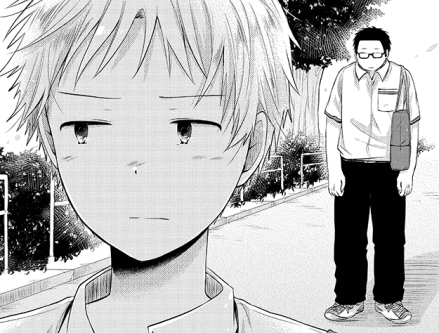
High school transfer student Noshiro may seem like a cool and outgoing guy to his new classmates, but Noshiro’s big, bumbling heart is his best feature. Although he’s inexperienced in love, he finds himself drawn to Sanada, the school outcast, who is rumored to be gay. While most would get squeamish at the thought, the rumor only further fuels Noshiro’s interest and determination to get close to Sanada. Set in motion is a bittersweet tale of self-discovery, friendship, and first love.

Marketed under the shounen demographic, this school romance drew a lot of its appeal from the relatable character drama presented and Coma Hashii’s soft and cute character designs. With only three volumes, the story reads quickly, but methodically guides us through Noshiro and Sanada’s entire first year together as classmates. Showcased are the attempts made by Noshiro to become friends with Sanada, all of the ups and downs of this rocky relationship, the misunderstandings, and the persistent efforts to grow closer.

From the start, this seemingly simple story of exploring a rumor opens up to much larger contexts, including social pressures and the meaning of “being gay” itself. Using Noshiro’s naivete as a lens for self-questioning, Okura has carefully crafted a cast of characters that investigate the notions of sexuality, attraction, and “liking”—and largely without even being aware of it! This is the kind of title that doesn’t break boundaries so much as explore how these boundaries form, why they do, and how people are affected by them.

noshiro and sanada

Straight, Gay, and Curious

Dai Noshiro is the open-book kind of character. He’s silly, easily approachable, and loud, which (often to Sanada’s dismay) attracts a huge crowd wherever he goes. It’s refreshing to have a lead character in this type of story who isn’t some tall and skinny bishounen. If anything, being built and a little on the round side (or as Sanada calls him, a “country potato”) is celebrated in That Blue Sky Feeling as a body type that characters like Sanada and energetic underclassman Morinaga actually hold as a preference. This definitely met my approval!

Having a guy like Noshiro who knows virtually nothing about the LGBT community (or relationships for that matter) makes him the perfect voice for Okura’s discussion on what it means to be a closeted gay kid—or being gay in general. Noshiro is new to this kind of thing. He straight . . . or, at least, he thinks so—he hasn’t ever given relationships much thought. But we know he’s uneasy, curious even, and I can’t blame him. This really is a smart move on Okura’s part, as now Noshiro functions both as a likable MC and a subtle proxy for self-exploration. Nothing in That Blue Sky Feeling is forced. Like clouds, these musings come and go, occasionally bringing a little rain or blocking out the sun.

Then there’s Kou Sanada. As the quiet closeted kid, Sanada strays away from anything that would draw attention: sports, clubs, even leisurely activities like swimming. He’s standoffish, dismissive, and get’s irritated easily. Sounds like no one would like him, right? Well, that’s where I was wrong, too. Sanada is just misunderstood. He doesn’t fit in with the other boys because he often can’t relate to any of them without fearing they’d leave him for thinking he’s weird. I mean, how regularly do you see gay people hanging out alone with their straight friends of the same gender? I suppose it’s different for everybody, but I get why Sanada distances himself. (I JUST WANT MY SLEEPY BOY TO BE HAPPY.)

If any part of Sanada will be a mixed bag, it’s his past relationship . . . with a 26-year-old man named Hide. I don’t think Okura is trying to condone pedophilia, but Sanada and Hide really did go out, and Hide’s not afraid to poke fun at their past together. Now, hear me when I say that Hide is genuinely a good guy. He serves as a mentor of sorts to Noshiro when it comes to gay stuff, and he only aims to help, not harm. I was uneasy about Hide at first, but—thankfully—I ended up being wrong about him.

dai pushing chair

Subtlety is Blue Sky‘s Greatest Strength

Okura’s story is wonderful, truly, but the biggest draw to That Blue Sky Feeling would easily be Coma Hashii’s art. The series has this wondrously soft aura to it, which is in no surprise thanks to Hashii’s character designs. Fun fact: The Blue Sky I am able to enjoy now is actually a remake of Okura’s original web comic series. When a book publication was announced, Okura brought on Hashii to redraw the entire series with greater quality art and the gentle touch Blue Sky is now beloved for.

Sanada and his dear childhood friend and classmate, a girl named Ayumi Yamamoto, are drawn with a slimmer build and bigger eyes. (Sanada’s cat-like design really accentuates his sleepy aura.) Other characters like Noshiro and Hide are noticably more rotund but still very cute. Like the story itself, the character expressions are never overdone, and that subtlety works to Okura’s writing immensely. I mean, a character turning away from someone—only to reveal bright blush marks on their cheeks—can speak where words wouldn’t quite do those feelings justice.

kou blushing

Unexpectedly Falling in Love

What does it mean to be normal? What does it mean to be weird? Navigating through the complexities of making friends as a young homosexual in a heteronormative world, That Blue Sky Feeling handles first love and the notion of “inexperience” with surprising delicacy and innocence. Even when things get heated, the characters try to better themselves by digging deep within and honestly asking what it is they want, and how they can present their truest self to others.

Everyone in That Blue Sky Feeling has an unbelievably pure heart. Just as prominent as the exploration into friendship, liking, and being gay is the theme of unrequited feelings. For a series to have such a tangled web of complex feelings, Blue Sky‘s characters hold their heads high and continue to remain friends despite all odds. This kind of content is the exact opposite of “toxic,” and is the reason I fell in love with Noshiro, Sanada, Ayumi, and everyone else.

As the gap between Noshiro and Sanada slowly shrinks, we come to see how two very different high school boys can find themselves unexpectedly falling for one another. Noshiro quickly finds that, perhaps, labels aren’t suited for everything, especially people and relationships. Wishing only for the happiness of these kids, That Blue Sky Feeling is preciously queer and wholeheartedly delightful.

sanada whisper


What does it mean to like someone? Going out. Boyfriends. Girlfriends. I never thought about it, never worried about it. Until I met Kou Sanada — Dai Noshiro


Afterword

Guys, I love this manga with all my heart. ALL MY HEART. If you couldn’t already tell, that means That Blue Sky Feeling is another certified “Cafe Mocha” for me! I can see why people may find Hide and the age gap to be a turn-off, but that kind of stuff happens in real life, too, and we eventually have to move past it. I love Noshiro’s loudness, Ayumi’s sweetness, and grew quite fond of Sanada’s character. (He really is charming when you get to know him!) Viz’s releases of this series are also pretty in pastel colors, I’m so thankful to them for such pleasant publications!

But I’ve talked enough, what did you think of That Blue Sky Feeling? Let me know in the comments. To shake things up, my next Pride Month post will be over the anime Love Stage!!, so please look forward to it! Thanks for reading, and until next time!

– Takuto

Melting Lover: The Shadowy Side of Affection || Review

A brief spoiler-free review of the standalone yaoi anthology manga “Melting Lover,” stories and art by Bukuro Yamada, and licensed in English by KUMA.


Four Short Supernatural Stories

“A bond of love is a beautiful thing, but what happens when outside pressures force it into forms both strange and strained?”

The first story of this anthology, “Melting Lover,” puts us in the apartment of a young man who encounters a shape-shifting blob that can take the form of his high school beloved. An energetic uke, Riku does whatever he can to perfectly imitate Keisuke’s lover for his pleasure. However, Riku’s personal love for Keisuke also leads him to acting on his own, which angers Keisuke. It’s a relationship that seems broken from the start, but actually ends with pleasant messages of moving on. (And, you know, a cute and steamy bonus chapter.)

Yamada’s second story, “Bottom of Heaven,” walks us through the life of Ezaki, a mafia hitman who swore off pleasure but can’t seem to leave behind the fun-loving angel, Sylvan, who follows him on his jobs. This story definitely had the most character depth, as well as one of the more interesting character dynamics. Although it’s kind of a sad story, the surprising twist at the ending imparts a wholesome feeling of redemption. It’s great, even if it makes you think a bit.

The most divisive story here would easily be the third, “The Circus After Midnight.” Divided into two chapters, we follow young Luce, a new circus recruit who trains to become a dancer for their ringmaster. Luce eagerly awaits his new life, including getting to know his circus roommate and resident beast-tamer Yan. Unbeknownst to Yan (who holds his own deadly secret), Luce has been serving the ringmaster in other ways against his will. Grim yet compelling, this loss of innocence tale shows how two men grow as they struggle to understand one another’s unfortunate circumstances. (NOTE that while it’s pretty ok, it does include themes of rape and abuse.)

Lastly, “Noisy Jungle” takes us to the far future with a kind android, Yumeo, and his human pet, Pochi. Despite being the shortest and most shallow (and most explicit), I probably enjoyed the premise of this one the most. Especially coming out of the dark circus setting, Yumeo and Pochi’s sci-fi world is clean and bright. I was reminded of No. 6, another shounen-ai series that I really love. The relationship here is also super cute, as Yumeo’s practical android self finds his programming malfunctioning whenever Pochi looks at him with his big round eyes. It’s explicit, it’s sci-fi, and I only wish it was longer!

melting lover

Dark Subjects with a Gentle Touch

Melting Lover is special to me because it serves as my first yaoi manga anthology read. Bukuro Yamada is able to explore these darker topics (obsession, anhedonia, abuse) in relation to love without feeling too heavy thanks to her soft, sketch-style art. While I found some panels to be a bit too loosely drawn to comprehend what they were, all of Yamada’s characters are drawn sweetly and with a gentle touch.

Also noteworthy is the publication itself. As their first official release, KUMA’s publication of Melting Lover features an aesthetically pleasing matte sleeve and quality printing on sturdy paper. It’s a thick, weighty little book, and the cover art was what drew me to buying it in the first place!

Some stories featured in Melting Lover were clearly stronger than others for me, and I can easily understand why someone may find the whole book to be a turn-off. It really comes down to a matter of subject and, of course, whether you like reading explicit BL. For as short a book as it was, however, I’d say it was a worthwhile read. Just know what you’re getting into with each short story, and you’ll probably end up enjoying Bukuro Yamada’s musings on love—as well as the shadowy side of affection. Oddly engrossing and reflective, Melting Lover includes four short BL stories, each dark and lovely in their own way.

melting lover color


I’m a hedonist. I choose what makes me feel best. And I want to be with you. — Sylvan


Afterword

I think this is one of the shortest reviews I’ve ever written, but oh well, shorter reads are good sometimes. KUMA’s first physical publication of Melting Lover is exceptionally wonderful, and Bukuro Yamada’s stories themselves are decent. I’ll welcome Melting Lover as a “Coffee” title here at the cafe and recommend it only if you’re looking for some darker supernatural BL (and don’t mind short story format, of course). There isn’t much talk about Melting Lover these days, so if you’re one of the few who’ve read it, definitely let me know your thoughts!

June is halfway done, can you believe it? My next Pride Month post will be over the highly anticipated That Sky Blue Feeling, so please look forward to that. ‘Till next time!

– Takuto
Miss Kobayashi’s Dragon Maid & Coping With Reality || OWLS “Mindfulness”

Chances are that if you were linked here from another blogger pal, then you might be new. To those first-timers, “Hi, I’m Takuto, welcome to my anime cafe!” For the OWLS blog tour’s sixth monthly topic of 2020, “Mindfulness,” I wanted to take a breather and share some of my loose thoughts on a title that I’m quite late to the game to, but am enjoying nonetheless: the much-beloved Miss Kobayashi’s Dragon Maid. 

If we don’t take care of our minds and souls, we will always be in pain.

For the past few months, things have been pretty hectic. Everyone’s lives have changed to some degree, and we can’t help but feel anxious, nervous, and overwhelmed. This month we will be focusing on ourselves and keeping a strong peace of mind with our theme, “Mindfulness.” We will be analyzing characters that have crafted and practiced their own philosophy on life and have spread their beliefs to others. We will also be talking about habits, hobbies, and things that are keeping us sane, positive, and peace within our souls.

I find that mindfulness can apply to many other wonderful shows out there, so it was tough picking just one. Thanks Lyn for the prompt!

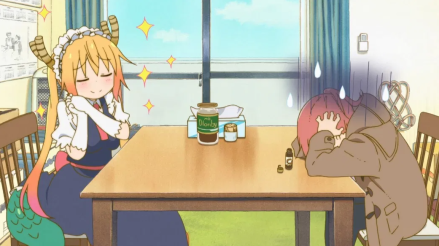
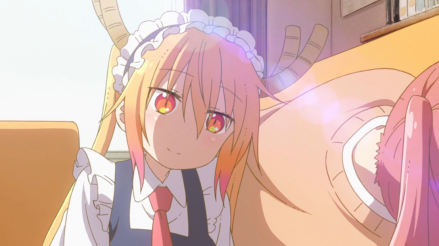
kobayashi tooru teeth


A brief discussion of the 13-episode Winter 2017 anime series “Miss Kobayashi’s Dragon Maid,” animated by Kyoto Animation, directed by Yasuhiro Takemoto, and based on the manga of the same name by Coolkyousinnjya.

Bound by Love and Servitude

It’s another hangover kind of morning for stoic programmer Kobayashi, only on this particular day, she is greeted at the front door of her apartment by a giant green dragon with shiny scales and sharp, saliva-drenched teeth. The dragon suddenly changes to the form of a young busty woman in a maid outfit, and aside from her horns and the green tail behind her, she appears relatively normal. The energetic maid’s name is Tooru, and she’s come to work for Kobayashi for free.

A trip down memory lane has Kobayashi recalling that—in a drunken stupor the previous night—she had invited Tooru to stay at her place. Kobayashi was the first to show Tooru kindness since entering the human world, and Tooru plans to serve her savior with a genuine love to return that compassion. Although plenty hesitant, Kobayashi decides to welcome the energetic maidservant out of both guilt and a curiosity for Tooru’s superior dragon powers.

Tooru’s unconventional powers prove astonishingly useful in Kobayashi’s average Japanese life. What Kobayashi wasn’t expecting was, however, was for Tooru’s dragon powers to attract other mythical beings from the world of magic. A cute dragon, a fun dragon, a stern dragon, and surely more to come, Kobayashi’s little apartment slowly starts to feel more crammed—and yet, a little more like home, too.

tooru and kobayashi meet

Coping at Kobayashi’s Place

A bunch of magical creatures may have crashed her apartment, but Kobayashi doesn’t stop that from throwing off her day. She tries to end her long days in the office with a round of drinks, which usually entails her otaku co-worker Takiya joining her. Together they engage in playful arguments that serve to vent stress. Afterwards, she crashes, and leaves the repercussions of her binge drinking for tomorrow’s problems. Unlike most, drinking doesn’t leave Kobayashi overly grumpy and hangry, which is good for her new roommates and friends!

Speaking of, Tooru manages pretty well as a dragon maid. There’s always plenty to clean, and with guests coming and going from the apartment, Tooru’s diligent maid service comes in handy. Often, she is able to express her love for Kobayashi by finding unorthodox solutions to common problems. Whether rinsing the laundry with her stain-removing saliva or clearing rainy skies with a terrifying burst of fire power, Tooru only serves to please Kobayashi in any way she can. Tooru also looks past the gender norms of same-sex couples and loves her master with all her heart, to which Kobayashi returns with warm affection. (Happy Pride Month, y’all!)

Kanna is the third to join Kobayashi’s growing family, and arguably undergoes the most change as a result of being such a young dragon. She enjoys people-watching, fighting to the death with Tooru playing, and sleeping. Kanna also takes an interest in making new friends, to which Kobayashi and Tooru help her enroll in elementary school. Attending class with the other kids makes Kanna feel like she has a place to belong outside Tooru’s wingspan. The poor kid was (temporarily) kicked out of the magical world for pulling a harmless prank, after all, so any chance she can play again with others she takes. Coloring, crafting, and running around with her classmates is a way for Kanna to momentarily forget the pain of her banishment.

Lastly, there’s Tooru’s mentor friends from back home, Lucoa and Fafnir. The dragon goddess from legend itself who got drunk and caused a scandal, Quetzalcoatl “Lucoa” takes a liking to a young chuuni boy after he “summons her” from the other realm. Lucoa plays along, enjoying both his company and the fact that she’s only a short flight away from the girls Kobayashi’s apartment. Fafnir winds up rooming with Takiya after they bond over video games, and although he’s still cautious around humans, Takiya seems alright enough. Through the gaming community, Fafnir learns to relax a bit and accept that not all humans should be burnt to cinders (which trust me—it’s a big step for him)!

fafnir and takiya

A House Becomes a Home

As a slice-of-life comedy with a splash of fantasy, Miss Kobayashi’s Dragon Maid is just as fun as it sounds. The characters get themselves wrapped up in all kinds of daily matters as they try to adjust to their new home on Earth, and the results are as heartwarming as they are hilarious. It’s great, and I get why everyone loves this series.

While I’ve only seen the first seven episodes, I can tell that this is one of those “healing” shows people would turn to during stressful times. To keep their own sanity in this new way of life, our characters gradually start to develop unique coping mechanisms fit just for themselves. For our dragon friends, this involves bonding with humans and learning about their world. As for Kobayashi, it’s about realizing for the first time that life is a lot more enjoyable when you can spend it with others. Certainly, building a family is far more complex than programming for Kobayashi, but it sure is an invaluable, incomparable gain.

tooru kobayashi sleep


The more I treasure what I have right now, the sadder I’ll be when I lose it. But, as sad as I may feel, I’m sure I won’t regret it. — Tooru


Afterword

Guys, I absolutely cannot wait to finish watching this series! I totally get why you all have been recommending it to one another like crazy ever since it aired three years ago. I’m enjoying Tooru’s antics so much, and Kobayashi is such an unenthusiastic queen, I love it. Who’s your favorite character from Miss Kobayashi’s Dragon Maid? Let me know in the comments. I may end up doing a full series review later down the line, but just in case, I’ll go ahead and pass it with the recommendation to watch this one—especially if you’re seeking a more chill watch to ease these stressful days we’ve recently had.

This concludes my June 13th entry in the OWLS “Mindfulness” blog tour. My good friend Hikari (Hikari Otaku Station) went right before me with a post covering some of the shows she’s been watching that have helped with her mental health, which you can read right here! Now, look out for Aria (The AniManga Spellbook) with a post coming Tuesday, June 16th! Thank you so much for reading, and until next time!

– Takuto

Claudine: Sexuality, Tragedy, & Growing Up Transgender || Review

A brief spoiler-free review of the standalone manga title “Claudine,” story and art by Riyoko Ikeda, and licensed in English by Seven Seas Entertainment.


19th Century French Romance

Since he was eight, Claudine was convinced he was born into the wrong gender. He grows up beautifully, more so than any of the men and women in Vernon, yet struggles through life with a series of depressing relationships. Only a handful of people reach out to Claudine and see him for who he is, but no one truly understands his heart. Claudine simply wishes to find true love, yet his efforts continue to end in tragedy as he is unable to be accepted as a man by society and his peers.

As a piece of historical fiction, Claudine offers a timeless story full of heartbreak. Riyoko Ikeda of The Rose of Versailles fame paints a picture of France that is rich in culture, but also a bit too melodramatic at times. Characters overreact to the smallest things with vivid expressions that can dominate several panels, which can make the read feel overwrought with agitation.

Without spoiling anything, some characters even dare dedicate their entire lives to destroying the hearts of others—an unfortunate trend which feels straight out of a wild telenovela or K-drama. Or, you know, The Rose of Versailles. This kind of thing might work well with a long-running series. But as a single volume work, the repetition of shocking reveals can feel overwhelming and excessive.

All that said, however, very few manga can make a drama feel as compelling as Riyoko Ikeda does, and to that I applaud Claudine. As a standalone piece, this is the kind of artistic mastery that most short story mangaka may struggle with. Here, the romance feels real, but so does the grief and misery that comes with rejection. Claudine explores sex and gender identity in a way that is poignant, respectful, and anything but forgettable.

young claudine

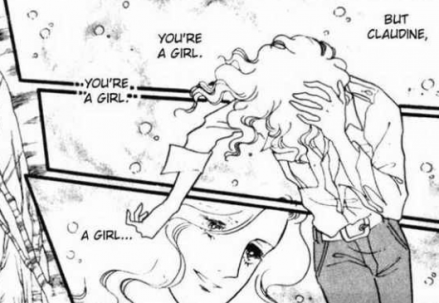
“But Claudine, You’re a Girl”

Not sure of what to do with her own child, Claudine’s mother takes him to a psychiatrist who reappears at a few major junctions in Claudine’s life. This was customary for the time, as being gay or trans was considered an illness, and thus treated as something that would eventually “go away” just as it came. We know now that this is far from fact. However, this is the best Claudine’s mother could do, and I believe she meant well by it.

Claudine’s father Auguste, on the other hand, was a mostly good man. A “large-hearted, manly dilettante with a variety of interests,” Claudine’s father was the only one willing to raise the child as he saw himself. Claudine expressed interested in equestrianism, hunting, sports, literature, and world history, to which his father only helped to provide the best resources to raise Claudine just as well as his other three accomplished sons. Loving Claudine wholly, Auguste says it himself: “That she doe not have a man’s body is honestly a mistake on God’s part.”

We follow Claudine through childhood flings, teenage romance, and relationships in adulthood. The women he encounters transform his life, although whether these interactions are for the better or not is definitely up for question. There’s one particular childhood lover, Rosemarie, who annoyingly clings to Claudine and causes him nothing but trouble. As he navigates through life, Claudine finds that it isn’t wrong of him to be a transgender person so much as that being trans is just highly ill-advised when no one can accept you for it. His emotions are understandable, and his actions are largely respectable.

Friends, strangers, and even his own family turn Claudine away from them on account of their own ignorance. A deeply seeded disgust for gay and transgender people plagues the populace of 19th century France, and—as it has continues to do today—only serves to ruin Claudine’s life. Despite his graceful air, his love of knowledge, and his deep compassion for helping others in need, Claudine is dejected again, and again, and again by women who have mixed love and kindness with lust and sin.

we are both girls

Why We Have To Do Better

This is a breathtaking manga. Although it was published way back in 1978, so much of this shoujo-ai drama can speak for the view of transgender individuals held by most conservative-minded people today. The story is highly relevant, and I’m so thankful Seven Seas was able to publish it when they did. Their restoration of this vintage shoujo manga is gorgeous, and the large trim format is greatly appreciated.

More than feeling upset, frustrated, or annoyed at the terrible ways Claudine was betrayed, I can only really sum up my thoughts on the ending with this: Claudine’s story is a sad one. It’s tragic, it hurts, and yet it’s an unfortunate end many transgender people find themselves meeting. Guys, it’s tragedies like this that remind me we still have a long way to go. For people like Claudine, for people who are confused or still in the closet, for people who are out and proud of it—We have to do better. So. Much. Better. And that begins with accepting these identities—NOT just acknowledging them.

From cover to cover, Riyoko Ikeda explores gender and sexuality, identity, culture, and self-acceptance in a coming-of-age tale so sorrowful and heartfelt that I can only want to express how important Claudine’s story is. It is works like this that can easily impact people, and even leave behind impressions that can hopefully change lives for the better. Certainly, I won’t be forgetting Claudine anytime soon.

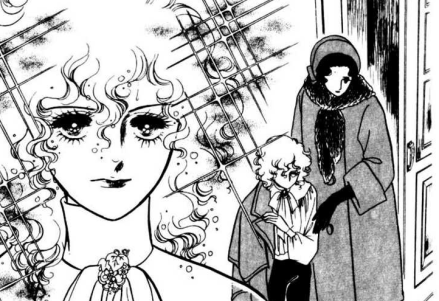
claudine art page


They lived together, deceiving the world, behind the backs of their friends. But like a flower waiting for rain, their caged love finally surged out, shining. I believe this was a true love, surpassing all preconceived notions, entirely moving.Claudine’s doctor


Afterword

What a great read this was. Riyoko Ikeda’s art style is not only iconic, but truly emblematic of early 70s and 80s shoujo manga. Sure, it’s a bit over-the-top at times, but what would a Riyoko Ikeda manga be without her signature dramatic twists and sparkling style? For telling an admirable albeit tragic tale about a respectable transgender man and his struggles with finding love and self-acceptance, I welcome Claudine as a “Cafe Mocha” title, a rating reserved only for the bests out there. Did I mention that the dad is actually a GOOD guy in this one? Normally it’s the other way around, so this was quite a pleasant surprise!

Anyone else read Claudine? I’d love to hear your thoughts on this old but classic shoujo read. I’m so glad I got to include a manga with a transgender focus this month with something like Claudine. My next Pride Month post will be over something much more modern, Bukuro Yamada’s Melting Lover, so please look forward to that! ‘Till next time!

– Takuto
Seven Days: Will You Still Love Me When Monday Comes? || Review

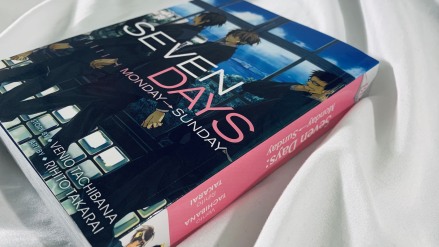
A brief spoiler-free review of the 2-volume manga series “Seven Days – Monday to Sunday,” story by Venio Tachibana, art by Rihito Takarai, and re-licensed in English by SuBLime Manga.


What Started as a Joke . . .

One week. That is all the time any lucky girl who dates Seryou Touji will spend with him. You can’t hate the guy, though. After all, he supposedly makes you feel like the most special person in the world during that time. Rumor has it that at the start of the following week, he’ll date the first person to ask him out that Monday morning, no tricks—and no strings attached either.

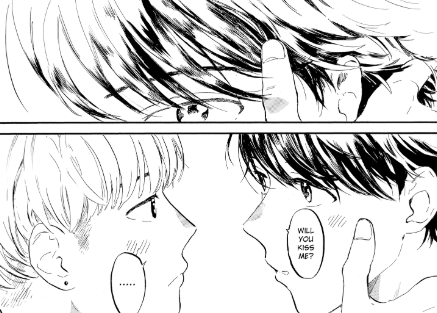
Curious about the mysterious first-year playboy himself, equally attractive third-year Shino Yuzuru decides to jokingly ask Seryou out one morning. True to the rumors, however, Seryou takes Shino’s offer seriously, and thus begins Shino’s fleeting seven days with him.

Although license rescued and released by SuBLime Manga, a company typically known for grabbing some of the harder yaoi works on the BL market, Seven Days much more belongs in the shounen ai or even school romance genre. Nothing about the story is explicit, making it the perfect gateway BL for newcomers ready to wet their feet.

Within just 13 chapters (or one omnibus volume), the entire story wraps up well enough to not warrant a continuation. Shino and Seryou’s week of dating and hanging out is also well-paced. Each day is divided into chapters, which means we literally are getting the full play-by-play for this awkward dating situation that started out as a joke but turned into much more.

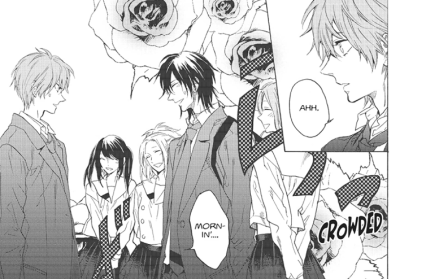
morning surrounded

Not Gay, But Gay Enough

What made the story somewhat difficult to get into was the fact that, technically, neither of our boys here are gay. That is, Shino and Seryou don’t actively seek males as a dating preference to females; if anything, they’re both well-known ladies’ men, and they know it, too.

So, how can two “straight” dudes fall for each other? For one, they’re both undeniably the hottest men in their school. Second, they share a pastime together—archery—which often leads to the start of many conversations (and playful teasing). Third, and this might just be me reading into it, but Seryou might actually have been gay from the start. The first-year can’t seem to fall in love with any of the many girls he dates. Yet, when approached by Shino that Monday morning, he doesn’t refute him. It could be that he was curious all along, and took the offer when it came to him.

It’s a little frustrating to cheer two guys on when neither is really into the same sex (unless . . . ), but at the same time, it’s amazing what dating one another allows the boys to see about themselves. Despite his graceful nature and pretty face, Shino is a pretty laid-back, impolite guy, not to mention being seriously blunt about everything he notices. Dating Seryou makes Shino realize that his worst traits really can hurt people—but also that they are what make Shino himself.

Then there’s Seryou, also a pretty boy but drastically bad at reading people. Unlike Shino, Seryou wears his expressions on his face, and even though he thinks he’s being transparent, Seryou isn’t as good at knowing others as he might believe. In fact, he’s kind of shallow in his romantic encounters, which Shino quickly picks up on. Even though he can let girl after girl live their high school fantasy, at the end of the day, Seryou doesn’t even save their contact information on his phone. He sure was quick to memorize Shino’s number and email by heart, though . . .

seryou charming

The Look of Early 2000s BL

Although Ten Count was the first yaoi series I’ve ever read, I’m definitely no stranger to the BL genre. I’ve seen plenty of screenshots of early 2000s BL manga on the internet and have flipped through my own fair share of yaoi manga at used bookstores. It’s nice to finally have purchased my own copy of one of these works, and I feel even more pride in having it displayed on my shelves. Seven Days is a nice little title to have for sure.

Aside from the license rescue stirring news in the manga community, however, what initially pushed me to buy and read Seven Days was because it shared the artist of Ten Count, Rihito Takarai. Having recently been acquainted with her series work, I wanted to see how her older art held up. Boy, has she improved. But also, WOW, she’s been this good from the start!?

Takarai knows how to draw pretty boys. Both donning that signature uke and seme look with their tall, lanky, yet athletically built figure, Shino and Seryou walk like gods among men. Their chiseled features, large eyes, and pointy noses hold all the indications of desirable beauty, especially of BL characters in pre-2010 works. Perhaps you could call Seven Days an early 2000s time capsule that most would still love and enjoy today.

It was probably the hair styling, however, that first caught my eye and stays in my mind now. Shino’s medium-long chestnut hair creates an elegant, almost foreign bowl-cut look. Similarly, Seryou’s longer black hair would make anyone who had it look like a thug, but on him serves to make him look dashing and poised. The use of scenery (LOTS of fences), while modest, also sets the scene for this cute slice-of-life romance. Also, likable female characters are present in this manga—and they’re NOT evil, hooray!

seven days seryou and shino

The Perfect Gateway BL

I swear, this really is one of those stories where a whole week of “not knowing how the other feels” could’ve been resolved by Tuesday night had Shino and Seryou sat down for five freakin’ minutes and just talked it out like any normal couple would. It’s annoying how characters can feel like they’re just being strung along, only to find out by the end that their partner was “madly in love with them the whole time.” Especially in this story where the reader can be unconvinced of author Venio Tachibana’s intentions, it can come across as a strange case of queerbaiting. Trust me when I say it that Shino and Seryou are falling for each other, though—they just might not know it yet.

And that’s the huge draw of Seven Days: Shino and Seryou aren’t your typical BL pairing. Neither knows what they want, both in themselves and in relationships, and that makes finding love all the more difficult. While I bite back and wish Tachibana was more transparent about their love, I also find myself realizing that, yeah, I’m not sure I could so easily admit my own feelings if I were in their situation either.

Surprisingly full of more introspection than it’d have you believing, every single chapter of Seven Days was a gift. Force yourself through this playful senpai-kohai shtick and it’ll be the longest week of your life. However, with a little patience, you might unexpectedly find yourself relating to this drama that spans just seven short-lived, transient days.

shino seryou sleep


I wonder how many girls stood right here and closed their eyes just like this? And when they did, how did Seryou respond? — Shino Yuzuru


Afterword

I had to flip back at some of the chapters to write this review and, ahhhh, it’s such a cute story! I wish I could read more stories with Takarai’s art in it, but that’s all I’ve got for now. Seven Days was definitely stronger than Ten Count, but I think I still like it about the same, if not slightly more. With very little to complain about, Seven Days is a wonderful “Cafe Mocha” title here at the cafe! If you only get to read one shounen ai story, this is my go-to rec for the time being. Have you read Seven Days? I’d love to hear your thoughts down in the comments! My next Pride Month post will likely be a first impressions on Candy Color Paradox, so please look forward to that. ‘Till next time!

– Takuto
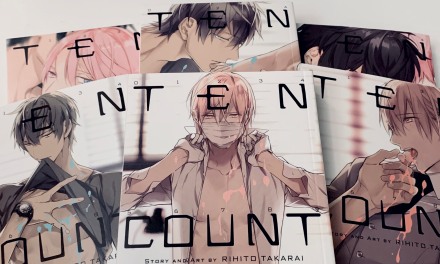
Ten Count: My First Yaoi Manga Series || Review

A brief review of the 6-volume manga series “Ten Count,” story and art by Rihito Takarai, and licensed in English by SuBLime Manga. MINOR SPOILERS WILL BE PRESENT.


Counseled into Love
Tadaomi Shirotani suffers from extreme obsessive-compulsive disorder wherever germs are concerned. While he manages to get his corporate secretary work done efficiently enough, his social life is practically nonexistent as a result of his condition. Upon saving Shirotani’s boss from a fatal car accident, behavior therapist Riku Kurose takes an interest in helping Shirotani overcome his germophobia. As Shirotani navigates through Kurose’s proposed ten-step program designed to cure his compulsion, the patient’s attraction to his therapist grows.

As far as romance dramas go, Ten Count starts off relatively tame, especially for a BL series. In fact, there’s nothing really explicit until the end of the second volume, of which there are only six. This relatively slower-burn intro allows us to really understand the position Shirotani is in, his feelings and his frustrations with his condition. Although Shirotani’s list of ten self-chosen tasks seems like an excuse to up the sexual tension step-by-step, I assure you that the series has more twists in store than finding out what Shirotani’s final tenth step is (even if they’re a bit more controversial).

One of my favorite aspects of the series is how, foundationally, Kurose’s psychological techniques (namely the titular “ten count”) are rooted in actual behavior therapy practices. (Trust me—I took a class for this!) Exposure and response prevention therapy (ERP) is a real therapy designed to treat anxiety disorders. By gradually introducing stimuli to the patient and slowly increasing the strength of the stimulus, an individual undergoing ERP therapy can hope to see at least some relief from their OCD symptoms. It doesn’t suddenly cure all—which Rihito Takarai respectfully acknowledges—but it can help relieve some of the stresses that come with anxiety or PTSD.

ten count list

The Patient-Therapist Relationship

From the start, Shirotani is a man bogged down by the pressures of society. His signature gloves may seem like a fashion choice, but they actually serve to shield his hands from potential germs. If he just wore the gloves, he’d see himself as looking foolish, though. Thus, he also dons a suit for both his job and personal life to seem less odd. I thought this was a sad detail, if not a pertinent one to telling us what kind of person Shirotani is: an extremely cautious and self-conscious individual. His condition interferes with his daily life, clearly, and he’s in dire need of help even if he refuses to admit it.

Kurose comes off as a little standoffish and weirdly intimate, and that’s also a result of a troubled past, no doubt. While he’s able to comfort Shirotani and make him feel good about himself, Kurose also has this aura of being impossible to read. For a corporate office guy with crippling OCD, this can pose major problems. Understandably, Shirotani fears the unpredictable, and even more so when it concerns human contact. What Kurose wants out of Shirotani might not be what he expects. At the same time, perhaps Kurose’s guidance and friendship are the exact things Shirotani wants out of this unconventional patient-therapist relationship.

shirotani kiss

To Fetishize Another’s Pain

Let me start this part by saying that Rihito Takari’s art is divine. Her characters are beautifully drawn, the panel construction serves to capture Shirotani’s feelings of isolation and anxiety, and the sex is hot, straight up. (I mean, Kurose’s jawline, C’MON.) Takarai also has an eye for aesthetic, her characters living clean, realistic lives, although on the lighter side. I cannot deny that reading this manga was enjoyable, if only for the art alone. It’s great. If explicit BL is your thing, Ten Count will serve you wonderfully.

Ok, now I can nitpick. SPOILERS for one of the later narrative twists, but WTF Kurose?? The dude likes—no, prefers—“people like” Shirotani because they have a germophobic condition . . . and he likes making them dirty . . . and corrupt like him?? I’m sorry, I just couldn’t with this reveal. It’s a shame, too, cause the series really started strong when it was just Shirotani meeting up with Kurose at their usual coffee shop to celebrate Shirotani’s progress.

The fetishization of mysophobia in Ten Count made the last couple volumes a struggle to get past. I really disliked finding out that, rather than love out of personality or charm, Kurose’s biggest draw to Shirotani was because of his suffering. It only confirmed my suspicions about Kurose from the beginning that the guy was a little messed up. While I appreciate the backstories for both of these characters (and can understand the effects that childhood neglect or trauma can have on someone), I couldn’t really find myself appreciating Kurose after discovering his kink.

kurose

One Step Forward, Two Steps Back

As a BL manga, Ten Count starts strong but falls into some of the unfortunate schemes of the genre that I’ve become aware of thanks to fellow bloggers and booktubers. It comes across as realistic and understanding of people with anxiety disorders, yet eventually succumbs to a somewhat insulting case of deception. I wanted Shirotani and Kurose to end up together out of a deep fondness and caring for one another, and it only feels halfway satisfying.

With any type of behavior therapy, it can often feel like you’re making leaps and strides one day, only to wake up the next feeling like you haven’t progressed past start—and that’s absolutely normal. For Shirotani, his lowest lows caused him to skip work, neglect his social life, and even turn down potential relationships. But on his best days, he stepped outside his comfort zone and took risks he normally wouldn’t have. Simply, he tried to live a better, more fulfilling life, and I can commend him for that.

Looking back, I find my liking for Ten Count to be the same way. The chapters where Kurose was genuinely trying to encourage Shirotani to go to the book store, buy a new suit, or actually drink the coffee at a coffee shop—those were great! When it just seemed like Kurose was trying to get his hands down Shirotani’s pants, however, I wasn’t quite rooting for either of them (which is kinda opposite of the intent the fanservice is supposed to do in this series).

As my first yaoi manga series, I don’t hate Ten Count, though. Rihitio Takarai’s plot has its problems, sure, but her art and character designs really are appealing. There’s a lot of self-torment going on throughout the series, but I do believe that in itself is a huge part of life. If the romantic story of a therapist and his patient sounds enticing, go ahead and give the first volume a shot. Just don’t be surprised when certain characters start revealing their true nature in the bedroom—unwonted fetishes and all.

ten count color


It’s because I finally realized that I love you and you reciprocated that love that I’m learning to love myself. — Tadaomi Shirotani


Afterword

I feel I could talk at length about Ten Count, but I’m honestly not sure whether I’d be saying primarily bad things or good things. Probably a mix of both, because despite its problematic concerns with trauma and sexual arousal, I did enjoy reading about Shirotani and Kurose’s relationship (and the many, many back-and-forth turns it takes). I know this series stirred a lot of buzz when it was first brought over in 2018, but what are your thoughts on Ten Count? For my first yaoi manga series, I feel like I picked a decent one, but you be the judge of that.

I’ll pass Ten Count as a “Cake” title here at the cafe if only for the fact that Shirotani’s story is fleshed out in a lovely six volumes and not just two or three. If you’ve got any BL recommendations, I’d also love to hear those. I’ve got more Pride Month content coming soon, so if BL is your thing, you’re in luck! Thanks for reading, and ’till next time!

– Takuto