Michiko & Hatchin, Two Against the World || OWLS “Lover”

Chances are that if you were linked here from another blogger pal, then you might be new. To those first-timers, “Hi, I’m Takuto, welcome to my anime cafe!” For the OWLS blog tour’s ninth monthly topic of 2019, “Lover,” I decided to travel back to one of my earliest anime watches with Michiko & Hatchin. Specifically, we’re looking at the titular Michiko’s fiery relationship from her past, and how love sometimes isn’t all it’s cracked up to be.

When it comes to romantic relationships, what do we look for in a partner? What core values do we seek when it comes to building a healthy and loving relationship? For this topic, we will be discussing some of our favorite couples in pop culture and what they have taught us about love and relationships, the good and the bad. 

Sweet and simple, I like it. Thanks Lyn and Flow for the prompt this month!
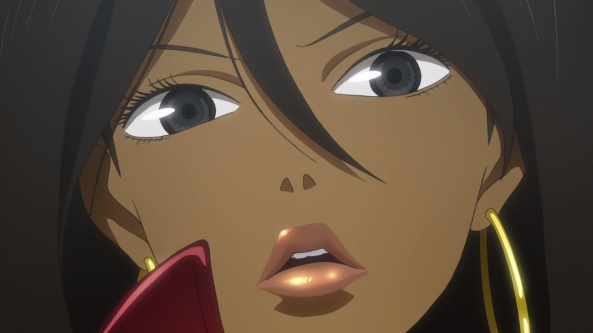
michiko close up.PNG


A brief discussion of the 22-episode fall 2008 anime “Michiko & Hatchin,” animated by Manglobe, original story and direction by Sayo Yamamoto and Shukou Murase. MINOR SPOILERS WILL BE PRESENT. 

On the Hunt for Their Man

She’s escaped from prison three times, and each time she gets farther. The name of this hardened criminal is Michiko Malandro, and she’s searching for a man from her past. Somewhere else under the harsh heat of the South American sun is Hana Morenos, nine years old, who lives a terrible life trapped under the oppressive whims of her abusive foster family. In her loneliness and despair, Hana dreams of the day when her Prince Charming will charge in and whisk her away from her captors. What Hana doesn’t know is that her “prince” would turn out to be the husky and vivacious escaped convict who’ll drive a stolen motorbike straight into the dining room window, claiming to her mother.

Free from their captors but now on the run from the law, the unlikely duo traverse the sun-soaked (and bone-dry) land of Diamandra, careening through this tumultuous adventure of betrayal, crime, child exploitation, rival gang warfare, and murder at every bend in the road. It’s a man-eat-man world out there, and Michiko and “Hatchin” are what’s for dinner.

A wild tale of vibrant lives and fateful reunions, two poor souls throw caution to the wind as all the unlikely human connections strung together by one elusive man start to converge on the dusty crossroads of destiny.
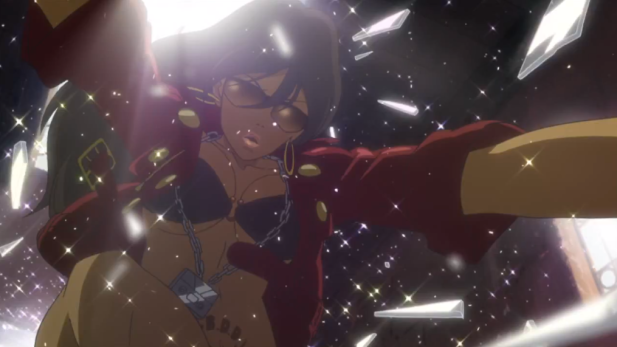
michiko glass

Equal parts action and drama, Michiko & Hatchin tells the timeless tale of a young girl searching for her father in a lawless land. The fictional setting of Diamandra itself is rife with drugs, alcohol, and poverty. People lie, cheat, and steal from one another—after all, everyone’s gotta make a living somehow in these ghettos. But buried within the tussles of the bad lie the good, and although they are few and far between, Michiko and Hatchin somehow make it by thanks to the handful of kind ones out there. Above all else, what Hana finds is that people are willing to do anything to survive another day—including murder and theft, of course—but also find someone to love, be it an artist, a musician, or a criminal.

Like Mother, Like Daughter . . .

. . . Is what I wish I could say about these two, but let’s face it, no one is quite like Michiko. Busty, brawny, and not afraid to kick the shit out of any man, Michiko is as gutsy as they come. A “sexy diva” who rocks her body to get whatever she wants, whenever she needs it (even if that means taking it by force), Michiko is loud, proud, and incredibly impatient, often yelling Hatchin around like someone would an animal. Plus, she’s an avid drinker and smoker, and quite often enjoys picking fights “negotiating” with her fists.

When she’s not being a royal pain in the ass, well, let’s face it, Michiko is always a pain. This Brazilian bombshell just wants her ex-lover, Hiroshi Morenos, back in her life. She’ll whine, scream, kick—basically whatever it takes to find Hiroshi. But the one thing she won’t do is give up, and if Hana got any good trait from her mama, it’s her unbridled determination.
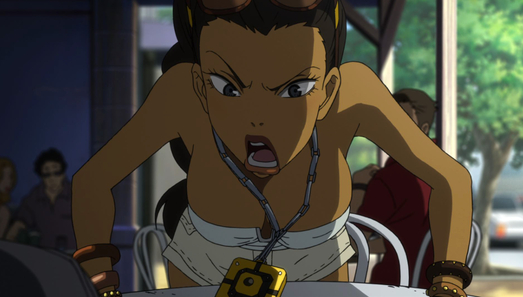
michiko grownups

Again, Hatchin couldn’t be more different from her Latina madre. Polite, introverted, respectful, outwardly compassionate, “Hatchin” (nicknamed by Michiko after Hana told her she didn’t want to be called her real name anymore) does what she can to find Hiroshi within the boundaries of the law. If Michiko stole shoes for her, Hatchin would find a job and work to earn the money for them. Same goes for food, medical visits, travel fares, you get the gist.

Hatchin’s a good girl, clearly much more mature and level-headed than her loudmouth, obnoxious mother. But she looks out for Michiko nonetheless, even if that means hauling her drunk, angry ass to a nearby motel for the night. Really, the entire series is about the different forms affection takes in this south-of-the-border adventure. Although they bicker and fight frequently with one another, Michiko’s always got Hatchin’s back, and Hatchin’s got Michiko’s. It may mean saying “Wait for me” a hundred times and dropping off the face of the planet for a bit, but one way or another, the two will always find a way to see each other again, no matter the cost.
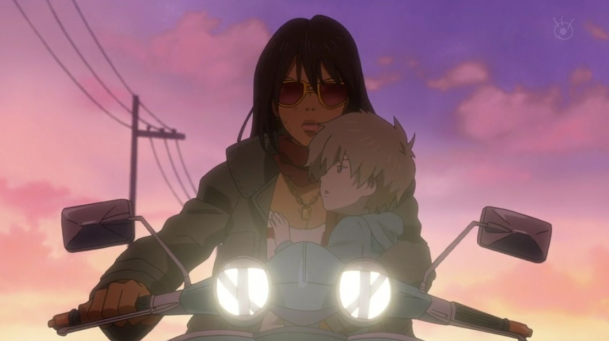
michiko purple sunset.PNG

The Search for Hiroshi

Now, about the mans Michiko’s so desperate about seeing again. Once upon a time they were lovers, until the day when young Hiroshi just up and left Michiko on her own. He was the kind of guy you could tell “the embarrassing shit, and he’d always lend a sympathetic ear”—that’s what everyone remembers about Hiroshi. Ever since, Michiko’s made it her job to find him because she truly loved him. The irony of this Cinderella story is that instead of Hiroshi being in one place and also lookin’ for her, this dude’s runin’ away from her, city by city! The great escapade is twofold, a gritty push and pull between what the heart wants—and what it certainly shouldn’t get.

By the beginning, Michiko’s story has already played out. She was a bad girl who fell in love with a bad man, and had their child only long after he was gone. Her man, Hiroshi Morenos, was the only guy who was able to tame this wild vixen, and the only human who could leave such a scar on her heart when he left her for dead. But Michiko can’t see that side of him. Or rather, she refuses to, and that ends her up in a world of hurt where the bad people take what little you have left, and the good people shut their blinds cause it ain’t their problem.

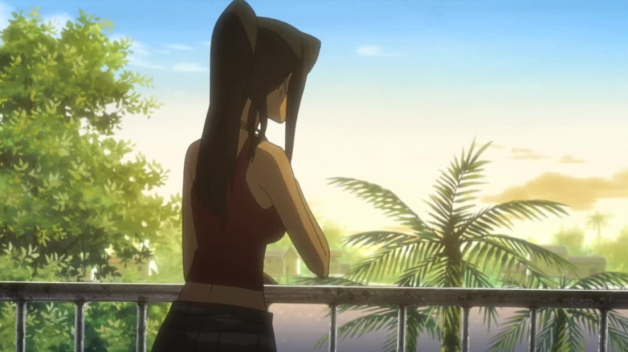
Michiko’s inflated visions of Hiroshi from her memories of the past royally screw her over in the present. Would she have been happier just forgetting Hiroshi? Yeah, probably—no, absolutely. But no one forgets about Hiroshi once they’ve met him, and so Michiko hunts him down. Contrary to what most romantic tales tell us, having a lover in this story means having to share the other’s pain and anguish. Yet, love is redemption for Michiko. In her mind, if she can find Hiroshi, she and Hatchin can be happy.
michiko palm trees.PNG

As Michiko desperately pines for information of Hiroshi’s whereabouts, she is met with the unfortunate realities of the situation—that the man has long since died. But with Hatchin, they persist anyway. And what do they find? The shadow of a man, a husk with a pretty face, but the same old shitty personality. And honestly, deep down, I don’t think Michiko was expecting anything more from this fleeting encounter.

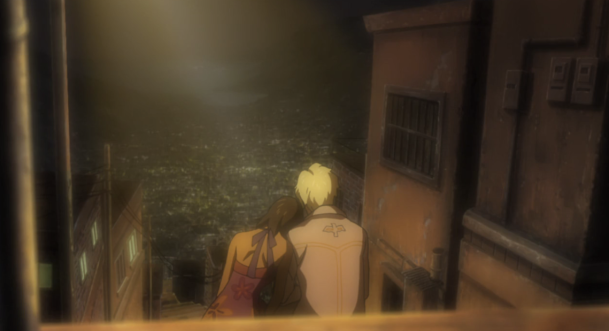
Having a lover in the world of Michiko & Hatchin is the equivalent of having an unbearably heavy weight tied to your foot. While providing an anchor for the soul in this otherwise turbulent landscape, it does little to actually make one happy. It’ll slow you down in the long run. Why? Because people and the relationships they share with one another are portrayed through the ugly side, the sad but realistic one we often tend to forget about. Michiko doesn’t want to find the real Hiroshi, but the Hiroshi of her dreams she remembers from one chance encounter long ago. And that’s why the ending is perfect. It delivers just what it should, even if it’s not the one we’d want; it’s how things would’ve realistically played out.
michiko leaning on hiroshi.PNG

The Reality Love Brings

Michiko is Hiroshi’s lover, not the other way around. He ain’t lookin’ for her, nor is he worried about her safety and well-being. And she knows all she’s gonna find at the end of the rainbow is a crock a shit, not “no damn pot o’ gold.” That’s what is waiting for Michiko and Hatchin and the end of this story, and the sad truth is that they know it deep down, too.

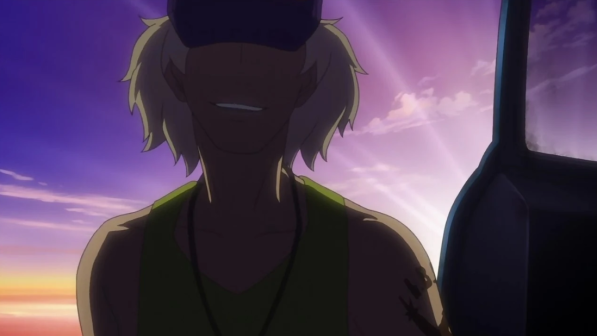
Lovers turn good people bad in this tale, and bad people to a life of crime. Everyone wants a piece of Hiroshi, but ain’t no one gonna get it without a dollop of heartache with their slice. Because dammit, sometimes that’s just the way it is. Love isn’t the contract—it’s the bait. And boy did Michiko fall hook, line, and sinker for this piece of trash.
hiroshi morenos.PNG

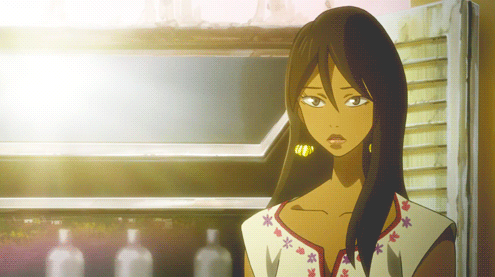
But Michiko can’t help it. She loves stupid guys, and the hotter and dumber they are, the better. But Hiroshi was a smart man, cunning, and she couldn’t help herself from feeling like a moth drawn to a flame every time he opened his lips. Love can be a curse that ties people down in the past, entrapping their emotions in the present to those memories long-gone.

Having a lover can also make us do rotten things to other people to make sure the relationship is protected. It’s not about staying afloat, so much as trying not to sink. I guess it’s as the saying goes, play shitty games, win shitty prizes. 
michiko sad.PNG

At the End of the Road

So, what’s the moral of the story? True love is something you give, not something you take. Bad people only get what they want because they take it from those who already have it. But also, ironically, there is nothing that love cannot mend. Michiko and Hatchin’s relationship, even if balancing on rickety stilts, is proof that in this terrible world, love is still something you can give, not just take. Hiroshi left without a trace except the empty hole in his lover’s heart; Hatchin came into her life and was able to make the whole situation easier to bear.

They are each others’ hero, a bond stronger than man and woman, but of mother and daughter. A familial love. And an irreplaceable love at that. 

What Michiko’s story also tells us about love is that a relationship fueled solely by the “good old days” of the past cannot survive in the future. At one point, Hiroshi was something special to her. But now, at the end of the road, he may not be so special anymore. After enduring 22 episodes heartache and emotional turmoil, Michiko AT LAST realizes that Hiroshi isn’t what she or her daughter need anymore. And thus, bathed and reborn in the fresh light of the rising sun, Michiko is finally able to leave her dreamy past behind, and face the future head on with Hatchin at her side.

And for a tale of two against the world, I find that ending profoundly touching. 
IMG_6290


It’s not gonna help to run, you know. I’ll come after you, no matter what. You belong to me, forever. — Michiko Malandro


Afterword

When I watched this so many years ago, it didn’t really resonate much with me. But now, having rewatched the series as an adult, lemme tell you: Michiko & Hatchin slaps differently. With unforgettable character designs, vivid animation, and a charming Latin-inspired OST, it’s unbelievable how well this 2008 series holds up today!

Delusions of grandeur, memories of the past, the painful realities of unrequited love—I’ve exhausted myself with analyzing this relationship, and now, the rest is up to you! For me, Michiko & Hatchin is a certified “Caffe Mocha” title, one for the history books that should be loved and enjoyed for years to come. But I’ve talked enough. What are your thoughts on the series? Please, let me know in the comments!

This concludes my September 24th entry in the OWLS “Lover” blog tour. Yumdeku (myanime2go) went before me with a post about Yuki and Yuno from The Future Diary, a favorite of mine that I can’t wait to read! Now, look out for Flow (DenOfNyanPasu) as they talk about the Visual Novel game Kara no Shoujo tomorrow, September 25th! Thank you so much for reading, and until next time, this has been

– Takuto, your host

Typhoon Noruda: A Storm of Emotions || Review

A brief spoiler-free review of the 30-minute 2015 anime original film “Typhoon Noruda,” animated by Studio Colorido, and directed by Youjirou Arai.

typhoon noruda storm brewing.PNG


Thunder in the Distance

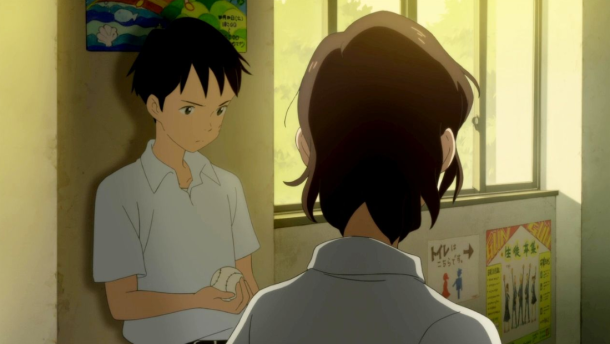
On the eve of his middle school culture festival, Azuma has a fight with his best friend Saijou after suddenly deciding to quit their baseball team. Azuma’s reasons are his own, but Saijou just can’t understand why his friend would depart from the sport they’ve been playing together since childhood. Any time for reconciliation is cut short by the shattering of a glass window in their classroom, and the fierce winds of a typhoon rocking their little island.

Right before the rain hits, Azuma notices a girl who, despite wearing their school uniform, doesn’t actually attend their school. Or at least, she shouldn’t. Shrouded in mystery, the girl quickly flees, and the storm rages on. What connects this enigmatic girl to the typhoon that is shaking up their island, and can Azuma and Saijou’s friendship be saved by this tempestuous storm of emotions?

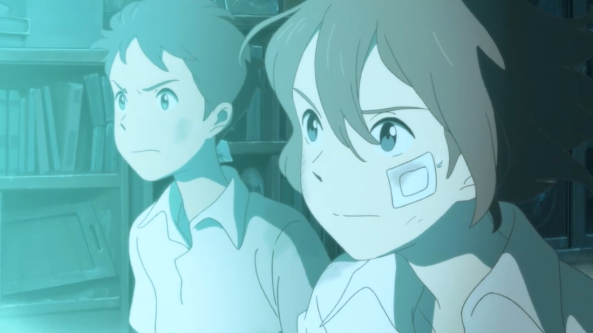
As far as characters go, Azuma and Saijou aren’t the most memorable boys out there, but they tell their story well enough to convey their frustrations with miscommunication and self-esteem. They are charming in their own way, Saijou embodying the “prince” of the class, confident and always willing to lend a hand, and Azuma being a total introvert just wanting to mind his own business and figure out what kind of person he truly wants to be. Dynamic as they are different, they really do mirror the interplay between thunder and lightning, rain and wind—one following the other in this clash of ambitions.

saijou and azuma.PNG

To save a young girl, two boys must first save themselves. Azuma uses the girl’s dire situation to prove to himself that he can help other people, and Saijou takes Azuma’s abrupt disappearance to reflect on their relationship. I can’t really say anything about the mystery girl without spoiling the entire plot, but I find her mere presence and willingness to lend an ear to a complete stranger to be proof that people are—as they have always been—worthy of redemption.

Soaked in Aesthetic

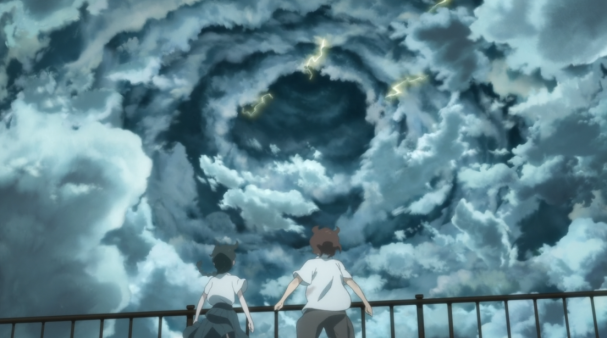
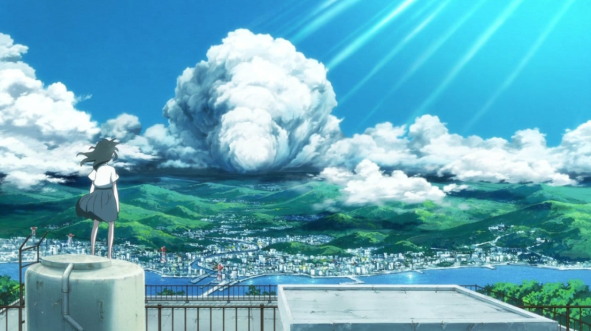
What immediately draws the viewer to Typhoon Noruda is the animation, no two ways about it.  From the sparkling rain to the leafy trees, busted wooden floorboards, and colorful school festival debris blowing in the wind, the attention to detail in crafting this turbulent environment truly paints the picture of a severe tropical thunderstorm.

The film looks incredible, with fluidly animated and expressive character designs, and the titular storm intensifying in the background. And the ash-colored clouds, how they move with such majesty, as if to shout, “Behold the storm!” Talk about a stunning sight. Down to the last drop, Studio Colorido produces a visual spectacle, and an ode to all us thunderstorm lovers. It’s as if a Makoto Shinkai setting and Mamoru Hosoda characters were married off and bang, Typhoon Noruda. Well, Comix Wave Films was listed in the credits, so it’s no wonder the Shinkai aesthetic feels so present here. 

typhoon clouds.PNG

For sound, Typhoon Noruda is supported by your standard string orchestral soundtrack, 15 minutes worth of music that follows the characters through to the climax. The real gem here is the credits song, “Arashi no Ato de” or “After the Rain” by Galileo Galilei, which is so good it gets its own official VEVO video, how about that. Seriously though, reminiscent of youthful days and fleeting childhood, this ED theme was how I was introduced to the film—and it’s arguably better than the film itself!

Lastly, John Swasey directs a solid dub, Greg Cote conveying the honesty and extroverted nature Saijou’s rash character, and Adam Gibbs nailing the discomfort and insignificance of Azuma’s naivete. I found myself really relating to Azuma through Gibbs’ performance, as I certainly know what it feels like to be the social outlier in class.

saijou and azuma blue light.PNG

Rain or Shine, We’ll Make it Through

Just as it sounds, Typhoon Noruda is a school fantasy short film anchored around youth and friendship. Despite only 26 minutes to tell its story, the film does follow a decent progression of exposition, rising action, and climax, never sticking on one plot point for too long. By the end, the conflict between the two boys feels decently resolved, and you’re only left briefly pondering a bit of the fantasy aspect (which I won’t spoil for you). It’s not perfectly convincing by any means, but for a mere half hour, the experience of the storm itself makes the film worth watching.

Simply, Typhoon Noruda is an entertaining, endearing story about insecurities and self-expression. As a small indie project from Studio Colorido, the visual and audio quality of the piece far outshines any looming clouds one may have about the plot and characters. Save this one for a rainy day, and you just might find yourself whisked away by the storm, left only to the freeing pleasure of having watched two relatable teenagers face life head-on—and leave their misgivings with youth behind with no regrets.

Noruda and the storm.PNG


Remember, cherish what you have. — Noruda


Afterword

I remember chatting with Neha over at Biblionyan, saying how I’ve been wanting to watch this film for sooo long, and how I even owned the Blu-ray yet just left it sitting on my shelf! Well, part of me was saving it for a rainy day (literally) to soak in the entire ambiance of stormy afternoons, which I finally got. I talked more about that feeling in my most recent “Cafe Talk,” so be sure to check that out. Anyway, I’m really glad that I enjoyed the “Cake” worthy Typhoon Noruda. It’s not a novel piece by any means, but for 30 minutes of unfiltered thunder and rain, what’s to lose?

I’d love to hear whether or not you enjoyed this recently licensed title by Sentai Filmworks! If you’ve yet to see it, but have been wanting to as I was, I pray for a cloudy day on the forecast just for you! Until next time, this has been

– Takuto, your host
Saving an Anime for a Rainy Day || Cafe Talk

Spring is my favorite season, if only for the rain.

Two years ago I came across a YouTube VEVO music video for “Arashi No Atode” by Galileo Galilei. The song was stuck in my head for weeks after, and I remember being spellbound by the breathtaking visuals of this little video. When I found out that it was made of clips from an actual anime short film, I freaked. After doing some research, I found that this anime, Typhoon Noruda, was not the most “beloved” film by most fans (a 6.3 on MAL, I mean, c’mon people, it’s not that bad). But I wanted to see it anyway.

A year later, I got that chance, when Sentai Filmworks license rescued the title in 2018. For some reason, I still held these feelings that it’d be a “magical experience” if I were to watch it on a rainy day, even if just an average-rated film. So, in favor of milking the most aesthetic out of this $8 Blu-ray, “Save it for a rainy day” was exactly what I told myself.

Another year passed. The stormy morning that I was desiring seemed like it’d never come. There were opportunities, but none where I felt I could fully dedicate myself mentally and physically to this highly anticipated effort. Winter, spring, and now it was summer 2019. Late summer, the beginning of a new fall, and the end of my chances, I knew.

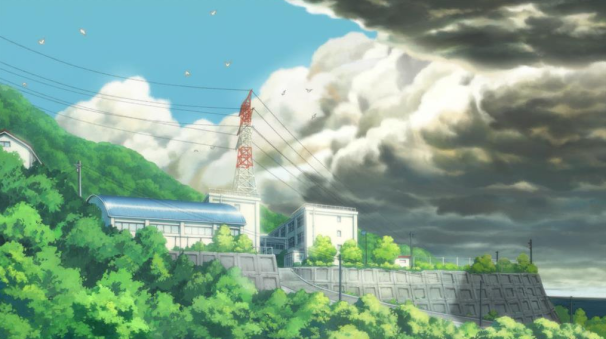
Until today, September 9th, a Monday morning before classes. It finally rained. And it poured, too. I tossed my book bag aside, having woken up early to relax before classes, and immediately plucked the Blu-ray off my growing to-watch stack and plugged in the disc. 

And there I sat, for 26 unfiltered minutes, soaking in the compressed audio of a typhoon on screen, and feeling the hard rain and thunder pounding against the wall I was propped against. It was such a spontaneous decision to watch it when I did, but I have no regrets whatsoever with how things played out. I felt alive, as if I were truly living right then and there, in that storm of emotions. 

For that brief half hour, I was caught in the wind’s current, and helpless to the awe of the storm both on screen and right above my head. So much time and anticipation had coalesced into this single transient moment, and before I could comprehend that it had begun, it was over, just like that. 

I spent the rest of the morning letting the rain brush against my jacket and roll down my sleeves as I walked to my class. Rolling into my first morning class right on time, I didn’t mind that I was a wet mess; I was literally soaked in aesthetic, a feeling that I had been waiting years for. No one was about to take this self-care moment from me. 

Today I watched a film I’ve waited over 2 years for. And sometime this very week, I’m actually going to be publishing the review for it. That’s crazy to me, a true full-circle experience. Now, I can finally put the Blu-ray back on the shelf, and merely hope for another rain to bring another unforgettable experience—and a new story to tell all of you.

typhoon noruda sun new.PNG


Oh the things I do for ambiance! While I enjoyed the aesthetic experience and cathartic feeling of watching Typhoon Noruda more than the actual film itself, I do still have some thoughts on it. Mostly good ones, too, so please look forward to my full review of the film here in a couple days.

Have you ever held off on a book, a movie, or a TV series just because you thought you might enjoy it more under a set of specific conditions? What about even something as trivial as a special piece of candy you received as a gift, or perhaps that brand new jacket with the bright colors and big hood? Please, share your stories in the comments! If you’re currently saving an anime for a “rainy day,” I especially want to know what title that is and why. Thanks for joining me on this little story time, and hopefully I’ll see you all again for the review!

– Takuto, your host

Perfect Blue: Life is Anything But Glamorous || Review

A brief spoiler-free review of the 80-minute 1997 anime film “Perfect Blue,” animated by Madhouse, directed by Satoshi Kon, script by Sadayuki Murai, and loosely based on the novel “Perfect Blue: Complete Metamorphosis” by Yoshikazu Takeuchi. 

mima fish.PNG


Fantasy & Reality

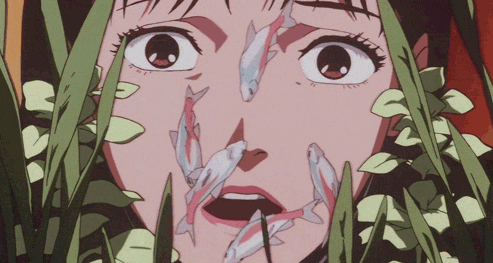
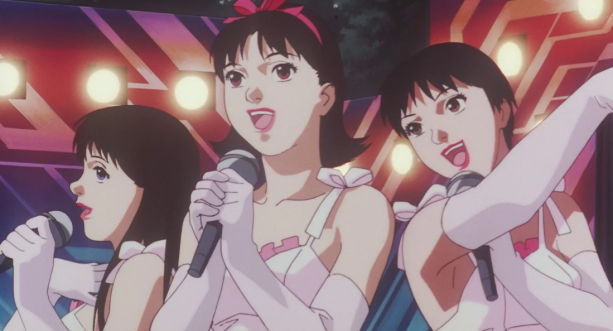
Rising star Mima Kirigoe has just announced her retirement from her Japanese idol group to pursue an acting career. While she tries to convince herself that this is what she wants to be doing with her life, others couldn’t be in greater opposition. Namely, her fans, and one deranged creep in particular who begins to stalking her. As the people responsible for her career change are gruesomely murdered one by one, Mima herself starts to teeter on the edge of sanity.

From the genius mind of Satoshi Kon comes the bizarre story of a singer-turned-actor desperately trying to escape from the delusional head space that is causing the lines between fantasy and reality to blur. The film is swamped in Kon’s signature quick-cut directing style, with creative transitions, wacky visual perspectives, and bright colors guiding the eye through this terrifying narrative.

idol mimi.PNG

Kon’s attentiveness to defining the boundaries of fantasy and reality is exemplified in Perfect Blue. Sometimes we are shown Mima acting in a scene, while other times the stage is very much mirroring reality. Figures from Mima’s imagination haunt both her visions of reality and the viewer’s perception of it. You often find yourself asking, is this a dream? Or, perhaps, the nightmare that Mima’s reality has become?

Set at the dawn of the Internet Age, this psychedelic trip puts the viewer on a wild roller-coaster ride through the darker tunnels of human emotion. Paranoia, loneliness, and fear are thoroughly explored in this masterful film that demonstrates what the psychological thriller genre of entertainment can do when a gripping story is met with heart-pumping suspense and a clever directing style that shows you exactly what it wants, when it wants.

mima in red.PNG

Living in Duality

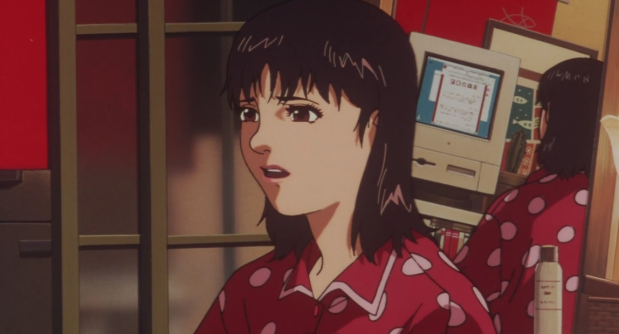
Perfect Blue begins at the end. That is to say, the end of Mima’s career as a pop idol, and the beginning of her acting career. Despite being a beloved icon on stage, her back stage life is actually a realistic mess. Her apartment is cluttered, and she’s so in-and-out all the time that the cheese she buys at the beginning of the film expires a few scenes later. Mima is, to be frank, just another teenage girl trying to make a living in modern day Japan.

As such, it’s no surprise that Mima’s idol career was suffocating her. Much like a high school memory, sure, she had fun. But maybe it’s time to move on now. She is characterized by a sense of modesty and passion for her work, although she’s perfectly fine with moving on to a new phase of her life. That is, until the industry starts to exploit her talents.

mima exploited.PNG

Without going into spoilers, I merely can offer this small sentiment: We really don’t have any idea of how the industry works, unless we are actively a part of it. In the world of money and fame, it’s not about you want to do, but rather about what other people want you to do. Sure, a girl can give her verbal consent, but that doesn’t necessarily mean she would be comfortable with being used for someone else’s gain. As an actor, you serve the director, and sometimes that can conflict with your own moral values as a person.

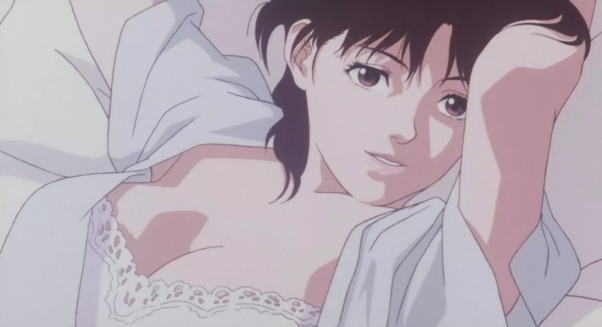
As the story goes along, Mima becomes a victim of forced maturation. This includes being thrust into horrific rape scene that, despite knowing it is fake, scars her poor young mind. She is also met with increased anxiety, depression, PTSD, and even a separation of self by means of superstition. This delusional mindset causes negative thoughts to rise, as in so long as someone is Mima, who really cares if Mima is Mima. How the mind repairs itself and subconsciously shields you for self-protection is absolutely incredible, and that underlying theme is what ties every red thread in Perfect Blue together in one complex, disorienting knot.

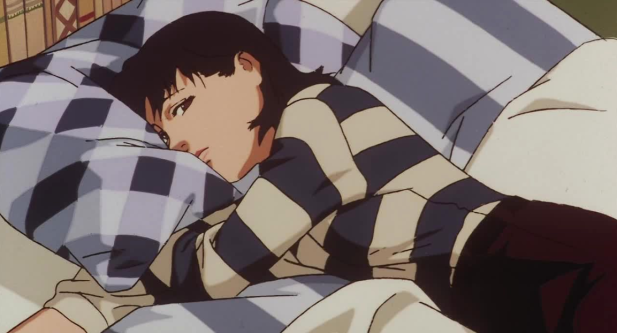
mima in bed.PNG

Sensation, Perception, & Direction

Madhouse boosts Perfect Blue‘s production value with an unbelievable amount sensory detail work that I can’t even begin to comprehend. Flashing stage lights, rattling AC units, the motor noises of a 90s desktop computer, the gentle hum of a fish tank—it’s almost sensation in excess, which is just what this film needs. Transporting us to modern day Japan, the attention to detail enhances the setting, and makes the story feel all the more real.

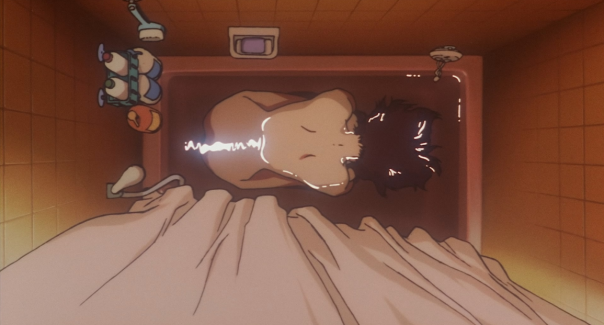
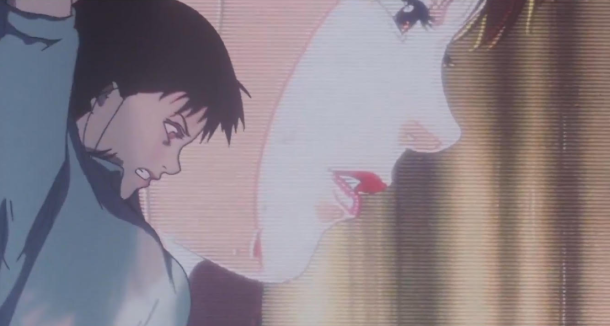
Another gift of watching this film is getting to understand the iconography that makes it so famous beyond being just a really good movie. The bath scene where Mima curls up and screams, bubbles rising from the air of her trapped emotions is particularly beautiful. Seeing Mima hold a knife in midair against a flashing digital backdrop of own image embodies the epitome of suspense. And although creepy in context when paired with the scary music, the scene where Mima chases her dancing, skipping pop idol self through a hospital building conjures up true feelings of horror and hysteria.

mima in bath

Speaking of music, Masahiro Ikumi’s music score for the film adds an eeriness that today’s horror anime just can’t compete with. When we’re not jamming out to light idol music from the 90’s (or listening to it in the elevator . . .), pounding sound board effects, uneasy remixing, and metallic screeching accompany a wailing chorus of uncanny cries. It sounds unpleasant, and it is. But, without Ikumi’s OST, I doubt Mima’s experiences would’ve felt as intense and life-threatening as they were.

mima raised knife.PNG

It’s A Maddening, Cruel World

Perfect Blue takes an introspective look at how fantasy can shape reality, and vice versa. In subtle ways, it asks the question that, as creators of some kind of content, what do we owe our consumers? Are we ever miscommunicating with our readers and viewers, and how would we know? Also, if our successes define us to some extend, how long will they cast shadows into our future?

The world is cruel, scary, and unfair. If it can take something from you, it will. And it won’t give anything back. But Perfect Blue also tells us that if any of these thoughts we are having bother us, then it’s all reality because these thoughts still shape how we feel in real life. Even the most seemingly sane people in our lives . . . We have no idea what they may be going through. Life is a performance, a stage, and if we don’t tell people about what’s going on, they might not ever know. 

In that way, Mima’s story is one about winning yourself back. What does it take to feel confident in my words and thoughts, and how can I get to that place—that’s what I got from Perfect Blue.

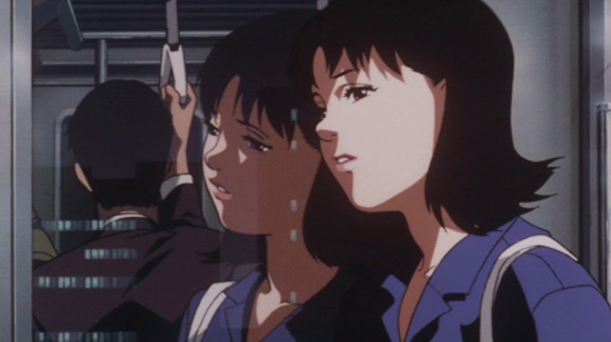
mima on the train.PNG

A harrowing journey through a young woman’s psyche as she tries to escape from the fever dream that her reality is becoming, Perfect Blue effectively uses deception in anime to play with his viewer’s mind. The perception of reality cannot be trusted, especially as the psychodrama heightens towards the climax. But WOW is it a compelling mystery. You actively want Mima to figure out what’s wrong with her life—you want her to solve the case. And with a sucker punch ending that’ll hit ya right in gut, the whole experience comes to a satisfying conclusion.

Believe it or not, for a story that began with existential worry and cleverly crafted chaos, the ending of Perfect Blue provides an outlook that favors hope, confidence, and independence. And seeing the light of those perfect blue skies completes this wild yet captivating journey through the complexities of the human psyche.

perfect blue art.PNG


The truth is that today more than ever, I wanted to have a good time with you. — Mima Kirigoe


Afterword

While I would recommend this film to every fan of anime out there, it IS full of gratuitous sex and violence. So, if either of those are triggering to you, definitely steer clear for a bit. More than just thrilling, suspenseful, and entertaining, Perfect Blue ponders so many ideas, from how the internet will forever change privacy, to the savagery in the entertainment world. A compelling mystery by master storyteller Kon himself, “Cafe Mocha” certified Perfect Blue can truly make you feel genuinely scared for your life (especially if you watch this at midnight by yourself like I did, eep).

I’d love to hear what you think of this classic film down in the comments! Special thanks go to GKIDS for rescuing this long out-of-print title and giving it a lovely Blu-ray remaster—they really are the best! Now, if you’ll excuse me, I have to go binge Love Live! . . . you know, to maintain my own sanity. ‘Till next time!

– Takuto, your host
A Little 2019 Birthday Haul!

Hi there!

Yup, August 27th is/was my birthday, and I’m officially 21! While it wasn’t the best 21st birthday a teen could’ve wished for, I really did appreciate all of the birthday wishes from my family and you guys here on the internet. I did a little Twitter rant venting some of the week’s frustrations leading up to that Tuesday, and I actually feel better somehow.

Anyway, thank you all very much for supporting me on that day and every day since then (and now of course). No words can express my gratitude for having all of you wonderful people in my life.

Now, no birthday is complete without a gift or two! So, I’d like to share a couple of the books and movies I received from family since one of my blogger goals for 2019 was to do more with my collection. Here we go!

From my sister are three of the new Funi “Essentials” releases designed to replace the yucky SAVE line. Having all the episodes, Blu-ray only—with no hassle of making sure it comes with a slipcover or not—is actually proving great on my psychological health lol. Plus, they’re VERY affordable!

As an artist myself, she picked up Barakamon and Handa-kun, and threw in The Morose Mononokean since it kinda matches the aesthetic. NICE! Not pictured is the new DVD collection for Beyblade Metal Masters (whoops, I forgot). Thanks sister!

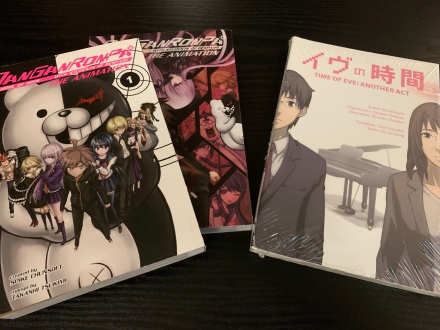
My brother bought the Time of Eve: Another Act light novel years ago, but he must’ve thought he’d never read it (or that I’d get more out of it since I’m the one who showed him the film), so he regifted it to me. He also got me the first two novels of the Danganronpa series, a specific part of the franchise I wasn’t planning on picking up myself, so I was beyond happy to receive it as a gift!

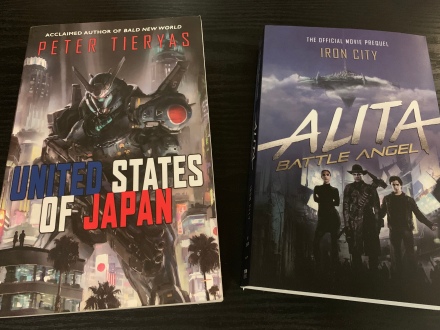
From him, I also received two novels he picked up at a bookstore in the city: United States of Japan and the Alita: Battle Angel prequel, Iron City. I didn’t even know that a prequel to the Alita live action existed, so that was a surprise! Looking forward to reading more dystopian sci-fi.

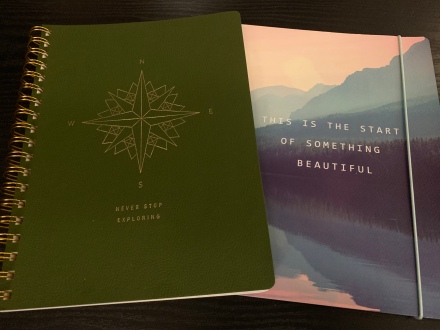
He kinda went overboard this year. The next two items are more books—and look, I can write in these! The green journal has a much darker, classier green in person, trust me. The other book is a pastel agenda, which will prove quite handy with the busy semester ahead. Can’t wait to write in these!

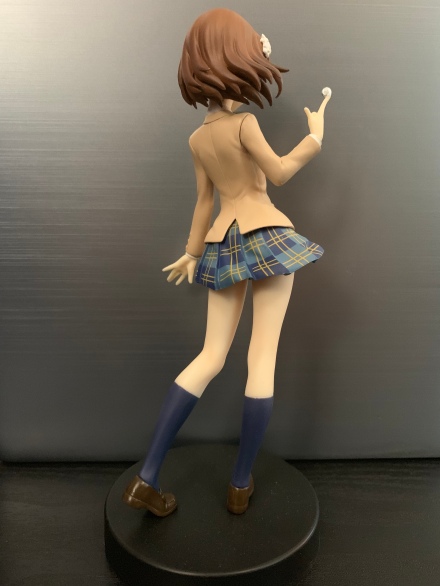
Last but not least is this figure of the “Railgun of Tokiwadai,” Mikoto Misaka, from the electrifying A Certain Scientific Railgun. This specific figure is from Index III, which came in nice timing since I had just finished watching the series. She is my first Railgun figure, and I absolutely just love her!

Funny story, I actually remember my brother picking this up from Naka-Kon in the spring, but noticed he never opened it. Eventually I forgot about it, and lo and behold, she makes her thunderous grand appearance once again as a gift for me! I always thought it was an interesting buy for someone like him, as I didn’t believe he liked the character that much to buy a figure of her. WELL, now it makes sense!


There you have it, a little haul for my 21st birthday last week. I can’t thank my family enough for being so supportive of my hobbies! In the same way, I’m so very thankful to all of you for your birthday wishes. The personal stories and thoughts some of you shared with me did numbers for my self-esteem, and I really value your kindness and concern.

So once again, thank you all!! ‘Till the next post!

– Takuto